Feeds:
Posts
Comments

By Sue Shekut, Licensed Massage Therapist, ACSM Personal Trainer, Certified Wellness Coach, Owner, Working Well Massage

Take this easy test to calculate your risk for diabetes and heart disease.

Just enter some basic health information and My Health Advisor very accurately calculates your risk for type 2 diabetes, heart disease, and stroke. Note: Your results will be more accurate if you know your blood pressure, cholesterol and glucose levels from recent blood tests.

My Health Advisor

Then, once My Health Advisor calculates your personal risk, you can quickly and easily see the difference simple lifestyle changes—like losing 5 or 10 pounds or quitting smoking—make in your overall risk. Then get your personal action plan outlining suggestions for lowering your risk for these deadly diseases. When you’re done, email your results to your doctor and make plans to discuss them at your next check-up.

You can stop type 2 diabetes, starting right now. Use My Health Advisor. Then talk to your doctor about your risk for diabetes, heart disease, and stroke. Listen to your doctor. Eat better. Get moving.

Get started now!

Learn more about CheckUp America and your risk for type 2 diabetes, heart disease, and stroke.

What is My Health Advisor?

My Health Advisor is powered by Archimedes, a very powerful health modeling program that brings together a large amount of clinical research data to make highly accurate predictions about health risk. Archimedes creates a virtual reality in which all the important objects and events in the real world match objects and events in the model’s world.

When a simulation model is run, the objects interact and events occur as they would in the real world. So, My Health Advisor is very accurately projecting your personal risk based on real world events.


My Health Advisor was developed through the American Diabetes Association’s CheckUp America program, which is supported by unrestricted educational grants from Eli Lilly & Company, Merck & Merck/Schering-Plough Pharmaceuticals, Novartis, Pfizer Inc., sanofi-aventis, and Takeda Pharmaceuticals North America.

Go to the American Diabetes Association website for more details.

By Sue Shekut, L.M.T., ASCM Personal Trainer and Certified Wellness Coach

Sitting with your feet flat on the floor with our backs resting on the back of your chair is an optimal ergonomic position (versus sitting on the edge of your chair as many shorter people end up doing so their feet can rest on the floor). However, many desks and computer surfaces are too high for people shorter than 5 feet 4 inches. At 5′-2″, I have always struggled to find the best combination of chair height and footrest to allow me to sit all the way back in my chair at my computer.

Recently we tested out two of the footrests shown below. Our clients report that both the 8 inch high Safeco footrest and the Rubbermaid Footrest have really helped them feel less neck and back strain when they work. Two of our vertically challenged clients (one approximately 5′-3″ in height and the other 5 foot) are using the footrests to allow them to raise their chairs high enough so that they are in proper position over their keyboards AND can still rest their feet on the floor or footrest.

Note: My feet are flat on a Safeco 8″ footrest myself as I type this post!

Safeco Footrest, Adjustable Easy-Glide Design, 18-1/2″W x 11-1/2″D x 8″H, Black SAF2106


Footrest, Adjustable Easy-Glide Design, 18-1/2"W x 11-1/2"D x 8"H, Black SAF2106

Price $30.84

  • Product Dimensions: 19 x 15.5 x 8.5 inches
  • Shipping Weight: 6 pounds

Order from Amazon here.

This is a great footrest for people under 5′-2″. If you must raise your chair up to it’s upper most height just to get your hands comfortable on your keyboard, this is a footrest for you. It can sit flat so you can rest your feet flat as you sit. It can also easily angle if you need to rock your feet towards you or if you need a bit less height.

Amazon Customer Reviews

• I had a very old rubbermaid footrest that finally cracked. Tried some out and wasn’t pleased. Decided to try this one, mostly because it was a bit higher than most others and i am short. I was skeptical because it ‘looked’ like it tilted ‘at will’ and wasn’t able to be set at one position. Well, that part is true but i just LOVE it and it is extremely comfortable whether tilted towards me or if i am resting such that it is tilted away from me! This one’s a keeper!

• After reading the reviews posted, I decided to get this foot rest to help relieve my lower back pain. It has helped relieve my lower back pain considerably. I am only 5 feet tall and can never reach the floor. Having this has helped my posture and sitting position immensely. I cannot begin to tell you how this has helped my lower back. Thank you fellow reviewers for turning me onto such a wonderful product!

• I bought this for use at home with my computer… as a woman with short legs, even at the lowest setting my computer chair forces me to sit forward in order for my feet to be comfortably on the floor. This footrest is fully adjustable, tips comfortably and instantly relieved the pressure sitting at the computer, enabling me to work for longer periods of time with less back, neck and shoulder strain! Highly recommend you have one at home… I always had one at work but getting one for home was a great move!

• This footrest is fairly simple but it gets the job done. Because the design is so simple, the likelihood of anything breaking on this is slim to none. I bought one for home and work and they both help me keep my legs up so that my legs aren’t getting pinched by the edge of the chair. I also like how you can adjust it by just moving your feet around which is nice for a fidgety person like myself.

Note: This footrest is very high compared to other footrests. At its full height it is 8 inches from the floor. So for people taller than 5’4″ you may be better off with a shorter footrest, as shown below. Amazon reviewers that were average height or only needed a footrest a few inches off the floor did not like this footrest due to it’s height.

Safeco Ergo-Comfort Adjustable Footrest – Black


Ergo-Comfort Adjustable Footrest - Black

Price:  $26.31

  • Product Dimensions: 15.5 x 20 x 5.5 inches
  • Shipping Weight: 5.2 pounds

Product Features

  • Elevates feet, improves circulation and allows shoulders to relax backwards naturally.
  • Easy-Glide design improves circulation allows repositioning of legs and feet while footrest is in use.
  • Tilt angle slides easy to any position that is comfortable for individual users.
  • Available in two heights.

This is a shorter version of the Safeco 8″ footrest. it’s also simple in design but gives you just a few inches of height for those that are taller than 5′-2″ or 5′-4″

Amazon Customer Reviews:

• There are fancier and more expensive foot rests out there, but they offer little more than an increased price and decreased reliability. This unit sturdy consisting of a metal frame and a solid (plastic or wood, I cannot tell) platform. It has only one moving part: the platform tilts in place on the metal frame.

• I am 6′ tall and find this foot rest to be quite comfortable. It’s at just the right height to keep my posture straight when sitting at my desk in my office chair. The tilting feature is effective in allowing me to find a comfortable position, and allows me to change the easily position when I want as is recommended for maximum benefit. Changing position is done by simply moving the platform with the feet — it is held in position by friction which seems sufficient to prevent unwanted slippage, yet yields when required.

• I looked at a lot of foot rests before choosing this one. The size is good, lots of foot room. I like that it can set over the cords rather than having to push them out of the way. It’s bulky or heavy and though it does not lock in place, it doesn’t move unless I want it to, I prefer it that way as I can’t sit in one position for long.

• I looked at all the reviews on footrests first. This one had none; I went for it. All the others seemed to have some problem. It is not fancy, only two pieces. Little or nothing to break. It looks and feels sturdy. It does what is supposed to do: adjust to your feet-and-back-needs with a slight pressure with your soles. It stays in place until you change it. No wobbling. Rubber on the bottom has enough traction to keep footrest from slipping on hardwood floor. Feet don’t slip from rest surface, either. I started using it this morning. Very comfortable. My back feels better already. I recommend it.

Note: Not every Amazon shopper was pleased with this Safeco footrest. But the unhappy reviewers main complaint was that the footrest broke when they applied too much pressure to it. Remember, this is a footrest, not a foot stool!

Rubbermaid 4653 Height-Adjustable Tilting Footrest, Charcoal, 18-1/8w x 14-1/4d


Height-Adjustable Tilting Footrest - Charcoal

Price $46.99 at Amazon.

Order Rubbermaid footrest here.

Product Details

* Item Weight: 6.5 pounds
* Shipping Weight: 6.5 pounds

Our 5′-3″ Working Well Massage client really likes this footrest. She’s only had it about a month so she can’t attest to it’d durability. However, it has made her much more comfortable sitting at her compute r and visiting coworkers like to putt heir feet  on it under her desk when they come in for meetings as well.

Amazon Customer Reviews:
• I’ve had this for about 4 years and it works great. It is the only footrest you’ll find that goes to a full 6.25″ in height, so if you are 5’3″ or shorter, a standard footrest probably is not going to be high enough for you. If you are taller than about 5’7″, you could probably get a standard foot rest. This one is very solid, and while the height is not easy to adjust, I have needed to adjust it exactly one time–when I took it out of the box–unless your height fluctuates from day to day you’ll never have to change it.

• I bought this to use at work and liked it a lot. However, one month later, it broke. A piece of plastic snapped off and now I no longer have three positions. Just one, flat on the floor. If you buy one, treat it gingerly and push it aside so no one else will use it when you’re away.

• My husband and I both bought one Eldon Height-Adjustable Tilting Footrest for our offices. We were delighted at first, because it did seem to relieve back pain and adjust our sitting positions. However, a few months later, two piece of plastic which change positions snapped off on his footrest. I thought he was not gentle enough. Not long after that, mine broke too, just when I needed it most (pregnant women have achy back!) I swear I was very gentle, and with my husband’s experience, I was trying to be extra careful with it. Oh well. I will need to get another one. This time, I will buy one with metal support.

• I am so happy with this product for several reasons – 1) Its the only footrest that I found that has 3 adjustable heights with the highest being almost 7″. This is great for me being only 5’2″! 2) It adjusts very easily…to raise it, just pull up to each height and to lower, hold the front and tilt it back. 3) It tilts back and forth, for added comfortability and increased circulation. The one thing I don’t like is the raised hard dimples. I know these are supposed to increase circulation in your feet, but I found them rather uncomfortable.

By Harvard Health Publications

Since the 1970s, meditation and other stress-reduction techniques have been studied as possible treatments for depression and anxiety. One such practice, yoga, has received less attention in the medical literature, though it has become increasingly popular in recent decades. One national survey estimated, for example, that about 7.5% of U.S. adults had tried yoga at least once, and that nearly 4% practiced yoga in the previous year.

Yoga classes can vary from gentle and accommodating to strenuous and challenging; the choice of style tends to be based on physical ability and personal preference. Hatha yoga, the most common type of yoga practiced in the United States, combines three elements: physical poses, called asanas; controlled breathing practiced in conjunction with asanas; and a short period of deep relaxation or meditation.

Many of the studies evaluating yoga’s therapeutic benefits have been small and poorly designed. However, a 2004 analysis found that, in recent decades, an increasing number have been randomized controlled trials — the most rigorous standard for proving efficacy.

Available reviews of a wide range of yoga practices suggest they can reduce the impact of exaggerated stress responses and may be helpful for both anxiety and depression. In this respect, yoga functions like other self-soothing techniques, such as meditation, relaxation, exercise, or even socializing with friends.

Taming the stress response

By reducing perceived stress and anxiety, yoga appears to modulate stress response systems. This, in turn, decreases physiological arousal — for example, reducing the heart rate, lowering blood pressure, and easing respiration. There is also evidence that yoga practices help increase heart rate variability, an indicator of the body’s ability to respond to stress more flexibly.

A small but intriguing study further characterizes the effect of yoga on the stress response. In 2008, researchers at the University of Utah presented preliminary results from a study of varied participants’ responses to pain. They note that people who have a poorly regulated response to stress are also more sensitive to pain. Their subjects were 12 experienced yoga practitioners, 14 people with fibromyalgia (a condition many researchers consider a stress-related illness that is characterized by hypersensitivity to pain), and 16 healthy volunteers.

When the three groups were subjected to more or less painful thumbnail pressure, the participants with fibromyalgia — as expected — perceived pain at lower pressure levels compared with the other subjects. Functional MRIs showed they also had the greatest activity in areas of the brain associated with the pain response. In contrast, the yoga practitioners had the highest pain tolerance and lowest pain-related brain activity during the MRI. The study underscores the value of techniques, such as yoga, that can help a person regulate their stress and, therefore, pain responses.

Improved mood and functioning

Questions remain about exactly how yoga works to improve mood, but preliminary evidence suggests its benefit is similar to that of exercise and relaxation techniques.

In a German study published in 2005, 24 women who described themselves as “emotionally distressed” took two 90-minute yoga classes a week for three months. Women in a control group maintained their normal activities and were asked not to begin an exercise or stress-reduction program during the study period.

Though not formally diagnosed with depression, all participants had experienced emotional distress for at least half of the previous 90 days. They were also one standard deviation above the population norm in scores for perceived stress (measured by the Cohen Perceived Stress Scale), anxiety (measured using the Spielberger State-Trait Anxiety Inventory), and depression (scored with the Profile of Mood States and the Center for Epidemiological Studies Depression Scale, or CES-D).

At the end of three months, women in the yoga group reported improvements in perceived stress, depression, anxiety, energy, fatigue, and well-being. Depression scores improved by 50%, anxiety scores by 30%, and overall well-being scores by 65%. Initial complaints of headaches, back pain, and poor sleep quality also resolved much more often in the yoga group than in the control group.

One uncontrolled, descriptive 2005 study examined the effects of a single yoga class for inpatients at a New Hampshire psychiatric hospital. The 113 participants included patients with bipolar disorder, major depression, and schizophrenia. After the class, average levels of tension, anxiety, depression, anger, hostility, and fatigue dropped significantly, as measured by the Profile of Mood States, a standard 65-item questionnaire that participants answered on their own before and after the class. Patients who chose to participate in additional classes experienced similar short-term positive effects.

Further controlled trials of yoga practice have demonstrated improvements in mood and quality of life for the elderly, people caring for patients with dementia, breast cancer survivors, and patients with epilepsy.

Benefits of controlled breathing

A type of controlled breathing with roots in traditional yoga shows promise in providing relief for depression. The program, called Sudarshan Kriya yoga (SKY), involves several types of cyclical breathing patterns, ranging from slow and calming to rapid and stimulating, and is taught by the nonprofit Art of Living Foundation.

One study compared 30 minutes of SKY breathing, done six days a week, to bilateral electroconvulsive therapy and the tricyclic antidepressant imipramine in 45 people hospitalized for depression. After four weeks of treatment, 93% of those receiving electroconvulsive therapy, 73% of those taking imipramine, and 67% of those using the breathing technique had achieved remission.

Another study examined the effects of SKY on depressive symptoms in 60 alcohol-dependent men. After a week of a standard detoxification program at a mental health center in Bangalore, India, participants were randomly assigned to two weeks of SKY or a standard alcoholism treatment control. After the full three weeks, scores on a standard depression inventory dropped 75% in the SKY group, as compared with 60% in the standard treatment group. Levels of two stress hormones, cortisol and corticotropin, also dropped in the SKY group, but not in the control group. The authors suggest that SKY might be a beneficial treatment for depression in the early stages of recovery from alcoholism.

Potential help for PTSD

Since evidence suggests that yoga can tone down maladaptive nervous system arousal, researchers are exploring whether or not yoga can be a helpful practice for patients with post-traumatic stress disorder (PTSD).

One randomized controlled study examined the effects of yoga and a breathing program in disabled Australian Vietnam veterans diagnosed with severe PTSD. The veterans were heavy daily drinkers, and all were taking at least one antidepressant. The five-day course included breathing techniques (see above), yoga asanas, education about stress reduction, and guided meditation. Participants were evaluated at the beginning of the study using the Clinician Administered PTSD Scale (CAPS), which ranks symptom severity on an 80-point scale.

Six weeks after the study began, the yoga and breathing group had dropped their CAPS scores from averages of 57 (moderate to severe symptoms) to 42 (mild to moderate). These improvements persisted at a six-month follow-up. The control group, consisting of veterans on a waiting list, showed no improvement.

About 20% of war veterans who served in Afghanistan or Iraq suffer from PTSD, according to one estimate. Experts treating this population suggest that yoga can be a useful addition to the treatment program.

Researchers at the Walter Reed Army Medical Center in Washington, D.C., are offering a yogic method of deep relaxation to veterans returning from combat in Iraq and Afghanistan. Dr. Kristie Gore, a psychologist at Walter Reed, says the military hopes that yoga-based treatments will be more acceptable to the soldiers and less stigmatizing than traditional psychotherapy. The center now uses yoga and yogic relaxation in post-deployment PTSD awareness courses, and plans to conduct a controlled trial of their effectiveness in the future.

Cautions and encouragement

Although many forms of yoga practice are safe, some are strenuous and may not be appropriate for everyone. In particular, elderly patients or those with mobility problems may want to check first with a clinician before choosing yoga as a treatment option.

But for many patients dealing with depression, anxiety, or stress, yoga may be a very appealing way to better manage symptoms. Indeed, the scientific study of yoga demonstrates that mental and physical health are not just closely allied, but are essentially equivalent. The evidence is growing that yoga practice is a relatively low-risk, high-yield approach to improving overall health.

Where To Find Yoga Classes

Yoga Chicago magazine is a free publication distributed around the Chicagoland area. It contains a directory of all yhe known yoga classes in the city and suburbs of Chicago. Other cities may have similar publications or online services. For the Yoga Chicago main class directory go to this link here.

There are also a number of great yoga DVD’s available from Amazon, or you may find them at Target, Best Buy or Whole Foods Markets:

Yoga for Beginners from Amazon here.

Yoga for Stress Relief from Amazon here.

Yoga for Every Body from Amazon here.

and Yoga for Inflexible People from Amazon here.

Working Well Massage also provides certified yoga instructors for your home or office.

Sources:

Brown RP, et al. “Sudarshan Kriya Yogic Breathing in the Treatment of Stress, Anxiety, and Depression: Part I — Neurophysiologic Model,” Journal of Alternative and Complementary Medicine (Feb. 2005): Vol. 11, No. 1, pp. 189–201.

Brown RP, et al. “Sudarshan Kriya Yogic Breathing in the Treatment of Stress, Anxiety, and Depression: Part II — Clinical Applications and Guidelines,” Journal of Alternative and Complementary Medicine (Aug. 2005): Vol. 11, No. 4, pp. 711–17.

Janakiramaiah N, et al. “Antidepressant Efficacy of Sudarshan Kriya Yoga (SKY) in Melancholia: A Randomized Comparison with Electroconvulsive Therapy (ECT) and Imipramine,” Journal of Affective Disorders (Jan.–March 2000): Vol. 57, No. 1–3, pp. 255–59.

Khalsa SB. “Yoga as a Therapeutic Intervention: A Bibliometric Analysis of Published Research Studies,” Indian Journal of Physiology and Pharmacology (July 2004): Vol. 48, No. 3, pp. 269–85.

Kirkwood G, et al. “Yoga for Anxiety: A Systematic Review of the Research,” British Journal of Sports Medicine (Dec. 2005): Vol. 39, No. 12, pp. 884–91.

Pilkington K, et al. “Yoga for Depression: The Research Evidence,” Journal of Affective Disorders (Dec. 2005): Vol. 89, No. 1–3, pp. 13–24.

Saper RB, et al. “Prevalence and Patterns of Adult Yoga Use in the United States: Results of a National Survey,” Alternative Therapies in Health and Medicine (March–April 2004): Vol. 10, No. 2, pp. 44–49.

For more references, please see www.health.harvard.edu/mentalextra.

The American Diabetes Association designated this November as the month to communicate the seriousness of diabetes and the importance of proper diabetes control and treatment to those diagnosed with the disease and their families.  Throughout the month, the American Diabetes Association will hold special events and programs on topics related to diabetes care and treatment.  For information click the link to go to the website,  American Diabetes Association or call (800) DIABETES.


myths-4330056-490x190

Diabetes Myths and Facts


Read the myths and facts below from the American Diabetes Association to see how well you know your diabetes facts.


Myth: Diabetes is not that serious of a disease.

Fact: Diabetes causes more deaths a year than breast cancer and AIDS combined.  Two out of three people with diabetes die from heart disease or stroke.

Myth: If you are overweight or obese, you will eventually develop type 2 diabetes.

Fact:  Being overweight is a risk factor for developing this disease, but other risk factors such as family history, ethnicity and age also play a role. Unfortunately, too many people disregard the other risk factors for diabetes and think that weight is the only risk factor for type 2 diabetes.  Most overweight people never develop type 2 diabetes, and many people with type 2 diabetes are at a normal weight or only moderately overweight.

Myth: Eating too much sugar causes diabetes.

Fact: No, it does not.  Type 1 diabetes is caused by genetics and unknown factors that trigger the onset of the disease; type 2 diabetes is caused by genetics and lifestyle factors.  Being overweight does increase your risk for developing type 2 diabetes, and a diet high in calories, whether from sugar or from fat, can contribute to weight gain.  If you have a history of diabetes in your family, eating a healthy meal plan and regular exercise are recommended to manage your weight.

Myth: People with diabetes should eat special diabetic foods.

Fact: A healthy meal plan for people with diabetes is generally the same as a healthy diet for anyone – low in fat (especially saturated and trans fat), moderate in salt and sugar, with meals based on whole grain foods, vegetables and fruit.  Diabetic and “dietetic” foods generally offer no special benefit. Most of them still raise blood glucose levels, are usually more expensive, and can also have a laxative effect if they contain sugar alcohols.

Myth: If you have diabetes, you should only eat small amounts of starchy foods, such as bread, potatoes and pasta.

Fact: Starchy foods are part of a healthy meal plan.  What is important is the portion size.  Whole grain breads, cereals, pasta, rice and starchy vegetables like potatoes, yams, peas and corn can be included in your meals and snacks.  The key is portions.  For most people with diabetes, having 3-4 servings of carbohydrate-containing foods is about right.  Whole grain starchy foods are also a good source of fiber, which helps keep your gut healthy.

Myth: People with diabetes can’t eat sweets or chocolate.

Fact: If eaten as part of a healthy meal plan, or combined with exercise, sweets and desserts can be eaten by people with diabetes.  They are no more “off limits” to people with diabetes than they are to people without diabetes.

Myth: You can catch diabetes from someone else.

Fact: No.  Although we don’t know exactly why some people develop diabetes, we know diabetes is not contagious.  It can’t be caught like a cold or flu.  There seems to be some genetic link in diabetes, particularly type 2 diabetes.  Lifestyle factors also play a part.

Myth:  People with diabetes are more likely to get colds and other illnesses.

Fact: You are no more likely to get a cold or another illness if you have diabetes.  However, people with diabetes are advised to get flu shots. This is because any illness can make diabetes more difficult to control, and people with diabetes who do get the flu are more likely than others to go on to develop serious complications.

Myth: If you have type 2 diabetes and your doctor says you need to start using insulin, it means you’re failing to take care of your diabetes properly.

Fact: For most people, type 2 diabetes is a progressive disease. When first diagnosed, many people with type 2 diabetes can keep their blood glucose at a healthy level with oral medications.  But over time, the body gradually produces less and less of its own insulin, and eventually oral medications may not be enough to keep blood glucose levels normal.  Using insulin to get blood glucose levels to a healthy level is a good thing, not a bad one.

Myth:  Fruit is a healthy food.  Therefore, it is ok to eat as much of it as you wish.

Fact: Fruit is a healthy food.  It contains fiber and lots of vitamins and minerals.  Because fruits contain carbohydrates, they need to be included in your meal plan.  Talk to your dietitian about the amount, frequency and types of fruits you should eat.

By Barbara Russi Sarnataro
WebMD Feature
Reviewed by Louise Chang, MD

How many New Year’s Eves have you spent sipping champagne and vowing to get more fit in the coming year? And how many times have you failed to follow through?

“December 31 over a drink is too late to set goals and make promises,” says Justin Price, owner of The Biomechanics, a personal training and wellness coaching facility in San Diego, Calif.

Fall, on the other hand, is a great time to start a fitness program because “‘you’re going to create good habits for the holiday season and the upcoming winter months,” says Price.

Chris Freytag, a fitness instructor and fitness expert with Prevention magazine, agrees.

“With the change of seasons comes a renewed time to rethink and restart,” she says. “‘What’s so special about January?”

Besides, says Freytag, a mother of three, moms with school-aged kids “think of September as the new year.”

Here are 10 ways to start making the most of the season. And who knows? This year, you might be in great shape before that New Year’s Eve party rolls around.

1. Take advantage of the weather. Fall can be a treat for the senses: the crisp air, apple picking, pumpkin carving, a gorgeous canopy of fall foliage, and the crunch of leaves underfoot. These months are a great time to exercise outdoors and enjoy cooler temperatures.

“Walking, hiking and cycling are all awesome in the fall,” says Todd Durkin, MS, fitness coach and owner of Fitness Quest 10 in San Diego, Calif.

Discover park trails and take in some new scenery, whether you’re walking, biking, or in-line skating, he suggests.

In places where snow falls early, try cross country skiing or snowshoeing. Or, if you live near the beach, get out and play volleyball, throw the Frisbee around, or play a vigorous game of fetch with your dog.

“It’s a great time to do beach activities because it’s so much less crowded,” says Price.

If you’re near a lake, try kayaking or canoeing, for an excellent whole-body workout and a great change of pace.

And remember, it doesn’t have to seem like exercise to be a great workout.

“Raking leaves or doing some fall outdoor yard work is a great way to get the heart pumping, and it’s great calorie-burning,” says Freytag.

2. Think outside the box. Always wanted to learn to tap dance? Attempt to box? Master the jump rope? Ask any schoolchild: Fall is a great time to learn something new.

Many classes at gyms and elsewhere get started in the fall, so look around and see if something intrigues you.

And with the kids in school, parents have more time to check out those classes, Freytag says.

Fall is the perfect time to gain new physical skills, Price says, because you burn fewer calories when you begin a new activity (thanks to the learning curve). If you learn something new now, by next summer, you’ll have mastered the skill — and you’ll burn more calories doing it, just in time for swimsuit season.

3. Be an active TV watcher. Many people get geared up for fall premieres of their favorite television shows, says Freytag. “If you’re going to sit down and watch hours of TV, get moving,” she suggests. “Make a date with exercise and TV.”

While you watch, you can walk or run in place, do standing lunges, do tricep dips off the couch, or lift weights. During commercials, do push-ups or sit-ups. In a one-hour show, you probably have close to 20 minutes worth of commercial interruption.

4. Integrate exercise into your life. You already know the obvious suggestions: park farther away from your destination; take stairs instead of elevators; take a walk during your lunch break. Here are a few that are less obvious:

* If you’re spending the afternoon taking kids to soccer practice, instead of reading a book or visiting with another parent, “why not walk around the outside of the field while they practice?”, suggests Price. “Or (if you feel comfortable) warm up and cool down with the kids.”
* Or try “walking meetings,” like those Price and his colleagues at Biomechanics often hold. ‘”We go for a walk, we brainstorm, and we figure out who’s going to take what responsibilities,” says Price. “‘Things get achieved much more quickly,” he says, and everyone feels better for doing it.
* You can even get moving while you get motivated — for fitness or other life goals. ‘”Get some inspirational music or find a motivational talk and download it to your iPod,” suggests Durkin. Walk while you listen for 30 minutes.

5. Rejuvenate yourself. Fall is the time to rejuvenate body, mind and spirit, says Durkin. Get a massage after your run. Learn to meditate. Take an art class. Treat yourself not just with exercise but other activities that promote wellness, he says, so you can feel good physically, mentally, emotionally, and spiritually.

6. Remember the 30-day rule. “‘It takes about four weeks for the body to adapt to lifestyle changes,” says Price. That’s why people who give up on their fitness programs tend to do so within the first 30 days.

So, when the alarm goes off in the morning and it’s darker and colder, don’t roll over and hit the snooze button.

“Try to stick with a program for a month,” Price says. “After a month, behavior patterns will have adapted and it will be much easier to stick with it after that.”

7. Strive for the 3 Cs. Freytag calls commitment, convenience, and consistency “the three Cs”, and says having all three will lead to a successful fitness program.

First, exercise takes commitment. When a client complains to Freytag about a lack of time, she responds: “Tell me something I haven’t heard before. We’re all busy; that’s just part of our lives.

You have to start planning exercise, just like you do everything else,” like meetings, dinners, and getting kids to lessons and practice, she says. “Put in on the calendar, because later always turns into never.”

Convenience means choosing a gym that’s close by, or an activity you can do at home, or a time when you’re not likely to be interrupted.

Finally, there’s consistency. “I’d rather see a brand-new client work out for 10 minutes a day rather than one hour every month,” Freytag says

8. Deal with darkness. The best way to enjoy fall is to exercise outdoors. But it is getting darker earlier, and staying dark later in the morning, so be smart and safe.

“Just because it’s 6 p.m. (or a.m.) and dark doesn’t mean you can’t work out,” says Durkin. If walking or running outdoors, he says, “wear a reflective vest and carry a flashlight.”

When cycling, affix a light to your helmet or bike.

If possible, use trails or a local school track to avoid vehicle traffic. Try to work out at the same time every day, so drivers get used to seeing you.

9. Dress in layers. When exercising outside, layer your clothing. Before your body warms up, you may feel chilled, but once the blood gets pumping, you’ll feel overdressed.

These days, there’s no lack of great weather gear. Freytag and Price recommend clothing with wicking, often called “DriFit.”‘ This fabric wicks moisture away from your skin so you’re not exercising with wet fabric hanging on you.

Freytag suggests three layers: “The inner layer should be a moisture-wicking fabric, so it wicks away sweat and you’re not chilled. The second layer should be a warmth layer, and the third layer should be a protective layer (like a windbreaker or rain slicker, depending on the weather).”

“And don’t forget the sunglasses,” she warns. UV protection is important year round. Fall sun can be blinding at certain times of the day.

10. Find your motivation. “People are motivated by different things,” says Durkin. It’s important to first discover what your individual goals are, whether it’s losing weight, strengthening and toning, or preparing for a race or event, says Durkin.

But goals aren’t enough to get you there; you have to be motivated by the day-to-day workouts, he says. So choose something you’ll enjoy doing and will be likely to keep up, whether it’s walking or hiking with a friend, working with a trainer, or taking part in a “boot camp” class.

Creating a challenge for yourself will motivate you, as will encouragement and accountability, he adds. “You want to know when you’re doing a good job, and when you’re not,” says Durkin.

Remember too, that anything worth having takes work.

“Tell me something you can do three times a week for 10 minutes and be great at? It doesn’t exist,” he says. “If it was easy to be great, everybody would be great.”

Link to Barbara Russi Sarnataro’s article here

Studies show that drinking excessive amounts of alcohol can be hazardous to your health. Many people enjoy drinking and are unlikely to give it up entirely, based on the threat of future health problems. A few glasses of wine may be safe for some and may even have a few health benefits.

Wine

But some overdo it. If you find yourself in the position of having drunk too much alcohol the night before, how can you handle the hangover? Eating Well magazine has some useful tips.

Of course, the best tip is to not overdo it! If you tend to over do it, try drinking a glass of water between every alcoholic drink to slow yourself down when drinking alcohol. It helps reduce dehydration and may keep you from drinking as much.

If you think you may have a problem with drinking, seek help.

Hangover Cures from Eating Well Magazine

Everyone knows someone who absolutely swears by a greasy egg sandwich from the corner diner to erase the symptoms of a hangover—but the only proven way to get rid of a hangover is to wait it out. (Hangovers usually last for 8 to 24 hours.) That said, some commonly touted hangover cures—while not proven effective—are worth a try if you’re truly in pain.

Fruit

bananas

One study conducted in the 1970s found that drinking fruit juice or eating fruit relieved some hangover symptoms. Fruits and fruit juices contain a sugar called fructose, which may help your body clear alcohol faster, according to the National Institutes of Health. Fruits and vegetables (think: supposed tomato juice cures] also contain minerals, such as potassium, that are important in restoring your electrolyte balance and replenishing your body’s fluids.

Starchy Carbohydrates

carbs

Starchy carbohydrates, such as toast or crackers, may help to counteract nausea and low blood sugar (symptoms include headaches, fatigue and cold sweats) caused by long bouts of drinking with little food, according to an article in the journal Alcohol Health & Research World.

Fluids

Water

Drinking alcohol causes your body to lose a lot of water, especially if you’ve been sick to your stomach. Rehydrating—with water or sports drinks that contain electrolytes, such as sodium and potassium—could help you feel better.

Electrolytes

Soup

The salt and potassium in bouillon-based soup may replace lost electrolytes, relieving some of the symptoms of dehydration: headache, weakness, dizziness.

“How Alcohol Affects Your Body,” an article from Eating Well

The Nutrition Data website is a great source of the latest information on nutrition. It also links to a great nutrition blog, the Nutrition Data blog, written by Monica Reinagel M.S., LD/N.

The information in Nutrition Data’s database comes from the USDA’s National Nutrient Database for Standard Reference and is supplemented by listings provided by restaurants and food manufacturers. The source for each individual food item is listed in the footnotes of that food’s Nutrition Facts page. In addition to food composition data, Nutrition Data also provides a variety of proprietary tools to analyze and interpret that data. These interpretations represent Nutrition Data’s opinion and are based on calculations derived from Daily Reference Values (DRVs), Reference Daily Intakes (RDIs), published research, and recommendations of the FDA.

Nutrition Data was launched in 2003 and has grown into one of the most useful sources of nutritional analysis on the Web. In July 2006, Nutrition Data was acquired by CondéNet, a digital publisher under the Condé Nast Publications umbrella dedicated to editorial excellence. Nutrition Data’s continuing goal is to provide the most accurate and comprehensive nutrition analysis available, and to make it accessible and understandable to all.

Check out Nutrition Data here for the latest on Diabetes, Diet and Weight Loss, Heart Health and a whole host of useful tools to track your daily caloric needs, compare foods to determine which has the best nutrition content and more!

From time to time we post about nutrition topics. Nutrition Data Blog is a great source of nutrition tips and ideas. Check out the ND blog here.

The Nutrition Data Blog is maintained by Monica Reinagel, MS, LD/N, CNS.

Who is Monica Reinagel? Take a look at her bio from MacMillan Speakers here to see if she really is a credible source about nutrition:

A licensed nutritionist, noted author, and trained chef, Monica Reinagel, MS, LD/N, CNS, has written and edited numerous books, articles, and other publications on health, nutrition, and diet. Her books include Amazon best-seller The Inflammation Free Diet Plan, as well as The Life Extension Revolution: The New Science of Growing Older without Aging (with Philip Miller, M.D.) and The Secrets of Evening Primrose Oil.

Monica is the creator of the IF Rating system, a scientific method for estimating the inflammatory effects of foods. She holds a Master’s Degree in Human Nutrition and is a board-certified nutrition specialist. Monica is a member of the American Dietetic Association, the American College of Nutrition and the International Association of Culinary Professionals.

Monica is Chief Nutritionist for NutritionData.com, the internet’s leading source of nutrition information. Her well-respected blog on NutritionData.com and her popular weekly Nutrition Diva podcast have attracted a large and enthusiastic fan base. In an age of information overload, Monica is known for her clear and practical advice on how to take charge of your health—without taking all the fun out of life.

Hmm, trained chef, licensed nutritionist, Masters Degree in nutrition, author of many nutrition books. We think Monica’s credibility speaks for itself! To view her blog click here.

Lately H1N1 flu has been all over the news. The Center for Disease Control (CDC) has some specific guidelines to prevent catching this flu and, if you do catch it, they have recommendations on how to avoid spreading the flu germs to others. The main point is that you should stay home, rest and recover from the flu for at least 24 hours after your fever is gone. For more detailed information from the CDC, read on. And getting together for “Swine Flu parties,” where people purposely try to contract the flu from someone that is infected to build immunity, is not such a good idea. You never know who will get severely ill and who will just get a slight case of the flu. Why risk it if you don’t have to!

2009 H1N1 Flu in Humans

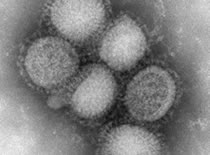
Flu virus under microscope

Is 2009 H1N1 virus contagious?
The 2009 H1N1 virus is contagious and is spreading from human to human.

How does 2009 H1N1 virus spread?

coughing and sneezing spreads germs

Spread of 2009 H1N1 virus is thought to occur in the same way that seasonal flu spreads. Flu viruses are spread mainly from person to person through coughing or sneezing by people with influenza. Sometimes people may become infected by touching something – such as a surface or object – with flu viruses on it and then touching their mouth or nose.

What are the signs and symptoms of this virus in people?
The symptoms of 2009 H1N1 flu virus in people include fever, cough, sore throat, runny or stuffy nose, body aches, headache, chills and fatigue. Some people may have vomiting and diarrhea. People may be infected with the flu, including 2009 H1N1 and have respiratory symptoms without a fever. Severe illnesses and deaths have occurred as a result of illness associated with this virus.

How severe is illness associated with 2009 H1N1 flu virus?
Illness with 2009 H1N1 virus has ranged from mild to severe. While most people who have been sick have recovered without needing medical treatment, hospitalizations and deaths from infection with this virus have occurred.

In seasonal flu, certain people are at “high risk” of serious complications. This includes people 65 years and older, children younger than five years old, pregnant women, and people of any age with certain chronic medical conditions. About 70 percent of people who have been hospitalized with this 2009 H1N1 virus have had one or more medical conditions previously recognized as placing people at “high risk” of serious seasonal flu-related complications. This includes pregnancy, diabetes, heart disease, asthma and kidney disease.

Young children are at risk

Young children are also at high risk of serious complications from 2009 H1N1, just as they are from seasonal flu. And while people 65 and older are the least likely to be infected with 2009 H1N1 flu, if they get sick, they are also at “high risk” of developing serious complications from their illness. See People at High Risk of Developing Flu-Related Complications for more information about who is more likely to get flu complications that result in being hospitalized and occasionally result in death.

CDC laboratory studies have shown that no children and very few adults younger than 60 years old have existing antibody to 2009 H1N1 flu virus; however, about one-third of adults older than 60 may have antibodies against this virus. It is unknown how much, if any, protection may be afforded against 2009 H1N1 flu by any existing antibody.

How does 2009 H1N1 flu compare to seasonal flu in terms of its severity and infection rates?
With seasonal flu, we know that seasons vary in terms of timing, duration and severity. Seasonal influenza can cause mild to severe illness, and at times can lead to death. Each year, in the United States, on average 36,000 people die from flu-related complications and more than 200,000 people are hospitalized from flu-related causes. Of those hospitalized, 20,000 are children younger than 5 years old. Over 90% of deaths and about 60 percent of hospitalization occur in people older than 65.

When the 2009 H1N1 outbreak was first detected in mid-April 2009, CDC began working with states to collect, compile and analyze information regarding the 2009 H1N1 flu outbreak, including the numbers of confirmed and probable cases and the ages of these people. The information analyzed by CDC supports the conclusion that 2009 H1N1 flu has caused greater disease burden in people younger than 25 years of age than older people. At this time, there are relatively fewer cases and deaths reported in people 65 years and older, which is unusual when compared with seasonal flu. However, pregnancy and other previously recognized high risk medical conditions from seasonal influenza appear to be associated with increased risk of complications from this 2009 H1N1. These underlying conditions include asthma, diabetes, suppressed immune systems, heart disease, kidney disease, neurocognitive and neuromuscular disorders and pregnancy.

How long can an infected person spread this virus to others?
People infected with seasonal and 2009 H1N1 flu shed virus and may be able to infect others from 1 day before getting sick to 5 to 7 days after. This can be longer in some people, especially children and people with weakened immune systems and in people infected with the new H1N1 virus.

Prevention & Treatment

What can I do to protect myself from getting sick?
This season, there is a seasonal flu vaccine to protect against seasonal flu viruses and a 2009 H1N1 vaccine to protect against the 2009 H1N1 influenza virus (sometimes called “swine flu”). A flu vaccine is the first and most important step in protecting against flu infection. For information about the 2009 H1N1 vaccines, visit H1N1 Flu Vaccination Resources. For information about seasonal influenza vaccines, visit Preventing Seasonal Flu With Vaccination.

There are also everyday actions that can help prevent the spread of germs that cause respiratory illnesses like the flu.

Take these everyday steps to protect your health:

Cover your nose and mouth with a tissue when you cough or sneeze. Throw the tissue in the trash after you use it.

Wash your hands

* Wash your hands often with soap and water. If soap and water are not available, use an alcohol-based hand rub.*
* Avoid touching your eyes, nose or mouth. Germs spread this way.
* Try to avoid close contact with sick people.
* If you are sick with flu-like illness, CDC recommends that you stay home for at least 24 hours after your fever is gone except to get medical care or for other necessities. (Your fever should be gone without the use of a fever-reducing medicine.) Keep away from others as much as possible to keep from making others sick.

Other important actions that you can take are:

* Follow public health advice regarding school closures, avoiding crowds and other social distancing measures.
* Be prepared in case you get sick and need to stay home for a week or so; a supply of over-the-counter medicines, alcohol-based hand rubs * (for when soap and water are not available), tissues and other related items could help you to avoid the need to make trips out in public while you are sick and contagious.

What is the best way to keep from spreading the virus through coughing or sneezing?
If you are sick with flu-like illness, CDC recommends that you stay home for at least 24 hours after your fever is gone except to get medical care or for other necessities. (Your fever should be gone without the use of a fever-reducing medicine.)

Keep away from others as much as possible. Cover your mouth and nose with a tissue when coughing or sneezing. Put your used tissue in the waste basket. Then, clean your hands, and do so every time you cough or sneeze.

If I have a family member at home who is sick with 2009 H1N1 flu, should I go to work?

Employees who are well but who have an ill family member at home with 2009 H1N1 flu can go to work as usual. These employees should monitor their health every day, and take everyday precautions including covering their coughs and sneezes and washing their hands often with soap and water, especially after they cough or sneeze. If soap and water are not available, they should use an alcohol-based hand rub.* If they become ill, they should notify their supervisor and stay home. Employees who have an underlying medical condition or who are pregnant should call their health care provider for advice, because they might need to receive influenza antiviral drugs. For more information please see General Business and Workplace Guidance for the Prevention of Novel Influenza A (H1N1) Flu in Workers.

What is the best technique for washing my hands to avoid getting the flu?

Washing your hands often will help protect you from germs. CDC recommends that when you wash your hands — with soap and warm water — that you wash for 15 to 20 seconds. When soap and water are not available, alcohol-based disposable hand wipes or gel sanitizers may be used.* You can find them in most supermarkets and drugstores. If using gel, rub your hands until the gel is dry. The gel doesn’t need water to work; the alcohol in it kills the germs on your hands.

What should I do if I get sick?
For information about what to do if you get sick with flu-like symptoms this season, see What To Do If You Get Sick: 2009 H1N1 and Seasonal Flu. A downloadable flyer Adobe PDF file containing this information also is available at http://www.cdc.gov/flu/freeresources/2009-10/pdf/what_to_do_if_you_get_sick.pdf Adobe PDF file.

What are “emergency warning signs” that should signal anyone to seek medical care urgently?

In children:

* Fast breathing or trouble breathing
* Bluish skin color
* Not drinking enough fluids
* Not waking up or not interacting
* Being so irritable that the child does not want to be held
* Flu-like symptoms improve but then return with fever and worse cough
* Fever with a rash

In adults:

* Difficulty breathing or shortness of breath
* Pain or pressure in the chest or abdomen
* Sudden dizziness
* Confusion
* Severe or persistent vomiting

Are there medicines to treat 2009 H1N1 infection?

Yes. There are drugs your doctor may prescribe for treating both seasonal and 2009 H1N1 called “antiviral drugs.” These drugs can make you better faster and may also prevent serious complications. This flu season, antiviral drugs are being used mainly to treat people who are very sick, such as people who need to be hospitalized, and to treat sick people who are more likely to get serious flu complications. Your health care provider will decide whether antiviral drugs are needed to treat your illness. Remember, most people with 2009 H1N1 have had mild illness and have not needed medical care or antiviral drugs and the same is true of seasonal flu.

What is CDC’s recommendation regarding “swine flu parties”?
“Swine flu parties” are gatherings during which people have close contact with a person who has 2009 H1N1 flu in order to become infected with the virus. The intent of these parties is for a person to become infected with what for many people has been a mild disease, in the hope of having natural immunity 2009 H1N1 flu virus that might circulate later and cause more severe disease.

CDC does not recommend “swine flu parties” as a way to protect against 2009 H1N1 flu in the future. While the disease seen in the current 2009 H1N1 flu outbreak has been mild for many people, it has been severe and even fatal for others. There is no way to predict with certainty what the outcome will be for an individual or, equally important, for others to whom the intentionally infected person may spread the virus.

CDC recommends that people with 2009 H1N1 flu avoid contact with others as much as possible. If you are sick with flu-like illness, CDC recommends that you stay home for at least 24 hours after your fever is gone except to get medical care or for other necessities. (Your fever should be gone without the use of a fever-reducing medicine.) Stay away from others as much as possible to keep from making others sick.
Contamination & Cleaning

Clean surfaces and doorknobs, phones and counters

How long can influenza virus remain viable on objects (such as books and doorknobs)?
Studies have shown that influenza virus can survive on environmental surfaces and can infect a person for 2 to 8 hours after being deposited on the surface.

What kills influenza virus?
Influenza virus is destroyed by heat (167-212°F [75-100°C]). In addition, several chemical germicides, including chlorine, hydrogen peroxide, detergents (soap), iodophors (iodine-based antiseptics), and alcohols are effective against human influenza viruses if used in proper concentration for a sufficient length of time.

What if soap and water are not available and alcohol-based products are not allowed in my facility?
If soap and water are not available and alcohol-based products are not allowed, other hand sanitizers that do not contain alcohol may be useful.

What surfaces are most likely to be sources of contamination?
Germs can be spread when a person touches something that is contaminated with germs and then touches his or her eyes, nose, or mouth. Droplets from a cough or sneeze of an infected person move through the air. Germs can be spread when a person touches respiratory droplets from another person on a surface like a desk, for example, and then touches their own eyes, mouth or nose before washing their hands.

How should waste disposal be handled to prevent the spread of influenza virus?
To prevent the spread of influenza virus, it is recommended that tissues and other disposable items used by an infected person be thrown in the trash. Additionally, persons should wash their hands with soap and water after touching used tissues and similar waste.

What household cleaning should be done to prevent the spread of influenza virus?
To prevent the spread of influenza virus it is important to keep surfaces (especially bedside tables, surfaces in the bathroom, kitchen counters and toys for children) clean by wiping them down with a household disinfectant according to directions on the product label.

How should linens, eating utensils and dishes of persons infected with influenza virus be handled?

Linens, eating utensils, and dishes belonging to those who are sick do not need to be cleaned separately, but importantly these items should not be shared without washing thoroughly first.
Linens (such as bed sheets and towels) should be washed by using household laundry soap and tumbled dry on a hot setting. Individuals should avoid “hugging” laundry prior to washing it to prevent contaminating themselves. Individuals should wash their hands with soap and water or alcohol-based hand rub immediately after handling dirty laundry.

Eating utensils should be washed either in a dishwasher or by hand with water and soap.

For more info go to the

By Sue Shekut, Owner, Working Well Massage, Licensed Massage Therapist, Certified Wellness Coach, ACSM Personal Trainer

Many Working Well Massage clients travel for business. Aside from cramped airplane seats, long waits in security lines, and walking for miles on concrete terminal floors, air travel requires sitting for long periods, breathing in stale recycled air and can be dehydrating. Where do weary travelers go for relief while waiting for their planes to board? Well, you can go to the airport bar and have a cocktail, beer or cup of Starbucks finest, but keep in mind that alcohol and caffeine are both dehydrating. Health conscious travelers go to an airport massage station, spa, oxygen bar or get a pampering manicure to pass the time and help their bodies adjust to air travel stress. And then they drink plenty of water!

What Services Do Airport Spas Provide? from By Anitra Brown, at About.com

• Chair Massage — The most common service is a seated or chair massage. You sit fully clothed in a special chair that cradles you face while the massage therapist works on your back and shoulders.

And you can get a chair massage for as short as ten or 15 minutes. It is great for working out kinks before they turn into hard knots! These are sometimes available in small “kiosks” right by the gates.

• Oxygen Therapy — You sit in a comfy chair with a two-pronged plastic tube up your nose, usually for 15 minutes, getting oxygen scented with essential oils that help you relax or boost your immune system.

• Other popular services are manicures and pedicures. Facials are more unusual, but sometimes available. A few places offer full salon services — cut, color even highlights.

Massage and Spa Services at U.S. Airports

Here’s a list of some of stress relieving services compiled from articles by Harriet Baskas of USA Today and Anitra Brown of About.com:

• Austin- Bergstrom International Airport Knot Anymore offers chair massages

• Baltimore/Washington International Thurgood Marshall Airport has two Destination Relaxations — one is a chair-massage kiosk on Pier B and the other a full-service store on Pier D that offers table and chair massages, as well as foot and hand rubs.

• Boston Logan International airport
The Jetsetter Mini Spa offers chair and table massages, manicures, pedicures and facials.
Boston’s Logan Airport also has Polished, in Terminal C, just before the security checkpoint at Gates 25-36. Polished offers foot, hand, back, neck and shoulder massages, manicures, pedicures, make-up applications and men’s grooming services.

• Chicago’s O’Hare International Airport has the Backrub Hub, offering neck and back massages in Terminal 3 (by the American and Delta gates). Massages also are offered at the full-service health club at the O’Hare Hilton, accessible via pedestrian tunnels from the terminal.

• Denver International Airport is served by two locations of A Massage Inc. You can get a haircut or massage (chair or table) at the location on Concourse B. The other is in the Main Terminal, on Level 6.

• Detroit Wayne County International Airport-OraOxygen
This airport has an underground passage with a trippy light show and New Age music. If you need more, the OraOxygen Spa by Gate A45 gives oxygen treatments, as well as facials, manicures, pedicures,a and massages, including foot massages and a 90-minute hot-stone massage. You can even take showers.

• Indianapolis International Airport
The post-security Enroute Massage and Spa (formerly Passport Travel Spa) offers manicures and pedicures, chair and table massages, and a new 20-minute, three-technician, three-service treatment (the “3 in 20”) that offers time-pressed travelers a neck and shoulder massage as well as hand and foot treatments — all at the same time.

• John F. Kennedy International Airport- Elemis Travel Spa and XpresSpa
While the Elemis Travel Spa in Terminal 7 offers complimentary massages to British Airways’ top-tier travelers.

XpresSpa in JetBlue’s new Terminal 5 offers passengers will find pay-as-you-go services ranging from head, foot, leg, back and shoulder massages to manicures, pedicures and facials.

• Las Vegas-McCarran International Airport
Oxygen treatments are also available at here at three Oxygen Bar locations.

• Miami International airport
The Jetsetter Mini Spa offers chair and table massages, manicures, pedicures and facials. The Miami branch also has a sleep pod for napping.

• Nashville-The Massage Bar
Heat therapy, foot massages and a variety of seated massage services.

• Newark-D-Parture Spa
d_parture spa offers chair massage, spa pedicures combines with massage, and cuts, color and manicures. d_parture spa has two Newark airport locations: Terminal C at Gate 92 and Terminal B across from the Duty Free shop. In addition, The Terminal B location offers oxygen therapy and has a private room for full-body massages and European facials.

Also in Newark, The Massage Bar in Terminal A offers 15-minutes of seated massage for $21 or 30 minutes for $39. Ten minutes of foot refexology is $15. A second kiosk location is in Newark’s A-3 connector.

• New York’s LaGuardia Airport
XpresSpa offers passengers will find pay-as-you-go services ranging from head, foot, leg, back and shoulder massages to manicures, pedicures and facials.

• Orlando International Airport d_parture Spa
The menu includes hair and nail services, as well as waxing, chair and foot massages, and facials.

• At Pittsburgh International Airport Polished offers foot, hand, back, neck and shoulder massages, manicures, pedicures, make-up applications and men’s grooming services. It’s located at the beginning of Concourse A, after security.

• Sacramento Columbus, Ohio-The Massage Bar
Heat therapy, foot massages and a variety of seated massage services.

• Seattle-Tacoma International Airport-The Massage Bar
In addition to heat therapy, foot massages and a variety of seated massage services, the Massage Bar offers happy hour discounts.

• Washington Dulles International Airport-The Massage Bar provides massage in a a kiosk on Concourse B.

Canadian Airports Spa Services

• Alberta’s Calgary International Airport-OraOxygen
A full-range of massage services, plus ear candling, showers and oxygen sessions, are offered.

• British Columbia’s Vancouver International Airport has three locations of Absolute Spa. Services include massage, pedicures, manicures, facials, and oxygen treatments. Absolute is located before the security gates in the International Departures area; past security in the U.S. Departures area; and in the Fairmont Hotel in the International Terminal.

International Airport Spa Services from Spa Index

• Amsterdam’s Schiphol Airport-OraOxygen
A full-range of massage services, plus ear candling, showers and oxygen sessions, are offered.

• Cancun Airport-The Salon Spa at Cancun Airport, Terminal 2, A Gates

• London, England-The Molton Brown Travel Spa
British Airways Terminal 1 and Terminal 4, Departures Lounge. Complimentary spa treatments to British Airways customers traveling First Class and Club World, and gold cardholders.

• Frankfort, Germany-Frankfurt Airport (FRA)- Be Relax Spa
Terminal 2
Be Relax provides relaxation and beauty services at the heart of airports and business around the world. Day after day, Be Relax professionals provide support with our relaxation centers when you most need to take a break. Services are designed to be of short duration and without requiring appointments.

• Hong Kong International Airport (HKG)-Regal Airport Hotel Health Spa and Pool
Full menu of services, including gymnasium, fitness center, aerobics, sauna, steam room, massage services, spa beauty treatments. Connect from the hotel to the Passenger terminal of Hong Kong International Airport via the sky-way.

• Milan, Italy-Linate Airport (LIN) – Be Relax Spa
Be Relax provides relaxation and beauty services at the heart of airports and business around the world. Day after day, Be Relax professionals provide support with our relaxation centers when you most need to take a break. Services are designed to be of short duration and without requiring appointments.

• Paris, France-Charles de Gaulle International Airport (CDG)
Be Relax Spa with locations in most terminals — visit website for individual phone numbers and email addresses for each CDG kiosk.
Be Relax provides relaxation and beauty services at the heart of airports and business around the world. Day after day, Be Relax professionals provide support with our relaxation centers when you most need to take a break. Services are designed to be of short duration and without requiring appointments.

Airport Massage Chairs
Even, Smarte Carte, the company best known for renting airport luggage carts, is getting in on the airport massage action. The company maintains self-service, automated massage chairs in about 30 airports, including Anchorage, Cincinnati, Dallas-Fort Worth, Reno and Pittsburgh.

Airport Nail Services

In addition to the spas mentioned above, travelers with nails in need can also visit one of the thirteen airport locations of 10 Minute Manicure or stop in at one of the three airport locations (Seattle, Sacramento and Dulles) of butter LONDON, a nail salon with a non-toxic product line.

Harriet Baskas writes about travel etiquette for MSNBC.com and is the author of the airport guidebook Stuck at the Airport and a blog of the same name.

Anitra Brown, Guide to Spas for About.com, is a journalist specializing in spas who decided to experience the other side of the treatment table. In addition to her writing, she is a licensed esthetician in the states of New York and Arizona and has worked at several luxury resort spas, including Alvadora Spa at Royal Palms in Phoenix.