Feeds:
Posts
Comments

Exercise and Mental Health

By Dr Shock at DrShockMD website
istock_000000297032xsmall

Healthy people exercising

A recent review about the relationship between exercise and mental health in the elderly discussed the results of clinical research and biological explanations for the effects of exercise on mental health. Exercise is studied in the elderly in depression, Alzheimer’s disease and Parkinson’s disease.

Dr. Shock has discussed the topic of exercise and depression before on his blog. The conclusion was that exercise is more effective than no treatment and that for mild to moderate depression it is efficacious and for severe depression it should be added to other treatments in the treatment program. In this more recent review on exercise and mental health the focus is on the elderly. Data on elderly patients are scarcer. Nevertheless investigations have shown that aerobic exercise at an intensity consistent with public health recommendations can be regarded as an effective treatment of mild and moderate depression. There is some evidence for a possible dose-response effect of exercise on depression. Treatment not prevention? Indeed, this topic has not yet been extensively studied in the elderly yet.

What does that mean: aerobic exercise at an intensity consistent with public health recommendations?

Basic recommendations from the The American College of Sports Medicine (ACSM) and the American Heart Association (AHA).

  • Do moderately intense aerobic exercise 30 minutes a day, five days a week
  • Or Do vigorously intense aerobic exercise 20 minutes a day, 3 days a week
  • And Do eight to 10 strength-training exercises, 10-15 repetitions of each exercise twice to three times per week
  • And If you are at risk of falling, perform balance exercises
  • And Have a physical activity plan.

What is a physical activity plan?
In short consult your GP before starting to exercise.

Older adults or adults with chronic conditions should develop an activity plan with a health professional to manage risks and take therapeutic needs into account. This will maximize the benefits of physical activity and ensure your safety.

Physical Exercise and Alzheimer’s Disease

  • Epidemiological studies have associated exercise with reduced risk of Alzheimer’s disease
  • Exercise as treatment for dementia showed efficacy for mood status, psychosocial functioning, physical health and caregiver distress
  • Daily 30 minutes of exercise diminishes the number of hospitalization needed, decreased depressive symptoms, increased quality of life in patients with Alzheimer’s disease
  • In comparison with a sedentary group, the group with a year of exercise intervention improved in quality of life

Physical Exercise and Parkinson’s Disease
Also in Parkinson’s Disease epidemiological studies have shown that exercise can protect against the disease. The disease is associated with tremor, rigidity, and hypokinesia which can result in falls and tiredness.The main advantage of exercise in PD is improvement of functional capabilities due to strength and balance training. This improves motor skills, improves their quality of life and reduces the number of falls.

Although somewhat limited, evidence suggests that exercise training is beneficial to patients with PD, especially in functional capacity and ADLs improvement

The protective effect of exercise can be explained by effects on the brain as can be read in the Neuroscience of Exercise on Dr. Shock’s blog.

Sources:
Deslandes, A., Moraes, H., Ferreira, C., Veiga, H., Silveira, H., Mouta, R., Pompeu, F., Coutinho, E., & Laks, J. (2009). Exercise and Mental Health: Many Reasons to Move Neuropsychobiology, 59 (4), 191-198 DOI: 10.1159/000223730

By Sue Shekut, LMT, ACSM PT, Certified Wellness Coach

There is still time to enjoy the fall colors and get a bit of healthy hiking in this fall. Throw on a few layers of clothes, a good pair of hiking shoes, a camel back for water and grab a few LARABARs and you are ready to hike Waterfall Glen in the Chicago area!

IMG_0192

Waterfal Glen

Waterfall Glen is one of the DuPage County Forest Preserves. It rings Argonne labs and offers hikers, bikers, fishermen (and women), horseback riders and picnickers a chance to get away from the sounds, smells and traffic in the city. Being in nature has a stress relieving effect and exercise is good for stress management as well.

According to researchers at Cornell University: “Our study finds that life’s stressful events appear not to cause as much psychological distress in children who live in high-nature conditions compared with children who live in low-nature conditions,” says Nancy Wells, assistant professor of design and environmental analysis in the New York State College of Human Ecology at Cornell. “And the protective impact of nearby nature is strongest for the most vulnerable children — those experiencing the highest levels of stressful life events.”

From the Waterfall Glen website:

Waterfall Glen Forest Preserve has w glacier-formed ridges, ravines and potholes. The preserve is exceptional, because it contains features not found anywhere else in the county: The largest contiguous woodland block – over 700 acres — and a dolomite prairie, with rock very close to the surface and shallow soil, home to rare plants for the region.

IMG_0198

Fall Colors at Argonne/Waterfall Glen

Waterfall Glen’s many habitats — prairies, savannas, oak-maple woodlands and planted pine groves – and distinctive features make it a haven for a wide variety of plants and animals. Surveys by District ecologists have recorded more than 600 native plant species at the preserve, which includes 75 per cent of all the plants known to grow naturally in DuPage County. In addition, countless fish, amphibian, reptilian, and mammalian species can be found in the preserve, as well as more than 160 avian species, some year-round and some migrating.

Biking

Cyclists are invited to use any of the preserve’s eight-foot-wide multipurpose trails, although they are asked to stay toward the outside of the trails as a courtesy to other visitors. To prevent damage to sensitive natural areas, cycling on trails less than eight feet wide is prohibited.

Fishing

Several old quarries scattered throughout the preserve offer still fishing waters. All persons 16 and older (except legally disabled persons) are required to have in their possession a valid Illinois sport fishing license. All anglers must follow District and state regulations.

Horseback Riding

In addition to the main trail loop, Waterfall Glen offers trails suitable for horseback riding throughout the preserve. Visitors with trailers should park in the designated parking bays at the trailhead on Northgate Road.

Model Aircraft Area

A large open field in the southwest section of the preserve is a popular spot for local model aircraft enthusiasts. For more information on access to this area or use by qualified model aircraft clubs, contact Visitor Services at (630) 933-7248.

Picnicking

Visitors are welcome to spread a blanket and enjoy a picnic in the mowed grass areas at Waterfall Glen. Ground fires are not permitted, except in the fire ring at the trailhead area.

Trails

Waterfall Glen’s four marked trails range from 0.2 miles to 9.5 miles in length and meander through some of the preserve’s most scenic areas. The main trail is an eight-foot-wide crushed-limestone multipurpose trail. In addition, there are many unmarked mowed-grass trails and footpaths that dissect the preserve. Feel free to hike and explore these smaller, less-conspicuous paths, but remember that they often are not linked to the main trail nor are they shown on the preserve map.

argonne1009

River at Waterfall Glen

To find out more about Waterfall Glen go to the DuPage Country Forest Preserve Website here.

By Sue Shekut, LMT, ACSM PT, Certified Wellness Coach

My boyfriend and I are avid hikers and bicyclers. We have spent many happy hours biking and hiking around Chicago area forest preserves this spring, summer and fall. But we get tired of the relative flatness of the terrain. Then we went to Starved Rock State Park this October and fell in love with the canyons in the area. We hiked about 8 miles one sunny Sunday, climbing literally hundreds of stairs and hills. It’s not the Grand Canyon, but for Chicagoans, it’s only 1.5 hours away from downtown and well worth the trip! And, it’s family friendly. We saw many parents with small children, babies in backpacks and people from all over the Chicago area.

I’ve loaded some of the pictures we took and use them as screen backgrounds. Feel free to use them yourself to give you a bit of natural relaxation on your computer desktop.

The View of Starved Rock from Lover’s Leap, the rock outcropping directly opposite Starved Rock.

IMG_0078

Starved Rock

LaSalle Canyon. See how small the person in the picture is compared to the canyon? This gives you an idea of the majestic size and scale of the canyon.

IMG_0131

LaSalle Canyon at Starved Rock, Oct 2009

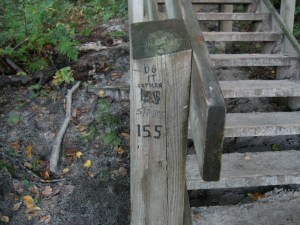
I love this shot of the bottom of one set of stairs along the hike. Some thoughtful previous traveler gave us a heads up on the stair count before us. 155 stairs to climb. With the motivational cue: Do It Fatman!

We did it!

IMG_0151

Stairs at Starved Rock

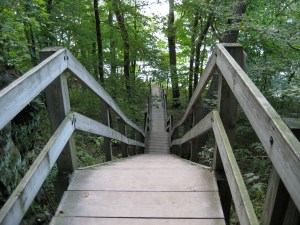
The view from the top of the stairs. Indeed, 151 stairs we climbed. And prior to that another 141 stairs at another area of the trail.)

IMG_0153

Another view of LaSalle Canyon. At this time of year, there was less water so we were able to hike into the canyon and walk all the way back to the edge of the waterfall which is behind us in this shot.

IMG_0134

If you look closely you can see the tiny trickle of waterfall still falling in October.

IMG_0135

If you like to hike, ski, run marathons, or otherwise burn calories in the great outdoors, you may have needed to resort to energy bars to keep you going. Nowadays, many people eat energy bars as a mid afternoon snack or to supplement a forgotten lunch box.  “Energy” bars can be packed with as much sugar as a candy bar. However, some energy bars face better than others in turns of good fats, low calories and great taste. (It sounds like a beer I am describing, but no, energy bars are not replacements for a Miller Genuine Draft 64!)

One of my favorite energy bars is the LÄRABAR.

sdc13037

Lara Bar Varieties

It is available in about 12 different flavors, from Coconut Cream Pie, Cashew Cookie, Banana Bread, Key Lime Pie, Pistachio, Lemon Bar, Apple Pie, Chocolate Coconut, Ginger Snap, Peanut Butter Cookie to Cherry Pie, Pecan Pie, Cocoa Mole PB&J and the new Tropical Fruit Tart.

What’s So Great About These Bars?

Can bars with dessert names be good for you?  From the LÄRABAR website, take a look at the ingredients:

LÄRABAR is a delicious blend of unsweetened fruits, nuts and spices – energy in its purest form. Made from 100% whole food, each flavor contains no more than eight ingredients. Pure and simple, just as nature intended.

Quality standards for LÄRABAR ingredients are: All natural, No added sugars or sweetener, Raw, Non-GMO, Non-irradiated, No sulfites, No preservatives, No fillers, No colorings, Gluten-free, Dairy-free, Soy-free and Vegan (But don’t let that scare you away, they are tasty!)

LÄRABARs are sweet with no added sweeteners. They use no added fillers, supplements or flavorings.  All of the vitamins, minerals, fiber, protein, good carbohydrates and healthy fats are derived exclusively from the whole, raw food used to make LÄRABAR.  Plant-based fats are healthier than animal fats. The fat in LÄRABAR comes primarily from nuts-all plant-based fats containing Omega 3 & 6 essential fatty acids, which have been proven to reduce LDL cholesterol and help protect the heart.

The carbohydrates in LÄRABAR are good carbohydrates, derived from fruit and, ultimately, necessary for the body to function. They also contain fiber and plant phytonutrients that help the immune system. It’s the processed and refined carbohydrates you should avoid-the kind found in white flour, white rice, and added sugars such as high fructose corn syrup, white sugar and grape juice.

Larabars are Uncooked and Unprocessed. The essential enzymes, which are necessary fo

Pecan Pie bars

Pecan Pie bars

r the digestion and utilization of nutrients, remain completely intact in their most natural, powerful state. A diet abundant in raw, unprocessed foods is important for health and longevity.

LÄRABAR contains approximately 20 grams of whole-food-source carbohydrates, which are essential to good health. Each bar contains approximately 5 grams of protein.

My favorite bar, Pecan Pie, is simply a combination of pecans, dates and almonds.

JŎCALAT aka Chocolate LÄRABARs

The company also sells chocolate bars. You may say, wait, aren’t chocolate bars candy bars, which are bad for me, high in transfats, sugars and all that unhealthy gook? Well, normally yes. But in this case, no! LÄRABAR has a line of bars, JŎCALAT bars, that are made with cocoa powder, but no added sugar or trans fats.

The chocolate in JŎCALAT, along with the fruit and nuts, contains high concentrations of natural antioxidants, which appear to be helpful in combating disease and aging.

Each JŎCALAT bar contains at least 20% of the recommended daily value of fiber, along with a healthy dose of Omega-6 essential fatty acids, which help keep your heart healthy AND has the added benefit of being under 190 calories. JŎCALAT bars contain 13 essential vitamins and minerals, which decrease stress and increase energy. Resident phytonutrients promote a hea

lthy immune system.


LBGCC_large_large

German Chocloate Cake Bar Ingredients

JŎCALAT German Chocolate Cake Bars

A new entry JŎCALAT bar offering, this bar contains Coconut+Pecans+Almonds+Cocoa. And that’s it. Listed out like that, it may not sound like it tastes that good, but try it and see if it gives your taste buds a bit of that German Chocolate Cake taste., without the nasty sugar

drop a real cake usually give you. And without the bad fats and guilt too!

So Where Do I get These Tasty LÄRABARs Already?

Order LÄRABARs directly from their website and have them shipped to you. Click here to order directly.

OR buy LÄRABARs from Whole Foods Markets at about the same price without the shipping costs.

Make Your Own Bars

As a last resort, if you have time and are adventurous, make your own raw fruit and nut bars!

Try this recipe from the Cookie Madness blog

Sort of Like Larabars

Makes about 3 bars or a quarter or a 4×4 inch square which you can form and then cut or punch into shapes.

1 1/2 ounce almonds (about 1/3 cup)
3 ounces pitted dates (about 14, if you don’t have a scale)


datebarforblog

Homemade "Lara-like Bars"

2 teaspoons unsweetened cocoa powder (optional)
1 tablespoon prune puree
1 tablespoon quick cooking oats.

Place almonds in food processor and process into crumbs. Pour into a bowl. Place dates in processor

and process as much as possible. Add almond crumbs back into processor and process until well mixed. Add cocoa, prune puree and oats. Process a little more, then dump into a bowl and knead until ingredients stick together. Shape into a rectangle. If it’s too sticky, knead in some more almonds or oats. Slice into about 3 bars or press into a square and cut out cute shapes.

By Sue Shekut, Owner, Working Well Massage, Licensed Massage Therapist, Certified Wellness Coach, ACSM Personal Trainer

Fibromyalgia is a disease characterized by painful muscles and fatigue. For those suffering from this condition, pain relief is a main goal. And research has found that contrary to previously held beliefs, it is better to move more than be sedentary if you have this disease. I’ve listed some of the best resources for help with fibromyalgia below. There are a lot of links and great articles so make sure you take a break between reading and move your body a bit!

WebMD has a great article about the impact of exercise on Fibromyalgia sufferers here. This WebMD article does a fantastic job of explaining the physical and neurological reasons that exercise helps boost endorphins and serotonin, keeps muscles strong and flexible and overall helps reduce the pain associated with the condition. The article also suggests types of exercises that are best for those with Fibromyalgia Syndrome: walking, strength training, stretching, yoga, Pilotes, swimming and tai chi are some of the exercises recommended.

An article at the ProHealth website, suggests that for some, conventional exercise may be too painful or difficult. This article provides some alternative exercise tips for those in this category here. In the article, Fibromyalgia and ME/CFS specialist Dr. Charles Lapp suggests redefining “exercise” for Fibromyalgia  patients.  Perhaps a better word would be “movement” or “activity.”  He says the main thing is to avoid strict bed rest, which causes deconditioning, which in turn makes symptoms worse. Tips in this article include remembering to breath deeply, making an effort to move more throughout the day even if it’s to get up to get a glass or water, do slow seated stretches and take frequent breaks.

The best resource for information about Fibromyalgia is the National Fibromylagia Assocaition (NFA). Their website is here. The site has a network of support groups for people with fibromyalgia here. Online discussions are available here.

Another site with information and a community chat room about Fibromyalgia is the Fibromyalgia website here.

A new research study is described here: Behavioral therapy plus exercise may help ease fibromyalgia here.

And finally, Medline Plus, a service provided by the U.S. National Library of Medicine and National Institute of Health has a page listing all the latest info and research on fibromyalgia here.

Some years ago, my father was wrestling with my nephews and could not get up when  he was wrestled to the wrestlingground. The kids didn’t realize anything was wrong and had left the playroom. For what seemed like 30 minutes, he could not get up nor move his arm nor call out for help. Eventually he was able to get up and tell my brother to call an ambulance.

Luckily for my dad, he did not have a stroke or heart attack. He simply had a TIA (transient ischemic attack) which was a warning sign that a true stroke may happen in the future if something is not done to prevent it.

My father went to the hospital and found out his cartoid artery was 90% occluded (blocked). Within a month, he had a carotid endarterectomy which removed the blockage and saved his life.

Why is this important to you?

 arterial plaque

Plaque in arteries from med.umich.edu

My father had been told he had high cholesterol but didn’t know what this meant for his health. The high levels of “bad” cholesterol caused plaque to build up in the arteries in his neck and narrow the space for blood to get to his brain. Even though he did not know it, he was slowly getting less and less oxygen to his brain and heading for a stroke, which could have happened while he was driving. When my nephews wrestled on him, they were jumping on his back and neck and likely dislodged some of the plaque which caused the transient ischemic attack.

Now my father takes cholesterol medication and watches his diet. He continues with his regular exercise routine. At 77, he’s an avid swimmer and maintains a home and his community’s lawn and drainage system. He gets regular checkups and monitors his cholesterol levels, now that he understands why it’s important. And yes, he still wrestles with my nephews!

Workplace Wellness Assessments

Many workplaces offer free wellness screenings as do health centers and hospitals. Wellness screenings often consist of checking your blood pressure, your cholesterol and blood sugar levels. But if your cholesterol levels are high, what does this mean for you?

How to Interpret Your Cholesterol Results

Your test report will show your cholesterol levels in milligrams per deciliter of blood (mg/dL). To determine how your cholesterol levels affect your risk of heart disease, your doctor will also take into account other risk factors such as age, family history, smoking and high blood pressure.

A complete fasting lipoprotein profile will show:

Your Total Blood (or Serum) Cholesterol Level

Less than 200 mg/dL: Desirable
If your LDL, HDL and triglyceride levels are also at desirable levels and you have no other risk factors for heart disease, total blood cholesterol below 200 mg/dL puts you at relatively low risk of coronary heart disease. Even with a low risk, however, it’s still smart to eat a heart-healthy diet, get regular physical activity and avoid tobacco smoke. Have your cholesterol levels checked every five years or as your doctor recommends.

200–239 mg/dL: Borderline-High Risk
If your total cholesterol falls between 200 and 239 mg/dL, your doctor will evaluate your levels of LDL (bad) cholesterol, HDL (good) cholesterol and triglycerides. It’s possible to have borderline-high total cholesterol numbers with normal levels of LDL (bad) cholesterol balanced by high HDL (good) cholesterol. Work with your doctor to create a prevention and treatment plan that’s right for you. Make lifestyle changes, including eating a heart-healthy diet, getting regular physical activity and avoiding tobacco smoke. Depending on your LDL (bad) cholesterol levels and your other risk factors, you may also need medication. Ask your doctor how often you should have your cholesterol rechecked.

240 mg/dL and over: High Risk
People who have a total cholesterol level of 240 mg/dL or more typically have twice the risk of coronary heart disease as people whose cholesterol level is desirable (200 mg/dL). If your test didn’t show your LDL cholesterol, HDL cholesterol and triglycerides, your doctor should order a fasting profile. Work with your doctor to create a prevention and treatment plan that’s right for you. Whether or not you need cholesterol-regulating medication, make lifestyle changes, including eating a heart-healthy diet, getting regular physical activity and avoiding tobacco smoke.

Your HDL (Good) Cholesterol Level

With HDL (good) cholesterol, higher levels are better. Low HDL cholesterol (less than 40 mg/dL for men, less than 50 mg/dL for women) puts you at higher risk for heart disease. In the average man, HDL cholesterol levels range from 40 to 50 mg/dL. In the average woman, they range from 50 to 60 mg/dL. An HDL cholesterol of 60 mg/dL or higher gives some protection against heart disease.

Smoking, being overweight and being sedentary can all result in lower HDL cholesterol. To raise your HDL level, avoid tobacco smoke, <!–
–>maintain a healthy weight<!– –> and get at least 30–60 minutes of physical activity more days than not.

People with high blood triglycerides usually also have lower HDL cholesterol and a higher risk of heart attack and stroke. Progesterone, anabolic steroids and male sex hormones (testosterone) also lower HDL cholesterol levels. Female sex hormones raise HDL cholesterol levels.

Your LDL (Bad) Cholesterol Level

The lower your LDL cholesterol, the lower your risk of heart attack and stroke. In fact, it’s a better gauge of risk than total blood cholesterol. In general, LDL levels fall into these categories:

LDL Cholesterol Levels
Less than 100 mg/dL Optimal
100 to 129 mg/dL Near Optimal/ Above Optimal
130 to 159 mg/dL Borderline High
160 to 189 mg/dL High
190 mg/dL and above Very High

Your other risk factors for heart disease and stroke help determine what your LDL level should be, as well as the appropriate treatment for you. A healthy level for you may not be healthy for your friend or neighbor. Discuss your levels and your treatment options with your doctor to get the plan that works for you.

For more info, go to the American Heart Association’s website here.

H1N1 Flu test

Feeling sick, wondering if you have the flu? And if so, how do you know if you, or your loved ones, have the H1N1 flu, a seasonal flu or just a cold?

Use the Flu Self-Assessment, based on material from Emory University, to:

  • Learn whether you have the symptoms of H1N1 flu (swine flu)
  • Help you decide what to do next

Take the Flu Self-Assessment

(Licensed from Emory University.)

Yoga Videos On Demand: A Fresh Take On Healthy Living


office-yoga-4-fa09ip-274x300

Office Yoga

  • Unlimited Video Classes
  • Full Screen HD Streaming
  • World Class Teachers
  • Low Monthly Subscription

Who is My Yoga Online?

My Yoga Online is a premium online subscription and digital download service, offering yoga, Pilates, meditation, and wellness video classes to thousands of members and free video and written content to hundreds of thousands of visitors worldwide. It was was created in 2005 and is Vancouver, Canada based. My Yoga Online partners a ‘Ancient Practice meets Modern Delivery’ concept, to bring the physical, mental, and emotional benefits of these wellness practices and exercises to a global audience, improving quality of life for all.

How does the website work?

My Yoga Online streams its large video library over the internet using streaming technology, allowing for full screen viewing in HD quality at your computer or on an attached television. People can download individual classes for their ipod, iTV, iPhone, or to burn to DVD. They also sell yoga related music and meditation downloads.

Price for subscription to My Yoga Online

Monthly Membership

$9.95 per month

• Unlimited access for just 33 cents a day
• Less than one DVD or studio class
• Experience our growing library of videos
• On demand anytime, anywhere
• Billing recurs monthly, cancel anytime
• No contract, no obligation

Yearly Membership Plan

$89.95 per year.

• Unlimited access for just a quarter a day
• 12 months for the price of 9
• World class teachers with guided instruction
• All the benefits of yoga at your fingertips

For more information on My Yoga Online, go to their website here.

What does exercise do to your brain? Specifically how can exercise improve your mood, your memory and your ability to process information aka your ability to think (cognate)?

Dr. Walter W. van den Broek, MD, PhD, (aka Dr. Shock), a Dutch Psychiatrist, has a website that answers these and many other questions about neuroscience for laypeople.  Read his blog post below to learn more about the effects of exercise on your brain.

Neuroscience of Exercise by Dr. Shock, MD

The Benefits of Exercise

  • In children, college students and young adults, exercise or physical activity improves learning and intelligence scores
  • Moreover, exercise in childhood increases the resilience of the brain in later life resulting in a cognitive reserve
  • The decline of memory, cortex and hippocampus atrophy in aging humans can be attenuated by exercise
  • Physical activity improves memory and cognition
  • Exercise protects against brain damage caused by stroke
  • Exercise promotes recovery after brain injury
  • Exercise can be an antidepressant

The brain needs certain ingredients to flourish or to life up to the expectations of every day problems. The brain has priority when it comes to certain ingredients. A variety of foods can be beneficial for learning. Positive effects on brain function have been reported for fish oil, teas, fruits, folate, spices, cocoa, chocolate and vitamins.

How does exercise improve the brain?

  • With exercise the number of neurons increase in the hippocampus, a brain structure important to memory and learning.
  • Also synaptic plasticity increases in a certain part of the hippocampus due to exercise: the dentate gyrus.
  • Spine density increases in certain parts of the hippocampus.
  • Exercise also increases and improves the small blood vessels throughout the brain.
  • Exercise can change the function of neurotransmitters and can activate the monoamine system.

And from Henriette van Praag, from Trends in Neuroscience:

Recent research indicates that the effects of exercise on the brain can be enhanced by concurrent consumption of natural products such as omega fatty acids or plant polyphenols. The potential synergy between diet and exercise could involve common cellular pathways important for neurogenesis, cell survival, synaptic plasticity and vascular function. Optimal maintenance of brain health might depend on exercise and intake of natural products.

Source:

van Praag, H. (2009). Exercise and the brain: something to chew on Trends in Neurosciences, 32 (5), 283-290 DOI. Read more here: 10.1016/j.tins.2008.12.007

Read D. Shock’s full article at his website here.

And for those that want to know more about exercise effects on your brain as you age, read more on Exercise, Experience and the Aging Brain at this abtract  here.

From Spinehealth.com
October 29, 2009
by: Sylvia Marten

Having the best designed and most ergonomically-friendly office equipment may not necessarily mean much for preventing back pain, neck pain and other pain if such equipment is out of sync with your workstation, as confirmed in a recent study that provides a great forum for examining how you can adjust an office chair to your work environment.

Detailed in the October issue of the Journal of Occupational and Environmental Medicine, a new study found that workers who received not only new ergonomic office furniture but professional set-up by an ergonomist had less symptoms of musculoskeletal pain and eyestrain 18 months later than those workers who had to set up their new furniture on their own based off instructions.

Now what if your employer can’t afford to hire a professional ergonomist to visit your office during these tough economic times? Well, there are still many ways to be proactive when setting up your office chair and desk just right to your needs and the principles of ergonomics.

Understand the Ultimate Goal
11-ergo-chair-image_1

ergonomic chair

Having a special chair is often viewed as the be-all, end-all of correct office ergonomics. While an ergonomically-designed chair can certainly do wonders, remember that the ultimate goal is to achieve balance between finding a work chair that fits you, provides good support and minimizes stress on the back, and using it correctly in relation to your work environment.

Before providing instant analysis of your chair, examine other factors, including your optimal desk level, how you sit, and the height of your computer screen, and strive to improve on these areas.

Get Suited to Your Work Surface
Rather than just going out and buying a new chair, ask yourself “what type of chair will fit your work station?”

Examine how long you sit all day and how you sit at your desk.

Are you semi-seated (similar to sitting on a bar stool) or do you sit straight up? Do you need to adjust your chair? Where is your computer in relation to your body?

Determine your appropriate work surface (which takes into account the position of your arms, elbows and hands in relation to your desk’s height and your laptop or desktop computer) and be sure to have a chair that allows you to attain this specific height.

The correct surface level can vary from profession to profession (for example, architects and draftsmen often prefer to sit higher), and the final decision as to what’s appropriate is thus determined by each individual.

Become a Series of Right Angles While Sitting and Typing ergonomic deskt arrangement

Sit down straight and as close and comfortable as possible to your desk, with your upper arms parallel to the spine and your hands rested on the work surface.

At this point, take a step back and examine whether your elbows are at a 90-degree angle. If they are not, adjust your office chair higher or lower as deemed fit.

Also make sure that your legs are bent at the knees at a 90 degree angle. Try to maintain this ideal sitting posture as much as possible, and if you find yourself slacking, give yourself a break by getting up and stretching.

Don’t Sit Too High Unless Necessary
Did you know that all of our ankles swell up anywhere from 6 to 8 percent by the end of the day, but for patients with back, leg or circulation problems, this swelling can jump from 10 to 15 percent, especially if sitting in a chair that is too high and leaves the feet dangling?

Generally speaking, a seat height ranging from 16 to 21 inches off the ground is suitable for most workers. To tell whether your chair is too high or at the right height for the desk surface, slide your finger underneath your thigh at the front end of the chair.

If this proves easy to do, your chair is likely at a good height. However, if this proves difficult, your chair is likely too high, which can put extra pressure on your feet and require you to proceed to the next tip.=

Boost Your Feet in Certain Situations
In situations where you have to lift your feet off the ground because of a chair or even a desk that is too high, or where the chair height is right but you’re not that tall, consider using a foot stool to prop and rest your feet as opposed to leaving them hanging all day long.

Such action will reduce both pressure on the feet and the likelihood of foot pain at the end of the day.
Raise Your Work Surface When Applicable
Standard seats should allow for 2-4 inches between the back of the knees and chair.
However, if you’re a taller worker, you may be familiar with this problem: your chair seat is not long enough for your thighs, which have too much space underneath them. In these rarer situations, raising the work surface level may be necessary to ensure circulation at the back of the knee.

Make a Fist to Your Calf
Ensure that there is enough room between the front edge of your chair and calves by simply making a fist, bringing it to the edge of the chair and pushing it on the calf.

If you can fit your full fist between the front edge and your calf, you likely have enough space for circulation and pressure. If not, your chair is likely too deep.

Adjusting the backrest forward, inserting a cushion, pillow or rolled-up towel to support your lumbar spine (lower back), or purchasing a new office chair are some possible solutions to this problem.

Have the Support of Your Back
Back support is a main focus of many ergonomic chairs, but what makes a chair good in terms of supporting the back?

Ideally your work chair should do a couple of things: provide back support angling just past 90 degrees or up to 90 degrees, and include cushioning that pushes your back forward when sitting back in the chair.

Such low back support is essential in preventing slouching as you tire and minimizing the load or strain on your back. With this in mind, the backrest of an ideal ergonomic office chair is typically between 12 and 19 inches wide.
Sit Right

Good Posture

A lot of times, workers have chairs with great back support but don’t take advantage of these features because they sit on the edge of the chair.

Make a conscious effort to press your bottom against the back of the chair, and avoid slumping or slouching, which places extra stress on the lumbar discs and other structures of the lower back.

Apply A Different Kind of Eye Test
Once your chair has been adjusted to the height of the table, your legs have gotten comfortable and your back is supported, close your eyes and take a deep breath.

Casually look forward with your eyes closed, and then open your eyes, which should be aimed at the center of your computer screen. Depending on whether the computer screen is higher or lower than your gaze, you may need to raise or lower the monitor.

If you need to raise your laptop, consider using a stack of books or even a small box, which has personally helped me reduce the likelihood of neck strain at work.

Adjust Your Armrest
Armrests play an important role in reducing neck and shoulder strain and diminishing the likelihood of slouching forward in your chair.

Adjust the armrest to the point where your arms are slightly lifted at the shoulders. Doing so will allow the armrest to support just the elbow and take weight off the shoulders.

Perhaps after making all these changes, you ultimately decide that you do need a new office chair.

If you find yourself in the market for a new chair, you’ll want to consider many factors, including the seat’s height, width, depth, materials, armrests, back rest, lumbar support and swivel.

Full article at  Spinehealth.com