By Sue Shekut, Owner, Working Well Massage, Licensed Massage Therapist, Certified Wellness Coach, ACSM Personal Trainer
 In my business, I see a lot of injuries. Weekend warriors sit at a desks all week and then push the limits of their bodies in intense weekend sports. Many of my clients sit long hours at computers and then face a long seated commute home. Muscle injuries can occur in both active and inactive people. Even sitting at a desk for 8-10 hours requires you to contract and use your muscles in a repetitive manner. These positions can cause tight neck, shoulder and back muscles. And all sports and exercises, yes, even yoga, can lead to injury if you are not using proper form or if you are overly tired, if you are already injured or if your muscles are cold. When clients tell me they have an injury, one of the first things I ask them is “Did you ice?” Some clients remember to ice. Others say they didn’t know they should ice or that they didn’t have time. but icing an injured muscle or limb is easy!
You can also end up with tight and sore muscles from sitting too long or holding one position for too long. Gardening and yard work can also cause sore muscles. In this case, heat packs, heating pads and hot baths can be helpful.
Like one of the 25 million Americans who report chronic pain, you might seek some simple treatments for relief. But should you use a heating pad or an ice pack? And for how long?
Jonathan Cluett, MD, offers some simple advice in a post at orthopedics.about.com.

Cold Pack
Ice Treatment:
- Ice treatment is most commonly used for acute injuries.
- Use ice treatment if you have a recent injury (within the last 48 hours) where swelling is a problem,
- Ice packs can help minimize swelling around the injury.
- Ice packs are often used after injuries such as an ankle sprain have occurred.
- To minimize swelling, apply an ice pack early and often for the first 48 hours. Decreasing swelling around an injury will help to control the pain.
- Ice treatments may also be used for chronic conditions, such as overuse injuries in athletes. In this case, ice the injured area after activity to help control inflammation. Never ice a chronic injury before activity as that can cause it to tighten which is not good before a workout! If you are too injured to workout without icing first, you are likely too injured to workout at all!
Heat Treatment:
- Heat treatments should be used for chronic conditions to help relax and loosen tissues, and to stimulate blood flow to the area. Use heat treatments for chronic conditions, such as overuse injuries, before participating in activities.
- Do not use heat treatments after activity
- Do NOT use heat after an acute injury–it can increase inflammation. Sometimes it feels good when you first add heat to an injured area, but afterward, as the swelling increases the pain may increase as well!
- You can heat your tight muscles using a heating pad, or even a hot, wet towel.
- When using heat treatments, be very careful to use a moderate heat for a limited time to avoid burns.
- Never leave heating pads or towels on for extended periods of time, or while sleeping.
If that’s not simple enough for you, try this simple chart:
| Ice or Heat? | ||
| Ice | Heat | |
| When To Use | Use ice after an acute injury, such as an ankle sprain, or after activities that irritate a chronic injury, such as shin splints. | Use heat before activities that irritate chronic injuries such as muscle strains. Heat can help loosen tissues and relax injured areas. |
| How To Do It | Read through the information on how to ice an injury. There are several ways to ice an injury. | Heating pads or hot wet towels are both excellent methods. Place a washcloth under hot tap water and then apply to the injured area. |
| For How Long | Apply ice treatments for no longer than 20 minutes at a time. Too much ice can do harm, even cause frostbite; more ice application does not mean more relief. | It is not necessary to apply a heat treatment for more than about 20 minutes at a time. Never apply heat while sleeping. |
How to Apply Ice Treatment to an Injury
1. Make sure the injured area is not bleeding. If it is, wash the wound and seek medical attention.
2. Take an icepack from your freezer. if you do not have an ice pack, put about 4-5 ice cubes in a strong zip lock baggy and seal the baggy. If you have crushed ice you can use about a cup instead of the ice cubes.
3. Place a hand towel over the tissue you want to use. (This can help prevent frostbite. NEVER apply the ice pack directly to your skin. As it cools your tissue, it also numbs your tissue and you won’t realize you are getting frostbite!)
4. Place the ice pack over the towel and hold it in place for approximately 15 minutes. When your tissue stops feeling cold and starts to feels numb it’s time to remove the icepack!
5. After letting your tissue warm up again, after about 2 hours you can reapply ice in the same manner.
Where to Get Ice Packs and Heat Packs
• Techni Ice HDR 4 Ply Reusable Ice & Heat Packs, approx $18.00 at Amazon. Link here.
• How to Make a $20 Ice pack for $2
• Instant Ice Pack for $1.50 at Amazon here.
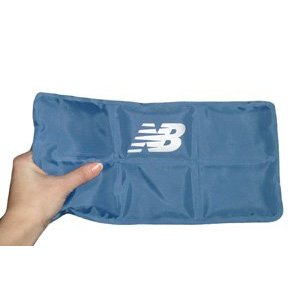
• New Balance Ice/Heat Pack for $12.00 at Amazon here.
• Thermalon Microwave Activated Moist Heat-Cold Neck Wrap for Neck and Shoulder, 21″ about $17.00 from Amazon here.
Note: The information given in this post is not intended to replace advice from your health care provider. Make sure you consult your doctor before using ice or heat on an injury!
Related articles by Zemanta
- Personal Best: Sports Injuries: Go to a Doctor or Tough It Out? (nytimes.com)
- How to Avoid Injuries While Exercising (dirjournal.com)
![Reblog this post [with Zemanta]](https://i0.wp.com/img.zemanta.com/reblog_b.png)

 Working Well Resources' Blog
Great article……I will share this with my students!
Products such as the Thermalon neck wrap should be used with extreme caution when microwaved. My laboratory tests have shown that products such as these are initially hotter in the interior than the surface following microwaving, and then the surface temperature can then rise to dangerously high temperatures – in excess of 160 F within 30 to 6o seconds and may cause serious skin burns
Thanks for the tip, Microwave Guru!
Burning a sore or tight muscle is certainly NOT therapeutic.
I am more of a hat bath or hot washcloth fan myself. but these neck wraps, when used with CAUTION, can be effective to warm up tight neck muscles or on a cold winter day.
Thanks again, Microware Guru!
[…] 4. When I work too long on the computer, I get really sore upper back and neck muscles. For those days, I grab a cold pack from the freezer and wrap it around my neck and shoulders. It helps reduce inflammation and also acts as a mild analgesic (pain reliever). Read more about when to use heat or ice here. […]
You mentioned that to minimize swelling, apply an ice pack early and often for the first 48 hours and decreasing swelling around an injury will help to control the pain. Do most athletes have cold wraps for different parts of the body? My son loves to play sports and in his football game last night he dislocated his shoulder. Using a shoulder cold wrap might be a good idea. https://www.icesleeves.com/hot-cold_therapy_products%20/shoulder_ice_pack
Hello Mcdooglederek,
That’s a good idea. You can also use very economical bags of frozen peas or corn. The small veggies mold well to limbs and can be easily positioned. Or you can purchase a wrap around ice pack like the one you linked.
Hope your son’s shoulder heals well!
Sue
I would treat the dislocated shoulder as serious. if he is young then most likely he will dislocate again. He most likely will need surgery. once dislocated a shoulder will neevr be 100% again but steps should be taken early to make sure it gets to near 100% as possible. ice will help short term to just ease the pain/inflamation but thats it.
Dave,
Thanks for reading and commenting. Dislocated shoulder’s are serious, I agree. However, I would not tell anyone how to treat it or tell them to get surgery, unless I was qualified to diagnose and treat such injuries.
Do you have a medical degree or are you a health care practitioner? I strive to stay within my scope of practice with tips I give. To clarify, I didn’t mention a dislocated shoulder in the blog. I don’t say anything about ice being along term fix for any condition. The post mentions using heat and ice for acute conditions and recommends readers see a medical doctor or health care provider to treat and diagnose injuries. I hope that is more clear!
Thanks for sharing your opinions,
Sue