Feeds:
Posts
Comments

Posts Tagged ‘Stress Management’

By Sue Shekut, Owner, Working Well Massage, Licensed Massage Therapist, Wellness Coach, ACSM Personal Trainer

I came across an interesting and, in my view, important blog today called KevinMD.com. (Founded by Kevin Pho, MD, KevinMD.com is the web’s leading destination for physician insight on breaking medical news.)

Kevin-Pho-MD, Founder of KevinMD.com

Kevin-Pho-MD, Founder of KevinMD.com

The blog is written by medical doctors and covers topics about health care in general from a doctor’s point of view. Sadly, as I read some of the posts, I realize that doctors are as frustrated with our health care system as we are. Many of them want to help their patients but health care billing and payment cause them to make some hard choices in order to survive. In the post, Why I decided to opt out of Medicare as a provider by Dr. Natasha Deonarain, it is clear why continuing to see Medicare patients is not financially feasible for many physicians. I also believe that relying on insurance companies and Medicare separates people from their own health care decisions. Health care can be costly, but there are other options for routine checkups and basic medical needs.

In another blog post, by Dr. Doug Olson, Primary care doctors may no longer be needed, he explains how nurse practitioners (with nurse practitioners complete 2,300 – 5,350 hours of education and clinical training during five to seven years, compared to physicians’ standardized path of 21,700 hours over 11-12 years) and physician assistants can see 80-85% of the patients medical doctors see. Dr Olson believes that “we need to develop systems that get that select the 15-20% of patients that need a physician.” In his view this is  a better use of primary care physicians training and expertise is to treat the more complex medical cases while the nurse practitioners and physician’s assistants treat the remaining 80% of less complex cases. as patients relatively healthy folks can self select our health care providers by only going to primary care docs if they need complex services, and using Walgreens, Target and other urgent care centers for simple colds, flues and minor injuries and illnesses. And recently in Chicago, there is a service that offers doctors making house calls, Chicago Express Doctors.

Chicago Express Doctors

Chicago Express Doctors

Massage Therapy and The New World Of Health Care

So where does massage therapy fit into all this? First off, I acknowledge that at least in the State of Illinois, massage therapy is not really a recognized health care option. According to the scope of practice for Illinois Massage Therapists, we are to provide massage therapy for the purposes of general health and well-being, but not to treat nor diagnose illnesses. Yet one of the most reported benefits of massage therapy is stress reduction (which can be thought of as pertaining to “general health”). The health effects of stress on the body include numerous illnesses and can even lead to injuries. KevinsMD has an article on How the stress of caregiving can lead to stroke. The Mayo Clinic reports that many health problems can be effected by stress including stomach pains, headaches, chest pains, sleep problem and anxiety. According to WebMD, “Seventy-five percent to 90% of all doctor’s office visits are for stress-related ailments and complaints.”

So what does massage therapy do for clients with stress-related ailments? According to one research study at Duke University, massage therapy was shown to reduce self reported stress in patients with brain tumors. Another pilot study showed that stress levels of inpatient psychiatric patients were reduced after massage therapy. And, according to the MayoClinic, massage therapy can not only reduce stress, but lead to other health benefits as well.

I do not think massage therapy is s substitute for medical care. And I do not think massage therapists should try to act as doctors nor prescribe nor diagnose illnesses. But I do believe that massage therapy sessions can be a source of relaxation, a time for our nervous systems to ramp down to parasympathetic mode versus ramping up to sympathetic (flight or flight) mode. Allowing ourselves to be cared for, relaxed and to spend time in an environment of reduced noise, stress and constant demands allows our bodies to better do what they do naturally: our hearts beat, our immune systems fight off infection and our lungs and muscles allow us to work, move and life. Allowing our bodies to stay healthy means less needs to visit the doctor so our medical providers can focus on us when we very sick, not for routine illnesses and injuries. For this reason, I think that massage therapists can offer stress relief BEFORE we get an illness, a stress-related injury or just plain get cranky from stress!

Enhanced by Zemanta

Read Full Post »

By Sue Shekut, Owner, Working Well Massage, Licensed Massage Therapist, Certified Wellness Coach, ACSM Personal Trainer

Recently I found out that a fellow student in the graduate psychology program at Roosevelt University has a company, Personalized Relaxation, that provides personalized relaxation CD’s. As a fellow personal trainer and master’s level psychology student, Jason Klinowski, , founder of Personalized Relaxation,  knows stress–and relaxation techniques–to help you combat the damaging effects of stress. In addition to his normal training in the master’s program, Jason also completed an additional Stress Management certification program at Roosevelt.

Here is what Personalized Relaxation  CD’s offer (from his website):

Jason offer two types of relaxation CD’s, a standard and a personalized. The standard CD includes progressive muscle relaxation, breathing exercises, autogenic training, sound meditation, mindfulness meditation, yogaform stretching, and imagery. All are proven forms of effective relaxation exercises and can be done anywhere.

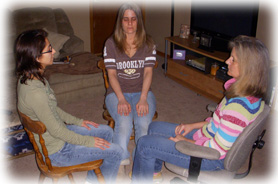
Mini Personalized Relaxation Workshop in a client's private home

The personalized relaxation CD includes 5 personalized spot relaxations (© Johnathan Smith 2009), or ‘Stress Stoppers’ tailored for individual lifestyles. Stress Stoppers are quick simple exercises that utilize certain aspects of relaxation exercises for use in highly stressful and inconvenient situations. These exercises can be used quickly and suddenly to help stop the negative effects of stress before they start.

Personalized relaxation offers you the following options:

  • A standard CD with 8 basic exercises that are great for all experience levels – (Order the download version and save on shipping costs!) The standard CD will help you to discover what forms of relaxation work best for you.
  • A personalized CD with up to 120 minutes or 10 tracks of exercises based on experience and preference –
    (CD’s Available Upon Request.) Each personalized CD will have different and unique tracks and scenarios. New personalized CD’s can be made for increasing experience levels and different themes/scenarios. Jason also gives you an added bonus with  every personalized CD order– A free stress ball!
  • Workshops tailored to fit the needs of your company or organization (church group, not-for-profit, spa party)

To learn more about Personalized Relaxation, click on the website here.  Or call Jason directly at  708-574-9298.

Note: Other than attending classes with Jason, I have no affiliation with Personalized Relaxation and receive no compensation for recommending his company. I am simply sharing the information in case any of my loyal readers is looking for stress management assistance beyond massage and exercise!

Enhanced by Zemanta

Read Full Post »

By Sue Shekut, Owner, Working Well Massage, Licensed Massage Therapist, Certified Wellness Coach, ACSM Personal Trainer

While I’ve been interviewing and setting up the new massage services at the Lincoln Park Wellness Club, I’ve been able to receive demo massages from a variety of talented massage therapists. And at the same time, I’ve been extremely aware of my own muscle issues and tension. As a massage therapist myself, I frequently feel my client’s tight muscles, work out muscle adhesions and try to educate them as best I can about proper body mechanics at work and how to stretch. But I myself find that, when times are stressful and my workload is intense, I don’t always have time to practice what I preach, exercise-wise. And that’s where massage therapy really saves me.

I don’t see massage therapy as a luxury these days. Without a few weekly chair massages and a table massage every other week, I would be in too much pain to function properly. When people tell me they can’t afford  a massage, I think, I can’t afford to NOT get a massage. Massage therapy is part of my wellness routine. Just like drinking water, getting enough rest and exercising as much as I can, time permitting. But why is massage so important to me and why do I promote massage, not just at my own Working Well Massage locations, but in general?

1. Massage therapy offers me a few minutes or an hour of time that is just for me. I don’t have to answer emails texts or phone calls. I don’t have to talk to the massage therapist if I don’t want to. My massage time is devoted to me and my wellbeing. The rest of the week I may be working hard, attending to my own clients but My massage time is just that MY time!

2. When I’ve been recovering from muscle injury or chronic tension, I can try to work out the muscle tension myself, but even for an experienced massage therapist, it’s tough to work my own neck and shoulders!

3.  For stress management, I can either hop a plane to somewhere warm and snorkel out in the ocean or I can go get a massage. Cheaper than a plane ticket, easier to do more frequently than a few times a year, and certainly less expensive!

4. I find that most massage therapists and certainly the ones I select to work at Working Well Massage locations, are warm, kind people. They care about my well being and my pain and they try to help me. I like my dentist too but even though he is super nice and tries not to hurt me, I don’t run to see him as often as I get a massage.

5. In our fast paced world, it’s s easy to lose touch with our physical bodies. I can spend hours in front of the computer and not move. I try not to but I know that many of my clients are in the same boat. When your job involves computer work, it’s difficult to get enough movement in during the day and it’s easier to forget that our bodies need movement and rest. On days I am computer bound, I tend to feel more muscle tension and even feel a little cranky. But within about 10 minutes of a good massage, my mood lifts, I feel less tension and I know I will feel much better at the end of my massage. And I do!

6. I am not an anti-Western medicine fanatic. I go to the doctor for my checkups, I get mammograms and take prescription drugs when needed. But I don’t tend to need a lot of prescription drugs.  Due to my relatively healthy living habits, most of my pain tends to come from allergies or muscle aches and pains. So instead of taking a pill every day or needing frequent medical care, I get regular massages to help me manage the aches and pains of an active aging body.

There are many other reasons I get regular massage, but enough about me!  What about you? Why do you receive massages? Tell us in your comments.

Enhanced by Zemanta

Read Full Post »

By Sue Shekut, Owner, Working Well Massage, Licensed Massage Therapist, Certified Wellness Coach, ACSM Personal Trainer

Recently I gained  a new Twitter follower, Ted Stark. Ted likely found me via one of my many posts about hiking in nature (with pics included). I checked out Ted’s website, and was visually inspired. Ted’s nature photos make me want to travel and see first-hand the many beautiful sights he captures in his pics. Ted also take great pics of wildlife and urban scenes, but it’s his nature photos that move me the most. To go to Ted’s Website and photo gallery, click on this link.

Ted Stark, photographer

For those of us that live and work in an urban environment, simply looking at photo of a restful nature scene can help relax us for a moment.  Nature pics take us out of our fast paced multitasking mode and give our eyes and minds something to focus on.

Check out Ted’s photos and see for yourself if you are moved or inspired. It’s more likely to relax you than a game of Angry Birds. 🙂


Who is Ted Stark and Why is He So Wild About Wildlife Photos?

From his website: Theodore A. Stark is a Colorado native and an avid nature, wildlife, and architectural photographer. He also does limited portraiture work, focusing in the candid style. Stark is a graduate of the University of Arizona with a degree in Management Information Systems. He and his wife, Erin, currently live in Centennial, Colorado.

Stark has been involved with photography since 2001 when he experienced a life changing event that, literally, changed his perspective on the world around. Add to that Stark is a Type I Diabetic and, as he puts it, “… I am aware that I very well may lose my vision at some point, so I should share what I can see while I still can.”

Find Ted’s tweets on Twitter here. And, if you are so moved by his work that you must have some for yourself, he does sell calendars, prints and books of his photography here.

Enhanced by Zemanta

Read Full Post »

By Sue Shekut, Owner, Working Well Massage, Licensed Massage Therapist, Certified Wellness Coach, ACSM Personal Trainer

I came across an interesting blog from a Wellness Center in New York, The R.E.S.T. Initiative. I really like the post about relaxation and how practicing relaxation exercises may actually change the way your body responds to stress: How Relaxation Exercises Can Heal You – Mind, Body and Spirit.

An excerpt of the article is below:

“Dr. Herbert Benson was quoted in the US News and Planet Report saying, ‘What we’ve discovered is that after you evoke the leisure response, the very genes which can be turned on or off by tension are turned another way. The thoughts can actively flip on and flip off genes. The mind is not separated from your physique.’

His research demonstrates that equally as you may trigger well being issues within the physique by means of way of life choices, it is possible to also create superior well being by means of way of life also. This may be the very first extensive study to indicate how thoughts says can impact gene expression…

Studying to harness your own individual energy and to calmly concentrate inside is often a useful ability for managing hectic instances of tension. Fostering an capability to slow your breathing and decrease your heart rate by way of practiced relaxation strategies is often highly restorative, permitting you to think additional plainly and calmly. Equally as you’ll be able to harm your wellness through tension connected sickness, research are actually being completed to indicate that you can recover your physique by means of employing tactics that relaxed the mind and body. Positive outcomes from rest techniques were long thought to become “all inside the head” with the consumer, but Scientists are now beginning to discover much more definitive evidence that these approaches of relaxation response possess a biofeedback mechanism that alters gene expression.”

To link to the complete post click here.

Enhanced by Zemanta

Read Full Post »

By Sue Shekut, Owner, Working Well Massage, Licensed Massage Therapist, Certified Wellness Coach, ACSM Personal Trainer

Worksite Wellness Programs Increases Productivity and Employee Retention

This coming week is National Workplace Wellness Week!  And no, it’s not just another Hallmark Holiday,  it’s a government resolution to promote workplace wellness.

History of Workplace Wellness Week

In 2008, the the U.S. House of Representatives passed a federal resolution creating National Workplace Wellness Week. The resolution, which was endorsed by the American Heart Association (AHA), Chamber of Commerce, Partnership for Prevention and many other groups, designated the first full week of April as “National Workplace Wellness Week.” During this week, private and public employers across the country are encouraged to invest in the health of their employees by creating worksite employee health promotion programs, or by sharing their worksite wellness experiences with other employers.

Workplace Wellness Statistics

The American Heart Association offers a handy fact sheet with some alarming statistics on workplace wellness:

· Health care costs in the United States doubled from 1990 to 2001 and are expected to double again by 2012

· Chronic illnesses affect more than a third of working-age Americans and the costs associated with chronic diseases account for approximately 75 percent of the nation’s annual health care costs

· Over 130 million Americans are employed across the United States and since a significant part of their day is spent at work, comprehensive, culturally sensitive health promotion within the workplace is essential to maintain and improve the nation’s health

· Nearly 60 percent of employers’ after-tax profits are spent on corporate health benefits. An estimated 25-30 percent of companies’ medical costs per year are spent on employees with excess health risk. That contrasts to three decades ago when only seven percent of corporate profits paid for health costs

· Addressing risk factors early can make a difference. For example, $5.6 billion in heart disease costs could be saved if one-tenth of Americans began a regular walking program

· Employer spending on health promotion and chronic disease prevention is a good business investment. Programs have achieved a rate of return on investment ranging from $3 to $15 for each dollar invested with savings realized between 12 and 18 months

National Workplace Wellness Week starts on April 5th and offers a new approach to some old stubborn problems that employers and employees face related to costs, health, productivity and morale, to mention a few. This information can help any company and can help them to take action to conquer their own health and wellness issues.

Get Well With Working Well Massage

One way to help employees reduce stress, increase productivity and computational skills and reduce muscle tension is to bring in Licensed Massage Therapists from Working Well Massage to give staff members a short chair massage.  Massage is an easy, cost effective way for employers to kick off or inject new energy into a workplace wellness initiative.

If your company already has a workplace massage program, tell us what you like about it! How has it benefited you?

if your company does not provide employees with massages, ask your Human Resources Department to look into it. You, and your fellow staff members, will be glad you did! For information on setting up a workplace wellness program including massage therapy, go to our website.

Reblog this post [with Zemanta]

Read Full Post »

Chatting
Image via Wikipedia

An important part of stress management is managing how we perceive events and situations in our lives. Now, new research shows that talking about our problems and finding resolution can make us happier than cold hard cash. Who knew? Read more from Health Day News to find our why talk therapy may make you happier than money in the long run.

SATURDAY, Nov. 28 (HealthDay News) — Psychological therapy may be much more effective at making people happy than getting a raise or winning a lottery prize, suggests an English study.

Researchers analyzed data on thousands of people who provided information about their mental well-being and found that the increase in happiness from a $1,329 course of therapy was so significant that it would take a pay raise of more than $41,542 to achieve an equal boost in well-being.

That suggests that therapy could be as much as 32 times more cost-effective at improving well-being than simply getting more money, the researchers said.

The study was published online Nov. 18 in the journal Health Economics, Policy and Law.

“We have shown that psychological therapy could be much more cost effective than financial compensation at alleviating psychological distress,” said study author Chris Boyce, of the University of Warwick. “This is not only important in courts of law, where huge financial rewards are the default way in which pain and suffering are compensated, but has wider implications for public health and well-being.”

Read entire article at Health Day News here.

Reblog this post [with Zemanta]

Read Full Post »

By Barbara Russi Sarnataro
WebMD Feature
Reviewed by Louise Chang, MD

How many New Year’s Eves have you spent sipping champagne and vowing to get more fit in the coming year? And how many times have you failed to follow through?

“December 31 over a drink is too late to set goals and make promises,” says Justin Price, owner of The Biomechanics, a personal training and wellness coaching facility in San Diego, Calif.

Fall, on the other hand, is a great time to start a fitness program because “‘you’re going to create good habits for the holiday season and the upcoming winter months,” says Price.

Chris Freytag, a fitness instructor and fitness expert with Prevention magazine, agrees.

“With the change of seasons comes a renewed time to rethink and restart,” she says. “‘What’s so special about January?”

Besides, says Freytag, a mother of three, moms with school-aged kids “think of September as the new year.”

Here are 10 ways to start making the most of the season. And who knows? This year, you might be in great shape before that New Year’s Eve party rolls around.

1. Take advantage of the weather. Fall can be a treat for the senses: the crisp air, apple picking, pumpkin carving, a gorgeous canopy of fall foliage, and the crunch of leaves underfoot. These months are a great time to exercise outdoors and enjoy cooler temperatures.

“Walking, hiking and cycling are all awesome in the fall,” says Todd Durkin, MS, fitness coach and owner of Fitness Quest 10 in San Diego, Calif.

Discover park trails and take in some new scenery, whether you’re walking, biking, or in-line skating, he suggests.

In places where snow falls early, try cross country skiing or snowshoeing. Or, if you live near the beach, get out and play volleyball, throw the Frisbee around, or play a vigorous game of fetch with your dog.

“It’s a great time to do beach activities because it’s so much less crowded,” says Price.

If you’re near a lake, try kayaking or canoeing, for an excellent whole-body workout and a great change of pace.

And remember, it doesn’t have to seem like exercise to be a great workout.

“Raking leaves or doing some fall outdoor yard work is a great way to get the heart pumping, and it’s great calorie-burning,” says Freytag.

2. Think outside the box. Always wanted to learn to tap dance? Attempt to box? Master the jump rope? Ask any schoolchild: Fall is a great time to learn something new.

Many classes at gyms and elsewhere get started in the fall, so look around and see if something intrigues you.

And with the kids in school, parents have more time to check out those classes, Freytag says.

Fall is the perfect time to gain new physical skills, Price says, because you burn fewer calories when you begin a new activity (thanks to the learning curve). If you learn something new now, by next summer, you’ll have mastered the skill — and you’ll burn more calories doing it, just in time for swimsuit season.

3. Be an active TV watcher. Many people get geared up for fall premieres of their favorite television shows, says Freytag. “If you’re going to sit down and watch hours of TV, get moving,” she suggests. “Make a date with exercise and TV.”

While you watch, you can walk or run in place, do standing lunges, do tricep dips off the couch, or lift weights. During commercials, do push-ups or sit-ups. In a one-hour show, you probably have close to 20 minutes worth of commercial interruption.

4. Integrate exercise into your life. You already know the obvious suggestions: park farther away from your destination; take stairs instead of elevators; take a walk during your lunch break. Here are a few that are less obvious:

* If you’re spending the afternoon taking kids to soccer practice, instead of reading a book or visiting with another parent, “why not walk around the outside of the field while they practice?”, suggests Price. “Or (if you feel comfortable) warm up and cool down with the kids.”
* Or try “walking meetings,” like those Price and his colleagues at Biomechanics often hold. ‘”We go for a walk, we brainstorm, and we figure out who’s going to take what responsibilities,” says Price. “‘Things get achieved much more quickly,” he says, and everyone feels better for doing it.
* You can even get moving while you get motivated — for fitness or other life goals. ‘”Get some inspirational music or find a motivational talk and download it to your iPod,” suggests Durkin. Walk while you listen for 30 minutes.

5. Rejuvenate yourself. Fall is the time to rejuvenate body, mind and spirit, says Durkin. Get a massage after your run. Learn to meditate. Take an art class. Treat yourself not just with exercise but other activities that promote wellness, he says, so you can feel good physically, mentally, emotionally, and spiritually.

6. Remember the 30-day rule. “‘It takes about four weeks for the body to adapt to lifestyle changes,” says Price. That’s why people who give up on their fitness programs tend to do so within the first 30 days.

So, when the alarm goes off in the morning and it’s darker and colder, don’t roll over and hit the snooze button.

“Try to stick with a program for a month,” Price says. “After a month, behavior patterns will have adapted and it will be much easier to stick with it after that.”

7. Strive for the 3 Cs. Freytag calls commitment, convenience, and consistency “the three Cs”, and says having all three will lead to a successful fitness program.

First, exercise takes commitment. When a client complains to Freytag about a lack of time, she responds: “Tell me something I haven’t heard before. We’re all busy; that’s just part of our lives.

You have to start planning exercise, just like you do everything else,” like meetings, dinners, and getting kids to lessons and practice, she says. “Put in on the calendar, because later always turns into never.”

Convenience means choosing a gym that’s close by, or an activity you can do at home, or a time when you’re not likely to be interrupted.

Finally, there’s consistency. “I’d rather see a brand-new client work out for 10 minutes a day rather than one hour every month,” Freytag says

8. Deal with darkness. The best way to enjoy fall is to exercise outdoors. But it is getting darker earlier, and staying dark later in the morning, so be smart and safe.

“Just because it’s 6 p.m. (or a.m.) and dark doesn’t mean you can’t work out,” says Durkin. If walking or running outdoors, he says, “wear a reflective vest and carry a flashlight.”

When cycling, affix a light to your helmet or bike.

If possible, use trails or a local school track to avoid vehicle traffic. Try to work out at the same time every day, so drivers get used to seeing you.

9. Dress in layers. When exercising outside, layer your clothing. Before your body warms up, you may feel chilled, but once the blood gets pumping, you’ll feel overdressed.

These days, there’s no lack of great weather gear. Freytag and Price recommend clothing with wicking, often called “DriFit.”‘ This fabric wicks moisture away from your skin so you’re not exercising with wet fabric hanging on you.

Freytag suggests three layers: “The inner layer should be a moisture-wicking fabric, so it wicks away sweat and you’re not chilled. The second layer should be a warmth layer, and the third layer should be a protective layer (like a windbreaker or rain slicker, depending on the weather).”

“And don’t forget the sunglasses,” she warns. UV protection is important year round. Fall sun can be blinding at certain times of the day.

10. Find your motivation. “People are motivated by different things,” says Durkin. It’s important to first discover what your individual goals are, whether it’s losing weight, strengthening and toning, or preparing for a race or event, says Durkin.

But goals aren’t enough to get you there; you have to be motivated by the day-to-day workouts, he says. So choose something you’ll enjoy doing and will be likely to keep up, whether it’s walking or hiking with a friend, working with a trainer, or taking part in a “boot camp” class.

Creating a challenge for yourself will motivate you, as will encouragement and accountability, he adds. “You want to know when you’re doing a good job, and when you’re not,” says Durkin.

Remember too, that anything worth having takes work.

“Tell me something you can do three times a week for 10 minutes and be great at? It doesn’t exist,” he says. “If it was easy to be great, everybody would be great.”

Link to Barbara Russi Sarnataro’s article here

Read Full Post »

By Sue Shekut, Licensed Massage Therapist, ACSM Personal Trainer, Certified Wellness Coach, Owner, Working Well Massage

I like to think of myself as not only a good massage therapist but also a good judge of massage therapists. I’ve had thousands of massages and given thousands of massages. As the owner of a wellness company, I interview many massage therapists and receive regular massage myself. Often, when clients travel or move out of town, they ask me how to find a good massage therapist.

It’s a question very similar to “how do I find a good dentist or a good doctor”. Since massage is a personal service, my first impulse is to say, ask your friends and coworkers who they go to and start there. But then, we’ve all had referrals to service people that our friends liked that were not a good fit for us. (One person may like a deep massage and you may like a lighter touch or vice versa. One person’s fantastic hair stylist may be great for that person but be unable to cut your style of hair well.)

Before you search out massage therapists, take a minute to think about what you want from a massage experience. Then when you call different therapists or massage centers, ask questions to make sure you get the massage therapist that best fits your needs.

Good questions to consider:

1. Are you going for stress relief or pain relief or both? Swedish massage or “relaxation massage” tends to be best for stress relief. Deep tissue or therapeutic massage tends to be best for pain relief. If you have a specific injury or chronic pain pattern, you will want a massage therapist with skill in relieving muscle pain, not just in relaxation therapy.

2. What’s your budget for massage?
Can you afford a weekly full hour (prices ranging from $65 to $120) or only mini-sessions (like the 15-20 minute $1 per minute chair massages offered at Whole Foods and similar places). If you have a chronic neck and shoulder pain, it’s often more cost effective to get weekly 20-minute massages than a one hour once a month.

3. Do you want someone you can go to regularly or just on a pamper yourself basis?
Spas tend to charge the most for massages and tend to be the place people go for pampering. However, some independent massage therapists may be able to offer you better prices and a really personalized pampering experience. Spas charge the most but they will give you the whole pamper yourself experience. However, if you want a regular massage your best bet is to find a good practitioner that is reasonably priced. If you can’t afford an hour regularly, try chair massage for 15-20 minutes if you want more frequent upper body massages.

4. How much do you care about the quality of the massage?
If you just want someone to pamper you and rub oil on your back while you relax and snooze away your stress, you don’t need someone with extensive experience or medical massage training. If you want someone to help you recover from an injury or deal with a chronic tension issue, you will likely want someone with a good deal of experience and skill working with similar conditions. Make sure you massage therapist meets minimal licensing and certifications standards if you want more than just relaxation massage!

5. Do you want the whole massage enchilada: the robe, slippers, the soothing music and spa environment? Or do you care more about the environment or more about the actual massage?

For the slippers and robe, go to a spa like Urban Oasis or Exhale in Chicago. For a great therapeutic massage, it’s more important to find a good practitioner. Use the locator services below and then speak with the therapist about his or her skill before you commit to the appointment.

Massage Locator Services
My top sources for great massage therapists are massage locator services (versus Google or any other search engine). Massage therapists that register with these services must meet minimum standards of training, normally 500 hours or more and have graduated from an accredited massage school.

One of the best is the Association of Bodywork and Massage Professionals massage practioner site here.

Massage Today also has a great service as well here.

Insider Pages is a review site that provides user comments about massage and spa services.

How Do I know if My Massage Therapist is Qualified?
In the State of Illinois, Licensed Massage Therapists are required by law to have at least 500 hours of training and graduate from an approved school. You can look up your therapists to see if he or she is licensed at this site. This site will also display a Y or N to indicate whether the massage therapist has ever undergone disciplinary action by the state of Illinois’s Department of Financial and Processional Regulation.

Other states vary in requirements. Some states do not require a license at all and allow municipalities to regulate massage. For example, in California, there is no state license. Hours of training required vary depending on the city. So some therapists in Northern California only have 100 hour of actual massage training! The Truth About California Massage Licensing here. However, at the other end of the spectrum is New York State, which requires 1000 hours of training. New York Licensing Requirements here

Still Unsure, Try a Sample Massage
Lastly, if you want to try a sample massage, your best bet is to try a chair massage at Whole Foods Gold Coast or Lincoln Park in Chicago. Or at a local health food store or mall. You can get a few minutes of massage, determine if the therapists fits your needs, then ask for his or her business card to set up a longer massage!

If you have questions about Chicago area massage therapists, feel free to contact Working Well Massage here!

Read Full Post »

Relaxation Exercises to Reduce Stress, Anxiety, and Depression
from Helpguide.org

Deep Breathing

Stress Relief: Yoga, Meditation, and Other Relaxation Techniques

The body’s natural relaxation response is a powerful antidote to stress. Relaxation techniques such as deep breathing, visualization, progressive muscle relaxation, meditation, and yoga can help you activate this relaxation response. When practiced regularly, these activities lead to a reduction in your everyday stress levels and a boost in your feelings of joy and serenity. What’s more, they also serve a protective quality by teaching you how to stay calm and collected in the face of life’s curveballs.

The Relaxation Response

The relaxation response is a mentally active process that leaves the body relaxed. It is best done in an awake state so don’t practice relaxation when you are very sleepy. The Relaxation Response IS trainable and becomes more profound with practice.

The stress response floods your body with chemicals that prepare you for “fight or flight.” But while the stress response is helpful in true emergency situations where you must be alert, it wears your body down when constantly activated. You can’t avoid all stress, but you can counteract its negative effects by learning how to evoke the relaxation response.

The relaxation response brings your system back into balance: deepening your breathing, reducing stress hormones, slowing down your heart rate and blood pressure, and relaxing your muscles. In addition to its calming physical effects, research shows that the relaxation response also increases energy and focus, combats illness, relieves aches and pains, heightens problem-solving abilities, and boosts motivation and productivity.

Starting a Relaxation Response Practice

A variety of relaxation techniques help you achieve the relaxation response. Those whose stress-busting benefits have been widely studied include deep breathing, progressive muscle relaxation, meditation, visualization, yoga, and tai chi.

Learning the basics of these relaxation techniques isn’t difficult. But it takes daily practice to get full benefit of their stress-relieving power. Most stress experts recommend setting aside at least 10 to 20 minutes a day for your relaxation practice. If you’d like to get even more stress relief, aim for 30 minutes to an hour.

More Relaxation Techniques from www.helpguide.org

Read Full Post »

Older Posts »