Feeds:
Posts
Comments

Posts Tagged ‘Postsurgical pain’

By Sue Shekut, MA, Licensed Professional Counselor, Owner, Working Well Massage, Licensed Massage Therapist, Wellness Coach, ACSM Personal Trainer

When someone we care about is in pain or has had surgery, it is difficult to know how to help them. For many people, time is the main healing agent. For others with chronic pain,  patience and respect for your loved one’s needs are important as time may not heal or reduce their pain. Watching someone you care about suffer can be stressful and difficult. I’m sharing some ideas for care giving a loved in pain below.
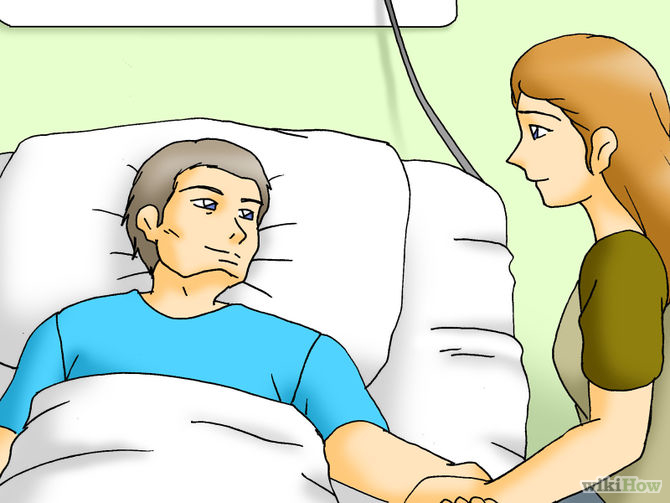
670px-Comfort-the-Dying-Step-1-Version-2

Keep in mind that when someone is in pain, they are likely to have less energy for conversation and may not be able to be clear about their needs. Offering help is kind, but general offers of help such as “let me know if you need anything,” puts the burden of determining what is needed on the person in pain. This kind of help may actually be more frustrating than helpful. Instead consider what your loved one may need and offer a few specific services or items they may need. For example, “Would you like me to read to you?” Or, “Let me know if you want to watch a funny movie.” “May I have someone come in (or come in myself) and clean your bathroom/home for you?”

Notice what your loved on seems to struggle with. Is it difficult for him/her to ask for help? Are there certain responsibilities (paying bills, cleaning, grocery shopping, prepare meals, etc.) that are difficult that you may be able to help with? Make a list and ask your loved one if you can help with any of those needs.

Consider your loved one’s energy levels and ask him/her the best time to call or visit. Even if someone does not “look” sick or tell you they are in pain or feeling tired, does not mean they are not feeling tired or need rest. Be mindful of your loved ones face and expression. If it seems he/she is getting tired, it may be time to cut the visit short or let your loved on sleep while you do dishes or other helpful chores.

Be a gatekeeper for other friends and family so that the person recovering does not need to speak to multiple people with updates. At the same time, if the person recovering seems to be able to handle phone calls and texts and finds that a good distraction from the pain, help make that easier by setting up pillows and a phone ear piece so that your loved one can sit or recline comfortably as he/she talks on the phone or texts.

If speaking is difficult for your loved one due to pain or fatigue, agree on a  few hand signals so that your loved one can tell you if he/she needs rest, pain medication or does not want to talk to someone. Rest is key in recovering from many illnesses. Try not to bombard your loved one with too many questions, excessive offers of help or with visitors, especially the first week after surgery. Quiet assistance, merely being nearby and not being overly chatty may be much appreciated.

Aside from kindness, patience and respect for your loved on, there are some gifts that may be helpful when a loved on is recovering or bed ridden.  This blog post shares great gift ideas for post surgical loved ones and also may have helpful for loved ones with chronic pain or limited mobility, “26 Surgery Recovery Gift Ideas – Cool Gift Ideas For Someone In The Hospital.”

Feel free to share your experience and ideas for helping a loved one through a surgical recovery or painful illness in comments below!

Read Full Post »

Injured soldiers find relief through massage and other “alternative therapies.”

By Michael Devitt from Massage Today magazine

Wars have been fought since time immemorial. From simple sticks and rocks to guided missiles and uranium-tipped artillery shells, the methods civilized nations have used to annihilate one another have changed dramatically over the centuries.

Despite the advances in modern warfare, the types and degrees of injury suffered in combat have remained frighteningly constant. Surprisingly, research suggests a major cause of attrition (a reduction in number or strength) among military personnel in recent wars has resulted not from injuries incurred on the battlefield, but, rather to more typical conditions such as accidents and musculoskeletal complaints.

To determine what types of painful conditions affect soldiers during wartime, researchers in the United States and Germany examined 162 soldiers engaged in Operation Iraqi Freedom who were evacuated to pain treatment centers outside the theater of combat. Results of the study, published in the journal of Anesthesia & Analgesia, show that many of the injuries suffered by military personnel during conflict are indeed similar to those sustained by people in the civilian sector. Even more important, the use of alternative therapies in the treatment of pain among injured soldiers appears to be growing, with massage the most common alternative therapy used for pain relief.

All of the soldiers included in the study had been injured during OIF between March 2003 and June 2004, and were medically evacuated to one of two treatment facilities: Walter Reed Army Medical Center in Bethesda, Md., and Landstuhl Regional Army Medical Center in Landstuhl, Germany. Most of the injured personnel received “consultations for treatment recommendations to be implemented at military treatment facilities located at the patient’s home duty station.”

Analysis of the complaints showed most soldiers suffered injuries comparable to those that would have been sustained by similarly aged civilians. Not surprisingly, more than half of the pain complaints reported by the soldiers (53 percent) involved the low back. The second most common complaint was “nonradicular extremety pain,” which accounted for 23 percent of the presenting complaints.

The most common diagnosis of injury was lumbar herniated disk which, according to the researchers,” accounted for almost one-quarter of all pain disorders.” Postsurgical pain was the second most common diagnosis, and was experienced by 14 percent of all patients.

More than three dozen treatment modalities were utilized for pain relief; on average, each soldier was treated with 3.5 different therapies. Not surprisingly, drugs were the most popular form of pain relief, beginning with nonsteroidal anti-inflammatory drugs (NSAIDs), which were given to 91 service members. Seventy-nine patients received opiods; 66 patients received some kind of neuropathic pain medication.

Drugs and surgical procedures weren’t the only treatment options available, however. According to the study authors, 28 soldiers (17 percent of the study population) were treated with “some type of alternative therapy.” The most common alternative therapy offered was therapeutic massage, which was performed on 13 soldiers, and administered more frequently than chiropractic manipulation, acupuncture and glucosamine/chondroitin supplements combined. More than half of these patients treated with alternative therapies (15) were diagnosed with postsurgical pain or lumbar herniated disk before receiving care. In fact, more than one-third of all military personnel diagnosed with postsurgical pain were treated with massage.

The study pointed out the number of injuries suffered during combat was significantly less than the number of non-combat injuries; in fact, only 17 percent of the patients stated they were injured during battle.

Such nonbattle-related injuries, or NBIs, can take a serious toll on overall troop strength in modern warfare. According to the authors, “Among the 21,655 soldiers admitted to army hospitals in Southwest Asia during the Persian Gulf War, acute NBI comprised 25 percent of all hospitalizations, with musculoskeletal conditions ranking second at 13 percent.”

Presenting Pain Complaints in Soldiers Injured in Operation Iraqi Freedom*
Pain Presentation (n=162) Frequency Percentage
Lumbar radicular pain 49 30.2%
Axial low back pain 37 22.8%
Nonradicular leg pain 24 14.8%
Nonradicular arm pain 16 9.9%
Groin pain 15 9.3%
Thoracic pain 10 6.2%
Neck pain 10 6.2%
Abdominal pain 8 4.9%
Cervical radicular pain 6 3.7%
Headache 6 3.7%
Thoracic radicular pain 2 1.2%
Polyarthralgia 1 0.6%
Facial pain 1 0.6%
* The percentage of pain complaints is based on the number of patients (162), not the number of presenting symptoms (185).

Taking these numbers into account, this would mean that more than 2,800 soldiers were hospitalized due to musculoskeletal complaints during the Gulf War. Given the increasing number of low back and other musculoskeletal injuries that seem to be the norm in modern warfare, and given that these conditions often are seen by massage therapists in the civilian sector, it would appear that massage therapists are just as qualified as other health care providers in helping to ease the pain and suffering of injured military personnel.

For more information, go to the article here.

Resources

  1. Cohen SP, Griffith S, Larkin TM, Villena F, Larkin R. Presentation, diagnoses, mechanisms of injury, and treatment of soldiers injured in Operation Iraqi Freedom: An epidemiological study conducted at two military pain management centers. Anesth Analg 2005;101:1098-1103.
  2. Hoeffler DF, Melton LJ. Changes in the distribution of Navy and Marine Corps casualties from World War I through the Vietnam conflict. Mil Med 1981;146:776-9.
  3. Writer JV, DeFraites RF, Keep LW. Non-battle injury casualties during the Persian Gulf War and other deployments. Am J Prev Med 2000;18:64-70.

Read Full Post »