Feeds:
Posts
Comments

Posts Tagged ‘neck pain’

By Sue Shekut, Licensed Massage Therapist, ACSM Personal Trainer, Certified Wellness Coach, Owner, Working Well Massage

I like to think of myself as not only a good massage therapist but also a good judge of massage therapists. I’ve had thousands of massages and given thousands of massages. As the owner of a wellness company, I interview many massage therapists and receive regular massage myself. Often, when clients travel or move out of town, they ask me how to find a good massage therapist.

It’s a question very similar to “how do I find a good dentist or a good doctor”. Since massage is a personal service, my first impulse is to say, ask your friends and coworkers who they go to and start there. But then, we’ve all had referrals to service people that our friends liked that were not a good fit for us. (One person may like a deep massage and you may like a lighter touch or vice versa. One person’s fantastic hair stylist may be great for that person but be unable to cut your style of hair well.)

Before you search out massage therapists, take a minute to think about what you want from a massage experience. Then when you call different therapists or massage centers, ask questions to make sure you get the massage therapist that best fits your needs.

Good questions to consider:

1. Are you going for stress relief or pain relief or both? Swedish massage or “relaxation massage” tends to be best for stress relief. Deep tissue or therapeutic massage tends to be best for pain relief. If you have a specific injury or chronic pain pattern, you will want a massage therapist with skill in relieving muscle pain, not just in relaxation therapy.

2. What’s your budget for massage?
Can you afford a weekly full hour (prices ranging from $65 to $120) or only mini-sessions (like the 15-20 minute $1 per minute chair massages offered at Whole Foods and similar places). If you have a chronic neck and shoulder pain, it’s often more cost effective to get weekly 20-minute massages than a one hour once a month.

3. Do you want someone you can go to regularly or just on a pamper yourself basis?
Spas tend to charge the most for massages and tend to be the place people go for pampering. However, some independent massage therapists may be able to offer you better prices and a really personalized pampering experience. Spas charge the most but they will give you the whole pamper yourself experience. However, if you want a regular massage your best bet is to find a good practitioner that is reasonably priced. If you can’t afford an hour regularly, try chair massage for 15-20 minutes if you want more frequent upper body massages.

4. How much do you care about the quality of the massage?
If you just want someone to pamper you and rub oil on your back while you relax and snooze away your stress, you don’t need someone with extensive experience or medical massage training. If you want someone to help you recover from an injury or deal with a chronic tension issue, you will likely want someone with a good deal of experience and skill working with similar conditions. Make sure you massage therapist meets minimal licensing and certifications standards if you want more than just relaxation massage!

5. Do you want the whole massage enchilada: the robe, slippers, the soothing music and spa environment? Or do you care more about the environment or more about the actual massage?

For the slippers and robe, go to a spa like Urban Oasis or Exhale in Chicago. For a great therapeutic massage, it’s more important to find a good practitioner. Use the locator services below and then speak with the therapist about his or her skill before you commit to the appointment.

Massage Locator Services
My top sources for great massage therapists are massage locator services (versus Google or any other search engine). Massage therapists that register with these services must meet minimum standards of training, normally 500 hours or more and have graduated from an accredited massage school.

One of the best is the Association of Bodywork and Massage Professionals massage practioner site here.

Massage Today also has a great service as well here.

Insider Pages is a review site that provides user comments about massage and spa services.

How Do I know if My Massage Therapist is Qualified?
In the State of Illinois, Licensed Massage Therapists are required by law to have at least 500 hours of training and graduate from an approved school. You can look up your therapists to see if he or she is licensed at this site. This site will also display a Y or N to indicate whether the massage therapist has ever undergone disciplinary action by the state of Illinois’s Department of Financial and Processional Regulation.

Other states vary in requirements. Some states do not require a license at all and allow municipalities to regulate massage. For example, in California, there is no state license. Hours of training required vary depending on the city. So some therapists in Northern California only have 100 hour of actual massage training! The Truth About California Massage Licensing here. However, at the other end of the spectrum is New York State, which requires 1000 hours of training. New York Licensing Requirements here

Still Unsure, Try a Sample Massage
Lastly, if you want to try a sample massage, your best bet is to try a chair massage at Whole Foods Gold Coast or Lincoln Park in Chicago. Or at a local health food store or mall. You can get a few minutes of massage, determine if the therapists fits your needs, then ask for his or her business card to set up a longer massage!

If you have questions about Chicago area massage therapists, feel free to contact Working Well Massage here!

Read Full Post »

by Sue Shekut, Licensed Massage Therapist, ACSM Personal Trainer, Certified Wellness Coach, Owner, Working Well Massage

Through the years I’ve had a number of massage therapy clients say things like, “I know it has to hurt to be effective,” and “no pain no gain, right?” Actually, massage does not, and should not ,“hurt” to be effective. In fact, if the massage you are receiving is so painful you have to grit your teeth or hold your breath, it likely isn’t going to be very effective.

The idea that we have to experience pain in order to heal is a holdover from the 1980’s when people were “going for the burn” and many bodywork modalities were just starting to take root. Some massage therapy schools of thought held that people were experiencing deep emotional breakthroughs if they cried out or had an emotional “release” during a particularly intense bodywork session. This led to the idea that you HAD to have a deep emotional outburst or had to feel pain to have a really “good” bodywork experience.

Since then, somatic psychology and bodywork has matured. As have bodywork practitioners. Many realize that, especially for people that have already had a physical trauma such as a car accident or injury, the body has already been through deep trauma. Working too deep, giving too much pressure, or expecting clients to have radical transformation from a single session can be retraumatizing.

Some massage therapists still hold to the belief that trigger points need intense compression to release the knot. Sometimes this is true. But holding a trigger point for too long, or pressing too deeply into a sore muscle area can cause more pain and damage than healing. (Trigger points are areas of the muscles that have a cluster of muscular adhesions or “knots” that refer pain elsewhere when compressed.)

Good Pain Versus Bad Pain
Does that mean that massage should be painless? Well herein lies the rub (pun intended). Massage is not painless any more than working out is painless. There can be muscle soreness. When we first press on a sore or extremely tight muscle area, there may be tenderness or soreness. We call this “good pain” similar to the soreness you may experience when you lift weights or do a prolonged cardio session. However, if you are working out and you “pull” a muscle or sprain your ankle, that would be “bad pain.” That type of pain indicates an injury to the tissue and requires medical attention. Muscle soreness during an exercise or massage session is not abnormal and can indicate that healing is occurring.

What About Soreness?
When a tight muscle is massaged, at first you may notice the sensation of soreness or tenderness. Initially you become more aware of that muscle area and that may include an awareness of just how very tight and sore the muscle is. Then as the massage therapist continues to work with the muscle tissue, fresh blood flows into the muscle area as the therapist presses down (as in compressions or gliding strokes). This fresh blood helps “loosen” the muscle tissue and also helps bring nutrients and oxygen into the muscle. At this point, especially in a deep tissue massage, you will likely notice less soreness in the area. If the muscle gets more and more sore, the massage therapist may be overworking the area and it’s best if you tell him or her to stop massaging that area and to move elsewhere!

That all said, after a deep tissue massage, you may feel some muscle soreness a day or two afterwards, just as you may feel sore after a workout. In essence, a deep tissue massage is like having someone else give your body a workout. Soreness or bruising lasting longer than a day or so may indicate the massage was too intense. Let your massage therapist know if this happens so he or she knows to work with less pressure for your next massage. (If you go back to him or her at all!)

Read Full Post »

Image representing iPhone as depicted in Crunc...
Image via CrunchBase

By Sue Shekut, Licensed Massage Therapist, ACSM Personal Trainer, Certified Wellness Coach, Owner, Working Well Massage

Smart phones are common tools for today’s fast-paced business world. And just as computer use has improved our lives AND added a host of new ergonomic issues, “iPod Neck” and “Blackberry Neck” are concerns for many users that hold their phones while looking down.

Smart phones are not heavy. You may think holding them won’t cause muscle tension. They are easy to hold in one hand and type with the other. But holding the phone and looking down at the small screen for long periods of time can cause unwanted muscle pain in the upper back and neck. Those that use their iPod’s as a Kindle reader spend even more time looking down while viewing the device.

Think holding a small phone can’t cause any problems? Try this test yourself.

1. Hold your phone up in front of you and look down at the screen for a full 60 seconds.

2. Notice how your neck and shoulders feel as the clock ticks by.

3. Feel any uncomfortability in your muscles?

4. Now think of how you would feel after holding your phone and looking down for five minutes. Ten minutes. You get the idea.

When you use your phone or media player you are usually focusing your attention on the task at hand, not on your muscle tension. Doing this exercise makes you more aware of how you use your body when typing or viewing your smart phone.

Smart phones need smart accessories. How can you counter the muscle strain you may get while holding your iPod or Blackberry to type?


A few simple suggestions to avoid “iPod Neck.”

1. Whenever possible, rest your elbows on a table or surface so that your arms are propped up to view your smart phone. This takes pressure off your neck and shoulder muscles and let’s you work more easily. Resting your elbows on a flat surface is free! And you can take your elbows with you anywhere you go. Just make sure the table or surface is not so slow you have to slump over to reach it!)

Find this inexpensive, portable stand here

2. Purchase an inexpensive Smart phone holder to use to prop up your device when you are on the go.

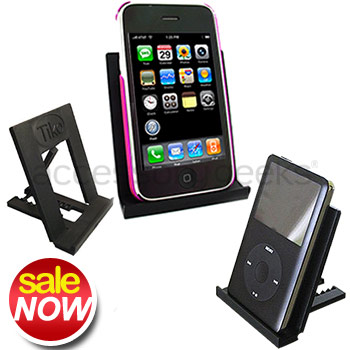
Tiko Stand

This Tiko Fold is convenient on planes, trains, at the coffee shop or at a desk. Free your hands and relax while viewing your phone or media player at one of nine adjustable viewing angles.

The Tiko Fold folds flat for slipping into a shirt pocket, backpack, computer bag, or purse. When folded into a stand, the Tiko Fold provides a universal base designed to hold the original iPhone and the iPhone 3G, Sony PSP, and practically any portable video players like your cell phone in both vertical and horizontal orientations. The Tiko Fold also holds the iPod Classic, iPod Touch, iPod Nano, BlackBerry Storm, BlackBerry Bold, most video capable cell phones, the Microsoft Zune, Sony PSP and even some ebook readers.

The Tiko stand retails for about $8.00 and can be purchased here here

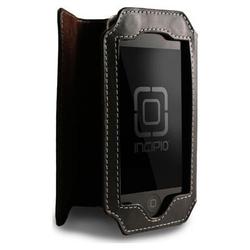
3. Another alternative for holding iPods/iPhones is the Incipio Kickstand Leather Case for iPod touch 2G link here for about $24.00

Leather iPod/iPhone case

Note: Apple makes wrist band holders for iPods but the problem with these is that they still require you to bend your arm in an unnatural position to view the phone or iPod.

Reblog this post [with Zemanta]

Read Full Post »

By Sue Shekut, Licensed Massage Therapist, ACSM Personal Trainer, Certified Wellness Coach, Owner, Working Well Massage

Are you shorter than average or do you simply want a better back support than your current chair or car seat offers? Do you have lumbar back pain or a back disorder that requires extra support for your back?

Why settle for uncomfortable car seats and office chairs when you can easily upgrade your seating setup with a foam cushion and backrest!

For about $100-$150 you can put together your own “ergo” seating. We’ve reviewed many of the products out there and found the best prices and reviews on Amazon. You may be able to find the same or similar products elsewhere, but you will pay about 10-30% more from other vendors.

To save you time, we pasted the links and pictures of the products in a few separate posts about backrests and seat cushions. Find the situation that describes your issue (you are taller than average, shorter than average, of wider girth than average, etc.) and read the associated post to find out about the product we think may help you best. This post describes backrests for people of shorter or medium height, about 5′ to 5′-6″.

We also included pertinent tips from the Amazon customer reviews so you don’t have to wade through them yourself. However, if you want to read all the reviews yourself, simply go to the Amazon product link and check out the customer reviews.

For medium height to shorter people that want a simple backrest with lumbar support:

Orthopedic Lowback Backrest Support By Obus Forme

On Amazon for $68.39

Orbus Lowback Backrest

According to the manufacturer:

• Patented, polycarbonate S-shaped frame that promotes correct spinal alignment and proper posture; guaranteed for life. Includes a patented, removable and adjustable lumbar pad that provides additional support to your lower back by filling in your lumbar curve.

• Portable and lightweight, turns any chair into an ergonomic seating system; use it in your home, office, vehicle, or anywhere else you sit.

• Polyurethane foam protects the frame.

• Hypoallergenic, brushed nylon cover can be removed and sponge washed.

Amazon Reviewers Say:

• Sounds cliché, but this backrest is worth its weight in gold to me. My back used to get so sore sitting in an office chair all day. Now that I have the backrest my back actually feels BETTER after having sat in my office chair for a while. It’s always good to get up and stretch now and then though. If the seat cushion of your chair is not firm enough, I recommend purchasing this backrest along with the Obus Forme seat cushion that helps to keep you in the proper position.

• If you’re a big person, you may want to consider the wide backrest version. I’m less than 125 pounds, and this particular (smaller) model is fine for me.

• It comes with a detachable pillow that can be placed wherever it’s most comfortable for lumbar support. It attaches with Velcro and could probably eventually fray the seat cover if it’s moved around a lot.

• It’s high back allows for complete back support.

Read Full Post »

By Sue Shekut, Licensed Massage Therapist, ACSM Personal Trainer, Certified Wellness Coach, Owner, Working Well Massage

Are you taller than average or have a long torso and find that standard office chairs don’t offer you enough back support?

Why settle for uncomfortable office chairs when you can easily upgrade your seating setup with a easy to use backrest!

For about $100-$150 you can put together your own “ergo” seating to accommodate your height requirements. We’ve reviewed many of the products out there and found the best prices and reviews on Amazon. You may be able to find the same or similar products elsewhere, but you will pay about 10-30% more from other vendors.

To save you time, we pasted the links and pictures of the products in a few separate posts about backrests and seat cushions. This post covers the need for back support for those that are either taller than average height or have long torsos.

We also included pertinent tips from the Amazon customer reviews so you don’t have to wade through them yourself. However, if you want to read all the reviews yourself, simply go to the Amazon product link below and check out the customer reviews.

If you are above average height, or if you simply want extra head and neck support for your chair, try the:

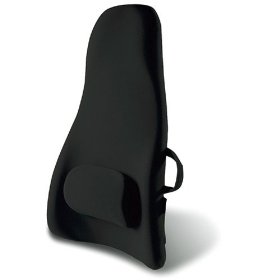
Obus Forme High-back Backrest

On Amazon for $79.95

Orbus Forme High-back Backrest

According to the manufacturer:
• Enhances overall posture and provides relief from pain from poor posture
• 8 inches taller for head and neck rest
• S-shaped frame
• Portable and lightweight
• Black

Amazon Reviewers Say:
• It has a lumbar support that is moveable and it is high enough to support my head comfortably.

• I have used this product before and this was to replace one, which I had worn out. I have 3 at the moment – 1 for my easy chair, 1 at my office at work and 1 in my car. At various times I have lent one of these to friends and the biggest problem is to get them to return them.

• This is not a magic cure for all back problems but it is magic if it helps your back problem and since it is high back it does seem to help many people.

• The height of the product works well with my long torso.

• The calzone-sized pillow attaches with Velcro. Depending on preference, it can be discarded or placed at the lumbar spine or head.

• The product is sturdy but not immortal. After a couple of years of steady use, the joints attaching the top third of the piece to the lower part are prone to break.

Read Full Post »

By Sue Shekut, Licensed Massage Therapist, ACSM Personal Trainer, Certified Wellness Coach, Owner, Working Well Massage

Most office furniture is made for people of average height, say people from 5’ 5” to 6’ 2 “. For those of us that don’t fall within this height range (like me at 5’2” or a friend that is 6’-6”), finding a comfortable way to sit and work on your computer is a challenge. Luckily, there are a host of add on products we can use to modify our workstations to make them more comfortable and ergonomic.

Recently a client has been having pain in her neck and upper back due to sitting at a desk without a properly fit keyboard tray. She can’t raise her chair high enough to let her hands rest comfortably over the keyboard because the desk design won’t allow it. And the desk has a support bar along the bottom of the desktop that prevents her from installing a conventional, slide out keyboard tray.

We looked into various trays and offer those of you with similar limitations a few options to easily add a keyboard tray to your workstation.

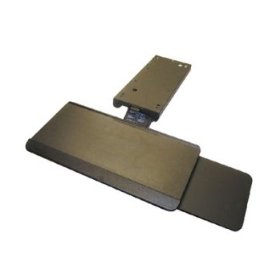
Waterloo Premium Arm, Keyboard Tray & Mouse Tray

Waterloo Keyboard and Mouse Tray

The advantage of this tray is that you don’t need to install rails and casters along the bottom of the tray. You can simply install one arm which sits in the center of the tray. In the case of the desk with the bar along the front underside of the desk, it looks like this arm can fit just under the bar and then the opening between the stabilizer arm and the actual trial itself may give a=enough room to accommodate the desk support bar. This keyboard tray has 7 positive reviews on Amazon and reviewers found to easy to install. Retails for $126.30 on Amazon. View more at the link here.

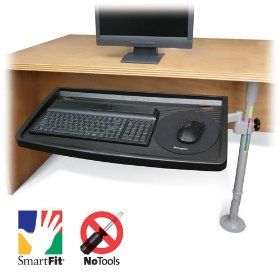
Kensington SnapLock Keyboard Tray with SmartFit

Kensington SnapLock Keyboard Tray

In this case, the tray is mounted on a metal pole that allows you to adjust the tray 6 inches in height, +/- 15 degrees in tilt and rotates 360 degrees. I did not find any customer reviews but the design gives those of you with desks without space for brackets and rails another potion for a keyboard tray. This tray extender retails for $117.83 at Amazon but is available via other online shopping services as well (for likely more). Link to this tray here.

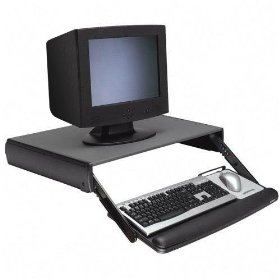
3M Desktop Adjustable Keyboard Drawer

3M Adjustable Keyboard Monitor Stand and Drawer

A top of the desk option, the desktop design is height and tilt adjustable up to 3 1/4″ below desk level and wide platform keeps mouse and keyboard at same level for added comfort. Includes gel-filled wrist rest and full size mousing area. No installation required. Lifetime warranty included.

Pros: holds heavy monitors and installs without having to attach anything to the actual desk. 4 adjustment levels for the keyboard tray. The tray can also be inclined at any angle that is comfortable and locked into position or not.

Cons: if your monitor is too light or if you do not place the monitor in the center of the stand the keyboard will wobble when you type. If you place the monitor too far forward the whole assembly, plus monitor could fall into your lap. (Sounds like proper placement is essential in this case!)

Retails for $132 at Amazon (or you can pay a hefty $209.99 for the same product at ergoguys.com)

Amazon link

Ergoguys link. This let’s you pay more for the same product from a company with the Ergo name in it.

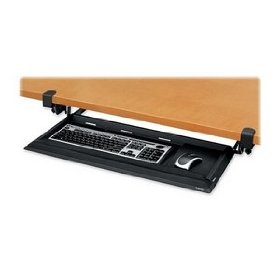
Fellowes Designer Suites Desk Ready Keyboard Drawer
Fellowes Keyboard Drawer
According to Fellowes:
• Attaches to virtually any work surface without tools or complex instructions.
• The patented clamp easily attaches unit to desktop (5/8 1-5/8 W) without surface damage and adjusts tray to one of three height positions below desktop for personal comfort: 2-1/2, 3-1/8,and 3-3/4
• Tray adjustment tilts to 3, 6, or 9 degrees to suit personal preference, and separate tray and mouse platforms allow you to switch mouse position to right or left side of keyboard tray
• Sturdy, impact-resistant tray fits standard and ergonomic keyboards, and the ball-bearing glide tracks ensure smooth drawer movement
• Includes soothing memory foam wrist rest for keyboard tray and provides convenient cable management for keyboard and mouse cord
From users of the tray: The suspension mechanism causes it to need almost 34 inches side to side table top space to attach. The exterior width of the drawer itself is 28 inches. The mouse tray is a little small.

This tray retails for $76.52 at Amazon.

Amazon Link here.

Read Full Post »

By Sue Shekut, Licensed Massage Therapist, ACSM Personal Trainer, Certified Wellness Coach, Owner, Working Well Massage

One of the most common problems we see with people that work on computers all day is sore neck and shoulders. Bending forward to see the laptop screen is a big headache (literally!) for students, sales people and anyone that uses a laptop on a frequent basis.

I’ve written Apple and some of the PC makers asking if they would create a laptop with an adjustable monitor that could be height adjustable and articulate to be more comfortable to users to no avail. Likely they have even bigger and better ideas. (I hope.)

For now, though, if you use a laptop frequently and can’t always connect to an external monitor and extended keyboard, there is a simple, inexpensive short term fix: the Portabook.

Sure, it’s sold via a cheesy infomercial. Sure the base model is made of plastic. But it’s durable plastic. And it works. (A metal version is available.) The Portabook is a laptop holder, a textbook or paper holder and it IS portable (and very lightweight.)

Watch the short video from the company here

I have two at home and I even take it with me when I plan on using my laptop away from home for extended periods. It fits right into my backpack along with the laptop! When I read textbooks or any 8.5 x 11 size papers, I also use the Portabook as a reading stand. It’s worth the $20 to save my neck and shoulders from pain and tension.

Note: Neither Working Well resources nor I have any affiliation or make any profits from Portabook. We just like the product!

Read Full Post »

« Newer Posts