Feeds:
Posts
Comments

Posts Tagged ‘Health’

By Sue Shekut, Owner, Working Well Massage, Licensed Massage Therapist, Wellness Coach, ACSM Personal Trainer

Today I came across an article by a fellow massage therapist, Dale Favier, on his blog, Portland Home Massage. Dale’s post is How to Stop Eating Too Much, in Ten Moderately Difficult Steps.  

Dale Favier, Portland Massage Therapist

I liked Dale’s approach to dietary lifestyle change for a few reasons:

1. He did not advocate a rapid immediate weight loss plan which can actually be unhealthy and lead to only short-term weight loss..and potentially, later gains.

2. He cautioned readers to really get to know their own eating habits. We often THINK we eat less than we do. Or we think we eat healthier than we are eating. For example, eating a salad as Dale says, but loading it with fatty dressing and other oil based toppings.

3. He gave readers a lot of encouragement to go slowly, make changes over a period of time.

In essence, what Dale is advocating is a major lifestyle change in diet and activity. But done slowly, with careful though and planning.

Read Dale’s blog post and let me know, what do you think about Dale’s plan? What is your plan for healthy lifestyle change? And how has it worked or not worked?

Enhanced by Zemanta

Read Full Post »

By Sue Shekut, Owner, Working Well Massage, Licensed Massage Therapist, Certified Wellness Coach, ACSM Personal Trainer

Are the medications you are taking contributing to premature bone loss? And if so, what can you do about it? This past week I attended a class on Functional Strength Training for the Aging Spine taught by Shari Kalstein, a physical therapist and personal trainer. )Shari created a class, Fortify Your Frame for older adults and now teaches it to seniors in her practice in Florida The class I attended was modified for personal trainers and physical therapists to teach older adults how to safely exercise.). Her class was a very useful and informative class. She presented a LOT of material about bone density, the aging spine and exercises to help people strengthen their backs and cores as they age. Since we all age at one point, it was useful info for people of all ages.

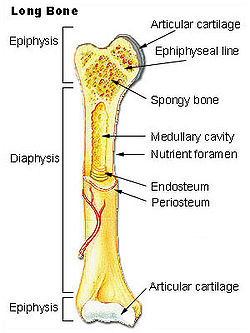
Long Bone. Image from Wikipedia

A few of the points Shari made were that:

1. Many people are vitamin D deficient, even in sunny Florida and don’t even know it.

2. Men can have osteoporosis and are not regularly tested until at least age 70, long after preventative measures could have been taken. Important facts for men about bone loss here.

3. Many medications as well as soda pop consumption lead to bone density loss.

I was surprised to see so many common medications listed as contributors to bone loss. I thought I’d share them with you as well as the link to the Osteoporosis Association website here.

Medications That Can Contribute to Bone Loss

Below is a list of medicines that may cause bone loss.

  • Aluminum-containing antacids
  • Antiseizure medicines (only some) such as Dilantin® or Phenobarbital
  • Aromatase inhibitors such as Arimidex®, Aromasin® and Femara®
  • Cancer chemotherapeutic drugs
  • Cyclosporine A and FK506 (Tacrolimus)
  • Gonadotropin releasing hormone (GnRH) such as Lupron® and Zoladex®
  • Heparin
  • Lithium
  • Medroxyprogesterone acetate for contraception (Depo-Provera®)
  • Methotrexate
  • Proton pump inhibitors (PPIs) such as Nexium®, Prevacid® and Prilosec®
  • Selective serotonin reuptake inhibitors (SSRIs) such as Lexapro®, Prozac® and Zoloft®
  • Steroids (glucocorticoids) such as cortisone and prednisone
  • Tamoxifen® (premenopausal use)
  • Thiazolidinediones such as Actos® and Avandia®
  • Thyroid hormones in excess

Preventing/Counteracting Bone Loss

• Make sure you are getting enough calcium and vitamin D. If you are not sure, get blood work from your doctor and make sure he/she specifically checks your calcium and vitamin D levels. Even if you are ingesting food high in calcium, you may not be properly absorbing it. Supplementation may be required.

• You need regular weight-bearing exercise to keep your bones healthy and strong. Walking is a great weight-bearing exercise you can do well into old age. And not on a treadmill–outdoors is best.

• Eat fruits and vegetables.

• Reduce your alcohol intake

• Quit Smoking

Enhanced by Zemanta

Read Full Post »

By Sue Shekut, Owner, Working Well Massage, Licensed Massage Therapist, Certified Wellness Coach, ACSM Personal Trainer

Where can you find free information about nutrition and healthy eating? Try the American Dietetic Association here. The ADA link to info for the general public is here.


What Is the American Dietetic Association (ADA)?

The American Dietetic Association is the world’s largest organization of food and nutrition professionals. ADA is committed to improving the nation’s health and advancing the profession of dietetics through research, education and advocacy.  It’s tough to know how to make feed your family and yourself. There is a wealth of conflicting info on line about the best eating and physical activity habits. ADA can help you in your search for answers. Registered dietitians (RDs) are the food and nutrition experts and provide the information on the site. ADA articles and recommendations are based on evidence based practices backed up by research in the field.

I like the ADA site because it’s easy to navigate, has great suggestions and is backed by evidence based practices.


Fresh fruit

A sample of some of the great info on the ADA’s Eat Right site:


Nutritious Family Meals Made Easy

Breakfast Basics for Busy Families

Healthy Weight Loss Description and Guides

How to Eat Healthy When Eating Out

Food Allergies and intolerance

The Benefits of Organic Foods

Check it out and see if the ADA site has helpful info for you and your family!


Enhanced by Zemanta

Read Full Post »

CORONADO, Calif. (Nov. 22, 2007) Storekeeper 1...
CORONADO, Calif. Storekeeper 1st Class Andy Zhang enjoys Thanksgiving dinner with his son. Image via Wikipedia

By Sue Shekut, Owner, Working Well Massage, Licensed Massage Therapist, Certified Wellness Coach, ACSM Personal Trainer

Thanksgiving is traditionally a time to give thanks and count our blessings. It can also be a time to overeat and overindulge. Here a few tips to help keep you from feeling like you lost control of your healthy eating habits on this feastful holiday:

1. Eat small portions of each food item you want to sample.

2. Don’t deprive yourself of dessert or you may overeat something else. If you want a slice of  pie, have one. Just cut a half  a slice, let that digest an hour or so before you think about having more!

3. Make sure you drink plenty of water. Dehydration can make you want to consume more food. And drinking water fills your stomach so you don’t have as much room for food.

4. If you drink alcohol, remember it is dehydrating. Trade off between one glass of water for every beer or glass of wine (or mixed drink if you are hitting harder stuff.)

5. Remember that this holiday is really about spending time with friends and family. Focus on the social interactions and the food becomes less of an issue.

6. If you are struggling with overeating or overindulging, do the dishes! It helps out the hostess/host and gives you something to do with your hands besides munch!

A Heartfelt Thank You

And thank you for reading my blog. It’s been a great year for Working Well Massage, am exceptionally happy year for me and a wonderful year for the many people in my life that have benefited from massage therapy, wellness coaching, personal training, better ergonomics, outdoor exercising, and good nutrition! I am grateful to have the opportunity to meet so many interesting and positively motivated people as I travel around and find interesting stories for  my blog. It’s the people I meet and work with that make my life interesting and fulfilling. A heartfelt thank you to all of you I’ve come in contact with this year, on the blog and in real life!

Enhanced by Zemanta

Read Full Post »

By Sue Shekut, Owner, Working Well Massage, Licensed Massage Therapist, Certified Wellness Coach, ACSM Personal Trainer

The American College of Sports Medicine tracks trends for the fitness industry and published their findings to show you what to expect in fitness in the coming year at the gym, in your doctor’s office and at work. Experienced fitness professionals topped the list while strength training, core work, special fitness programs for older adults, pilates and balance training also made the top ten. Dr. Walter Thompson, of the American College of Sports Medicine (ACSM) which conducted the poll, said that 1,540 ACSM-certified fitness professionals from all around the world took part in the online survey.

“We really wanted to look at trends,” Thompson, a professor of Exercise Science at Georgia State University, explained. “We instructed the respondents to ignore fads, like the devices you see on late-night TV infomercials.”

Fitness professionals and personal trainers captured the first and third spots in the survey, but according to Thompson, this increase is at expense of clients. Why? Because the increase in demand for personal trainers and fitness instructors has led to an influx of people entering the profession lacking the necessary training to avoid injuring clients. Thompson said, “There has to be some policing. People are getting hurt by trainers who just don’t have the qualifications.” Personal training was introduced about 10 years ago and was once a luxury for movie stars. Now most gyms provide personal trainers and some gyms are personal trainer-only gyms.

Children and obesity came in second in the poll. “For the first time in history the next generation of young people may not live as long as their parents or grandparents,” said ACSM representatives. Strength training  and core training were in the top five as well.

The stability ball  came in at number eight. (Note: The use of the stability ball did not even make the top 20 in an ACSM survey in 2007.)  Fitness professionals once thought this was a fad, according to the ACSM, but the ball has become into a versatile teaching tool for stability, balance and strength.

Balance training, which includes yoga, Pilates, tai chi and exercise balls, came in at number 10. (Two years ago it was not even in the top 20.)

The emphasis on comprehensive health promotion at the workplace was number 12. “The notion of wellness coaching (number 13) was also a surprise. Last year it was at the bottom.” said Thompson, adding that nutrition as well as exercise and wellness training points to a more holistic approach to fitness in general.

Thompson and his team don’t predict the future, but they believe that the trends they track to inform the fitness industry are also useful in educating the public. For example,  physician referrals to exercise professionals is a growing trend. “Exercise is medicine,” Thompson concludes. “We’re bridging the gap between fitness professionals and physicians.”

Read the full article  here.
Enhanced by Zemanta

Read Full Post »

By Sue Shekut, Owner, Working Well Massage, Licensed Massage Therapist, Certified Wellness Coach, ACSM Personal Trainer

Here is a list of the top 10 Twitter feeds for health news that I follow. I really like Men’s Health and  Woman’s Health magazines as a starting point for current trends in fitness and sports medicine. The CDC is a great feed to follow for news about any outbreaks of illness or other health concerns. WebMD and the Mayo Clinic tend to have pretty comprehensive coverage of most medical complaints and illnesses. Greythinking is a great mental health resource and I round out the lists with Daily health tips, a Discovery health feed and a New York Times health tweeter.  Check them out!

Mayo Clinic

  • @MayoClinic
  • Location: Minnesota, Florida, Arizona
  • Bio: Excellent integrated group health care practice. Acct maintained by @leeaase. Following not = endorsement. To request follow, tweet @mayoclinic.

Women’s Health Mag

  • @WomensHealthMag
  • Location:
  • Bio: Women’s Health is your ultimate guide to looking and feeling great. We’ll bring you the latest in health, fitness, sex, beauty and more!

Men’s Health Mag

  • @MensHealthMag
  • Location: Emmaus, PA
  • Bio: Men’s Guide to Fitness, Health, Weight Loss, Nutrition, Sex, Style, and Guy Wisdom

WebMD

  • @WebMD
  • Location: USA
  • Bio: WebMD provides valuable health information, tools for managing your health, and support to those who seek information.

womenshealth.gov

  • @womenshealth
  • Location: US
  • Bio: Womenshealth.gov is part of the U.S. HHS Office on Women’s Health, the federal government’s resource for women’s health information.

CDC Emergency Verified

  • @CDCemergency
  • Location: Atlanta, GA
  • Bio: CDC Emergency Preparedness and Response: increasing the nation’s ability to prepare for and respond to public health emergencies.

greythinking

  • @greythinking
  • Location:
  • Bio: Commentary on mental health, eating disorders, depression, anxiety, PTSD, psychopharmacology, etc.

Daily Health Tips

  • @DailyHealthTips
  • Location:
  • Bio: Daily Health Tips to keep you healthy and happy.

Tara Parker-Pope Verified

  • @nytimeswell
  • Location: New York, NY
  • Bio: Follow Tara Parker-Pope as she sifts through medical research and expert opinions to help readers take control of their health and live well every day.
  • Discovery Health Verified

    • @Disc_Health
    • Location: Silver Spring, MD
    • Bio: Your source for health & wellness info, tips, tools, support & great TV!!
Enhanced by Zemanta

Read Full Post »

By Sue Shekut, Owner, Working Well Massage, Licensed Massage Therapist, Certified Wellness Coach, ACSM Personal Trainer

Check out My Fat Secret website. It provides you with an online method to record and track your food intake long with a host of other great nutrition tools!

Become a member of FatSecret, get involved and experience the benefits. Best of all, it’s free!

A food diary to plan and keep track of what you’re eating
A list of common diets and their components
An activity diary to record all the calories you burn
Your own weight ticker and weight chart
A journal to record your progress
Recipes, tips and foods just for your diet
Challenges, groups and buddies to keep you motivated
Comparisons of your food and activities to your buddies
Common foods and their calories

It doesn’t have to be a secret anymore!  Click here to go to MyFatSecret.com

Enhanced by Zemanta

Read Full Post »

By Sue Shekut, Owner, Working Well Massage, Licensed Massage Therapist, Certified Wellness Coach, ACSM Personal Trainer

From time to time I come across a blog that is well written, has great info and coves areas of wellness that pertain to my readers. Recently I came across the blog, Life-Sized Business written by Elizabeth Cogswell Baskin.  I liked one of her posts so much I want to share it with you (with her permission and proper credit to her blog of course!) Enjoy!

Small Business Strategies: Starting a workplace wellness program might be easier than you think

By Elizabeth Baskin

What can you do in the new year to improve employee morale and productivity without spending a ton of money?
Easy answer: start some level of wellness program in your office. If you’ve ever considered doing something like that, this might be the perfect time.

Wellness programs allow you to give employees something they find meaningful without handing out big pay raises.
Many small companies froze salary increases last year. In others, employees watched people in their company lose their jobs, and were understandably meek about pushing for their own salary reviews. But don’t think that means they’re not thinking about what they give the company for what they get. A workplace wellness program can be a very good way to let employees know you value their contributions.

Of course, it’s also the beginning of a new year.
The perfect time for fresh starts, healthy new habits and lifestyle improvements. Your employees are probably already thinking about what they can do in 2010 to be healthier. A wellness program can help support them in their individual goals. It’s also a powerful way to bring new energy into the workplace.

How do you do it?
You don’t have to build a company gym or pay for an on-site spa chef (although you could). Think in terms of providing flexibility (time) or resources (access). You can pick one element of wellness, like fitness or stress management or healthy eating and focus your program around that area. Or you can put together a small smorgasbord of wellness offerings. Here are a few examples:

• Allow employees extra time for lunch two or three days a week so they can fit in a walk or a run.
At Tribe, we tell employees they can put up to three hours a week on their time sheets for exercise during the workday. We’ve found that whenever someone manages to fit in a workout or  yoga class during the day, they’re likely to come back to the office with a good idea or solution for something they’re working on. If nothing else, their energy level is higher that when they left.

• Use one of those empty offices for a meditation room.
Move the desk out and put a small couch or a comfortable armchair in there instead. Or just put out a few yoga mats or some big floor pillows.  Add a few meditation CDs and a CD player, and you’re good to go. If employees feel comfortable spending 20 minutes meditating in the middle of the day, alone or with a coworker, that can go a long way towards reducing stress levels.

• Put a bowl of fresh fruit in the break room, and stock it weekly.
When employees hit that pre-lunch or mid-afternoon slump, being able to skip the vending machine and grab an apple or banana instead can be a highly appreciated perk. Supporting wellness in the office can actually come down to some very simple (and inexpensive) changes.

The biggest thing employees are looking for in a wellness program is a way for the workplace to support them in living a good life.
As a business owner, you do that by providing meaningful work and fair compensation. But lately, many companies have been asking employees to work harder without the hope of a big, fat salary increase. Especially in this economic environment, one of the best things you can do for your employees is to provide the flexibility and resources for them to take care of their own health.

Read Elizabeth’s Live Sized Business blog here.

Workplace Massage
Of course, an easy and cost-effective way to show your staff you care about their health and well being AND give your company a productivity boast, is to offer workplace massage. Working Well Massage provides massage to corporate clients in and around the Chicago area. Contact us today for a customer proposal for your workplace.

Who is Elizabeth Cogswell Baskin and Why Should We Listen to Her?

Elizabeth Cogswell Baskin is the CEO and Creative Director of Tribe, Inc., a branding company working with national and global clients like UPS, Chick-fil-A and Coca-Cola Enterprises.

She also developed the Starter Cards deck titled “Start Your Own Company,” which takes the gigantic task of launching a business and breaks it down into 52 manageable steps, one step per card. (You can read a recent news story on the cards here.)

She is the author of “Hell Yes! Two Little Words for a Simpler, Happier, Life,” and of a book on women entrepreneurs titled “How to Run Your Business Like a Girl: Successful Strategies from Entrepreneurial Women Who Made It Happen.”

Reblog this post [with Zemanta]

Read Full Post »

2-people-beach-shadows-002
Image by mikebaird via Flickr

Emotional health is just as important as physical health. But what is emotional health? Being happy? Being in touch with your feelings? Being able to cope with stressful situations? Never being angry? Read more from Familydoctor.org below to find out.

What is good emotional health?

People who are emotionally healthy are in control of their thoughts, feelings and behaviors. They feel good about themselves and have good relationships. They can keep problems in perspective.It’s important to remember that even people who have good emotional health can sometimes have emotional problems or mental illness. Mental illness often has a physical cause, such as a chemical imbalance in the brain. Stress and problems with family, work or school can sometimes trigger mental illness or make it worse. However, people who are emotionally healthy have learned ways to cope with stress and problems. They know when they need to seek help from their doctor or a counselor.

What about anger?

People are sometimes not aware of what causes their anger, how much anger they are holding inside or how to express anger appropriately. You may be angry about certain events, your own actions or other people’s actions. Many little things can build up to make you feel that life is unfair.If you find yourself becoming increasingly irritable or taking unhealthy risks (such as drinking too much or abusing drugs), you may have a problem dealing with anger. It’s very important to talk with your doctor or a counselor about getting help.

What can I do to avoid problems?

First, notice your emotions and reactions. Try to understand them. Learning how to identify what is causing sadness, frustration and anger in your life can help you do a better job of managing your emotional health. The box to the right gives some other helpful tips.

Tips on dealing with your emotions

  • Learn to express your feelings in appropriate ways. It’s important to let people close to you know when something is bothering you. Keeping feelings of sadness or anger inside takes extra energy. It can also cause problems in your relationships and at work or school.
  • Think before you act. Emotions can be powerful. But before you get carried away by your emotions and say or do something you might regret, give yourself time to think.
  • Strive for balance in your life. Make time for things you enjoy. Focus on positive things in your life.
  • Take care of your physical health. Your physical health can affect your emotional health. Take care of your body by exercising regularly, eating healthy meals and getting enough sleep. Don’t abuse drugs or alcohol.

How does stress affect my emotions?

Your body responds to stress by making stress hormones. These hormones help your body respond to situations of extreme need. But when your body makes too many of these hormones for a long period of time, the hormones wear down your body — and your emotions. People who are under stress a lot are often emotional, anxious, irritable, and even depressed.If possible, try to change the situation that is causing your stress. Relaxation methods, such as deep breathing and meditation, and exercise are also useful ways to cope with stress.

Can emotional problems be treated?

Yes. Counseling, support groups and medicines can help people who have emotional problems or mental illness. If you have an ongoing emotional problem, talk to your family doctor. He or she can help you find the right type of treatment.

Tips on dealing with your emotions

  • Learn to express your feelings in appropriate ways. It’s important to let people close to you know when something is bothering you. Keeping feelings of sadness or anger inside takes extra energy. It can also cause problems in your relationships and at work or school.
  • Think before you act. Emotions can be powerful. But before you get carried away by your emotions and say or do something you might regret, give yourself time to think.
  • Strive for balance in your life. Make time for things you enjoy. Focus on positive things in your life.
  • Take care of your physical health. Your physical health can affect your emotional health. Take care of your body by exercising regularly, eating healthy meals and getting enough sleep. Don’t abuse drugs or alcohol.

Organizations That Can Help with Mental Health

Read more from familydoctor.org

Reblog this post [with Zemanta]

Read Full Post »

Chatting
Image via Wikipedia

An important part of stress management is managing how we perceive events and situations in our lives. Now, new research shows that talking about our problems and finding resolution can make us happier than cold hard cash. Who knew? Read more from Health Day News to find our why talk therapy may make you happier than money in the long run.

SATURDAY, Nov. 28 (HealthDay News) — Psychological therapy may be much more effective at making people happy than getting a raise or winning a lottery prize, suggests an English study.

Researchers analyzed data on thousands of people who provided information about their mental well-being and found that the increase in happiness from a $1,329 course of therapy was so significant that it would take a pay raise of more than $41,542 to achieve an equal boost in well-being.

That suggests that therapy could be as much as 32 times more cost-effective at improving well-being than simply getting more money, the researchers said.

The study was published online Nov. 18 in the journal Health Economics, Policy and Law.

“We have shown that psychological therapy could be much more cost effective than financial compensation at alleviating psychological distress,” said study author Chris Boyce, of the University of Warwick. “This is not only important in courts of law, where huge financial rewards are the default way in which pain and suffering are compensated, but has wider implications for public health and well-being.”

Read entire article at Health Day News here.

Reblog this post [with Zemanta]

Read Full Post »