Feeds:
Posts
Comments

Posts Tagged ‘Fitness’

By Sue Shekut, MA, Licensed Professional Counselor, Licensed Massage Therapist, Wellness Coach, ACSM Personal Trainer, Owner,Working Well Massage

In her post, Losing Inches but Not Losing Weight, Paige Waehner talks about how focusing on the scale and pounds as a measurement of wellness and fitness is a losing proposition (bad pun intended). I really like this post about how to conceptualize body fitness versus focusing on weight loss.

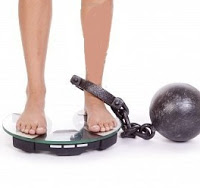
8102631-a-woman-has-a-ball-and-chain-on-her-leg-and-standing-on-the-scales

I frequently hear people say, “I need to lose weight,” but that is a frightening idea if you really think about it. Losing weight implies losing important parts of our bodies. What people likely mean is they want to lose fat, get more fit, feel better about my body. The words we use to describe our goals are important. What we tell ourselves effects how we feel about ourselves. Telling ourselves we want to feel better, be more fit is a positive empowering thought. Telling ourselves, I need to lose weight is a more punitive judgemental and frequently unrealistic thought.

A few highlights of Waehner’s post: The number you see on the scale of your weight is a measure of every part of your body. Your bones are heavy, your muscle is heavy, your organs have weight. And most of your body weight is in water!

She also mentions that the weight you measure is not an accurate measure of your overall health nor the proportion of muscle to fat.  And she also agrees with me that focusing on losing “weight” is not a strong motivator to work out. Focusing on feeling better, stronger, more fit helps motivate us to work out.

Lastly she gives great tips about how to change your fitness focus to be more motivating and positive and kind to yourself!

Read Full Post »

By Sue Shekut, Owner, Working Well Massage, Licensed Massage Therapist, Certified Wellness Coach, ACSM Personal Trainer

US Navy 050203-N-4729H-005 Navy Delayed Entry ...

Image via Wikipedia

For anyone that’s ever dieted or struggled to keep excess fat off, you know that conventional wisdom (increase activity, decrease calories) has tended to recommend very caloric intake for losing weight. But living on super low-calorie diets is not only not sustainable int he long-term, but it’s very difficult to maintain even for short-term results. Now scientist shave found the way to lose weight is not as strict and severe as we once thought! And the National Institute of Diabetes and Digestive and Kidney Diseases has produced a wonderful new tool that allows you to more accurately estimate how many calories you need to consume and how you need to adjust your activity level to lose unwanted fat. This tool is called the Body Weight Simulator and is accessible here.

To use the Body Weight Simulator, you need to enter your Base Weight, your activity level and your age and height. The tool does the rest, providing you with an estimate of the number of calories you need to reduce each day to lose weight for the short-term as well as the number of calories you need to reduce to maintain the loss for the long-term. I tried the simulator myself and the number of calories I’d need to cut to lose 10 pounds in 6 months is just much smaller than most diet plans would have me reduce. (About 270 per day versus 500-1000 calories per day.)

The tool also provides graphs and charts that show the progression of weight loss, body fat % change, and activity level change.  Try it yourself and see how reasonable the new calorie goals and activity levels can be for your own fat loss plan!

Enhanced by Zemanta

Read Full Post »

Body Fat meter

Body fat meter. Image via Wikipedia

By Sue Shekut, Owner, Working Well Massage, Licensed Massage Therapist, Certified Wellness Coach, ACSM Personal Trainer

I am a big believer in being clear about our goals so that we don’t waste a lot of time pursing a fitness or nutritious goal that isn’t realistic or attainable. To me, saying “I need to lose weight” is inaccurate. What most people really mean is that they want to reduce their total body fat. If we wanted to simply lose weight, it wold mean we would lose muscle, fat and bone mass across the board. And that is NOT healthy.

I cam across a good article on fat loss and weight training myths. Check out this article for some great ideas on spot reduction, lower abdominal myths and the myth that high repetitions burn more fat from exrx.net, Fat Loss & Weight Training Myths

Enhanced by Zemanta

Read Full Post »

By Sue Shekut, Owner, Working Well Massage, Licensed Massage Therapist, Certified Wellness Coach, ACSM Personal Trainer

The answer: Change your life!  What do I mean by that? Change the way you relate to food and exercise.


Healthy people exercising

Today I was reading this article on Yahoo Health about women that lose a significant amount of fat and transformed into healthier leaner people. And they kept the fat off over a period of years. If you read through their stories you will find a common theme: They switched from eating processed foods to “clean” foods like salads, brown rice, fish, vegetables. And they added regular exercise to their daily routines. They didn’t become professional bodybuilders, they did not subsist on a peanut and a celery stalk a day. They just eat healthier food in smaller more frequent portions. And they added activity to their daily lives One woman follows the simple guidelines of the ACSM: She added 30-60 min of cardio or strength training each day. Another woman said she makes sure she works out even on busy days at least 15 minutes.


If you read fitness magazines, blogs or know anything about fat loss and physical fitness, this story won’t be a big surprise to you. I think it’s important to remind ourselves that there are no quick fixes for fitness. But is losing fat, getting in shape and then STAYING in shape so easy? For most people, it’s not. It takes a few key qualities:

1. Perseverance-We don’t skip brushing our teeth every day to catch up on weekends and brush for 2 hours. Why would working out for 2 hours once a week be better than working out for 20-30 minutes 5 days a week? It isn’t. Our bodies work best in increments. We eat several times during the day, we sleep each night. We wash up each day (hopefully). Our 2010 lifestyles may make it tough to fit in movement when most people work in offices or in jobs that involved sitting for hours on end.  Adding in movement a little bit each day is easier than trying to pack in a mega workout once in a while. It takes perseverance (to persist in a state, enterprise, or undertaking in spite of counterinfluences, opposition, or discouragement). Taking stairs instead of the elevator, parking farther away from the store, walking when you can versus driving. Working out while spending time with your family and children also makes it easier to incorporate daily activity into your routine.  What’s important is that you add some exercise activity each day or at least 5 days a week. Don’t have time to go to a gym? It’s easy to make a home gym or workout to videos, Wii Fit or other cardio program. Whether you run swim, hike, bike or do yoga, it’s important is that you keep it up on a regular basis.

2. Discipline as in Self discipline-Fast food, junk food and high calorie, high fat food are all around us. It’s tough to get out of bed and go for a run or come home from a long day and fit in that 30 minutes of cardio or strength training. Making it a regular nonnegotiable part of your routine can help. And when you feel the urge to overeat or skip your daily workout, it takes a bit of self-discipline to pass up those french fries or push yourself to work out even when you’d rather sleep! But the rewards are feeling better, being healthier, having a clearer mind, being less stressed out and of course, being fit!

3. Prioritization-like that word? I did NOT make it up. It means making the most of your time and resources. And in this case, I say it means making sure that fitness and healthy eating are a priority. I use this analogy. If your child (if you don’t have a child, think about your niece, nephew or another child you care about) needed to eat, rest or get some exercise, would you let other priorities get in the way of taking care of the child?  (Hopefully not!) Yet adults often neglect our own needs for health and fitness because “we are too tired, too busy or too unmotivated.” Yet if we have to walk the dog or feed a child healthy food, somehow we find the inner strength, time and resources. So it’s not a matter of not having time or energy to take care of ourselves. It’s really about priorities. Learn to make your own health and wellness a priority. It benefits you and it also provides a good role model for children in your life!

4.  Focus (directed attention, concentration)-Focusing on how we look is rarely motivating. For some, working out to get the body they want or fit into a particular outfit may help motivate them to work out and eat right. It doesn’t work for me and many of my clients though. For me, I have to focus on how I feel. I feel better when I work out and eat right. How I look may change for the better but it’s not my  main focus. My focus is in feeling good, having more energy. sleeping well, not having stomach aches or feeling sluggish. No matter what your prime motivator/s is/are, use them to give you strength when you need a push to work out or eat right!

5. Fun-Wellness needs to be fun to be sustainable.  If you hate running, how motivated will you be to get up and run in the morning? But if tennis is fun for you, you will be more likely to play tennis than run. Wii Fit tries to make exercise fun for adults and children by integrating games in with the movement exercises. healthy food doesn’t have to be drab and boring. take a cooking class that specializes in healthy eating: Indian food, Middle Eastern Food , Chinese Stir Fry and even some Italian dishes can be low-fat and healthy.  Learn to add healthy spice to your food and “healthy” becomes fun and tasty! Make learning new fitness routines fun by trying them out with family and friends.

Enhanced by Zemanta

Read Full Post »

Saratoga chips at the Mississippi State Fair i...
Image via Wikipedia

By Sue Shekut, Owner, Working Well Massage, Licensed Massage Therapist, Certified Wellness Coach, ACSM Personal Trainer

Having a hard time switching from potato chips to carrots? You are not alone! As people in our country continue to grow more and more obese, many research scientists are putting in long hours to investigate biological causes. Last month, scientists from the Scripps Research Institute issued a report that shows -definitively, for the first time- that the same biological processes that cause drug addiction are behind the compulsion to overeat. Many obese people have been making this statement for years–that they feel out of control after eating junk food, and the more they eat, the more they want.

In the study, scientists monitored brain chemicals in rats, noticing that as the rats got more obese, their brains were less and less able to issue a reward to the body. As this pleasure center in the brain became less and less responsive, the rats developed the tendency to overeat, seeking that chemical reward. This is the exact same pattern that occurs in rats that are administered cocaine or heroin, and scientists believe that the pattern plays a large part in the development of drug dependency.

Paul J. Kenny, an Associate Professor at Scripps, conducted the study. He says that the nearly three year long study confirms the “addictive” properties of junk food:

“The new study, unlike our preliminary abstract, explains what happens in the brain of these animals when they have easy access to high-calorie, high-fat food. It presents the most thorough and compelling evidence that drug addiction and obesity are based on the same underlying neurobiological mechanisms. In the study, the animals completely lost control over their eating behavior, the primary hallmark of addiction. They continued to overeat even when they anticipated receiving electric shocks, highlighting just how motivated they were to consume the palatable food.”

The scientists offered the rats many types of food, but they always chose “junk” food. As a test, the researchers removed the junk food and tried to put them on a nutritious diet. Their preference for junk food was so strong, however, that they starved themselves for nearly two weeks.

To read the entire article, visit the original Press Release.

So if anyone tells you junk food is not addicting, think again. And pass the carrots!

Reblog this post [with Zemanta]

Read Full Post »

By Barbara Russi Sarnataro
WebMD Feature
Reviewed by Louise Chang, MD

How many New Year’s Eves have you spent sipping champagne and vowing to get more fit in the coming year? And how many times have you failed to follow through?

“December 31 over a drink is too late to set goals and make promises,” says Justin Price, owner of The Biomechanics, a personal training and wellness coaching facility in San Diego, Calif.

Fall, on the other hand, is a great time to start a fitness program because “‘you’re going to create good habits for the holiday season and the upcoming winter months,” says Price.

Chris Freytag, a fitness instructor and fitness expert with Prevention magazine, agrees.

“With the change of seasons comes a renewed time to rethink and restart,” she says. “‘What’s so special about January?”

Besides, says Freytag, a mother of three, moms with school-aged kids “think of September as the new year.”

Here are 10 ways to start making the most of the season. And who knows? This year, you might be in great shape before that New Year’s Eve party rolls around.

1. Take advantage of the weather. Fall can be a treat for the senses: the crisp air, apple picking, pumpkin carving, a gorgeous canopy of fall foliage, and the crunch of leaves underfoot. These months are a great time to exercise outdoors and enjoy cooler temperatures.

“Walking, hiking and cycling are all awesome in the fall,” says Todd Durkin, MS, fitness coach and owner of Fitness Quest 10 in San Diego, Calif.

Discover park trails and take in some new scenery, whether you’re walking, biking, or in-line skating, he suggests.

In places where snow falls early, try cross country skiing or snowshoeing. Or, if you live near the beach, get out and play volleyball, throw the Frisbee around, or play a vigorous game of fetch with your dog.

“It’s a great time to do beach activities because it’s so much less crowded,” says Price.

If you’re near a lake, try kayaking or canoeing, for an excellent whole-body workout and a great change of pace.

And remember, it doesn’t have to seem like exercise to be a great workout.

“Raking leaves or doing some fall outdoor yard work is a great way to get the heart pumping, and it’s great calorie-burning,” says Freytag.

2. Think outside the box. Always wanted to learn to tap dance? Attempt to box? Master the jump rope? Ask any schoolchild: Fall is a great time to learn something new.

Many classes at gyms and elsewhere get started in the fall, so look around and see if something intrigues you.

And with the kids in school, parents have more time to check out those classes, Freytag says.

Fall is the perfect time to gain new physical skills, Price says, because you burn fewer calories when you begin a new activity (thanks to the learning curve). If you learn something new now, by next summer, you’ll have mastered the skill — and you’ll burn more calories doing it, just in time for swimsuit season.

3. Be an active TV watcher. Many people get geared up for fall premieres of their favorite television shows, says Freytag. “If you’re going to sit down and watch hours of TV, get moving,” she suggests. “Make a date with exercise and TV.”

While you watch, you can walk or run in place, do standing lunges, do tricep dips off the couch, or lift weights. During commercials, do push-ups or sit-ups. In a one-hour show, you probably have close to 20 minutes worth of commercial interruption.

4. Integrate exercise into your life. You already know the obvious suggestions: park farther away from your destination; take stairs instead of elevators; take a walk during your lunch break. Here are a few that are less obvious:

* If you’re spending the afternoon taking kids to soccer practice, instead of reading a book or visiting with another parent, “why not walk around the outside of the field while they practice?”, suggests Price. “Or (if you feel comfortable) warm up and cool down with the kids.”
* Or try “walking meetings,” like those Price and his colleagues at Biomechanics often hold. ‘”We go for a walk, we brainstorm, and we figure out who’s going to take what responsibilities,” says Price. “‘Things get achieved much more quickly,” he says, and everyone feels better for doing it.
* You can even get moving while you get motivated — for fitness or other life goals. ‘”Get some inspirational music or find a motivational talk and download it to your iPod,” suggests Durkin. Walk while you listen for 30 minutes.

5. Rejuvenate yourself. Fall is the time to rejuvenate body, mind and spirit, says Durkin. Get a massage after your run. Learn to meditate. Take an art class. Treat yourself not just with exercise but other activities that promote wellness, he says, so you can feel good physically, mentally, emotionally, and spiritually.

6. Remember the 30-day rule. “‘It takes about four weeks for the body to adapt to lifestyle changes,” says Price. That’s why people who give up on their fitness programs tend to do so within the first 30 days.

So, when the alarm goes off in the morning and it’s darker and colder, don’t roll over and hit the snooze button.

“Try to stick with a program for a month,” Price says. “After a month, behavior patterns will have adapted and it will be much easier to stick with it after that.”

7. Strive for the 3 Cs. Freytag calls commitment, convenience, and consistency “the three Cs”, and says having all three will lead to a successful fitness program.

First, exercise takes commitment. When a client complains to Freytag about a lack of time, she responds: “Tell me something I haven’t heard before. We’re all busy; that’s just part of our lives.

You have to start planning exercise, just like you do everything else,” like meetings, dinners, and getting kids to lessons and practice, she says. “Put in on the calendar, because later always turns into never.”

Convenience means choosing a gym that’s close by, or an activity you can do at home, or a time when you’re not likely to be interrupted.

Finally, there’s consistency. “I’d rather see a brand-new client work out for 10 minutes a day rather than one hour every month,” Freytag says

8. Deal with darkness. The best way to enjoy fall is to exercise outdoors. But it is getting darker earlier, and staying dark later in the morning, so be smart and safe.

“Just because it’s 6 p.m. (or a.m.) and dark doesn’t mean you can’t work out,” says Durkin. If walking or running outdoors, he says, “wear a reflective vest and carry a flashlight.”

When cycling, affix a light to your helmet or bike.

If possible, use trails or a local school track to avoid vehicle traffic. Try to work out at the same time every day, so drivers get used to seeing you.

9. Dress in layers. When exercising outside, layer your clothing. Before your body warms up, you may feel chilled, but once the blood gets pumping, you’ll feel overdressed.

These days, there’s no lack of great weather gear. Freytag and Price recommend clothing with wicking, often called “DriFit.”‘ This fabric wicks moisture away from your skin so you’re not exercising with wet fabric hanging on you.

Freytag suggests three layers: “The inner layer should be a moisture-wicking fabric, so it wicks away sweat and you’re not chilled. The second layer should be a warmth layer, and the third layer should be a protective layer (like a windbreaker or rain slicker, depending on the weather).”

“And don’t forget the sunglasses,” she warns. UV protection is important year round. Fall sun can be blinding at certain times of the day.

10. Find your motivation. “People are motivated by different things,” says Durkin. It’s important to first discover what your individual goals are, whether it’s losing weight, strengthening and toning, or preparing for a race or event, says Durkin.

But goals aren’t enough to get you there; you have to be motivated by the day-to-day workouts, he says. So choose something you’ll enjoy doing and will be likely to keep up, whether it’s walking or hiking with a friend, working with a trainer, or taking part in a “boot camp” class.

Creating a challenge for yourself will motivate you, as will encouragement and accountability, he adds. “You want to know when you’re doing a good job, and when you’re not,” says Durkin.

Remember too, that anything worth having takes work.

“Tell me something you can do three times a week for 10 minutes and be great at? It doesn’t exist,” he says. “If it was easy to be great, everybody would be great.”

Link to Barbara Russi Sarnataro’s article here

Read Full Post »
Climbing stairs is a great way to pump fresh blood, (and thus, oxygen) into your brain, give yourself a break from a stressful day, and burn a few calories. Best yet, it can be fun.

In the 1960’s, Volkswagen made ugly cars fun with the Volkswagen Beetle. Now they are finding new ways to make exercise fun. A car company encouraging people to exercise? Now that is FUN!

Link to You Tube video!

From Volkswagen’s The Fun Theory website: We believe that the easiest way to change people’s behavior for the better is by making it fun to do. We call it The Fun Theory. Link to The Fun Theory Website

Working Well agrees!

Read Full Post »

By Sue Shekut, Licensed Massage Therapist, ACSM Personal Trainer, Certified Wellness Coach, Owner, Working Well Massage

I have had to eat a “healthy” diet for most of my adult life. As a young girl, I ate as much junk food as my peers and my body rebelled. By 20, I could not eat any white or processed sugar because I was hypoglycemic. I developed migrane headaches from chocolate (a former childhood love) and fermented foods like sharp cheeses and wines. White bread made me sick, so I had to switch to whole grain bread even before it was marketed as whole grain bread. Through the years my body let me know, anything overly processed, overly sugared, overly salted, or overly fat was going to give me stabbing pain in my head, my abdomen, or just plain make me sick and exhausted. I am the “canary in the coal mine” when it comes to food. But in many ways I am a lucky person. I haven’t been able to eat the typical American diet and I don’t have a lot of the typical American diseases. (such as obesity, high blood pressure, Type II diabetes)

I don’t tell you this to get accolades or say I am so great. No, my healthy diet was mainly by default in the beginning. I liked the junk food. I just couldn’t handle it. Later, as I read more and learned more, I ate healthy by design. Having grown up on Rice Krispy Treats, all things Nestle, Rice a Roni, Carnation Instant Breakfast, Skippy Peanut Butter, McDonald’s and Wonder Bread, I know what it’s like to try to wean off the processed foods and try to eat vegetables, fresh fruit, healthy grains, like brown rice, and be satisfied. In my case, I had a crash course in changing my diet. Still, it took a while to adjust to new tastes and learn how to be satisfied with less added sugar. But I can tell you IT CAN BE DONE! and your health and well being is worth it.

But How do you Know What’s Junk Food and What’s Healthy Food?
According to Margie King of the Philadelphia Nutrition Examiner, the NuVal nutritional scoring system may be the ticket to simpler healthy eating. The NuVal system will analyze more than 50,000 food items found in a typical grocery store and assign a value of 1 to 100 to each item. The higher the score, the more nutritious is the food.

The system is the brainchild of Dr. David Katz, an Associate Professor at the Yale University School of Public Health, and the Director and founder of Yale’s Prevention Research Center. Dr. Katz is an expert in nutrition and preventative medicine, the author of several books including The Flavor Point Diet, a syndicated health columnist for The New York Times and a medical contributor for ABC News.
Read more from Margie King of the Philadelphia Nutrition Examiner here

Dr. Katz says our taste buds are malleable and we are teaching them to crave salt and sugar. Eating added sugar in non-dessert items in everything from pasta sauce to breakfast cereal causes our taste buds to crave sugar much more than we normally would. In the video, he talks about how there is as much sodium in many breakfast cereals than your diet should be. It’s well worth the 4 minutes to watch Dr. Katz talk about how our diets are modified by the food supply and how we can retrain our taste buds to enjoy healthier less salty and less sugary foods.

Link to Dr. Katz’s video “Rehab Your Taste Buds: Getting Hooked on Wholesome Foods”

As American’s look to health care reform, there is a growing buzz about food system reform as well. Some say health care reform won’t work without reforming our nutritional system. The Nu Val system is one attempt to give us tools to reform our diets so we don’t NEED as much health care intervention. It’s Prevention versus Disease Treatment. And that sounds pretty sweet! Read Why Health Care Reform Requires Nutrition Reform by Margie King in the Philadelphia Nutrition Examiner

Read Full Post »

By Sue Shekut, Licensed Massage Therapist, ACSM Personal Trainer, Certified Wellness Coach, Owner, Working Well Massage

By now, most people have heard the news that consuming High Fructose Corn Syrup (HFCS) may have adverse effects on your health. The documentary, King Of Corn, is a humerus and educational review of corn production and describes how much of the corn produced in the U.S. is refined into HFCS. The Corn Refiners Association lobby countered bad press about HFCS with the Sweet Surprise campaign, a series of ads saying “HFCS is not bad for you..in moderation.”

Not to be alarmist, but how bad is HFCS for us, really?

Let’s look at the recent research:

High-Fructose Diet Raises Blood Pressure in Middle-Aged Men
A diet high in foods with large amounts of fructose sugar such as sweetened soft drinks increased blood pressure in men, according to a study presented today (September 23, 2009) that also found that a drug for gout blocked the effect.

Men in the study who ate a high-fructose diet had their blood pressure rise about 5 percent after two weeks, while those who also were given a gout treatment increased less than 1 percent, study author Richard Johnson said. Eating great amounts of fructose without the treatment also raised the risk of developing metabolic syndrome, a group of risk factors associated with the development of heart disease and diabetes.

The study, which was funded by the National Institutes of Health, will be presented today (September 23, 2009) at the American Heart Association’s annual conference on high blood pressure in Chicago.

Fructose is one of several sugars in food and makes up about half of all the sugar molecules in table sugar and in high-fructose corn syrup, according to background information from the American Heart Association. The syrup often is used as a sweetener in packaged food products. Fructose is the only common sugar known to increase uric acid levels, the heart association said. Study info here

Study Finds High-Fructose Corn Syrup Contains Mercury
MONDAY, Jan. 26, 2009 (HealthDay News) — Almost half of tested samples of commercial high-fructose corn syrup (HFCS) contained mercury, which was also found in nearly a third of 55 popular brand-name food and beverage products where HFCS is the first- or second-highest labeled ingredient, according to two new U.S. studies.

In the first study, published in current issue of Environmental Health, researchers found detectable levels of mercury in nine of 20 samples of commercial HFCS.

And in the second study, the Institute for Agriculture and Trade Policy (IATP), a non-profit watchdog group, found that nearly one in three of 55 brand-name foods contained mercury. The chemical was found most commonly in HFCS-containing dairy products, dressings and condiments.

The use of mercury-contaminated caustic soda in the production of HFCS is common. The contamination occurs when mercury cells are used to produce caustic soda.

“The bad news is that nobody knows whether or not their soda or snack food contains HFCS made from ingredients like caustic soda contaminated with mercury. The good news is that mercury-free HFCS ingredients exist. Food companies just need a good push to only use those ingredients,” Wallinga said in his prepared statement. Washington Post Article on Mercury on HFCS products here

HFCS and Obesity
And finally, researchers from Pennington Biomedical Research Center, Louisiana State University, and the Department of Nutrition, University of North Carolina, analyzed food consumption patterns by using US Department of Agriculture food consumption tables from 1967 to 2000. The consumption of HFCS increased > 1000% between 1970 and 1990, far exceeding the changes in intake of any other food or food group.

HFCS now represents more than 40% of caloric sweeteners added to foods and beverages and is the sole caloric sweetener in soft drinks in the United States. The increased use of HFCS in the United States mirrors the rapid increase in obesity. The digestion, absorption, and metabolism of fructose differ from those of glucose. In addition, unlike glucose, fructose does not stimulate insulin secretion or enhance leptin production. Because insulin and leptin act as key afferent signals in the regulation of food intake and body weight, this suggests that dietary fructose may contribute to increased energy intake and weight gain. Furthermore, calorically sweetened beverages may enhance caloric overconsumption. Thus, the increase in consumption of HFCS has a temporal relation to the epidemic of obesity, and the overconsumption of HFCS in calorically sweetened beverages may play a role in the epidemic of obesity. Link to article in American Journal of Clinical Nutrition

More research needs to be and is being done. And, King of Corn afficionados aside, HFCS isn’t the only sugar that should be consumed in moderation.

Sugar Consumption Guidelines
According to the American Heart Association, no more than half of your daily discretionary calorie allowance come from added sugars. For most American women, this is no more than 100 calories per day and no more than 150 per day for men (or about 6 teaspoons a day for women and 9 teaspoons a day for men).

How much added sugars do most Americans consume?
A report from the 2001–04 NHANES (National Health and Nutrition Examination Survey) database showed that Americans get about 22.2 teaspoons of sugar a day or about 355 calories. This number has increased steadily over the past three decades. Teens and men consume the most added sugars.

A major contributor of added sugars to American diets are soft drinks and other sugar-sweetened beverages.

What foods and beverages are the main sources of added sugars in Americans’ diets?
Regular soft drinks; sugars and candy; cakes, cookies, pies; fruit drinks (fruitades and fruit punch); dairy desserts and milk products (ice cream, sweetened yogurt, and sweetened milk); and other grains (cinnamon toast and honey-nut waffles).

Regular soft drinks are the No. 1 source of added sugars in Americans’ diets. A 12-ounce can of regular soda contains an estimated 130 calories (or 8 teaspoons) of added sugars. People who consume lots of sugar-sweetened beverages eat too many sugar calories which can add up quickly and tend to gain weight. Carefully monitor the number of calories you get from sodas and other sources of added sugars.

More on the AHA’s standpoint on sugar consumption

Obesity, mercury poisoning and high blood pressure is serious stuff. But, let’s not get too stressed out about it. Pour a glass of nice cold water, kick back and watch the King of Corn filmmakers, Ian Cheney and Curt Ellis spoof about the Corn Refiners Association “HFCS is OK in moderation” ads.

Spoof: HFCS is like cigarettes..it’s OK in moderation

Spoof: DDT is OK, in moderation

Read Full Post »

By Sue Shekut, Licensed Massage Therapist, ACSM Personal Trainer, Certified Wellness Coach, Owner, Working Well Massage

Does exercise makes you fatter?  According to an article in Time Magazine ‘s August 9th,  2009 issue, “Why Exercise Won’t Make you Thin,” vigorous exercise can make you unable to lose weight. The article states that people only have so much willpower. Once they use that limited self control to work out, they don’t have any more mental strength to resist over eating. It also states that vigorous exercise makes you ravenous and you end up eating much more if you exercise than if you do not.

Well, that’s just silly.  Think about it. If vigorous exercise made you fat, Michael Phelps would be a Sumo wrestler.  It is true that high caloric expenditure requires high caloric intake.  An Olympic athlete that burns 12000 calories a day in training would need to eat at 12000 calories just to maintain his current weight. People that work out for hours at a time–competitive body builders, gymnasts, swimmers and marathon runners–do expend a lot of calories. And they do need to eat to replace the calories they burn in exercise. But ask a marathon runner if he or she is ravenously hungry after a run. Many of them will tell you they actually lose their appetite immediately following an intense workout. Body builders eat frequent meals throughout the day to keep protean available to give their muscles building blocks to grow larger and stronger.

It’s only been relatively recently that human beings lead such sedentary lifestyles. In the 1800’s and early 1900’s, most people had very physically active lives. Daily caloric intake was larger due to the extra caloric expenditure. In other words, if you spent your day tilling the fields, or washing clothes and dishes by hand, hand washing floors and making bread from scratch, you had a higher caloric needs than someone from 2009 that sits at work all day, drives home, microwaves a meal and sits in front of the television.

According to the American College of Sports Medicine, a leading authority in sports medicine and exercise science:

• Physical activity is one of the most important behavioral factors in weight maintenance and improving long-term weight loss outcomes. In fact, participation in an exercise program has proven to be the very best predictor of maintaining weight that was lost.

• Effective weight loss and maintenance depend on a simple equation called energy balance: Calories expended through physical activity and normal lifestyle functions must exceed calories consumed.

• It is a myth that exercise can actually prevent weight loss by leading exercisers to overeat. Research and common sense disprove this notion. Look around the gym or the jogging trail. If this were the case, wouldn’t those who regularly exercise be the fattest?

• Physical activity needn’t involve expensive equipment, gym memberships or team athletics. Simple activities like walking, accumulated in 10-minute bouts, can have significant benefits.

John Jakicic, Ph.D., FACSM states that” “Again, it is clear in this regard that physical activity is one of the most important behavioral factors in enhancing weight loss maintenance and improving long-term weight loss outcomes.”

Jakicic’s research on obesity, published in 2008, showed that a long duration of physical activity (275 minutes above baseline levels) led to the largest observed weight loss after a 24-month intervention.

Sorry for the letdown, folks, but exercise does help you lose fat and maintain the weight loss. And  it can be fun!

Sources:

Time Magazine Article link

ASCM Article link

Read Full Post »