Feeds:
Posts
Comments

Posts Tagged ‘Add new tag’

Wii Fit Plus
Image via Wikipedia

By Sue Shekut, Owner, Working Well Massage, Licensed Massage Therapist, Certified Wellness Coach, ACSM Personal Trainer

I’ve been using the Wii Fit on and off for the past year. I like the exercises overall. They combine video games with a little “Mii” avatar you design yourself.  The Wii Fit consists of a Balance Board which monitors your balance and weight, and a DVD of the Fit program. The Wii itself comes with the Wii Controller and Nunkucks which you use in some of the games.

Now Wii Fit Plus is out and I have to say it is an improvement over the original Wii. Wii Fit Plus includes all the same exercises, yoga, strength training, aerobic activities and balance games. PLUS it includes a set of about 20 new games and adds about 3 new exercises to the yoga, strength training and aerobic activities.

The strength training activities are well done. You get a “personal trainer” avatar that demos each exercise and counts out each set with you. The trainer offers encouragement and tips with each set you do.  As you progress through the program increasing levels of difficulty are unlocked.

The yoga poses are great and the balance board gives you a good indication of where your balance is off and how you need to move your body to be in better balance. While this does not substitute for live instructor as far as having someone watch you and correct subtle deficiencies in your form, the Balance Board does tell you when you are putting too much pressure on one leg over another or when you are leaning too far to one side.

The balance games are fun and silly. In one you are dressed as a penguin and you have to balance on an ice berg and jump up to eat fish as they fly overhead. Sounds silly, right? Well, it is, but it’s also fun. It really works your legs and teaches you to balance as you slide across the iceberg.

The Wii Fit also keeps track of your workouts. Wii uses a timer to let you know how many minutes of each workout you complete.  Some exercises take 1 minute, others like the stepping routine may take 5-6 minutes. Put em all together and you can design your own 30-60 minute workout. It also has a “locker room” in this new version of the game along with a program to let you customize your fitness routines and monitor your progress.

If you are a marathon runner or a serious athlete, you may think Wii Fit will be too easy for you. The aerobic portion may be. But since Wii does such a  good job of monitoring your posture and balance, even the most serious athlete can benefit from the feedback Wii Fit provides. PLUS, even serious athletes need to have fun and the Balance games are a nice break in your running routine.

Some of the new games I like are the Snowball fight where you throw snowballs at friend Miis and they fight back. The Rhythm Kung Fu game which is a step game that incorporates “Kung Fu” moves with a nice rhythm music background. The Island Cycling game is a game where you “bicycle” around the “island,” a course with flags you must ride by for points. You bicycle by stepping on the Balance Board. (This gives you a great calf workout!) The Bird’s Eye Bulls Eye is a fun “arm flapping” exercise. You squat and flap your arms up and down to control your “bird” as he/she flies over the sea and drops down on posts that have bulls eyes painted on them. A great exercise for computer users. If you feel silly doing this game then you aren’t flapping your arms fast enough!
Overall, Wii Fit Plus is a great indoor fitness game for those of you that say you don’t have time to workout. You can use Wii Fit in as little as 10 minutes and get some movement in your day. (Although ideally you want to get 30 minutes of exercise a day!

Check out some of the new games here.

Suggestions for Improvements for The Wii Fit Plus here.

Buy your Wii Fit Plus here at Amazon for $19.99 (Wii sold separately.)

Reblog this post [with Zemanta]

Read Full Post »

The Walkstation
Image by Scoobyfoo via Flickr

By Sue Shekut, Owner, Working Well Massage, Licensed Massage Therapist, Certified Wellness Coach, ACSM Personal Trainer

It’s all over the web today…too much seat time can hurt your heart, increase your risk for cancer, obesity and diabetes, according to a study published in Circulation: Journal of the American Heart Assn. Doctors from the Karolinska Institute and the Swedish School of Sport and Health conducted a study that shows that sitting too long, not just lack of exercise, can contribute to heart disease and other life threatening diseases.

Journalist, Michelle Fay Cortez, writes in “Sitting Is a Silent Killer, Swedish Medics Warn Couch Potatoes” from Bloomberg.com, “The more time people spend in a completely sedentary state, independent of the exercise they get at other times, the higher their risk of becoming obese, and developing diabetes, heart disease and cancer, the doctors wrote in an editorial in the British Journal of Sports Medicine. The dangers are greater still for people who do little exercise as it is, the authors wrote.

While many people think of being sedentary as lacking in exercise, this is more accurately described as the time when the body’s muscles get no activity, the doctors said. They cited an Australian study showing that each extra hour women spent watching television boosted their risk of developing a group of heart complications known as metabolic syndrome by 26 percent, regardless of what exercise they took.”

Read entire article at Bloomberg here.

Unfortunately, most people I know, especially “knowledge workers” have jobs that require us to sit for hours behind a computer.  So, what do you do? Tell your boss, hey, my job is killing me? Not likely. However, many workplaces are responding to such studies with Walk at Work programs. Or allowing staff to go to yoga or other workout classes at lunch. Or providing yoga classes or personal training sessions at work. Some companies provide employees with desks that move up and down to allow for standing. Some very progressive companies use Walk Stations for employees to walk while they work on their computers. Other companies provide regular massage to help increase circulation to your muscles. Massage therapists also provide stretches for sedentary employees.

How to Add More Movement to Your Work Day

You can incorporate more movement and less sitting into your workday yourself with these simple ideas:

1. Take the stairs when you can versus an elevator.

2. Walk up or down a few flights of stairs for a 5-minute break every few hours.

3. Do jumping jacks at your desk or, if that embarrasses you, in the restroom.

4. Do squats at your desk. Simply stand up, then barely sit, then stand, then barely sit. Repeat 5 or 10 times.

5. Do side bends at your desk. Do 3 sets on each side and hold each “bend” for 15 seconds.

6. Stand up, take a few deep breathes, then reach for the ceiling, inhale, exhale and sit down again.

7. Stand up and do arm circles.

8. Walk around the office-take a few laps!

9. Stand at your desk when you are on the phone. March in place for extra points!

10. Drink water at your desk in a sport bottle to keep the water cool and prevent spills. If you drink about 20 ounces every few hours your bladder will create a natural timer for you to get up and take a break!

Reblog this post [with Zemanta]

Read Full Post »

An Artistic yoga class in session
Image via Wikipedia

By Sue Shekut, Owner, Working Well Massage, Licensed Massage Therapist, Certified Wellness Coach, ACSM Personal Trainer

So you decided to take the plunge and try a yoga class. Then you find out that there are different kinds of yoga. How do you know what kind of yoga to take? And what if you are not flexible? Do not despair!  Yoga is really for people that are not flexible. Unfortunately, many yoga teachers or studios advertise their classes by showing a very highly trained yoga teacher doing an extremely advanced pose that few other people can do.  No worries, most beginning classes teach you simple poses to elongate your body and relax. “Pretzel” yoga is for the very very advanced, not the novice.

If you’ve tried a yoga class and found it either too difficult, too easy or too boring, it may not be yoga that’s the problem, it may  be  the type of yoga you tried or that particular teacher. (Think about it, if you get  a bad hair cut, do you think hair cuts are not for you or do you go to a different barber/hair dressor?!?)

So what type of yoga class should you attend?  Here are some tips from http://www.yoga.orz.nz:

Yoga Styles Overview

Iyengar – A softer -on-the-body classical style of yoga, Iyengar is perfect for beginners and those who haven’t exercised in a while. It uses props such as chairs, straps, blocks and pillows, and even sandbags, to compensate for a lack of flexibility, which is helpful for anyone with back or joint problems.

Iyengar is the most widely recognized approach to Hatha Yoga, it was created by B. K. S. Iyengar. Iyengar yoga is characterized by attention to detail within poses and the aid of the props. The props assist all sorts of people to be able to do the poses comfortably.

Each pose is held for a longer amount of time than in most other yoga styles, developing a state of focused calm. Benefits include toning muscles, eliminating tension and easing chronic pain.

Practicing Iyengar yoga will give you a good knowledge of classic yoga poses so that whatever other style you practice, you will have the basic fundamentals of how to do each posture. The teacher focuses on alignment and inner awareness.

Sue’s Note: Some Iyengar teachers tend to take a militaristic approach and may push your body beyond what you are capable of doing. Don’t let them! Many Iyengar teachers are wonderful and gentle. But if you find a teacher that is dogmatic in his/her approach or tells you to try a pose even if it hurts you, avoid this class and find someone that is more compassionate–or risk serious injury!

Ashtanga (Power Yoga) the preferred choice for athletes, Ashtanga yoga is light on meditation but heavy on developing strength and stamina. The poses are more difficult than those performed in other styles, students move quickly from one pose to another in an effort to build strength and flexibility.

This style is suitable for anyone in reasonable physical condition but should be avoided by those who are new to exercise. Even the “beginners” routines are a physically demanding workout.

Students move from one pose to another in a continual flow and combine the inhale and exhale of the breath with movements. This physically demanding yoga was developed to build strength, flexibility, and stamina.

The series of poses involves weaving in a combination of standing, seated, backbends, inversions, balancing, and twisting poses into sun salutation poses which include a standing forward bend, upward dog, downward dog, and other poses.

Sue’s Note: Ashtanga or “power” yoga is popular in the West.  Westerners tend to move at a hectic pace even in yoga. However, proper form is even more important when you move through poses quickly. Potential for injury or overstretching/tearing of ligaments is greater in the faster paced styles of yoga. Take care when you try this style of yoga and make sure your yoga teacher is aware of any injuries or limitations before the class begins.

Bikram done in a hot room that is 38C or higher (to replicate the temperature of yoga’s birthplace in India); this style of yoga focuses on 26 postures that are performed in a certain order. The exercises are very physical and the intensity is high.

The Bikram series is warm and stretches muscles, ligaments and tendons in the order in which they should be stretched. Heat and yoga makes for a tough workout. This style is recommended for yoga veterans and extremely fit individuals only.

Sue’s Note: If you have high blood pressure or tend to overheat easily, you may want to avoid Bikram yoga especially in summer heat!

Hatha: This mellow form of yoga focuses on simple poses that flow from one to the other at a very comfortable pace. Participants are encouraged to go at their own pace, taking time to focus on the breathing and meditation in their practice. This yoga is ideal for winding down at the end of a tough day.

Sue’s Note: Hatha yoga may feel too slow for you if you like fast paced moment and cardio classes. But be patient and let yourself be bored a bit sot hat you can take the time to learn the proper form for you poses. It’s also a  way to sneak a little relaxation into your hectic week.

Kundalini, which incorporates mantras (chanting), meditations, visualizations, and guided relaxation. It focuses on healing and “purifying” the mind, body, and emotions. Kundalini yoga is designed to activate the kundalini energy in the spine.

This is achieved with poses, breath control, chanting, and meditation. Kundalini yoga is beneficial in dealing with addictions, and many people find it a natural way of releasing endorphins just by breathing and doing the poses.

Kundalini yoga consists of poses combined with breath control, hand and finger gestures, body locks, chanting and meditation.

Kripalu, which is more spontaneous, flowing, and meditation orientated. Kripalu yoga starts with the first stage, postural alignment and intertwining of breath and movement, and the poses are held a short time.

The student progresses to the second stage with meditation included and poses held for longer. Finally, the practice of poses becomes a spontaneous dynamic movement. The essence of Kripalu yoga is experienced through a continuous flow of postures whilst meditating, for gentle yet dynamic yoga.

Sivananda Yoga has a series of 12 poses, with the Sun Salutation, breathing exercises, relaxation, and mantra chanting as the basis.

Viniyoga, a slower more individualized form of yoga. This form develops strength, balance and healing, make it ideal for beginners, seniors, people with chronic pain or who are in rehabilitation from injury or disease.

Read the entire article on Type of Yoga at http://www.yoga.org.nz here.

Enhanced by Zemanta

Read Full Post »

By Sue Shekut, Owner, Working Well Massage, ACSM Personal Trainer, Certified Wellness Coach, Licensed Massage Therapist

Digitlal Miniposters from Produtive Fitness

I write a lot about increasing activity and fitness in and outside the workplace.  Companies can provide employees with education about fitness to help improve employee health. One easy way to give employees great information about stretching and weight training is to put up posters from Productive Fitness. At home, Productive Fitness provides mini versions of these posters via digital download.

What’s So Great About Productive Fitness?

Productive Fitness Products Inc. is the #1 supplier of fitness books to exercise equipment stores in North America. Mike Jespersen started Productive Fitness Products Inc. with the publication of The Great Dumbbell Handbook. The idea of publishing a book specific to dumbbells came when Mike was working at a local fitness equipment store in Vancouver, B.C. Many of the customers purchasing dumbbells also wanted a reference guide to performing the exercises. The book was an instant success and has now sold over 300,000 copies. This success has been expanded upon with The Great Body Ball Handbook now having sold over 300,000 copies, and The Great Handbook series having sales of over 1.2 million.

Since Productive Fitness Products’ incorporation in 1998, it has continued to publish books, expanding on its series of “Great Books” which offer instruction on specific exercise topics such as the Body Ball, Stretch Tubing, and multi-station gyms.
The “Great Books” are designed as quick-reference handbooks which allow readers to instantly access exercise descriptions for a particular body part. Each exercise description has a start and finish photo with clear, concise, step-by-step exercise descriptions.

• See a sample of Productive Fitness videos on You Tube here.

Who Writes and Reviews Productive Fitness Products?

• Andre Noël Potvin is an internationally accredited author, fitness educator and medical exercise specialist with 24 years of leadership experience and clinical experience. Owner and operator of both a medical fitness clinic and school for fitness professionals, Andre is frequently invited to lecture at international public and professional conferences.
Read more about Andre here.
• James Talo has an extensive background in individual and team sports. His endeavors have ranged from track and field to lacrosse and the martial art, aikido. However, it wasn’t until Jim suffered a spinal injury in 1993 where his appreciation for the human body and how it should optimally move and function became apparent. This injury shifted his attention to the method of kettlebell lifting and the teachings of some of the world’s best coaches. He began his search for knowledge on this niche sport and obtained his first kettlebell certification in 2004.Jim’s coaching philosophy is one he shares with his students, clients and colleagues: “My purpose is to create an awareness… to educate coaches and their athletes on the merits of kettlebell lifting both as a training protocol and as a sport…I am here to serve, and to instruct technique that is safe and highly effective.”

Read more about Jim here.

Fitness Posters from Productive Fitness

• Large Size Posters for the workplace

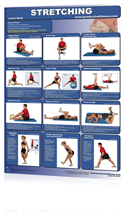
Large Stretching Poster from Productive Fitness

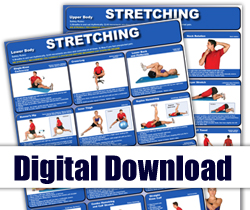
• Digital Download Posters (8.5 x 11) for home workouts.

Disital Posters from Productive Fitness

Reblog this post [with Zemanta]

Read Full Post »

Image representing Walk Score as depicted in C...
Image via CrunchBase

By Sue Shekut, Licensed Massage Therapist, ACSM Personal Trainer, Certified Wellness Coach, Owner, Working Well Massage

Want to know where you can take a nice after dinner walk in Chicago?  I know it’s cold but if you bundle up, you can burn some calories and still see the bright lights and your neighbors holiday decorations as you stroll.   Check out this site dedicated to providing rankings on most walkable neighborhoods: Walk Score.com

According to WalkScore’s website, “The top 8 neighborhoods in Chicago are Walkers’ Paradises. 66% of Chicago residents have a Walk Score of 70 or above. 96% have a Walk Score of at least 50—and 4% live in Car-Dependent neighborhoods.”

Top  Cities for Walking

The cities at the top of the Walk Score rankings have density, mixed use, transit, short blocks—and almost everything else on our walkability checklist. Most importantly, these cities have lots of destinations near each address, which is the strongest indicator of whether people walk.

Least Walkable Cities

It’s difficult to get by without a car (or even walk to a nearby restaurant) in these sprawling cities. More time in the car means more money at the pump, less exercise, and more pollution. But even the least walkable cities have walkable places. Read about these walking oases.
Top 20 Most Walkable Chicago Neighborhoods according to WalkScore

Neighborhood     Score
1  Loop                       98
2  Near North Side  97
3  Lincoln Park        94
4  Lake View             93
5  Uptown                 92
6  Edgewater            92
7  Near South Side  90
8  Rogers Park         90
9  West Town           88
10  Hyde Park          87
11  Logan Square     86
12  Lincoln Square  85
13  Bridgeport          85
14  Lower West Side 85
15  Near West Side   84
16  Albany Park        84
17  North Center      83
18  West Ridge         83
19  North Park          81
20  Irving Park         80
Read more from the WalkScore website here.
Reblog this post [with Zemanta]

Read Full Post »

By Sue Shekut, Licensed Massage Therapist, ACSM Personal Trainer, Certified Wellness Coach, Owner, Working Well Massage

Chicago is famous for many things. Chicago is “the Windy City,” The Second City,” the home of the Cubs, the White Sox and da Bears. Chicago also has the dubious honor of being one of the top 20 most “fat” cities in the U.S. But there are those of us that want to change that last claim to fame for Chicago.

One group that is making serous headway in tackling high blood pressure, obesity and activity levels of Chicagoans is Building a Healther Chicago.

Building a Healthier Chicago

Building a Healthier Chicago (BHC) is a collaborative of local and national stakeholders working to strengthen efforts to promote the health of Chicago residents and employees.

Through collaboration BHC promotes and tracks the adoption of selected programs, practices, policies, and supportive environments throughout the worksites, schools, health care organizations, faith based organizations, parks and neighborhoods of Chicago. BHC works with community organizations, academics, health care and government to improve the health of all citizens.

To make a significant impact on the health of all Chicagoans, BHC works to support its stakeholders broadly in:

  • Increasing physical activity levels
  • Improving healthy eating
  • Prevention, detection and control of high blood pressure

Why focus on physical activity, nutrition, and blood pressure?

Physical inactivity and obesity are at epidemic proportions in the U.S., resulting in an increased prevalence of many chronic diseases. Meanwhile, health care expenditures associated with physical inactivity and obesity continue to rise.

Becoming a Stakeholder in Building a Healthier Chicago

Working Well Massage is a stakeholder in Building a Healthier Chicago. If your firm is involved in promoting wellness or has a workplace wellness program you are proud of, consider joining BHC as a stakeholder!

Building a Healthier Workplace Resources

American Cancer Society Workplace Solutions

Centers for Disease Control and Prevention

Center for Value-Based Health Management

Federal Occupational Health

Health Enhancement Research Organization

Health Resources and Services Administration

National Business Group on Health

National Wellness Institute

Partnership for Prevention

Start! For HR Professionals (American Heart Association)

WELCOA: Wellness Council of America

WellSteps

Reblog this post [with Zemanta]

Read Full Post »

By Sue Shekut, Licensed Massage Therapist, ACSM Personal Trainer, Certified Wellness Coach, Owner, Working Well Massage

Christmas Eve. Snacks, candy, treats, egg nog. Friends. Family. Presents. Roast turkey. Or ham and roast beef. And then rolls and bread and crackers and brie…and before you know it, you’ve eaten way too much and you feel…like a pinata ready to burst open.

The holidays are full of extra sugary and fat filled treats. And according to some nutrition experts, it’s fine to have a few treats at Christmas. However, it’s also a good idea to plan ahead and follow a few simple rules of thumb so you don’t overdo it. Dana Lilenthal of Nutrition Data blog has the following tips to help you feel less stuffed and more buff on Christmas.

Healthy Eating Tips for Christmas

By Dana Lilienthal

Before you head out to your holiday meal, or before your guests arrive, here are some things you should be doing to make sure you enjoy your holiday with out overindulging.

1. Make a game plan for the day.
• What will you eat during the day?
• When will you fit in your exercise?

2. How much will you eat at your Christmas Eve/Day meal.

3. What are those special foods that you will eat at this meal.
• Are there 1 or 2 dishes that you love and only have once a year?
• Will you enjoy a small serving of these foods?
• What foods can you pass on?

4. Are there foods that make better leftovers?

5. Will you be the host to have control over the foods prepared or are you the guest who can bring a healthy dish or two for you and the rest of the guests?

Read entire blogpost from Dana here here.

Read more articles like this: Blog posts by Dana, Habits & Behavior

Who is Dana Lilienthal, M.S., R.D. and Why Would You Want to Follow her Advice?
Dana is a health educator and counselor with a passion for analyzing and creating recipes. She holds certifications as a Registered Dietitian from the American Dietetic Association, Personal Trainer from the American Council on Exercise and Health Counselor from the Institute for Integrative Nutrition. Dana holds a B.S. in dietetics and a master’s degree in elementary education. When not in a middle-school classroom, Dana educates private clients on how to improve their lifestyle for health and overall well-being.

Reblog this post [with Zemanta]

Read Full Post »

By Sue Shekut, L.M.T., ACSM Personal Trainer, Certified Wellness Coach, Owner, Working Well Massage

For those that are looking for an ergonomic gift for those people on your gift list that are glued to their computers, you are in luck!  According to Shane McGlaun at SlashGear.com, Jeflin has a new mouse with a gel cover that fits comfortably in your hand and is easy to use.  Read Shane’s comments below for more info on this new mouse from Jelfin. (And no, Working Well Massage & Working Well Resources does not have any connection to Jeflin nor do we get any free gear or ad dollars for telling you about their products.)

Jelfin ball mouse with gel cover rolls onto scene

by Shane Glaun at SlashGear.com
I have never been one to think that the mouse form factor that we all know and love needs a complete redesign. I will agree some mice are more comfortable to use than others are, but I like the traditional style myself. Just give me lots of sensitivity and I am good.

jelpinmouse

If you want to try a different mouse altogether the Jelfin ball-shaped mouse may be worth a look. The mouse is round and is covered with a gel coating for ergonomics and a comfortable feel. The ball shape of the mouse promises to fit the curve of your hand perfectly.

The mouse is designed to be sort of like a stress ball that can be touched and squeezed. The ball mouse comes in blue, red, yellow, green, and pink colors. The mouse also ships in a can that acts as a transportation container. Sensitivity for the mouse is 1000 dpi and it is available now for $34.95 from Amazon here.

Reblog this post [with Zemanta]

Read Full Post »

« Newer Posts