Feeds:
Posts
Comments

Posts Tagged ‘Add new tag’

By Sue Shekut, Owner, Working Well Massage, Licensed Massage Therapist, Certified Wellness Coach, ACSM Personal Trainer

In winter cold, my thoughts run to tropical vacations, the desert sun beating down on my back and all places warm and cozy. But what about learning how to survive in nature? If you are looking for a vacation that lets you soak up some warmth AND learn how to light afire, find safe drinking water and teach you how to survive in the wilderness like Survivorman? Check out Cody Lundin. He’s a survivalist, book author and runs his own wilderness travel company, Aboriginal Living Skills School.

Cody Lundin The "Nothing" Course Skill building

From Cody’s Website: Cody’s field courses are held in the wilderness — not just outside — allowing you the rare opportunity to explore and harvest natural materials from their source for optimum realism and enjoyment. Time-tested programs are continually updated with new and exciting skills while limited enrollment ensures you personalized instruction, maximum adventure and fun!

Cody Lundin’s ALSS specializes in:

  • Primitive Living Skills
  • Wilderness Living and Modern Outdoor Survival Skills
  • Urban, Suburban and Rural Preparedness
  • Disaster Mitigation, Training and Survival
  • Sustainable Design, Building and Living Systems
  • Media Production

Sample Upcoming Class-The Essential Abo

June 19-20
Cost $395

If you were to walk “naked into the wilderness,” what skills would you need to know first? Come and find out…..and introduce yourself to living comfortably in the outdoors without relying on modern technology. For more than 19 years, the Essential Abo adventure has been a foundational class at our school and remains a must have experience for those who walk upright. Learn and experience the very skills that were used by indigenous peoples the world over to shape the beginning of civilization itself!

Fire from Sticks: create a functional bow-drill fire making set from a wilderness environment, learn about the all powerful tinder bundle, the fire triangle, nature’s fire starters, using fire as a tool, and how to safely extinguish a fire using no water.

Primitive Shelter: building quickie homes from leaves and limbs, where to build, why and how using the five laws of how the human body loses and gains heat to the environment.

Stone Tools: creating simple discoidal and bi-polar stone knives and hand-axes and how to use them for anything from making a shelter, notching a fire-by-friction board or cleaning a fish.

Natural Cordage: create string and rope from dogbane, yucca and deer sinew, learn how to identify and prepare the fiber, do reverse wrap cordage, splice and braid.

Wooden Containers: use fire you’ve made with sticks to create cottonwood eating bowls and bark spoons using the same method indigenous peoples used to make dug-out canoes.

The Essential Abo adventure trains you in the priorities of long term living in the bush. These same priorities can be used to help you more effectively plan, pack and prepare for a 21st century modern back packing adventure. Create and take home lots of handmade primitive gear that has kept people alive in the wilderness for thousands of years! (minimal hiking required)

Note: Cody has many other classes including skills classes, adventure classes and custom classes you design with Cody.

Who is Cody Lundin?

Cody

Image from the back of Cody’s book, 98.6 Degrees: The Art of Keeping Your Ass Alive!

Unbeknownst to him at the time, Cody Lundin’s love of all things self-reliant began as a child with the influence of his grandparents. Their rural South Dakota lifestyle of living close to the land and doing more with less was Cody’s first exposure to what the family still calls, “that good ol’ pioneer spirit.”

The only child of a military family, Cody moved frequently, including time spent in Europe. During these years of migration, with no formal base to call home, Nature became Cody’s constant companion, whether in the neighboring woods or the back yard.

During his teenage years in the prairies and mountains of Wyoming his interest in self-reliance training continued. He would frequently hike alone into the Wyoming wilderness with spartan gear and a piece of fishing line to improvise catching brook trout. Cody graduated early from high school, created his first survival kit for living on the road, and boarded a westward bound greyhound bus with a duffle bag and a guitar – making raw choices that would nearly cost him his life more than once. He lived on city streets, alone in the woods, in a radical commune a few miles from the Mexican border, and generally immersed himself in the dark years he simply calls, “my warrior training.”

Cody’s life changed forever when he experienced a transformation in the Red Rock wilderness of Sedona, Arizona. This profound experience with the natural world inspired him to change his life and share Nature with others. He then consciously entered a multi-year journey of hard choices, deprivation and self-correction.

In 1991, Cody founded the Aboriginal Living Skills School using the same passion, determination and psychological stamina he used to overcome personal challenges and heal his life. He is an internationally recognized professional in his field and the best-selling author of two books on survival and preparedness, 98.6 Degrees: The Art of Keeping Your Ass Alive and When All Hell Breaks Loose: Stuff You Need to Survive When Disaster Strikes. His expertise in practical outdoor skills comes from a lifetime of personal experience including two years spent living in a brush shelter in the woods where he slept on pine needles and cooked over an open fire.

For information on the Aboriginal Living Skills School courses click here.

Reblog this post [with Zemanta]

Read Full Post »

Unlit filtered cigarettes
Image via Wikipedia

By Sue Shekut, Owner, Working Well Massage, Licensed Massage Therapist, Certified Wellness Coach, ACSM Personal Trainer

Coping with stress can be tough. Some people turn to cigarettes as a way to cope with stress. In the long run, smoking doesn’t help your body ward off stress…it creates new health and social problems that lead to more stress. Quitting smoking is also tough but the rewards are numerous.  I was once a heavy smoker myself and quitting was one of the toughest things I’ve ever done. Quitting smoking also freed me from a crippling dependence not only on nicotine but on the habit of ingesting smoke with the result of having my clothes and hair smell like smoke and having yellow fingers and skin that was aging more rapidly than normal.

The American Cancer Society has great information on smoking cessation. In the next few posts we will share some tips o quitting smoking with you.

Why is it so hard to quit smoking?

Mark Twain said, “Quitting smoking is easy. I’ve done it a thousand times.” Maybe you’ve tried to quit, too. Why is quitting and staying quit hard for so many people? The answer is nicotine.

Nicotine

Nicotine is a drug found naturally in tobacco. It is as addictive as heroin or cocaine. Over time, a person becomes physically and emotionally addicted to (dependent on) nicotine. Studies have shown that smokers must deal with both the physical and psychological (mental) dependence to quit and stay quit.

How nicotine gets in, where it goes, and how long it stays

When you inhale smoke, nicotine is carried deep into your lungs. There it is quickly absorbed into the bloodstream and carried throughout your body. Nicotine affects many parts of the body, including your heart and blood vessels, your hormones, the way your body uses food (your metabolism), and your brain. Nicotine can be found in breast milk and even in mucus from the cervix of a female smoker. During pregnancy, nicotine freely crosses the placenta and has been found in amniotic fluid and the umbilical cord blood of newborn infants.

Different factors affect how long it takes the body to remove nicotine and its by-products. In most cases, regular smokers will still have nicotine or its by-products, such as cotinine, in their bodies for about 3 to 4 days after stopping.

How nicotine hooks smokers

Nicotine causes pleasant feelings that make the smoker want to smoke more. It also acts as a kind of depressant by interfering with the flow of information between nerve cells. Smokers tend to increase the number of cigarettes they smoke as the nervous system adapts to nicotine. This, in turn, increases the amount of nicotine in the smoker’s blood. In fact, nicotine inhaled in cigarette smoke reaches the brain faster than drugs that enter the body through a vein (intravenously or IV).

After a while, the smoker develops a tolerance to the drug. Tolerance means that it takes more nicotine to get the same effect that the smoker used to get from smaller amounts. This leads to an increase in smoking over time. The smoker reaches a certain nicotine level and then keeps smoking to maintain this level of nicotine.

Read more at the American Cancer Society website here.

Reblog this post [with Zemanta]

Read Full Post »

A cigarette butt, lying in dirty snow.
Image via Wikipedia

By Sue Shekut, Owner, Working Well Massage, Licensed Massage Therapist, Certified Wellness Coach, ACSM Personal Trainer

Recently a client of mine quit smoking. He’s using a combination of tools to help him stay quit and I have to say I am so proud of his progress so far!   When I quit smoking about 17 years ago, I found that the negative press on smoking wasn’t motivation enough. Quitting smoking is one of the toughest things I’ve ever done. Knowing that I could get lung cancer some far off date in the future should have scared me enough to quit, but frankly it didn’t. I could rationalize my smoking, tell myself I had plenty of time to quit before my health was impacted. I could tell myself that I’d deal with the consequences later. To give me the mental courage to quit I needed something to hang onto. I needed reasons why quitting would make my life better. Strategies for coping with life to replace the coping crutch of smoking.

The reasons I quite smoking were many. Remembering them helped me cope with withdrawal symptoms and keep me away from smoking.
1. I didn’t want to hurt my pets. They could get burned from accidents with cigarettes. It also hurt their little lungs.
2. I got mad when I was winded after walking up a flight of stairs. I wanted to be in better shape. Smoking was hurting my cardiovascular fitness.
3. Smoking wasn’t making me any thinner. I had quit before, gained weight and started smoking again to take the weight off. Only it didn’t work.
4. Smoking made me less desirable as an employee and as a partner. I was single and wanted to look for a new job when I quit. Smoking was holding me back on both counts.
5. I wanted my hair and skin to smell cleaner.
6. I wanted to stop the rapid aging process of my skin. Smoking made me look 10 years older!
7. Cigarettes were getting expensive. Back when I quit they were up to about $2.00 a pack. Now they cost even more. At about $8/pack x 30 days=$240…that’s the price of a car payment!
8. Smoking was no longer “cool.” Being a smoker made me feel socially alienated.

What are/were your reasons for quitting?

The American Cancer Society lists more great reasons to help motivate you to quit smoking. Read on to find out what they are!

When smokers quit — What are the benefits over time?

20 minutes after quitting: Your heart rate and blood pressure drops.

(Mahmud A, Feely J. Effect of Smoking on Arterial Stiffness and Pulse Pressure Amplification. Hypertension. 2003;41:183.)

12 hours after quitting: The carbon monoxide level in your blood drops to normal.

(U.S. Surgeon General’s Report, 1988, p. 202)

2 weeks to 3 months after quitting: Your circulation improves and your lung function increases.

(U.S. Surgeon General’s Report, 1990, pp. 193, 194, 196, 285, 323)

1 to 9 months after quitting: Coughing and shortness of breath decrease; cilia (tiny hair-like structures that move mucus out of the lungs) regain normal function in the lungs, increasing the ability to handle mucus, clean the lungs, and reduce the risk of infection.

(U.S. Surgeon General’s Report, 1990, pp. 285-287, 304)

1 year after quitting: The excess risk of coronary heart disease is half that of a smoker’s.

(U.S. Surgeon General’s Report, 1990, p. vi)

5 years after quitting: Your stroke risk is reduced to that of a non-smoker 5 to 15 years after quitting.

(U.S. Surgeon General’s Report, 1990, p. vi)

10 years after quitting: The lung cancer death rate is about half that of a person who continues smoking. The risk of cancer of the mouth, throat, esophagus, bladder, cervix, and pancreas decrease, too.

(U.S. Surgeon General’s Report, 1990, pp. vi, 131, 148, 152, 155, 164, 166)

15 years after quitting: The risk of coronary heart disease is the same as a non-smoker’s.

(U.S. Surgeon General’s Report, 1990, p. vi)

Immediate rewards of quitting

Kicking the tobacco habit offers some benefits that you’ll notice right away and some that will develop over time. These rewards can improve your day-to-day life a great deal:

  • your breath smells better
  • stained teeth get whiter
  • bad smelling clothes and hair go away
  • your yellow fingers and fingernails disappear
  • food tastes better
  • your sense of smell returns to normal
  • everyday activities no longer leave you out of breath (such as climbing stairs or light housework)

Cost

The prospect of better health is a major reason for quitting, but there are other reasons, too. Smoking is expensive. It isn’t hard to figure out how much you spend on smoking: multiply how much money you spend on tobacco every day by 365 (days per year). The amount may surprise you. Now multiply that by the number of years you have been using tobacco and that amount will probably shock you.

Multiply the cost per year by 10 (for the next 10 years) and ask yourself what you would rather do with that much money.

And this doesn’t include other possible costs, such as higher costs for health and life insurance, and likely health care costs due to tobacco-related problems.
Social acceptance
Smoking is less socially acceptable now than ever.

Today, almost all workplaces have some type of smoking rules. Some employers even prefer to hire non-smokers. Studies show smoking employees cost businesses more because they are out sick more. Employees who are ill more often than others can raise an employer’s need for costly short-term replacement workers. They can increase insurance costs both for other employees and for the employer, who often pays part of the workers’ insurance premiums. Smokers in a building also can increase the maintenance costs of keeping odors down, since residue from cigarette smoke clings to carpets, drapes, and other fabrics.

Landlords may choose not to rent to smokers since maintenance costs and insurance rates may rise when smokers live in buildings.

Friends may ask you not to smoke in their homes or cars. Public buildings, concerts, and even sporting events are largely smoke-free. And more and more communities are restricting smoking in all public places, including restaurants and bars. Like it or not, finding a place to smoke can be a hassle.

Smokers may also find their prospects for dating or romantic involvement, including marriage, are largely limited to other smokers, who make up less than 21% of the adult population.

Health of others
Smoking not only harms your health but it hurts the health of those around you. Exposure to secondhand smoke (also called environmental tobacco smoke or passive smoking) includes exhaled smoke as well as smoke from burning cigarettes.

Studies have shown that secondhand smoke causes thousands of deaths each year from lung cancer and heart disease in healthy non-smokers.

If a mother smokes, there is a higher risk of her baby developing asthma in childhood, especially if she smoked while she was pregnant. Smoking is also linked to sudden infant death syndrome (SIDS) and low-birth weight infants. Babies and children raised in a household where there is smoking have more ear infections, colds, bronchitis, and other lung and breathing problems than children in non-smoking families. Secondhand smoke can also cause eye irritation, headaches, nausea, and dizziness.
Setting an example
If you have children, you probably want to set a good example for them. When asked, nearly all smokers say they don’t want their children to smoke. But children whose parents smoke are more likely to start smoking themselves. You can become a good role model for them by quitting now.

Read more at the American Cancer Society website here.

How to Quit

Government Resources from the CDC website here.

Pathways to Freedom
Pathways to Freedom

Reblog this post [with Zemanta]

Read Full Post »

Tai Chi in the Grange
Image by Darren // DA Creative Photography via Flickr

By Sue Shekut, Owner, Working Well Massage, Licensed Massage Therapist, Certified Wellness Coach, ACSM Personal Trainer

If you want to try a tai chi class and are not an in home video/dvd afficionado, there are classes around the Chicagoland area you may want to check out. While not an exhaustive list, it does give you a few ideas of where to look for tai chi instruction.

Taoist Tai Chi Society of the USA

Midwest Branch of the International Taoist Tai Chi Society
A charitable organization that promotes the dual cultivation of body and mind.

They offer instruction in the Taoist Tai Chi Society® internal arts of health including tai chi chuan in the following locations:

Chicago Center
1922 W. Montrose Ave, Chicago IL 60613
773 275-5992
Arlington Heights Center
332 E. Golf Road,
Arlington Heights IL 60005
847-734-6044

Lombard
United Methodist Church
155 S Main St
(Corner Main and Maple)
Lombard, IL
630-268-9152
lombard.il@taoist.org

• Elmhurst
Elmhurst Presbyterian Church
367 Spring Road
Elmhurst, IL 60126
630-268-9152

The Tai Chi Center of Chicago

4043 N. Ravenswood, Suite 228
Chicago, IL 60613
773.396.2653

4-Week Introductory Class

    Cost: $50.00 a month for one class a week (4 classes) plus a one time registration fee of $10.00.
    Requirements: Come 15 minuted early on your first day to register. Wear loose comfortable clothing.

Ongoing Tai Chi Program [Beginning Level I – Advanced III]
Cost:$80.00 a month.
All forms other than the 64-posture Tai Chi Chuan and Tan Tui are initially taught in special seminars and will incur additional fees.

Link to their website here.

Durgerberg Academy of Martial Arts & Fitnexx, Inc.

Chicago Martial Arts Classes

Link to Dugerberg website here.

Stirling Tai Chi

(773) 252-74431123 N. Ashland, Chicago, IL 60622
http://www.stirlingtaichi.com/curriculum.html

Northwestern Memorial Hospital:

Northwestern Memorial Hospital – Feinberg and Galter Pavilions
251 E. Huron
Chicago, IL 60611

Slow, steady movements encourage the flow of “Chi” or vital energy. Performed in a standing position. Tai Chi helps reduce tension and builds strength and balance. It is ideal for those with arthritis or joint pain. Instructor : Raye Bemis

For more information or to register:
Phone: 1-877-926-4664
Link to February class sign up here.

Forest Park (Yoga & Healing & Tai Chi) Dahn Yoga Studio

Center Main Image

Center Photo 1
7233 Madison St Ste. #2. Forest Park. IL 60130
Phone : 708-771-9642

Website link here.

Clark (Body + Brain franchise center) Dahn Yoga Studio

Center Main Image
2732 N. Clark St. Chicago. IL 60614
Phone : 773-755-9566

Website link here.

La Grange (Body + Brain franchise center) Dahn Yoga Studio

Center Main Image
108 W Burlington Ave. La Grange. IL 60525
Phone : 708-482-0571

Website link here.

Glenview Qi /Ki Gong Therapy Dahn Yoga Studio

Center Main Image

2630 Golf Road. Glenview. IL 60025
Phone : 847-998-1377

Website link here.

Schaumburg (Body + Brain Franchise Center) Dahn Yoga Studio

No Image Available

1063 N. Salem Dr. Schaumburg. IL 60194
Phone : 847-882-6980

Website link here.

Read Full Post »

A 30 kHz bright light therapy lamp (Innosol Ro...
Image via Wikipedia

By Sue Shekut, Owner, Working Well Massage, Licensed Massage Therapists, Certified Wellness Coach, ACSM Personal Trainer

Lately everyone I talk to is feeling the effects of winter. In Chicago we’ve had little to no sunshine, lots of cold weather and snow, snow, snow. Crankiness, irritability, more frequent colds and flues result.  But for some people, the winter blues may be more serious, they may have Seasonal Affective Disorder (also called SAD).

According to the MayoClinic, SAD is a an actual medical disorder: Seasonal affective disorder  is a type of depression that occurs at the same time every year. If you’re like most people with seasonal affective disorder, your symptoms start in the fall and may continue into the winter months, sapping your energy and making you feel moody.

What Are the Symptoms of SAD?

Seasonal affective disorder is a cyclic, seasonal condition. This means that signs and symptoms come back and go away at the same time every year. Usually, seasonal affective disorder symptoms appear during late fall or early winter and go away during the sunnier days of spring and summer. Some people have the opposite pattern and become depressed with the onset of spring or summer. In either case, problems may start out mild and become more severe as the season progresses.

Fall and winter seasonal affective disorder (winter depression)
Winter-onset seasonal affective disorder symptoms include:

  • Depression
  • Hopelessness
  • Anxiety
  • Loss of energy
  • Social withdrawal
  • Oversleeping
  • Loss of interest in activities you once enjoyed
  • Appetite changes, especially a craving for foods high in carbohydrates
  • Weight gain
  • Difficulty concentrating and processing information

What Causes SAD?

The specific cause of seasonal affective disorder remains unknown. It’s likely, as with many mental health conditions, that genetics, age and, perhaps most importantly, your body’s natural chemical makeup all play a role in developing the condition. A few specific factors that may come into play include:

  • Your biological clock (circadian rhythm). The reduced level of sunlight in fall and winter may disrupt your body’s internal clock, which lets you know when you should sleep or be awake. This disruption of your circadian rhythm may lead to feelings of depression.
  • Melatonin levels. The change in season can disrupt the balance of the natural hormone melatonin, which plays a role in sleep patterns and mood. Talk to your doctor to see whether taking melatonin supplements is a good option.
  • Serotonin levels. A drop in serotonin, a brain chemical (neurotransmitter) that affects mood, might play a role in seasonal affective disorder. Reduced sunlight can cause a drop in serotonin, perhaps leading to depression.

How Do I Know if I Have SAD or Just Hate Winter?

To help diagnose seasonal affective disorder, your doctor or mental health provider will do a thorough evaluation, which generally includes:

  • Detailed questions. Your doctor or mental health provider may ask about your mood, seasonal changes in your thoughts and behavior, your lifestyle and social situation, and sleeping and eating patterns, for example. You may also fill out psychological questionnaires.
  • Physical exam. Your doctor or mental health provider may do a physical examination to check for any underlying physical issues that could be linked to your depression.
  • Medical tests. There’s no medical test for seasonal affective disorder, but if your doctor suspects a physical condition may be causing or worsening your depression, you may need blood tests or other tests to rule out an underlying problem.

Seasonal affective disorder is considered a subtype of depression or bipolar disorder. Even with a thorough evaluation, it can sometimes be difficult for your doctor or mental health provider to diagnose seasonal affective disorder because other types of depression or mental health conditions may mimic seasonal affective disorder.

How Can I Treat My SAD?

Treatment for seasonal affective disorder may include light therapy, medications and psychotherapy.

Light therapy
In light therapy, also called phototherapy, you sit a few feet from a specialized light therapy box so that you’re exposed to bright light. Light therapy mimics outdoor light and appears to cause a change in brain chemicals linked to mood. This treatment is easy to use and seems to have few side effects.

Although light therapy is widely used and appears to be helpful, it isn’t clear how light therapy works and how effective it is in treating seasonal affective disorder. Before you purchase a light therapy box or consider light therapy, talk to your doctor or mental health provider to make sure it’s a good idea and to make sure you’re getting a high-quality light therapy box.

Medications
Some people with seasonal affective disorder benefit from treatment with antidepressants, especially if symptoms are severe. Medications commonly used to treat seasonal affective disorder include:
• Bupropion. An extended-release version of the antidepressant bupropion (Wellbutrin XL) may help prevent depressive episodes in people with a history of seasonal affective disorder.
• Other antidepressants. Antidepressants commonly used to treat seasonal affective disorder include paroxetine (Paxil), sertraline (Zoloft), fluoxetine (Prozac, Sarafem) and venlafaxine (Effexor)

Psychotherapy
Psychotherapy is another option to treat seasonal affective disorder. Although seasonal affective disorder is thought to be related to biochemical processes, your mood and behavior also can add to symptoms. Psychotherapy can help you identify and change negative thoughts and behaviors that may be making you feel worse. You can also learn healthy ways to cope with seasonal affective disorder and manage stress.

Do It Yourself Treatments for SAD

  • Make your environment sunnier and brighter. Open blinds, add skylights and trim tree branches that block sunlight. Sit closer to bright windows while at home or in the office.
  • Get outside. Take a long walk, eat lunch at a nearby park, or simply sit on a bench and soak up the sun. Even on cold or cloudy days, outdoor light can help — especially if you spend some time outside within two hours of getting up in the morning.
  • Exercise regularly. Physical exercise helps relieve stress and anxiety, both of which can increase seasonal affective disorder symptoms. Being more fit can make you feel better about yourself, too, which can lift your mood.

Mind-body therapies that may help relieve depression symptoms include:

  • Acupuncture
  • Yoga
  • Meditation
  • Guided imagery
  • Massage therapy

Read the entire article at MayoClinics’ website here.

Reblog this post [with Zemanta]

Read Full Post »

By Sue Shekut, Owner, Working Well Massage, Licensed Massage Therapist, Certified Wellness Coach, ACSM Personal Trainer

Now it can.  With the FitDeck Mobile downloadable personal training program, you can take your “personal trainer” with you everywhere you take your phone!. Created by former Navy SEAL and certified trainer Phil Black, FitDeck Mobile gives you a workouts on the go!

What is FitDeck Mobile?

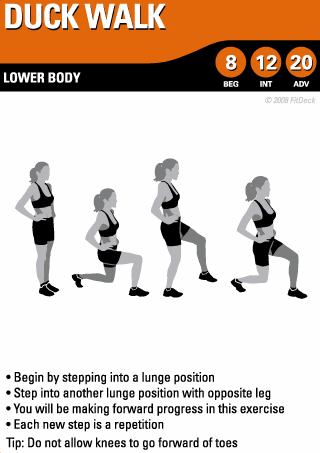
FitDeck Mobile is an application that runs on your mobile device and guides you through a unique physical fitness routine. It is comprised of various slides which contain instructions for exercises that you can do without any weights or special equipment (so you can do it anywhere!). FitDeck Mobile gives you a comprehensive set of exercises for the entire body, with each slide categorized into one of four body regions – Upper Body, Lower Body, Middle Body, or Full Body. You can arrange the slides in order or shuffle them to get a unique, random workout. Get the free FitDeck Mobile demo for your mobile: See the demo.

Will FitDeck Mobile work on my phone or mobile device?
FitDeck Mobile currently runs on the Java (j2me) platform and works on most phones and mobile devices. To find out if it will work on your mobile, simply use the mobile device selection wizard and follow the instructions to get the free trial version.

Is there a Money-Back Guarantee?
Yes.  If, upon paying to unlock your product, you are dissatisfied for any reason,  let FitDeck know within 90 days and they will correct the problem to your satisfaction and/or refund your payment. Please note there is a demo version of the FitDeck Mobile software available free of charge, so make sure the product works on your device before buying the keycode.

Sample FitDeck Mobile Workout

How else can FitDeck Mobile help me stay in shape?

Here are creative ways to stay motivated and incorporate FitDeck Mobile into your daily routine:

  1. Interval Training: Perform a series of FitDeck Mobile exercises alternately with a cross-training exercise (e.g., lap around the track, FitDeck Mobile exercise, lap around the track, FitDeck Mobile exercise, and so on).
  2. Coffee Break: Take a quick break from the desk and rattle off 2 or 3 FitDeck Mobile exercises. You’ll feel reinvigorated and there’s no need to change into workout clothes. Best of all, over the course of a week you’ll have done a complete bonus workout.
  3. 8 Before Bed: Were you so busy you had to forgo your workout today? Motivate and do 8 FitDeck Mobile exercises before you hit the sack. In less than 10 minutes you’ll shake off the day’s stress and put those feelings of guilt to rest as well.
  4. Group Training: Are you a teacher, manager, coach, or anyone else who oversees a group activity? Mix things up by leading them through a short FitDeck Mobile workout of 10 slides or so and get your folks motivated.
  5. Workout Reminder: FitDeck Mobile lives on your mobile and you live by your mobile. Use your calendar feature to schedule workouts during the week – when the alarm sounds you already have your workout right at hand.
  6. Ideas of your own: Do you have other creative ways that you incorporate FitDeck Mobile into your life? Please share them with FitDeck and they’ll make you famous.

FitDeck Mobile is Easy to use.

FitDeck Mobile uses one screen per exercise with no need to push a button to see an image or description.

Do I Need An Internet Connection for FitDeck?

No. FitDeck Mobile, lives on the device and requires no Internet connection – so you really can take it anywhere! Many competitors offer Web versions of their software which poses two significant problems: (1) If you are out of range of service, you simply cannot use the app; and (2) you will have to wait for each page to load.

Does FitDeck Require Special Equipment?

The FitDeck BODYWEIGHT workout program requires no special weights or equipment – so you can do it anywhere!

What Does FitDeck Cost?

FitDeckMobile is pretty inexpensive too. From what I could tell from their website, it’s about $7.95 per download.

Reblog this post [with Zemanta]

Read Full Post »

By Sue Shekut, Owner, Working Well Massage, Licensed Massage Therapist, Certified Wellness Coach, ACSM Personal Trainer

At an early age I had to turn away from the processed foods I so loved growing up to the healthier whole grain, fruit and veggie and meats diet that doctors and other health care providers now embrace. In college, I tried eating as a vegetarian, reading “Diet for a Small Planet” and trying hummus, falafel and garbanzo bean curry for the first time. I felt better, my skin looked better and once I realized that eating an entire jar of peanut butter, no matter how organic, was a bad diet move, I lost some of my teenage belly fat.

In Defense of Food

Now there’s a new book that talks about the American diet in a hopeful new way: Michael Pollan’s In Defense of Food here. Read an excerpt from his blog about the book:

Most of what we’re consuming today is not food, and how we’re consuming it — in the car, in front of the TV, and increasingly alone — is not really eating. Instead of food, we’re consuming “edible foodlike substances” — no longer the products of nature but of food science. Many of them come packaged with health claims that should be our first clue they are anything but healthy. In the so-called Western diet, food has been replaced by nutrients, and common sense by confusion. The result is what Michael Pollan calls the American paradox: The more we worry about nutrition, the less healthy we seem to become.

But if real food — the sort of food our great grandmothers would recognize as food — stands in need of defense, from whom does it need defending? From the food industry on one side and nutritional science on the other. Both stand to gain much from widespread confusion about what to eat, a question that for most of human history people have been able to answer without expert help. Yet the professionalization of eating has failed to make Americans healthier. Thirty years of official nutritional advice has only made us sicker and fatter while ruining countless numbers of meals.

Pollan proposes a new (and very old) answer to the question of what we should eat that comes down to seven simple but liberating words: Eat food. Not too much. Mostly plants. By urging us to once again eat food, he challenges the prevailing nutrient-by-nutrient approach — what he calls nutritionism — and proposes an alternative way of eating that is informed by the traditions and ecology of real, well-grown, unprocessed food. Our personal health, he argues, cannot be divorced from the health of the food chains of which we are part.

In Defense of Food shows us how, despite the daunting dietary landscape Americans confront in the modern supermarket, we can escape the Western diet and, by doing so, most of the chronic diseases that diet causes. We can relearn which foods are healthy, develop simple ways to moderate our appetites, and return eating to its proper context — out of the car and back to the table. Michael Pollan’s bracing and eloquent manifesto shows us how we can start making thoughtful food choices that will enrich our lives, enlarge our sense of what it means to be healthy, and bring pleasure back to eating.

Pollan’s last book, The Omnivore’s Dilemma, launched a national conversation about the American way of eating; now In Defense of Food shows us how to change it, one meal at a time.

Order Pollan’s book from Amazon here for about $15.00.

Reblog this post [with Zemanta]

Read Full Post »

A typical TV Dinner.
Image via Wikipedia

By Sue Shekut, Owner, Working Well Massage, Licensed Massage Therapist, Certified Wellness Coach, ACSM Personal Trainer

Does eating certain foods make you sick? Obviously foods that are spoiled or have bacteria from sitting unrefrigerated too long can make you ill. However, what about foods that taste good and seem to be ok to eat? Like table salt, fast food and so forth. Recently I had a dear friend find out that his high blood pressure was preventing him from obtaining a lucrative government job. So we went on a grocery shopping mission to find foods he could eat that were healthier and less salty than the packaged and processed foods he accustomed to eating. It truly amazes me how small portions of frozen dinners often contain more fat, salt and calories than a huge pile of steamed veggies and meat!

One of the simplest healthy eating devices I introduced my friend to was the vegetable steamer. Yes, the metal steamer that you can insert in a pot with a little water and steam your veggies for dinner or lunch. Steaming is one of the best ways to cook vegetables. It leaves more of the vegetable’s natural taste,  color and nutrients intact than any other method, and it requires no added fat. If you buy fresh produce like broccoli, and steam it instead of eating a tv dinner, you cut out a whole lot of unnecessary salt added to improve the taste of basically old frozen meat and veggies. You also cut out a lot of fat and other chemicals used to preserve the food and add flavor to what really is an unappetizing dish!

You can  buy a stainless steel veggie steamer from most stores including Target, Kmart, Bed Bath & Beyond or Amazon. The Trudeau Steamer runs about $17.00 at Amazon right now. Link here.

Trudeau Veggie Steamer

Read more on “How to Use a Veggie Steamer” here.

Watch a video on how to steam veggies here.

Reblog this post [with Zemanta]

Read Full Post »

By Sue Shekut, Owner, Working Well Massage, Licensed Massage Therapists, Certified Wellness Coach, ACSM Personal Trainer

So you are in a hurry and want to grab a quick bite. What’s your best bet calorie for dollar? Men’s Health magazine does such a  great job of explaining which fast food meal selections are better for you with their “Eat This Not That “column. They now made it into a  book.

A sample of the trade off between a few extra cents or bucks and the increase to your fat and calorie consumption from the Men’s Health article, “4 Must-Know Restaurant Secret’s,” By David Zinczenko, with Matt Goulding –  here.

Here’s exactly how expensive it really is whenever you go for the “bargain”:

  • 7-Eleven: Gulp to Double Gulp Coca-Cola Classic: 37 cents extra buys 450 more calories.
  • Cinnabon: Minibon to Classic Cinnabon: 48 more cents buys 370 more calories.
  • Movie theater: Small to medium unbuttered popcorn: 71 additional cents buys you 500 more calories.
  • Convenience store: Regular to “The Big One” Snickers: 33 more cents packs on 230 more calories.
  • McDonald’s: Quarter Pounder with Cheese to Medium Quarter Pounder with Cheese Extra Value Meal: An additional $1.41 gets you 660 more calories.
  • Subway: 6-inch to 12-inch Tuna Sub: $1.53 more buys 420 more calories.
  • Wendy’s: Classic Double with Cheese to Classic Double with Cheese Old Fashioned Combo Meal: $1.57 extra buys you 600 more calories.
  • Baskin Robbins: Chocolate Chip Ice Cream, Kids’ Scoop, to Double Scoop: For another $1.62, you’ve added 390 calories.

Want the Eat This, Not That info but don’t want to carry around a book. Men’s Health has a solution for you: the new Eat This, Not That iphone app. Check it out here.

Reblog this post [with Zemanta]

Read Full Post »

« Newer Posts - Older Posts »