Feeds:
Posts
Comments


Cover Your Mouth When Sneezing!

By Sue Shekut, Owner, Working Well Massage, Licensed Massage Therapist, Certified Wellness Coach, ACSM Personal Trainer

The cold and flu season seems to no longer be a season but a constant sharing of germs and sneezes in many of the corporate offices I visit. Aside from sleep and fluids some people swear that exercising helps keep them from getting many of these office bugs.  According to a recent press release from the American College of Sports Medicine, sometimes it’s better to rest when you are sick versus exercise. However, exercise does help boost your body’s immune response. So how do you know when to work out and when to stay in bed?

Read this excerpt from the ACSM press release:

ACSM Fellow David C. Nieman, Dr.P.H., says that moderate exercise (30 minutes a day, on most, if not all, days of the week) actually lowers the risk for respiratory infections.  Prolonged, intense exercise, on the other hand, can weaken the immune system and allow viruses to gain a foothold and spread.

In general, if your symptoms are from the neck up, go ahead and take a walk,” said Dr. Nieman. “But if you have a fever or general aches and pains, rest up and let your body get over the illness.”

Read more from the press releases including Dr. Nieman’s  4 Tips on when to exercise and when to rest here.

And for a more detailed Fact Sheet on the relationship between safe exercise and illnesses download the ACSM fact sheet: “Exercise and the Common Cold,”   This fact sheet was written by Dr. Nieman.

Enhanced by Zemanta

By Sue Shekut, Owner, Working Well Massage, Licensed Massage Therapist, Certified Wellness Coach, ACSM Personal Trainer

One of the advantages to being a member of the American College of Sports Medicine (ACSM) is that I get timely access to the latest studies on sports medicine and exercise science. I also get a lot of information about what’s happening in the U.S. regarding health and wellness. Today I opened my email to find a newsletter from ACSM and a link to a great blog that features stories about real people implementing fitness and nutrition programs into schools, workplaces and the home. The blog is called the “Be Active Your Way Blog” and this week it features a story about the Hip Hop Healthy Heart Program for Children™ (Hip Hop), a comprehensive wellness program bringing together physical education, music, and arts in grade K-6th. The post before that was an article on ways people have overcome environmental barriers to be more active and fit with suggestions. Check it out here!

The blog was created by the U.S. Department of Health and Human Services. Contributors to the blog include the YMCA,  ACSM, the Office of Disease Prevention & Health Promotion, the National Center on Physical Activity and Disability, the National Physical Activity Plan, the National Coalition for Promoting Physical Activity, Inc. and many similar organizations.

Enhanced by Zemanta

By Sue Shekut, Owner, Working Well Massage, Licensed Massage Therapist, Certified Wellness Coach, ACSM Personal Trainer

There is a good article in this months’ Men’s Health Magazine about fat phobia and America’s obesity problem, titled “I Hate Fat People.”  The author, Richard Connif, did a thorough job of explaining how BMI numbers have been revised and how this affects our perception of our fatness in his article about fat phobia and prejudice. He also did a great job explaining the controversy between those that celebrate their fatness (and contend that fat doesn’t mean unfit and that thin isn’t necessarily more healthy or fit) and those that believe that obesity is a ticking time bomb of health problems that tend to manifest later in life no matter how fit an obese person is. But he also notes that obesity tends to cause health problems later in life as the extra weight takes its toll on the pancreas (contributing to Type II diabetes), heart disease, and I would also add, joint issues and back pain.

But what’s the cause of our obesity? I have read articles that explain that we as human beings are biologically predisposed to crave fat and sugary foods as well as protean to stave off hunger. For the majority of time humans have been on this planet, we were living in food scarcity. But in the last 100 years, and especially the last 30-40 years, we’ve been afforded an abundance of food in most developed nations. Walk the aisles of any grocery store and you’ll find more food than our ancestors likely ate in a lifetime. Advertisers, trying to sell their companies products, cater to our inborn cravings for fat and sugar and salt and load our prepared foods with it. Like literally giving candy to a baby, food manufacturers and retailers tempt us with sweets and treats and we, creatures of our biological nature, snatch them up, and eat as much as we want or can afford. Over time, as we add in the more sedentary lifestyle most of us now enjoy, due to car travel, television and long work hours and commutes. Add this all up and it’s a simple math equation. Too much fat, sugar and calories coupled with low activity levels and our bodies do what they are supposed to do: protect us from starvation and store fat.

There may be more to this picture than all that. Some believe that obesity isn’t a sign of lack of self-discipline or solely our biological drives. It may be caused by an addiction: Compulsive overeating. An article in WebMD by Elizabeth Lee talks about former FDA Commissioner David Kessler, MD ‘s book,  The End of Overeating. In the book, Kessler, a Harvard-trained pediatrician and medical school professor at the University of California, San Francisco, described Hyperpalatable foods. He defines these foods as those high in fat, sugar, and salt that stimulate the senses to provide a physiological reward that causes many people to eat more to repeat the experience. Kessler explains that when a person eats a high sugar, high fat food they like this stimulates the body to produce endorphins, the brain chemicals that tell us we are experiencing something pleasurable. (Similar to runners high but less calorie burning!) Since our brains feel so good from the ingestion of endorphin producing sugar and fatty food, we want more. Eating more momentarily calms our nervous systems and  makes us feel good. Eating these foods also stimulates our brings to produce more dopamine. This in turn signals us to eat more of that feel good food. Visual cues lead us to seek more of the feel good food-pictures of food on TV ads, the signs of fast food restaurants, the packaging of our favorite candy bars in vending machines and at the checkout line. We eat without thinking and don’t realize why it’s so hard to control our cravings and eating habits. Once we get “hooked” on these feel good foods, we may develop a tolerance. And then we need food with more fat and sugar to bring us the same high, Kind of sounds like cocaine addiction, doesn’t it? Well, chemically, to our brains there are a lot of similarities. Read the full WebMD article here.

Not everyone is susceptible to the hyperpalatable foods. But for those that are, similar to people who are more susceptible to becoming alcoholic or addicted to other substances, there is help. One of the self-help groups that many people with compulsive overeating issues can turn to is a group called “Overeaters Anonymous.” Link here to take  short test to see if you may be considered a compulsive overeater.

More about OA from their website:

What is OA?

Overeaters Anonymous is a Fellowship of individuals who, through shared experience, strength and hope, are recovering from compulsive overeating. We welcome everyone who wants to stop eating compulsively.

There are no dues or fees for members; we are self-supporting through our own contributions, neither soliciting nor accepting outside donations. OA is not affiliated with any public or private organization, political movement, ideology or religious doctrine; we take no position on outside issues.

Our primary purpose is to abstain from compulsive overeating and to carry this message of recovery to those who still suffer.

Who belongs to OA?

In Overeaters Anonymous, you’ll find members who are extremely overweight, even morbidly obese; moderately overweight; average weight; underweight; still maintaining periodic control over their eating behavior; or totally unable to control their compulsive eating.

OA members experience many different patterns of food behaviors. These “symptoms” are as varied as our membership. Among them are:

  • obsession with body weight, size and shape
  • eating binges or grazing
  • preoccupation with reducing diets
  • starving
  • laxative or diuretic abuse
  • excessive exercise
  • inducing vomiting after eating
  • chewing and spitting out food
  • use of diet pills, shots and other medical interventions to control weight
  • inability to stop eating certain foods after taking the first bite
  • fantasies about food
  • vulnerability to quick-weight-loss schemes
  • constant preoccupation with food
  • using food as a reward or comfort

Where can I find OA?

Go to Find a Meeting on this Web site and follow the instructions to find a meeting in your area. Or you can contact the World Service Office at (505) 891-2664 or email for further assistance. You can also look for Overeaters Anonymous in your local telephone directory and in your local newspaper’s social or community calendar section.

Enhanced by Zemanta

By Sue Shekut, Owner, Working Well Massage, Licensed Massage Therapist, Certified Wellness Coach, ACSM Personal Trainer

Infant massage helps baby's digestion and gassiness

I met Heather Rabbit recently at the AMTA-IL Strategic planning meeting. After spending a day with Heather and chatting with her over lunch, I can say that, if I were pregnant, she is the massage therapist I would most likely go to for pregnancy massage. And if I had a new born, I would also pick her as my number one Infant Massage Instructor. Heather is not only fit, smart, professional, knowledgeable and articulate, she is also warm and compassionate. And Heather has a passion for infant massage instruction as well as massage therapy in general. She is also a nationally certified and state licensed massage therapist practicing in Chicago, Illinois. She teaches parents how to give their babies massage in her Infant Massage Class at Swedish Covenent Hospital. Her website is here.

Read this excerpt about infant massage as explained by Heather from an article by Anne E. Stein, a Contributing writer in WellCommunity, a publication of Swedish Covenent Hospital.:

“Believe it or not, babies get stressed out,” Rabbitt says. “Massage helps them learn what relaxation is at a young age, and studies have shown they’ll be more relaxed as they grow.”

In addition to calming a baby, massage helps with digestion and gassiness by stimulating the stomach and large intestine. Tummy massage, explains Rabbitt, is extremely helpful for soothing colicky babies.

Other studies have shown that, like adults, babies derive a significant amount of relaxation and good feeling from massage because it decreases the stress hormone cortisol, which is harmful for brain development. Reduction in this hormone can cause an increase in the antibodies that fight infection and facilitate healthy weight gain.

More studies still have found that infant massage may increase babies’ alertness, attentiveness and ability to learn.

“Overall, brain development is defined and guided by our environment, and infant massage helps create a physical and emotional environment for baby that is open to learning,” Rabbitt said. “The sensation of touch can facilitate this brain development and creates denser and more comprehensive brain cells.”

This theory is based on the fact that babies (by about age 1) naturally have about 150 percent more neural connections (brain cells) than adults do. As babies age, their bodies start to shed the connections that are not being used. But if their brains are well stimulated at an early age, they retain more information, and are more responsive to learning.

Therefore, it is essential that babies take in as much sensation and information as possible during that time, and infant massage can serve as the needed stimulus.

Massage is a great tool for parents, especially if swaddling and rocking aren’t working. When a parent gets home from work, for example, infant massage provides quality time that comforts baby and decreases the parent’s stress.

The connection created by massage can be especially important for dads, who often feel left out because they haven’t carried the baby for nine months and don’t experience the intimacy of breastfeeding.

Infant massage techniques are similar to adult massage techniques though gentler, and generally 20 minutes is the maximum time for massage. It’s extremely easy to learn, said Rabbitt. At Swedish Covenant Hospital, up to two caregivers can attend three, 60 to 90-minute classes with their baby (Rabbitt also provides in-home sessions). The massage techniques are designed for babies from birth to one year, but classes are typically taken between four weeks to just before the baby starts to crawl.

Infant massage is also being used in a research project in the hospital’s special care nursery for late pre-term babies (27-34 weeks). Babies receive three massages a day for five days, with a goal of increasing their weight gain faster so they can go home sooner. Previous studies have shown that early pre-term infants gained 47 percent more weight and were discharged earlier than infants who weren’t massaged.

Link to the entire article here.

Heather Rabbit, LMT, Infant Massage Instructor

In 2008, Heather received a grant from the Massage Therapy Foundation entitled: Increasing Infant-Mother Interaction, Decreasing Depression – Teaching Infant Massage to Women With Symptoms of Postpartum Depression. With this grant, she was able to help 15 new mothers use infant massage as a tool to decrease anxiety, create a healthy and loving relationship with their new babies, and make sure their babies were developing properly for their age.

Heather is certified in Pre, Peri and Postnatal massage, as well as orthopedic massage. She is also the Secretary on the Board of Directors for 3300 member-Illinois chapter of the American Massage Therapy Association and she has BA from Ohio State University.

Watch Heather explain infant massage in this video, You Tube link here. Link to Heather’s website here.

Enhanced by Zemanta

By Sue Shekut, Owner, Working Well Massage, Licensed Massage Therapist, Certified Wellness Coach, ACSM Personal Trainer

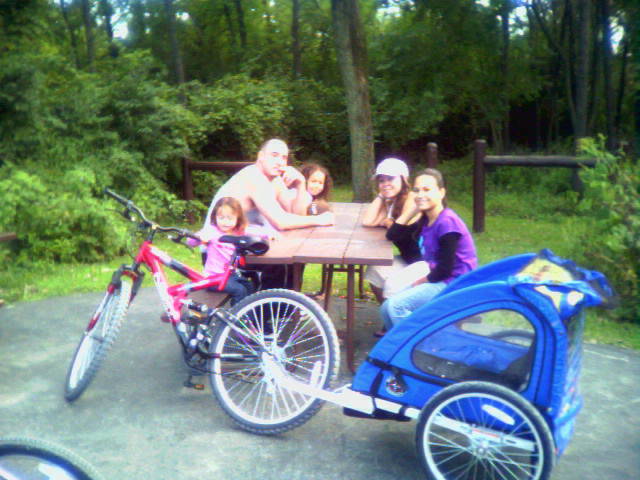
The Perdy Family take sa break from their biking adventure

I have a fair number of clients that have stressful jobs, long commutes and small children at home. It’s also a common scenario to see a client come in and say “I used to work out all the time and in the last year I haven’t been working out much.” Invariably I ask, do you have a one-year-old?” It’s not always the case, but often the answer is “Yes, how did you know?” The time of having a new baby int he family is an exciting and exhausting time. For a few months (to many months) this can mean sleep deprivation, more time needed at home to care for your child and of course the joys of seeing a new life, a new smile and bonding with your new son or daughter. But all this change can also bring a halt to mom and dad’s workout routines.

I am a big advocate of incorporating regular activity into our daily lives. But having a new baby or small children at home makes it difficult to workout like you did pre-children. That doesn’t mean you can’t work out at all. It just gives you an opportunity to try something new, think outside the box and modify your workout routine without taking too much time away from your family. One of the things I tell my parent clients is that working out and being fit is one of the best ways to role model healthy physical activity behavior to your children. And taking your kids along on your workout, while a bit tricky, can be a great way to spend time with your family without giving up time for your own health.

How to Incorporate more physical fitness into your life without sacrificing  family time.

• Used to going on long bike rides but can’t get away for long enough to get your rides in? Add a bike trainer to your own bike or buy a spinning type bike and put it in your basement, garage, workout room, where ever it is out-of-the-way but easily accessible for riding. If you need motivation to keep you from being bored, put the bike in front of a TV and use the SpinRider, an indoor cycling DVD that simulates an outdoor bike ride in different locales. Each DVD includes 3 bike rides filmed from the rider’s point of view. The videos take you to the countryside, city streets, beaches, and back alleys, while the onscreen subtitles and bonus features inform you about the destination’s history, people and activities. Spinrider releases a new 3 ride DVD every September, December, and February. Individual DVD’s are $19.95. Subscribe for 3 DVDs $44.95. Order here.

• Are your children old enough to be bundled up and go outdoors but too small to go on long walks? Pack them up in a stroller or bike carrier and either hike with them or bike with them.

• If you kids are old enough to bike but not old enough to keep up with you on your bike, let them cycle while you run or roller blade with them.

• Make family fitness a regular activity. Each weekend plan to explore a new forest preserve, a new lake, river or scenic outdoor setting. The Chicago area is chock full of small and large forest preserves. And children that experience and interact with nature will be more likely to be comfortable experiencing and protecting nature as adults. Check out  the Little Red School House for your children to explore Chicago area wildlife and go for a short hike together before the winter covers the woods with a blanket of snow!

• If you absolutely must leave your family to get in a workout, obviously, you want to minimize your time away. So if you join a gym, find one close to home, or put on your jogging shoes and go for a run. Adding a small workout room to your basement or spare room also means less travel time and less time away from the family. AND you kids get to see you role modeling good fitness behaviors. (Versus role modeling sitting in front of the TV eating cookies!)

• If you children are a bit older (say 7 or 12 years old), you can also have them join you in using Wii Fit or following along on beginner’s yoga videos.

• As your children hit the teenage years, it’s more likely that mom and dad are chaffering the kids around to their sports and athletic events more so than joining in on your children’s activities. But that doesn’t mean you need to go your separate ways when it come s to working out. If your children are old enough to do resistance training, you can work out together! If your son or daughter is a good swimmer, hockey player, roller blader or snow boarder, you can plan day trips or weekend trips to areas where the whole family can enjoy your favorite sports together.

• Take a dance class with your kids. Hip Hop is an easy dance to learn and a great aerobic workout. I’ve taken Hip Hop classes at the Old Town School of Folk and enjoyed every sweaty minute of it!

• If you have Dance Dance Revolution, make a game out of  playing it with your kids a few times a week.

• In the winter, go ice skating or sledding with your kids.

• Ask your kids what they want to do to have family fitness time each week. They may come up with answers that you all will love and that you might never have thought of without them!

Enhanced by Zemanta

By Sue Shekut, Owner, Working Well Massage, Licensed Massage Therapist, Certified Wellness Coach, ACSM Personal Trainer

I belong to a gym, but with work and graduate school, adding an additional 30 minutes of travel time to my already packed schedule is tough for workouts. And I tend to work out more at home in the winter. We have already have yoga equipment, Wii Fit and some dumbbells that I already use, as well as a wall lined with mirrors to assess form for yoga and resistance training in my small Chicago apartment. Now, as the fall weather signals the start of colder temperatures, shorter days (at least less sun) and soon-to-be snow-covered streets, I decided it was time to do a scouting trip for my readers to see where would be the best place for an inexpensive free weight set in Chicago.

Our first stop was at a higher end home gym equipment store in a strip mall on Elston Avenue. The store showcased the Powerblock dumbbells and we wanted to see how these worked from an “expert” perspective. The lone salesman was more than happy to tell us all about the dumbbells and even demonstrated their use for us. I found them extremely cumbersome and uncomfortable. He told me that I would “get used to using them.” (I can tell you know, I would never use them. And if I did use them I’d probably injure my wrist because of the cumbersome construction.) He also told us another great benefit of the Powerblock dumbbells: they sell well on Craigslist.  He discouraged us from using free weight dumbbells because they were so much more expensive (at least in his store) and took up a lot of space. Despite the salesman’s high pressure sales tactics (“I can’t see any reason why you WOULDN’T buy these today?!”) and high prices, we were able to get out of his store without buying an expensive set of dumbbells that we would never use and would need to sell on Craiglist!

Our next stop was Play it Again Sports, on Ashland near Irving Park Road. I haven’t been to this location before and it was overwhelming!  From the outside it doesn’t look like a very big store, but inside it was a jam-packed sporting goods emporium!  Hundreds of bicycles, a skateboarding section, hockey skates, sleds, baseball equipment, free weights, some used weight benches, and much much more. The sales people were mercifully low maintenance. Aside from asking us if we needed help, they pretty much left us alone. But the selection of free weight equipment was sparse and unorganized and we didn’t see anything we really wanted. I will be back for other sporting equipment though now that I see how well stocked this store is!

Lastly we went to our normal one-stop-sports store: Sports Authority. I know Sports Authority is not a high-end store. It doesn’t have ALL the latest and greatest equipment. But what it does have is EXACTLY WHAT WE NEEDED at HALF the price of the high-end store. Our salesman, Rolando Batchelor, was helpful without being obnoxious. He showed us the different equipment they had and explained how each type of  free weight set was different. Sports Authority had a surprisingly good range of free weight equipment. And most of it was on sale! We got an adjustable, 7-position weight bench (that collapses for storage) for about $74 (versus a similar bench for $229 at the high-end store). We selected a plate rack to store our free weight plates in our apartment (approx $50). And we bought a 100-pound free weight set with bar bell and two dumbbells which Rolando helped us get out to the car ($90 on sale from about $120)). As a child my father used to use a plated set of weights and I prefer the plates set to other types of dumbbells because then not only can I use the set, but my man can use them (he does lift a bit more than I can!) and I can also use them for clients on occasion. And surprisingly (maybe not so surprisingly) the entire weight set from Sports Authority, including plate stand, weight bench AND 100 pound dumbbells set, was less expensive than the weight bench at the high-end store.

If you have room and money to buy an expensive weight set or Body-Solid Home Gym, hats off to you! But for people living in Chicago with limited funds, small living quarters and a need for an efficient, easy to store and use set of free weights, my money is with Sports Authority.

And to be clear. I am not being paid by Sports Authority, nor do I get any special deals for this post. I simply like the store, and encourage people to go where they can get the best deals and value for your hard-earned dollars!

P.S. Sports Authority has great deals on clothing too!

Enhanced by Zemanta

By Sue Shekut, Owner, Working Well Massage, Licensed Massage Therapist, Certified Wellness Coach, ACSM Personal Trainer

This past Saturday, I had the opportunity to spend a day with board members and other LMT’s (Licensed Massage Therapists) from the Illinois Chapter of the American Massage Therapy Association. Since we’ve had so many legislative issues effecting Chicago and Illinois massage therapists, I wanted to do my part and put my two cents in on their annual Strategic Planning session. I want to share my observations with my loyal readers and any fellow massage therapists that read my blog.

What So Great About the AMTA?

First off, I recently rejoined the AMTA after quitting the organization about 6 years ago. I’ve been a member of the Association for Bodywork and Massage Professionals for the past 6 years or so instead. However, after seeing how proactive AMTA-IL has been, I decided to reactive my AMTA membership. Now, I belong to both organizations! Why, because both organizations do different things well. And two things I’ve seen AMTA-IL do really well this past year is to get out the word to massage therapists about pending legislation and to use the AMTA local volunteer network to access legislators on a few key issues. Unfortunately, AMTA and massage therapists efforts were not enough to stop two pieces of legislation from being passed–legislation that is damaging to massage therapists, and in my book, to the public as well.  But as the old saying goes, it ain’t over til it’s over. Or in this case, it’s not over until AMTA-IL  massage therapists, and the public in general, decide to stop fighting against legislation that is not in the public’s best interests nor in the best interests of the massage therapy profession. I just don’t see that fight ending any time soon. Legislation can be overturned or changed. New laws and ordinances can be written. It just takes effort. A lot of effort!

The Interesting People I Met at the Strategic Planning Meeting of the AMTA-IL Chapter

That all said, the Strategic Planning session was about 10 times more fun than I anticipated. There were about 25 people in a meeting room at a local Schaumberg hotel. The Chapter provided breakfast, lunch, treats (Fresh made cookies from the hotel kitchen as well as fruit, my favorite snack!) and beverages to keep us fortified and hydrated.

• I met “celebrity” massage therapist and winner of the  National Sports Massage Achiever Award, Nester Battaung. You would recognize Nester if you say him because his face is plastered all over Athletico ads in the area. Nester is fun, energetic and a former collegiate gymnast.

• I also spoke at length with  Becky Schwoebel, Senior Vice President of the chapter and a massage therapist in the eastern part of the state near St. Louis. If it hadn’t been for the meeting, I would never have met Becky since she practices and lives 5 hours away.

• One of the treats of the day was to hear stories about the history of massage therapy from Pat Malone, a man with a book inside his head, waiting to come out. (Write your stories into a history of the profession, Pat!)

• I also met Heather Rabbit in the flesh. In addition to being a Licensed Massage Therapist, Heather runs Infant Massage Classes at Swedish Covenent Hospital and she promised to share her infant massage video with me for this  blog. (Coming soon!)

• I also got to spend time with Mike Hovi, President of the IL Chapter and a real stud! (One of the bonding exercises we did was to draw a symbol that represented how we see ourselves. Mike drew a stud because he holds up/supports the chapter and, like a stud in the wall, he can’t do it alone.)

• Lastly, I met Robin Doerr,  an LMT from Elmhurst that runs her own massage business and has rooms for rent for other LMTs in the area. Robin and I have read each others comments on Facebook (and realized we were both WMTI grads!) but this was our first chance to meet in person and swap ideas about business and management.  She has since agreed to meet my Facebook challenge and plans to present at the upcoming  Spring Conference of the AMTA-IL.

What We Did at the Strategic Planning Meeting

We spent a great deal of time coming up with ideas to help promote Illinois massage therapists, and to educate the public, the medical community and our legislators about the massage profession. There are still many legislators (as evidenced by our recent City Council passing restrictive zoning ordinances) that don’t know the difference between massage “parlor” illicit activities and legitimate massage therapy.  There are also large segments of the population that don’t have access to or experience with licensed massage therapists, only with people pretending to be massage therapists but really offering illicit activities. We also talked about how massage therapists as a group need to be better educated about massage research, how to use it and how to conduct or design new research studies for massage therapy as well as about how to run their own businesses, market their practices and be successful.

The Future of Massage Therapy in Illinois

Some people may see this as a dark time for the massage profession because we’d had so many setbacks legislatively, in the media (The View, The Al Gore story, etc.) and with the struggling economy. I see it as a time of great opportunity for the massage profession to use these obstacles as a spring-board for a stronger, better educated, better organized, proactive approach to making massage an important part of mainstream health care, a practical low-cost stress management intervention for workplaces, and a partner with other health care providers. And the AMTA-IL Chapter is one big cog in this wheel of progress.

As only the recently converted can be, I hope I don’t come across as a zealot for the AMTA-IL chapter. I simply have high hopes for the over 3300 massage therapists in Illinois that rely on the guidance of the Illinois chapter. As one of  the over 3300, I am doing my part to help my fellow massage therapists, my clients and the public in general to live in a future world where massage is more respected, where massage therapists are better educated and proactive regarding legislative issues that effect our profession.  Mike Hovi will be publishing the results of the Strategic Planning committee to members soon and he will also be putting out a call to action to Illinois AMTA members with all the gory details.

A Great Opportunity for AMTA-Illinois Massage Therapists

If you are a LMT and a member of the AMTA-IL, don’t be intimidated (or bored) by the idea of working with the chapter. They need all of us to do even a small part. Sometimes they need someone to send emails or make phone calls or help out with mailings or other tasks. If you are an instructor with something valuable to share with other massage therapists, the chapter is looking for presenters for the upcoming AMTA-IL state conference in Itasca in April. If you are Facebook savvy and want to help out with the chapter Facebook pages (due to the mysteries of how Facebook works,  they have two Facebook pages for the IL Chapter!), they need help there as well. Link here and here.

How AMTA-IL Members Can Benefit Massage Clients

If you are a client of a Licensed Massage Therapist who is an AMTA member ask them what is going on with the Illinois chapter of AMTA. (Don’t know if they are? Ask them!) Your AMTA-IL massage therapist may be able to work with you to help provide outreach efforts in your community for charity events, community fairs or even give short talks about massage therapy to your group or church.

My Contribution to AMTA-IL State Conference in April

My friends, clients, and family know I am a very busy person. I run a business, have my own clients, and also started graduate school in Clinical Professional Psychology this fall. (You may have noticed my blog postings slowing down, Now you know why!) But I felt this Strategic Planning session was too important to miss.  I don’t have much time left in my jam-packed schedule to help out the AMTA-IL chapter, but I am fitting in what I can when I can. This spring I committed to presenting a Continuing Education session for my fellow massage therapists on Marketing their practices. If every busy, and especially not busy, of the over 3300 AMTA-IL massage therapists did just one thing, one task, one project, or attended one meeting, think of all the good that could come for the profession, for the lot of Illinois massage therapists and for the public.

I can hardly wait to see how this year unfolds. And see what my fellow AMTA-IL massage therapists and the chapter board members produce in the coming year. I will keep you posted as I find out!
Enhanced by Zemanta

By Sue Shekut, Owner, Working Well Massage, Licensed Massage Therapist, Certified Wellness Coach, ACSM Personal Trainer

While I was looking up hiking info, I stumbled upon  Chicago Wilderness Magazine. Although it appears to have stopped publication, there are many great articles and links about Chicago’s wilderness.   Link here.

Info from their website:

The Chicago Wilderness Corporate Council

The Corporate Council brings the resources, skills, capabilities, and influence of its members to foster widespread awareness of the region’s biodiversity and to develop broad-based support for its protection, restoration, and stewardship. Learn more

What is Chicago Wilderness?

The Chicago Wilderness Region

Embedded in one of North America’s largest metropolitan regions and stretching from southeastern Wisconsin, through northeastern Illinois, into northwestern Indiana and southwestern Michigan is a network of natural areas that includes nearly 370,000 acres of protected lands and waters. These natural areas are Chicago’s wilderness, and they are home to a wide diversity of life. Thousands of native plant and animal species live here among the more than nine million people who also call the region home.

The Chicago Wilderness Alliance

Chicago Wilderness is a regional alliance that connects people and nature. We are more than 250 organizations that work together to restore local nature and improve the quality of life for all who live here, by protecting the lands and waters on which we all depend. Our four key initiatives—to restore the health of local nature, green infrastructure, combat climate change, and leave no child inside—reflect our commitment to using science and emerging knowledge, as well as a collaborative approach to conservation, to benefit all the region’s residents.

The members of Chicago Wilderness include local, state and federal agencies, large conservation organizations, cultural and education institutions, volunteer groups, municipalities, corporations, and faith-based groups. chicagowilderness.org.

The Back Issues page lists all the archives issues with a list of the article topics. Link here. Some of the back issues are listed/shown below.

Summer 2009

Summer 2009
Reclaiming the Outdoors — Freewheelin’ in Deer Grove — Burnham’s Vision 100 Years Later — A Passion for Saving Paradise — Saving the Flint Creek Watershed

Spring 2009

Spring 2009
Discovering the Calumet — Calumet’s Wilderness Heritage — Tales of Restoration — Life, Liberty, and the Pursuit of Bluegills — The Calumet Region

Winter 2009

Winter 2009
Our Climate Challenge — Rare, Endangered, and Saved on Flickr — The Heart of Barkness — The Secret Garden

Fall 2008

Fall 2008
A New Day for Old Predators — Middlefork BioBlitz Revealed — The North Shore Ravines — Surveying the Survey — The parable of a weed-fighter — Haunted fungi.

Enhanced by Zemanta

By Sue Shekut, Owner, Working Well Massage, Licensed Massage Therapist, Certified Wellness Coach, ACSM Personal Trainer

The answer: Change your life!  What do I mean by that? Change the way you relate to food and exercise.


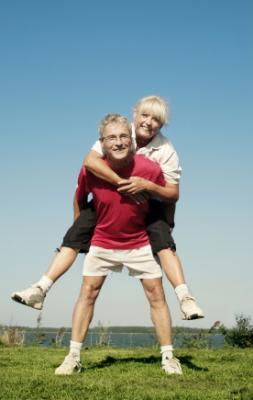
Healthy people exercising

Today I was reading this article on Yahoo Health about women that lose a significant amount of fat and transformed into healthier leaner people. And they kept the fat off over a period of years. If you read through their stories you will find a common theme: They switched from eating processed foods to “clean” foods like salads, brown rice, fish, vegetables. And they added regular exercise to their daily routines. They didn’t become professional bodybuilders, they did not subsist on a peanut and a celery stalk a day. They just eat healthier food in smaller more frequent portions. And they added activity to their daily lives One woman follows the simple guidelines of the ACSM: She added 30-60 min of cardio or strength training each day. Another woman said she makes sure she works out even on busy days at least 15 minutes.


If you read fitness magazines, blogs or know anything about fat loss and physical fitness, this story won’t be a big surprise to you. I think it’s important to remind ourselves that there are no quick fixes for fitness. But is losing fat, getting in shape and then STAYING in shape so easy? For most people, it’s not. It takes a few key qualities:

1. Perseverance-We don’t skip brushing our teeth every day to catch up on weekends and brush for 2 hours. Why would working out for 2 hours once a week be better than working out for 20-30 minutes 5 days a week? It isn’t. Our bodies work best in increments. We eat several times during the day, we sleep each night. We wash up each day (hopefully). Our 2010 lifestyles may make it tough to fit in movement when most people work in offices or in jobs that involved sitting for hours on end.  Adding in movement a little bit each day is easier than trying to pack in a mega workout once in a while. It takes perseverance (to persist in a state, enterprise, or undertaking in spite of counterinfluences, opposition, or discouragement). Taking stairs instead of the elevator, parking farther away from the store, walking when you can versus driving. Working out while spending time with your family and children also makes it easier to incorporate daily activity into your routine.  What’s important is that you add some exercise activity each day or at least 5 days a week. Don’t have time to go to a gym? It’s easy to make a home gym or workout to videos, Wii Fit or other cardio program. Whether you run swim, hike, bike or do yoga, it’s important is that you keep it up on a regular basis.

2. Discipline as in Self discipline-Fast food, junk food and high calorie, high fat food are all around us. It’s tough to get out of bed and go for a run or come home from a long day and fit in that 30 minutes of cardio or strength training. Making it a regular nonnegotiable part of your routine can help. And when you feel the urge to overeat or skip your daily workout, it takes a bit of self-discipline to pass up those french fries or push yourself to work out even when you’d rather sleep! But the rewards are feeling better, being healthier, having a clearer mind, being less stressed out and of course, being fit!

3. Prioritization-like that word? I did NOT make it up. It means making the most of your time and resources. And in this case, I say it means making sure that fitness and healthy eating are a priority. I use this analogy. If your child (if you don’t have a child, think about your niece, nephew or another child you care about) needed to eat, rest or get some exercise, would you let other priorities get in the way of taking care of the child?  (Hopefully not!) Yet adults often neglect our own needs for health and fitness because “we are too tired, too busy or too unmotivated.” Yet if we have to walk the dog or feed a child healthy food, somehow we find the inner strength, time and resources. So it’s not a matter of not having time or energy to take care of ourselves. It’s really about priorities. Learn to make your own health and wellness a priority. It benefits you and it also provides a good role model for children in your life!

4.  Focus (directed attention, concentration)-Focusing on how we look is rarely motivating. For some, working out to get the body they want or fit into a particular outfit may help motivate them to work out and eat right. It doesn’t work for me and many of my clients though. For me, I have to focus on how I feel. I feel better when I work out and eat right. How I look may change for the better but it’s not my  main focus. My focus is in feeling good, having more energy. sleeping well, not having stomach aches or feeling sluggish. No matter what your prime motivator/s is/are, use them to give you strength when you need a push to work out or eat right!

5. Fun-Wellness needs to be fun to be sustainable.  If you hate running, how motivated will you be to get up and run in the morning? But if tennis is fun for you, you will be more likely to play tennis than run. Wii Fit tries to make exercise fun for adults and children by integrating games in with the movement exercises. healthy food doesn’t have to be drab and boring. take a cooking class that specializes in healthy eating: Indian food, Middle Eastern Food , Chinese Stir Fry and even some Italian dishes can be low-fat and healthy.  Learn to add healthy spice to your food and “healthy” becomes fun and tasty! Make learning new fitness routines fun by trying them out with family and friends.

Enhanced by Zemanta

By Sue Shekut, Owner, Working Well Massage, Licensed Massage Therapist, Certified Wellness Coach, ACSM Personal Trainer


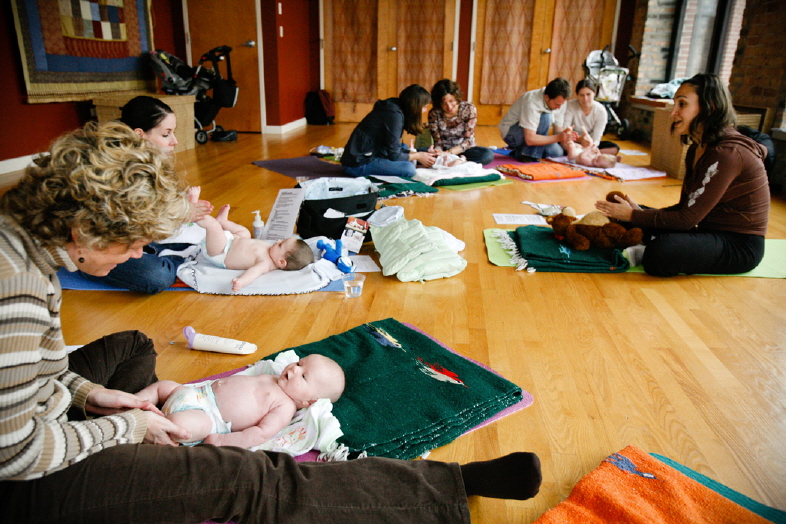
Adina Rosenberg's Infant Massage class


Recently I’ve had a number of my female clients deliver happy healthy adorable babies! As a big promoter of  a healthy lifestyle and wellness services like massage therapy, I want to share some information about infant massage for new moms and dads and other infant childcare providers.

Research shows children and infants that are massaged regularly show sleep better, are less anxious and show less signs of stress as indicated by heart rate and stress hormone levels. Infant massage supports the healthy development of  your baby’s body and  builds a foundation of trust and healthy communication between you and your child.

So, where do you go to learn how to safely massage your infant in the Chicago area? I found a few infant massage instructors and class offerings for you and am posting them below.

Adina Rosenberg, Breathe Bodyworks


Adina Rosenberg


As seen on “Fox Thing in the Morning”, Adina teaches  easy massage and yoga techniques to benefit your baby and you. The benefits of infant massage and yoga stretches include early brain development, stimulation, relaxation of muscles, gas relief, and enhanced sleep quality for baby and parent. The massage giver benefits from increased awareness of their baby’s needs and strengthens your bonds with baby. A 10 minute massage, two or three times a week, will make for a more confident caregiver-infant relationship and a very happy baby. It’s easy, fun and rewarding. All care givers are welcome – Mothers, Fathers, Expecting Parents, Grandparents, Sitters, etc. Please bring your baby or a doll to practice techniques.

Infant Massage Workshop
Sunday, December 12, 2010, 1:00 – 2:00 p.m.<

Soulistic Studio & Spa
805 Milwaukee Avenue
Chicago Il 60642

The cost of this workshop is $35/family. Space is limited an pre-registration is required.

To Register go to Soulistic.com.

Infant Massage Course at Galter Life Center

5157 N Francisco Avenue, Chicago, Illinois 60625

Infant massage has numerous benefits, including relaxing and soothing your baby, deepening your communication and bonding and helping your baby sleep. Learn the proper techniques for massaging newborns to 1-year-olds from Heather Rabbitt, LMT, certified infant massage instructor.The class fee is $60 per infant, with a discount for babies delivered at Swedish Covenant Hospital (enter schdelivery as your discount code at checkout).

For more information about this course, please call (773) 878-8200, Ext. 7340 or go to this link here.

Northwestern Memorial Hospital

Infant Massage Classes — Two-part series is for parents of infants from 3 weeks to crawling and is one of the most pleasant ways to “get in touch” with your infant. Infant massage helps regulate digestive, respiratory, and circulatory systems, while influencing motor and memory development. It helps baby sleep better, too! Small group sessions, or private sessions at the hospital, are taught by a Certified Infant Massage Instructor. ONLY MOTHER NEEDS TO BE REGISTERED. Two-Part Group session: $80 Private Session: $100
Register for the next class on November 3 by clicking here.

Infant Massage Class in Oak Park with Mary Cay Cavanagh, NCBTMB, LMT, CPMT, CEIM


Mary Cay Cavanagh


Medical Arts Building | 715 Lake Street | Suite 200 | Oak Park, IL 60301

  • Classes held in Oak Park location
  • Babies may be any age under one year (pre-crawling is ideal!)
  • Expectant parents may attend and bring a doll on which to practice the strokes – this is a great way to prepare for your baby’s homecoming
  • Classes are valuable for all caregivers, i.e., moms, dads, nannies, grandparents, older siblings or anyone who enriches your baby’s life with his/her presence. Especially great for new dads as it gives them a physical bond (like mom already has) with their new baby
  • Wonderful opportunity to meet others with new babies in their lives and to share experiences
  • Each session focusing on massage techniques for different parts of the body so you can work with your baby and discover his/her favorites techniques. We also discuss various aspects of infant massage i.e., history, benefits, infant brain development.
  • Price is $150.00 per family for the 2 week series

Please email or phone Mary at 630.452.1527 if you are interested in a class or if you would like information about future classes with Mary.

Enhanced by Zemanta