Feeds:
Posts
Comments

By Sue Shekut, Owner, Working Well Massage, Licensed Massage Therapist, Certified Wellness Coach, ACSM Personal Trainer

May 2-8 is Demand Healthy Week. What does that mean?
Tap your inner hero for health and show your support for an active, healthy American culture by participating in ACTIVE Life’s Demand Healthy Week. Throughout Demand Healthy Week, ACTIVE Life challenges you to create, share and log “Moments, Groups and Projects for Health” . These projects can be simply preparing a healthy meal, organizing a recurring walk or bike ride with friends or coworkers, or participating in community events such as a clean-up day or working in a community garden. It’s easy and free to participate in Demand Healthy Week. The Demand Healthy Week website has all the tools you’ll need to take action. Click here for more info.

More details from the Demand Healthy Week website:

History of Demand Healthy Week

On May 5, 2010, ACTIVE Life asked people and places across the country to show their support for healthy, active lifestyles by creating and sharing Moments of physical activity (Move), healthy eating (Fuel) and personal and environmental health (Honor). We called this day-long initiative Make the Movement Day (MMD) , and the end results demonstrated the powerful effects of what can happen when an energetic and committed community works together.

By the end of the day, nearly 90,000 healthy Moments had been organized and shared in 43 states. MMD participants of all ages took part in healthy, active Moments like school-wide health marches, healthy office picnics and community-wide run/walks. And, for one incredible day we were unified in our mission to build healthier communities.

Despite the success of Make the Movement Day, unhealthy living continues to be an epidemic in America, manifested in ballooning obesity rates, soaring health care costs, and the overabundance of unhealthy people, places, products and policies.
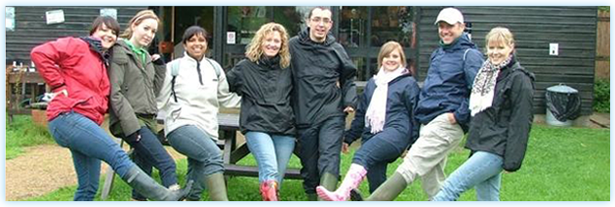
What are other people doing to show their healthy lifestyles? For a list of other healthy demander’s and a description of their healthy Moments, Groups and Projects, click here. And for a list of supporters of Demand Healthy Week, including the American College of Sports Medicine, click here.

About ACTIVE Life

ACTIVE Life is a 501(c)(3) nonprofit organization dedicated to organizing the national movement for healthy change in America. They envision and are committed to establishing an American culture which values, demands and supports healthy for all. They believe that it’s time to demand that healthy be the norm in our country, and  hope you’ll demonstrate your support by participating in Demand Healthy Week.

To learn more about ACTIVE Life and our programs and initiatives, click here.

Enhanced by Zemanta

By Sue Shekut, Owner, Working Well Massage, Licensed Massage Therapist, Certified Wellness Coach, ACSM Personal Trainer

Are you a new parent or a parent of a young child? Do you ever wonder what is going on in your child’s mind? One book recommended by some Montessori schools can tell you more about your child’s brain development and inner world: What’s Going on in There?: How the Brain and Mind Develop in the First Five Years of Life by Lise Eliot.

Amazon reviewers summed the book up better than Publisher’s Weekly so I am reposting excerpts of some of the top reviews of this book.

One Amazon reviewer provides an overview of the book contents:

How the brain is developed
Prenatal risk factors
The special benefits of breast milk for brain development
What newborns can hear
Infant walkers don’t help infants walk
How to encourage a baby’s motor development
Stress, attachment, and brain development
How the brain store memories?
Language in the 1st eighteen months
The role of genes
The role of environment

The chapters in the book include:
Chapter 1 Nature or Nurture? It’s All in the Brain
Chapter 2 The Basic Biology of Brain Development
Chapter 3 Prenatal Influences on the Developing Brain
Chapter 4 How Birth Affects the Brain
Chapter 5 The Importance of Touch
Chapter 6 Why Babies Love to be Bounced: The Precocious Sense of Balance and Motion
Chapter 7 The Early World of Smell
Chapter 8 Taste, Milk, and the Origins of Food Preference
Chapter 9 Wiring Up the Visual Brain
Chapter 10 How Hearing Evolves
Chapter 11 Motor Milestones
Chapter 12 Social Emotional Growth
Chapter 13 The Emergence of Memory
Chapter 14 Language and the Developing Brain
Chapter 15 How Intelligence Grows in the Brain
Chapter 16 Nature, Nurture, and Sex Differences in Intellectual Development
Chapter 17 How to Raise a Smarter Child

Audry’s (who is an ex-reference librarian and ex-reference librarian who reads and reviews adult and children’s fiction) writes in her Amazon  review that “Subtitled ‘How the Brain and Mind Develop in the First Five Years of Life’ and written by a neuroscientist mother of three, this book benefits as much from its organization as the material it presents. Research, supplemented with anecdotes, is divided into chapters based on sense or function and then detailed chronologically within each section…This is one of those books you should write in — underline, highlight, take notes — because if you are indeed interested in using this information to understand your child’s progressive developmental changes, you will be referring to it often. The author presents a lot of research material in accessible language and style, but the book is dense and is not a day-to-day how-to guide. You will not read about colic or how to tell a cold from the flu, but you will learn why your four-month old prefers a little salt in her mashed potatoes or why most of us can’t recall anything that happened before we were three-and-a-half years old. Because there is a lot of information, this is not one of the easiest books you will ever read, but it is eminently worthwhile. The author not only synopsizes a lot of research for us, but also defines the limits of research and/or those issues which are still under debate or not yet fully understood, and discusses the evolutionary implications of various developmental changes.”

To read more or to order the book on Amazon, click this link. Costs about $13.60 for the paperback. About $20 for the hardcover.

Enhanced by Zemanta
Cover of "Last Child in the Woods: Saving...

Cover via Amazon

By Sue Shekut, Owner, Working Well Massage, Licensed Massage Therapist, Certified Wellness Coach, ACSM Personal Trainer

While I study psychology in my masters program, one thing really has become clear–the importance of early childhood experiences on our future mental health.   I am not yet a graduate and am in no position to give psychological advice beyond my coaching credentials. However, I have found a wealth of info about early childhood and the role of experiencing nature in development in the Earth Easy blog. If you have children, or even if you don’t but are interested in nature and psychology, click on any of the links tot he articles below and enjoy!

Clearing a Path to Nature

by Richard Louv
The disengagement of children from nature has begun to alarm some of America’s more thoughtful naturalists, scientists, and environmentalists. For the full article, click here.
Richard Louv is the author of several books about children and community, including, The Web of Life: Weaving the Values that Sustain Us (Conari Press), Fly-Fishing for Sharks: An American Journey (Simon & Schuster), and the national bestseller Last Child in the Woods.

The Real Cost of ‘Virtual Nature’

by Brenda Scott Royce
Can robotic replicas and digital imagery inspire children to a love of nature? For the full article, click here.

How to get your child excited about nature

By Greg Seaman
Children are born with an innate curiosity about the natural world around them. How can we help them satisfy it? For the full article, click here.

Spending time in nature, a natural remedy for ADHD

By The University of Illinois at Urbana-Champaign, reported in Scienceblog
Children with attention deficit hyperactive disorder (ADHD) should spend some quality time outdoors when they are not in school, according to a nationwide study.

Leave No Child Inside

By Richard Louv
… we must pass on to our children the joy and value of playing outside in nature. For the full article, click here.

Our Psychic Connections to Nature

by David Bollier
The despoliation of nature is tantamount to despoiling our mental habitat as well. To read the full article, click here.

David Bollier is the editor of OntheCommons.org, an activist and writer about the commons, and author of Silent Theft, Brand Name Bullies and Viral Spiral.

Enhanced by Zemanta

By Sue Shekut, Owner, Working Well Massage, Licensed Massage Therapist, Certified Wellness Coach, ACSM Personal Trainer

Where can you find free information about nutrition and healthy eating? Try the American Dietetic Association here. The ADA link to info for the general public is here.


What Is the American Dietetic Association (ADA)?

The American Dietetic Association is the world’s largest organization of food and nutrition professionals. ADA is committed to improving the nation’s health and advancing the profession of dietetics through research, education and advocacy.  It’s tough to know how to make feed your family and yourself. There is a wealth of conflicting info on line about the best eating and physical activity habits. ADA can help you in your search for answers. Registered dietitians (RDs) are the food and nutrition experts and provide the information on the site. ADA articles and recommendations are based on evidence based practices backed up by research in the field.

I like the ADA site because it’s easy to navigate, has great suggestions and is backed by evidence based practices.


Fresh fruit

A sample of some of the great info on the ADA’s Eat Right site:


Nutritious Family Meals Made Easy

Breakfast Basics for Busy Families

Healthy Weight Loss Description and Guides

How to Eat Healthy When Eating Out

Food Allergies and intolerance

The Benefits of Organic Foods

Check it out and see if the ADA site has helpful info for you and your family!


Enhanced by Zemanta
lakefront joggers

Image by reallyboring via Flickr

By Sue Shekut, Owner, Working Well Massage, Licensed Massage Therapist, Certified Wellness Coach, ACSM Personal Trainer

Recently I came across a nutritionist’s website that I really like. The nutritionist, Jennier Vimbor, has banded together with fitness experts to create a combo nutrition education and exercise club called NCS..gotta run!! This club incorporates nutrition and exercise into a weekly meeting format. Our Nutritionists, weekly speakers and guests will demonstrate how to balance your nutritional needs with your fitness needs. Each member receives individualized recommendations from Nutritionists/Dietitians, Trainers and others in order to continue to move forward to reach your goals.

Here is what you receive if you join the NSC…Gotta Run Club:

1. Every week you will keep a food & activity journal, then submit the information prior to each meeting.

2. A Registered Dietitian (RD) will evaluate your intake/output and provide personalized recommendations.

3. Each week we’ll start off or end with a different 15 – 30 minute clinic regarding nutrition information, correct shoe fit, stretching, rehydrating, Pilates & Yoga, and Massage Therapy.

4. Get out there and run or walk at your pace for 15 – 60 minutes along Chicago’s beautiful Lakefront Trail., depending on your goals. Pacers will be out there with us in order to provide consistency, advice and encouragement.

5. Safety is of great importance. No member will walk/run alone. There’s a match for everyone.

6. Return to suite to pick up your belongs.

7. Q&A with our Healthcare Professionals, if interested.

8. Enjoy complimentary snacks & beverages.

Schedule

6-Week Sessions
Session A is Closed
Session B: Mon, Jun 6 – Jul 18
Session C: Mon, Aug 1 – Sep 12
Session D: October 18th – November 22nd

When: Every Monday, 6 – 8 pm
(doors open at 5:45 pm)

Where: the Fine Arts Building
410 South Michigan Avenue, Suite #306, Chicago, IL 60605

Cost: $150 ($25 per session for the whole package)

Registration: Sign up for NCS…Gotta Run!! Club  here.

NCS Founder: NCS…Gotta Run Club was created by Jennifer Vimbor, MS, RD, LDN, CDN in 2003 to promote optimal nutrition, health & wellness. Her website is the ChicagoNutritionist here.

Jennifer received her Master’s Degree (MS) from Columbia University in New York City. She is a Registered Dietitian (RD), Licensed Dietitian-Nutritionist (LDN) and Certified Dietitian-Nutritionist (CDN), as well as certified in Food afety from the National Restaurant Association Educational Foundation.

NCS philosophy: nutrition plays a significant role in your life. You really are what you eat. The foods you choose influence your healthy and well-being. Foods are selected for many reasons (pleasure, emotions, traditions, and associations as well as nourishment). The challenge is to find a balanced regimen that works for your lifestyle.

Enhanced by Zemanta

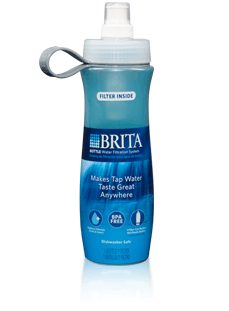
Brita traveling filter bottle!

By Sue Shekut, Owner, Working Well Massage, Licensed Massage Therapist, Certified Wellness Coach, ACSM Personal Trainer

Recently we were wondering just how well our Brita filtered water protects us from lead, chlorine and parasites. I went looking for info and found that Brita filers do a pretty good job of protecting us from most contaminants. Check out Brita’s FAQ section for info on what each type of Brita filter removes. (Brita sells faucet filters as well as those ubiquitous pictures you see in many refrigerators. For info on what the Brita Faucet filters remove, click here.) AND, to learn about your very own Brita bottle to go for $9.99, click here. (Available at Bed Bath and Beyond and a host of other retailers. Click here for the list of stores that carry the to go filter bottle.) But is Brita the best filter for you? How do you know?  I did some digging and found out what before you can select a filter you need to know what you types of pollutants may be in your water.

What Kind of Water Filter Do You Need?

The Natural Resource Defense Council is a decent source for info on what each type of water filter protects you from. The NRDC recommends that before you shop for a water filter, you find out what type of contaminants you may be exposed to. To find out what’s in your water, ask your water utility for a copy of their annual water quality report.

In Chicago, that would be the Metropolitan Water Reclamation District of Chicago (MWRDC,), link here. If you want to know more about how our overall water is processed, click here for a description of how water is treated and processed before it gets to your home. For water quality reports current up through 2008, click here. If you want to tour any of the local water reclamation and treatment plants, go to this link for info on how to proceed.

For information on current Chemicals of Concern and Endocrine Disruptors reports from the MWRDC, click here for a list of reports available.

But what about the pipes in your house or apartment? Even if the water coming to you from the city is relatively “safe,” what happens when that water goes through old pipes or copper pipes that have been soldered with lead? Can lead leak into your water? You betcha. How do you know if its’ a health hazard to you or your kids? NRDC recommends that you test your tap water for lead contamination. If you have young kids, are pregnant, or thinking about becoming pregnant it’s even more important to check your water for lead, since lead levels can vary enormously from house to house.

Check out the NRDC website and their list of different types of filtering systems and what they filter here.

For info on when to test your water and what typical water inspection tests cost, click on this link to InspectAPedia  here. Make sure the testing lab is licensed by the state!

What does a water inspection test cost? InspectAPedia says that if you are moving into a home and are testing water for the first time, use a more extensive test packages typically cost $200. to $300.If that test detects no problems,  follow-up testing of your water supply annually, using a less costly minimum screen for bacteria or coliform bacteria, typically costing less than $50.

What is the NDRC?

An environmental action group, which uses the grassroots power of 1.3 million members and online activists in addition to the courtroom clout and expertise of more than 350 lawyers, scientists and other professionals.

What is InspectAPedia?

An online encyclopedia of building & environmental inspection, testing, diagnosis, repair, & problem prevention advice – illustrated, detailed, in-depth research on finding, diagnosing, testing, correcting, & preventing building defects, energy conservation, & indoor environmental hazards.

Enhanced by Zemanta

By Sue Shekut, Owner, Working Well Massage, Licensed Massage Therapist, Certified Wellness Coach, ACSM Personal Trainer

Adventure Journal is a pretty cool magazine that shows outdoor adventure enthusiasts the latest in gear, events, people and culture and travel. It’s tagline is “the deeper you get, the deeper you get.” The web design is clean, well-organized and super easy to navigate and read. Even if you are not that big of an outdoor adventurer, it’s well worth checking out if only for the pics!

The brainchild of writer, photographer, and editor, Steve Casimiro, Adventure Journal was founded in 2008 and seems to be going strong. Read more about the rest of the staff at Adventure Journal here.


Image from Adventure Journal

With a host of highly talented writers and photographers, this magazine has some amazing pics. Checkout the print store for some of the most amazing outdoor adventure pics you can find! Link here.

Here are some samples of the site’s latest info on Adventure Journal:
New National Forest Rule Is Better — But It Lacks A Spine by Judith Lewis. Read it here.

• Watch the video of the BBC’s expensive camouflaged-as-snow-and-ice cameras, which were destroyed by inquisitive polar bears during production of “Polar Bear – Spy on the Ice”in this post here.

An Argument for Wilderness, by Wallace Stegner written by Steve Casimiro, link here.

• In the Gear section of the magazine, check out the Otter Smartphone case giveaway, a review on Freerider shoes, info on the Cyclotrope and a review of the new Specialized Road bike  here.

• And bonus section of the site is the link to about 50+ related blogs, sites and gear blogs. Go to the bottom of the web page and check out he links here.

Enhanced by Zemanta

By Sue Shekut, Owner, Working Well Massage, Licensed Massage Therapist, Certified Wellness Coach, ACSM Personal Trainer

Some people run because the act of running is fun for them. Others run as part of their fitness routine, but consider it a necessary evil. Why can’t running be fun and healthy? It can!  This May, in Oswego, the Oswegoland Park District combines fun and run with the Terror Trail Run at Saw Wee Kee on Saturday, May 14 starting at 4:30pm. Here are the details!

Race Date and Time: Saturday, May 14, 2011 from 5:00-8:00pm

The run is a  four mile run through trails you just don’t often see in Illinois. Halfway through this race you won’t know what country you are in or what year it is! You will just know you have to keep running. This race is not for children, the squeamish, or those who imagine people grabbing their feet when they climb the stairs.

Cost: $35 for the run. Cost includes post race eats and a drink after the event and a clean pair of pants.

To go to the webpage that links to a downloadable Terror Trail Run form, click here. Entries are limited so sign up soon!

Check in Location:

Scoreboards, 1100 S Douglas Road, Oswego by 4:30pm on race day.

The race course begins at Saw Wee Kee Park where there is  no parking at the park so don’t head there! Let the buses take you. You must load onto the buses between 4:30-5:15pm or you miss the race.

The course winds through fields and ravines. There will be mud, strange sounds and even heavy breathing (but not from the run!)

Post Terror Wrap Up Party

After the run there will be a party with awards given to overall first place male and female by age group. The party will have treats, soft drinks and beers (for those with appropriate ID’s). at Scoreboards.

For more info, call Kristie Vest at 630-554-4425 or email her at kvest@oswegoland.org.
For driving directions go to Oswegolandparkdistrict.org.

Bring I.D. for check in.

Check out Kevin Hanks blog entry about his 2010 Terror Trail Run complete with great pics here.

Enhanced by Zemanta

By Sue Shekut, Owner, Working Well Massage, Licensed Massage Therapist, Certified Wellness Coach, ACSM Personal Trainer

Since the Recession, I’ve seen an uptick in the number of coupon services and “discount” massage and spa service offers. Makes sense. People are more cost conscious and stressed out and want stress relief but are afraid to spend money on themselves beyond basic needs. Some people have no choice but to only pay for basic needs. But for those of us with enough disposable income to pay for health and wellness services, let’s look at what these “discount” services are really costing us.

To start off, one massage company that has really embraced the idea of offering “discounts” has a brilliant marketing strategy. They offer a “low-priced” massage usually about $49-$59 per hour (which is actually a 50-minute massage, not a full hour). This discount massage company pays its massage therapists between $17-$20 an hour with the understanding that YOU the customer will pick up the rest of their wages through the tip/gratuity that is suggested in signs plastered all over treatment rooms. So you pay $59 (in downtown Chicago) and then are “encouraged” to tip the massage therapist $20. In essence, you pay $79, or about $80 an hour, for your 50-minute massage at the discount company.

What’s brilliant about this strategy is that the discount company makes you think you are getting a bargain. But what is really going on is that the owners of the discount company are cost shifting. Instead of the discount company charging $79 for your massage and paying their massage therapists $35-40 per hour-long massage  (which is more the going rate for massage therapists employed by chiropractors or self-employed), the discount company pays $18-$20/hour and the client bears the burden of the rest of the massage therapists wages ($20 tip). Brilliant!  And the client leaves, thinking he/she got a bargain massage of only $59. But in actually, the client pays $79 for the massage. (And the discount company does not have to take out taxes or pay unemployment or workers comp taxes on the tip if you pay the massage therapists in cash. Which is extra savings for the discount massage company owners!)

Now let’s say you read this and say, “Well, then I WON’T tip the massage therapist. Let the discount company pay their people fairly and not shift the cost to me. ”

Think about it, the massage therapist at a discount company makes half the going rate for massage. Her employer promises her that you will make up the rest of your wages through tips and you,  the client, do not tip.  How enthusiastic would the massage therapist at the discount company be about giving you, the non-tipping client, your next massage? And if the massage therapist you first had work on you tells other massage therapist you don’t tip,  how happy do you think the massage therapists are going to be when you come in for your next massage?

Note: If you go to a high price salon or hotel and pay $100 or more for  a massage, you are usually paying more for the ambiance, not for the massage therapists. Massage therapists at high-end spas usually make about $25-30 of that $100 fee and also rely on tips. Not a bargain for the client or for the massage therapist. The landlord  of the high-end spa is the winner in this deal because most of the cost goes to high overhead.

How Much Do Massage Therapists Really Earn Per Hour?

Keep in mind that earning $17-40 per hour-long massage is not equivalent to earning $17-40 an hour in a 40-hour a week office job. Most full-time massage therapists can only physically perform 20-25 hours of massage per week without injuring our bodies or sacrificing the quality of our work. The rest if our time is not spent sitting on a divan eating bon bons. We still have to chart, change sheets, do laundry, marketing, scheduling and do all the other business-related chores office workers do. But this work is absorbed in the cost of the hour-long massage. As is the cost of our own self-paid sick days, holidays, vacation time and health insurance. AND, if we are not booked with clients 20-25 hours per week, we earn significantly less. (Think about how it would be if you came into work and your boss said, wow, we can only pay you for half a week’s work this week.  That’s not uncommon in the massage field.)

I’m not trying to gain pity for massage therapists. But I am pointing out that you are paying more for the “discount” massage than you think. In any case, I hope you get your massages at whatever location you prefer. Just know what you are paying for it!

Enhanced by Zemanta

By Sue Shekut, Licensed Massage Therapist, Owner, Working Well Massage, ACSM Personal Trainer, Certified Wellness Coach

My favorite site for sleep advice though is a website called helpguide.org. It’s a not-for-profit website that produces great tips on a variety of conditions. Click this link for their excellent breakdown of ways to improve your sleep. The American Academy of Sleep Medicine has these great tips for getting a good night sleep. Click here for their list. And the University of Maryland Medical Center has these tips for restful sleep. Click here for their webpage and sleeping tips.

Overall, getting a good night sleep is tough for many people, not because of poor sleep hygiene but because we do not budget enough time for actual sleep. If you have to wake up at 4:30am and your family and work obligations mean you don’t get into bed for sleep until 10pm, then you can only sleep for about 6.5 hours. And that’s 30-90 minutes shy of the optimal 7-8 hours of sleep most of us need.

So, if you’ve made all the sleep hygiene changes you need to get good sleep (from the links above), darkened the room, keeping the TV off, using the bedroom only for sleep and intimate relations, keeping the room cool at night, getting enough exercise, not eating right before bed, etc., and you still feel tired and run down, it may be you are not budgeting enough time for sleep. For those with very young children and babies, you have the added issue of being awakened a few times a night and in the early morning by your kids. Fear not, it should be temporary.

For the rest of us, getting enough sleep may be a matter of changing your night-time habits.

• Turning off the TV an hour or half hour earlier so you have time to unwind.

• Doing some form of medication or relaxation before bed. Get your kids into it too if you have children. It’s a good way to role model good sleep hygiene with your kids.

• Listening to a sound machine in bed for 20 minutes before you would normally go to bed. The machines simulate nature sounds like ocean waves, crickets, waterfalls, rain and similar sounds. Home medics makes a number of great sound machines. I like this one: HoMedics SS-2000 Sound Spa Relaxation Sound Machine with 6 Nature Sounds, Silver. Home Medics make a number of sound machines with clocks as well, but I find that the blue or green light from the clock can keep me up. So the no clock version is a better machine in my book.

• Setting boundaries for your self as far as when you stop working for the day. If you really need to sleep by 9pm, make the work cut off time at 8pm. So, no emails, texts or phone calls after 8pm.

• Being disciplined about accepting obligations that keep you up too late. Telling friends and family the window of time you have for phone calls or outings. When I worked a corporate job, I learned that if I only took phone calls between 7pm and 9pm, I felt less stressed and had time to do yoga and prepare a healthy meal when I got home. This practice also trained my friends to only call when I had time to talk. Unless it’s a real emergency (someone is in the hospital or is bleeding on the side of the road), I don’t view a phone call/email/text as an excuse to keep me up at night.

• Learn to disengage from potentially stressful people, situations and places that can keep you up at night with worry or anxiety. For example, television news. TV news is designed to get your attention. News teams get ratings based on how many viewers they have. So if they don’t cater to our fight or flight mechanism, showing violence, confrontations and crime, they think we won’t watch. And maybe we won’t. But why fill your head with violence and crime, stories of fires and disasters right before bed?  Save it for the morning when you can be anxious right before work. 🙂 Same thing goes for people who tend to stress your out. Why talk to them or read their emails right before bed? Can it wait until morning? If so, sleep well and deal with the call or text or email when you’ve had a good night’s rest.