Feeds:
Posts
Comments

By Sue Shekut, Owner, Working Well Massage, Licensed Massage Therapist, Certified Wellness Coach, ACSM Personal Trainer

Last month I visited the beautiful Rough River Lake area with some of my family members. While we were walking into a quaint general store in search of ice cream, my 16-year-old nephew was stung by a bee! After the screaming and panic subsided, he said he still felt the stinger in his head. Luckily, we had two things going for us: 1. my nephew has very short hair and a pale scalp so it was easy to see the bee sting site and stinger and 2. we had a brand new first aid kit in the car with tweezers, cold pack and bandages. We were able to remove the stinger, care for his wound and continue on to our next adventure!

Disclaimer: I received this first aid kit for free from a product representative from Magid that asked me to review his products. I agreed with the caveat that I would provide an objective review and would tell my loyal readers about the free first aid swag (valued at $25).

Rather than simply review the Magid® Precision Safety® ANSI-Plus General Purpose First Aid Poly Kit from Magid, I decided to compare and contrast Magid’s first aid kit with one I had purchased previously from Johnson & Johnson.
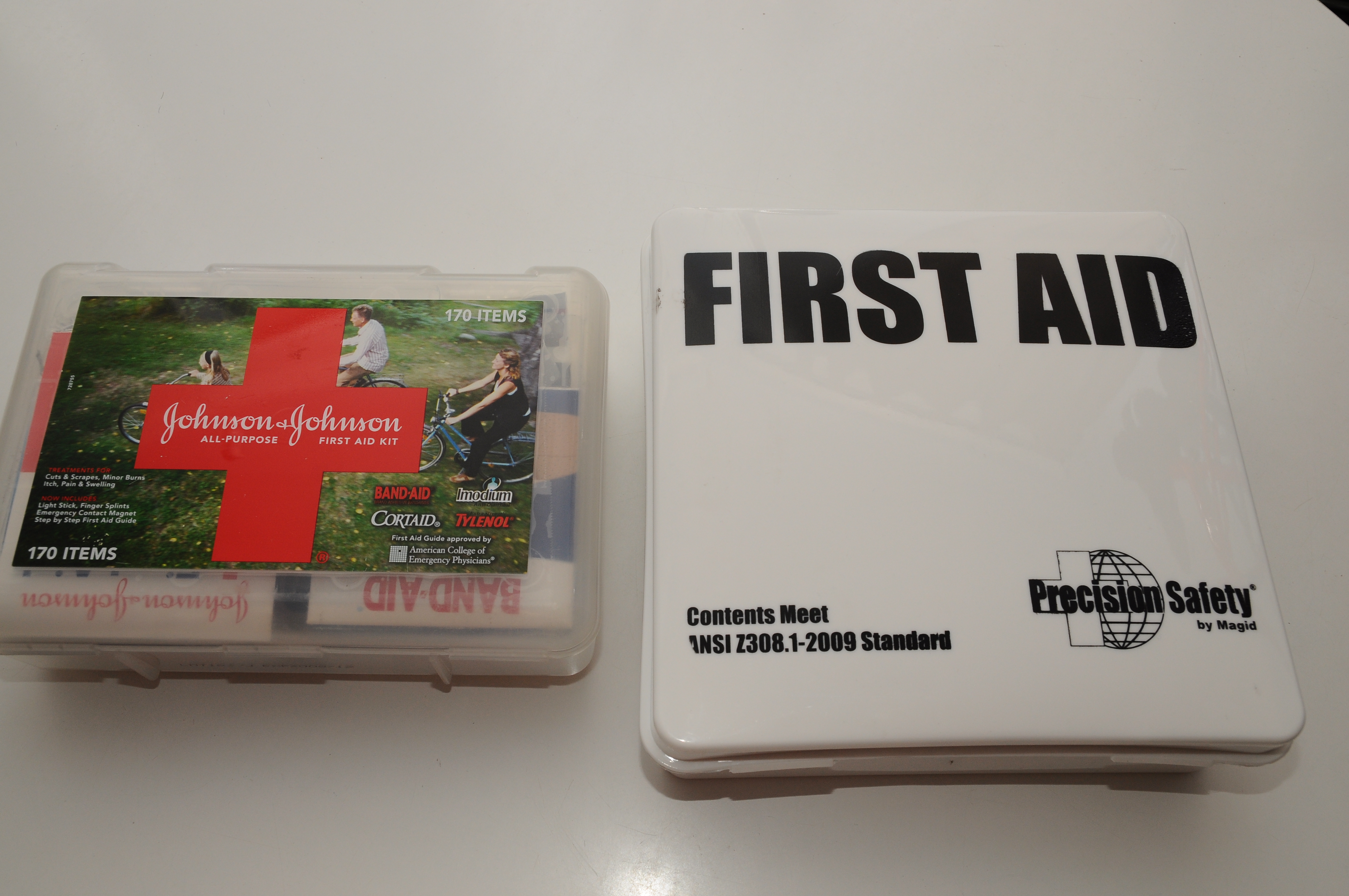
Johnson & Johnson versus Magid First Aid Kits. Photo by J.Porys Photography
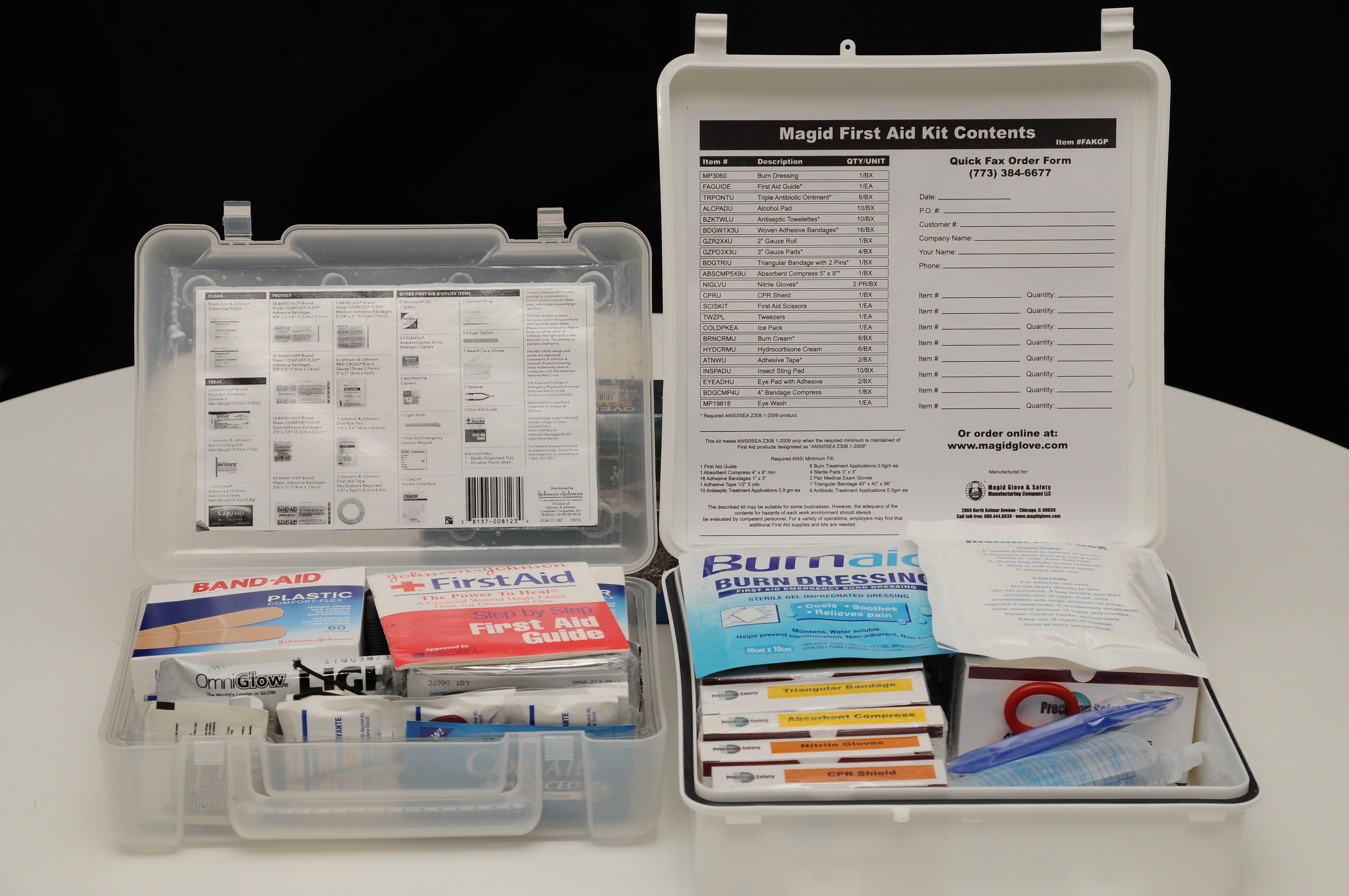
First Aid Kit Content Comparison. Photo by J.Porys Photography

The First Aid Kit from Johnson & Johnson is more of a home consumer kit and has a handy handle for easy portability to an injured person or accident site.
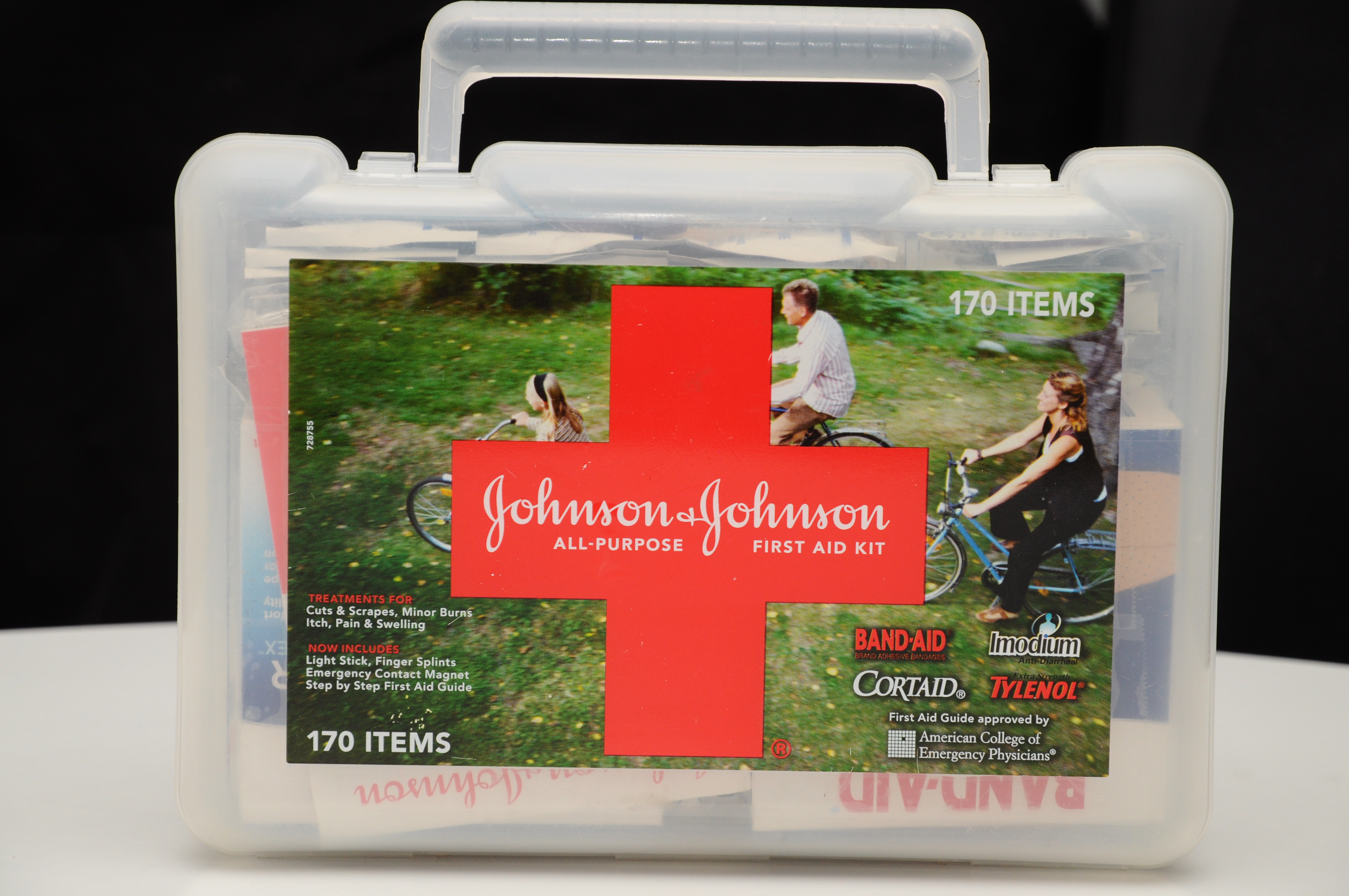
Johnson & Johnson First Aid kit. Photo by J.Porys Photography

The kit from Magid is geared more towards the workplace, but is basically the same size and contains many of the same items as the J&J kit. It does lack the handy handle that Johnson and Johnson’s kit sports.
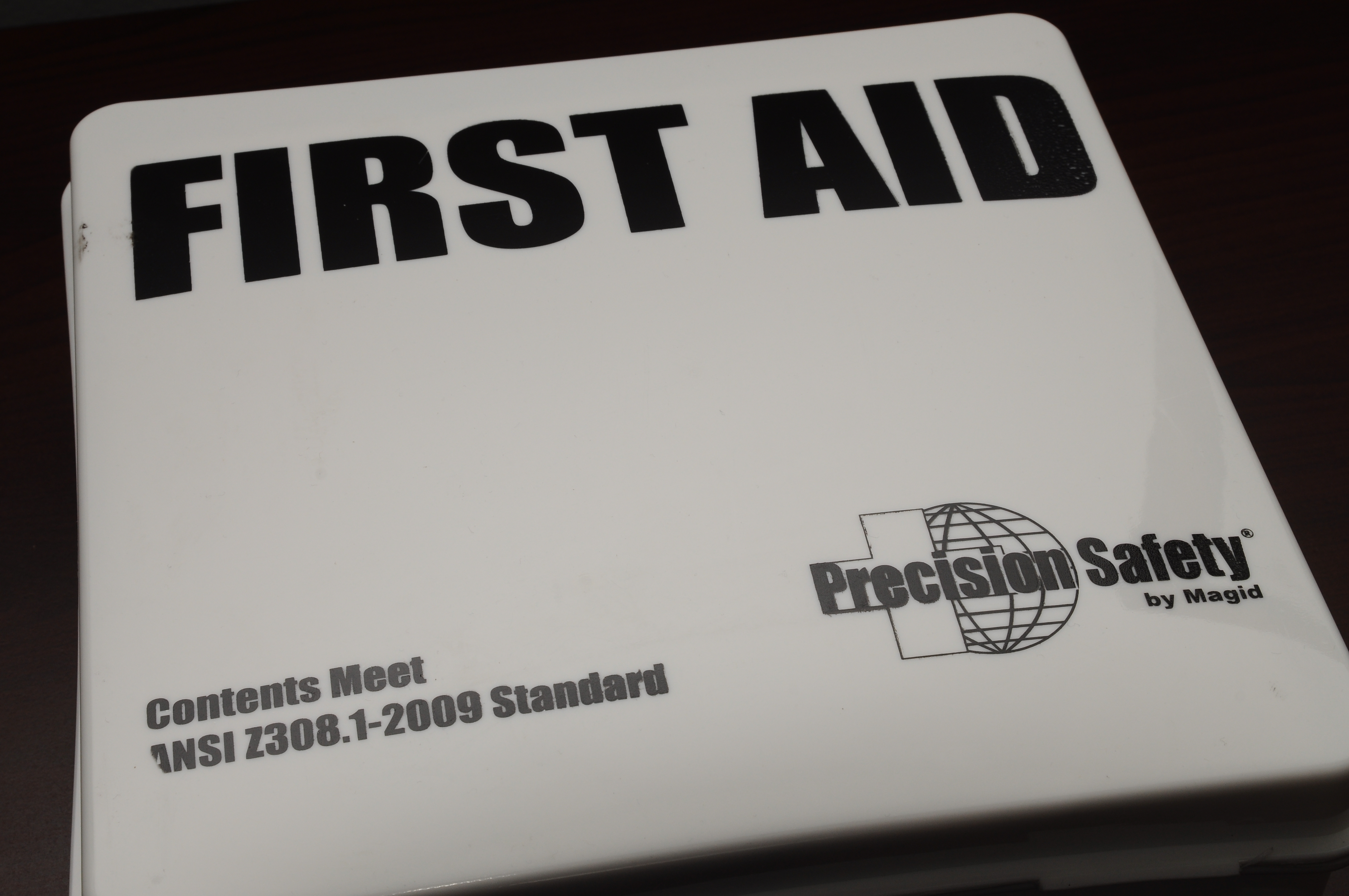
Magid First Aid Kit for Home or Office. Photo by J.Porys Photography

Both first aid contain many of the same items, but one thing I liked about the Magid kit was that in an emergency situation, all the products inside the kit were clearly labeled in large point type and color coded. I was able to find the tweezers, instant ice pack and insect sting pad in seconds when my nephew was in pain.

Magid First Aid Kit. Photo by J.Porys Photography

The tweezers in the Magid First Aid Kit are hard plastic versus metal, but worked well and were easy to handle for tasks like removing bee stings (and likely to remove splinters, another common first aid need). The tweezers in Johnson & Johnson’s kits were not packed in sterile plastic packaging but were resting in the kit with no protective covering. A small detail but in this age of infection and since plastic tweezers can’t be sterilized via fire, an important detail!
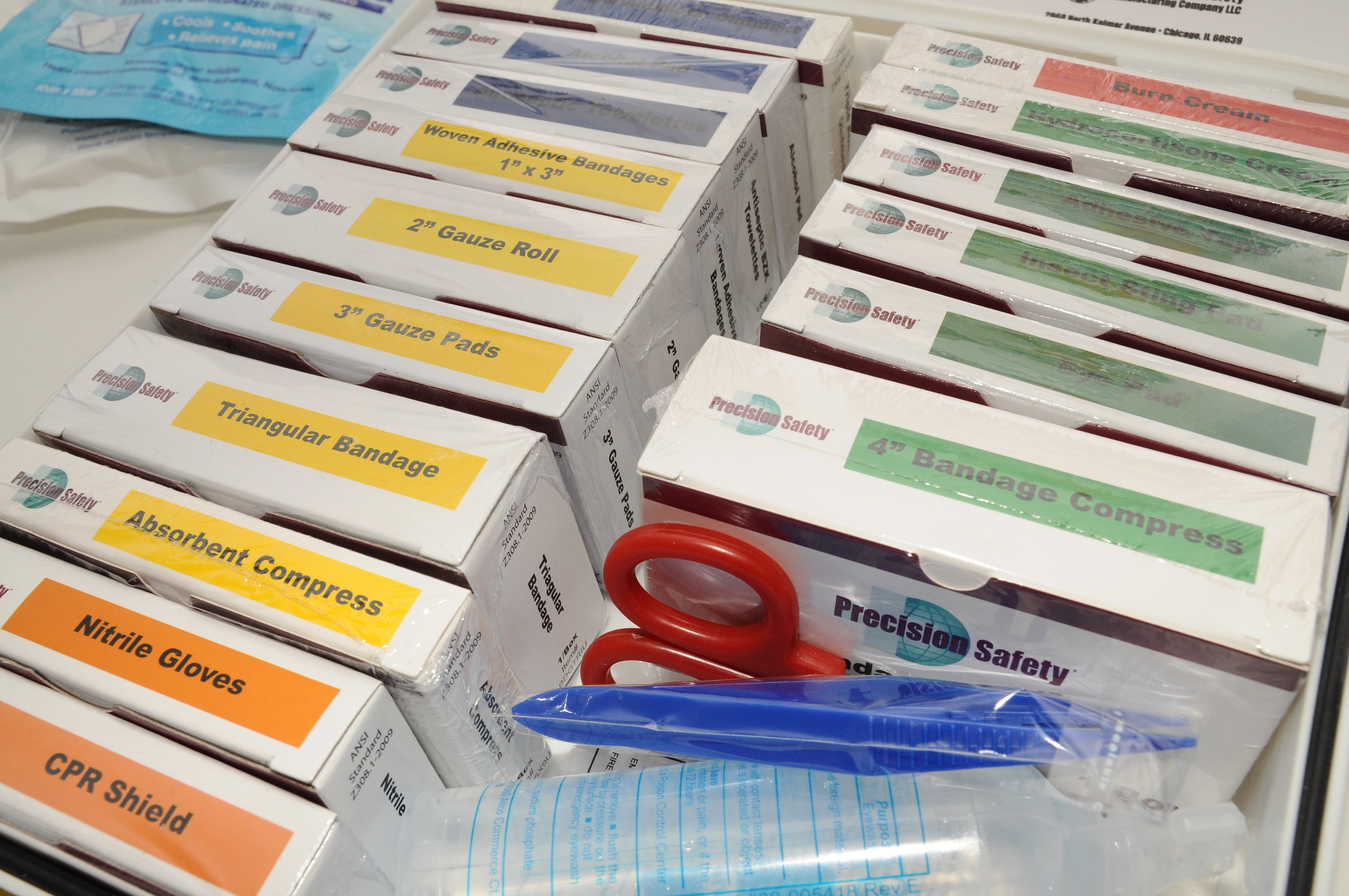
Blue plastic tweezers in sterile plastic wrap, easy to access in a hurry in Magid’s Firs Aid Kit. Photo by J.Porys Photography

One thing missing from the Magid kit that was in the Johnson & Johnson kit was a tongue depressor which can also be used to splint broken fingers. I’d prefer 2-3 tongue depressors in my first aid kit and I ended up adding them to the Magid kit myself for future outings.

Johnson & Johnson First Aid Kit. Photo by J.Porys Photography

Johnson & Johnson’s kit also came with a light stick which is great for travel or if electricity goes out in a storm.

Magid’s First Aid Kit product list is shown in the photo below. Note that it includes eye wash, CPR shield, burn dressing  and nitrile gloves (for those that are allergic to latex). Johnson & Johnson’s kit contained an eye pad but no eye wash. In an industrial or office situation or even for children at home, being able to clean someone’s eye if it comes into contact with a substance requiring eye flushing is essential.
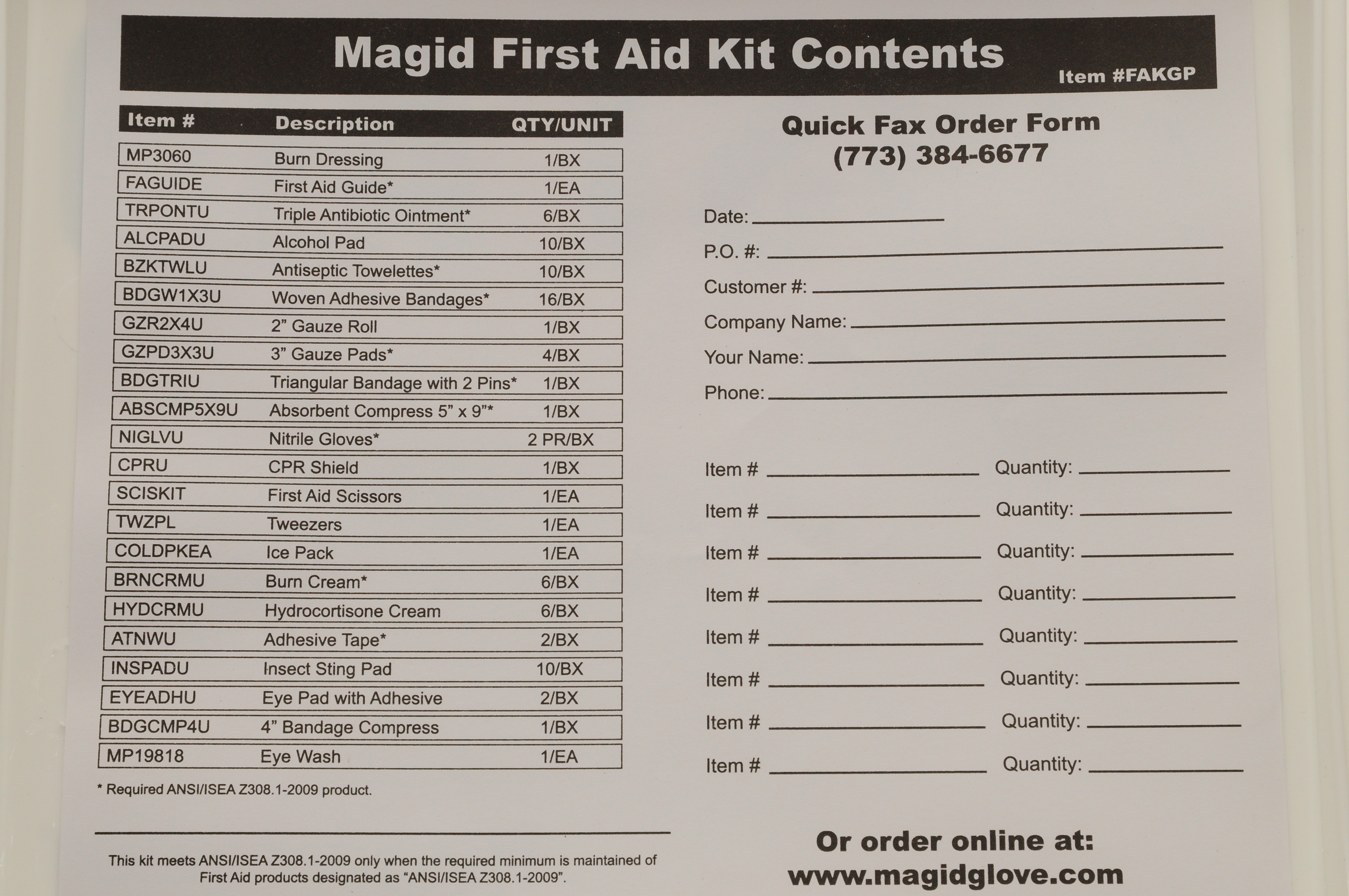
Magid First Aid Kit Itemized Contents List. Photo by J.Porys Photography

I do prefer Johnson & Johnson pictorial labeling of their First Aid Kit Contents over Magid’s list because in an emergency, it’s is easier to look for the item you need pictorially and if English is not your first language or if you have any difficulty reading, providing both words and pictures is more helpful!.
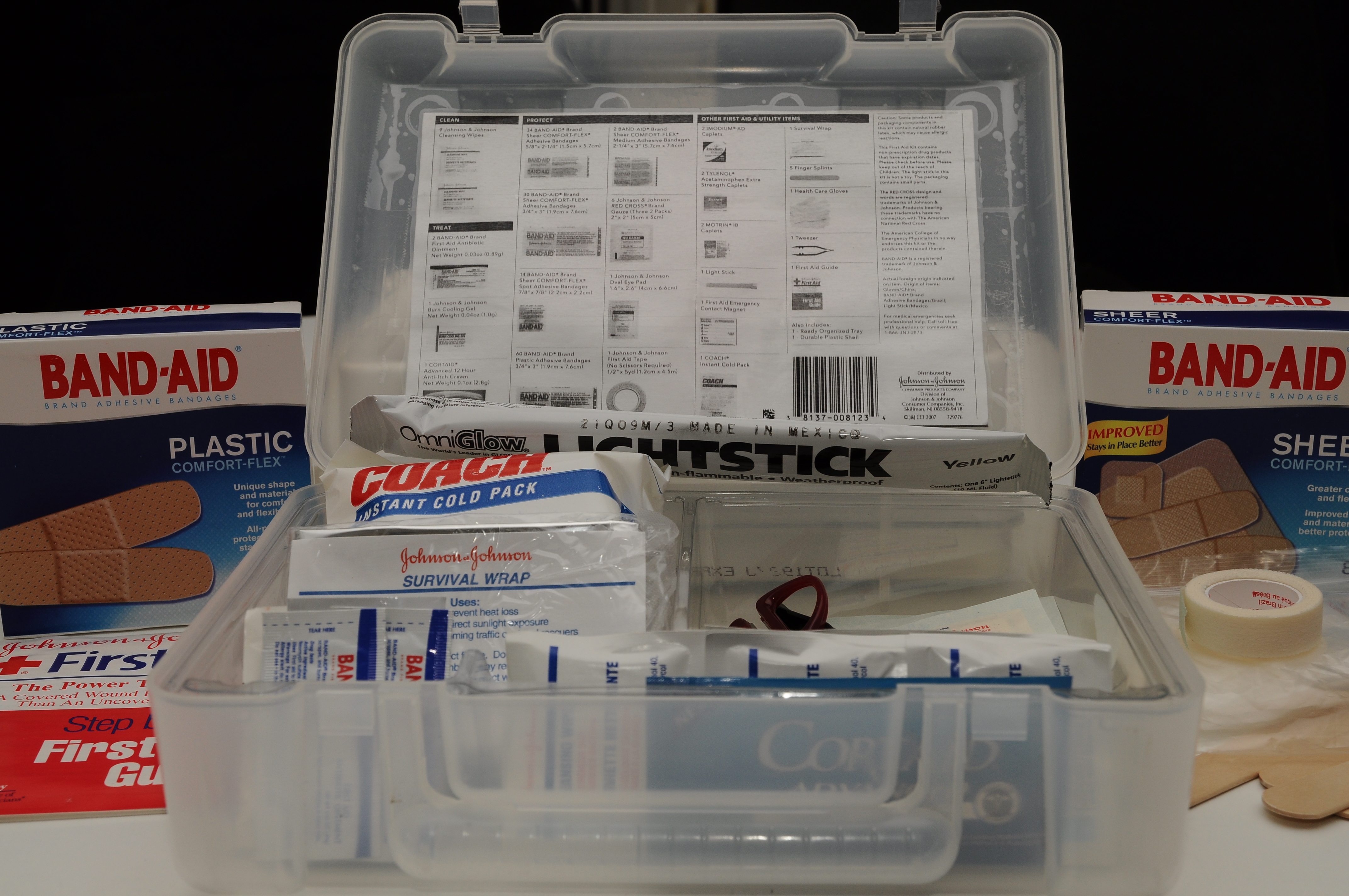
Johnson & Johnson First Aid Kit Contents. Photo by J.Porys Photography

Overall both kits have items the other does not, so I combined the lightstick and tongue depressors from Johnson & Johnson’s kit with the Magid kit for car travel. I do wish the Magid kit had a handle!

Product info on Magid® Precision Safety® ANSI-Plus General Purpose First Aid Poly Kit

ANSI-Plus 22-unit kit contains essential items suitable for the convenient and fast delivery of first aid treatment; durable, white poly box with rubber gasket to keep moisture out; wall mountable; equipped with handle and safety seal; refills available; ANSI Z308.1-2009 compliant. The kit retails for $25 at Magid.

To order products such as the First Aid kit from Magid, click here. And to order replacement tweezers and other items for your first aid kit, click here.

Enhanced by Zemanta

By Sue Shekut, Owner, Working Well Massage, Licensed Massage Therapist, Certified Wellness Coach, ACSM Personal Trainer

I’ve been taking Pilates lessons from Jacob Greathouse for the past few months and I love how it’s working for me! As a long time yoga practitioner, I appreciate Jacob’s attention to detail and the way he is raising my awareness of specific muscle groups and body movements in our Pilates sessions. I’ve known Jacob for a few years now, having first met him as a personal trainer and then working with him to help me improve my swim strokes and water aerobics techniques. I really enjoy working with Jacob because he  knows his anatomy, is super patient and nonjudgmental and he approaches each session with enthusiasm and a sense of humor.

Jacob Greathouse, founder of be fitness & wellness embodying fitness and wellness every day!

Jacob grew up in Louisiana but you would never know because he barely has a Southern accent after living in Chicago for the past several years. Jacob shares his personal journey to wellness on his website: “As a child, my family taught me the importance of spirituality. My mother, a former college athlete and coach, instilled the importance of health and exercise. This combination of spirituality and physical health lead to my search for a more integrative approach to life and wellness as they work hand in hand with each other. I continued developing the spiritual side through my college education and continued the physical side through years as an Emergency Medical Technician and a Personal Trainer.

To further my holistic understanding with fitness & wellness, I received a master’s degree in Divinity and completed studies in yoga practice, philosophy and Thai massage in America and Thailand. It is out of these experiences, that my own personal philosophy of living, working, playing, and being as whole individuals – mind, body, and spirit – has coalesced into what we now know as be fitness & wellness.

When mind, body and spirit are challenged, all three can develop in balance; we embrace our challenges and personal growth occurs.”

Jacob also recently graduated from the New School of Massage and is now a Licensed Massage Therapist. Jacob has also studied Thai massage in Thailand. He can give both Swedish massages as well as Thai massages. Jacob”s website is befitnessandwellness here.

Between Pilates, fitness classes and his own Ironman training, Jacob’s abs are strong enough to demo Pilates moves in excellent form!

Jacob’s philosophy for his company, Befitnessandwellness from his website: be fitness & wellness seeks to address the whole person: mind, body and spirit. Traditional models of fitness and wellness usually focus on only one of these three areas. At be, we work with you and develop a plan to set realistic, balanced and challenging goals. be’s primary objective is not to attain a specific body weight, a physical or mental ability or a level of enlightenment, but to help you find your personal best. be assists you in reaching your “best” and encourages you to make your “best” – your everyday state of be-ing.

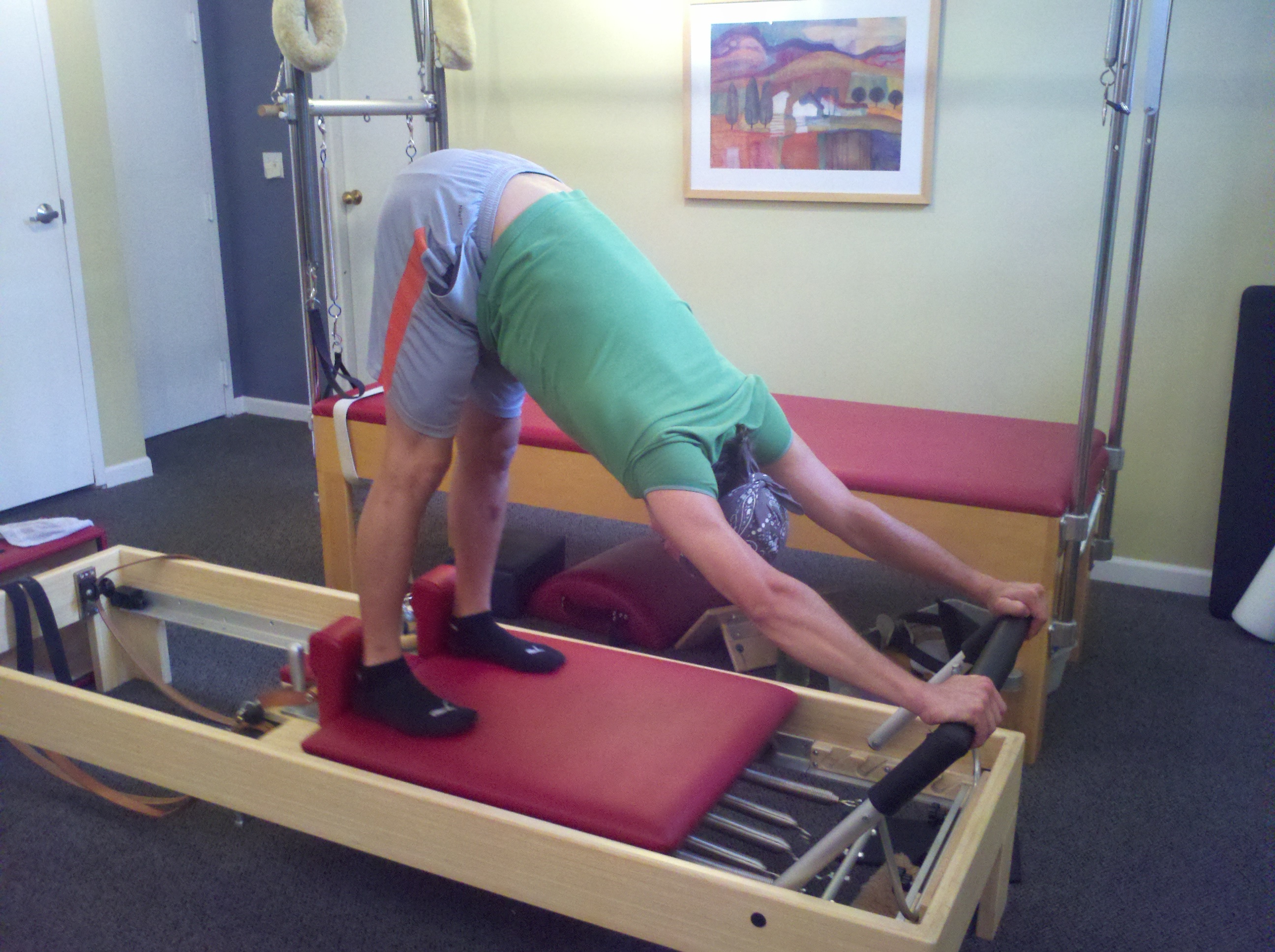
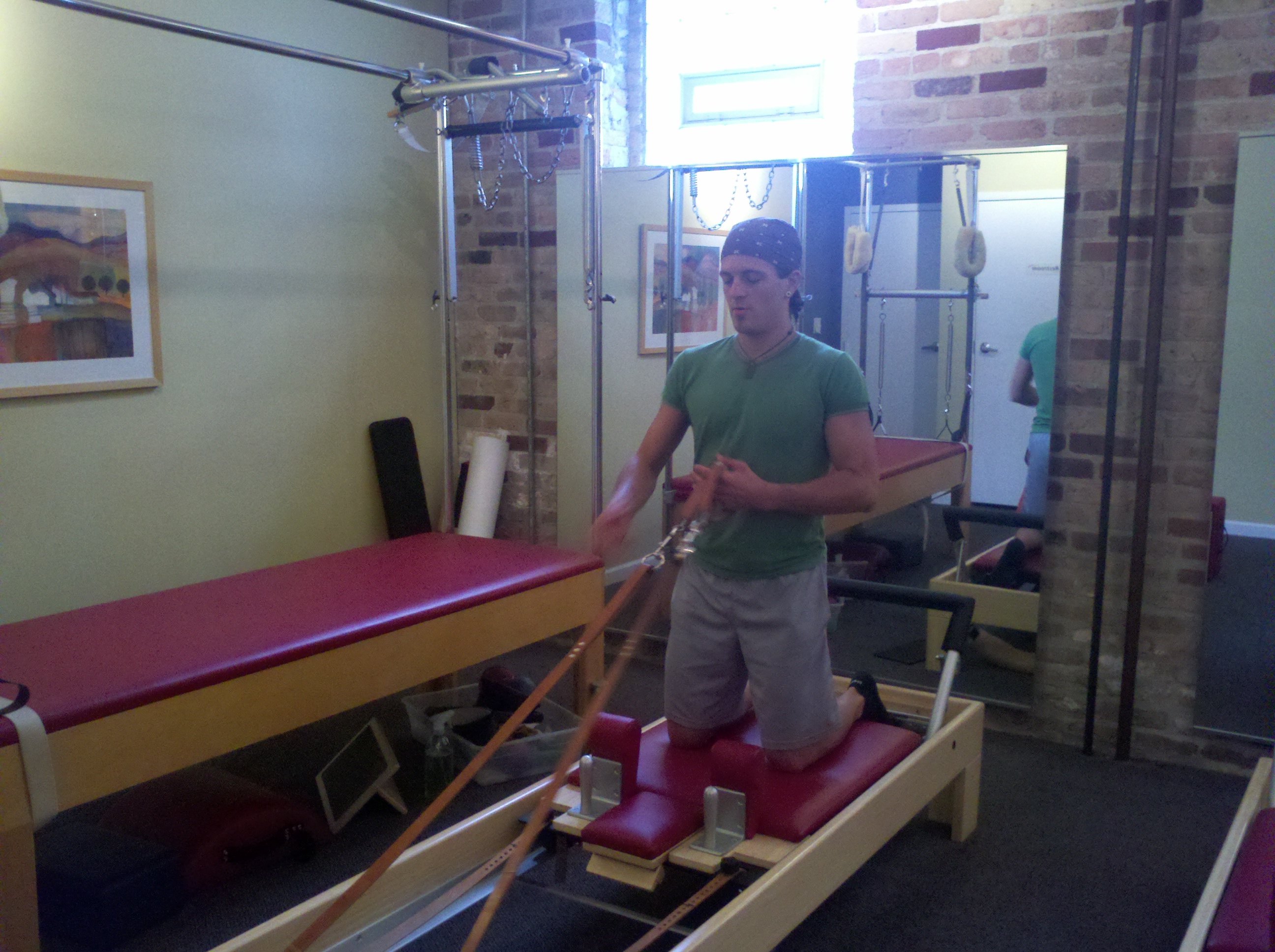
Jacob Greathouse showing off his Pilates training mad moves!

Jacob currently is completing his training in Pilates instruction at Body Endeavors, a beautiful very spacious studio in Lincoln Park on Halsted  near the Lincoln Park Whole Foods Market. Want to hire Jacob for a massage, fitness or Pilates session? Check out his pricing structure here.

Jacob Greathouse demonstrates every move he expects me to do which greatly helps me understand where to position my body in a Pilates exercise.

Want to know more about Pilates? Check out Body Endeavors website and FAQ here.

Enhanced by Zemanta

By Sue Shekut, Owner, Working Well Massage, Licensed Massage Therapist, Certified Wellness Coach, ACSM Personal Trainer

Working Well Massage is partnering with Balance & Harmony Massage to bring chair massage to  the Palatine Whole Foods Market on Saturdays from 11am to 3pm. starting October 6, 2012.

Palatine Whole Foods Market on Rand Road

Palatine Whole Foods Market is located at 1331 North Rand Rd in Palatine,  Illinois  60074-2922. (Note: The store is relocating to a larger building nearby in March of 2013.) Map of Palatine Whole Foods Market location here.

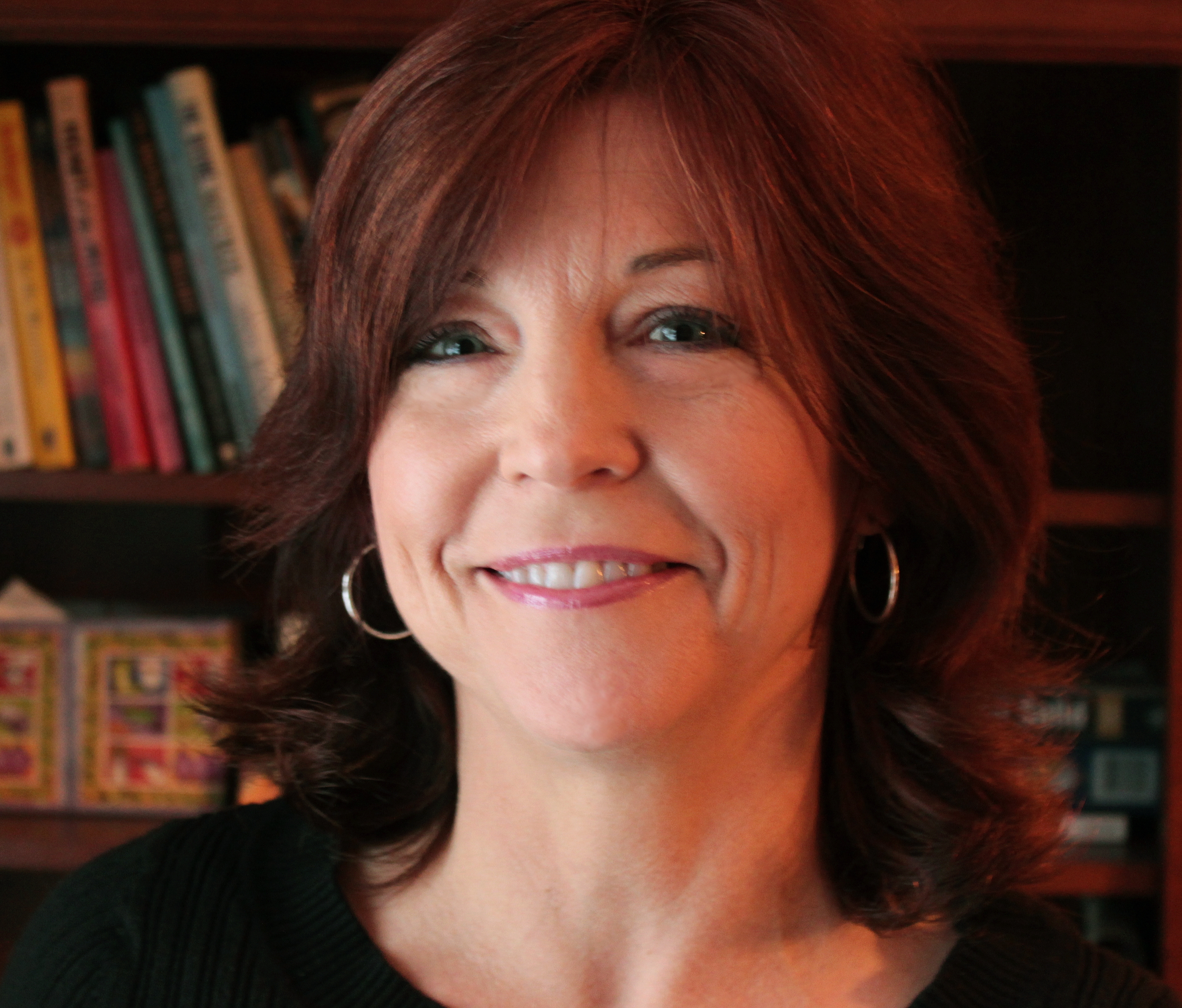
Dawn Mucha, LMT

Dawn Mucha of Balance & Harmony Massage, located in Schaumberg is going to be providing massages on Saturdays at the Palatine store. Working Well Massage is testing out the new location to determine if we need to add more days and hours of massage for our suburban relaxation fans.

Hours: Dawn will be giving relaxing massages from 11am to 3pm on Saturdays in the Whole Body section of the store.

Prices:
Quick Fix (5-Minute Massage) = $6
Short Stop (10-Minute Massage) = $12
Mellow Moment (15-Minute Massage) = $18
Complete Retreat I (20-Minute Massage) = $24
Complete Retreat II (30-Minute Massage) = $35

Additional increments of 5 minutes = $6. Please note that we do not accept credit card payments at the Massage Stations. Payment accepted in cash or checks only.

Look for Dawn’s smiling face and her massage chair coming soon to this space inside Whole Foods Market in Palatine, IL

How to Use WWM Chair Massage Stations

  • No need to make an appointment! If someone else is already receiving a massage when you arrive, simply sign in and wait your turn.
  • Before your massage begins, let the therapist know how long you’d like the massage to last and any areas that are bothering you. Be sure to let him or her know if you have any medical contraindications such as high or low blood pressure, pregnancy, or fever.
  • Your therapist will help you get seated in the chair and begin the massage. Let him or her know if you need the pressure adjusted. We welcome your feedback; it helps us give you a better massage.
  • When your massage ends, your therapist will help you out of the chair . He or she will provide you with any feedback you may need about stretching or follow-up.
  • Pay the therapist for the massage. Gratuity is always appreciated but not required.

Stop by the Palatine Whole Foods and try out Dawn’s relaxing massages on Saturdays in October. Then let us know what you think!  Do you want more massage in this location or are you so relaxed already in your life that you can’t even type a reply?
For more information, contact Working Well Massage or contact Dawn directly at Balance & Harmony at 847-452-8987.

Enhanced by Zemanta
UPDATE: Our first three weeks at Whole Foods Market in Palatine was a big success! However, in an effort to reduce confusion by our new clients, Working Well Massage has turned over operation of the chair massage station at this location to our partner company, Balance & Harmony Massage. Working Well Massage continues to support the efforts of the new chair massage business in Palatine. We wish Balance and Harmony Massage great success in this new business endeavor!

By Sue Shekut, Owner, Working Well Massage, Licensed Massage Therapist, Certified Wellness Coach, ACSM Personal Trainer

I read magazines daily and yet with my schedule,  it takes me a while to get through all the magazines I like (and then longer to find time to blog about them). May’s issue of Scientific American had a fantastic article, , How Bacteria in Our Bodies Protect Our Health, by Jennifer Ackerman about the bacteria in our bodies and how we actually could not survive without some forms of bacteria.  The article is well worth the read. If you don’t subscribe, you can preview and then buy he article via this link. Better yet, why not subscribe here? (Yes, I do subscribe myself, but other than that I have no affiliation with the magazine or its staff.) Scientific American is a very well researched, in-depth publication, that offers up the latest in scientific discovery. And it comes with shiny four-color pages.

A short excerpt from the article, How Bacteria in Our Bodies Protect Our Health, by Jennifer Ackerman: “Over the past 10 years or so, however, researchers have demonstrated that the human body is not such a neatly self-sufficient island after all. It is more like a complex ecosystem—a social network—containing trillions of bacteria and other microorganisms that inhabit our skin, genital areas, mouth and especially intestines. In fact, most of the cells in the human body are not human at all. Bacterial cells in the human body outnumber human cells 10 to one. Moreover, this mixed community of microbial cells and the genes they contain, collectively known as the microbiome, does not threaten us but offers vital help with basic physiological processes—from digestion to growth to self-defense.”

More on our inner ecosystem, bacterial roommates and life savers in the New York Times article, Tending the Body’s Microbial Garden, By Carl Zimmer  here.

If you are more of an auditory learner, check out this podcast, “Your Inner Ecosystem” from NPR’s On Point with Tom Ashbrook here.   I found this link via blogger StrangeHealth   whose take on bacteria and probiotics is also interesting. As Strangehealth so succinctly puts it, “Humans were designed to co-exist with bacteria in our environment.” Check  out his synopsis of the NPR podcast here.

Enhanced by Zemanta

By Sue Shekut, Owner, Working Well Massage, Licensed Massage Therapist, Certified Wellness Coach, ACSM Personal Trainer

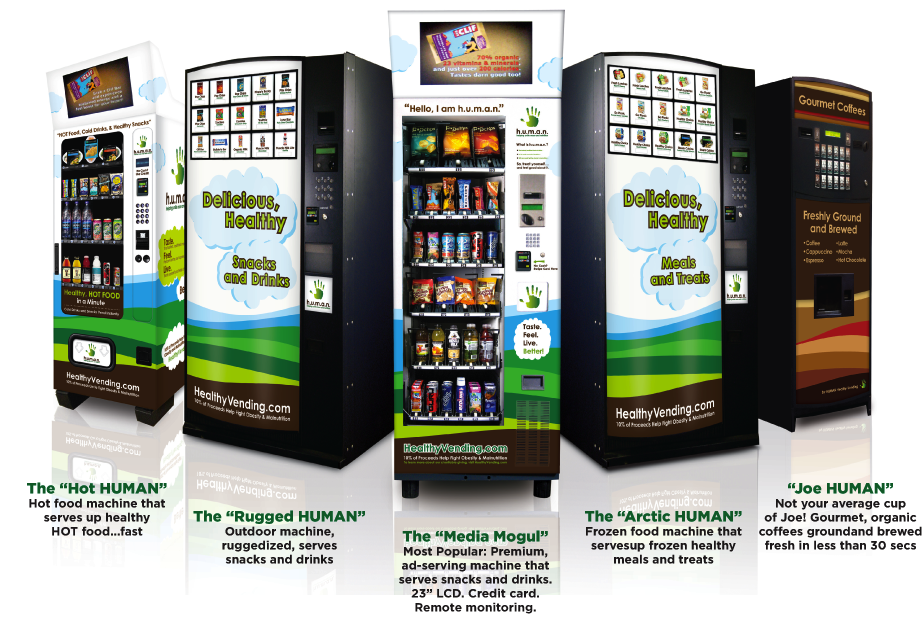
Recently a client asked me if I knew anything about healthy vending machines. I looked into it and found that there has actually been a lot of new vending machine companies that now offer healthier foods in vending machines.  I took a look at a few of the more popular vending machines companies and put together some info for other corporate clients, schools and hospitals.

Keep in mind that these vending machine companies are primarily geared toward selling vending machine franchises to vending operators. But two of them  do provide enough information to allow companies looking for healthy vending machines with information about their offerings and a means for client companies to contact them to inquire about adding a vending machine to their company. Companies with a high volume of usage will be more likely to be able to secure a vending machine versus small companies with fewer staff or vending machine usage. My top pick is Sprout!

Sprout Healthy Vending

I really like the Sprout website and company approach. Check out this webpage for detailed specs on the Sprout vending equipment and an excellent video on how the vending machine combines non-refrigerated items with refrigerated items in one machine AND accepts coins, bills and credit cards easily. I really like Sprout’s website and approach to sales. They showcase themselves as a company of people committed to providing healthy products and creating a good working environment for their own staff.

Sprout Healthy Vending Machines


All Sprout Healthy Vending Machines Include:

  • Sprout Healthy Vending Machines
  • Cashless Credit and Debit Card Payment Systems
  • Coin Acceptor/Dispenser
  • Wireless Reporting/Monitoring
  • Shipping / Delivery and Installation to the Vending Locations

To inquire about setting up a Sprout vending healthy vending machine service in your office or school, click here.

Some FAQ’s about Sprout vending services that I thought was useful:

Your location does not have to pay for the machine! Its free! The Sprout Healthy Vending machine is provided at absolutely NO cost to the location. In fact, not only do we provide the machine, we service and stock it on a regular basis and then give you a percentage of the profits each month.

Sprout Healthy Vending has a qualified professional Operator in your area who is responsible to monitor, stock and service the machines as necessary. Each of our Operators goes through extensive training and background checks to ensure that the quality of service provided is far superior to anything you have witnessed before.

Your company can help select the products in each machine in your location. Sprout believes it is important to provide a good variety of healthy products in order to satisfy the taste of everyone. Your local Sprout Operator will meet with you to discuss potential products and you can provide a wish list of requested products from our extensive inventory.

Sprout has licensed Dieticians on staff that create customized Menu Plans for each machines. They will take into account local, state and federal guidelines and build a menu plan that meets or surpasses those standards.

Sprout products are all national Name Brand items. These are the same products you would expect to find on the shelves of your local Whole Foods and Trader Joes.

Fresh Healthy Vending

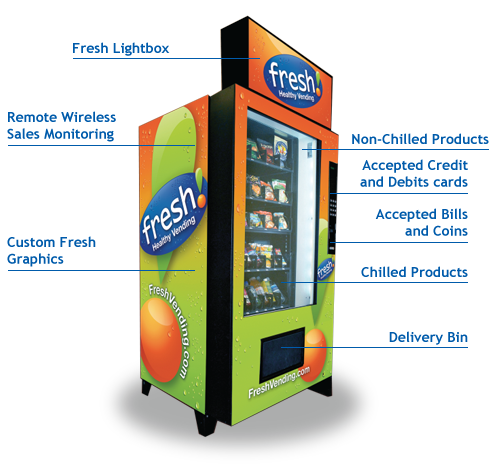
I also like the Fresh Healthy Vendings website because it makes it easier for client companies to see all the available products they can choose for their vending machines. Fresh Healthy Vending has a clean, easier to navigate website and it’s easy to see exactly what products they offer. Fresh Healthy Vending offers Cliff bar products lines, Luna and Kashi Go Lean bars, Nature’s Path, Barbara and SoyJoy bars as well as dried fruit, vitamin waters, healthy  juices, smoothies and yogurt. Check out the scrollable product options here.

Fresh Vending

To get more information on starting a Fresh Vending Franchise or to order a Fresh Vending machine for your location, click here and fill out the online form.

Healthy Vending Machines by HUMAN

Healthy Vending Machines by HUMAN

Sad to say that Healthy Vending Machines by HUMAN may be a great company, but the website looks like a giant confusing infomercial. When I think of HUMAN, the vending machine company, the phrase that comes to mind is “stressful clutter.” I could not get much information about any of their products, other than they are “customizable” and “healthy”.  I had to go through several web pages to find a general list of the type products they offer (granola bars, juice, etc.), but found no specific product lines mentioned. Thus their website does not list any brand name products to allow me to compare HUMAN’s offerings with the other two healthy vending companies.

I also do not like their video display terminal on the top of some of their vending machines. People at work are already under stress and stopping to grab a healthy snack should be a BREAK from computer monitors. Adding yet another video display with canned advertising content adds MORE stress to office workers. Be kind to human beings, HUMAN, and get rid of the annoying video displays on your machines! We are already bombarded with commercials on television, at air ports and in elevators. Do we really need yet more commercial clutter on our vending machines?

The HUMAN website is also difficult to navigate and cluttered with videos promoting their services. Their sales approach is so cluttered,  confusing and hard sell that I would not recommend them for any of my client sites. Go with Sprout or Fresh Vending instead!

Enhanced by Zemanta

By Sue Shekut, Owner, Working Well Massage, Licensed Massage Therapist, Certified Wellness Coach, ACSM Personal Trainer

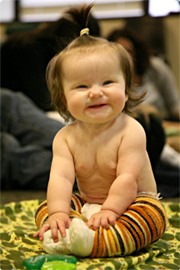
Infant massage brings a smile to the face of babies everywhere!

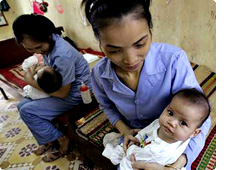
Today I received an email from a former Working Well Massage massage therapist, Rania Baxter, who left Chicago a few years ago for the calm and quiet of upper Wisconsin. Rania let me know about a fantastic program she is taking part in to bring infant and child massage to children and caregivers in another country with the Liddle Kidz Foundation.  Rania, as you can see, is now calm and peaceful and ready to bring her compassion and touch to children in a less developed country.

Rania Baxter, L.M.T. & Future Infant Massage Giver in Viet Nam!

I think it’s a great idea and a wonderful way to bring massage therapy into less developed countries in a manner than can be healing for everyone involved. The lessons Rania learns on her journey will likely benefit children and parents here as well when she returns to the U.S. Rania is hoping to raise $4300 for this effort. If you an afford to donate to Rania and LiddleKidz Foundations mission to help children and their caregivers in Viet Nam, click here and you can enter any amount you wish. Donations are being handled by Firstgiving, a secure donation portal. And sorry, I can’t let you be the first to donate. Working Well Massage already made the first donation!

According to the Liddle Kidz website, “Children who are resilient typically have a number of characteristics that make this possible.  These characteristics include having a sense of purpose in life, confidence in one’s ability to control any given situation, compassion for others, a belief in the fundamental goodness of people, and the energy and resourcefulness to make things happen. The Liddle Kidz™ Foundation Global programs directly nurture two of these important characteristics; compassion for others and the belief in the fundamental goodness of people.  Liddle Kidz  programs support children and their caregivers, so that each child has the chance to reach their full potential.”

According to Rania, “It is the vision of Liddle Kidz Foundation Global to make a true difference for children who have been orphaned, along with their caregivers who lack the necessary support to provide them with best developmental care possible. Specifically we provide focused support to orphans and children affected by HIV/AIDS, Cerebral Palsy, Spina Bifida, Agent Orange, Down Syndrome, Autism/ASD, Muscular Dystrophy, landmine survivors, children with visual and hearing impairments, as well as a host of mental and physical impairments. The LiddleKidz foundation’s mission includes setting up massage and nurturing touch programs in orphanages and children’s care settings across the globe. The goal is to provide infants and children with experiences of caring and nurturing touch that they often lack. In addition to working directly with the children,  volunteers such as Rania, teach staff and caregivers at these facilities ways to continue to provide supportive, comforting touch to the children in their care.”

Annually, Ms. Tina Allen, the founder of Liddle Kidz and Liddle Kidz Foundation Global, travels with volunteer groups to provide touch therapy in orphaTina Allen |  Founder, Liddle Kidz Foundation | Infant and  Pediatric Massagenages all over the globe. This is the group that Rania will be traveling with this December when they visit orphanages and children’s hospitals in Viet Nam.

Who is Tina Allen?

Tina Allen, LMT, CPMMT, CPMT, CIMT

With over a decade of service to children and families, Tina Allen, founder of leading children’s health and nurturing touch organization Liddle KidzFoundation (LKF), has become an internationally respected educator, author and expert in the field of infant and pediatric massage therapy.

She is a Pediatric Massage Master Teacher, Developmental Baby Massage Teacher, a Licensed Massage Therapist with specialized training in providing massage therapy for infants and children with special healthcare needs.  Ms. Allen understands the varied physical and emotional needs of hospitalized and medically complex infants, children and their families. Because of her dedication to the well-being of the entire family, she has studied and become certified in pregnancy massage and is a Trainer of Peaceful Touch®, which implements a healthy touch approach for children in school based environments.

For more information on Tina Allen and her work with healthy touch and children, click here.

For massage therapists that want to be trained in Infant Massage and Pediatric Massage, click here for upcoming class information.

Enhanced by Zemanta


United States farm subsidies (source ewg.org)

United States farm subsidies (source ewg.org) (Photo credit: Wikipedia)

By Sue Shekut, Owner, Working Well Massage, Licensed Massage Therapist, Certified Wellness Coach, ACSM Personal Trainer

I’ve heard that U.S. government farm subsidies are contributing to obesity and poor nutrition from many sources.  I thought I’d look into it and see what I could dig up. What I found surprised me. In his article in Environmental Health Perspectives, The Fat of the Land: Do Agricultural Subsidies Foster Poor Health?, Scott Fields writes that while farm subsidies for corn, soy and wheat are the norm, eliminating these subsidies likely would not result in much change in our health nor in the price of these products. (So why do we keep subsidizing them?)

HOWEVER, if the U.S. Department of Agriculture really wanted to help us out and eat healthier, experts recommend they channel those subsidies into production of fresh fruit and vegetables to encourage farmers to grow more of these more difficult to manage crops. (Apparently growing corn, wheat and soy is much easier than growing say broccoli, apples or kale.)

The relationship between farm subsidies and obesity is not clear to all. But the basic idea is that as sugary, fatty food is cheaper, people buy more of it and eat more of it. Can you image how tempted you’d be by a bag of chips if they cost $40!
Read the full  article here.

Enhanced by Zemanta
National Wear Red Day 2012

National Wear Red Day 2012 (Photo credit: U.S. Embassy Montevideo)

By Sue Shekut, Owner, Working Well Massage, Licensed Massage Therapist, Certified Wellness Coach, ACSM Personal Trainer

Are you surprised that heart attack is the number one cause of death for women? I was.  I wrote a paper for my Behavioral Medicine class in my graduate program in Psychology about women and heart disease. I learned so much about women’s heart attack symptoms and important screening exams that I thought I’d share some of what I learned with my loyal workingwellresources readers!

A heart attack, also known as a myocardial infarction, is considered to be an acute manifestation of cardiovascular disease. Heart attacks are usually caused when a blockage of the blood vessels supplying the heart with oxygenated blood causes blood to cease flowing to an area of the heart, causing that portion of the heart to be damaged or die. These blockages are most frequently caused by fatty deposits or plaque that builds up in the inner walls of arterial blood vessels. Symptoms for a heart attack are different in women than for men. In women, a heart attack may be occurring when a woman feels pressure or fullness in the center of the chest for more than a few minutes.  However, in men, heart attacks are often reported as feelings of intense discomfort or pressure in the chest. Women may experience shortness of breath even without chest discomfort. Women may also break out into a cold sweat feel nauseated or light-headed during a heart attack. In women, a heart attack can also manifest as shortness of breath, pain or discomfort in the back and/or jaw and nausea or vomiting. Men and woman can feel pain or pressure in the chest, but because symptoms tend to be less severe in women with heart attacks, many woman ignore the symptoms or take an aspirin and go to bed, thinking they have the flu, acid reflex or are just getting older. And since women tend to have heart attacks, on average, 10 years later than men, female heart attack victims tend to have a higher tendency to occur along with other chronic disease like diabetes or hypertension which puts them at greater risk than men for heart attacks to be fatal.

 According to the American Heart Association, each year approximately 785,000 U.S. citizens have an initial heart attack and another 470,000 have a recurrent heart attack. In 2007, according to the American Heart Association, 391, 886 U.S. men and 421, 918 U.S. women died of heart attacks.

Medical Treatments

Current medical treatment for hear disease includes prevention in the form of eating a healthy diet, getting regular exercise, and avoiding tobacco smoke, first and second-hand. Those that have heart attacks and survive them, as well as those with high cholesterol and/or high blood pressure, can lower the risk of another heart attack by taking statins to lower cholesterol, drugs to lower blood pressure and aspirin.

When a woman is having a heart attack, she needs emergency medical care in the form of cardiopulmonary resuscitation (CPR) or electric shock (defibrillation) until she can get to the hospital. At the hospital, medical personnel will conduct tests to decide if she is experiencing a heart attack and determine the best course of treatment depending on the severity of the attack and her general health.

For those with heart disease, or for those surviving heart attacks, surgeries such as coronary artery bypass, balloon angioplasties, heart valve repair and replacement and heart transplants are available. For some patients, there are also medical implants that can help keep their heart operating, including pacemakers to keep the heart beating regularly, prosthetic valves to replace faulty heart valves and patches which can be used to close holes in the heart muscle.

Psychological Factors Affecting Risk, Onset, Severity and Recovery

Since women tend to have less severe symptoms of heart attack and tend to be caretakers of others, females may not take signs of a heart attack as seriously and may not seek appropriate medical attention. In addition, since women tend to have greater Cardiovascular diseases like heart attacks, on average 10 years later than men, females may discount the severity of the attack, thinking their symptoms are a sign of aging or are not serious enough to go to the hospital. If a weakened heart is left untreated, by the time a woman has a serious heart attack, it is likely to be more severe than a man’s heart attack for these reasons. And lastly, since women tend to be caretakers, after a heart attack, females may not feel comfortable taking the required time to recover and may push themselves to go back to work or childcare before they are fully recovered, thus increasing the risk of re-occurrence of a heart attack.

Sociocultural and Economic Influences

Aside from females being underrepresented in clinical trails for heart disease, over 80% of fatalities from heart diseases occur in people living in low-income and middle-income countries. Some of the risk factors for heart disease in low and middle-income countries include poverty and stress, as well as unhealthy diets and sedentary lifestyles. People in these countries also tend to have reduced access to effective health care including early detection. So being poor and having a stressful life with little exercise and a poor diet makes you a winner–in the heart attack game, that is. And who wants to “win” by having a heart attack?!

Since 80% of coronary heart disease is caused by behavioral risk factors such as poor diet, lack of exercise and cigarette smoking, you can reduce your risk of having a heart attack by engaging in healthier lifestyle behaviors such as quitting smoking, eating more vegetables and fruits and exercising more. Isn’t this list of healthy lifestyle behaviors becoming repetitive? It seems that most of our health problems, obesity, heart disease, diabetes, high blood pressure–all share the same common lifestyle risk factors of poor diet, not getting enough movement in our bodies easy day and cutting down on tobacco smoking and alcohol drinking. But even if you don’t engage in these unhealthy behaviors, getting regular medical exams for blood pressure and cholesterol tend to be lower your risk of having a heart attack. Lastly, learning stress management techniques as well as coping skills to better manage stress in your live can help your heart beat more easily, help your body overall work better and help you feel better and live longer!

So what is your game plan to reduce your risk of having a heart attack? I’d like to hear from you!

Sources

American Heart Association (2012) Heart Attack Symptoms in Women. (http://www.heart.org/HEARTORG/Conditions/HeartAttack/WarningSignsofaHeartAttack/Warning-Signs-of-a-Heart-Attack_UCM_002039_Article.jsp.)

Center for Disease Control and Prevention (2012) Heart Disease. (http://www.cdc.gov/HeartDisease/coronary_ad.htm/)

Mayo Clinic (2011). Heart disease. (http://mayoclinic.com/health/heart-disease/DS01120).

McSweeny, J.C., Cody, M., Elbertson, K., Moser, D.K., Garvin, B.J. (2003) Women’s early warning symptoms of acute myocardial infarction. Circulation 108(21), 2619-23.

Roger, V.L., Go. A.S., Lloyd-Jones, D.M., Adams, R.J., Berry, J.D., Brown, T.M.,…Wylie-Rosett, J. (2011). Heart disease and stroke statistics–2011 update: a report from the American Heart Association. Circulation, 123(4), e18-e209.

World Health Organization (n.d.), Cardiovascular disease. (http://www.who.int/cardiovascular_diseases/en/)

Worrall-Carter, L., Ski, C., Scruth, E., Campbell, M & Page, K. (2011) Systemic review of

Enhanced by Zemanta

By Sue Shekut, Owner, Working Well Massage, Licensed Massage Therapist, Certified Wellness Coach, ACSM Personal Trainer

Dr. Jay Parkinson reminds me of my behavioural Medicine professor this summer. My prof is the picture of health, muscular, lean, and enthusiastic about preventative health care. His classes really challenge me to think creatively about our nation’s health care system. I am currently working on a presentation about the problems associated with health care costs. As I am researching the existing literature, I cam across Dr. Jay, who is all about prevention and helping improve people’s health from a biopsychosocial perspective and blogs are The Future Well.

Check out Dr. Jay’s blog post, “Most health solutions aren’t medical, they’re social,” here. I love his message and it echos research I’ve read about the effects of your social circle on your health. If your friends are sedentary, pizza-eating gamers, you will likely eat a fair share of pizza, game and not move much. If you start hanging out with those that are more active and eat healthier, teach you to cook or a new hobby like hiking or human origami (I just made that one up but it sounds fun doesn’t it!), you are more likely to adopt healthier behaviors. And if you inspire your pizza eating friends to try a hacky sack game or two with you on a regular basis, you may be able to keep your friends and improve your health.

Who is Dr. Jay?

Dr. Jay Parkinson, MD, MPH

(From his blog site)

Instead of pills and scalpels, Dr. Jay Parkinson uses creative design to improve health. He’s been called “The Doctor of the Future” and one of the “Top Ten Most Creative People in Healthcare” by Fast Company. Esquire Magazine included him in 2009’s “Best and Brightest: Radicals and Rebels Who Are Changing the World” issue.

Jay is a pediatrician and preventive medicine specialist with a masters in public health from Johns Hopkins. After completing residency, he started a practice for his neighborhood of Williamsburg, Brooklyn in September 2007. People would visit his website; see his Google calendar; choose a time and input their symptoms; his iPhone would alert him; he’d make a house call; they’d pay him via Paypal; and he’d follow up by email, IM, videochat, or in person. This concept led to Jay co-founding Hello Health, a novel way of experiencing healthcare via a Facebook-like platform that uses technology — including email, instant messaging, and video chat — to restore the traditional doctor-patient relationship but updated for today’s lifestyle.

He’s been called “The Doctor of the Future” and one of the “Top Ten Most Creative People in Healthcare” by Fast Company. Esquire Magazine included him in 2009′s “Best and Brightest: Radicals and Rebels Who Are Changing the World” issue. He’s been featured in GOOD Magazine, CNN, Newsweek, and Health Affairs. The leading trade publication for hospital and system executives, Hospitals and Health Networks, dedicated a cover article to Jay entitled, Your Future Chief of Staff? Jay also appears in Seth Godin’s new book, Linchpin.

Selected Writings of Dr. Jay

BusinessWeek: How to Redesign Healthcare

Design Observer: Road to Wellville. How to redesign a broken healthcare system.

GOOD Magazine: Fixing What Ails the Sickness Industry.

Enhanced by Zemanta

By Sue Shekut, Owner, Working Well Massage, Licensed Massage Therapist, Certified Wellness Coach, ACSM Personal Trainer

For those that know me, I am a big fan of treadmill desks. However, up until recently the main treadmill desk available was the Walkstation, for $4400-$4900, from Steelcase. And that may be too hefty of a price tag for small offices and the self-employed. Now more options are lower prices have become available! I am posting some of the best user reviews and options I found to date.

 LifeSpan TR1200-DT Treadmill Desk from LifeSpan Fitness

LifeSpan TR1200-DT Treadmill Desk

Here are some of the more specific Amazon reviews on the LifeSpan TR1200-DT Treadmill Desk

Eclectic Teacher says this about the  LifeSpan TR1200-DT Treadmill Desk:

I type this as I walk at 2mph on the treadmill in my home office. The desk is a fairly solid, almost stupidly-simple to assemble, unit in five easy pieces (not counting nut’n’bolts). It’s not too hard to adjust to get it to the right height, though changing it regularly for multiple users would be a real pain. The controls at the front of the desk are fairly unobtrusive, quite intuitive, and quite literally easy enough for my five-year-old to use (he thinks it cool, and keeps asking to use it before school for five or ten minutes – he hops on, starts it up with me nearby, walks and trots for a little while, stops it, and says “thanks, dad.”)

The treadmill part comes totally preassembled, and you just have to unpack it and roll it into place. It seems to work just as you’d expect, and feels solid under my feet. It plugs into the desk with a really simple, only-one-possible-way to plug it together plug to connect it to the desk controls. The wires run almost entirely interior to the desk leg, an elegant solution. While in use, it’s very quiet.

My biggest annoyance is that it doesn’t plug into your computer via a USB or something to track your long-term progress, and if you pull the dead-man stop it resets all your mileage / time, etc.

Personally, I think 2.5 mph is great for just surfing the net. Two mph works for most typing. 1.5 mph is for drinking coffee and more serious typing, and about 1 mph for eating breakfast with a plate under it while surfing the web before the coffee kicks in.

Shelly.Daniels says “I was surprised how quickly you pick up the “feel” of walking while using the desk. When I first started I was walking at 1-1.4 mph and felt comfortable typing while walking. Now, 1.6 is comfortable for me…What has surprised me is how often this is now being used. This was bought just for me to be used in the office but we have found many other uses…I use it at night now on occasion to do my Facebook updates, recently it was where a good bit of my Christmas shopping was completed! ”

Shelley goes on to talk about the desk itself: The work surface allows me to comfortably stores my laptop, phone, folders, mouse and water bottle. The console was very smartly designed where it does not slide under the desk or sit on top of the desk like the others I looked at. One of my favorite parts is the built-in step counter…it is fun and VERY motivating to watch the steps add while you work or play. As mentioned earlier the treadmill is very quiet and have asked people while on speakerphone if they could hear the treadmill and they could not! The treadmill has 4 levelers to ensure that the desk is level and the desk is very solid and stable. I get no movement and vibration on the desk and assume that is because the treadmill and desk are not attached.

WorknMan “worknman”  brings up some issues about typing versus mousing on the Treadmill desk: From the very beginning, typing seemed very easy for me while walking on this thing. Unfortunately, mouse precision took a pretty serious hit. This probably won’t be a problem if you’re a typical office worker and/or spend most of your day typing. But if you do a lot of mousing (like me), this could be a problem. In my case, using the mouse while on the treadmill is getting easier over time as I get more used to it, plus it is forcing me to use shortcut keys more to save time, so I guess that can only be a good thing 🙂 When I first got the treadmill, I couldn’t go any faster than 0.5mph before I could no longer control the mouse. Now I’m up to 1.0, and I can go as fast as 1.5, depending on what I’m doing.

To order yours for about $1300, click here.

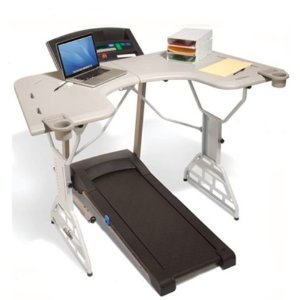
TrekDesk Treadmill Desk

TrekDesk Treadmill Desk

Another option is the TrekDesk Treadmill Desk by Trek, for about $480. However, Amazon reviewer say this desk is not adjustable, rattles and shakes and is of such poor quality it’s not worth it. Check out the desk and reviews here.

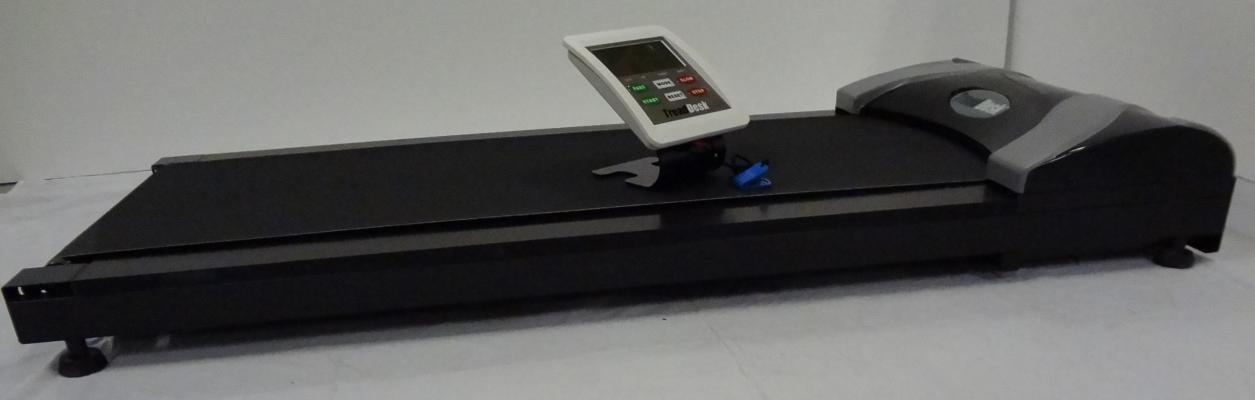
TreadDesk

TreadDesk

Another option is to simply add a treadmill, without handlebars to your existing desk set up. This may require you to add monitor risers to raise your monitor high enough to see it comfortable while standing. The TreadDesk is currently on back order, but at $840, this would be my first pick to retrofit an existing desk to a treadmill. The TreadDesk control panel sits on top of the desk and is attached to the Tread with a six-foot long wire. The control panel keeps track of distance, time, speed, calories burned and comes with an emergency shut off cord which should always be worn when using the TreadDesk. A rubber treadmill mat is also included with the purchase of each TreadDesk. If you want to read detailed user comments about the TreadDesk, click here.

Build Your Own Treadmill Desk

A cheaper option but far more labor intensive one is to build a treadmill desk yourself.  Jay Buster, an options trader, created a blog called Treadmill Desk. (Today, while walking on his Treadmill Desk, Jay manages a private investment fund which is involved in option and structured product arbitrage.) He writes this post, The $39 Treadmill Desk, to tell you how to build your own treadmill desk for $39 (minus the cost of the treadmill, natch!).

Enhanced by Zemanta