Feeds:
Posts
Comments

Archive for the ‘Workplace Wellness’ Category

Studies show that drinking excessive amounts of alcohol can be hazardous to your health. Many people enjoy drinking and are unlikely to give it up entirely, based on the threat of future health problems. A few glasses of wine may be safe for some and may even have a few health benefits.

Wine

But some overdo it. If you find yourself in the position of having drunk too much alcohol the night before, how can you handle the hangover? Eating Well magazine has some useful tips.

Of course, the best tip is to not overdo it! If you tend to over do it, try drinking a glass of water between every alcoholic drink to slow yourself down when drinking alcohol. It helps reduce dehydration and may keep you from drinking as much.

If you think you may have a problem with drinking, seek help.

Hangover Cures from Eating Well Magazine

Everyone knows someone who absolutely swears by a greasy egg sandwich from the corner diner to erase the symptoms of a hangover—but the only proven way to get rid of a hangover is to wait it out. (Hangovers usually last for 8 to 24 hours.) That said, some commonly touted hangover cures—while not proven effective—are worth a try if you’re truly in pain.

Fruit

bananas

One study conducted in the 1970s found that drinking fruit juice or eating fruit relieved some hangover symptoms. Fruits and fruit juices contain a sugar called fructose, which may help your body clear alcohol faster, according to the National Institutes of Health. Fruits and vegetables (think: supposed tomato juice cures] also contain minerals, such as potassium, that are important in restoring your electrolyte balance and replenishing your body’s fluids.

Starchy Carbohydrates

carbs

Starchy carbohydrates, such as toast or crackers, may help to counteract nausea and low blood sugar (symptoms include headaches, fatigue and cold sweats) caused by long bouts of drinking with little food, according to an article in the journal Alcohol Health & Research World.

Fluids

Water

Drinking alcohol causes your body to lose a lot of water, especially if you’ve been sick to your stomach. Rehydrating—with water or sports drinks that contain electrolytes, such as sodium and potassium—could help you feel better.

Electrolytes

Soup

The salt and potassium in bouillon-based soup may replace lost electrolytes, relieving some of the symptoms of dehydration: headache, weakness, dizziness.

“How Alcohol Affects Your Body,” an article from Eating Well

Read Full Post »

The Nutrition Data website is a great source of the latest information on nutrition. It also links to a great nutrition blog, the Nutrition Data blog, written by Monica Reinagel M.S., LD/N.

The information in Nutrition Data’s database comes from the USDA’s National Nutrient Database for Standard Reference and is supplemented by listings provided by restaurants and food manufacturers. The source for each individual food item is listed in the footnotes of that food’s Nutrition Facts page. In addition to food composition data, Nutrition Data also provides a variety of proprietary tools to analyze and interpret that data. These interpretations represent Nutrition Data’s opinion and are based on calculations derived from Daily Reference Values (DRVs), Reference Daily Intakes (RDIs), published research, and recommendations of the FDA.

Nutrition Data was launched in 2003 and has grown into one of the most useful sources of nutritional analysis on the Web. In July 2006, Nutrition Data was acquired by CondéNet, a digital publisher under the Condé Nast Publications umbrella dedicated to editorial excellence. Nutrition Data’s continuing goal is to provide the most accurate and comprehensive nutrition analysis available, and to make it accessible and understandable to all.

Check out Nutrition Data here for the latest on Diabetes, Diet and Weight Loss, Heart Health and a whole host of useful tools to track your daily caloric needs, compare foods to determine which has the best nutrition content and more!

Read Full Post »

Lately H1N1 flu has been all over the news. The Center for Disease Control (CDC) has some specific guidelines to prevent catching this flu and, if you do catch it, they have recommendations on how to avoid spreading the flu germs to others. The main point is that you should stay home, rest and recover from the flu for at least 24 hours after your fever is gone. For more detailed information from the CDC, read on. And getting together for “Swine Flu parties,” where people purposely try to contract the flu from someone that is infected to build immunity, is not such a good idea. You never know who will get severely ill and who will just get a slight case of the flu. Why risk it if you don’t have to!

2009 H1N1 Flu in Humans

Flu virus under microscope

Is 2009 H1N1 virus contagious?
The 2009 H1N1 virus is contagious and is spreading from human to human.

How does 2009 H1N1 virus spread?

coughing and sneezing spreads germs

Spread of 2009 H1N1 virus is thought to occur in the same way that seasonal flu spreads. Flu viruses are spread mainly from person to person through coughing or sneezing by people with influenza. Sometimes people may become infected by touching something – such as a surface or object – with flu viruses on it and then touching their mouth or nose.

What are the signs and symptoms of this virus in people?
The symptoms of 2009 H1N1 flu virus in people include fever, cough, sore throat, runny or stuffy nose, body aches, headache, chills and fatigue. Some people may have vomiting and diarrhea. People may be infected with the flu, including 2009 H1N1 and have respiratory symptoms without a fever. Severe illnesses and deaths have occurred as a result of illness associated with this virus.

How severe is illness associated with 2009 H1N1 flu virus?
Illness with 2009 H1N1 virus has ranged from mild to severe. While most people who have been sick have recovered without needing medical treatment, hospitalizations and deaths from infection with this virus have occurred.

In seasonal flu, certain people are at “high risk” of serious complications. This includes people 65 years and older, children younger than five years old, pregnant women, and people of any age with certain chronic medical conditions. About 70 percent of people who have been hospitalized with this 2009 H1N1 virus have had one or more medical conditions previously recognized as placing people at “high risk” of serious seasonal flu-related complications. This includes pregnancy, diabetes, heart disease, asthma and kidney disease.

Young children are at risk

Young children are also at high risk of serious complications from 2009 H1N1, just as they are from seasonal flu. And while people 65 and older are the least likely to be infected with 2009 H1N1 flu, if they get sick, they are also at “high risk” of developing serious complications from their illness. See People at High Risk of Developing Flu-Related Complications for more information about who is more likely to get flu complications that result in being hospitalized and occasionally result in death.

CDC laboratory studies have shown that no children and very few adults younger than 60 years old have existing antibody to 2009 H1N1 flu virus; however, about one-third of adults older than 60 may have antibodies against this virus. It is unknown how much, if any, protection may be afforded against 2009 H1N1 flu by any existing antibody.

How does 2009 H1N1 flu compare to seasonal flu in terms of its severity and infection rates?
With seasonal flu, we know that seasons vary in terms of timing, duration and severity. Seasonal influenza can cause mild to severe illness, and at times can lead to death. Each year, in the United States, on average 36,000 people die from flu-related complications and more than 200,000 people are hospitalized from flu-related causes. Of those hospitalized, 20,000 are children younger than 5 years old. Over 90% of deaths and about 60 percent of hospitalization occur in people older than 65.

When the 2009 H1N1 outbreak was first detected in mid-April 2009, CDC began working with states to collect, compile and analyze information regarding the 2009 H1N1 flu outbreak, including the numbers of confirmed and probable cases and the ages of these people. The information analyzed by CDC supports the conclusion that 2009 H1N1 flu has caused greater disease burden in people younger than 25 years of age than older people. At this time, there are relatively fewer cases and deaths reported in people 65 years and older, which is unusual when compared with seasonal flu. However, pregnancy and other previously recognized high risk medical conditions from seasonal influenza appear to be associated with increased risk of complications from this 2009 H1N1. These underlying conditions include asthma, diabetes, suppressed immune systems, heart disease, kidney disease, neurocognitive and neuromuscular disorders and pregnancy.

How long can an infected person spread this virus to others?
People infected with seasonal and 2009 H1N1 flu shed virus and may be able to infect others from 1 day before getting sick to 5 to 7 days after. This can be longer in some people, especially children and people with weakened immune systems and in people infected with the new H1N1 virus.

Prevention & Treatment

What can I do to protect myself from getting sick?
This season, there is a seasonal flu vaccine to protect against seasonal flu viruses and a 2009 H1N1 vaccine to protect against the 2009 H1N1 influenza virus (sometimes called “swine flu”). A flu vaccine is the first and most important step in protecting against flu infection. For information about the 2009 H1N1 vaccines, visit H1N1 Flu Vaccination Resources. For information about seasonal influenza vaccines, visit Preventing Seasonal Flu With Vaccination.

There are also everyday actions that can help prevent the spread of germs that cause respiratory illnesses like the flu.

Take these everyday steps to protect your health:

Cover your nose and mouth with a tissue when you cough or sneeze. Throw the tissue in the trash after you use it.

Wash your hands

* Wash your hands often with soap and water. If soap and water are not available, use an alcohol-based hand rub.*
* Avoid touching your eyes, nose or mouth. Germs spread this way.
* Try to avoid close contact with sick people.
* If you are sick with flu-like illness, CDC recommends that you stay home for at least 24 hours after your fever is gone except to get medical care or for other necessities. (Your fever should be gone without the use of a fever-reducing medicine.) Keep away from others as much as possible to keep from making others sick.

Other important actions that you can take are:

* Follow public health advice regarding school closures, avoiding crowds and other social distancing measures.
* Be prepared in case you get sick and need to stay home for a week or so; a supply of over-the-counter medicines, alcohol-based hand rubs * (for when soap and water are not available), tissues and other related items could help you to avoid the need to make trips out in public while you are sick and contagious.

What is the best way to keep from spreading the virus through coughing or sneezing?
If you are sick with flu-like illness, CDC recommends that you stay home for at least 24 hours after your fever is gone except to get medical care or for other necessities. (Your fever should be gone without the use of a fever-reducing medicine.)

Keep away from others as much as possible. Cover your mouth and nose with a tissue when coughing or sneezing. Put your used tissue in the waste basket. Then, clean your hands, and do so every time you cough or sneeze.

If I have a family member at home who is sick with 2009 H1N1 flu, should I go to work?

Employees who are well but who have an ill family member at home with 2009 H1N1 flu can go to work as usual. These employees should monitor their health every day, and take everyday precautions including covering their coughs and sneezes and washing their hands often with soap and water, especially after they cough or sneeze. If soap and water are not available, they should use an alcohol-based hand rub.* If they become ill, they should notify their supervisor and stay home. Employees who have an underlying medical condition or who are pregnant should call their health care provider for advice, because they might need to receive influenza antiviral drugs. For more information please see General Business and Workplace Guidance for the Prevention of Novel Influenza A (H1N1) Flu in Workers.

What is the best technique for washing my hands to avoid getting the flu?

Washing your hands often will help protect you from germs. CDC recommends that when you wash your hands — with soap and warm water — that you wash for 15 to 20 seconds. When soap and water are not available, alcohol-based disposable hand wipes or gel sanitizers may be used.* You can find them in most supermarkets and drugstores. If using gel, rub your hands until the gel is dry. The gel doesn’t need water to work; the alcohol in it kills the germs on your hands.

What should I do if I get sick?
For information about what to do if you get sick with flu-like symptoms this season, see What To Do If You Get Sick: 2009 H1N1 and Seasonal Flu. A downloadable flyer Adobe PDF file containing this information also is available at http://www.cdc.gov/flu/freeresources/2009-10/pdf/what_to_do_if_you_get_sick.pdf Adobe PDF file.

What are “emergency warning signs” that should signal anyone to seek medical care urgently?

In children:

* Fast breathing or trouble breathing
* Bluish skin color
* Not drinking enough fluids
* Not waking up or not interacting
* Being so irritable that the child does not want to be held
* Flu-like symptoms improve but then return with fever and worse cough
* Fever with a rash

In adults:

* Difficulty breathing or shortness of breath
* Pain or pressure in the chest or abdomen
* Sudden dizziness
* Confusion
* Severe or persistent vomiting

Are there medicines to treat 2009 H1N1 infection?

Yes. There are drugs your doctor may prescribe for treating both seasonal and 2009 H1N1 called “antiviral drugs.” These drugs can make you better faster and may also prevent serious complications. This flu season, antiviral drugs are being used mainly to treat people who are very sick, such as people who need to be hospitalized, and to treat sick people who are more likely to get serious flu complications. Your health care provider will decide whether antiviral drugs are needed to treat your illness. Remember, most people with 2009 H1N1 have had mild illness and have not needed medical care or antiviral drugs and the same is true of seasonal flu.

What is CDC’s recommendation regarding “swine flu parties”?
“Swine flu parties” are gatherings during which people have close contact with a person who has 2009 H1N1 flu in order to become infected with the virus. The intent of these parties is for a person to become infected with what for many people has been a mild disease, in the hope of having natural immunity 2009 H1N1 flu virus that might circulate later and cause more severe disease.

CDC does not recommend “swine flu parties” as a way to protect against 2009 H1N1 flu in the future. While the disease seen in the current 2009 H1N1 flu outbreak has been mild for many people, it has been severe and even fatal for others. There is no way to predict with certainty what the outcome will be for an individual or, equally important, for others to whom the intentionally infected person may spread the virus.

CDC recommends that people with 2009 H1N1 flu avoid contact with others as much as possible. If you are sick with flu-like illness, CDC recommends that you stay home for at least 24 hours after your fever is gone except to get medical care or for other necessities. (Your fever should be gone without the use of a fever-reducing medicine.) Stay away from others as much as possible to keep from making others sick.
Contamination & Cleaning

Clean surfaces and doorknobs, phones and counters

How long can influenza virus remain viable on objects (such as books and doorknobs)?
Studies have shown that influenza virus can survive on environmental surfaces and can infect a person for 2 to 8 hours after being deposited on the surface.

What kills influenza virus?
Influenza virus is destroyed by heat (167-212°F [75-100°C]). In addition, several chemical germicides, including chlorine, hydrogen peroxide, detergents (soap), iodophors (iodine-based antiseptics), and alcohols are effective against human influenza viruses if used in proper concentration for a sufficient length of time.

What if soap and water are not available and alcohol-based products are not allowed in my facility?
If soap and water are not available and alcohol-based products are not allowed, other hand sanitizers that do not contain alcohol may be useful.

What surfaces are most likely to be sources of contamination?
Germs can be spread when a person touches something that is contaminated with germs and then touches his or her eyes, nose, or mouth. Droplets from a cough or sneeze of an infected person move through the air. Germs can be spread when a person touches respiratory droplets from another person on a surface like a desk, for example, and then touches their own eyes, mouth or nose before washing their hands.

How should waste disposal be handled to prevent the spread of influenza virus?
To prevent the spread of influenza virus, it is recommended that tissues and other disposable items used by an infected person be thrown in the trash. Additionally, persons should wash their hands with soap and water after touching used tissues and similar waste.

What household cleaning should be done to prevent the spread of influenza virus?
To prevent the spread of influenza virus it is important to keep surfaces (especially bedside tables, surfaces in the bathroom, kitchen counters and toys for children) clean by wiping them down with a household disinfectant according to directions on the product label.

How should linens, eating utensils and dishes of persons infected with influenza virus be handled?

Linens, eating utensils, and dishes belonging to those who are sick do not need to be cleaned separately, but importantly these items should not be shared without washing thoroughly first.
Linens (such as bed sheets and towels) should be washed by using household laundry soap and tumbled dry on a hot setting. Individuals should avoid “hugging” laundry prior to washing it to prevent contaminating themselves. Individuals should wash their hands with soap and water or alcohol-based hand rub immediately after handling dirty laundry.

Eating utensils should be washed either in a dishwasher or by hand with water and soap.

For more info go to the

Read Full Post »

Climbing stairs is a great way to pump fresh blood, (and thus, oxygen) into your brain, give yourself a break from a stressful day, and burn a few calories. Best yet, it can be fun.

In the 1960’s, Volkswagen made ugly cars fun with the Volkswagen Beetle. Now they are finding new ways to make exercise fun. A car company encouraging people to exercise? Now that is FUN!

Link to You Tube video!

From Volkswagen’s The Fun Theory website: We believe that the easiest way to change people’s behavior for the better is by making it fun to do. We call it The Fun Theory. Link to The Fun Theory Website

Working Well agrees!

Read Full Post »

In an article from Physorg.com, A new study shows that exercise boosts body image for both fit and unfit:

Attention weekend warriors: the simple act of exercise and not fitness itself can convince you that you look better, a new University of Florida study finds.

People who don’t achieve workout milestones such as losing fat, gaining strength or boosting cardiovascular fitness feel just as good about their bodies as their more athletic counterparts, said Heather Hausenblas, a UF exercise psychologist. Her study is published in the September issue of the Journal of Health Psychology.

“You would think that if you become more fit that you would experience greater improvements in terms of body image, but that’s not what we found,” she said. “It may be that the requirements to receive the psychological benefits of exercise, including those relating to body image, differ substantially from the physical benefits.”

The study by Hausenblas and graduate student Anna Campbell is the first to systematically analyze the wide-ranging effects of exercise on body image by examining all intervention studies on the subject until June 2008. From the 57 publications, the researchers found conclusively that exercise buffed up the way people see their bodies regardless of the actual benefits, but the results varied.

Negative body image has grown to almost epidemic proportions in the past 20 years, with as many as 60 percent of adults in national studies saying they don’t like the way their bodies look, Hausenblas said.

Americans spend billions of dollars a year for products designed to change their body size and shape, including diet pills and various cosmetic procedures, she said.

“Body dissatisfaction is a huge problem in our society and is related to all sorts of negative behavior including yo-yo dieting, smoking, taking steroids and undergoing cosmetic surgery,” she said. “It affects men and women and all ages, starting with kids who are as young as five years old saying they don’t like how their bodies look.”

The psychological advantages of exercise have been less explored, including the reduction of depression or confidence in body image, compared with the well-researched and understood physical benefits, she said.

Link to article here

Read Full Post »

By Sue Shekut, Licensed Massage Therapist, ACSM Personal Trainer, Certified Wellness Coach, Owner, Working Well Massage

I have had to eat a “healthy” diet for most of my adult life. As a young girl, I ate as much junk food as my peers and my body rebelled. By 20, I could not eat any white or processed sugar because I was hypoglycemic. I developed migrane headaches from chocolate (a former childhood love) and fermented foods like sharp cheeses and wines. White bread made me sick, so I had to switch to whole grain bread even before it was marketed as whole grain bread. Through the years my body let me know, anything overly processed, overly sugared, overly salted, or overly fat was going to give me stabbing pain in my head, my abdomen, or just plain make me sick and exhausted. I am the “canary in the coal mine” when it comes to food. But in many ways I am a lucky person. I haven’t been able to eat the typical American diet and I don’t have a lot of the typical American diseases. (such as obesity, high blood pressure, Type II diabetes)

I don’t tell you this to get accolades or say I am so great. No, my healthy diet was mainly by default in the beginning. I liked the junk food. I just couldn’t handle it. Later, as I read more and learned more, I ate healthy by design. Having grown up on Rice Krispy Treats, all things Nestle, Rice a Roni, Carnation Instant Breakfast, Skippy Peanut Butter, McDonald’s and Wonder Bread, I know what it’s like to try to wean off the processed foods and try to eat vegetables, fresh fruit, healthy grains, like brown rice, and be satisfied. In my case, I had a crash course in changing my diet. Still, it took a while to adjust to new tastes and learn how to be satisfied with less added sugar. But I can tell you IT CAN BE DONE! and your health and well being is worth it.

But How do you Know What’s Junk Food and What’s Healthy Food?
According to Margie King of the Philadelphia Nutrition Examiner, the NuVal nutritional scoring system may be the ticket to simpler healthy eating. The NuVal system will analyze more than 50,000 food items found in a typical grocery store and assign a value of 1 to 100 to each item. The higher the score, the more nutritious is the food.

The system is the brainchild of Dr. David Katz, an Associate Professor at the Yale University School of Public Health, and the Director and founder of Yale’s Prevention Research Center. Dr. Katz is an expert in nutrition and preventative medicine, the author of several books including The Flavor Point Diet, a syndicated health columnist for The New York Times and a medical contributor for ABC News.
Read more from Margie King of the Philadelphia Nutrition Examiner here

Dr. Katz says our taste buds are malleable and we are teaching them to crave salt and sugar. Eating added sugar in non-dessert items in everything from pasta sauce to breakfast cereal causes our taste buds to crave sugar much more than we normally would. In the video, he talks about how there is as much sodium in many breakfast cereals than your diet should be. It’s well worth the 4 minutes to watch Dr. Katz talk about how our diets are modified by the food supply and how we can retrain our taste buds to enjoy healthier less salty and less sugary foods.

Link to Dr. Katz’s video “Rehab Your Taste Buds: Getting Hooked on Wholesome Foods”

As American’s look to health care reform, there is a growing buzz about food system reform as well. Some say health care reform won’t work without reforming our nutritional system. The Nu Val system is one attempt to give us tools to reform our diets so we don’t NEED as much health care intervention. It’s Prevention versus Disease Treatment. And that sounds pretty sweet! Read Why Health Care Reform Requires Nutrition Reform by Margie King in the Philadelphia Nutrition Examiner

Read Full Post »

by Sue Shekut, Licensed Massage Therapist, ACSM Personal Trainer, Certified Wellness Coach, Owner, Working Well Massage

Through the years I’ve had a number of massage therapy clients say things like, “I know it has to hurt to be effective,” and “no pain no gain, right?” Actually, massage does not, and should not ,“hurt” to be effective. In fact, if the massage you are receiving is so painful you have to grit your teeth or hold your breath, it likely isn’t going to be very effective.

The idea that we have to experience pain in order to heal is a holdover from the 1980’s when people were “going for the burn” and many bodywork modalities were just starting to take root. Some massage therapy schools of thought held that people were experiencing deep emotional breakthroughs if they cried out or had an emotional “release” during a particularly intense bodywork session. This led to the idea that you HAD to have a deep emotional outburst or had to feel pain to have a really “good” bodywork experience.

Since then, somatic psychology and bodywork has matured. As have bodywork practitioners. Many realize that, especially for people that have already had a physical trauma such as a car accident or injury, the body has already been through deep trauma. Working too deep, giving too much pressure, or expecting clients to have radical transformation from a single session can be retraumatizing.

Some massage therapists still hold to the belief that trigger points need intense compression to release the knot. Sometimes this is true. But holding a trigger point for too long, or pressing too deeply into a sore muscle area can cause more pain and damage than healing. (Trigger points are areas of the muscles that have a cluster of muscular adhesions or “knots” that refer pain elsewhere when compressed.)

Good Pain Versus Bad Pain
Does that mean that massage should be painless? Well herein lies the rub (pun intended). Massage is not painless any more than working out is painless. There can be muscle soreness. When we first press on a sore or extremely tight muscle area, there may be tenderness or soreness. We call this “good pain” similar to the soreness you may experience when you lift weights or do a prolonged cardio session. However, if you are working out and you “pull” a muscle or sprain your ankle, that would be “bad pain.” That type of pain indicates an injury to the tissue and requires medical attention. Muscle soreness during an exercise or massage session is not abnormal and can indicate that healing is occurring.

What About Soreness?
When a tight muscle is massaged, at first you may notice the sensation of soreness or tenderness. Initially you become more aware of that muscle area and that may include an awareness of just how very tight and sore the muscle is. Then as the massage therapist continues to work with the muscle tissue, fresh blood flows into the muscle area as the therapist presses down (as in compressions or gliding strokes). This fresh blood helps “loosen” the muscle tissue and also helps bring nutrients and oxygen into the muscle. At this point, especially in a deep tissue massage, you will likely notice less soreness in the area. If the muscle gets more and more sore, the massage therapist may be overworking the area and it’s best if you tell him or her to stop massaging that area and to move elsewhere!

That all said, after a deep tissue massage, you may feel some muscle soreness a day or two afterwards, just as you may feel sore after a workout. In essence, a deep tissue massage is like having someone else give your body a workout. Soreness or bruising lasting longer than a day or so may indicate the massage was too intense. Let your massage therapist know if this happens so he or she knows to work with less pressure for your next massage. (If you go back to him or her at all!)

Read Full Post »

By Sue Shekut, Licensed Massage Therapist, ACSM Personal Trainer, Certified Wellness Coach, Owner, Working Well Massage

Do you have a great backrest, but your chair or car seat is too hard or you find yourself sliding off the seat? Or is your chair a wire mesh type with a supposedly great ergonomic design but no comfy cushioning in the seat?

Why settle for uncomfortable car seats and office chairs when you can easily upgrade your seating setup with a foam cushion! Pair your backrest with a foam seat cushion.

For about $100-$150 you can put together your own “ergo” seating. We’ve reviewed many of the products out there and found the best prices and reviews on Amazon. You may be able to find the same or similar products elsewhere, but you will pay about 10-30% more from other vendors.

To save you time, we pasted the links and pictures of the products in a few separate posts about backrests and seat cushions. Find the situation that describes your issue (you are taller than average, shorter than average, of wider girth than average, etc.) and read the associated post to find out about the product we think may help you best. In this post we discuss three different seat cushion options.

We also included pertinent tips from the Amazon customer reviews so you don’t have to wade through them yourself. However, if you want to read all the reviews yourself, simply go to the Amazon product link and check out the customer reviews.

Note: Many car seats are smaller and office chairs may be deeper and wider in the seat than some cushions. So when adding a foam seat cushion to your chair or car seat, keep the existing seat dimensions in mind. Amazon customer reviewers make note of this for some of the cushions discussed below.

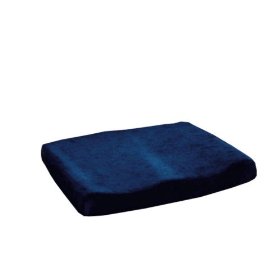
1. Essential Medical Supply Memory P.F. Sculpture Comfort Seat Cushion

Essential Medical Seat Cushion

A bargain on Amazon for $28.92!


According to the manufacturer:

• Relieves Pressure
• Seating cushion includes molded, 6 lb. density memory foam
• Comfortable seat for individuals sitting in chairs, riding in cars, scooters, etc.
• Encased in removable and washable luxurious zippered blue velveteen cover.
• The sculpted design is anatomically correct and provides maximum comfort.
• Product Dimensions: 18 x 2.5 x 16 inches

Amazon Reviewers Say:
• The memory foam is dense so it doesn’t collapse into nothingness when you sit on it, and it gives you very good support. It raises the seat about two inches, which can make getting up from the chair a lot easier.

• My only complaint is that it would be nice if it was at least 2 inches wider and 3 inches deeper so it would approximate the seating area of my office chair. At its current dimensions, it only covers the seating area of a traditional dining room chair.

• While it does have a dense foam, it is not memory foam, as I understand the term. It compresses and quickly bounces back like any other foam. Would also have liked it to be a bit bigger, particularly in depth. Really only good for a small chair.

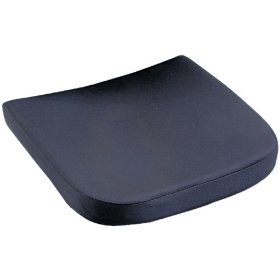
2. Kensington Memory Foam Seat Cushion

Kensington Memory Foam Seat Cushion

On Amazon for $37.64

According to the manufacturer:

• High-density memory cell foam was originally developed by NASA to relieve G-force strain during lift off.
• Temperature- and pressure-sensitive, it molds to the body’s contour, offering optimal comfort.
• Dissipates pressure while conforming to body contours.
• Leather-like bottom cover reduces movement on chair.
• Product Dimensions: 16.2 x 2.6 x 16.2 inches ; 2.6 pounds

Amazon Reviewers Say:

• No customer reviews on this product as of yet. We purchased one for one of our clients and so far she loves it, but she weighs only about 120 pounds.

Review from the similar Kensington Memory Foam Seat Rest (L82024)

• I ordered this cushion for my rather large desk chair at work- and it works great! The foam is very thick, but conforms to the body to support it well. The cushion is tapered at the front to prevent pressure on the legs. I would highly recommend this to improve posture and support while working at a desk. I am buying a second one to keep at home so when I work at my kitchen table on my laptop I am at the proper height.

• Heavier people may find the cushion smashes quickly, according to Amazon reviewers.

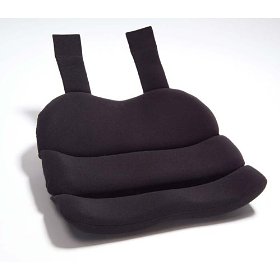
3. Obus Forme Ergonomic Seat Cushion

Orbus Forme Seat Cushion

From Amazon for $59.46

According to the manufacturer:

• Polyurethane foam construction absorbs compression forces and dissipates the vibration created in moving vehicles, making it ideal for use on the road.
• Can be used on its own or with any Obus Forme Backrest support to create a complete and comfortable ergonomic sitting experience.
• The removable front section is easily unzipped to allow for use with narrow chairs and benches.

Amazon Reviewers Say:

• The seat comes in a handy little plastic tote bag with a handle for carrying, and you can zip off the front segment of the seat to fit shallower chairs.

• This cushion saved my butt on a long car trip! I have periodic flare-ups of sciatica and hip pain, aggravated by riding in the car. Even short trips around town usually have me squirming in my seat. With the ObusForme cushion I can ride or drive pain free for hours at a time. I also brought it to a football game, and was comfortable for over three hours on the bleacher seat.

• However, I purchased the Obus Ultra Forme backrest for added support. I was so happy with the backrest that I decided that adding the seat was called for. It unfortunately turned out to be fairly uncomfortable. The support was pretty good, and the problem might have been that it was too small for my recliner, but I ended up returning it. I’m 6’4″, 200lbs, so maybe I don’t have enough built in padding, but regardless, I was disappointed in the seat after being so happy with the backrest.

• Great firm seat cushion. It stays in place well, and is a good complement to the Obus Forme back support device.

Read Full Post »

Image representing iPhone as depicted in Crunc...
Image via CrunchBase

By Sue Shekut, Licensed Massage Therapist, ACSM Personal Trainer, Certified Wellness Coach, Owner, Working Well Massage

Smart phones are common tools for today’s fast-paced business world. And just as computer use has improved our lives AND added a host of new ergonomic issues, “iPod Neck” and “Blackberry Neck” are concerns for many users that hold their phones while looking down.

Smart phones are not heavy. You may think holding them won’t cause muscle tension. They are easy to hold in one hand and type with the other. But holding the phone and looking down at the small screen for long periods of time can cause unwanted muscle pain in the upper back and neck. Those that use their iPod’s as a Kindle reader spend even more time looking down while viewing the device.

Think holding a small phone can’t cause any problems? Try this test yourself.

1. Hold your phone up in front of you and look down at the screen for a full 60 seconds.

2. Notice how your neck and shoulders feel as the clock ticks by.

3. Feel any uncomfortability in your muscles?

4. Now think of how you would feel after holding your phone and looking down for five minutes. Ten minutes. You get the idea.

When you use your phone or media player you are usually focusing your attention on the task at hand, not on your muscle tension. Doing this exercise makes you more aware of how you use your body when typing or viewing your smart phone.

Smart phones need smart accessories. How can you counter the muscle strain you may get while holding your iPod or Blackberry to type?


A few simple suggestions to avoid “iPod Neck.”

1. Whenever possible, rest your elbows on a table or surface so that your arms are propped up to view your smart phone. This takes pressure off your neck and shoulder muscles and let’s you work more easily. Resting your elbows on a flat surface is free! And you can take your elbows with you anywhere you go. Just make sure the table or surface is not so slow you have to slump over to reach it!)

Find this inexpensive, portable stand here

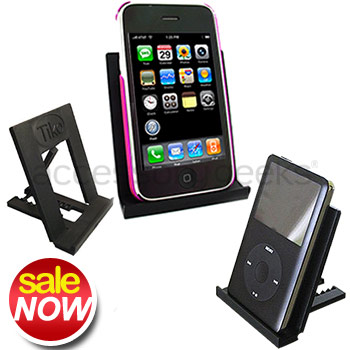
2. Purchase an inexpensive Smart phone holder to use to prop up your device when you are on the go.

Tiko Stand

This Tiko Fold is convenient on planes, trains, at the coffee shop or at a desk. Free your hands and relax while viewing your phone or media player at one of nine adjustable viewing angles.

The Tiko Fold folds flat for slipping into a shirt pocket, backpack, computer bag, or purse. When folded into a stand, the Tiko Fold provides a universal base designed to hold the original iPhone and the iPhone 3G, Sony PSP, and practically any portable video players like your cell phone in both vertical and horizontal orientations. The Tiko Fold also holds the iPod Classic, iPod Touch, iPod Nano, BlackBerry Storm, BlackBerry Bold, most video capable cell phones, the Microsoft Zune, Sony PSP and even some ebook readers.

The Tiko stand retails for about $8.00 and can be purchased here here

3. Another alternative for holding iPods/iPhones is the Incipio Kickstand Leather Case for iPod touch 2G link here for about $24.00

Leather iPod/iPhone case

Note: Apple makes wrist band holders for iPods but the problem with these is that they still require you to bend your arm in an unnatural position to view the phone or iPod.

Reblog this post [with Zemanta]

Read Full Post »

By Sue Shekut, Licensed Massage Therapist, ACSM Personal Trainer, Certified Wellness Coach, Owner, Working Well Massage

Are you an avid video gamer or person that likes to read or work sitting upright on the couch or in bed? Or are you of wider than “average” girth? Keep in mind that average is not the norm these days. Recent statistics state that 62% of the American population is considered “obese.” A person is considered obese if his or her fat body weight is more that 30 percent of his or her total weight.

Funny thing is, office furniture is still made for the Hollywood ideal, the office workers of Mad Men days. If you don’t fit that body ideal, we are not going to lecture you about the need to lose fat. Being height/weight proportionate is the healthier goal. However, getting fit is not something you can do overnight. So what do you do to sit comfortably when you have a wide girth?

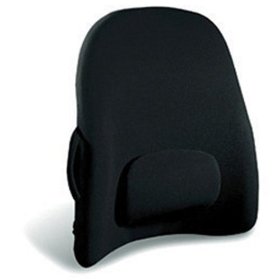
A good backrest for people with wider girth or those that want a bed rest for reading or working sitting upright in bed or on a couch is the Orbus Forme Wide-back Backrest. It’s also great for gamers that rest on a bed or couch playing video games. (Of course, if you get a Wii Fit you can game and get fit!)

Obus Forme Wide-back Backrest

On Amazon for $66.66

Orbus Forme Wide Backrest


According to the manufacturer:

• 3 inches wider and 1 inch taller than normal backrest
• Enhances overall posture and provides relief from pain from poor posture
• S-shaped frame
• Portable and lightweight

Amazon Reviewers Say:

• It is the PERFECT “pillow” with back support and the BEST I have found for sitting up to read or use a laptop in bed. It offers the kind of support that other sitting up in bed pillows don’t. I think I have tried every style of bed pillow ever made for reading in bed without being 100% satisfied with their performance and my comfort. So, I am delighted with this use for this backrest. This backrest nearly hits the 100% mark as a reading pillow.

• The one big problem with this backrest is that the curve of it sticks far from the chair making the space where your legs go is cut to half of what it originally was. My back feels better but now my legs hurt because they hang over the edge too far because of the curve of the backrest.

However, if your chair allow for the backrest and you are of wider than Mad Men ideal girth, this backrest may be the perfect fit for you! Until they start making wider, better cushioned office chairs.

Read Full Post »

« Newer Posts - Older Posts »