Feeds:
Posts
Comments

Archive for the ‘Workplace Wellness’ Category

By Sue Shekut, Licensed Massage Therapist, ACSM Personal Trainer, Certified Wellness Coach, Owner, Working Well Massage

It’s that time of year. Holiday parties abound with extra cocktails and appetizers.  Cookies,  candies and vendor gifts line workplace kitchen areas. How do you eat sensibly and maintain a healthy weight without overdoing it and packing on an extra 5-10 pounds this holiday season? Surprisingly, by NOT following some well meaning but unhelpful diet tips.  Katherine Hobson from U.S. News and World Report, has the following tips about diet tips. Her advice: shun or eschew the conventional tips about holiday dieting for a more practical–and healthful–approach.

6 Stupid Holiday Diet Tips You Should Ignore (And 1 You Shouldn’t)

By Katherine Hobson, U.S. News and World Report

(Julia Nichols/iStockphoto)

You can read the best holiday diet advice while waiting in line at the supermarket! Or not. Amidst the stories about Tiger Woods’s monogamy issues, I found some ideas for controlling weight that sounded too good (or odd) to be true. (I picked up a few more online.) I ran them by people who know far more about nutrition and the body than I do, and some added their own examples of stupid holiday diet tips you’re better off ignoring. Here’s the final list—including one tip that sounds stupid but is actually pretty smart.

Diet Tip Myth #1: Avoid dairy products, since they’re tough to digest.

(iStockphoto)

There are several reasons you might want to avoid dairy products: lactose intolerance, a commitment to veganism, or simply a dislike of cheese and milk. But “because they complicate digestion,” as I read in one magazine, is not one of them.

If you’re lactose intolerant, the sugar in milk will sail through the gastrointestinal tract without being processed, says Amy Foxx-Orenstein, past president of the American College of Gastroenterology and an associate professor of medicine at the Mayo Clinic. That can lead to bloating, gas, and other unpleasantness. Folks experiencing flare-ups of celiac disease or irritable bowel syndrome might also find milk hard on the stomach, she says. And, says Suzanne Havala Hobbs, a registered dietitian and faculty member at Gillings School of Public Health at the University of North Carolina, people with acid reflux may experience symptoms if they eat a lot of high-fat cheese and then loll on the sofa. But otherwise healthy people without those problems aren’t going to be harmed by dairy—and cutting it out certainly won’t provide any magic weight-loss advantage.

Diet Tip Myth #2: If you’re trying to lose weight quickly, cut out all fruits except grapefruit.

(Liv Friis-Larsen/iStockphoto)

Why on earth would you pick a diet that eliminates what American Dietetic Association spokesperson Jeannie Gazzaniga-Moloo calls “nature’s perfect food”? Fruit is loaded with vitamins, minerals, and beneficial phytochemicals, she says. While fruit does contain sugar, it’s helpfully packaged with fiber, which slows the absorption of sugar by the liver. “I don’t think most people’s [weight] problems come from eating too many apples,” notes Rachel Cosgrove, cofounder of Results Fitness in Southern California and author of The Female Body Breakthrough.

Diet Tip Myth #3: Use agave, not sugar.

(Cathleen Abers-Kimball/iStockphoto) Blue agave plant.

Whether it’s table sugar, maple syrup, agave, or honey, it’s largely empty calories and so should be eaten in moderation. “When it comes to weight loss, a sugar is a sugar is a sugar,” says Gazzaniga-Moloo.

Diet Tip Myth #4: Don’t drink a lot of water or other fluids during your meal because they may dilute the digestive juices in your stomach and make digestion more difficult.

(Nicolette Neish/iStockphoto)

Umm…no. Water and other liquids actually help the stomach acids to better combine with the solid food in your stomach and to give the mixture the proper consistency to pass from the stomach, says Foxx-Orenstein. (At the opposite extreme, slavishly drinking eight glasses of water a day is no guarantee of weight loss, either, says Gazzaniga-Moloo.)

Diet Tip Myth #5: Make “healthful” versions of holiday favorites—like nonfat, no-sugar cheesecake.

(Paul Johnson/iStockphoto)

OK, I made up that example; I’m not sure such a thing exists. But, says Cosgrove, substituting ingredients or making “lite” holiday dishes is rarely a good idea. “Usually, it still isn’t very healthy, and now it just doesn’t taste as good,” she says. “Life’s too short not to have my grandmother’s sweet potato pie.” Her suggestion for the holidays (and the rest of the year): Eat healthfully 90 percent of the time, and then give yourself the freedom to splurge during the other 10 percent.

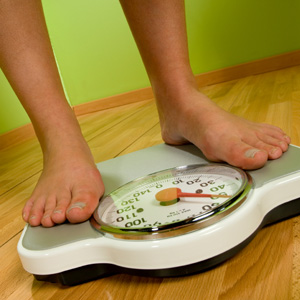
Diet Tip Myth #6: Lose seven pounds in seven days.
Istock photo

“Get thin for the holidays” with the restrictive, 1,000-to-1,200-calorie diet featured in a gossip magazine? Not likely. First, do the math: Even if you normally burn off 2,500 calories in a day and cut back to 1,000, your deficit over a week still adds up to less than 7 pounds (1 pound is equivalent to 3,500 calories). Anything you do lose on a strict calorie deprivation diet is mostly water. Moreover, most dietitians would counsel people to maintain their weight—not try for a drastic loss—over the holidays, says Havala Hobbs.

#1 Smart Diet Tip: Eat dessert first.

(Ed O'Neil/iStockphoto)

I always thought that substituting leftover cookie batter for dinner while I bake counted as a guilty pleasure, but going straight for your favorite treat can sometimes be a smart move, says Havala Hobbs. If you know you’re going to eat the cookies and the pumpkin pie, having them first, even if it spoils your appetite for dinner, will very likely keep your daily calorie total lower than if you eat a full dinner and then chow down on your favorites although you’re already stuffed. No, it won’t be the most nutritionally balanced meal of your life, but that’s OK once in a while.

Link to Katherine Hobson’s full article here. Katherine Hobson is a Senior Writer for U.S. News and World Report. Her expertise is in Cancer research and treatment,  diet,  nutrition, exercise and fitness.

Reblog this post [with Zemanta]

Read Full Post »

By Sue Shekut, Licensed Massage Therapist, ACSM Personal Trainer, Certified Wellness Coach, Owner, Working Well Massage

Some times ago I blogged about the Walkstation from Steelcase. (Link here.) Now it looks like the idea of treadmills attached to desks is gathering steam–and coming down a bit in price. Read the excerpt from a article in Vocus/PRWEB.

Salt Lake City, UT (Vocus/PRWEB ) December 10, 2009 — A new research project for scientists at the University of Utah has been announced which will focus on a series of workplace wellness studies designed to test the effectiveness of walking slowly while working, utilizing a treadmill desk known as the TrekDesk.

Dr. Elizabeth Joy of the University of Utah

The first in a series of proposed studies will focus on damage caused in the workplace to employee’s spines. Eight out of ten Americans will suffer from back pain and injury at some point in their adult lives. The study will do a comparative analysis of spinal compression caused by office chairs versus the compression reducing qualities of walking.

“We evolved as a species to be upright. We have less loading actually of the joints and our back standing than we do sitting. We actually lubricate the joints in our lower extremities, in our hips, in our knees and our ankles through movement,” states lead scientist, Dr. Elizabeth Joy, Director, Utah Health Research Network (UHRN). Dr. Joy has an extensive background in workplace wellness issues and has long lobbied for the re-engineering of work environments to allow for more physical movement.

Treadmill desks are currently in use at many Fortune 500 companies and small businesses across America and have been shown effective in boosting energy, productivity, preventing disease, assisting in weight loss and restoring health.

Many employers faced with declining employee health and rising health care costs now see the need for a radical change in the workspace and a need for more healthy solutions. The current challenge for most employers is finding a solution that is affordable since treadmill desks may retail between $4,500 and $6,000.

A treadmill desk manufacturer based in Phoenix, AZ recently released the TrekDesk, which, priced at 1/10 the cost of comparable models, is the subject of many of the proposed studies. TrekDesk is a full sized, height adjustable workstation designed to attach to an existing treadmill.

“We are thrilled that the University recognizes the myriad health benefits of treadmill desks and are honored that the TrekDesk has been chosen for further study due to its affordability and design,” states Steve Bordley, CEO of TrekDesk. “With rising obesity rates and skyrocketing health care costs it is time to realize that the sedentary design of the workplace must be changed,” states Bordley, “once employers adopt measures to keep their employees moving during the day they will see a boost in productivity and a decrease in sick days and health care costs.”

Read the entire article in Vocus/PRWEB here.

Working Well Says: The TrekDesk is available from Amazon for about $479. However, this does not include the cost of the treadmill which can run another $380 on up. In addition, if you purchase the TrekDesk, you must make sure that whatever treadmill you buy to work with it can fit so that the treadmill display and handlebars can fit behind the desk not blocking your entry to the desk. Overall, we are happy to see the price of walkable workstations decreasing. $800-$1000 is lot less than the Steelcase Walkstations $4500 price tag!

Read Full Post »

By Sue Shekut, Licensed Massage Therapist, ACSM Personal Trainer, Certified Wellness Coach, Owner, Working Well Massage

Don’t have time to exercise? Working long hours at a computer or desk?  Then this set of easy yoga poses may be for you!

Easy Desktop Yoga is a CD with a series of video exercises based on yoga, and designed specifically for computer users. International yoga instructor, Juliet Lee, demonstrates easy modified yoga exercises to calm, invigorate, or relax.

Pop the CD into your computer and choose from more than 20 yogic exercises.  Each one can be done in just a few minutes, so they are easy to incorporate into your workday.  Easy Desktop Yoga CD-ROM comes complete with a reminder program to help remind you when it’s time to take a break and stretch!

Note: One of our clients purchased the DVD and found it only works for PCs not Apple computers.

What You Get on the Easy Desktop Yoga CD

Office Warm Up (four exercises) Easy Desktop Yoga Cover
Breathing
Breath Stretch
Seated Sun Salutation
Modified Sun Salutation
Moon Pose
Lunge Pose
Hip Rotation
Knee Rotation
Right Angle Pose
Neck Stretch
Lion Pose
Eye Exercise
Upper Body Twist
Upper Body Stretch
Shoulder Roll
Modified Camel Pose
Modified Cat and Dog Poses
Forward Bend
Relax

Purchase your very own Easy Desktop Yoga program here.

Check out the free download for a sample: neck stretch 2 min video here.

Read Full Post »

2-people-beach-shadows-002
Image by mikebaird via Flickr

Emotional health is just as important as physical health. But what is emotional health? Being happy? Being in touch with your feelings? Being able to cope with stressful situations? Never being angry? Read more from Familydoctor.org below to find out.

What is good emotional health?

People who are emotionally healthy are in control of their thoughts, feelings and behaviors. They feel good about themselves and have good relationships. They can keep problems in perspective.It’s important to remember that even people who have good emotional health can sometimes have emotional problems or mental illness. Mental illness often has a physical cause, such as a chemical imbalance in the brain. Stress and problems with family, work or school can sometimes trigger mental illness or make it worse. However, people who are emotionally healthy have learned ways to cope with stress and problems. They know when they need to seek help from their doctor or a counselor.

What about anger?

People are sometimes not aware of what causes their anger, how much anger they are holding inside or how to express anger appropriately. You may be angry about certain events, your own actions or other people’s actions. Many little things can build up to make you feel that life is unfair.If you find yourself becoming increasingly irritable or taking unhealthy risks (such as drinking too much or abusing drugs), you may have a problem dealing with anger. It’s very important to talk with your doctor or a counselor about getting help.

What can I do to avoid problems?

First, notice your emotions and reactions. Try to understand them. Learning how to identify what is causing sadness, frustration and anger in your life can help you do a better job of managing your emotional health. The box to the right gives some other helpful tips.

Tips on dealing with your emotions

  • Learn to express your feelings in appropriate ways. It’s important to let people close to you know when something is bothering you. Keeping feelings of sadness or anger inside takes extra energy. It can also cause problems in your relationships and at work or school.
  • Think before you act. Emotions can be powerful. But before you get carried away by your emotions and say or do something you might regret, give yourself time to think.
  • Strive for balance in your life. Make time for things you enjoy. Focus on positive things in your life.
  • Take care of your physical health. Your physical health can affect your emotional health. Take care of your body by exercising regularly, eating healthy meals and getting enough sleep. Don’t abuse drugs or alcohol.

How does stress affect my emotions?

Your body responds to stress by making stress hormones. These hormones help your body respond to situations of extreme need. But when your body makes too many of these hormones for a long period of time, the hormones wear down your body — and your emotions. People who are under stress a lot are often emotional, anxious, irritable, and even depressed.If possible, try to change the situation that is causing your stress. Relaxation methods, such as deep breathing and meditation, and exercise are also useful ways to cope with stress.

Can emotional problems be treated?

Yes. Counseling, support groups and medicines can help people who have emotional problems or mental illness. If you have an ongoing emotional problem, talk to your family doctor. He or she can help you find the right type of treatment.

Tips on dealing with your emotions

  • Learn to express your feelings in appropriate ways. It’s important to let people close to you know when something is bothering you. Keeping feelings of sadness or anger inside takes extra energy. It can also cause problems in your relationships and at work or school.
  • Think before you act. Emotions can be powerful. But before you get carried away by your emotions and say or do something you might regret, give yourself time to think.
  • Strive for balance in your life. Make time for things you enjoy. Focus on positive things in your life.
  • Take care of your physical health. Your physical health can affect your emotional health. Take care of your body by exercising regularly, eating healthy meals and getting enough sleep. Don’t abuse drugs or alcohol.

Organizations That Can Help with Mental Health

Read more from familydoctor.org

Reblog this post [with Zemanta]

Read Full Post »

By Sue Shekut, Owner, Working Well Massage, Licensed Massage Therapist, Certified Wellness Coach, ACSM Personal Trainer

Recently we posted about a study from the University of Georgia that listed 5 indoor plants as good air cleaners. Now NASA scientists are finding house plants surprisingly useful in absorbing potentially harmful gases and cleaning the air inside modern buildings.

spathiphyllum-mojo

Peace Lily. Image from http://www.spaths.com

A sophisticated pollution-absorbing device: the common indoor plant may provide a natural way of helping combat “Sick Building Syndrome”.

Research into the use of biological processes to solve environmental problems, both on Earth and in space, has been carried out for many years by Dr. Bill Wolverton, formerly a senior research scientist at NASA’s John C. Stennis Space Center, Bay St. Louis, Miss.

Preliminary evaluations of the use of common indoor plants for indoor air purification and revitalization inspired a study using about a dozen popular varieties of houseplants to determine their effectiveness in removing several key pollutants associated with indoor air pollution.

NASA research on indoor plants found that living plants are so efficient at absorbing contaminants in the air that some will be launched into space as part of the biological life support system aboard future orbiting space stations.

While more research is needed, Wolverton’s study showed that common indoor landscaping plants can remove certain pollutants from the indoor environment. “We feel that future results will provide an even stronger argument that common indoor landscaping plants can be a very effective part of a system used to provide pollution free homes and work places, ” he concludes.

Each plant type was placed in sealed, Plexiglas chambers in which chemicals were injected.

JanetCraig

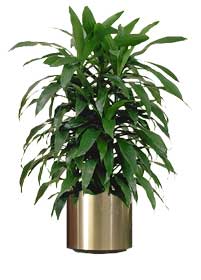
Dracaena Janet Craig. Image from http://www.dracaena.com

Philodendron, spider plant and the golden pothos were labeled the most effective in removing formaldehyde molecules.

Flowering plants such as gerbera daisy and chrysanthemums were rated superior in removing benzene from the chamber atmosphere. Other good performers are Dracaena Massangeana, Spathiphyllum, and Golden Pothos.Plants take substances out of the air through the tiny openings in their leaves,” Wolverton said. “But research in our laboratories has determined that plant leaves, roots and soil bacteria are all important in removing trace levels of toxic vapors“.

Combining nature with technology can increase the effectiveness of plants in removing air pollutants,” he said. “A living air cleaner is created by combining activated carbon and a fan with a potted plant. The roots of the plant grow right in the carbon and slowly degrade the chemicals absorbed there,” Wolverton explains.

Read Wolverton’s book from Amazon: How to Grow Fresh Air: 50 Houseplants to Purify Your Home or Office

NASA research has consistently shown that living, green and flowering plants can remove several toxic chemicals from the air in building interiors. You can use plants in your home or office to improve the quality of the air to make it a more pleasant place to live and work – where people feel better, perform better, any enjoy life more.

TOP 10 plants most effective in removing Formaldehyde, Benzene, and Carbon Monoxide from the air

Formaldehyde is a ubiquitous chemical found in virtually all indoor environments. The major sources which have been reported and publicized include urea-formaldehyde foam insulation (UFFI) and particle board or pressed wood products used in manufacturing of the office furniture bought today. It is used in consumer paper products which have been treated with UF resins, including grocery

formaldehyde

Products made with Formaldehyde. Image from Greenday systems

bags, waxed papers, facial tissues and paper towels. Many common household cleaning agents contain formaldehyde. UF resins are used as stiffeners, wrinkle resisters, water repellents, fire retardants and adhesive binders in floor coverings, carpet backings and permanent-press clothes. Other sources of formaldehyde include heating and cooking fuels like natural gas, kerosene, and cigarette smoke.

Formaldehyde irritates the mucous membranes of the eyes, nose and throat. It is also a highly reactive chemical which combines with protein and can cause allergic contact dermatitis. The most widely reported symptoms from exposure to high levels of this chemical include irritation of the eyes and headaches. Until recently, the most serious of the diseases attributed to formaldehyde exposure was asthma. However, the Environmental Protection Agency (EPA) has recently conducted research which has caused formaldehyde to be strongly suspected of causing a rare type of throat cancer in long-term occupants of mobile homes.

Benzene is a very commonly used solvent and is also present in many common items including gasoline, inks, oils, paints, plastics, and rubber. In addition it is used in the manufacture of detergents, explosives, pharmaceuticals, and dyes.

Benzene has long been known to irritate the skin and eyes. In addition, it has been shown to be mutagenic to bacterial cell culture and has shown embryotoxic activity and carcinogenicity in some tests. Evidence also exists that benzene may be a contributing factor in chromosomal aberrations and leukemia in humans. Repeated skin contact with benzene will cause drying, inflammation, blistering and dermatitis.

Acute inhalation of high levels of benzene has been reported to cause dizziness, weakness, euphoria, headache, nausea, blurred vision, respiratory diseases, tremors, irregular heartbeat, liver and kidney damage, paralysis and unconsciousness. In anima tests inhalation of benzene led to cataract formation and diseases of the blood and lymphatic systems. Chronic exposure to even relatively low levels causes headaches, loss of appetite, drowsiness, nervousness, psychological disturbances and diseases of the blood system, including anemia and bone marrow diseases.

Sources: Plantcare.com and Zone10.com

For a similar listing of plants that improve indoor air quality, read our post here on the University of Georiga’s research on plants and indoor air quality.

More in depth information on indoor air quality, Sick Building Syndrome, and the effects of indoor air pollutants on our health in an article titled “Top 15 NASA’s Plants That Can Save Your Life!” by Stefan Anitei, Science Editor at Softpedia.com.

Where To Find Indoor Plants Services in Chicago

Plantscapes by Janet

Everliving Greenery

Read Full Post »

By Sue Shekut, L.M.T. ACSM P.T., Certified Wellness Coach

Years ago a client gave me a Crabtree & Evelyn hand cream as  a holiday gift. I tried the cream and could not believe how well it lubricated my hands–AND did not leave my hands greasy. I went to the Crabtree & Evelyn store to get more and find out what this amazing ingredient was. The salesclerk told me that the amazing ingredient in some of their creams was: shea butter.

However, I was not a big fan of the smell of the Crabtree cream (or it’s price). I have since found many other sweeter smelling creams and lotions with shea butter. For massage, shea butter is a great cream because it gives just enough lubrication for massage therapist’s hands to glide for effluerage strokes, but just enough friction for deep tissue work.

Now I find that shea butter has another benefit that would not immediately come to mind: As a nasal decongestant! I am the first to admit, some wellness people tend to tout the benefits of products far beyond what is realistic (not everything cures cancer, prevents hair loss or keeps your skin looking young forever). I am fairly skeptical about product clams from product manufacturers. But I looked into this claim and it is backed up by clinical research.

Put Butter in My Nose? C’mon, You Must Be Joking

According to a study published in the British Journal of Clinical Pharmacology, shea butter does relieve nasal decongestion, actually better than conventional nasal drops! Now, it’s just one study. But my experience of shea butter is that it’s pretty amazing butter and lubricating dry nasal passages when I have a stuffy nose makes sense. But, don’t just take my word for it.. Read the study here.

So What is Shea Butter?

Shea tree

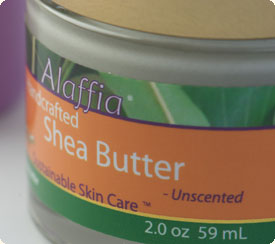
Allafia is a company that sells unrefined Shea Butter. According to their website, “Shea Butter is the oil from the nuts of wild Shea trees (Vitellaria paradoxa) scattered throughout the wooded savanna of West and Central Africa. Shea Butter has been used for centuries in Africa as a decongestant, an anti-inflammatory for sprains and arthritis, healing salve, lotion for hair and skin care, and cooking oil. However, the protective and emollient properties of Shea Butter are most valued for skin care.”

What Does it Matter if It’s Refined or Unrefined Shea Butter?

According to Alaffia: Most Shea Butter available to the general public outside West Africa is white and odorless: in other words, it has been “refined” to remove the natural scent and color of natural Shea Butter. In the process, the majority of the effective agents are also removed.

In addition, refined Shea Butter has usually been extracted from the shea kernels with hexane or other petroleum solvents. The extracted oil is boiled to drive off the toxic solvents, and then refined, bleached, and deodorized, which involves heating it to over 400 degrees F and the use of harsh chemicals, such as sodium hydroxide.

Shea butter itself!

Shea Butter extracted in this manner still contains some undesirable solvent residues, and its healing values are significantly reduced. Antioxidants or preservatives such as BHA (butylated hydroxyanisole) or BHT (butylated hydroxytoluene) may be added as well. The end result is an odorless, white butter that may be aesthetically appealing, but lacks the true moisturizing, healing, and nutritive properties of true traditional Shea Butter.

Refined Shea Butter is often hard and grainy, not smooth and creamy like pure, unrefined Shea Butter. Refined Shea Butter  has an extended shelf life, a white, uniform color, no odor, and greatly reduced therapeutic benefits from the Shea Butter. All of the Alaffia butters are handcrafted and unrefined so they retain their natural healing and moisturizing properties.

Where Do I get Some Unrefined Shea Butter  in the U.S.?

Whole Foods Market carries Allafia products as well as many other shea butter based creams and lotions. I like Affalia because they do not refine their shea butter and their pricing is reasonable. (A little jar of shea butter last a long time!)   Affalia is also a fair trade company.

To purchase jars of Affalia Shea Butter online, click here. To purchase Alaffia products at Whole Foods, stop by a local store or click here.

What is Fair Trade?

Fair Trade Enpowers Whole Communities

Fair trade means paying a fair price or wage in the local context, providing equal employment opportunities, engaging in environmental sustainable practices, providing healthy and safe working conditions, being open to public accountability, and reducing the number of middlemen between producers and consumers. Fair trade is environmentally, economically and culturally sustainable and gives local communities the opportunity to self empower.

Buying products from producers that are fair trade certified means you can feel good about the product you are buying. A fair trade product means the actual people toiling away in the fields of far off Africa are getting paid a fair wage for their work and are able to support themselves and their families from their own labor.

The founder of Aliffa, Olowo-n’djo Tchala, grew up in poverty in Togo. He dedicated his life to empowering communities in Africa. He chooses to promote indigenous African natural resources that are culturally, spiritually, economically and ecologically sustainable. Traditionally handcrafted shea butter fits these criteria. It is a renewable resource of African origin; shea trees are wild, requiring no chemical fertilizers or pesticides. Furthermore, it is an integral part of many savanna communities and, consequently, there is a wealth of local and traditional knowledge of making shea butter. The fair trade of our handcrafted shea butter and shea butter skin care products is bringing income to and empowering our communities in Togo, while making indigenous, sustainable and effective skin care available to the global community.

Aliffia Shea Butter

Give Gifts Friend and Family Will Love And You Will Feel Good Giving

To give some great holiday gifts this year, why not give those you love a product that not only helps their skin feel good but in this cold and flu season, may help them breathe better if they get congested?

Does Working Well Massage Get Anything From Promoting Alaffia or Shea Butter Products?

Nope. No money, no free stuff, no kickbacks. What we do get is the satisfaction that we are telling our clients and readers about great products and helping in some small way to promote fair trade in a far off country. And that is worth more than a few dollars!

Read Full Post »

Harvard Health Publications has the latest word on napping and your health. Read the article below from Harvard Health Letter to find out why short daytime naps may be good for business’ bottom line!

Napping may not be such a no-no

Research is showing that the daytime snooze may have benefits and not interfere with nighttime sleep.

At work, if you get caught napping, it could get you into trouble or, more mildly, sully your reputation for diligence. In studies, naps have been linked to ill health, although usually as a consequence, not a cause. And in sleep recommendations, naps have taken a back seat — or been cast as a threat to nighttime sleep.

But lately, naps have been shedding some of their bad-for-you image. Researchers are finding benefits. A few employers have become accommodating of the quick snooze. And some research suggests that instead of fretting about napping more as we get older, we should plan on adding daytime sleep to our schedule as a way to make up for the normal, age-related decay in the quality of our nighttime sleep.

Getting over the hump

Naps, of course, can be an antidote to daytime sleepiness, and we get sleepy during the day for a wide variety of reasons. There is, in fact, a biological clock located in a cluster of cells in the hypothalamus of the brain. Those cells orchestrate the circadian (that is, daily) ups and downs of many physiological processes (body temperature, blood pressure, secretion of digestive juices), including sleep and wakefulness. As you might expect, the usual circadian pattern is wakefulness during the day followed by gradually increasing sleepiness in the evening, but it’s also common to have a little “hump” of midafternoon sleepiness programmed into the circadian schedule. An afternoon nap is one way to accommodate that hump.

In 2008, British researchers reported results of a study that compared getting more nighttime sleep, taking a nap, and using caffeine as ways to cope with the afternoon hump. The nap was the most effective.

Another factor in daytime sleepiness is the number of hours you’ve been awake. After about 16 consecutive hours without sleep, most of us will start to feel tired. Ideally, this homeostatic sleep drive, as it is called, is in sync with the one set by our circadian rhythm, so they’re mutually reinforcing. But if you work a night shift, or have problems sleeping at night, your 16-hour allotment of wakefulness may begin — and end — earlier, which can set you up for grogginess in the late afternoon or early evening. A short nap won’t completely reset the timer, but it can buy you some time before the grogginess sets in again.

How to take a good nap

Keep it short. The 20- to 30-minute nap may be the ideal pick-me-up. Even just napping for a few minutes has benefits. Longer naps can lead to sleep inertia — the post-sleep grogginess that can be difficult to shake off.

Find a dark, quiet, cool place. You don’t want to waste a lot of time getting to sleep. Reducing light and noise helps most people nod off faster. Cool temperatures are helpful, too.

Plan on it. Waiting till daytime sleepiness gets so bad that you have to take a nap can be uncomfortable and dangerous if, say, you’re driving. A regular nap time may also help you get to sleep faster and wake up quicker.

Time your caffeine. Caffeine takes some time to kick in. A small Japanese study published several years ago found that drinking a caffeinated beverage and then taking a short nap immediately afterward was the most restful combination because the sleep occurred just before the caffeine took effect. We’re not so sure about that approach — the mere suggestion of caffeine, in the form of coffee taste or smell, wakes us up. Regardless of the exact timing, you need to coordinate caffeine intake with your nap.

Don’t feel guilty! The well-timed nap can make you more productive at work and at home.

On the job

Since 2000 or so, researchers at Harvard and elsewhere have conducted dozens of experiments that have shown that sleep improves learning, memory, and creative thinking. In many cases, the edifying sleep has come in the form of a nap. For example, several studies have shown that if people are asked to memorize something — say, a list of words — and then take a nap, they’ll remember more of it than they would have if they hadn’t taken the nap. Even catnaps of six minutes (not counting the five minutes it takes to fall asleep on average) have been shown to make a difference in how well people retain information.

Robert Stickgold, a Harvard sleep researcher, says napping makes people more effective problem solvers. His research group has shown that taking a nap seems to help people separate important information from extraneous details. If the nap includes REM sleep — the phase during which dreaming occurs — people become better at making connections between seemingly unrelated words.

Stickgold says his and others’ findings argue for employer policies that actively encourage napping, especially in today’s knowledge-based economy. Some companies have set up nap rooms, and Google has “nap pods” that block out light and sound.

Understandably, employers are concerned about abuse: employees catching up on sleep they should be getting on their own time. But there may be a place for “strategic napping,” especially among people who work a night shift. Results from a New Zealand study published in 2009 showed that air traffic controllers working the night shift scored better on tests of alertness and performance if they took advantage of a planned nap period of 40 minutes. Researchers in the Harvard Division of Sleep Medicine are working with fire departments to improve sleep policies. One of their recommendations is that firefighters on the night shift take a nap in the late afternoon before their shift starts.

Read entire article in Harvard Health Letter here.

Read Full Post »

By Sue Shekut, Owner, Working Well Massage, Licensed Massage Therapist, Certified Wellness Coach, ACSM Personal Trainer

We know that nature has a stress relieving effect. Read more about the effects of nature on stress in our post, “A Cure For Burnout and Stress–As Simple as a Walk In The Woods!” here. But working indoors and living in cold climates like Chicago often means a lack of contact with nature. How can we help reduce our stress, interact more with nature and still work to pay our bills?

Add indoor plants to the workplace and home!

Not only can it help with stress relief, but indoor plants have been shown to improve indoor air quality too. Read more about the study of indoor plants and air quality from United Press International via EcoWorld in the   article that follows.


Top Indoor Air Cleaner Plants


ATHENS, Ga., Nov. 5, 2009 (UPI) — U.S. scientists say they have come up with five ornamental plants that do a superior job of removing indoor air pollutants.

The study of 28 types of plants, published in HortScience, found Hemigraphis alternata known as purple waffle plant; Hedera helix or English ivy; Hoya carnosa or variegated wax plant; and Asparagus densiflorus or Asparagus fern had the highest removal rates for all five volatile organic compounds introduced.

Tradescantia pallida or Purple heart plant was rated superior for its ability to remove four of the volatile organic compounds.

Study leader Stanley J. Kays of the University of Georgia in Athens placed plants in gas-tight glass jars, exposing them to benzene, octane, toluene and alpha-pinene. The researchers analyzed air samples and then classified plants as superior, intermediate and poor in their ability to remove the five volatile organic compounds from the air.

“The volatile organic compounds tested in this study can adversely affect indoor air quality

and have a potential to seriously compromise the health of exposed individuals,” Kays said in a statement.

Kays said benzene and toluene are known to originate from petroleum-based indoor coatings, cleaning solutions, plastics, environmental tobacco smoke and exterior exhaust fumes seeping into buildings; octane from paint, adhesives and building materials; TCE from tap water, cleaning agents, insecticides and plastic products; and alpha-pinene from synthetic paints and odorants.

Copyright 2009 by United Press International

Find original article in EcoWorld here.


Caring for your Indoor Plants


• Purple waffle plant-care instructions here.

2403036762_e7b39eb931

Purple Waffle Plant from joeysplanting's photostream on Flickr

• English ivy-most effective plant for removing formaldehyde,  the most common indoor air pollutant, from your indoor atmosphere. English Ivy care instructions here.

plant_english_ivy

English Ivy. Image from Loghome.com

• Variegated wax plant-care instructions here.

Hoya carnosa-varigeated-809

Hoya-varigeated wax plant. Image from plant-care.com

• Asparagus fern-care instructions here.

1139637262_dbeb27b24b

Asparagus Fern (Asparagus densiflorus. Image from Pandorea's photostream on Flickr.

• Purple heart plant-care instructions here.

T_pallida-container

Purple Heart or Purple Heart Wandering Jew. Image from University of Wisconsin Horticulture

Read Full Post »

Even the healthiest of us may require hospital treatment at some point in our lives. As do our kids, spouses,  parents and extended family. And the medical bills can be confusing, not to mention expensive!  But how do you know if you are overpaying or if the bill is accurate?  That’s where Smart Medical Consumer comes in.

About Smart Medical Consumer

Smart Medical Consumer is the first intelligent web-based service for consumers to manage their medical expenses, with breakthrough features including automatic detection of medical billing mistakes. Smart Medical Consumer offers this application based on its patent pending technology and architecture. We develop proprietary web software, and also operate as the service provider.

Analysis and management of the health care bills and insurance explanation of benefits might save a medical consumer thousands of dollars. Additionally, it can help a medical consumer smartly plan their short term and long term decisions for choices in health care, providers, drugs, health insurance plans, health savings accounts and flexible savings accounts.

While health care providers and insurances use extensive resources and tools to optimize their revenues from services to consumers, there is hardly any help for consumers to optimize their medical spending. Smart Medical Consumer is dedicated to fill this void and offer services for consumers to smartly manage their health care expenses.

The founder, Banu Ozden, PhD,

smart-medical-consumer

Banu Ozden

is an expert in distributed database systems, multimedia systems, and Internet infrastructure. Formerly, she was at Bell Labs, Murray Hill, New Jersey, as the Director of Research in Computing Systems, and at the Computer Science Department of the University of Southern California, Los Angeles, California.

After her own frustrations dealing with health care expenses, she founded Smart Medical Consumer to bring a consumer-centric solution to fellow medical consumers.

Smart Medical Consumer currently offers the following services: MySMC beta service to manage medical expenses; MyDocs beta service to keep track of medical billing documents from healthcare providers, insurances, and health saving accounts; and Ask&Share service to get help from billing experts, and to share frustrations and experiences with a community of other smart medical consumers.

About MySMC

Smart Medical Consumer’s MySMC service is for managing user’s medical expenses. MySMC is not a passive record tracking system, but it smartly analyses data to detect billing and coverage errors. It warns the user with detected billing mistakes, insurance coverage anomalies, and incorrectly allocated user payments. MySMC also enables user to analyze her own data more effectively, so that the user can make decisions about her medical choices and healthcare spendings.

Smart Medical Consumer’s first test users have saved thousands of dollars by the help of MySMC. Furthermore, the thorough understanding of what they are charged for and the correct amount they are responsible for have helped them to make proactive decisions about their medical choices.

About MyDocs

Smart Medical Consumer’s MyDocs service is to keep track of records user receives from insurances, providers and saving accounts.

MyDocs serves multiple purposes. One to maintain the records available to user as is so that the user does not need to manage filing of these records. Second to automatically retrieve data from the online documents stored in MyDocs and automatically enter data MySMC for further analysis.

MyDocs can be also be used independent of MySMC if the user needs only easy filing, retrieving and note keeping for the records the user receives from healthcare providers, insurances and saving accounts.

Similarly, the user can choose to use MySMC service independently of the MyDocs service.

About Ask&Share

Smart Medical Consumer’s Ask and Share is to help consumers understand their medical expenses: if you have questions regarding your medical expenses, doctor bills, health care provider statements, insurance claims, or explanation of benefits, post them here. Our moderators are medical billing experts and will answer your questions if they can. If not, other fellow smart medical consumers may be able to help.

Not understanding your medical bills or insurance explanation of benefits might cause you to spend more on health care than your fair share. Whether you are questioning the copays for your prescription drug, disputing an insurance claim, managing your family’s health care, trying to coordinate multiple insurance plans, trying to figure out the copay, coinsurance, allowed amount, reasonable and customary amount, hospital surcharge, deductible, out-of pocket amount, the services patient is charged for, the medical codes for services and procedures, and the diagnosis codes, or simply trying to understand the financial implications of the actions of your doctor or insurance company and what your options are, get aid from Smart Medical Consumer’s billing experts.

Whatever health problem you or your loved ones are going through, whether it is a catastrophic illness like cancer, a chronic disease like diabetes, or a sports injury like a hip fracture, don’t let the patient responsibility of medical expenses pile up unfairly. Post your questions at Ask&Share, use Smart Medical Consumer’s MySMC service to manage your expenses, and MyDocs service for easy filing and retrieving statements from providers, insurances and saving accounts.

Read Full Post »

If you like to hike, ski, run marathons, or otherwise burn calories in the great outdoors, you may have needed to resort to energy bars to keep you going. Nowadays, many people eat energy bars as a mid afternoon snack or to supplement a forgotten lunch box.  “Energy” bars can be packed with as much sugar as a candy bar. However, some energy bars face better than others in turns of good fats, low calories and great taste. (It sounds like a beer I am describing, but no, energy bars are not replacements for a Miller Genuine Draft 64!)

One of my favorite energy bars is the LÄRABAR.

sdc13037

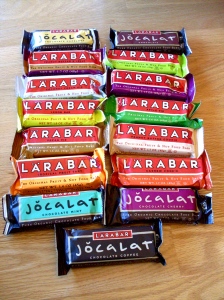
Lara Bar Varieties

It is available in about 12 different flavors, from Coconut Cream Pie, Cashew Cookie, Banana Bread, Key Lime Pie, Pistachio, Lemon Bar, Apple Pie, Chocolate Coconut, Ginger Snap, Peanut Butter Cookie to Cherry Pie, Pecan Pie, Cocoa Mole PB&J and the new Tropical Fruit Tart.

What’s So Great About These Bars?

Can bars with dessert names be good for you?  From the LÄRABAR website, take a look at the ingredients:

LÄRABAR is a delicious blend of unsweetened fruits, nuts and spices – energy in its purest form. Made from 100% whole food, each flavor contains no more than eight ingredients. Pure and simple, just as nature intended.

Quality standards for LÄRABAR ingredients are: All natural, No added sugars or sweetener, Raw, Non-GMO, Non-irradiated, No sulfites, No preservatives, No fillers, No colorings, Gluten-free, Dairy-free, Soy-free and Vegan (But don’t let that scare you away, they are tasty!)

LÄRABARs are sweet with no added sweeteners. They use no added fillers, supplements or flavorings.  All of the vitamins, minerals, fiber, protein, good carbohydrates and healthy fats are derived exclusively from the whole, raw food used to make LÄRABAR.  Plant-based fats are healthier than animal fats. The fat in LÄRABAR comes primarily from nuts-all plant-based fats containing Omega 3 & 6 essential fatty acids, which have been proven to reduce LDL cholesterol and help protect the heart.

The carbohydrates in LÄRABAR are good carbohydrates, derived from fruit and, ultimately, necessary for the body to function. They also contain fiber and plant phytonutrients that help the immune system. It’s the processed and refined carbohydrates you should avoid-the kind found in white flour, white rice, and added sugars such as high fructose corn syrup, white sugar and grape juice.

Larabars are Uncooked and Unprocessed. The essential enzymes, which are necessary fo

Pecan Pie bars

Pecan Pie bars

r the digestion and utilization of nutrients, remain completely intact in their most natural, powerful state. A diet abundant in raw, unprocessed foods is important for health and longevity.

LÄRABAR contains approximately 20 grams of whole-food-source carbohydrates, which are essential to good health. Each bar contains approximately 5 grams of protein.

My favorite bar, Pecan Pie, is simply a combination of pecans, dates and almonds.

JŎCALAT aka Chocolate LÄRABARs

The company also sells chocolate bars. You may say, wait, aren’t chocolate bars candy bars, which are bad for me, high in transfats, sugars and all that unhealthy gook? Well, normally yes. But in this case, no! LÄRABAR has a line of bars, JŎCALAT bars, that are made with cocoa powder, but no added sugar or trans fats.

The chocolate in JŎCALAT, along with the fruit and nuts, contains high concentrations of natural antioxidants, which appear to be helpful in combating disease and aging.

Each JŎCALAT bar contains at least 20% of the recommended daily value of fiber, along with a healthy dose of Omega-6 essential fatty acids, which help keep your heart healthy AND has the added benefit of being under 190 calories. JŎCALAT bars contain 13 essential vitamins and minerals, which decrease stress and increase energy. Resident phytonutrients promote a hea

lthy immune system.


LBGCC_large_large

German Chocloate Cake Bar Ingredients

JŎCALAT German Chocolate Cake Bars

A new entry JŎCALAT bar offering, this bar contains Coconut+Pecans+Almonds+Cocoa. And that’s it. Listed out like that, it may not sound like it tastes that good, but try it and see if it gives your taste buds a bit of that German Chocolate Cake taste., without the nasty sugar

drop a real cake usually give you. And without the bad fats and guilt too!

So Where Do I get These Tasty LÄRABARs Already?

Order LÄRABARs directly from their website and have them shipped to you. Click here to order directly.

OR buy LÄRABARs from Whole Foods Markets at about the same price without the shipping costs.

Make Your Own Bars

As a last resort, if you have time and are adventurous, make your own raw fruit and nut bars!

Try this recipe from the Cookie Madness blog

Sort of Like Larabars

Makes about 3 bars or a quarter or a 4×4 inch square which you can form and then cut or punch into shapes.

1 1/2 ounce almonds (about 1/3 cup)
3 ounces pitted dates (about 14, if you don’t have a scale)


datebarforblog

Homemade "Lara-like Bars"

2 teaspoons unsweetened cocoa powder (optional)
1 tablespoon prune puree
1 tablespoon quick cooking oats.

Place almonds in food processor and process into crumbs. Pour into a bowl. Place dates in processor

and process as much as possible. Add almond crumbs back into processor and process until well mixed. Add cocoa, prune puree and oats. Process a little more, then dump into a bowl and knead until ingredients stick together. Shape into a rectangle. If it’s too sticky, knead in some more almonds or oats. Slice into about 3 bars or press into a square and cut out cute shapes.

Read Full Post »

« Newer Posts - Older Posts »