Feeds:
Posts
Comments

Archive for the ‘Workplace Wellness’ Category

National Wear Red Day 2012

National Wear Red Day 2012 (Photo credit: U.S. Embassy Montevideo)

By Sue Shekut, Owner, Working Well Massage, Licensed Massage Therapist, Certified Wellness Coach, ACSM Personal Trainer

Are you surprised that heart attack is the number one cause of death for women? I was.  I wrote a paper for my Behavioral Medicine class in my graduate program in Psychology about women and heart disease. I learned so much about women’s heart attack symptoms and important screening exams that I thought I’d share some of what I learned with my loyal workingwellresources readers!

A heart attack, also known as a myocardial infarction, is considered to be an acute manifestation of cardiovascular disease. Heart attacks are usually caused when a blockage of the blood vessels supplying the heart with oxygenated blood causes blood to cease flowing to an area of the heart, causing that portion of the heart to be damaged or die. These blockages are most frequently caused by fatty deposits or plaque that builds up in the inner walls of arterial blood vessels. Symptoms for a heart attack are different in women than for men. In women, a heart attack may be occurring when a woman feels pressure or fullness in the center of the chest for more than a few minutes.  However, in men, heart attacks are often reported as feelings of intense discomfort or pressure in the chest. Women may experience shortness of breath even without chest discomfort. Women may also break out into a cold sweat feel nauseated or light-headed during a heart attack. In women, a heart attack can also manifest as shortness of breath, pain or discomfort in the back and/or jaw and nausea or vomiting. Men and woman can feel pain or pressure in the chest, but because symptoms tend to be less severe in women with heart attacks, many woman ignore the symptoms or take an aspirin and go to bed, thinking they have the flu, acid reflex or are just getting older. And since women tend to have heart attacks, on average, 10 years later than men, female heart attack victims tend to have a higher tendency to occur along with other chronic disease like diabetes or hypertension which puts them at greater risk than men for heart attacks to be fatal.

 According to the American Heart Association, each year approximately 785,000 U.S. citizens have an initial heart attack and another 470,000 have a recurrent heart attack. In 2007, according to the American Heart Association, 391, 886 U.S. men and 421, 918 U.S. women died of heart attacks.

Medical Treatments

Current medical treatment for hear disease includes prevention in the form of eating a healthy diet, getting regular exercise, and avoiding tobacco smoke, first and second-hand. Those that have heart attacks and survive them, as well as those with high cholesterol and/or high blood pressure, can lower the risk of another heart attack by taking statins to lower cholesterol, drugs to lower blood pressure and aspirin.

When a woman is having a heart attack, she needs emergency medical care in the form of cardiopulmonary resuscitation (CPR) or electric shock (defibrillation) until she can get to the hospital. At the hospital, medical personnel will conduct tests to decide if she is experiencing a heart attack and determine the best course of treatment depending on the severity of the attack and her general health.

For those with heart disease, or for those surviving heart attacks, surgeries such as coronary artery bypass, balloon angioplasties, heart valve repair and replacement and heart transplants are available. For some patients, there are also medical implants that can help keep their heart operating, including pacemakers to keep the heart beating regularly, prosthetic valves to replace faulty heart valves and patches which can be used to close holes in the heart muscle.

Psychological Factors Affecting Risk, Onset, Severity and Recovery

Since women tend to have less severe symptoms of heart attack and tend to be caretakers of others, females may not take signs of a heart attack as seriously and may not seek appropriate medical attention. In addition, since women tend to have greater Cardiovascular diseases like heart attacks, on average 10 years later than men, females may discount the severity of the attack, thinking their symptoms are a sign of aging or are not serious enough to go to the hospital. If a weakened heart is left untreated, by the time a woman has a serious heart attack, it is likely to be more severe than a man’s heart attack for these reasons. And lastly, since women tend to be caretakers, after a heart attack, females may not feel comfortable taking the required time to recover and may push themselves to go back to work or childcare before they are fully recovered, thus increasing the risk of re-occurrence of a heart attack.

Sociocultural and Economic Influences

Aside from females being underrepresented in clinical trails for heart disease, over 80% of fatalities from heart diseases occur in people living in low-income and middle-income countries. Some of the risk factors for heart disease in low and middle-income countries include poverty and stress, as well as unhealthy diets and sedentary lifestyles. People in these countries also tend to have reduced access to effective health care including early detection. So being poor and having a stressful life with little exercise and a poor diet makes you a winner–in the heart attack game, that is. And who wants to “win” by having a heart attack?!

Since 80% of coronary heart disease is caused by behavioral risk factors such as poor diet, lack of exercise and cigarette smoking, you can reduce your risk of having a heart attack by engaging in healthier lifestyle behaviors such as quitting smoking, eating more vegetables and fruits and exercising more. Isn’t this list of healthy lifestyle behaviors becoming repetitive? It seems that most of our health problems, obesity, heart disease, diabetes, high blood pressure–all share the same common lifestyle risk factors of poor diet, not getting enough movement in our bodies easy day and cutting down on tobacco smoking and alcohol drinking. But even if you don’t engage in these unhealthy behaviors, getting regular medical exams for blood pressure and cholesterol tend to be lower your risk of having a heart attack. Lastly, learning stress management techniques as well as coping skills to better manage stress in your live can help your heart beat more easily, help your body overall work better and help you feel better and live longer!

So what is your game plan to reduce your risk of having a heart attack? I’d like to hear from you!

Sources

American Heart Association (2012) Heart Attack Symptoms in Women. (http://www.heart.org/HEARTORG/Conditions/HeartAttack/WarningSignsofaHeartAttack/Warning-Signs-of-a-Heart-Attack_UCM_002039_Article.jsp.)

Center for Disease Control and Prevention (2012) Heart Disease. (http://www.cdc.gov/HeartDisease/coronary_ad.htm/)

Mayo Clinic (2011). Heart disease. (http://mayoclinic.com/health/heart-disease/DS01120).

McSweeny, J.C., Cody, M., Elbertson, K., Moser, D.K., Garvin, B.J. (2003) Women’s early warning symptoms of acute myocardial infarction. Circulation 108(21), 2619-23.

Roger, V.L., Go. A.S., Lloyd-Jones, D.M., Adams, R.J., Berry, J.D., Brown, T.M.,…Wylie-Rosett, J. (2011). Heart disease and stroke statistics–2011 update: a report from the American Heart Association. Circulation, 123(4), e18-e209.

World Health Organization (n.d.), Cardiovascular disease. (http://www.who.int/cardiovascular_diseases/en/)

Worrall-Carter, L., Ski, C., Scruth, E., Campbell, M & Page, K. (2011) Systemic review of

Enhanced by Zemanta

Read Full Post »

By Sue Shekut, Owner, Working Well Massage, Licensed Massage Therapist, Certified Wellness Coach, ACSM Personal Trainer

Dr. Jay Parkinson reminds me of my behavioural Medicine professor this summer. My prof is the picture of health, muscular, lean, and enthusiastic about preventative health care. His classes really challenge me to think creatively about our nation’s health care system. I am currently working on a presentation about the problems associated with health care costs. As I am researching the existing literature, I cam across Dr. Jay, who is all about prevention and helping improve people’s health from a biopsychosocial perspective and blogs are The Future Well.

Check out Dr. Jay’s blog post, “Most health solutions aren’t medical, they’re social,” here. I love his message and it echos research I’ve read about the effects of your social circle on your health. If your friends are sedentary, pizza-eating gamers, you will likely eat a fair share of pizza, game and not move much. If you start hanging out with those that are more active and eat healthier, teach you to cook or a new hobby like hiking or human origami (I just made that one up but it sounds fun doesn’t it!), you are more likely to adopt healthier behaviors. And if you inspire your pizza eating friends to try a hacky sack game or two with you on a regular basis, you may be able to keep your friends and improve your health.

Who is Dr. Jay?

Dr. Jay Parkinson, MD, MPH

(From his blog site)

Instead of pills and scalpels, Dr. Jay Parkinson uses creative design to improve health. He’s been called “The Doctor of the Future” and one of the “Top Ten Most Creative People in Healthcare” by Fast Company. Esquire Magazine included him in 2009’s “Best and Brightest: Radicals and Rebels Who Are Changing the World” issue.

Jay is a pediatrician and preventive medicine specialist with a masters in public health from Johns Hopkins. After completing residency, he started a practice for his neighborhood of Williamsburg, Brooklyn in September 2007. People would visit his website; see his Google calendar; choose a time and input their symptoms; his iPhone would alert him; he’d make a house call; they’d pay him via Paypal; and he’d follow up by email, IM, videochat, or in person. This concept led to Jay co-founding Hello Health, a novel way of experiencing healthcare via a Facebook-like platform that uses technology — including email, instant messaging, and video chat — to restore the traditional doctor-patient relationship but updated for today’s lifestyle.

He’s been called “The Doctor of the Future” and one of the “Top Ten Most Creative People in Healthcare” by Fast Company. Esquire Magazine included him in 2009′s “Best and Brightest: Radicals and Rebels Who Are Changing the World” issue. He’s been featured in GOOD Magazine, CNN, Newsweek, and Health Affairs. The leading trade publication for hospital and system executives, Hospitals and Health Networks, dedicated a cover article to Jay entitled, Your Future Chief of Staff? Jay also appears in Seth Godin’s new book, Linchpin.

Selected Writings of Dr. Jay

BusinessWeek: How to Redesign Healthcare

Design Observer: Road to Wellville. How to redesign a broken healthcare system.

GOOD Magazine: Fixing What Ails the Sickness Industry.

Enhanced by Zemanta

Read Full Post »

By Sue Shekut, Owner, Working Well Massage, Licensed Massage Therapist, Certified Wellness Coach, ACSM Personal Trainer

For those that know me, I am a big fan of treadmill desks. However, up until recently the main treadmill desk available was the Walkstation, for $4400-$4900, from Steelcase. And that may be too hefty of a price tag for small offices and the self-employed. Now more options are lower prices have become available! I am posting some of the best user reviews and options I found to date.

 LifeSpan TR1200-DT Treadmill Desk from LifeSpan Fitness

LifeSpan TR1200-DT Treadmill Desk

Here are some of the more specific Amazon reviews on the LifeSpan TR1200-DT Treadmill Desk

Eclectic Teacher says this about the  LifeSpan TR1200-DT Treadmill Desk:

I type this as I walk at 2mph on the treadmill in my home office. The desk is a fairly solid, almost stupidly-simple to assemble, unit in five easy pieces (not counting nut’n’bolts). It’s not too hard to adjust to get it to the right height, though changing it regularly for multiple users would be a real pain. The controls at the front of the desk are fairly unobtrusive, quite intuitive, and quite literally easy enough for my five-year-old to use (he thinks it cool, and keeps asking to use it before school for five or ten minutes – he hops on, starts it up with me nearby, walks and trots for a little while, stops it, and says “thanks, dad.”)

The treadmill part comes totally preassembled, and you just have to unpack it and roll it into place. It seems to work just as you’d expect, and feels solid under my feet. It plugs into the desk with a really simple, only-one-possible-way to plug it together plug to connect it to the desk controls. The wires run almost entirely interior to the desk leg, an elegant solution. While in use, it’s very quiet.

My biggest annoyance is that it doesn’t plug into your computer via a USB or something to track your long-term progress, and if you pull the dead-man stop it resets all your mileage / time, etc.

Personally, I think 2.5 mph is great for just surfing the net. Two mph works for most typing. 1.5 mph is for drinking coffee and more serious typing, and about 1 mph for eating breakfast with a plate under it while surfing the web before the coffee kicks in.

Shelly.Daniels says “I was surprised how quickly you pick up the “feel” of walking while using the desk. When I first started I was walking at 1-1.4 mph and felt comfortable typing while walking. Now, 1.6 is comfortable for me…What has surprised me is how often this is now being used. This was bought just for me to be used in the office but we have found many other uses…I use it at night now on occasion to do my Facebook updates, recently it was where a good bit of my Christmas shopping was completed! ”

Shelley goes on to talk about the desk itself: The work surface allows me to comfortably stores my laptop, phone, folders, mouse and water bottle. The console was very smartly designed where it does not slide under the desk or sit on top of the desk like the others I looked at. One of my favorite parts is the built-in step counter…it is fun and VERY motivating to watch the steps add while you work or play. As mentioned earlier the treadmill is very quiet and have asked people while on speakerphone if they could hear the treadmill and they could not! The treadmill has 4 levelers to ensure that the desk is level and the desk is very solid and stable. I get no movement and vibration on the desk and assume that is because the treadmill and desk are not attached.

WorknMan “worknman”  brings up some issues about typing versus mousing on the Treadmill desk: From the very beginning, typing seemed very easy for me while walking on this thing. Unfortunately, mouse precision took a pretty serious hit. This probably won’t be a problem if you’re a typical office worker and/or spend most of your day typing. But if you do a lot of mousing (like me), this could be a problem. In my case, using the mouse while on the treadmill is getting easier over time as I get more used to it, plus it is forcing me to use shortcut keys more to save time, so I guess that can only be a good thing 🙂 When I first got the treadmill, I couldn’t go any faster than 0.5mph before I could no longer control the mouse. Now I’m up to 1.0, and I can go as fast as 1.5, depending on what I’m doing.

To order yours for about $1300, click here.

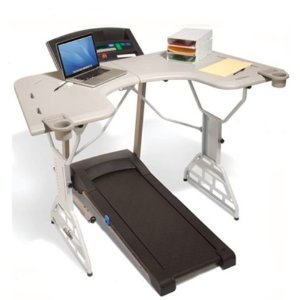
TrekDesk Treadmill Desk

TrekDesk Treadmill Desk

Another option is the TrekDesk Treadmill Desk by Trek, for about $480. However, Amazon reviewer say this desk is not adjustable, rattles and shakes and is of such poor quality it’s not worth it. Check out the desk and reviews here.

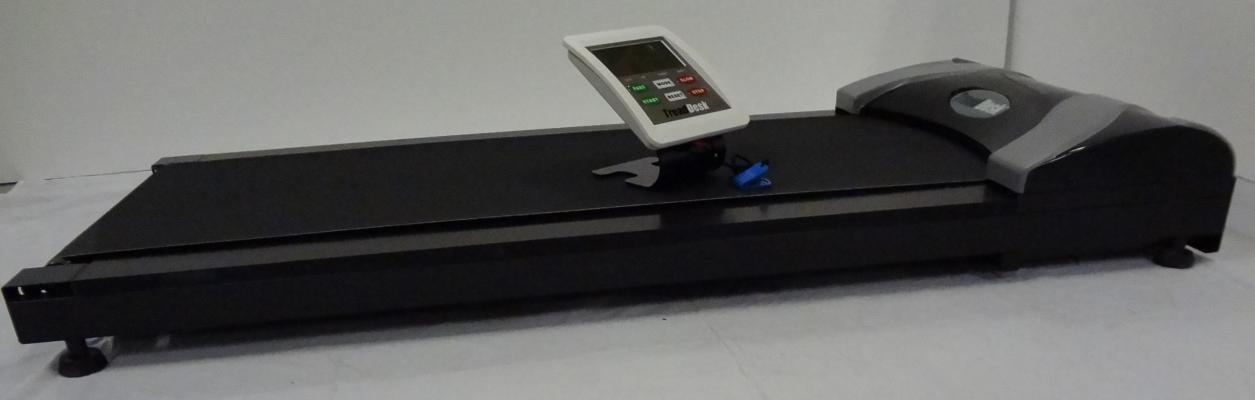
TreadDesk

TreadDesk

Another option is to simply add a treadmill, without handlebars to your existing desk set up. This may require you to add monitor risers to raise your monitor high enough to see it comfortable while standing. The TreadDesk is currently on back order, but at $840, this would be my first pick to retrofit an existing desk to a treadmill. The TreadDesk control panel sits on top of the desk and is attached to the Tread with a six-foot long wire. The control panel keeps track of distance, time, speed, calories burned and comes with an emergency shut off cord which should always be worn when using the TreadDesk. A rubber treadmill mat is also included with the purchase of each TreadDesk. If you want to read detailed user comments about the TreadDesk, click here.

Build Your Own Treadmill Desk

A cheaper option but far more labor intensive one is to build a treadmill desk yourself.  Jay Buster, an options trader, created a blog called Treadmill Desk. (Today, while walking on his Treadmill Desk, Jay manages a private investment fund which is involved in option and structured product arbitrage.) He writes this post, The $39 Treadmill Desk, to tell you how to build your own treadmill desk for $39 (minus the cost of the treadmill, natch!).

Enhanced by Zemanta

Read Full Post »

By Sue Shekut, Owner, Working Well Massage, Licensed Massage Therapist, Certified Wellness Coach, ACSM Personal Trainer

One of the frustrations I hear from clients is how to get enough veggies into a daily diet when you are on the go and don’t have time or an appetite to eat breakfast. Eating wraps with lettuce, cukes and red onions is one way. Eating salads, of course is great when you have time. But for that early morning pick me up or when you don’t have time to eat a full meal, I suggest you try Orgain.

Orgain

Orgain is a meal replacement drink that tastes like a milkshake but includes veggie juices, is low sugar and low-fat and is packed with protein! It comes in 3 flavors: Creamy Chocolate Fudge, Sweet Vanilla Bean and  Iced Cafe Mocha.  Fat is only 7 grams for Vanilla and Fudge.

From the product website-more factoids about Orgain:

Organic Ready-to-Drink Nutritional Shake
– USDA Certified Organic
– 16 grams of Organic Whey Protein
– Organic Complex Carbohydrates from Brown Rice
– Omega 3 Fatty Acids from DHA
– Organic blueberries, bananas, acai berry, apple and raspberry
– Organic kale, beets, spinach, carrots, tomatoes
– Organic Pomegranate and Green Tea Extracts
– 24 Vitamins and Minerals
– Antioxidant equivalent to 10 servings of fruits and veggies per serving
– Lightly sweetened with Organic Brown Rice Syrup and Organic Evaporated Cane Juice (only 13 grams of sugar per drink)
– No caffeine, preservatives, gluten, corn syrup, saturated fat, hormones or antibiotics!

You can buy it at Whole Foods Market for about $3.50 per drink or by the case at Amazon here for about $33 for 12.

Orgain was founded by a practicing medical doctor and cancer survivor, Dr. Andrew Abraham. Read his story and the story of Orgain here. (Click on About Us and Founder.) Orgain also donates a share of the proceeds to people struggling with cancer that don’t have the funds to afford adequate nutritional or medical care.

I say, “Thank you Dr. Abraham and thank you Orgain!”

Note: I have absolutely no affiliation with Orgain now does my company, Working Well Massage. I just think it’s a great product and I buy it for my boyfriend and friends!

Read Full Post »

By Sue Shekut, Owner, Working Well Massage, Licensed Massage Therapist, Certified Wellness Coach, ACSM Personal Trainer

Recently I helped a client adjust her chair to better reach the arm rests of her chair to reduce tension in her neck and shoulders. She had done a fantastic job of repositioning her monitors and keyboard, but we found that her arm rest height was too low for her to rest her arms comfortably on the chair as she worked.


Arm rest positions. Image from OHSA website.

After we found some potential fixes for her workstation, I thought I’d share some resources with Working Well Resource readers in case you are having similar problems with your chair. For starters, if your arm rest are not adjustable and you can’t reach them, you may need arm rest pads or a new chair. If you do not have a way to rest your arms as you work on your desk or computer keyboard, your poor shoulders have to hold your arms up all day. That may not seem like a big deal, but think about it, if you went tot he gym and had to hold a 5-pound weight or even a 1-pound weight up in front of you for 8 hours, your arms would be exhausted!  And you likely wouldn’t even be able to hold the weight for that long no matter how strong you are. But that is what many of us expect our bodies to do at work.

Ergononmic Resources for Arm Rests

OSHA has some of the best information about workstation ergonomics and office chairs here. 

, from About.com Guide, has great tips on office chair ergonomics in her article, Before You Decide on Office Chair Arm Rest Adjustments. This post describes optimum settings to adjust your chair for the most ergonomic Arm Rest Height, arm rest width and rm rest pivot as well as how to handle Non-Adjustable Armrests and the Armless Chair.

And here is a great tutorial from Prometheus Training Corporation, explaining self assessment tools you can use to determine if your workstation is set up as ergonomically as possible.  The video is a bit dry, but the graphics and information presented is excellent!

Enhanced by Zemanta

Read Full Post »

By Sue Shekut, Owner, Working Well Massage, Licensed Massage Therapist, Certified Wellness Coach, ACSM Personal Trainer

February is American Heart Month according to the CDC. And now, Elizabeth Banks, (the actress from Definitely, Maybe, Scrubs, 30 Rock, and Role Models, did a pretty attention-grabbing public service announcement. In “Just a Little Heart Attack,” Elizabeth is a multitasking, overworked mother of two getting ready for work, getting the kids ready, and ….having a “little” heart attack. But in a really cute and funny way that only Elizabeth Banks can pull off. I think it’s an effective and clear video that makes a heart attack in a seemingly healthy, thin, middle-aged woman seem very real. Elizabeth personalizes heart disease and packages her heart attack in a scenario many of us can either directly relate to or understand. For a PSA to be effective, it has to keep your interest and make its message simple. Elizabeth’s message seems to be, “take time for yourself, and know the warning signs of a heart attack.” Good advice!

Check out the video and tell me what you think. Is the video helpful, silly, interesting, funny. You be the judge.

Starring and directed by Emmy-nominated actress Elizabeth Banks.

“A little film about a super mom who takes care of everyone except herself” — Elizabeth Banks

Go Red for Women presents: Just  a Little Heart Attack.

Enhanced by Zemanta

Read Full Post »

By Sue Shekut, Owner, Working Well Massage, Licensed Massage Therapist, Certified Wellness Coach, ACSM Personal Trainer

I’m not big on New Year’s resolutions because I don’t think they work and often make people feel guilty about taking a stand without really having a concrete plan to back up lifestyle changes. Changing habits takes a lot more than just making a statement. it takes a lot of planning and effort. And often, support from a coach, a personal trainer or other wellness support staff. I am more into planning and goal setting (which is natural from my coaching background!). The first day of a new year is always a good time for reflection and planning for me.

2011 in review

This past year has been a great year for Working Well Massage. We’d added some new team members to our happy group of professional therapeutic massage therapists: Aaron, Jennifer and Allison. And we bid a fond farewell to Janice, one of our chair massage team members, on her way as she travels to India for four months. We added a new Assistant Manager, David McClinton, to our chair massage stations in the Fall of 2011. David has done a fantastic job of sprucing up our booths and keeping things running smoothing for both our massage therapists and our clients.

In 2011, our corporate chair massage team has continued to provide many stressed out and sore office workers with relaxing chair and table massages in their office. This arm of our business has continued to grow and we are both grateful for the business and happy that our many corporate office worker clients have management teams that are progressive enough to know that providing in-house massages to their staff can mean more productive, less tense employees. (Note: I don’t mention the names of our corporate clients to preserve their anonymity. We enjoy our relationship with our clients and don’t want to exploit those relationships for promotional purposes.)

In 2011, we tried out a new business venture with Whole Foods Market’s new Wellness Clubs in Lincoln Park.  Sadly, the idea of adding a table massage location to our already successful chair massage business in the store proved to be less desirable for clients than we had anticipated. Most of our chair massage clients appreciate the convenience and location of our chair massage stations. Few people wanted to venture upstairs to the Mezzanine level of the Lincoln Park Whole Foods Market to get a table massage so, rather than scatter our resources further, we quickly closed the table location and let the Wellness Club focus on the nutritional counseling and fitness needs of shoppers upstairs while we do what we do best, walk in chair massage, on the main floor.

On this blog, Working Well Resources, in 2011, I wrote 94 new posts, growing the total archive of my blog to 395 posts. I uploaded 194 pictures in 2011.. The tops posts accessed in 2011 were as follows:

My most commented on post in 2011 was Helping Chicago Get and Stay Calm-Calm Chicago. My blog was viewed about 39,000 times in 2011.

The busiest day of the year was April 12th with 230 views. The most popular post that day was Find the Top Tweeters on Nutrition.

What’s Ahead for 2012?

In 2012, we at Working Well Massage plan on continuing to grow our corporate chair massage business, providing quality massage professionals with access to corporate office clients and providing office workers with much-needed (and much appreciated) stress relieving massage sessions. We are also looking to add some yoga classes and other fitness options to some of our corporate client sites.

In 2012, we are going to continue to improve our WWM chair massage stations inside both the Lincoln Park and Gold Coast Whole Foods Markets in Chicago, Illinois. We will be changing the carpeting, adding some new art and stretching posters and incorporating some of our new team members into the lineup at the two stores. I will personally be offering some new training and advising opportunities to my WWM team, to keep us all up to date on the latest research on massage therapy and best ways to help our chair massage clients enjoy our chair massages in the stores.

At Working Well Massage, we aim to not only give our clients the most relaxing and enjoyable chair massages and corporate massage experiences, but to help our highly skilled,  professional team of massage therapists connect with great clients!

As far as the blog goes, this year I plan on providing some new video content to give our readers visual tips on workstation ergonomics, relaxing videos of amazing nature scenes, and some helpful illustrations of how to use the Miracle balls as well as tennis balls and the yoga bolster to stretch muscles and relax your nervous system. I will also aim to provide new info on the latest massage and fitness research.

In 2012, I will personally continue to work towards my master’s degree in Clinical Professional Psychology, to give me more tools to help my clients relax and deal with stress and to help make me an even better coach for my current clients, massage therapy team and potential new coaching clients. I will also make the extreme sacrifice (wink) to continue hiking and taking photos of wonderful natural forest preserves and other nature spots to share with you in this blog!

Happy New Year to our team, our clients and of course, to all our loyal readers of our Working Well Resources blog!

Enhanced by Zemanta

Read Full Post »

By Sue Shekut, Owner, Working Well Massage, Licensed Massage Therapist, Certified Wellness Coach, ACSM Personal Trainer

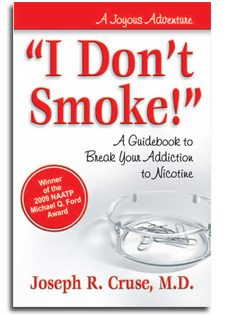
Yesterday I was talking to a friend who works in the addictions field. She told me about a book to help people stop smoking. In my view, smoking is one of the hardest addictions to quit. I quit smoking cigarettes about 20 years ago and I know how important positive thinking and a good support-network can be to help quit! This new book, “I Don’t Smoke” looks like an excellent tool for those either looking to quit smoking cigarettes or for those with loved ones they want to help quit smoking. What I like about the approach is that it centers on the addiction, not the substance. Our brains pleasure centers get addicted and it’s the pleasure centers in our brains that we need to work with to stop the addiction. Hammering home the future potential hazards of smoking (lung cancer, emphysema, heart attack), don’t help smokers quit. A fear based approach makes smokers want to avoid the informer…and go have a cigarette to deal with the anxiety of hearing about potential future health issues.

Some of the main points covered in the book (from the author’s website):

  • The importance of self worth
  • Addiction theory and brain function
  • A method to change that function
  • The importance of our emotions in recovering from addictions
  • Receiving help and helping others remain free from an addiction to nicotine.

To order the book (for the 2011 price of a pack of cigarettes, about $11), click here.

Who is the Author of I Don’t Smoke and Why Should We Listen to Him?

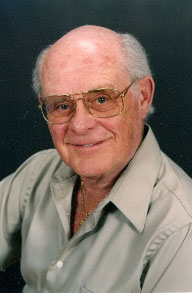
Joseph R. Cruse, M.D, wrote the book I Don’t Smoke.

Joseph R. Cruse, M.D.

Dr. Cruse is an oncologist-surgeon, an addiction medicine specialist, author, and lecturer. He is the Founding Medical Director of The Betty Ford Center at Eisenhower Medical Center. He served as President of the Medical Staff at Eisenhower. He served 8 yrs. on the Governor’s state alcoholism advisory board for the State of California and 12 years on the California Medical Association’s Impaired Physicians Help Committee. He was Medical Director of Onsite Workshops for 12 years. He has served as consultant to industry, school systems, hospitals, and universities.

He has been a guest on “60 Minutes”, “Good Morning America” and the “Late Night Show”. He has been featured in magazines in the U.S- and Australia.

Joe has written books and several booklets and teaching videos:

Books Published

“I Don’t Smoke!” 2008*
Chicken Soup for the Recovering Soul, contributor 2004
The Pharmer’s Almanac II, co author, 1993
Understanding Co-Dependency, co author, 1993
Painful Affairs: Loving Drugs and Alcohol, 1992
Experiential Therapy for Co-Dependency, co-author 1990


Enhanced by Zemanta

Read Full Post »

By Sue Shekut, Owner, Working Well Massage, Licensed Massage Therapist, Certified Wellness Coach, ACSM Personal Trainer

Fresh fruit

After eating a wonderful traditional Thanksgiving meal, I was inspired to look for some new healthy eating tips. I came across one that I think we should all check out: Healthy Dining. It is an all-volunteer community education and outreach program in Chicago devoted to providing simple, healthy lifestyle options for Chicago diners. By subscribing to the newsletter (free), you have access to “a steady diet of bite-size, easy-to-digest morsels of practical information, valuable resources, easy recipes, time and money-saving ideas, conservation tips and special subscriber-only invitations and offers that support good clean living.”

Who Started Healthy Dining in Chicago?

Laura Bruzas


In 2003, Laura Bruzas founded Healthy Dining to help teach Chicagoans that good nutrition and an eco-friendly lifestyle can aid in to disease prevention and management. Bruzas’ holds a degree in Marketing, has 15 years in HR/Recruiting and spent five years working with Whole Foods Market. When Laura was in college, a friend gave her a copy of Diet for a Small Planet by Frances Moore Lappe and she has been on that path ever since.  Laura is also the author of Eat Well for Less, a collection of 50 simple tips and fast recipes to save time and cut your natural food bill in half.


For ten years, Laura has been an adult education instructor at the Latin School. She received a grant for developing and delivering a series of community wellness workshops, has taught healthy cooking classes at Whole Foods Market, Gildas Club of Chicago and the Discovery Center, presented a motivational lecture series on wellness and personal effectiveness for Chicago Public Library patrons and has spoken to audiences at the Chicago Women in Publishing Conference, Chicago Green Drinks, and FamilyFarmed.org EXPO.  Prior to publishing Healthy Dining Chicago, she was the editor of Living Well from 1998 to 2002.

60 Second Desserts and a variety of Four-Course Dinners in Under an Hour.

Laura has a full list of Q&A’s about healthy dining. Check out the questions and answers here.

Bruzas also teaches classes at the Moraine Valley Environmental Institute, as well as hosting corporate Lunch & Learns on the topic of Healthy Dining on a Dime and offering home parties with menu options that include 60 Second Desserts and a variety of Four-Course Dinners in Under an Hour.

For More Information or to Schedule a Lunch & Learn or Home Party
Please contact Laura at 312.666.9979 or via e-mail Laura@HealthyDining.org.

Enhanced by Zemanta

Read Full Post »

Downtown Chicago Building Roundup: North

Image by Gravitywave via Flickr

By Sue Shekut, Owner, Working Well Massage, Licensed Massage Therapist, Certified Wellness Coach, ACSM Personal Trainer

I was looking at my WorkingWellResources  blog subscribers and noticed that I’ve got a few blog stalkers.   OK, not stalkers, just fans. One of them is Healthy In Chicago, an easy to read, fun and accessible blog about healthy lifestyle choices for Chicagoans.

What I like about this blog is that it’s not about being perfectly healthy. The blogger admits that it’s about trying to do his/her best at making healthy lifestyle choices. I am certainly not perfect either. I often have to check myself to see if I am practicing what I preach. And sometimes I fall short of the optimal healthy guidelines I would like to adhere to. I am human. And so are my clients. WE strive for our ideals but don’t get overly critical of ourselves when we fall short of perfection! This attitude of acceptance and moderation helps me be less critical and judgmental of my clients and allows them to share their successes and weaknesses with me more easily. So I am happy to introduce you to another blogger that has a similar positive, but not fanatical, outlook on Wellness.

Check out the Top posts on the Healthy In Chicago blog:

Chicago, Meet HealthyinChicago on the blog here. To follow Healthy In Chicago tweets, check out @HealthyNChicago.

Who is the Author of Healthy In Chicago?

The blogger chooses to remain anonymous, but did post some fun factoids about him/herself.

From the Healthy In Chicago Website, the blog author:

  • Is someone who doesn’t always ”practice what they preach” in terms of health advice.  I am not the perfect pinnacle of health.  I truly believe in moderation and not depriving myself of things (food and drinks) I love, which doesn’t always fit within the “recommendations” of healthy living.
  • Has a sweet tooth
  • Makes attempts to make healthy choices and health goals however
  • Has a college degree in Sport Science
  • Employed with IL largest health system, and is responsible for educating the community on health topics that plague Chicagoan’s (diabetes, heart disease, asthma, obesity, etc)
  • Previous experience as a personal trainer
  • Certified Intrinsic Coach (basically a life coach, someone to motivate you to follow through with the decisions, you have made in your life…example, quitting smoking)

The blogger also states that:

“I came to a point in my life where I was looking for more active, healthier activities and resources in the city…and really couldn’t find them and neither could my friends. So, I thought…why not share the information I find with everyone so they too can have the local resources to enjoy a healthier life, when and if they want to?  And with that Healthy In Chicago was created!”

Enhanced by Zemanta

Read Full Post »

« Newer Posts - Older Posts »