Feeds:
Posts
Comments

Archive for the ‘Stress Management’ Category

By Sue Shekut, LMT, ACSM PT, Certified Wellness Coach

My boyfriend and I are avid hikers and bicyclers. We have spent many happy hours biking and hiking around Chicago area forest preserves this spring, summer and fall. But we get tired of the relative flatness of the terrain. Then we went to Starved Rock State Park this October and fell in love with the canyons in the area. We hiked about 8 miles one sunny Sunday, climbing literally hundreds of stairs and hills. It’s not the Grand Canyon, but for Chicagoans, it’s only 1.5 hours away from downtown and well worth the trip! And, it’s family friendly. We saw many parents with small children, babies in backpacks and people from all over the Chicago area.

I’ve loaded some of the pictures we took and use them as screen backgrounds. Feel free to use them yourself to give you a bit of natural relaxation on your computer desktop.

The View of Starved Rock from Lover’s Leap, the rock outcropping directly opposite Starved Rock.

IMG_0078

Starved Rock

LaSalle Canyon. See how small the person in the picture is compared to the canyon? This gives you an idea of the majestic size and scale of the canyon.

IMG_0131

LaSalle Canyon at Starved Rock, Oct 2009

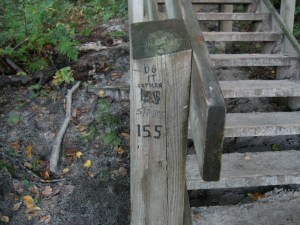
I love this shot of the bottom of one set of stairs along the hike. Some thoughtful previous traveler gave us a heads up on the stair count before us. 155 stairs to climb. With the motivational cue: Do It Fatman!

We did it!

IMG_0151

Stairs at Starved Rock

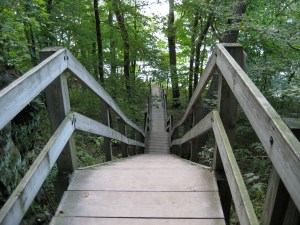
The view from the top of the stairs. Indeed, 151 stairs we climbed. And prior to that another 141 stairs at another area of the trail.)

IMG_0153

Another view of LaSalle Canyon. At this time of year, there was less water so we were able to hike into the canyon and walk all the way back to the edge of the waterfall which is behind us in this shot.

IMG_0134

If you look closely you can see the tiny trickle of waterfall still falling in October.

IMG_0135

Read Full Post »

What does exercise do to your brain? Specifically how can exercise improve your mood, your memory and your ability to process information aka your ability to think (cognate)?

Dr. Walter W. van den Broek, MD, PhD, (aka Dr. Shock), a Dutch Psychiatrist, has a website that answers these and many other questions about neuroscience for laypeople.  Read his blog post below to learn more about the effects of exercise on your brain.

Neuroscience of Exercise by Dr. Shock, MD

The Benefits of Exercise

  • In children, college students and young adults, exercise or physical activity improves learning and intelligence scores
  • Moreover, exercise in childhood increases the resilience of the brain in later life resulting in a cognitive reserve
  • The decline of memory, cortex and hippocampus atrophy in aging humans can be attenuated by exercise
  • Physical activity improves memory and cognition
  • Exercise protects against brain damage caused by stroke
  • Exercise promotes recovery after brain injury
  • Exercise can be an antidepressant

The brain needs certain ingredients to flourish or to life up to the expectations of every day problems. The brain has priority when it comes to certain ingredients. A variety of foods can be beneficial for learning. Positive effects on brain function have been reported for fish oil, teas, fruits, folate, spices, cocoa, chocolate and vitamins.

How does exercise improve the brain?

  • With exercise the number of neurons increase in the hippocampus, a brain structure important to memory and learning.
  • Also synaptic plasticity increases in a certain part of the hippocampus due to exercise: the dentate gyrus.
  • Spine density increases in certain parts of the hippocampus.
  • Exercise also increases and improves the small blood vessels throughout the brain.
  • Exercise can change the function of neurotransmitters and can activate the monoamine system.

And from Henriette van Praag, from Trends in Neuroscience:

Recent research indicates that the effects of exercise on the brain can be enhanced by concurrent consumption of natural products such as omega fatty acids or plant polyphenols. The potential synergy between diet and exercise could involve common cellular pathways important for neurogenesis, cell survival, synaptic plasticity and vascular function. Optimal maintenance of brain health might depend on exercise and intake of natural products.

Source:

van Praag, H. (2009). Exercise and the brain: something to chew on Trends in Neurosciences, 32 (5), 283-290 DOI. Read more here: 10.1016/j.tins.2008.12.007

Read D. Shock’s full article at his website here.

And for those that want to know more about exercise effects on your brain as you age, read more on Exercise, Experience and the Aging Brain at this abtract  here.

Read Full Post »

By Harvard Health Publications

Since the 1970s, meditation and other stress-reduction techniques have been studied as possible treatments for depression and anxiety. One such practice, yoga, has received less attention in the medical literature, though it has become increasingly popular in recent decades. One national survey estimated, for example, that about 7.5% of U.S. adults had tried yoga at least once, and that nearly 4% practiced yoga in the previous year.

Yoga classes can vary from gentle and accommodating to strenuous and challenging; the choice of style tends to be based on physical ability and personal preference. Hatha yoga, the most common type of yoga practiced in the United States, combines three elements: physical poses, called asanas; controlled breathing practiced in conjunction with asanas; and a short period of deep relaxation or meditation.

Many of the studies evaluating yoga’s therapeutic benefits have been small and poorly designed. However, a 2004 analysis found that, in recent decades, an increasing number have been randomized controlled trials — the most rigorous standard for proving efficacy.

Available reviews of a wide range of yoga practices suggest they can reduce the impact of exaggerated stress responses and may be helpful for both anxiety and depression. In this respect, yoga functions like other self-soothing techniques, such as meditation, relaxation, exercise, or even socializing with friends.

Taming the stress response

By reducing perceived stress and anxiety, yoga appears to modulate stress response systems. This, in turn, decreases physiological arousal — for example, reducing the heart rate, lowering blood pressure, and easing respiration. There is also evidence that yoga practices help increase heart rate variability, an indicator of the body’s ability to respond to stress more flexibly.

A small but intriguing study further characterizes the effect of yoga on the stress response. In 2008, researchers at the University of Utah presented preliminary results from a study of varied participants’ responses to pain. They note that people who have a poorly regulated response to stress are also more sensitive to pain. Their subjects were 12 experienced yoga practitioners, 14 people with fibromyalgia (a condition many researchers consider a stress-related illness that is characterized by hypersensitivity to pain), and 16 healthy volunteers.

When the three groups were subjected to more or less painful thumbnail pressure, the participants with fibromyalgia — as expected — perceived pain at lower pressure levels compared with the other subjects. Functional MRIs showed they also had the greatest activity in areas of the brain associated with the pain response. In contrast, the yoga practitioners had the highest pain tolerance and lowest pain-related brain activity during the MRI. The study underscores the value of techniques, such as yoga, that can help a person regulate their stress and, therefore, pain responses.

Improved mood and functioning

Questions remain about exactly how yoga works to improve mood, but preliminary evidence suggests its benefit is similar to that of exercise and relaxation techniques.

In a German study published in 2005, 24 women who described themselves as “emotionally distressed” took two 90-minute yoga classes a week for three months. Women in a control group maintained their normal activities and were asked not to begin an exercise or stress-reduction program during the study period.

Though not formally diagnosed with depression, all participants had experienced emotional distress for at least half of the previous 90 days. They were also one standard deviation above the population norm in scores for perceived stress (measured by the Cohen Perceived Stress Scale), anxiety (measured using the Spielberger State-Trait Anxiety Inventory), and depression (scored with the Profile of Mood States and the Center for Epidemiological Studies Depression Scale, or CES-D).

At the end of three months, women in the yoga group reported improvements in perceived stress, depression, anxiety, energy, fatigue, and well-being. Depression scores improved by 50%, anxiety scores by 30%, and overall well-being scores by 65%. Initial complaints of headaches, back pain, and poor sleep quality also resolved much more often in the yoga group than in the control group.

One uncontrolled, descriptive 2005 study examined the effects of a single yoga class for inpatients at a New Hampshire psychiatric hospital. The 113 participants included patients with bipolar disorder, major depression, and schizophrenia. After the class, average levels of tension, anxiety, depression, anger, hostility, and fatigue dropped significantly, as measured by the Profile of Mood States, a standard 65-item questionnaire that participants answered on their own before and after the class. Patients who chose to participate in additional classes experienced similar short-term positive effects.

Further controlled trials of yoga practice have demonstrated improvements in mood and quality of life for the elderly, people caring for patients with dementia, breast cancer survivors, and patients with epilepsy.

Benefits of controlled breathing

A type of controlled breathing with roots in traditional yoga shows promise in providing relief for depression. The program, called Sudarshan Kriya yoga (SKY), involves several types of cyclical breathing patterns, ranging from slow and calming to rapid and stimulating, and is taught by the nonprofit Art of Living Foundation.

One study compared 30 minutes of SKY breathing, done six days a week, to bilateral electroconvulsive therapy and the tricyclic antidepressant imipramine in 45 people hospitalized for depression. After four weeks of treatment, 93% of those receiving electroconvulsive therapy, 73% of those taking imipramine, and 67% of those using the breathing technique had achieved remission.

Another study examined the effects of SKY on depressive symptoms in 60 alcohol-dependent men. After a week of a standard detoxification program at a mental health center in Bangalore, India, participants were randomly assigned to two weeks of SKY or a standard alcoholism treatment control. After the full three weeks, scores on a standard depression inventory dropped 75% in the SKY group, as compared with 60% in the standard treatment group. Levels of two stress hormones, cortisol and corticotropin, also dropped in the SKY group, but not in the control group. The authors suggest that SKY might be a beneficial treatment for depression in the early stages of recovery from alcoholism.

Potential help for PTSD

Since evidence suggests that yoga can tone down maladaptive nervous system arousal, researchers are exploring whether or not yoga can be a helpful practice for patients with post-traumatic stress disorder (PTSD).

One randomized controlled study examined the effects of yoga and a breathing program in disabled Australian Vietnam veterans diagnosed with severe PTSD. The veterans were heavy daily drinkers, and all were taking at least one antidepressant. The five-day course included breathing techniques (see above), yoga asanas, education about stress reduction, and guided meditation. Participants were evaluated at the beginning of the study using the Clinician Administered PTSD Scale (CAPS), which ranks symptom severity on an 80-point scale.

Six weeks after the study began, the yoga and breathing group had dropped their CAPS scores from averages of 57 (moderate to severe symptoms) to 42 (mild to moderate). These improvements persisted at a six-month follow-up. The control group, consisting of veterans on a waiting list, showed no improvement.

About 20% of war veterans who served in Afghanistan or Iraq suffer from PTSD, according to one estimate. Experts treating this population suggest that yoga can be a useful addition to the treatment program.

Researchers at the Walter Reed Army Medical Center in Washington, D.C., are offering a yogic method of deep relaxation to veterans returning from combat in Iraq and Afghanistan. Dr. Kristie Gore, a psychologist at Walter Reed, says the military hopes that yoga-based treatments will be more acceptable to the soldiers and less stigmatizing than traditional psychotherapy. The center now uses yoga and yogic relaxation in post-deployment PTSD awareness courses, and plans to conduct a controlled trial of their effectiveness in the future.

Cautions and encouragement

Although many forms of yoga practice are safe, some are strenuous and may not be appropriate for everyone. In particular, elderly patients or those with mobility problems may want to check first with a clinician before choosing yoga as a treatment option.

But for many patients dealing with depression, anxiety, or stress, yoga may be a very appealing way to better manage symptoms. Indeed, the scientific study of yoga demonstrates that mental and physical health are not just closely allied, but are essentially equivalent. The evidence is growing that yoga practice is a relatively low-risk, high-yield approach to improving overall health.

Where To Find Yoga Classes

Yoga Chicago magazine is a free publication distributed around the Chicagoland area. It contains a directory of all yhe known yoga classes in the city and suburbs of Chicago. Other cities may have similar publications or online services. For the Yoga Chicago main class directory go to this link here.

There are also a number of great yoga DVD’s available from Amazon, or you may find them at Target, Best Buy or Whole Foods Markets:

Yoga for Beginners from Amazon here.

Yoga for Stress Relief from Amazon here.

Yoga for Every Body from Amazon here.

and Yoga for Inflexible People from Amazon here.

Working Well Massage also provides certified yoga instructors for your home or office.

Sources:

Brown RP, et al. “Sudarshan Kriya Yogic Breathing in the Treatment of Stress, Anxiety, and Depression: Part I — Neurophysiologic Model,” Journal of Alternative and Complementary Medicine (Feb. 2005): Vol. 11, No. 1, pp. 189–201.

Brown RP, et al. “Sudarshan Kriya Yogic Breathing in the Treatment of Stress, Anxiety, and Depression: Part II — Clinical Applications and Guidelines,” Journal of Alternative and Complementary Medicine (Aug. 2005): Vol. 11, No. 4, pp. 711–17.

Janakiramaiah N, et al. “Antidepressant Efficacy of Sudarshan Kriya Yoga (SKY) in Melancholia: A Randomized Comparison with Electroconvulsive Therapy (ECT) and Imipramine,” Journal of Affective Disorders (Jan.–March 2000): Vol. 57, No. 1–3, pp. 255–59.

Khalsa SB. “Yoga as a Therapeutic Intervention: A Bibliometric Analysis of Published Research Studies,” Indian Journal of Physiology and Pharmacology (July 2004): Vol. 48, No. 3, pp. 269–85.

Kirkwood G, et al. “Yoga for Anxiety: A Systematic Review of the Research,” British Journal of Sports Medicine (Dec. 2005): Vol. 39, No. 12, pp. 884–91.

Pilkington K, et al. “Yoga for Depression: The Research Evidence,” Journal of Affective Disorders (Dec. 2005): Vol. 89, No. 1–3, pp. 13–24.

Saper RB, et al. “Prevalence and Patterns of Adult Yoga Use in the United States: Results of a National Survey,” Alternative Therapies in Health and Medicine (March–April 2004): Vol. 10, No. 2, pp. 44–49.

For more references, please see www.health.harvard.edu/mentalextra.

Read Full Post »

By Barbara Russi Sarnataro
WebMD Feature
Reviewed by Louise Chang, MD

How many New Year’s Eves have you spent sipping champagne and vowing to get more fit in the coming year? And how many times have you failed to follow through?

“December 31 over a drink is too late to set goals and make promises,” says Justin Price, owner of The Biomechanics, a personal training and wellness coaching facility in San Diego, Calif.

Fall, on the other hand, is a great time to start a fitness program because “‘you’re going to create good habits for the holiday season and the upcoming winter months,” says Price.

Chris Freytag, a fitness instructor and fitness expert with Prevention magazine, agrees.

“With the change of seasons comes a renewed time to rethink and restart,” she says. “‘What’s so special about January?”

Besides, says Freytag, a mother of three, moms with school-aged kids “think of September as the new year.”

Here are 10 ways to start making the most of the season. And who knows? This year, you might be in great shape before that New Year’s Eve party rolls around.

1. Take advantage of the weather. Fall can be a treat for the senses: the crisp air, apple picking, pumpkin carving, a gorgeous canopy of fall foliage, and the crunch of leaves underfoot. These months are a great time to exercise outdoors and enjoy cooler temperatures.

“Walking, hiking and cycling are all awesome in the fall,” says Todd Durkin, MS, fitness coach and owner of Fitness Quest 10 in San Diego, Calif.

Discover park trails and take in some new scenery, whether you’re walking, biking, or in-line skating, he suggests.

In places where snow falls early, try cross country skiing or snowshoeing. Or, if you live near the beach, get out and play volleyball, throw the Frisbee around, or play a vigorous game of fetch with your dog.

“It’s a great time to do beach activities because it’s so much less crowded,” says Price.

If you’re near a lake, try kayaking or canoeing, for an excellent whole-body workout and a great change of pace.

And remember, it doesn’t have to seem like exercise to be a great workout.

“Raking leaves or doing some fall outdoor yard work is a great way to get the heart pumping, and it’s great calorie-burning,” says Freytag.

2. Think outside the box. Always wanted to learn to tap dance? Attempt to box? Master the jump rope? Ask any schoolchild: Fall is a great time to learn something new.

Many classes at gyms and elsewhere get started in the fall, so look around and see if something intrigues you.

And with the kids in school, parents have more time to check out those classes, Freytag says.

Fall is the perfect time to gain new physical skills, Price says, because you burn fewer calories when you begin a new activity (thanks to the learning curve). If you learn something new now, by next summer, you’ll have mastered the skill — and you’ll burn more calories doing it, just in time for swimsuit season.

3. Be an active TV watcher. Many people get geared up for fall premieres of their favorite television shows, says Freytag. “If you’re going to sit down and watch hours of TV, get moving,” she suggests. “Make a date with exercise and TV.”

While you watch, you can walk or run in place, do standing lunges, do tricep dips off the couch, or lift weights. During commercials, do push-ups or sit-ups. In a one-hour show, you probably have close to 20 minutes worth of commercial interruption.

4. Integrate exercise into your life. You already know the obvious suggestions: park farther away from your destination; take stairs instead of elevators; take a walk during your lunch break. Here are a few that are less obvious:

* If you’re spending the afternoon taking kids to soccer practice, instead of reading a book or visiting with another parent, “why not walk around the outside of the field while they practice?”, suggests Price. “Or (if you feel comfortable) warm up and cool down with the kids.”
* Or try “walking meetings,” like those Price and his colleagues at Biomechanics often hold. ‘”We go for a walk, we brainstorm, and we figure out who’s going to take what responsibilities,” says Price. “‘Things get achieved much more quickly,” he says, and everyone feels better for doing it.
* You can even get moving while you get motivated — for fitness or other life goals. ‘”Get some inspirational music or find a motivational talk and download it to your iPod,” suggests Durkin. Walk while you listen for 30 minutes.

5. Rejuvenate yourself. Fall is the time to rejuvenate body, mind and spirit, says Durkin. Get a massage after your run. Learn to meditate. Take an art class. Treat yourself not just with exercise but other activities that promote wellness, he says, so you can feel good physically, mentally, emotionally, and spiritually.

6. Remember the 30-day rule. “‘It takes about four weeks for the body to adapt to lifestyle changes,” says Price. That’s why people who give up on their fitness programs tend to do so within the first 30 days.

So, when the alarm goes off in the morning and it’s darker and colder, don’t roll over and hit the snooze button.

“Try to stick with a program for a month,” Price says. “After a month, behavior patterns will have adapted and it will be much easier to stick with it after that.”

7. Strive for the 3 Cs. Freytag calls commitment, convenience, and consistency “the three Cs”, and says having all three will lead to a successful fitness program.

First, exercise takes commitment. When a client complains to Freytag about a lack of time, she responds: “Tell me something I haven’t heard before. We’re all busy; that’s just part of our lives.

You have to start planning exercise, just like you do everything else,” like meetings, dinners, and getting kids to lessons and practice, she says. “Put in on the calendar, because later always turns into never.”

Convenience means choosing a gym that’s close by, or an activity you can do at home, or a time when you’re not likely to be interrupted.

Finally, there’s consistency. “I’d rather see a brand-new client work out for 10 minutes a day rather than one hour every month,” Freytag says

8. Deal with darkness. The best way to enjoy fall is to exercise outdoors. But it is getting darker earlier, and staying dark later in the morning, so be smart and safe.

“Just because it’s 6 p.m. (or a.m.) and dark doesn’t mean you can’t work out,” says Durkin. If walking or running outdoors, he says, “wear a reflective vest and carry a flashlight.”

When cycling, affix a light to your helmet or bike.

If possible, use trails or a local school track to avoid vehicle traffic. Try to work out at the same time every day, so drivers get used to seeing you.

9. Dress in layers. When exercising outside, layer your clothing. Before your body warms up, you may feel chilled, but once the blood gets pumping, you’ll feel overdressed.

These days, there’s no lack of great weather gear. Freytag and Price recommend clothing with wicking, often called “DriFit.”‘ This fabric wicks moisture away from your skin so you’re not exercising with wet fabric hanging on you.

Freytag suggests three layers: “The inner layer should be a moisture-wicking fabric, so it wicks away sweat and you’re not chilled. The second layer should be a warmth layer, and the third layer should be a protective layer (like a windbreaker or rain slicker, depending on the weather).”

“And don’t forget the sunglasses,” she warns. UV protection is important year round. Fall sun can be blinding at certain times of the day.

10. Find your motivation. “People are motivated by different things,” says Durkin. It’s important to first discover what your individual goals are, whether it’s losing weight, strengthening and toning, or preparing for a race or event, says Durkin.

But goals aren’t enough to get you there; you have to be motivated by the day-to-day workouts, he says. So choose something you’ll enjoy doing and will be likely to keep up, whether it’s walking or hiking with a friend, working with a trainer, or taking part in a “boot camp” class.

Creating a challenge for yourself will motivate you, as will encouragement and accountability, he adds. “You want to know when you’re doing a good job, and when you’re not,” says Durkin.

Remember too, that anything worth having takes work.

“Tell me something you can do three times a week for 10 minutes and be great at? It doesn’t exist,” he says. “If it was easy to be great, everybody would be great.”

Link to Barbara Russi Sarnataro’s article here

Read Full Post »

Studies show that drinking excessive amounts of alcohol can be hazardous to your health. Many people enjoy drinking and are unlikely to give it up entirely, based on the threat of future health problems. A few glasses of wine may be safe for some and may even have a few health benefits.

Wine

But some overdo it. If you find yourself in the position of having drunk too much alcohol the night before, how can you handle the hangover? Eating Well magazine has some useful tips.

Of course, the best tip is to not overdo it! If you tend to over do it, try drinking a glass of water between every alcoholic drink to slow yourself down when drinking alcohol. It helps reduce dehydration and may keep you from drinking as much.

If you think you may have a problem with drinking, seek help.

Hangover Cures from Eating Well Magazine

Everyone knows someone who absolutely swears by a greasy egg sandwich from the corner diner to erase the symptoms of a hangover—but the only proven way to get rid of a hangover is to wait it out. (Hangovers usually last for 8 to 24 hours.) That said, some commonly touted hangover cures—while not proven effective—are worth a try if you’re truly in pain.

Fruit

bananas

One study conducted in the 1970s found that drinking fruit juice or eating fruit relieved some hangover symptoms. Fruits and fruit juices contain a sugar called fructose, which may help your body clear alcohol faster, according to the National Institutes of Health. Fruits and vegetables (think: supposed tomato juice cures] also contain minerals, such as potassium, that are important in restoring your electrolyte balance and replenishing your body’s fluids.

Starchy Carbohydrates

carbs

Starchy carbohydrates, such as toast or crackers, may help to counteract nausea and low blood sugar (symptoms include headaches, fatigue and cold sweats) caused by long bouts of drinking with little food, according to an article in the journal Alcohol Health & Research World.

Fluids

Water

Drinking alcohol causes your body to lose a lot of water, especially if you’ve been sick to your stomach. Rehydrating—with water or sports drinks that contain electrolytes, such as sodium and potassium—could help you feel better.

Electrolytes

Soup

The salt and potassium in bouillon-based soup may replace lost electrolytes, relieving some of the symptoms of dehydration: headache, weakness, dizziness.

“How Alcohol Affects Your Body,” an article from Eating Well

Read Full Post »

By Sue Shekut, Owner, Working Well Massage, Licensed Massage Therapist, Certified Wellness Coach, ACSM Personal Trainer

Many Working Well Massage clients travel for business. Aside from cramped airplane seats, long waits in security lines, and walking for miles on concrete terminal floors, air travel requires sitting for long periods, breathing in stale recycled air and can be dehydrating. Where do weary travelers go for relief while waiting for their planes to board? Well, you can go to the airport bar and have a cocktail, beer or cup of Starbucks finest, but keep in mind that alcohol and caffeine are both dehydrating. Health conscious travelers go to an airport massage station, spa, oxygen bar or get a pampering manicure to pass the time and help their bodies adjust to air travel stress. And then they drink plenty of water!

What Services Do Airport Spas Provide? from By Anitra Brown, at About.com

• Chair Massage — The most common service is a seated or chair massage. You sit fully clothed in a special chair that cradles you face while the massage therapist works on your back and shoulders.

And you can get a chair massage for as short as ten or 15 minutes. It is great for working out kinks before they turn into hard knots! These are sometimes available in small “kiosks” right by the gates.

• Oxygen Therapy — You sit in a comfy chair with a two-pronged plastic tube up your nose, usually for 15 minutes, getting oxygen scented with essential oils that help you relax or boost your immune system.

• Other popular services are manicures and pedicures. Facials are more unusual, but sometimes available. A few places offer full salon services — cut, color even highlights.

Massage and Spa Services at U.S. Airports

Here’s a list of some of stress relieving services compiled from articles by Harriet Baskas of USA Today and Anitra Brown of About.com:

• Austin- Bergstrom International Airport Knot Anymore offers chair massages

• Baltimore/Washington International Thurgood Marshall Airport has two Destination Relaxations — one is a chair-massage kiosk on Pier B and the other a full-service store on Pier D that offers table and chair massages, as well as foot and hand rubs.

• Boston Logan International airport
The Jetsetter Mini Spa offers chair and table massages, manicures, pedicures and facials.
Boston’s Logan Airport also has Polished, in Terminal C, just before the security checkpoint at Gates 25-36. Polished offers foot, hand, back, neck and shoulder massages, manicures, pedicures, make-up applications and men’s grooming services.

• Chicago’s O’Hare International Airport has the Backrub Hub, offering neck and back massages in Terminal 3 (by the American and Delta gates). Massages also are offered at the full-service health club at the O’Hare Hilton, accessible via pedestrian tunnels from the terminal.

• Denver International Airport is served by two locations of A Massage Inc. You can get a haircut or massage (chair or table) at the location on Concourse B. The other is in the Main Terminal, on Level 6.

• Detroit Wayne County International Airport-OraOxygen
This airport has an underground passage with a trippy light show and New Age music. If you need more, the OraOxygen Spa by Gate A45 gives oxygen treatments, as well as facials, manicures, pedicures,a and massages, including foot massages and a 90-minute hot-stone massage. You can even take showers.

• Indianapolis International Airport
The post-security Enroute Massage and Spa (formerly Passport Travel Spa) offers manicures and pedicures, chair and table massages, and a new 20-minute, three-technician, three-service treatment (the “3 in 20”) that offers time-pressed travelers a neck and shoulder massage as well as hand and foot treatments — all at the same time.

• John F. Kennedy International Airport- Elemis Travel Spa and XpresSpa
While the Elemis Travel Spa in Terminal 7 offers complimentary massages to British Airways’ top-tier travelers.

XpresSpa in JetBlue’s new Terminal 5 offers passengers will find pay-as-you-go services ranging from head, foot, leg, back and shoulder massages to manicures, pedicures and facials.

• Las Vegas-McCarran International Airport
Oxygen treatments are also available at here at three Oxygen Bar locations.

• Miami International airport
The Jetsetter Mini Spa offers chair and table massages, manicures, pedicures and facials. The Miami branch also has a sleep pod for napping.

• Nashville-The Massage Bar
Heat therapy, foot massages and a variety of seated massage services.

• Newark-D-Parture Spa
d_parture spa offers chair massage, spa pedicures combines with massage, and cuts, color and manicures. d_parture spa has two Newark airport locations: Terminal C at Gate 92 and Terminal B across from the Duty Free shop. In addition, The Terminal B location offers oxygen therapy and has a private room for full-body massages and European facials.

Also in Newark, The Massage Bar in Terminal A offers 15-minutes of seated massage for $21 or 30 minutes for $39. Ten minutes of foot refexology is $15. A second kiosk location is in Newark’s A-3 connector.

• New York’s LaGuardia Airport
XpresSpa offers passengers will find pay-as-you-go services ranging from head, foot, leg, back and shoulder massages to manicures, pedicures and facials.

• Orlando International Airport d_parture Spa
The menu includes hair and nail services, as well as waxing, chair and foot massages, and facials.

• At Pittsburgh International Airport Polished offers foot, hand, back, neck and shoulder massages, manicures, pedicures, make-up applications and men’s grooming services. It’s located at the beginning of Concourse A, after security.

• Sacramento Columbus, Ohio-The Massage Bar
Heat therapy, foot massages and a variety of seated massage services.

• Seattle-Tacoma International Airport-The Massage Bar
In addition to heat therapy, foot massages and a variety of seated massage services, the Massage Bar offers happy hour discounts.

• Washington Dulles International Airport-The Massage Bar provides massage in a a kiosk on Concourse B.

Canadian Airports Spa Services

• Alberta’s Calgary International Airport-OraOxygen
A full-range of massage services, plus ear candling, showers and oxygen sessions, are offered.

• British Columbia’s Vancouver International Airport has three locations of Absolute Spa. Services include massage, pedicures, manicures, facials, and oxygen treatments. Absolute is located before the security gates in the International Departures area; past security in the U.S. Departures area; and in the Fairmont Hotel in the International Terminal.

International Airport Spa Services from Spa Index

• Amsterdam’s Schiphol Airport-OraOxygen
A full-range of massage services, plus ear candling, showers and oxygen sessions, are offered.

• Cancun Airport-The Salon Spa at Cancun Airport, Terminal 2, A Gates

• London, England-The Molton Brown Travel Spa
British Airways Terminal 1 and Terminal 4, Departures Lounge. Complimentary spa treatments to British Airways customers traveling First Class and Club World, and gold cardholders.

• Frankfort, Germany-Frankfurt Airport (FRA)- Be Relax Spa
Terminal 2
Be Relax provides relaxation and beauty services at the heart of airports and business around the world. Day after day, Be Relax professionals provide support with our relaxation centers when you most need to take a break. Services are designed to be of short duration and without requiring appointments.

• Hong Kong International Airport (HKG)-Regal Airport Hotel Health Spa and Pool
Full menu of services, including gymnasium, fitness center, aerobics, sauna, steam room, massage services, spa beauty treatments. Connect from the hotel to the Passenger terminal of Hong Kong International Airport via the sky-way.

• Milan, Italy-Linate Airport (LIN) – Be Relax Spa
Be Relax provides relaxation and beauty services at the heart of airports and business around the world. Day after day, Be Relax professionals provide support with our relaxation centers when you most need to take a break. Services are designed to be of short duration and without requiring appointments.

• Paris, France-Charles de Gaulle International Airport (CDG)
Be Relax Spa with locations in most terminals — visit website for individual phone numbers and email addresses for each CDG kiosk.
Be Relax provides relaxation and beauty services at the heart of airports and business around the world. Day after day, Be Relax professionals provide support with our relaxation centers when you most need to take a break. Services are designed to be of short duration and without requiring appointments.

Airport Massage Chairs
Even, Smarte Carte, the company best known for renting airport luggage carts, is getting in on the airport massage action. The company maintains self-service, automated massage chairs in about 30 airports, including Anchorage, Cincinnati, Dallas-Fort Worth, Reno and Pittsburgh.

Airport Nail Services

In addition to the spas mentioned above, travelers with nails in need can also visit one of the thirteen airport locations of 10 Minute Manicure or stop in at one of the three airport locations (Seattle, Sacramento and Dulles) of butter LONDON, a nail salon with a non-toxic product line.

Harriet Baskas writes about travel etiquette for MSNBC.com and is the author of the airport guidebook Stuck at the Airport and a blog of the same name.

Anitra Brown, Guide to Spas for About.com, is a journalist specializing in spas who decided to experience the other side of the treatment table. In addition to her writing, she is a licensed esthetician in the states of New York and Arizona and has worked at several luxury resort spas, including Alvadora Spa at Royal Palms in Phoenix.

Read Full Post »

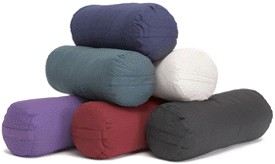
Yoga Bolsters on sale!

Standard Round Yoga Bolster

Order from Yoga Accessories for only $37 here: YogaAccessories (TM) Round Cotton Yoga Bolster
YogaAccessories (TM) Rectangular Cotton Yoga Bolster

Yoga Bolsters are great for to give your body a break from forward leaning work. With a simple yoga bolster, you can relax your back muscles, stretch our your pectoral muscles and let the day’s stress float away from you. Check out our Yoga Bolster video for a demonstration!

For more detailed explanation of the reasons to use the yoga bolster to stretch your muscles and relax, read this post here

Read Full Post »

Climbing stairs is a great way to pump fresh blood, (and thus, oxygen) into your brain, give yourself a break from a stressful day, and burn a few calories. Best yet, it can be fun.

In the 1960’s, Volkswagen made ugly cars fun with the Volkswagen Beetle. Now they are finding new ways to make exercise fun. A car company encouraging people to exercise? Now that is FUN!

Link to You Tube video!

From Volkswagen’s The Fun Theory website: We believe that the easiest way to change people’s behavior for the better is by making it fun to do. We call it The Fun Theory. Link to The Fun Theory Website

Working Well agrees!

Read Full Post »

By Sue Shekut, Licensed Massage Therapist, ACSM Personal Trainer, Certified Wellness Coach, Owner, Working Well Massage

I like to think of myself as not only a good massage therapist but also a good judge of massage therapists. I’ve had thousands of massages and given thousands of massages. As the owner of a wellness company, I interview many massage therapists and receive regular massage myself. Often, when clients travel or move out of town, they ask me how to find a good massage therapist.

It’s a question very similar to “how do I find a good dentist or a good doctor”. Since massage is a personal service, my first impulse is to say, ask your friends and coworkers who they go to and start there. But then, we’ve all had referrals to service people that our friends liked that were not a good fit for us. (One person may like a deep massage and you may like a lighter touch or vice versa. One person’s fantastic hair stylist may be great for that person but be unable to cut your style of hair well.)

Before you search out massage therapists, take a minute to think about what you want from a massage experience. Then when you call different therapists or massage centers, ask questions to make sure you get the massage therapist that best fits your needs.

Good questions to consider:

1. Are you going for stress relief or pain relief or both? Swedish massage or “relaxation massage” tends to be best for stress relief. Deep tissue or therapeutic massage tends to be best for pain relief. If you have a specific injury or chronic pain pattern, you will want a massage therapist with skill in relieving muscle pain, not just in relaxation therapy.

2. What’s your budget for massage?
Can you afford a weekly full hour (prices ranging from $65 to $120) or only mini-sessions (like the 15-20 minute $1 per minute chair massages offered at Whole Foods and similar places). If you have a chronic neck and shoulder pain, it’s often more cost effective to get weekly 20-minute massages than a one hour once a month.

3. Do you want someone you can go to regularly or just on a pamper yourself basis?
Spas tend to charge the most for massages and tend to be the place people go for pampering. However, some independent massage therapists may be able to offer you better prices and a really personalized pampering experience. Spas charge the most but they will give you the whole pamper yourself experience. However, if you want a regular massage your best bet is to find a good practitioner that is reasonably priced. If you can’t afford an hour regularly, try chair massage for 15-20 minutes if you want more frequent upper body massages.

4. How much do you care about the quality of the massage?
If you just want someone to pamper you and rub oil on your back while you relax and snooze away your stress, you don’t need someone with extensive experience or medical massage training. If you want someone to help you recover from an injury or deal with a chronic tension issue, you will likely want someone with a good deal of experience and skill working with similar conditions. Make sure you massage therapist meets minimal licensing and certifications standards if you want more than just relaxation massage!

5. Do you want the whole massage enchilada: the robe, slippers, the soothing music and spa environment? Or do you care more about the environment or more about the actual massage?

For the slippers and robe, go to a spa like Urban Oasis or Exhale in Chicago. For a great therapeutic massage, it’s more important to find a good practitioner. Use the locator services below and then speak with the therapist about his or her skill before you commit to the appointment.

Massage Locator Services
My top sources for great massage therapists are massage locator services (versus Google or any other search engine). Massage therapists that register with these services must meet minimum standards of training, normally 500 hours or more and have graduated from an accredited massage school.

One of the best is the Association of Bodywork and Massage Professionals massage practioner site here.

Massage Today also has a great service as well here.

Insider Pages is a review site that provides user comments about massage and spa services.

How Do I know if My Massage Therapist is Qualified?
In the State of Illinois, Licensed Massage Therapists are required by law to have at least 500 hours of training and graduate from an approved school. You can look up your therapists to see if he or she is licensed at this site. This site will also display a Y or N to indicate whether the massage therapist has ever undergone disciplinary action by the state of Illinois’s Department of Financial and Processional Regulation.

Other states vary in requirements. Some states do not require a license at all and allow municipalities to regulate massage. For example, in California, there is no state license. Hours of training required vary depending on the city. So some therapists in Northern California only have 100 hour of actual massage training! The Truth About California Massage Licensing here. However, at the other end of the spectrum is New York State, which requires 1000 hours of training. New York Licensing Requirements here

Still Unsure, Try a Sample Massage
Lastly, if you want to try a sample massage, your best bet is to try a chair massage at Whole Foods Gold Coast or Lincoln Park in Chicago. Or at a local health food store or mall. You can get a few minutes of massage, determine if the therapists fits your needs, then ask for his or her business card to set up a longer massage!

If you have questions about Chicago area massage therapists, feel free to contact Working Well Massage here!

Read Full Post »

By Sue Shekut, Licensed Massage Therapist, ACSM Personal Trainer, Certified Wellness Coach, Owner, Working Well Massage

By now, most of us have heard about the new recommended guidelines for adults under 65 to get at least 30 minutes a day of moderately intense cardio, five days a week. The American College of Sports Medicine (ACSM) and the American Heart Association (AHA) Guidelines here

However, many people have a hard time finding time to exercise after work with long commutes, family obligations and just maintaining the household. At work, people face deadlines, scores of emails, phone calls and piles of paperwork to address. One way for employers and employees to help keep health care costs down, reduce risks of illness, and help improve overall health and well being is to encourage employees to step up their steps!

According to Health Enhancement Systems’ report, Walking: The Health and Economic Impact, there’s no wellness investment that pays a higher dividend than a robust walking program. Here are just a few of the health-related findings specifically associated with walking:

• Protects against heart attack and stroke.
• Helps prevent weight gain.
• Reduces risk of diabetes.
• Lowers overall mortality.
• Decreases heart disease risk.
• Maintains a healthy BMI.
• Enhances fitness with little time or effort.

According to a Loughbrough University study, women who took three 10-minute brisk walks, 5 days a week, had nearly the same increases in fitness levels as women who walked continuously for 30 minutes. In fact, those who walked in briefer sessions lost more weight and inches around the waist than the 30-minute walkers! More here from Health Enhancement Systems

Why Walk?
• Walking is the only exercise where participation rates don’t decrease as
individuals reach middle age and older. One national survey found that
compared with any other group, men 65 and older had the highest percent
of regular walkers — 39.4%.14
• It’s the most popular physical activity in America. More than 56 million people
walk for fitness at least 100 days a year.15
• Walking is inexpensive and easy. All a person needs is a pair of comfortable,
supportive shoes.16
• It comes naturally and can be done in connection with other daily activities —
for example: walking to work, circling the mall or grocery aisles, walking
the dog, or pacing while on the phone.
• Walking is a low impact, safe form of exercise — even for those who are
obese or have arthritis.

How to Find Time to Walk at Work
Employers cannot mandate that employees walk at work. And we don’t encourage employees to shirk their work responsibilities to complete their walking goals. But many smokers take “smoke breaks” at work, leaving the office for 10-15 minutes to smoke a cigarette outdoors. Why shouldn’t the nonsmokers take advantage of a similar break in the work flow for a far healthier result!

And the lunch “hour” is also a great time to get coworkers together and take a brisk walk outside the office or at a nearby mall. Although some do not take a full hour for lunch, and others may want to split the lunch break up into 30 minutes of walking and then time to eat lunch, there are many ways you can fit in a walk a few times during the workweek lunch time.

• A simple plan would be to set up 3 ten-minute walk breaks inside the office building if there is enough space, or weather permitting outside the office.

• Alternatively, staff can set up 20-30 minute walk breaks at lunch time.

• And for those lucky few that take a train or bus or subway to work, try getting off a few blocks or even a half mile earlier than normal and then walk to your destination from there. it’s an easy way to add a few steps to your day and explore your own neighborhood.

Benefits of Walking at Work
Employers have found that allowing employees to take minibreaks leads to increased productivity and job satisfaction. According to Health Enhancement Solutions, walking, like other physical activity, employee productivity increases with physical activity. Findings include:
• Better concentration 1
• Enhanced memory and learning 2
• Improved ability to make complex decisions 1
• Increased physical stamina. 3, 4

Walking promotes an overall sense of wellness by helping people to:
• Control appetite and increase the body’s metabolism 5
• Improve mood and well-being 2, 4
• Reduce symptoms of depression and anxiety 2
• Relax, feel more energetic, and control stress 4, 6
• Sleep better. 7, 8

Programs to Encourage People to Walk at Work
• Employers can encourage or even provide low cost pedometers to help staff monitor the steps they take every day. Recomended Top Ten Pedometers. The Sportline 360 Fitness Pedometer is $22 pedometer that’s easier to use, lightweight and clips on a belt or waistline of trowsers Order here
• Employers or Employees can start a Walking Club at work.

Walking Club Tips
• Spread the word – use email, voicemail and posters to get people interested
• Make it fun and make it friendly. Start slowly so that none of your co-workers are too intimidated to continue.
• Set a Walking club schedule so that it become part of your regular daily routine. Even if some people cannot commit to every day, make sure at least 2 of you keep up the schedule to maintain momentum.
• Encourage your colleagues to take walking breaks instead of coffee breaks in order to get some fresh air– and avoid problems sleeping alter at night due to too much caffeine.
• Promote a noon-hour walking group.
• Create an indoor walking route in case of poor weather – go to a local mall if your workspace is not conducive to walking. Walk the stairwells if your office is a high rise or building with access to stairs.
• Track your walking groups progress on a graph or poster in a main foyer to inspire others to join.
• Hold a contest or challenge between departments.
• Host a heart healthy nutritious potluck before or after your walking groups noon-hour walk.
• Ask your colleagues when they would prefer to walk. Some people need a “pick me up” in the morning while others require one in the later afternoon.

Link to the Health Unit of Canada’s tips on organizing a walking group at work

Research Cited:

1 Loehr J, Schwartz T. The Power of Full Engagement; New York, NY, 2003.
2 US Department of Health and Human Services. Physical Activity Fundamental to Preventing
Disease Washington, DC: U.S. Government Printing Office, June 2002.
3 Murphy MH, Nevill AM, Murtagh EM, Holder RL. The Effect of Walking on Fitness, Fatness and
Resting Blood Pressure: A Meta-Analysis of Randomised, Controlled Trials. Preventive Medicine
2007;44(5):377-385.
4 Fentem PH. Benefits of Exercise in Health and Disease. British Medical Journal
1994;308(6939):1291-1295.

5 Cheng MH, Bushnell D, Cannon DT, Kern M. Appetite Regulation via Exercise Prior or
Subsequent to High-Fat Meal Consumption. Appetite 2009;52(1):193-198.
6 Puetz TW, Flowers SS, O’Connor PJ. A Randomized Controlled Trial of the Effect of Aerobic
Exercise Training on Feelings of Energy and Fatigue in Sedentary Young Adults With Persistent
Fatigue. Psychotherapy and Psychosomatics 2008;77(3):167-174.
7 Galantino ML, Cannon N, Hoelker T, Iannaco J, Quinn L. Potential Benefits of Walking and Yoga
on Perceived Levels of Cognitive Decline and Persistent Fatigue in Women With Breast Cancer.
Rehabilitation Oncology 2007;25(3):3-16.
8 King AC, Pruitt LA, Woo S, Castro CM, Ahn DK, Vitiello MV, Woodward SH, Bliwise DL. Effects of Moderate-Intensity Exercise on Polysomnographic and Subjective Sleep Quality in Older Adults With Mild to Moderate Sleep Complaints. The Journals of Gerontology 2008;63A(9):997-1004.

Read Full Post »

« Newer Posts - Older Posts »