Feeds:
Posts
Comments

Archive for the ‘Stress Management’ Category

By Sue Shekut, Owner, Working Well Massage, Licensed Massage Therapist, Certified Wellness Coach, ACSM Personal Trainer

Since it’s the week of love and romance, I thought I’d add another book recommendation. Years ago someone told me about this book, The 5 Love Languages, by Gary Chapman. It helped me better understand that everyone ha a different approach to expressing their love and caring for another person. In my Valentines Day post, I talked about how some people feel love when you take care of them others feel loved when you spend money on them. What does this have to do with Wellness? Think about the stress you have when you think you are showing your love and your partner thinks you are being insensitive. All because you don’t understand each others styles of showing affection and care. Stress can cause a lot of health issues. So, giving you tools to reduce stress  is part of my goal!

If you are in the perfect relationship and understand you partner 100% or even 90%, kudos!  For the rest of the population, though, cultural differences, family experiences and personal history can affect how we view acts of love.  This book is easy to read and insightful. Give it a read and let me know what you think of it!

Check out the book on Amazon here: The 5 Love Languages: The Secret to Love That Lasts

Here is what Amazon has to say about this book:

Unhappiness in marriage often has a simple root cause: we speak different love languages, believes Dr. Gary Chapman. While working as a marriage counselor for more than 30 years, he identified five love languages: Words of Affirmation, Quality Time, Receiving Gifts, Acts of Service, and Physical Touch. In a friendly, often humorous style, he unpacks each one. Some husbands or wives may crave focused attention; another needs regular praise. Gifts are highly important to one spouse, while another sees fixing a leaky faucet, ironing a shirt, or cooking a meal as filling their “love tank.” Some partners might find physical touch makes them feel valued: holding hands, giving back rubs, and sexual contact. Chapman illustrates each love language with real-life examples from his counseling practice. How do you discover your spouse’s – and your own – love language? Chapman’s short questionnaires are one of several ways to find out.

Enhanced by Zemanta

Read Full Post »

Image from Wikipedia.

By Sue Shekut, Owner, Working Well Massage, Licensed Massage Therapist, Certified Wellness Coach, ACSM Personal Trainer

Valentine’s day is here! Some studies show that sharing love is good for your health. Click here for a great post about the health benefits of love and loving. For those of you in love, wanting to be in love or even old married folks that have a long time partnership, there is a lot of confusion about how to show your love to those you care about. Last week I had a young male client ask me if we were doing anything special for Valentines’ day. My reply was that, in my relationship, every day is Valentine’s day! Why, because we try to show each other we care and enjoy each others company every day even in small ways. For me, taking out the trash is an act of love. It’s care taking and I like being cared for. I also like caring for others so making my man nice meal or giving him hot tea when he is sick is an act of love to me. However, other people may value different things.

Here are some ideas about what to give your loved ones for Valentine’s day or any day to show you care.

• For some woman, feeling loved and appreciated means getting an expensive gift like diamond jewelry or silver jewelry from Tiffany’s.

• For busy moms, it might mean watching the kids so she can go to yoga class, take a hot bath alone and uninterrupted.

• Some lovers buy their partners chocolate (to say I am sweet on you!) for their love. But that can add unwanted fat and calories to your loved ones diet. Try low-fat chocolates or a smaller box so he/she can savor the treat without putting on 10 pounds! Or you can try giving Xocia Healthy Chocolate. Click here for more info.

• Some men and women may want a gift certificate for a massage or even a nice back rub from their partner. In Chicago,  Working Well Massage sells gift certificates for chair massage at both of our chair massage stations. Click here for more info.

• Learn how to give your partner a sensual massage from this DVD – Couples Massage DVD – GTS Therapeutics – Tiffany and Gary Blackden NCMTs.

• There are also health benefits to physical  intimacy as well. Read more about them here.

• For a man in your life (even brother or son) that does not know how to cook, don’t give him a fish, teach him to fish..and cook the fish with this book – Tough Guys Don’t Dice: A Cookbook for Men Who Can’t Cook

For those of you looking for love, there are some great books to help you figure out what it is you really want and figure out how to get it:

• A great book that explains the different ways people express love and how to find a mate you are compatible with love style wise: –The Truth About Love: The Highs, the Lows, and How You Can Make It Last Forever

• A wonderful book for those that are happy to be single or for those that WANT to be happy being single–Living Alone and Loving It

• A helpful book about how couples can better connect through touch –Connecting Through Touch: The Couples’ Massage Book

Enhanced by Zemanta

Read Full Post »

Illustration of the pain pathway in René Desca...
Descartes’ pain pathway. Image via Wikipedia

By Sue Shekut, Owner, Working Well Massage, Licensed Massage Therapist, Certified Wellness Coach, ACSM Personal Trainer

A neuroscience-minded friend shared an interesting post (Mind-body: How mental, physical pain are linked) with me about the mind-body connection between physical pain and emotional pain. According to the post author, Dr. Raison,  associate professor of psychiatry and behavioral sciences at Emory University, and CNNHealth’s Mental Health expert, people experience both types of pain within the same region of the brain, the anterior cingulated cortex, or ACC. People subjected to short bursts of electrical shock (physical pain) had the same ACC region of their brain light up during pain that those that experienced a simulated emotional snub did. Researchers also found that medicating people with pain reliever, like Tylenol, helped them become more resistant to emotional pain. Not to tell everyone to start taking pain medication to deal with emotional pain. But this is an exciting area of research and I look forward to more posts from Dr. Charles Raison and CNN Health!

A few other ways to help reduce pain:

• Medication and relaxation techniques. Since the mind-body connection is so strong, relaxing your mind can also help reduce your reaction to hurt and pain

• Visiting a counselor or psychologist to learn new ways to cope with pain and also ways to heal from past hurts and emotional traumas

• Massage therapy an help reduce pain caused by tense or injured muscles. It can also help relax you and reduce your body’s reaction to stress.

• Accupuncture has been found to help relieve some types of pain and also to calm the nervous system

• Taking a break from TV news, loud music, and spending some time in quiet, relaxing spaces can help calm your nervous system as well

Learn more about the Pain Pathway from Discovery Health here.

Enhanced by Zemanta

Read Full Post »

By Sue Shekut, Owner, Working Well Massage, Licensed Massage Therapist, Certified Wellness Coach, ACSM Personal Trainer

Tai Chi can be done at Any Age. Image by Wikipdia.

One of my most popular posts is about Tai Chi and the Wii Fit. As far as I know, there are still no Tai Chi modules for the Wii Fit. I also wrote a post about schools offering Tai Chi in Chicago. But I missed one.  I was recently contacted by a Tai Chi school is in Chinatown, Calm Chicago. to let me know about their classes and school. For my Chicago-based readers,  thought I’d give you more info about this school so those of you that don’t yet have a teacher or place to study Tai Chi could check them out. (And I don’t get any freebies or advertising revenue to tell you about it. Just passing on the info!)


The Calm Chicago center offers three types of classes: yang 24 short form, 18-form qigong and yi jin jig.  They also offer classes in meditation, sitting, standing, walking. They also have a Facebook page and wordpress blog. Find out how to get to the school here.

What does Calm Chicago Offer?

From the Calm Chicago website: Teaching and practice at Calm Chicago focuses on the simple and practical. We offer stress reduction and whole body health via taiji, meditation and qigong. Our teaching leans on a traditional pattern, passed from generation to generation, teacher to student. We emphasize learning by direct experience not from reading in a book or analyzing with the mind. Our classes allow you to : Restore the unity of your mind and body. Enter the natural peace and quiet of your own mind. Balance, strengthen and relax your whole body. Get healthy and stay healthy. Dump stress. Think more clearly. Respond more calmly. Leave feeling refreshed, invigorated and calm. We offer group classes, private lessons and corporate stress reduction programs.  Steady programs of stress reduction utilizing taiji, qigong and meditation, helps keep employees happier and healthier.

Find out more about the Calm Chicago teacher, Hillary here.

Cost of the classes is $20 a class for drop-ins and $100 a month for a once a week class. (Note: There is a one time membership fee of $50 to cover liability insurance. It looks like its cheaper to drop in after that though unless you have 5 days a month to attend! More tuition info here.

Beginner classes are offered on these days and times: Saturday 3:30-4:45pm and Sunday 10-11:15 a.m. Beginner classes offer a gentle introduction to 18-form qigong, Yang 24 form taiji and meditation.

Advanced classes are offered on Sundays from 11:30am -1pm.

Calm Chicago Blog

Read about the upcoming (4-30-11) World Tai Chi Day in the their blog here.

For a great explanation of what Tai Chi Is (from the what it’s not perspective!) click here.

Enhanced by Zemanta

Read Full Post »

By Sue Shekut, Owner, Working Well Massage, Licensed Massage Therapist, Certified Wellness Coach, ACSM Personal Trainer

Today, I was reading a wonderful blog, Writing A Blue Streak written by Allissa Haines, a fellow massage therapist. I  love her blog because it’s funny and honest and she doesn’t take herself too seriously.  In her New Year’s post, she talked about creating more voids, as in space in her life, for relaxation and  enjoyment (versus work, work, work). It’s a good reminder for me, the Queen of Overcommitment.

One of the things I struggle with as a massage therapist, teacher, coach, business owner and graduate student, is balancing time for my clients with time I need to care of myself and my other obligations. Sadly, I have not managed to find a way to create the 80-hour day (and as a friend, pointed out, I would find a way to fill all 80 hours if I did!). So this often means I have to say “No” to some potential client bookings or other things I’d like to do in order to say “Yes” to myself and my other obligations.

Being in a helping profession, I am a natural helper. I like to help people and I like people. But many of my work and school obligations require me to be solitary. I can’t concentrate if I have a lot of noise and that includes noise in my head. We often talk about relaxing or taking a break as in giving our bodies a break. But our minds need rest too and that’s not just sleep rest. We need mental rest.

This past week, my boyfriend and I had the good fortune to be able to take an actual entire week off of work (between school terms) and visit St. John, one of  the U.S. Virgin Islands. We spent the week hiking, snorkeling and relaxing. Aside from the many many bug bites we got (which I will discuss in another post!), we had much mental relaxation. Looking at colorful fish and coral, navigating steep mountainous roads while driving on the left, photographing beautiful blue water and sandy beaches was such a  nice break from my day-to-day living.

Flowers overlooking Hanover Bay in St John, VI. Image by Sue Shekut.

I can’t always take a vacation when I get stressed, however, and that’s where I find I need other ways to give my mind a mental break. One way to take a mini-vacation is seriously to close my eyes and just focus on my breathing. Doing some yoga also gives my mind a much-needed break. (And it’s not so bad for my body either!)

Little Lameshur Bay in St. John, VI. Image by Sue Shekut

Think about your own life. Do you find yourself rushing from task to task and feeling overwhelmed, stressed out or irritable? Do you get sick frequently? Do you feel burned out?  It may be a time for an actual vacation. Or it may simply be time for you to take a look at your schedule and cut back some oblations to give yourself more time for mental rest.

St John, VI. Image by Sue Shekut.

Putting Space Between the Notes

To me, mental rest is like listening to music. If all the notes were played simultaneously it would be a noisy cacophony. You could not hear each note distinctly. By giving yourself “space between the notes” you give yourself time to appreciate and hear all the wonderful music going on in your life. Whether it is your kids’ first steps, the successful completion of a big project at work, or the sound of a good friend venting to you about their own life’s accomplishments and struggles–those times are best heard and experienced when we have space in our lives to appreciate them. I know it’s a tall order for many of us. During the term there are days I go from my computer to clients to class to my computer to write a paper. Those days the space I get is few and far between. My head hits the pillow before I get a chance to breathe. But those are the times I have to breathe! And be in the moment, not in my head.

If I only have a  few minutes to walk up 10 flights of stairs or walk to class, I savor those “alone time” moments. Or I may use my travel time to kvetch with my boyfriend via cell phone as I go from work to school. But if I over commit and book that one extra client that I really don’t have time for but feel guilty if I don’t accommodate, I can end up being frustrated, irritable and burned out. Which does not make fora happy or effective massage therapist or coach! So I’ve learned that as hard as it is to turn down more work. there are times I have to to keep mentally healthy!

St. John, VI. Image by Sue Shekut.

Here are a few tips to help you find time for mental rest

1. Listen to relaxing music when you drive versus news radio, or loud music like rap or rock.

2. Spend at least 10 minutes a day in a quiet place, where you won’t be interrupted by cell phones, emails, or other people. If the restroom is the only place people will leave you alone, so be it! You get to sit down and relax. If a s stairwell is available at work or a massage table (for those of us in the field), use that area. If you can care out 10 minutes at home to just lay on the bed or floor and breathe, that’s another great way to find this mental decompression time.

3. Take an electronic holiday at least time once a week where you don’t go on the computer, use your cell phone or watch tv. Get outdoors if possible and experience the natural world.

4. Schedule time for yourself and don’t give that time away for work, family or friends. At can be 60 minutes a week or a 20 minutes a day, but make it an unbreakable appointment.

5. Say “Let me think about it” before committing to volunteer work, the PTA, extra work on the job or any obligation that is nonessential. And if you think all obligations are essential, you may be headed for burnout and exhaustion! I tend to say YES and then later regret my acceptance of two many time committments. Asking for time to think about it lets me mull over future obligations and reduces my over commitment.

6. If you tend to over schedule as I do, set up your appointment book so that you only have certain blocks of time available for extra work, volunteer work or other obligations. If that time is booked up, don’t try to fit in an extra something else. Because at that point your are sacrificing your mental well being for someone else.

View of Round Bay in St John, VI. Image by Sue Shekut

7. And lastly, forgive me if I don’t blog as much as I originally did. When I started blogging, I posted about every day for the first year.  Now with grad school and other commitments, I am lucky if I can blog once or twice a week.  But I would rather blog less frequently and write higher quality posts. So enjoy the posts I still have time to write. I know I really do!

Me relaxing on Lameshur Bay trail, St. John, VI, snorkel gear in my backpack. Image by Sue Shekut.

Enhanced by Zemanta

Read Full Post »

By Sue Shekut, Owner, Working Well Massage, Licensed Massage Therapist, Certified Wellness Coach, ACSM Personal Trainer


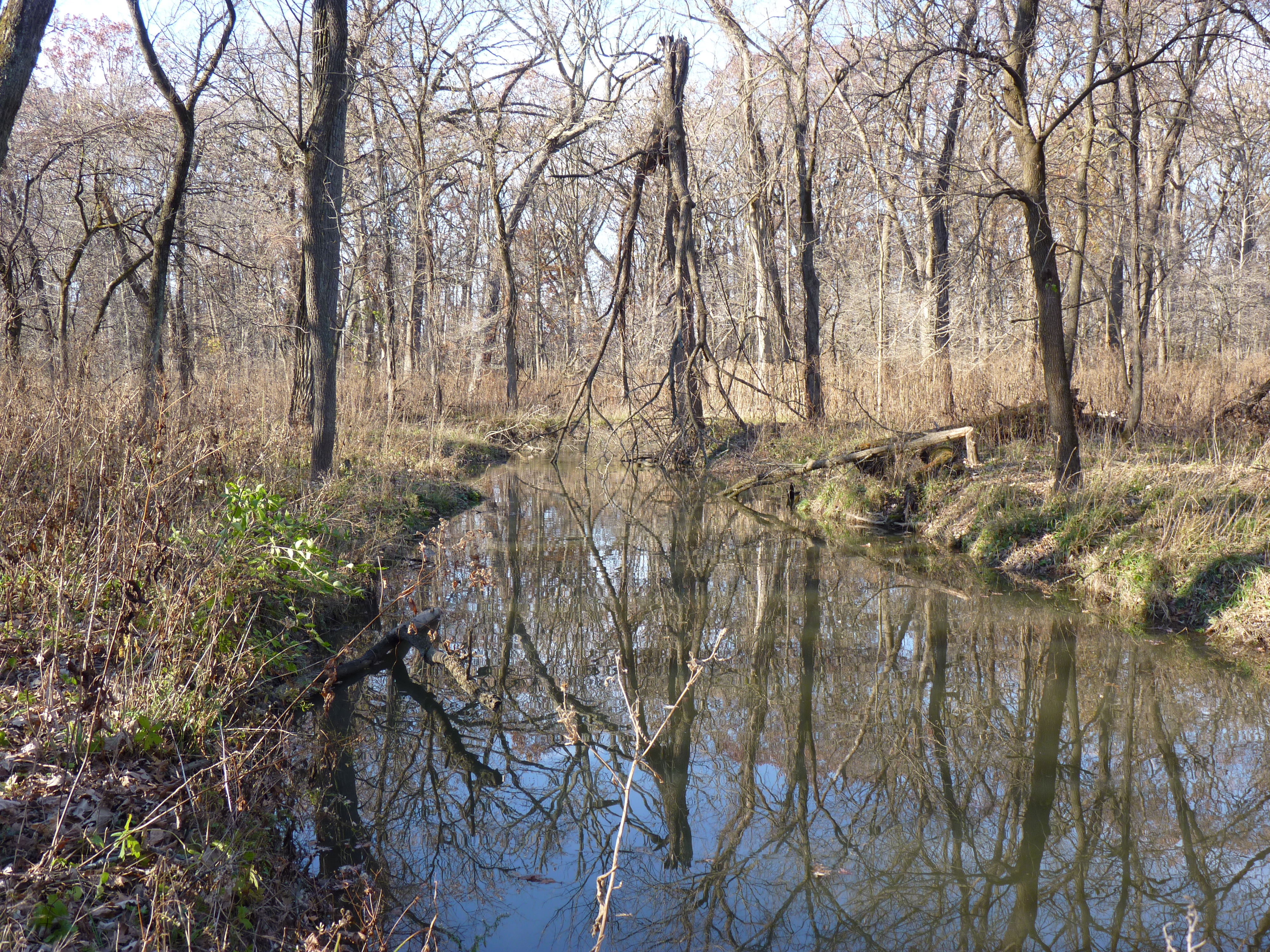
Goodenow Grove Nature Preserve. Photo by Sue Shekut

For my birthday in November, my boyfriend took me to a lovely gentle hike at Goodenow Grove near the  Plum Creek Forest Preserve in Crete township. Now that the first snow has fallen, it’s a great time to bundle up yourself and your kids if you have kids) and head to Plum Creek for a cold hike or a sledding adventure!  Plus Creek has a fantastic nature preserve complete with stuffed owls, live snakes and a project area for kids to learn about nature and make artwork. The Plum Creek Nature Center is part of Will County Forest Preserves and it looks like Will County has spent their conservation budget well. The trail is well maintained, the sledding hill is large and wide enough for many people to spend the day sledding on and the nature center guides are knowledgeable and friendly. Check out more about the nature center here.

Goodenow Grove has about four miles of hiking trails that crisscross the preserve. The Trail of Thoughts is  a 0.5-mile paved loop, leads around a pond filled with a cattail marsh to a wildlife observation deck.. The Pine Grove Trail, a 1-mile loop with a natural surface, provides you with a scenic overlook from the highest point in the preserve. For info on the Goodenew Grove Nature Preserve or Plum Creek Nature Center link here.

Will County Forest Preserve Winter Activities

Ice Skating
There are ice skating ponds at both Goodenow Grove and Monee Reservoir open to the public when conditions allow. Ice thickness is checked daily and conditions are posted on the website.

Sledding
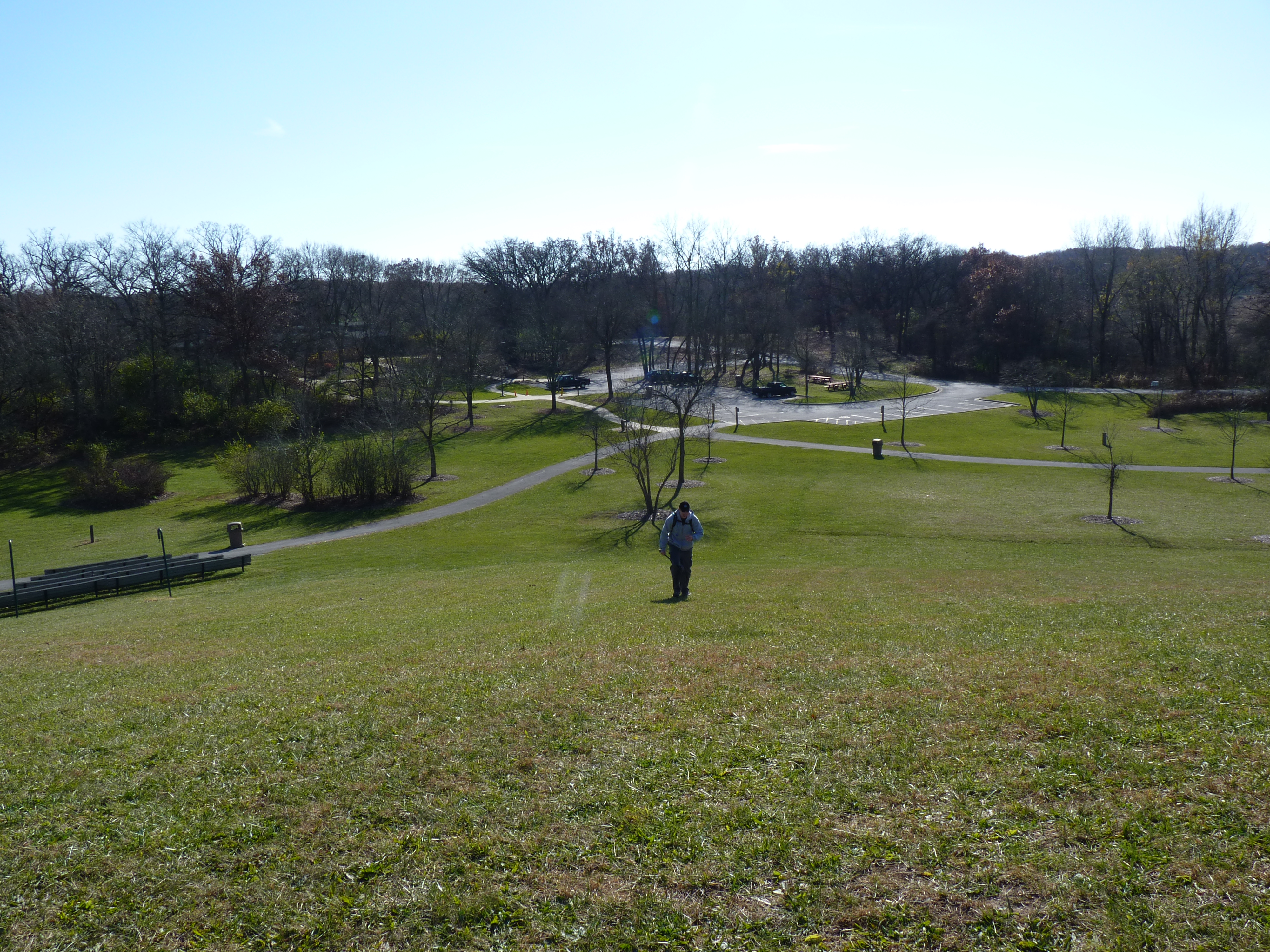
There is a 40-foot high sledding hill at Goodenow Grove. Bring their own plastic sleds (no runners allowed), or rent a tube  at Plum Creek Nature Center. (Nature center is located within Goodenow Grove. Tube rental requires a driver’s license or state ID and $1.00/day/tube fee. after sledding you can warm up inside the Nature Center by the fireplace and enjoy a variety of nature-related exhibits. Goodenow Grove sled hill conditions are posted on the website.

As of 2010 a new new sledding hill is open at Butcher Road in the Forked Creek Greenway in Wilmington. This natural hill is not monitored for sledding conditions.

Snowshoeing
Enjoy snowshoeing  the winter trails in the Monee Reservoir’s 2.5-mile trail. You can bring your own or rent snowshoes at the Monee Reservoir concessions building. Then warm up by a wood-burning stove after your trek.

Cross-Country Skiing
Bring your cross country skills to Monee Reservoir, Goodenow Grove, and many other preserves to enjoy the quiet of nature in the winter and burn a lot of calories tredging along the trails..

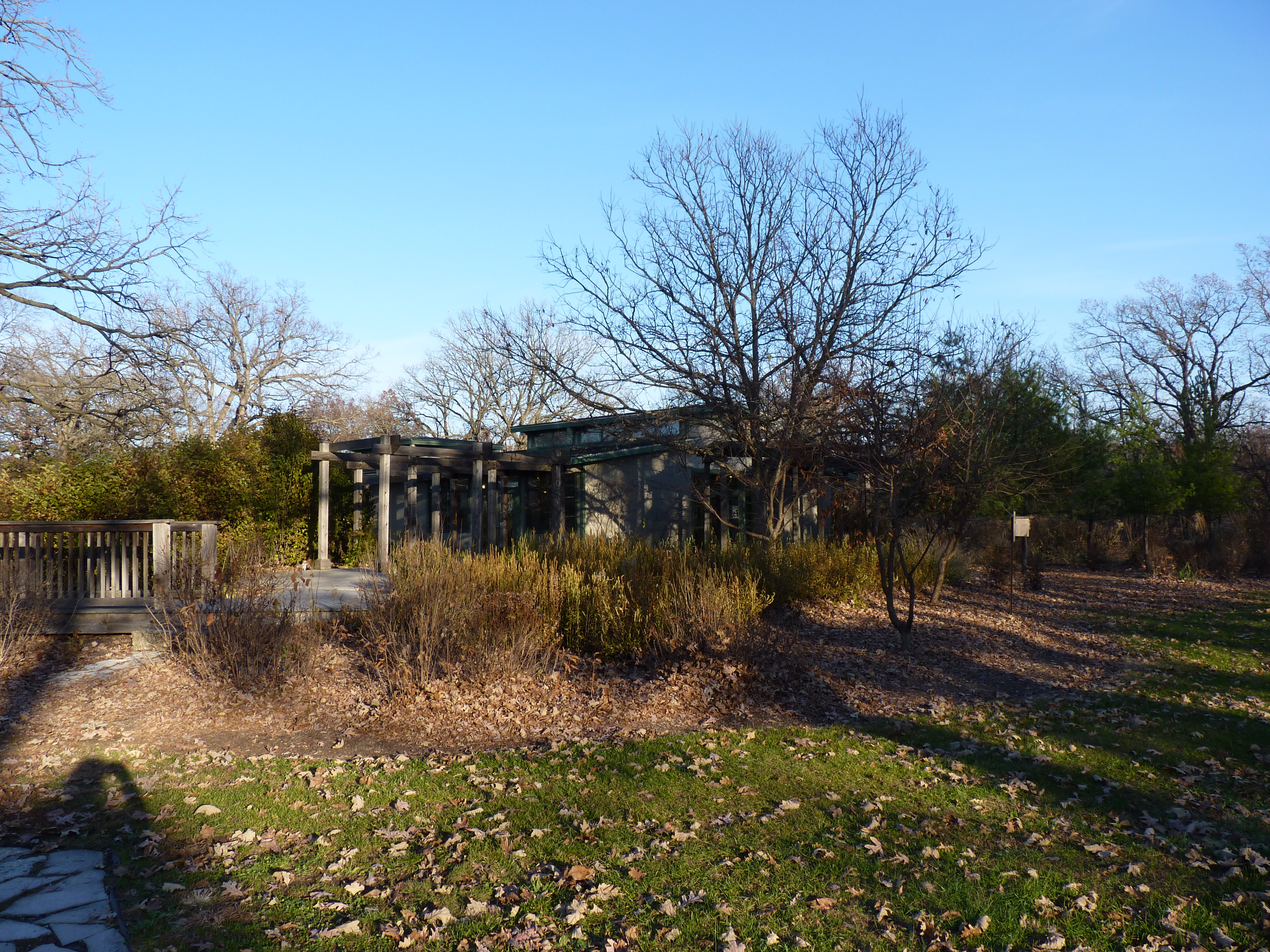
Our Fall Hike Pics November, 2010 of Goodenew Grove and Plum Creek Nature Center

Plum Creek Nature Center. Photo by Sue Shekut

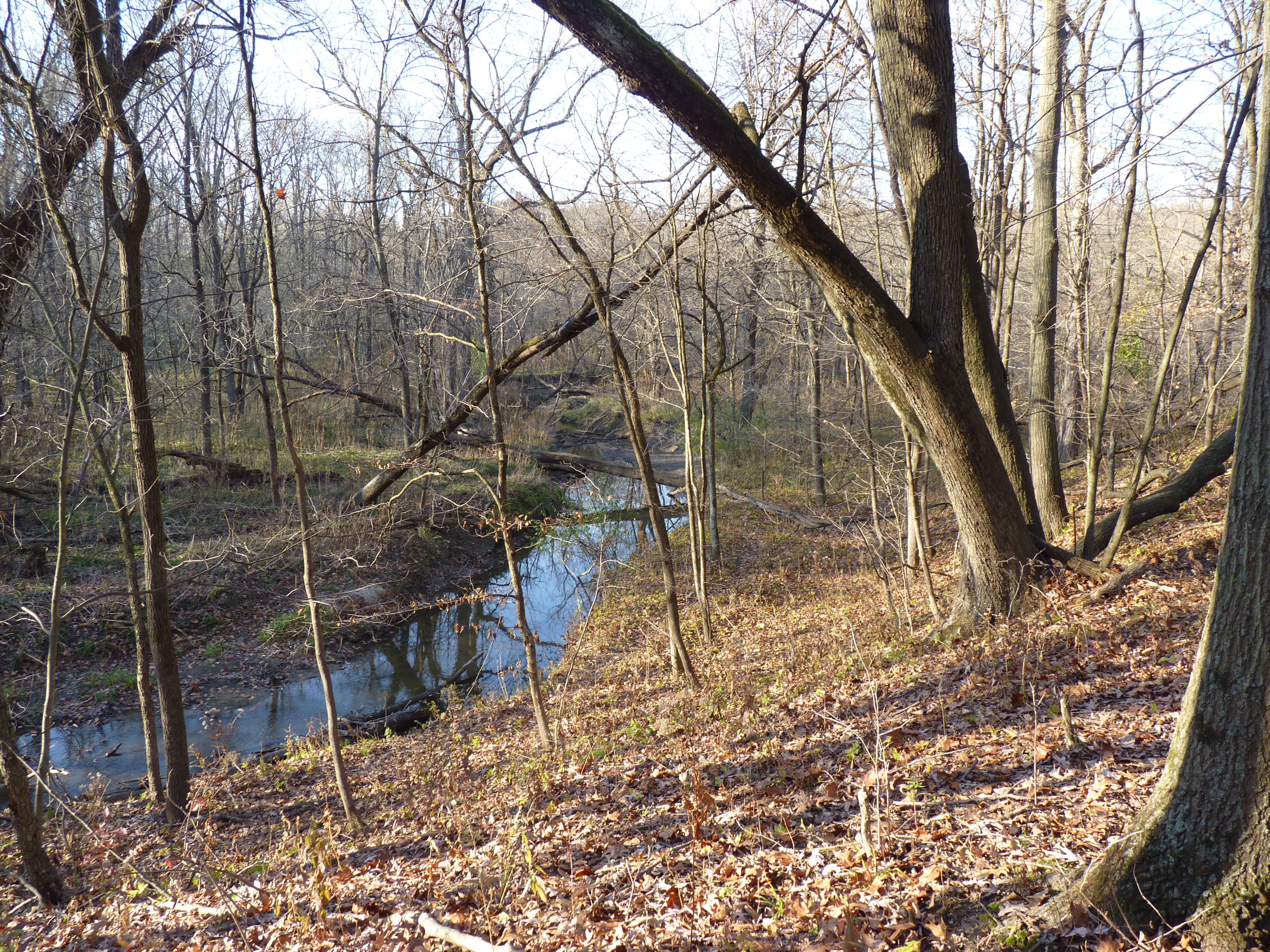
Trails at the Goodenew Grove Nature Preserve are well mapped and well marked.

Hiking Trails at Goodenow Grove. Photo by Sue Shekut

It’s difficult to get a perspective of how high the sledding hill is from the photo. But is’ a decent sized hill, high and wide enough for sledding.

View of the Sledding Hill from the Top at Goodenow Grove. Photo by Sue Shekut

The Hiking/Snowshoeing Path Sneaks Around a creek

Goodenow Grove Nature Preserve. Photo by Sue Shekut

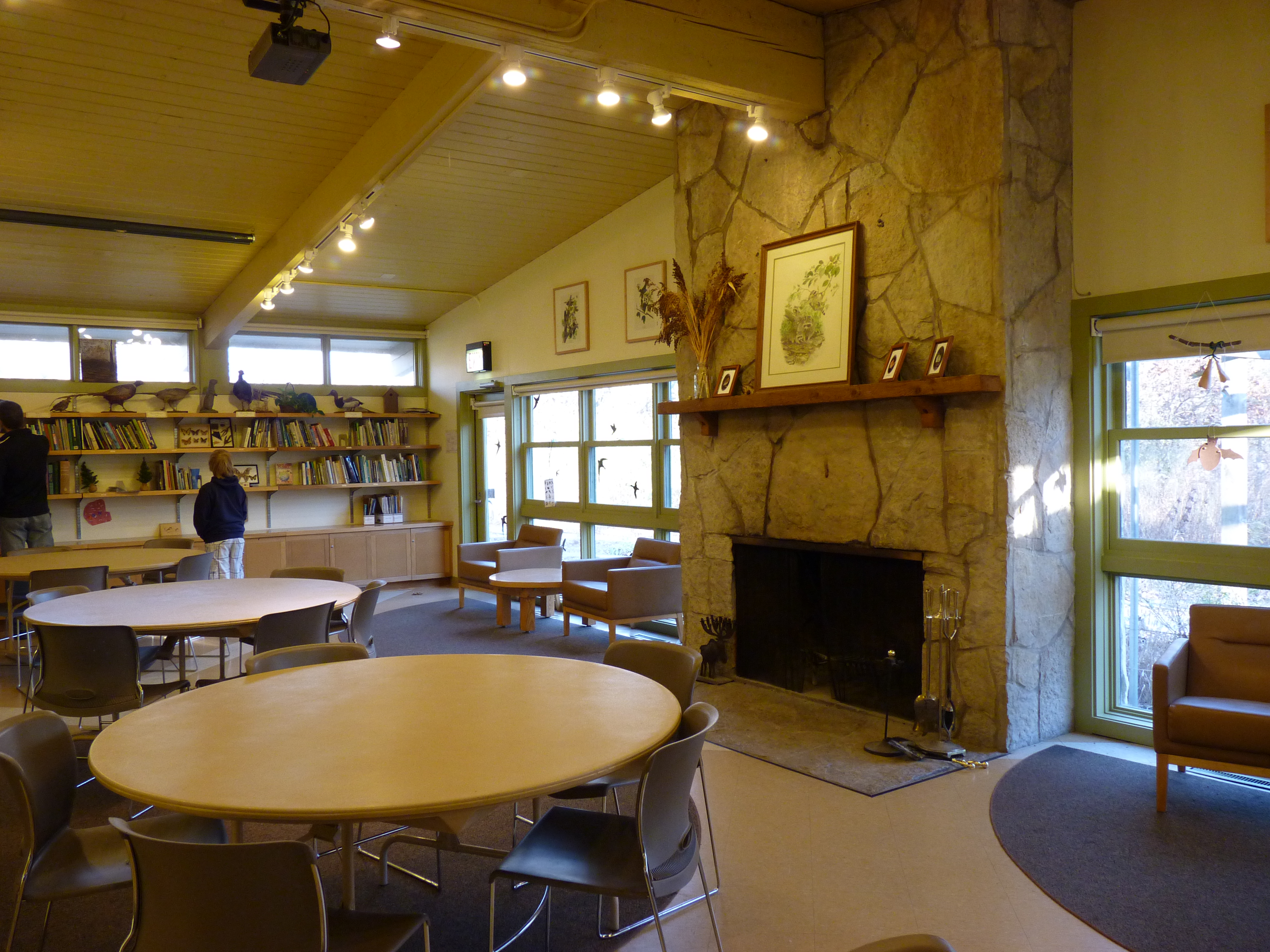
The nature center at Plum Creek is top notch!

Inside Plum Creek Nature Center. Photo by Sue Shekut

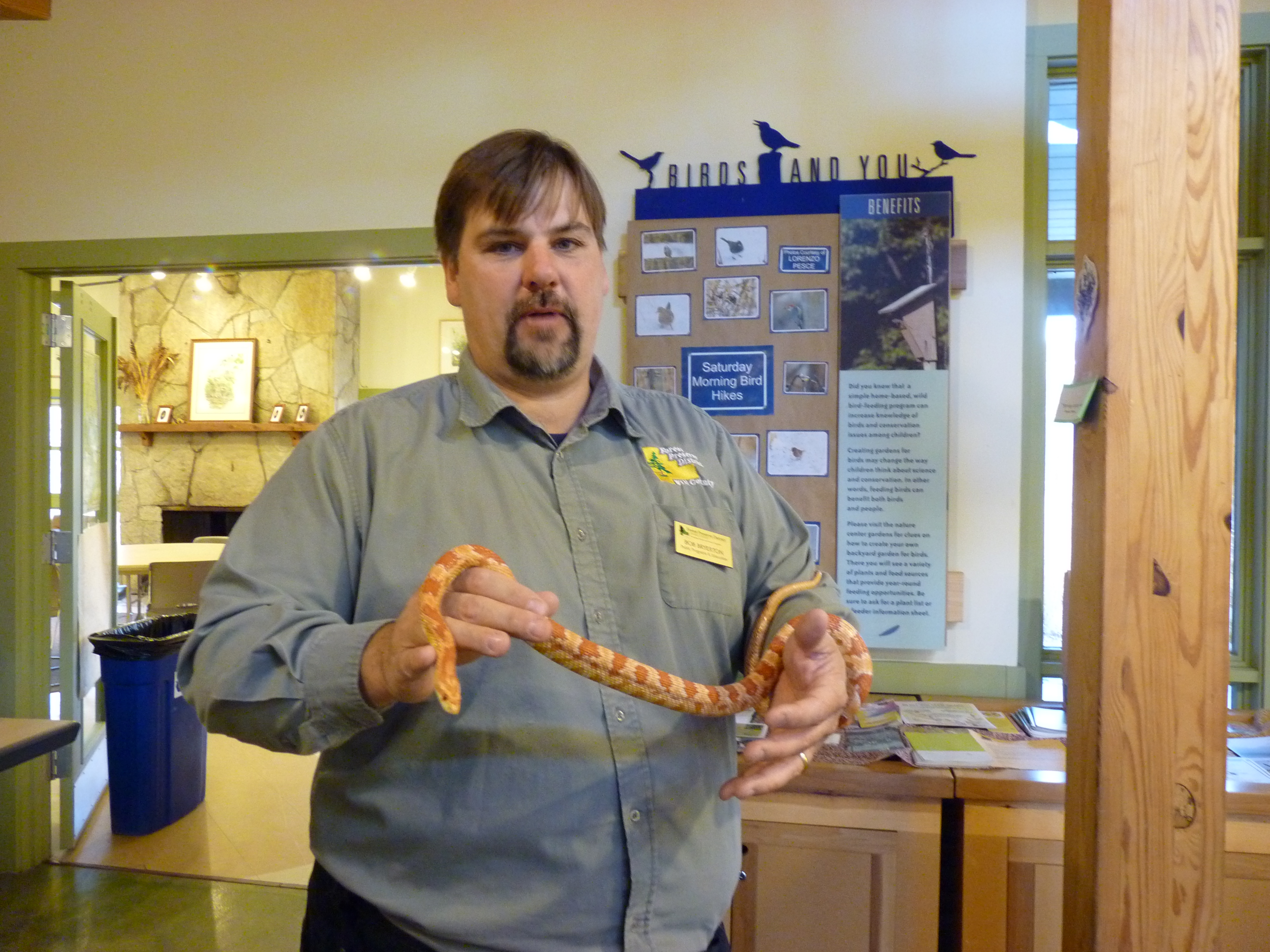
Snakes are one of the many animals kids can meet at the Plum Creek Nature Center. The Guide holds a gentle snake and let me pet it. Kids can too!

Plum Creek Nature Guide Showing off gentle snake. Photo by Sue Shekut

You know a forest preserve is a place to see and be seen when the rap community deems it a good place to shoot a video!

A Young Rap Artist Shooting a video on Goodenow Grove sledding hill! Photo by Sue Shekut

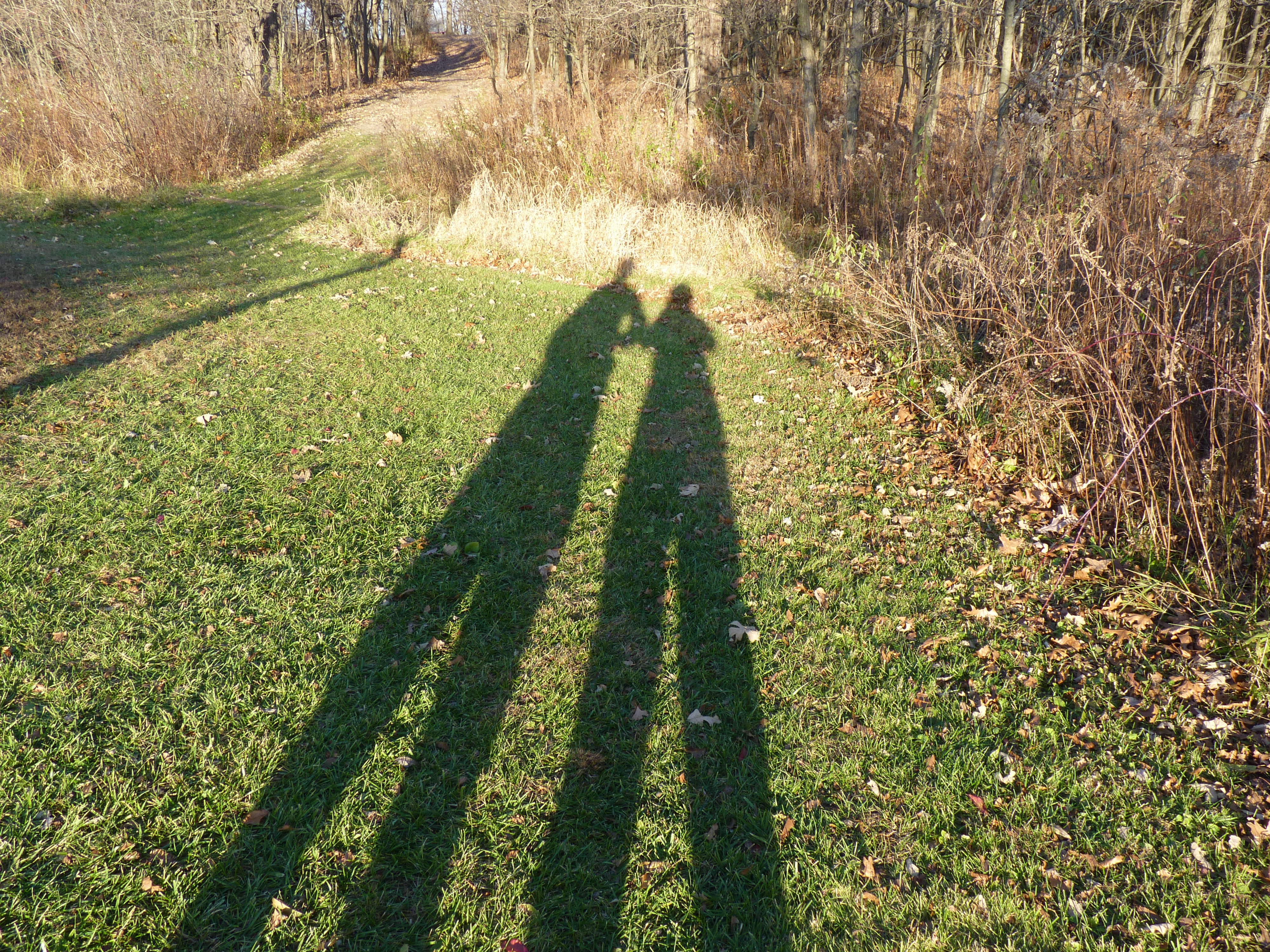
My boyfriend and I prefer to let our shadows leave our mark, instead of littering or damaging nature preserve property on our hike.

Goodenow Grove Forest Presrve in the Shadows! Photo by Sue Shekut

Enhanced by Zemanta

Read Full Post »


The Artculating Easel in use with an iPad


By Sue Shekut, Owner, Working Well Massage, Licensed Massage Therapist, Certified Wellness Coach, ACSM Personal Trainer

This past weekend I did what I tell other people not to do. I spent the bulk of the weekend at my desk and computer, studying, writing a paper and reading  a textbook. In all, I likely logged 20 hours sitting in my chair, typing, reading and researching. I did use my Port-A-Book to hold my textbook but even with good ergonomics, sitting for that long take sits toll. The result: I got a lot of work done, but I also felt exhausted, my back and neck hurt and I felt my immune system wearing out. I missed my weekly, long forest preserve hike and overall, I missed my weekend. I don’t do this often and I don’t advise spending the weekend working or computing, especially if that is what you do all week at work.

Now research shows that you do on your weekend can effect how well you feel and how productive you are during your workweek.  A study conducted by German researchers on emergency medical service (EMS) workers showed that weekend time spent socializing with friends and family tended to reduce workers’ burnout and increase their general well-being. Kind of a no brainer, don’t you think?  But  many people who work long hours during the week in office jobs that come home to a weekend of more work done in front of their computers. Why do we work so hard? For some, it’s a matter of managers giving workers too many tasks to complete in too little time. But if your manager is one of those people who doesn’t believe you should have time off from work on the weekend, you may want to share the results of this study with him or her. AND, if you are the one that drives yourself to work during the weekend, you may want to read more about this study yourself. And then, give yourself some time off! You will be glad you did.

Researchers at the Technical University of Braunschweig studied the effect of nonwork hassles, time spent in social activity and time spent reflecting positively about work on 87 EMS workers. Nonwork hassles were defined as conflicts with family members or spouse, car trouble, excessive housework  or similar irritation. Social activity was defined as spending time with people one enjoys and positive reflection about work was defined as thinking about the benefits or successes of one’s work. It appears it was easier to study EMS workers (paramedics in U.S. terminology) because they would have a difficult time “bringing their work home with them.” Thus,  the weekend experience for an EMS worker would not include work tasks. (Contrast this with U.S. office workers than can do their work anywhere a Blackberry, laptop or iPhone can be powered up.)

Non work hassles correlated with poor general well-being post-weekend and lower performance in daily work tasks post-weekend. So fighting with your spouse tends to make you feel less healthy and perform more poorly at work the next week). Workers engaged in more social activity on the weekend reported higher levels of general health and well-being as well as better task performance post-weekend.  A high amount of non work hassles tended to associate with lower pursuit of learning post weekend.  Higher positive work reflection on the weekend led to higher pursuit of learning post weekend. Exhaustion was significantly related to task performance (those more exhausted did less well on task performance). The study recommended that workers try to spend more time in positive social activities during weekends and free time.  Employers and organizations could use this study as support for considering reductions in workload and allowing for breaks or comp time after periods of intensive work activity.

I, for one, will be taking time off from the computer and my textbooks for next few days for Thanksgiving activities with my family and friends. And I will be giving my back and neck a much-needed break. And maybe even get  some hiking or swimming in!

Happy Thanksgiving to all of you!

Source:

Fritz, C., and Sonnentag, S. (2005) Recovery, Health, and Job Performance: Effects of Weekend Experiences. Journal of Occupational Health Psychology, 10(3), 187-199

Enhanced by Zemanta

Read Full Post »

By Sue Shekut, Owner, Working Well Massage, Licensed Massage Therapist, Certified Wellness Coach, ACSM Personal Trainer
Recently I heard about a great blog that provides posts about the latest research on Industrial/Organizational science, The IOATWORK blog.

Human Resource professionals, as well as those of you interested in reducing stress in your workplace, might learn a lot from articles in this blog. As a massage therapist and wellness coach, I see the effects of workplace stress first-hand. And I can do something about relieving the effects of stress for my clients. But I can’t eliminate the causes of stress. That’s the job of management and Industrial/Organizational psychologists. If you want to know more about what’s going on in the field of research, what’s been shown to work and what does not as far as reducing workplace stress, providing better work/life balance for employees or how to keep yourself from burning out, you would do well to check out this blog! (And of course there are a lot of other great non-wellness related posts in the blog as well.

Who Created the IOATWORK blog and Who May Benefit From Reading It?

The blog editor, Alison Mallard, Ph.D. explains why the blog was created and the audience they intend to serve:

Many consider Industrial/Organizational psychology as the science behind Human Resources, Organizational Development, Organizational Effectiveness, and Organizational Behavior.

I/O AT WORK helps to bridge the gap between I/O research and its application in the HR world (and beyond) by making it easier for practitioners to access and stay on top of recent published research.

So, instead of spending hours scanning multiple journals, we do much of the work for you.  With this site and a few minutes a week, you can stay informed about new research by scrolling through the new reviews posted each week.  Or you can search reviews by topic or journal.

Wellness-related  Blog Posts from IOATWORK blog (links included)

Your Lunchbox is Your Friend

Keeping it Safe for Daylight Saving Time

Heavy Workloads: Much More Than Just a Nuisance

If You Want to Prevent Exhaustion … Don’t Worry, Be Happy!

With Age Comes Wisdom…And Better Job Attitudes

Managing Grief in the Workplace

Oh give me a BREAK! (Why breaks are important)

When Helping Hurts: The Dark Side of Organizational Citizenship Behaviors

When Mental Detachment from Work is a Must

Play Hard, Rest Hard and Maximize Your Performance

The Organizational Benefits of Work Life Balance

Home Sweet Home…At Work?

Work-Family Conflict: White vs Blue Collar

Related articles

Enhanced by Zemanta

Read Full Post »

By Sue Shekut, Owner, Working Well Massage, Licensed Massage Therapist, Certified Wellness Coach, ACSM Personal Trainer

While I was looking up hiking info, I stumbled upon  Chicago Wilderness Magazine. Although it appears to have stopped publication, there are many great articles and links about Chicago’s wilderness.   Link here.

Info from their website:

The Chicago Wilderness Corporate Council

The Corporate Council brings the resources, skills, capabilities, and influence of its members to foster widespread awareness of the region’s biodiversity and to develop broad-based support for its protection, restoration, and stewardship. Learn more

What is Chicago Wilderness?

The Chicago Wilderness Region

Embedded in one of North America’s largest metropolitan regions and stretching from southeastern Wisconsin, through northeastern Illinois, into northwestern Indiana and southwestern Michigan is a network of natural areas that includes nearly 370,000 acres of protected lands and waters. These natural areas are Chicago’s wilderness, and they are home to a wide diversity of life. Thousands of native plant and animal species live here among the more than nine million people who also call the region home.

The Chicago Wilderness Alliance

Chicago Wilderness is a regional alliance that connects people and nature. We are more than 250 organizations that work together to restore local nature and improve the quality of life for all who live here, by protecting the lands and waters on which we all depend. Our four key initiatives—to restore the health of local nature, green infrastructure, combat climate change, and leave no child inside—reflect our commitment to using science and emerging knowledge, as well as a collaborative approach to conservation, to benefit all the region’s residents.

The members of Chicago Wilderness include local, state and federal agencies, large conservation organizations, cultural and education institutions, volunteer groups, municipalities, corporations, and faith-based groups. chicagowilderness.org.

The Back Issues page lists all the archives issues with a list of the article topics. Link here. Some of the back issues are listed/shown below.

Summer 2009

Summer 2009
Reclaiming the Outdoors — Freewheelin’ in Deer Grove — Burnham’s Vision 100 Years Later — A Passion for Saving Paradise — Saving the Flint Creek Watershed

Spring 2009

Spring 2009
Discovering the Calumet — Calumet’s Wilderness Heritage — Tales of Restoration — Life, Liberty, and the Pursuit of Bluegills — The Calumet Region

Winter 2009

Winter 2009
Our Climate Challenge — Rare, Endangered, and Saved on Flickr — The Heart of Barkness — The Secret Garden

Fall 2008

Fall 2008
A New Day for Old Predators — Middlefork BioBlitz Revealed — The North Shore Ravines — Surveying the Survey — The parable of a weed-fighter — Haunted fungi.

Enhanced by Zemanta

Read Full Post »

By Sue Shekut, Owner, Working Well Massage, Licensed Massage Therapist, Certified Wellness Coach, ACSM Personal Trainer

People seek massages for a variety of reasons: Stress relief, reducing muscle tension, improving recovery from injury, to enhance athletic performance, and to just pain feel good (versus feel bad or being in pain and tension). If you’ve noticed lately, a new study that links social anxiety to increased inflammatory response has been all over the Internet. So what does this have to do with massage therapy? Plenty.

First off, massage therapy is one of the main complimentary health care approaches for stress relief. Research has shown that massage therapy lowers blood pressure, elevates levels of serotonin and dopamine and reduces levels of cortisol. This new study, conducted by George Slavich, a postdoctoral fellow at the UCLA Cousins Center for Psychoneuroimmunology, and Shelley Taylor, a UCLA professor of psychology,  found that people who have a greater neural sensitivity to social rejection (social anxiety) also have greater increases in inflammatory activity in response to social stress.

A temporary increases in inflammatory response may have been useful for our ancestors when they were confronting a physical threat which may have been triggered by a social threat from a neighboring tribe or another tribe member jockeying for position. Inflammation may be triggered by anticipation of a physical injury.  Proteins that regulate the immune system called, inflammatory cytokines  are released in response to impending (or actual) physical assault because they accelerate wound-healing and reduce the risk of infection. However, chronic inflammation can increase the risk of asthma, rheumatoid arthritis, cardiovascular disease, certain types of cancer and depression, according to the UCLA study.


George Slavich, UCLA


Study author George Slavich said that how people react and interpret social situations has an important effect on how people trigger the inflammatory response. For example, some people may view being the enter of attention (such as giving a speech or attending a party), as a welcome challenge. Others may see the same event as extremely uncomfortable or even threatening.

“This is further evidence of how closely our mind and body are connected,” Slavich said according to a UCLA press release about the study. “We have known for a long time that social stress can ‘get under the skin’ to increase risk for disease, but it’s been unclear exactly how these effects occur. To our knowledge, this study is the first to identify the neurocognitive pathways that might be involved in inflammatory responses to acute social stress.”

Potentially anxiety producing situations like job interviews, public speaking, large parties, even award ceremonies can lead some people to feel extreme anxiety.

How can massage therapy help? One way would be to hire your own personal massage therapist to travel around with you and give you a chair massage any time you feel social anxiety. Bob Hope did it. That it, he had his own personal massage therapist for years that gave him a massage every day. I’m not sure that daily massage was to improve Bob’s social anxiety, because I don’t know if he had any! But he did get daily massage for many years. And Bob lived to be 100 years old.

For most of us a daily professional massage not really practical. But how about scheduling a massage the day before or a few hours before or after your big event. The massage may help relax you and flood your body with feel good chemicals. It’s difficult to feel tense and stressed while feeling relaxed at the same time!

Other strategies for coping with social anxiety include working with a cognitive behavioral therapist to help you better manage your thoughts that make your responses to social situations less stressful.

“Although the issue is complex, one solution is to not treat negative thoughts as facts,” Slavich said. “If you think you’re being socially rejected, ask yourself, what’s the evidence? If there is no evidence, then revise your belief. If you were right, then make sure you’re not catastrophizing or making the worst out of the situation.”

The study appears in the current online edition of the journal Proceedings of the National Academy of Sciences.

Enhanced by Zemanta

Read Full Post »

« Newer Posts - Older Posts »