Feeds:
Posts
Comments

Archive for the ‘Massage Therapy’ Category

Shovelling Snow
Image by gautamnguitar via Flickr

By Sue Shekut, L.M.T., ACSM Personal Trainer, Certified Wellness Coach, Owner, Working Well Massage

Shopping more than normal? Traveling to see family and friends? Taking a ski vacation? Or just shoveling snow, putting up lights and surviving the extra traffic this time of year brings? All of these activities may be out of your normal routine and may put extra stress on you and your back.  Read the tips excerpted from a blogpost below from Josie and Chris at Ann Arbor Balance Massage Therapy to safeguard your back and muscles as much as possible to stay healthy this holiday season!

Holiday Back Pain–Find Balance and Stay Pain Free

Back pain around the holidays can be especially debilitating as we all try to do more for everyone but ourselves. Taking a moment ahead of time can really help you stay on your feet this holiday season. Here are some helpful tips to pay attention to your back, taken from Dr. Alanna Levine and Dr. Marcus – primary care physicians.

Move Your Body
Long trips through the airport or in a car involve sitting for a long period of time which is very hard on muscles. “muscles were made to move” says Dr. Marcus. Take the time to get a holiday tune up massage. A great self care trick is to bring along a tennis ball and sit on it. Direct pressure helps relieve muscle tension, keeps muscles from getting tight through movement and keeps blood flowing through the legs reducing risk for blood clots.

Travel With Your Body In Balance
When traveling take the time to pack light and use a roller bag or two. By dividing your belongings into two bags instead of one you can carry the weight in a more balanced way. Pack a tennis ball (see above tip), move during the flight and take regular breaks while driving.

Lift Smart–Carry Light-Move Trips Means More Movement
Many small bags are better than one big one even when shopping. As you approach holiday shopping make frequent trips to the car to give your back a break. When carrying, balance the weight load. Lift smart -Bend your knees and hips, not your back, and try to prevent bending and twisting at the same time and keep the weight close to your body.

Warm Up When You Wake Up
For many of us sleeping in a foreign bed can wreak havoc on the back – Take the time to warm up in the morning before standing up. Gentle movement (yes, you should wiggle around!) while still laying down gives a chance for hard working muscles to be ready to hold you up when you stand.

Buddy Up For Tall Tasks
Decorating involves a long time on a ladder and a a lot of reaching – use a buddy to hand up to you to save your back. Any type of reaching whether it be down to clean or across as you cook is a hard on your back making very few muscles work very hard. Which is always a recipe for disaster over time.

Most importantly – Take Good Care of Yourself!
Pay attention to your body and how it feels. Drink plenty of water as dehydration can make muscles ache.

Although massage can help to relieve severe back pain once you hurt yourself, it will also keep you out of pain when used on a regular basis. Muscle tension and imbalance do not happen overnight they build up slowly with overuse and poor posture. Taking care to work out trigger points, or knots in muscles stops this build up. Just like getting your teeth cleaned on a regular basis has long lasting results so does regular massage help with muscle imbalance and strain.

Read entire blogpost from Josie and Chris at Ann Arbor Balance Massage Therapy here.

Link to Interview on CBS News Early Show Interview with Dr. Alanna Levine here.

Reblog this post [with Zemanta]

Read Full Post »

By Sue Shekut, L.M.T. ACSM P.T., Certified Wellness Coach

Years ago a client gave me a Crabtree & Evelyn hand cream as  a holiday gift. I tried the cream and could not believe how well it lubricated my hands–AND did not leave my hands greasy. I went to the Crabtree & Evelyn store to get more and find out what this amazing ingredient was. The salesclerk told me that the amazing ingredient in some of their creams was: shea butter.

However, I was not a big fan of the smell of the Crabtree cream (or it’s price). I have since found many other sweeter smelling creams and lotions with shea butter. For massage, shea butter is a great cream because it gives just enough lubrication for massage therapist’s hands to glide for effluerage strokes, but just enough friction for deep tissue work.

Now I find that shea butter has another benefit that would not immediately come to mind: As a nasal decongestant! I am the first to admit, some wellness people tend to tout the benefits of products far beyond what is realistic (not everything cures cancer, prevents hair loss or keeps your skin looking young forever). I am fairly skeptical about product clams from product manufacturers. But I looked into this claim and it is backed up by clinical research.

Put Butter in My Nose? C’mon, You Must Be Joking

According to a study published in the British Journal of Clinical Pharmacology, shea butter does relieve nasal decongestion, actually better than conventional nasal drops! Now, it’s just one study. But my experience of shea butter is that it’s pretty amazing butter and lubricating dry nasal passages when I have a stuffy nose makes sense. But, don’t just take my word for it.. Read the study here.

So What is Shea Butter?

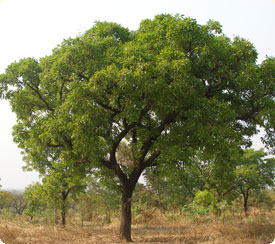
Shea tree

Allafia is a company that sells unrefined Shea Butter. According to their website, “Shea Butter is the oil from the nuts of wild Shea trees (Vitellaria paradoxa) scattered throughout the wooded savanna of West and Central Africa. Shea Butter has been used for centuries in Africa as a decongestant, an anti-inflammatory for sprains and arthritis, healing salve, lotion for hair and skin care, and cooking oil. However, the protective and emollient properties of Shea Butter are most valued for skin care.”

What Does it Matter if It’s Refined or Unrefined Shea Butter?

According to Alaffia: Most Shea Butter available to the general public outside West Africa is white and odorless: in other words, it has been “refined” to remove the natural scent and color of natural Shea Butter. In the process, the majority of the effective agents are also removed.

In addition, refined Shea Butter has usually been extracted from the shea kernels with hexane or other petroleum solvents. The extracted oil is boiled to drive off the toxic solvents, and then refined, bleached, and deodorized, which involves heating it to over 400 degrees F and the use of harsh chemicals, such as sodium hydroxide.

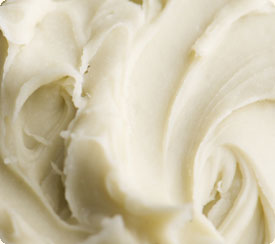
Shea butter itself!

Shea Butter extracted in this manner still contains some undesirable solvent residues, and its healing values are significantly reduced. Antioxidants or preservatives such as BHA (butylated hydroxyanisole) or BHT (butylated hydroxytoluene) may be added as well. The end result is an odorless, white butter that may be aesthetically appealing, but lacks the true moisturizing, healing, and nutritive properties of true traditional Shea Butter.

Refined Shea Butter is often hard and grainy, not smooth and creamy like pure, unrefined Shea Butter. Refined Shea Butter  has an extended shelf life, a white, uniform color, no odor, and greatly reduced therapeutic benefits from the Shea Butter. All of the Alaffia butters are handcrafted and unrefined so they retain their natural healing and moisturizing properties.

Where Do I get Some Unrefined Shea Butter  in the U.S.?

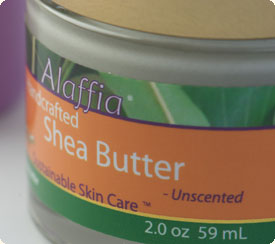
Whole Foods Market carries Allafia products as well as many other shea butter based creams and lotions. I like Affalia because they do not refine their shea butter and their pricing is reasonable. (A little jar of shea butter last a long time!)   Affalia is also a fair trade company.

To purchase jars of Affalia Shea Butter online, click here. To purchase Alaffia products at Whole Foods, stop by a local store or click here.

What is Fair Trade?

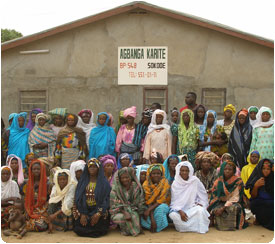
Fair Trade Enpowers Whole Communities

Fair trade means paying a fair price or wage in the local context, providing equal employment opportunities, engaging in environmental sustainable practices, providing healthy and safe working conditions, being open to public accountability, and reducing the number of middlemen between producers and consumers. Fair trade is environmentally, economically and culturally sustainable and gives local communities the opportunity to self empower.

Buying products from producers that are fair trade certified means you can feel good about the product you are buying. A fair trade product means the actual people toiling away in the fields of far off Africa are getting paid a fair wage for their work and are able to support themselves and their families from their own labor.

The founder of Aliffa, Olowo-n’djo Tchala, grew up in poverty in Togo. He dedicated his life to empowering communities in Africa. He chooses to promote indigenous African natural resources that are culturally, spiritually, economically and ecologically sustainable. Traditionally handcrafted shea butter fits these criteria. It is a renewable resource of African origin; shea trees are wild, requiring no chemical fertilizers or pesticides. Furthermore, it is an integral part of many savanna communities and, consequently, there is a wealth of local and traditional knowledge of making shea butter. The fair trade of our handcrafted shea butter and shea butter skin care products is bringing income to and empowering our communities in Togo, while making indigenous, sustainable and effective skin care available to the global community.

Aliffia Shea Butter

Give Gifts Friend and Family Will Love And You Will Feel Good Giving

To give some great holiday gifts this year, why not give those you love a product that not only helps their skin feel good but in this cold and flu season, may help them breathe better if they get congested?

Does Working Well Massage Get Anything From Promoting Alaffia or Shea Butter Products?

Nope. No money, no free stuff, no kickbacks. What we do get is the satisfaction that we are telling our clients and readers about great products and helping in some small way to promote fair trade in a far off country. And that is worth more than a few dollars!

Read Full Post »

Injured soldiers find relief through massage and other “alternative therapies.”

By Michael Devitt from Massage Today magazine

Wars have been fought since time immemorial. From simple sticks and rocks to guided missiles and uranium-tipped artillery shells, the methods civilized nations have used to annihilate one another have changed dramatically over the centuries.

Despite the advances in modern warfare, the types and degrees of injury suffered in combat have remained frighteningly constant. Surprisingly, research suggests a major cause of attrition (a reduction in number or strength) among military personnel in recent wars has resulted not from injuries incurred on the battlefield, but, rather to more typical conditions such as accidents and musculoskeletal complaints.

To determine what types of painful conditions affect soldiers during wartime, researchers in the United States and Germany examined 162 soldiers engaged in Operation Iraqi Freedom who were evacuated to pain treatment centers outside the theater of combat. Results of the study, published in the journal of Anesthesia & Analgesia, show that many of the injuries suffered by military personnel during conflict are indeed similar to those sustained by people in the civilian sector. Even more important, the use of alternative therapies in the treatment of pain among injured soldiers appears to be growing, with massage the most common alternative therapy used for pain relief.

All of the soldiers included in the study had been injured during OIF between March 2003 and June 2004, and were medically evacuated to one of two treatment facilities: Walter Reed Army Medical Center in Bethesda, Md., and Landstuhl Regional Army Medical Center in Landstuhl, Germany. Most of the injured personnel received “consultations for treatment recommendations to be implemented at military treatment facilities located at the patient’s home duty station.”

Analysis of the complaints showed most soldiers suffered injuries comparable to those that would have been sustained by similarly aged civilians. Not surprisingly, more than half of the pain complaints reported by the soldiers (53 percent) involved the low back. The second most common complaint was “nonradicular extremety pain,” which accounted for 23 percent of the presenting complaints.

The most common diagnosis of injury was lumbar herniated disk which, according to the researchers,” accounted for almost one-quarter of all pain disorders.” Postsurgical pain was the second most common diagnosis, and was experienced by 14 percent of all patients.

More than three dozen treatment modalities were utilized for pain relief; on average, each soldier was treated with 3.5 different therapies. Not surprisingly, drugs were the most popular form of pain relief, beginning with nonsteroidal anti-inflammatory drugs (NSAIDs), which were given to 91 service members. Seventy-nine patients received opiods; 66 patients received some kind of neuropathic pain medication.

Drugs and surgical procedures weren’t the only treatment options available, however. According to the study authors, 28 soldiers (17 percent of the study population) were treated with “some type of alternative therapy.” The most common alternative therapy offered was therapeutic massage, which was performed on 13 soldiers, and administered more frequently than chiropractic manipulation, acupuncture and glucosamine/chondroitin supplements combined. More than half of these patients treated with alternative therapies (15) were diagnosed with postsurgical pain or lumbar herniated disk before receiving care. In fact, more than one-third of all military personnel diagnosed with postsurgical pain were treated with massage.

The study pointed out the number of injuries suffered during combat was significantly less than the number of non-combat injuries; in fact, only 17 percent of the patients stated they were injured during battle.

Such nonbattle-related injuries, or NBIs, can take a serious toll on overall troop strength in modern warfare. According to the authors, “Among the 21,655 soldiers admitted to army hospitals in Southwest Asia during the Persian Gulf War, acute NBI comprised 25 percent of all hospitalizations, with musculoskeletal conditions ranking second at 13 percent.”

Presenting Pain Complaints in Soldiers Injured in Operation Iraqi Freedom*
Pain Presentation (n=162) Frequency Percentage
Lumbar radicular pain 49 30.2%
Axial low back pain 37 22.8%
Nonradicular leg pain 24 14.8%
Nonradicular arm pain 16 9.9%
Groin pain 15 9.3%
Thoracic pain 10 6.2%
Neck pain 10 6.2%
Abdominal pain 8 4.9%
Cervical radicular pain 6 3.7%
Headache 6 3.7%
Thoracic radicular pain 2 1.2%
Polyarthralgia 1 0.6%
Facial pain 1 0.6%
* The percentage of pain complaints is based on the number of patients (162), not the number of presenting symptoms (185).

Taking these numbers into account, this would mean that more than 2,800 soldiers were hospitalized due to musculoskeletal complaints during the Gulf War. Given the increasing number of low back and other musculoskeletal injuries that seem to be the norm in modern warfare, and given that these conditions often are seen by massage therapists in the civilian sector, it would appear that massage therapists are just as qualified as other health care providers in helping to ease the pain and suffering of injured military personnel.

For more information, go to the article here.

Resources

  1. Cohen SP, Griffith S, Larkin TM, Villena F, Larkin R. Presentation, diagnoses, mechanisms of injury, and treatment of soldiers injured in Operation Iraqi Freedom: An epidemiological study conducted at two military pain management centers. Anesth Analg 2005;101:1098-1103.
  2. Hoeffler DF, Melton LJ. Changes in the distribution of Navy and Marine Corps casualties from World War I through the Vietnam conflict. Mil Med 1981;146:776-9.
  3. Writer JV, DeFraites RF, Keep LW. Non-battle injury casualties during the Persian Gulf War and other deployments. Am J Prev Med 2000;18:64-70.

Read Full Post »

By Sue Shekut, Owner, Working Well Massage, Licensed Massage Therapist, Certified Wellness Coach, ACSM Personal Trainer

Many Working Well Massage clients travel for business. Aside from cramped airplane seats, long waits in security lines, and walking for miles on concrete terminal floors, air travel requires sitting for long periods, breathing in stale recycled air and can be dehydrating. Where do weary travelers go for relief while waiting for their planes to board? Well, you can go to the airport bar and have a cocktail, beer or cup of Starbucks finest, but keep in mind that alcohol and caffeine are both dehydrating. Health conscious travelers go to an airport massage station, spa, oxygen bar or get a pampering manicure to pass the time and help their bodies adjust to air travel stress. And then they drink plenty of water!

What Services Do Airport Spas Provide? from By Anitra Brown, at About.com

• Chair Massage — The most common service is a seated or chair massage. You sit fully clothed in a special chair that cradles you face while the massage therapist works on your back and shoulders.

And you can get a chair massage for as short as ten or 15 minutes. It is great for working out kinks before they turn into hard knots! These are sometimes available in small “kiosks” right by the gates.

• Oxygen Therapy — You sit in a comfy chair with a two-pronged plastic tube up your nose, usually for 15 minutes, getting oxygen scented with essential oils that help you relax or boost your immune system.

• Other popular services are manicures and pedicures. Facials are more unusual, but sometimes available. A few places offer full salon services — cut, color even highlights.

Massage and Spa Services at U.S. Airports

Here’s a list of some of stress relieving services compiled from articles by Harriet Baskas of USA Today and Anitra Brown of About.com:

• Austin- Bergstrom International Airport Knot Anymore offers chair massages

• Baltimore/Washington International Thurgood Marshall Airport has two Destination Relaxations — one is a chair-massage kiosk on Pier B and the other a full-service store on Pier D that offers table and chair massages, as well as foot and hand rubs.

• Boston Logan International airport
The Jetsetter Mini Spa offers chair and table massages, manicures, pedicures and facials.
Boston’s Logan Airport also has Polished, in Terminal C, just before the security checkpoint at Gates 25-36. Polished offers foot, hand, back, neck and shoulder massages, manicures, pedicures, make-up applications and men’s grooming services.

• Chicago’s O’Hare International Airport has the Backrub Hub, offering neck and back massages in Terminal 3 (by the American and Delta gates). Massages also are offered at the full-service health club at the O’Hare Hilton, accessible via pedestrian tunnels from the terminal.

• Denver International Airport is served by two locations of A Massage Inc. You can get a haircut or massage (chair or table) at the location on Concourse B. The other is in the Main Terminal, on Level 6.

• Detroit Wayne County International Airport-OraOxygen
This airport has an underground passage with a trippy light show and New Age music. If you need more, the OraOxygen Spa by Gate A45 gives oxygen treatments, as well as facials, manicures, pedicures,a and massages, including foot massages and a 90-minute hot-stone massage. You can even take showers.

• Indianapolis International Airport
The post-security Enroute Massage and Spa (formerly Passport Travel Spa) offers manicures and pedicures, chair and table massages, and a new 20-minute, three-technician, three-service treatment (the “3 in 20”) that offers time-pressed travelers a neck and shoulder massage as well as hand and foot treatments — all at the same time.

• John F. Kennedy International Airport- Elemis Travel Spa and XpresSpa
While the Elemis Travel Spa in Terminal 7 offers complimentary massages to British Airways’ top-tier travelers.

XpresSpa in JetBlue’s new Terminal 5 offers passengers will find pay-as-you-go services ranging from head, foot, leg, back and shoulder massages to manicures, pedicures and facials.

• Las Vegas-McCarran International Airport
Oxygen treatments are also available at here at three Oxygen Bar locations.

• Miami International airport
The Jetsetter Mini Spa offers chair and table massages, manicures, pedicures and facials. The Miami branch also has a sleep pod for napping.

• Nashville-The Massage Bar
Heat therapy, foot massages and a variety of seated massage services.

• Newark-D-Parture Spa
d_parture spa offers chair massage, spa pedicures combines with massage, and cuts, color and manicures. d_parture spa has two Newark airport locations: Terminal C at Gate 92 and Terminal B across from the Duty Free shop. In addition, The Terminal B location offers oxygen therapy and has a private room for full-body massages and European facials.

Also in Newark, The Massage Bar in Terminal A offers 15-minutes of seated massage for $21 or 30 minutes for $39. Ten minutes of foot refexology is $15. A second kiosk location is in Newark’s A-3 connector.

• New York’s LaGuardia Airport
XpresSpa offers passengers will find pay-as-you-go services ranging from head, foot, leg, back and shoulder massages to manicures, pedicures and facials.

• Orlando International Airport d_parture Spa
The menu includes hair and nail services, as well as waxing, chair and foot massages, and facials.

• At Pittsburgh International Airport Polished offers foot, hand, back, neck and shoulder massages, manicures, pedicures, make-up applications and men’s grooming services. It’s located at the beginning of Concourse A, after security.

• Sacramento Columbus, Ohio-The Massage Bar
Heat therapy, foot massages and a variety of seated massage services.

• Seattle-Tacoma International Airport-The Massage Bar
In addition to heat therapy, foot massages and a variety of seated massage services, the Massage Bar offers happy hour discounts.

• Washington Dulles International Airport-The Massage Bar provides massage in a a kiosk on Concourse B.

Canadian Airports Spa Services

• Alberta’s Calgary International Airport-OraOxygen
A full-range of massage services, plus ear candling, showers and oxygen sessions, are offered.

• British Columbia’s Vancouver International Airport has three locations of Absolute Spa. Services include massage, pedicures, manicures, facials, and oxygen treatments. Absolute is located before the security gates in the International Departures area; past security in the U.S. Departures area; and in the Fairmont Hotel in the International Terminal.

International Airport Spa Services from Spa Index

• Amsterdam’s Schiphol Airport-OraOxygen
A full-range of massage services, plus ear candling, showers and oxygen sessions, are offered.

• Cancun Airport-The Salon Spa at Cancun Airport, Terminal 2, A Gates

• London, England-The Molton Brown Travel Spa
British Airways Terminal 1 and Terminal 4, Departures Lounge. Complimentary spa treatments to British Airways customers traveling First Class and Club World, and gold cardholders.

• Frankfort, Germany-Frankfurt Airport (FRA)- Be Relax Spa
Terminal 2
Be Relax provides relaxation and beauty services at the heart of airports and business around the world. Day after day, Be Relax professionals provide support with our relaxation centers when you most need to take a break. Services are designed to be of short duration and without requiring appointments.

• Hong Kong International Airport (HKG)-Regal Airport Hotel Health Spa and Pool
Full menu of services, including gymnasium, fitness center, aerobics, sauna, steam room, massage services, spa beauty treatments. Connect from the hotel to the Passenger terminal of Hong Kong International Airport via the sky-way.

• Milan, Italy-Linate Airport (LIN) – Be Relax Spa
Be Relax provides relaxation and beauty services at the heart of airports and business around the world. Day after day, Be Relax professionals provide support with our relaxation centers when you most need to take a break. Services are designed to be of short duration and without requiring appointments.

• Paris, France-Charles de Gaulle International Airport (CDG)
Be Relax Spa with locations in most terminals — visit website for individual phone numbers and email addresses for each CDG kiosk.
Be Relax provides relaxation and beauty services at the heart of airports and business around the world. Day after day, Be Relax professionals provide support with our relaxation centers when you most need to take a break. Services are designed to be of short duration and without requiring appointments.

Airport Massage Chairs
Even, Smarte Carte, the company best known for renting airport luggage carts, is getting in on the airport massage action. The company maintains self-service, automated massage chairs in about 30 airports, including Anchorage, Cincinnati, Dallas-Fort Worth, Reno and Pittsburgh.

Airport Nail Services

In addition to the spas mentioned above, travelers with nails in need can also visit one of the thirteen airport locations of 10 Minute Manicure or stop in at one of the three airport locations (Seattle, Sacramento and Dulles) of butter LONDON, a nail salon with a non-toxic product line.

Harriet Baskas writes about travel etiquette for MSNBC.com and is the author of the airport guidebook Stuck at the Airport and a blog of the same name.

Anitra Brown, Guide to Spas for About.com, is a journalist specializing in spas who decided to experience the other side of the treatment table. In addition to her writing, she is a licensed esthetician in the states of New York and Arizona and has worked at several luxury resort spas, including Alvadora Spa at Royal Palms in Phoenix.

Read Full Post »

By Sue Shekut, Licensed Massage Therapist, ACSM Personal Trainer, Certified Wellness Coach, Owner, Working Well Massage

I like to think of myself as not only a good massage therapist but also a good judge of massage therapists. I’ve had thousands of massages and given thousands of massages. As the owner of a wellness company, I interview many massage therapists and receive regular massage myself. Often, when clients travel or move out of town, they ask me how to find a good massage therapist.

It’s a question very similar to “how do I find a good dentist or a good doctor”. Since massage is a personal service, my first impulse is to say, ask your friends and coworkers who they go to and start there. But then, we’ve all had referrals to service people that our friends liked that were not a good fit for us. (One person may like a deep massage and you may like a lighter touch or vice versa. One person’s fantastic hair stylist may be great for that person but be unable to cut your style of hair well.)

Before you search out massage therapists, take a minute to think about what you want from a massage experience. Then when you call different therapists or massage centers, ask questions to make sure you get the massage therapist that best fits your needs.

Good questions to consider:

1. Are you going for stress relief or pain relief or both? Swedish massage or “relaxation massage” tends to be best for stress relief. Deep tissue or therapeutic massage tends to be best for pain relief. If you have a specific injury or chronic pain pattern, you will want a massage therapist with skill in relieving muscle pain, not just in relaxation therapy.

2. What’s your budget for massage?
Can you afford a weekly full hour (prices ranging from $65 to $120) or only mini-sessions (like the 15-20 minute $1 per minute chair massages offered at Whole Foods and similar places). If you have a chronic neck and shoulder pain, it’s often more cost effective to get weekly 20-minute massages than a one hour once a month.

3. Do you want someone you can go to regularly or just on a pamper yourself basis?
Spas tend to charge the most for massages and tend to be the place people go for pampering. However, some independent massage therapists may be able to offer you better prices and a really personalized pampering experience. Spas charge the most but they will give you the whole pamper yourself experience. However, if you want a regular massage your best bet is to find a good practitioner that is reasonably priced. If you can’t afford an hour regularly, try chair massage for 15-20 minutes if you want more frequent upper body massages.

4. How much do you care about the quality of the massage?
If you just want someone to pamper you and rub oil on your back while you relax and snooze away your stress, you don’t need someone with extensive experience or medical massage training. If you want someone to help you recover from an injury or deal with a chronic tension issue, you will likely want someone with a good deal of experience and skill working with similar conditions. Make sure you massage therapist meets minimal licensing and certifications standards if you want more than just relaxation massage!

5. Do you want the whole massage enchilada: the robe, slippers, the soothing music and spa environment? Or do you care more about the environment or more about the actual massage?

For the slippers and robe, go to a spa like Urban Oasis or Exhale in Chicago. For a great therapeutic massage, it’s more important to find a good practitioner. Use the locator services below and then speak with the therapist about his or her skill before you commit to the appointment.

Massage Locator Services
My top sources for great massage therapists are massage locator services (versus Google or any other search engine). Massage therapists that register with these services must meet minimum standards of training, normally 500 hours or more and have graduated from an accredited massage school.

One of the best is the Association of Bodywork and Massage Professionals massage practioner site here.

Massage Today also has a great service as well here.

Insider Pages is a review site that provides user comments about massage and spa services.

How Do I know if My Massage Therapist is Qualified?
In the State of Illinois, Licensed Massage Therapists are required by law to have at least 500 hours of training and graduate from an approved school. You can look up your therapists to see if he or she is licensed at this site. This site will also display a Y or N to indicate whether the massage therapist has ever undergone disciplinary action by the state of Illinois’s Department of Financial and Processional Regulation.

Other states vary in requirements. Some states do not require a license at all and allow municipalities to regulate massage. For example, in California, there is no state license. Hours of training required vary depending on the city. So some therapists in Northern California only have 100 hour of actual massage training! The Truth About California Massage Licensing here. However, at the other end of the spectrum is New York State, which requires 1000 hours of training. New York Licensing Requirements here

Still Unsure, Try a Sample Massage
Lastly, if you want to try a sample massage, your best bet is to try a chair massage at Whole Foods Gold Coast or Lincoln Park in Chicago. Or at a local health food store or mall. You can get a few minutes of massage, determine if the therapists fits your needs, then ask for his or her business card to set up a longer massage!

If you have questions about Chicago area massage therapists, feel free to contact Working Well Massage here!

Read Full Post »

by Sue Shekut, Licensed Massage Therapist, ACSM Personal Trainer, Certified Wellness Coach, Owner, Working Well Massage

Through the years I’ve had a number of massage therapy clients say things like, “I know it has to hurt to be effective,” and “no pain no gain, right?” Actually, massage does not, and should not ,“hurt” to be effective. In fact, if the massage you are receiving is so painful you have to grit your teeth or hold your breath, it likely isn’t going to be very effective.

The idea that we have to experience pain in order to heal is a holdover from the 1980’s when people were “going for the burn” and many bodywork modalities were just starting to take root. Some massage therapy schools of thought held that people were experiencing deep emotional breakthroughs if they cried out or had an emotional “release” during a particularly intense bodywork session. This led to the idea that you HAD to have a deep emotional outburst or had to feel pain to have a really “good” bodywork experience.

Since then, somatic psychology and bodywork has matured. As have bodywork practitioners. Many realize that, especially for people that have already had a physical trauma such as a car accident or injury, the body has already been through deep trauma. Working too deep, giving too much pressure, or expecting clients to have radical transformation from a single session can be retraumatizing.

Some massage therapists still hold to the belief that trigger points need intense compression to release the knot. Sometimes this is true. But holding a trigger point for too long, or pressing too deeply into a sore muscle area can cause more pain and damage than healing. (Trigger points are areas of the muscles that have a cluster of muscular adhesions or “knots” that refer pain elsewhere when compressed.)

Good Pain Versus Bad Pain
Does that mean that massage should be painless? Well herein lies the rub (pun intended). Massage is not painless any more than working out is painless. There can be muscle soreness. When we first press on a sore or extremely tight muscle area, there may be tenderness or soreness. We call this “good pain” similar to the soreness you may experience when you lift weights or do a prolonged cardio session. However, if you are working out and you “pull” a muscle or sprain your ankle, that would be “bad pain.” That type of pain indicates an injury to the tissue and requires medical attention. Muscle soreness during an exercise or massage session is not abnormal and can indicate that healing is occurring.

What About Soreness?
When a tight muscle is massaged, at first you may notice the sensation of soreness or tenderness. Initially you become more aware of that muscle area and that may include an awareness of just how very tight and sore the muscle is. Then as the massage therapist continues to work with the muscle tissue, fresh blood flows into the muscle area as the therapist presses down (as in compressions or gliding strokes). This fresh blood helps “loosen” the muscle tissue and also helps bring nutrients and oxygen into the muscle. At this point, especially in a deep tissue massage, you will likely notice less soreness in the area. If the muscle gets more and more sore, the massage therapist may be overworking the area and it’s best if you tell him or her to stop massaging that area and to move elsewhere!

That all said, after a deep tissue massage, you may feel some muscle soreness a day or two afterwards, just as you may feel sore after a workout. In essence, a deep tissue massage is like having someone else give your body a workout. Soreness or bruising lasting longer than a day or so may indicate the massage was too intense. Let your massage therapist know if this happens so he or she knows to work with less pressure for your next massage. (If you go back to him or her at all!)

Read Full Post »

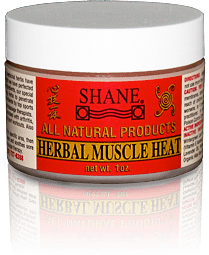
Shane's Herbol Muscle Heating Balm

By Sue Shekut, Licensed Massage Therapist, ACSM Personal Trainer, Certified Wellness Coach, Owner, Working Well Massage

Many chiropractors and sports clinics use BioFreeze for sore muscle relief. However, we’ve had better results with a simple product made of all natural products. Unlike Icy Hot or BioFreeze, Herbal Muscle Heat Balm has a time release formula that allows the balm to penetrate muscles more slowly over a period of hours, instead of providing a quick, short-lasting, superficial muscle heating effect.

Our clients report that after applying the balm before bed, they wake up with less pain and less tension in their muscles. It’s great for massage work as well.

A small jar only costs about $10 and can last for months!

Note: Do not apply this balm before taking a hot bath, sitting in a steam room or sauna! The balm does not easily rub off and it will heat up fast and feel like it’s burning. It’s best to apply it post bath for this reason.

It’s hard to find in stores but you can order a jar or two online a this website here. Click on the far left hand webpage: Tools for Life. Then click on the picture of the balm to order.

Read Full Post »

By Sue Shekut, Licensed Massage Therapist, ACSM Personal Trainer, Certified Wellness Coach, Owner, Working Well Massage

Do you have a great backrest, but your chair or car seat is too hard or you find yourself sliding off the seat? Or is your chair a wire mesh type with a supposedly great ergonomic design but no comfy cushioning in the seat?

Why settle for uncomfortable car seats and office chairs when you can easily upgrade your seating setup with a foam cushion! Pair your backrest with a foam seat cushion.

For about $100-$150 you can put together your own “ergo” seating. We’ve reviewed many of the products out there and found the best prices and reviews on Amazon. You may be able to find the same or similar products elsewhere, but you will pay about 10-30% more from other vendors.

To save you time, we pasted the links and pictures of the products in a few separate posts about backrests and seat cushions. Find the situation that describes your issue (you are taller than average, shorter than average, of wider girth than average, etc.) and read the associated post to find out about the product we think may help you best. In this post we discuss three different seat cushion options.

We also included pertinent tips from the Amazon customer reviews so you don’t have to wade through them yourself. However, if you want to read all the reviews yourself, simply go to the Amazon product link and check out the customer reviews.

Note: Many car seats are smaller and office chairs may be deeper and wider in the seat than some cushions. So when adding a foam seat cushion to your chair or car seat, keep the existing seat dimensions in mind. Amazon customer reviewers make note of this for some of the cushions discussed below.

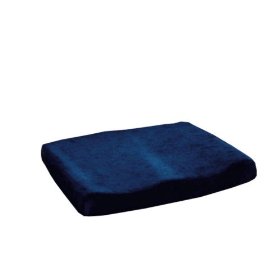
1. Essential Medical Supply Memory P.F. Sculpture Comfort Seat Cushion

Essential Medical Seat Cushion

A bargain on Amazon for $28.92!


According to the manufacturer:

• Relieves Pressure
• Seating cushion includes molded, 6 lb. density memory foam
• Comfortable seat for individuals sitting in chairs, riding in cars, scooters, etc.
• Encased in removable and washable luxurious zippered blue velveteen cover.
• The sculpted design is anatomically correct and provides maximum comfort.
• Product Dimensions: 18 x 2.5 x 16 inches

Amazon Reviewers Say:
• The memory foam is dense so it doesn’t collapse into nothingness when you sit on it, and it gives you very good support. It raises the seat about two inches, which can make getting up from the chair a lot easier.

• My only complaint is that it would be nice if it was at least 2 inches wider and 3 inches deeper so it would approximate the seating area of my office chair. At its current dimensions, it only covers the seating area of a traditional dining room chair.

• While it does have a dense foam, it is not memory foam, as I understand the term. It compresses and quickly bounces back like any other foam. Would also have liked it to be a bit bigger, particularly in depth. Really only good for a small chair.

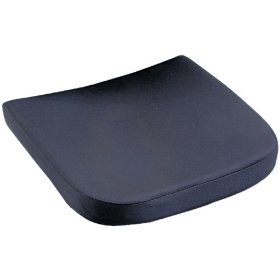
2. Kensington Memory Foam Seat Cushion

Kensington Memory Foam Seat Cushion

On Amazon for $37.64

According to the manufacturer:

• High-density memory cell foam was originally developed by NASA to relieve G-force strain during lift off.
• Temperature- and pressure-sensitive, it molds to the body’s contour, offering optimal comfort.
• Dissipates pressure while conforming to body contours.
• Leather-like bottom cover reduces movement on chair.
• Product Dimensions: 16.2 x 2.6 x 16.2 inches ; 2.6 pounds

Amazon Reviewers Say:

• No customer reviews on this product as of yet. We purchased one for one of our clients and so far she loves it, but she weighs only about 120 pounds.

Review from the similar Kensington Memory Foam Seat Rest (L82024)

• I ordered this cushion for my rather large desk chair at work- and it works great! The foam is very thick, but conforms to the body to support it well. The cushion is tapered at the front to prevent pressure on the legs. I would highly recommend this to improve posture and support while working at a desk. I am buying a second one to keep at home so when I work at my kitchen table on my laptop I am at the proper height.

• Heavier people may find the cushion smashes quickly, according to Amazon reviewers.

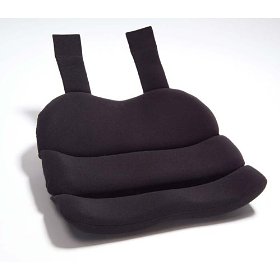
3. Obus Forme Ergonomic Seat Cushion

Orbus Forme Seat Cushion

From Amazon for $59.46

According to the manufacturer:

• Polyurethane foam construction absorbs compression forces and dissipates the vibration created in moving vehicles, making it ideal for use on the road.
• Can be used on its own or with any Obus Forme Backrest support to create a complete and comfortable ergonomic sitting experience.
• The removable front section is easily unzipped to allow for use with narrow chairs and benches.

Amazon Reviewers Say:

• The seat comes in a handy little plastic tote bag with a handle for carrying, and you can zip off the front segment of the seat to fit shallower chairs.

• This cushion saved my butt on a long car trip! I have periodic flare-ups of sciatica and hip pain, aggravated by riding in the car. Even short trips around town usually have me squirming in my seat. With the ObusForme cushion I can ride or drive pain free for hours at a time. I also brought it to a football game, and was comfortable for over three hours on the bleacher seat.

• However, I purchased the Obus Ultra Forme backrest for added support. I was so happy with the backrest that I decided that adding the seat was called for. It unfortunately turned out to be fairly uncomfortable. The support was pretty good, and the problem might have been that it was too small for my recliner, but I ended up returning it. I’m 6’4″, 200lbs, so maybe I don’t have enough built in padding, but regardless, I was disappointed in the seat after being so happy with the backrest.

• Great firm seat cushion. It stays in place well, and is a good complement to the Obus Forme back support device.

Read Full Post »

Image representing iPhone as depicted in Crunc...
Image via CrunchBase

By Sue Shekut, Licensed Massage Therapist, ACSM Personal Trainer, Certified Wellness Coach, Owner, Working Well Massage

Smart phones are common tools for today’s fast-paced business world. And just as computer use has improved our lives AND added a host of new ergonomic issues, “iPod Neck” and “Blackberry Neck” are concerns for many users that hold their phones while looking down.

Smart phones are not heavy. You may think holding them won’t cause muscle tension. They are easy to hold in one hand and type with the other. But holding the phone and looking down at the small screen for long periods of time can cause unwanted muscle pain in the upper back and neck. Those that use their iPod’s as a Kindle reader spend even more time looking down while viewing the device.

Think holding a small phone can’t cause any problems? Try this test yourself.

1. Hold your phone up in front of you and look down at the screen for a full 60 seconds.

2. Notice how your neck and shoulders feel as the clock ticks by.

3. Feel any uncomfortability in your muscles?

4. Now think of how you would feel after holding your phone and looking down for five minutes. Ten minutes. You get the idea.

When you use your phone or media player you are usually focusing your attention on the task at hand, not on your muscle tension. Doing this exercise makes you more aware of how you use your body when typing or viewing your smart phone.

Smart phones need smart accessories. How can you counter the muscle strain you may get while holding your iPod or Blackberry to type?


A few simple suggestions to avoid “iPod Neck.”

1. Whenever possible, rest your elbows on a table or surface so that your arms are propped up to view your smart phone. This takes pressure off your neck and shoulder muscles and let’s you work more easily. Resting your elbows on a flat surface is free! And you can take your elbows with you anywhere you go. Just make sure the table or surface is not so slow you have to slump over to reach it!)

Find this inexpensive, portable stand here

2. Purchase an inexpensive Smart phone holder to use to prop up your device when you are on the go.

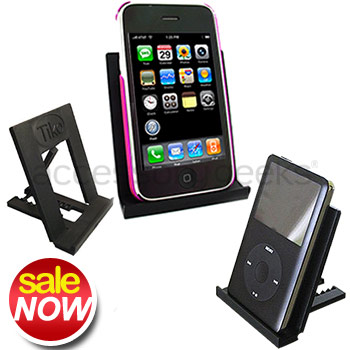
Tiko Stand

This Tiko Fold is convenient on planes, trains, at the coffee shop or at a desk. Free your hands and relax while viewing your phone or media player at one of nine adjustable viewing angles.

The Tiko Fold folds flat for slipping into a shirt pocket, backpack, computer bag, or purse. When folded into a stand, the Tiko Fold provides a universal base designed to hold the original iPhone and the iPhone 3G, Sony PSP, and practically any portable video players like your cell phone in both vertical and horizontal orientations. The Tiko Fold also holds the iPod Classic, iPod Touch, iPod Nano, BlackBerry Storm, BlackBerry Bold, most video capable cell phones, the Microsoft Zune, Sony PSP and even some ebook readers.

The Tiko stand retails for about $8.00 and can be purchased here here

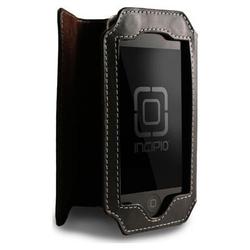
3. Another alternative for holding iPods/iPhones is the Incipio Kickstand Leather Case for iPod touch 2G link here for about $24.00

Leather iPod/iPhone case

Note: Apple makes wrist band holders for iPods but the problem with these is that they still require you to bend your arm in an unnatural position to view the phone or iPod.

Reblog this post [with Zemanta]

Read Full Post »

By Sue Shekut, Licensed Massage Therapist, ACSM Personal Trainer, Certified Wellness Coach, Owner, Working Well Massage

Are you an avid video gamer or person that likes to read or work sitting upright on the couch or in bed? Or are you of wider than “average” girth? Keep in mind that average is not the norm these days. Recent statistics state that 62% of the American population is considered “obese.” A person is considered obese if his or her fat body weight is more that 30 percent of his or her total weight.

Funny thing is, office furniture is still made for the Hollywood ideal, the office workers of Mad Men days. If you don’t fit that body ideal, we are not going to lecture you about the need to lose fat. Being height/weight proportionate is the healthier goal. However, getting fit is not something you can do overnight. So what do you do to sit comfortably when you have a wide girth?

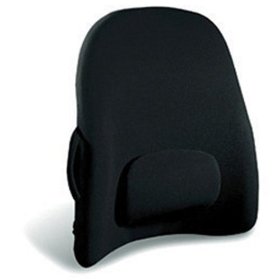
A good backrest for people with wider girth or those that want a bed rest for reading or working sitting upright in bed or on a couch is the Orbus Forme Wide-back Backrest. It’s also great for gamers that rest on a bed or couch playing video games. (Of course, if you get a Wii Fit you can game and get fit!)

Obus Forme Wide-back Backrest

On Amazon for $66.66

Orbus Forme Wide Backrest


According to the manufacturer:

• 3 inches wider and 1 inch taller than normal backrest
• Enhances overall posture and provides relief from pain from poor posture
• S-shaped frame
• Portable and lightweight

Amazon Reviewers Say:

• It is the PERFECT “pillow” with back support and the BEST I have found for sitting up to read or use a laptop in bed. It offers the kind of support that other sitting up in bed pillows don’t. I think I have tried every style of bed pillow ever made for reading in bed without being 100% satisfied with their performance and my comfort. So, I am delighted with this use for this backrest. This backrest nearly hits the 100% mark as a reading pillow.

• The one big problem with this backrest is that the curve of it sticks far from the chair making the space where your legs go is cut to half of what it originally was. My back feels better but now my legs hurt because they hang over the edge too far because of the curve of the backrest.

However, if your chair allow for the backrest and you are of wider than Mad Men ideal girth, this backrest may be the perfect fit for you! Until they start making wider, better cushioned office chairs.

Read Full Post »

« Newer Posts - Older Posts »