Feeds:
Posts
Comments

Archive for the ‘Massage Research’ Category

By Sue Shekut, MA, Licensed Professional Counselor, Licensed Massage Therapist, Wellness Coach, ACSM Personal Trainer

For some time, the research behind massage therapy has shown that massage can reduce symptoms of anxiety, depression and improve the ability to get good nights sleep.

In the Institute for Integrative Health Care, Leslie DeMatteo, LMT, MS,  wrote a good article that sums up the symptoms of anxiety and explains that the way massage therapy helps is to help you sleep more soundly and massage also reduces muscle pain.  For more details, read the article here!

Massage reduces anxiety!

Massage reduces anxiety!

Want the “official word” On anxiety and massage therapy? Read the American Massage Therapy Associations position statement with multiple research articles referenced here.

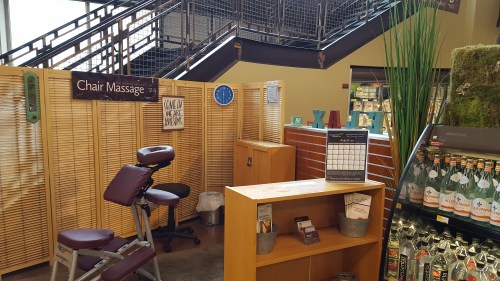
If you are in Chicago and want to reduce your anxiety,  stop by one of our chair massage locations inside Whole Foods and let us help you relax…in minutes!


7 days a week, we reduce anxiety and muscle pain at Whole Foods Lincoln Park and Whole Foods Gold Coast

7 days a week, we reduce anxiety and muscle pain at Whole Foods Lincoln Park and Whole Foods Gold Coast


Read Full Post »

By Sue Shekut, MA, Licensed Professional Counselor, Owner, Working Well Massage, Licensed Massage Therapist, Wellness Coach, ACSM Personal Trainer

Massage & Fitness Magazine

Massage & Fitness Magazine

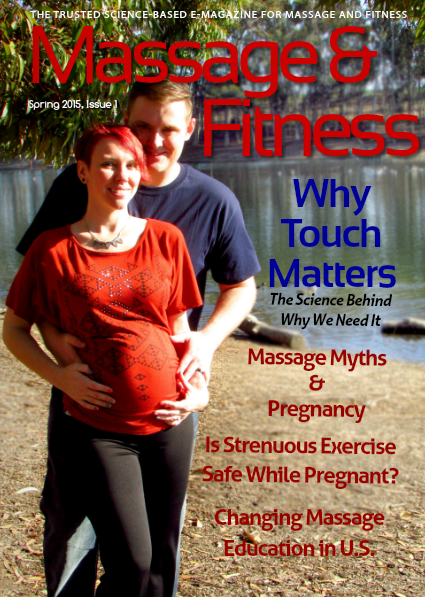
I am super excited to report that today the first issue ever of Massage & Fitness Magazine became available!  This magazine is the brainchild of Nick Ng, BA, CMT, and a host of other nationally known science-based massage therapists including Ravensara Travillian, PhD, LMP, Eric Keith Grant, PhD., Brett Jackson, BS, LMT, Alive Sanvito, LMT, and Rebecca Bishop, AS, CMT, (I’ve written about Nick’s work before, here regarding Cranial Sacral work,  and here regarding best sources for science based news. )

I am excited about this new magazine because, up until now, most massage therapy magazines provide frighteningly little science-based information.  I tend not to read them anymore because some of what is published supports myths that have been discredited in the past 5-10 years or is simply inaccurate scientifically. Health care providers have an ethical obligation to provide the most up-to-date, accurate information to clients and regurgitating pseudoscience or perpetuating potentially damaging myths does not serve massage clients well, nor does it serve massage therapists.

The first issue of Massage & Fitness has an excellent article by Alice Sanvito that explores some of the myths around massage and pregnancy. For many massage therapists, becoming certified in pregnancy massage has meant learning that massage can ‘accidentally” induce labor  yet there is no scientific evidence to support this). During my own prenatal massage training, I was told that it was best to avoid giving women massage in their first trimester  to avoid being sued if the woman miscarried. At least that instructor was honest about her reasoning. However, Alice points out that for many women, receiving massage helps them handle some of the symptoms of pregnancy including reducing feelings of nausea and giving women a feeling of being nurtured and supported

Other articles include an exploration of the science behind touch, explanations of when and how much exercise is acceptable for pregnant woman (quite a bit if already fit and the mom-to-be has no health complications), a truly wonderful explanation of massage education and the partnership of massage education and conventional medicine.

Check out Massage & Fitness Magazine here!
Disclaimer: Neither I nor Working Well Massage benefits financially from Massage & Fitness Magazine, but I do know some of the people mentioned above from social media and massage therapy advocacy. from my interactions with the editorial group, I am pleased to see that they live up to my expectations of being well-informed, clear and professional in this first edition!

Read Full Post »

By Susan Shekut, MA, Clinical Professional Psychology, Owner, Working Well Massage, Licensed Massage Therapist, Wellness Coach, ACSM Personal Trainer

In Cranial Therapy Discredited, one of my favorite science-based authors, Nick Ng, writes about the likely mechanism for client improvement in cranial sacral therapy… it really is likely all in your head (bad pun intended)! Nick explains that proponents of cranial sacral therapy claim that bones in our heads need to be moved to keep us healthy. Yet science has yet to show this to be true. First off, adult skull bones are fused and do not move. At all. Unless they move in unison with your head (when nodding and shaking your head, your whole skull moves).  Secondly, the idea of people moving cerebral spinal fluid via small hand movements defies what we know of science.

That all said, for some, laying on a massage table for an hour, having a kind person gently hold and rock the body can be relaxing all by itself. And in our hectic modern lives, being gently held and therapeutically touched for a period of time, away from cell phones, family obligations, work stress and traffic, is something people pay money for.

Read Nick Ng’s entire article here. Nick is a fitness trainer, bodyworker, and science writer.

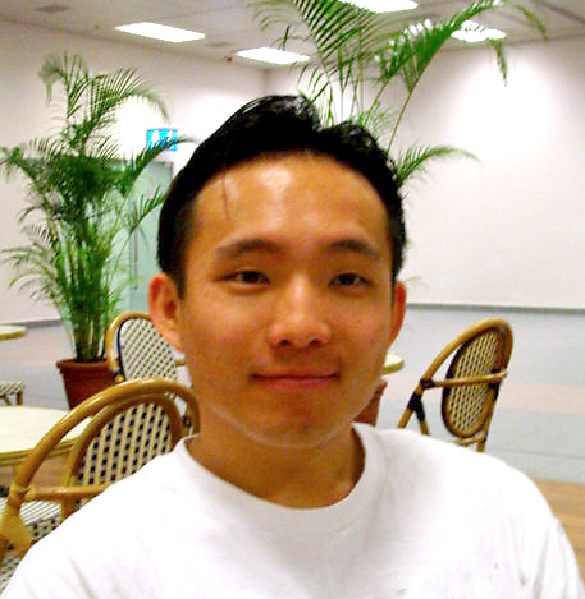
Nick Ng, photo by Writerscsasozi

Nick Ng, photo by Writerscsasozi

Read Full Post »

By Susan Shekut, MA, Clinical Professional Psychology, Owner, Working Well Massage, Licensed Massage Therapist, Wellness Coach, ACSM Personal Trainer

Recently I came across an article from one of my favorite blogs, Sciencebasedmedicine.org.  The post, The Role of Anecdotes in Science Based Medicine” struck a chord with me. In the world of massage therapy and complimentary or alternative medicine, anecdotes are the main source of “proof.” For example, I hear people say, “My friend went to this lady who did Reiki on her and she recovered from her fibromyalgia…after a while. It must be the Reiki!” Or, “I’ve been drinking this (coconut water, gogi juice, kombuchu) and now my (skin, bowels, emotional state) is much improved. It must be the coconut water. I am buying a case.” Or, of course, “Dr. Oz says…”

I’ve learned to be skeptical of websites touting the latest cure/fad/craze of some new miracle drug/herb, supplement/technique that cures all ills based on anecdotal evidence. When actual medical scientific research is conducted (not a You Tube video of a guy in a lab dressed up in a white lab coat waving at some machines), there tends to be no evidence, weak evidence, or no effect beyond placebo, to show that the claims have any validity. To put it in old-fashioned terms, it’s usually snake oil. But some people believe the snake oil claims more than they believe medical science. Why is that?

People that do not understand science do not trust it, understandably. Some point to an article of a scientist selling out his research to Big Pharm to justify their general mistrust of science and research.  However, this ignores the many scientists who don’t sell out. Or people firmly believe their own experiences and do not question the sequence of events that led to a miracle cure. Yet our experiences may be colored by our perceptions and may not be as objective as we think!

For example, let’s say I fall and hit my knee, which proceeds to swell up. I take a few ibuprophin pills and put an ice pack on my knee.

About 20 minutes later a shaman friend stops by and I ask him to help me. He waves his hands over my knee and chants something mystical sounding. Soon I look at my knee and wow, the swelling is going down!  So, was it the ibuprofen (which takes about 20-30 minutes  to take effect), the ice pack (which also takes time to take effect), or the shamans hand-waving chant-making that reduced the swelling? In such a situations, it is hard to tell. But in retelling the story, if all I recall is the shaman because that was the most unusual and memorable portion of the experience, then it may seem as the shaman did the healing. And, if the shaman was kind to me and I felt cared for, that also may lend me to want to believe it was his actions.

Many anecdotes (stories of someone’s experience) of non-science based healing may leave out the important elements of what helped someone heal. The person retelling the story may not recall the boring normal medical aids they used to overcome an illness or injury. Instead they recall the fantastical interventions because they make a better story and can serve to “prove” to themselves, if not others, that magical cures do work. The only people talking about the miracles of ibuprofen are on television commercials theses days.  People in 2014 are so familiar with over-the-counter drugs like Ibuprofen, that it no longer amazes us that a small pill can reduce physical pain! If you think about it, to a Highlander in 1744, ibuprofen would have been magic or witchcraft. But in 2014, we have research studies showing that ibuprofen works well on most pain for most people and we have science that explains how it works biochemically. Science explains that which was once magical, and also allows us to distinguish between that which is real and that which is folklore.

An attitude of skepticism is a sign of a good scientist and a careful consumer. Let research inform our choices of  health care services, not good marketing, celebrity endorsements or anecdotes alone.

Read Full Post »

Ethics in the Biosciences

Ethics in the Biosciences (Photo credit: AJC1)

By Sue Shekut, Owner, Working Well Massage, Licensed Massage Therapist, Wellness Coach, ACSM Personal Trainer

What do you think? Is it ethical for your medical doctor, your massage therapist, your psychotherapist or any of your health care providers to use treatments on you that have not been backed up by legitimate research? What if the non-evidence based treatment simply makes you feel cared for and that alone makes you feel better?

I came across two articles today regarding the ethics of health care providers using non-evidence based treatments on patients.  Allan Besselink, PT, Dip.MDT, writes in his blog post, Is Non-Evidence-Based Clinical Practice An Ethical Dilemma? that health care providers have an ethical duty to use evidence-based treatments. Bessenlink defines evidence-based clinical practice as “the use of assessment strategies and treatment interventions that have scientific evidence to support their use.” His main point is that using treatments that have not been scientifically proven to provide benefit to patients may cause harm and have not been shown to repeatedly produce the beneficial healing results they are claimed to produce.

Another article, in London’s Daily Mail, Don’t claim acupuncture works, NHS hospital told: Institution criticied over leaflets that made bogus claims about the treatment, describes the current situation in Britain’s National Health Service (NHS). Hospitals in the NHS are now being told they cannot advertise unproven benefits of non-evidence based treatments to the public.

Evidence-based (EB) medicine has become the preferred lens through which health care is being evaluated, practiced and compensated by insurers and third-party payors over the course of the last 20 years. While evidence-based practice has political implications and, at times, has led to misconceptions as to its application, EB medicine is the current standard for medical care in the U.S and, in other developed countries.

What does this mean for consumers and practitioners of “alternative medicine?” First off, as a consumer, you may want to think twice before forking over cash to a treatment they does not have evidence to support its effectiveness. If your health care provider or massage therapist tells you that he or she has a technique that had no evidence behind it but will make you feel better, what is the harm? Maybe it will work. Maybe you have tried medical treatments and they didn’t seem to work. Or maybe you have a condition that will heal on its own over time. Or maybe you simply are tired, have a lot of stress in your life and just need to lay down for an hour while a caring person pays attention to you and attempts to soothe you in some way. If that is the case and you know that the treatment being proposed will likely not sure cancer or fix a medical condition, but the treatment feels good, what is the harm? At the same time, if you do have a legitimate medical condition and you opt to try a non-evidence-based treatment, this may mean that you are putting off a treatment that could work for you. You could be harming yourself by waiting so long that by the time you attempt a EB treatment, it could be too late. For consumers, when you pay out-of-pocket, you can pretty much do what you want healthcare wise though. People do and take the consequences as they come.

For health care providers like massage therapists that do not have a wealth of evidence-based practices at their fingertips (bad pun intended), there is a fine line between doing no harm and doing good. I am a firm believer that massage therapy “works,” but what does this mean and in what context? For me, this means massage therapy is an effective method to help people relax, feel comforted, be able to move more easily and to overall feel better physically and mentally. Massage therapy has evidence to support these results and I have received these results myself when I have had massage and with my own clients. However, it would be unethical for me to claim that massage cures cancer or that I can cure medical conditions using massage therapy. Until more clinical research is conducted and until results are verified scientifically, I believe it is unethical to provide my clients with treatments that are not scientifically based. It is unethical to make claims about my work that are not based on empirical evidence.

I am reminded of a story my second grade teacher told me years ago when we were studying Frontier days. She told the story of a woman who came into the general store and told the shopkeeper that she wanted to swap her milk pail for a fresh pail from his store. She revealed that a mouse had fallen into her pail of milk and she wanted to swap her pail with one that had not had a mouse fall into it. She said, “What people don’t know, won’t hurt them.” The shop keeper smiled and took her milk pail. He went into the back room and set her pail down so she could hear it set down. Then he picked her pail up again, brought it back to her and said, “You are right, what people don’t know won’t hurt them.” But is that true? Can we be hurt by what we don’t know or what we believe is true without evidence to support our belief? (We now know that having a mouse fall into one’s milk could lead to bacterial contamination and disease, but I doubt either the woman or the shop keeper in this story knew about germs carried by rodents back then.)

Over the next few years, the conflict over EB medicine and “alternative” health care will continue. Do you want to know if the treatment being applied by your massage therapist, doctor, or other health care provider is evidence-based? Do you think it is ethical for your health care provider to use treatments on you that are not evidence-based? Share your thoughts in the comments section!

Enhanced by Zemanta

Read Full Post »

By Sue Shekut, Owner, Working Well Massage, Licensed Massage Therapist, Wellness Coach, ACSM Personal Trainer

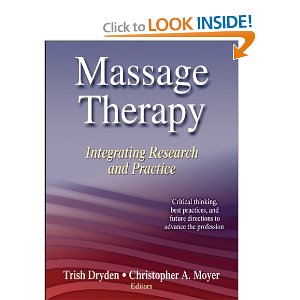
Want to make a huge impact in the field of massage therapy for the price of a cup of coffee? You can today! Recently I learned of a scientific study that is underway to measure how massage therapy impacts our health. The study, conducted by a  respected researcher in the field, Christopher A. Moyer, Ph.D, author of  Massage Therapy Integrating Research Into Practice, is currently looking for a small amount of funding to compete the final report.

At present, the study is only short $285! Consider donating $5, $10 or any amount of money to this important study to help reach the goal of full funding at $700 (which is a huge bargain considering the thousands of dollars that many scientific studies cost).

EDIT 5-31-13: The study has been fully funded! Thanks so much to all who contributed. I will post details of the results as they become available in future blog posts.

51NAaCd4jxL._BO2,204,203,200_PIsitb-sticker-arrow-click,TopRight,35,-76_AA300_SH20_OU01_

Why Contributing to this Study On the Effects of Massage Therapy is So Important

1. Most of the research that has been conducted in the massage field has been poorly designed and lacks the controls and scientific integrity that the medical community deems essential for it to be valid research. Much of the studies measuring similar biological and psychological effects were done by very well-meaning people who alas did not apply appropriate research methods for the studies to be considered valid.

2. Massage therapy has been shown, in valid research studies,  to improve symptoms of depression and anxiety,

two devastating but unfortunately prevalent disorders in the U.S. But we don’t know how or why massage has this effect. This current study may lend some insight into he mechanism of action of massage on our mental health.

3. Few studies on massage therapy are conducted in the public eye with the opportunity for clients and massage therapists to have a direct say into what we would like to be studied or what is important for us to learn about the effects of massage therapy. Funding this study is a way to vote with your wallet to let the massage community know what you consider to be important research.

From Dr. Moyer’s site, here are some of the reasons why this study is important:

A better understanding of how the autonomic nervous system responds to massage therapy moment-to-moment as it is occurring, and across the entire treatment session, will increase our understanding of this form of treatment and help us to answer important clinical questions such as:

• How is massage able to reduce anxiety and depression?
• How does massage help the body to recover faster from injuries and to cope with painful conditions?
• How much massage is necessary to provide a therapeutic effect?

• Are there any aspects of massage therapy that tend to increase sympathetic nervous system activity and/or which decrease parasympathetic nervous system activity?

How Will the Funds Be Used (from the Funding website)

The funds being requested are to ensure the completion of this project. Data collection for 60 sessions of massage therapy, which enabled collection of heart rate, heart rate variability, electrodermal response, and mood state, has already been completed under laboratory conditions. This data was collected while Dr. Moyer was an assistant professor of psychology at a university in the upper Midwestern United States. A family health emergency caused him to leave that position before the data analysis and report writing could be completed. Dr. Moyer is requesting funds which will allow me to complete this important study.

Who is Christopher A. Moyer, Ph.D. and Why Should We Listen to Him?

Christopher A. Moyer Ph.D.

Christopher A. Moyer Ph.D.

Christopher A. Moyer, Ph.D is a psychological scientist who uses a variety of methods (e.g., meta-analysis, clinical trials, psychophysiological and neuroscientific laboratory assessments, survey construction and administration, et al.), combined with and informed by clinical training and experience, to study when, for whom, and by what mechanisms massage therapy, the manual manipulation of soft tissue intended to promote health, wellness, and performance, can be beneficial. In addition to this main focus, I am also interested in studying other modalities, such as meditation, that involve self-regulation, both for their own sake and as a way to broaden my perspective for understanding massage therapy as an intervention. He obtained his Ph.D. from the University of Illinois.

Read Full Post »

By Sue Shekut, Owner, Working Well Massage, Licensed Massage Therapist, Wellness Coach, ACSM Personal Trainer

For the past few years, I’ve been reading and learning more about evidence-based practices, research methods, and, sadly, the paucity of solid research backing up the medical benefits of massage therapy. While some members of the massage community are diligently working to improve the quality and quantity of massage research, there are many misconceptions about massage that have been taught to massage therapists in massage school and then passed on to massage clients. Some of these misconceptions have to do with the idea that “massage releases toxins” (technically, it does not and what people mean by “toxins”is unclear as well), that you must drink water after a massage (often as way to “flush” these said” toxins”). Some massage therapists and massage clients believe massage is a healing modality and that massage can release muscle “knots,”  While massage can reduce muscle tension, the conceptualization of knots in our muscles is misleading.  Many of these claims have either been seriously called into question, or explained to be misconceptions caused by massage school instructors trying to simplify physiological explanations.

More will be revealed about how massage therpy works

More will be revealed about how massage therapy works

That all said, I do believe that massage has some physical, mental and possibly, medical benefits. I do believe that most massage therapists genuinely want to help people feel better, want to use massage as  a healing tool and are doing their best to teach clients what they know about the benefits of massage. And I think that while it is important to understand the mechanism of how massage therapist works on our bodies and minds, for now until the research we need pours forth, I would like to propose a few simple explanations as to how massage can benefit us:

1. Most massage therapy, whether performed on a massage chair or massage table, puts the person being massaged into a really relaxing comfortable position. And in our culture, people rarely have a chance to relax or just sit. If we sit down to relax, we often think we are being lazy or unproductive. So giving ourselves permission to get a massage “for our health” or to “reduce stress” allows us to give ourselves permission to sit down and do relatively nothing for a period of time. It’s not magical. It’s not mystical. But relaxing is good for our health. By sitting down or laying down for a period of time, from 10 minutes to an hour or more, allows our nervous systems to move from sympathetic (fight or flight adrenaline pumping mode) to parasympathetic resting and digesting mode).

Just laying down on a massage table is relaxing

Just laying down on a massage table is relaxing

This may seem obvious to you, and you may think, “well what’s the big deal about that?” The big deal is this, in my experience few people in this culture will take the time to just sit down and do nothing or to lay down and relax, especially during a work day or when the kids needs help with homework or they want to spend time with friends. Relaxing is only socially acceptable if we do it in a structured environment like during a massage or while doing meditation. (Even though yoga was originally designed to calm the nervous system and relax the body, in the U.S., we even add words like “power” to yoga and add weight training to a yoga session! Which in my view, really defeats the purpose of doing yoga in the first place.)

2. Another aspect of our culture is that we are super “busy”…and often touch deprived. Our to do lists have to do lists. If we are not accomplishing, if we are not helping kids, parents or friends or making money (or being good consumers by spending money) we are not being “responsible, we are not being “productive” and we are not being “good” parents, children, neighbors, workers, bosses, employees, friends, community members. We are, in an unspoken way, not supposed to take time for ourselves (unless it is to work out, “power” style) because that is considered to be “selfish.” But getting a massage lets a person take care of him or herself without guilt. Instead of this being a selfish act, getting a massage is now seen an act of self caring. If we do not take care of ourselves, we cannot give to others because we will be too sick or too stressed out to be of much use! When you get a massage we allow ourselves to say, “hey this is my hour, or my ten minutes and I want the attention to be on me. I want to feel good, I want to be touched in a positive,  kind way, without the touch feeling sexual or violent or ticklish. And it is for my health so it’s okay in this instance for me to do something for my self.

Getting a massage gives you a little window of time for self care

Getting a massage gives you a little window of time for self care

Likely down the road, we will be able to use science to explain the psychology of massage through random clinical trails. Someday soon we will be able to point to research that shows more specifically how one person touching another via massage actually causes the recipient’s nervous system to shift into parasympathetic mode. But for now, I am content in my own explanations. I know my clients, and clients of other Working Well Massage therapists, benefit from our massages. I know people relax and enjoy getting massages. The science will come. Until then, we will keep providing relaxation, comfort and care to massage clients. And we will acknowledge and encourage their willingness to take care of themselves.

Enhanced by Zemanta

Read Full Post »

By Sue Shekut, Owner, Working Well Massage, Licensed Massage Therapist, Certified Wellness Coach, ACSM Personal Trainer
I’m not big on New Year’s resolutions because I don’t think they work and often make people feel guilty about taking a stand without really having a concrete plan to back up lifestyle changes. Changing habits takes a lot more than just making a statement. it takes a lot of planning and effort. And often, support from a coach, a personal trainer or other wellness support staff. I am more into planning and goal setting (which is natural from my coaching background!). The first day of a new year is always a good time for reflection and planning for me.

2011 in review

This past year has been a great year for Working Well Massage. We’d added some new team members to our happy group of professional therapeutic massage therapists: Aaron, Jennifer and Allison. And we bid a fond farewell to Janice, one of our chair massage team members, on her way as she travels to India for four months. We added a new Assistant Manager, David McClinton, to our chair massage stations in the Fall of 2011. David has done a fantastic job of sprucing up our booths and keeping things running smoothing for both our massage therapists and our clients.

In 2011, our corporate chair massage team has continued to provide many stressed out and sore office workers with relaxing chair and table massages in their office. This arm of our business has continued to grow and we are both grateful for the business and happy that our many corporate office worker clients have management teams that are progressive enough to know that providing in-house massages to their staff can mean more productive, less tense employees. (Note: I don’t mention the names of our corporate clients to preserve their anonymity. We enjoy our relationship with our clients and don’t want to exploit those relationships for promotional purposes.)

In 2011, we tried out a new business venture with Whole Foods Market’s new Wellness Clubs in Lincoln Park.  Sadly, the idea of adding a table massage location to our already successful chair massage business in the store proved to be less desirable for clients than we had anticipated. Most of our chair massage clients appreciate the convenience and location of our chair massage stations. Few people wanted to venture upstairs to the Mezzanine level of the Lincoln Park Whole Foods Market to get a table massage so, rather than scatter our resources further, we quickly closed the table location and let the Wellness Club focus on the nutritional counseling and fitness needs of shoppers upstairs while we do what we do best, walk in chair massage, on the main floor.

On this blog, Working Well Resources, in 2011, I wrote 94 new posts, growing the total archive of my blog to 395 posts. I uploaded 194 pictures in 2011.. The tops posts accessed in 2011 were as follows:

My most commented on post in 2011 was Helping Chicago Get and Stay Calm-Calm Chicago. My blog was viewed about 39,000 times in 2011.

The busiest day of the year was April 12th with 230 views. The most popular post that day was Find the Top Tweeters on Nutrition.

What’s Ahead for 2012?

In 2012, we at Working Well Massage plan on continuing to grow our corporate chair massage business, providing quality massage professionals with access to corporate office clients and providing office workers with much-needed (and much appreciated) stress relieving massage sessions. We are also looking to add some yoga classes and other fitness options to some of our corporate client sites.

In 2012, we are going to continue to improve our WWM chair massage stations inside both the Lincoln Park and Gold Coast Whole Foods Markets in Chicago, Illinois. We will be changing the carpeting, adding some new art and stretching posters and incorporating some of our new team members into the lineup at the two stores. I will personally be offering some new training and advising opportunities to my WWM team, to keep us all up to date on the latest research on massage therapy and best ways to help our chair massage clients enjoy our chair massages in the stores.

At Working Well Massage, we aim to not only give our clients the most relaxing and enjoyable chair massages and corporate massage experiences, but to help our highly skilled,  professional team of massage therapists connect with great clients!

As far as the blog goes, this year I plan on providing some new video content to give our readers visual tips on workstation ergonomics, relaxing videos of amazing nature scenes, and some helpful illustrations of how to use the Miracle balls as well as tennis balls and the yoga bolster to stretch muscles and relax your nervous system. I will also aim to provide new info on the latest massage and fitness research.

In 2012, I will personally continue to work towards my master’s degree in Clinical Professional Psychology, to give me more tools to help my clients relax and deal with stress and to help make me an even better coach for my current clients, massage therapy team and potential new coaching clients. I will also make the extreme sacrifice (wink) to continue hiking and taking photos of wonderful natural forest preserves and other nature spots to share with you in this blog!

Happy New Year to our team, our clients and of course, to all our loyal readers of our Working Well Resources blog!

Enhanced by Zemanta

Read Full Post »

By Sue Shekut, Owner, Working Well Massage, Licensed Massage Therapist, Certified Wellness Coach, ACSM Personal Trainer

The world of massage research is in many ways, still in its infancy.  As such there is a lot of conflicting studies that can easily lead people to draw incorrect conclusions. mainstream press often takes the most sensational points from a study and broadcast those points to the world as if it were the Gospel. How do concerned citizens, loyal readers and fellow massage aficionados cope with the deluge of conflicting and confusing information about massage research?  one magazine that does a pretty good job of reporting on massage reasearch is Runner’s World.  In his article, Massage Q+A: Does it Work?, author Sam Murphy writes about a number of studies and explains how research results can be misleading when they don’t compare apples and oranges. or in this case, when research doe snot compare the effects of multiple massage session with the effects of a  single 8-minute session. Runners and research consumers,  take a few minutes to read Sam Murphy’s article. It may clear up questions you have about using massage to improve your athletic performance and or aid recovery from muscle injury.


Enhanced by Zemanta

Read Full Post »

By Sue Shekut, Owner, Working Well Massage, Licensed Massage Therapist, Certified Wellness Coach, ACSM Personal Trainer

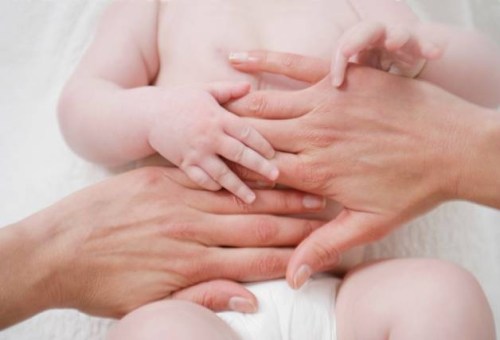
Infant massage helps baby's digestion and gassiness

I met Heather Rabbit recently at the AMTA-IL Strategic planning meeting. After spending a day with Heather and chatting with her over lunch, I can say that, if I were pregnant, she is the massage therapist I would most likely go to for pregnancy massage. And if I had a new born, I would also pick her as my number one Infant Massage Instructor. Heather is not only fit, smart, professional, knowledgeable and articulate, she is also warm and compassionate. And Heather has a passion for infant massage instruction as well as massage therapy in general. She is also a nationally certified and state licensed massage therapist practicing in Chicago, Illinois. She teaches parents how to give their babies massage in her Infant Massage Class at Swedish Covenent Hospital. Her website is here.

Read this excerpt about infant massage as explained by Heather from an article by Anne E. Stein, a Contributing writer in WellCommunity, a publication of Swedish Covenent Hospital.:

“Believe it or not, babies get stressed out,” Rabbitt says. “Massage helps them learn what relaxation is at a young age, and studies have shown they’ll be more relaxed as they grow.”

In addition to calming a baby, massage helps with digestion and gassiness by stimulating the stomach and large intestine. Tummy massage, explains Rabbitt, is extremely helpful for soothing colicky babies.

Other studies have shown that, like adults, babies derive a significant amount of relaxation and good feeling from massage because it decreases the stress hormone cortisol, which is harmful for brain development. Reduction in this hormone can cause an increase in the antibodies that fight infection and facilitate healthy weight gain.

More studies still have found that infant massage may increase babies’ alertness, attentiveness and ability to learn.

“Overall, brain development is defined and guided by our environment, and infant massage helps create a physical and emotional environment for baby that is open to learning,” Rabbitt said. “The sensation of touch can facilitate this brain development and creates denser and more comprehensive brain cells.”

This theory is based on the fact that babies (by about age 1) naturally have about 150 percent more neural connections (brain cells) than adults do. As babies age, their bodies start to shed the connections that are not being used. But if their brains are well stimulated at an early age, they retain more information, and are more responsive to learning.

Therefore, it is essential that babies take in as much sensation and information as possible during that time, and infant massage can serve as the needed stimulus.

Massage is a great tool for parents, especially if swaddling and rocking aren’t working. When a parent gets home from work, for example, infant massage provides quality time that comforts baby and decreases the parent’s stress.

The connection created by massage can be especially important for dads, who often feel left out because they haven’t carried the baby for nine months and don’t experience the intimacy of breastfeeding.

Infant massage techniques are similar to adult massage techniques though gentler, and generally 20 minutes is the maximum time for massage. It’s extremely easy to learn, said Rabbitt. At Swedish Covenant Hospital, up to two caregivers can attend three, 60 to 90-minute classes with their baby (Rabbitt also provides in-home sessions). The massage techniques are designed for babies from birth to one year, but classes are typically taken between four weeks to just before the baby starts to crawl.

Infant massage is also being used in a research project in the hospital’s special care nursery for late pre-term babies (27-34 weeks). Babies receive three massages a day for five days, with a goal of increasing their weight gain faster so they can go home sooner. Previous studies have shown that early pre-term infants gained 47 percent more weight and were discharged earlier than infants who weren’t massaged.

Link to the entire article here.
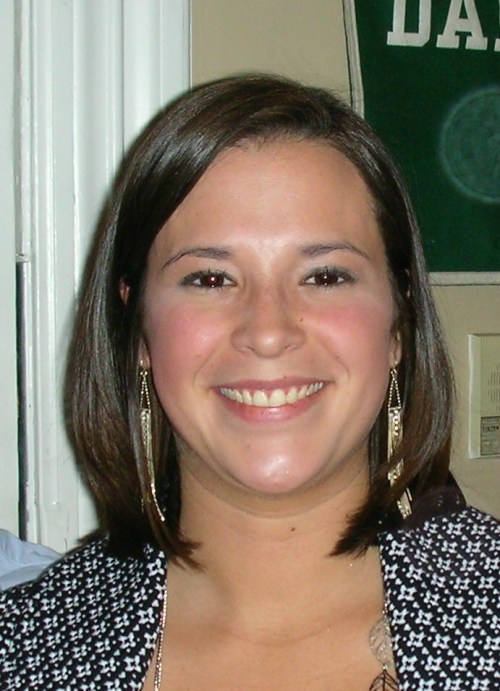
Heather Rabbit, LMT, Infant Massage Instructor

In 2008, Heather received a grant from the Massage Therapy Foundation entitled: Increasing Infant-Mother Interaction, Decreasing Depression – Teaching Infant Massage to Women With Symptoms of Postpartum Depression. With this grant, she was able to help 15 new mothers use infant massage as a tool to decrease anxiety, create a healthy and loving relationship with their new babies, and make sure their babies were developing properly for their age.

Heather is certified in Pre, Peri and Postnatal massage, as well as orthopedic massage. She is also the Secretary on the Board of Directors for 3300 member-Illinois chapter of the American Massage Therapy Association and she has BA from Ohio State University.

Watch Heather explain infant massage in this video, You Tube link here. Link to Heather’s website here.

Enhanced by Zemanta

Read Full Post »

Older Posts »