Feeds:
Posts
Comments

Archive for the ‘Yoga’ Category

By Sue Shekut, Owner, Working Well Massage, Licensed Massage Therapist, Certified Wellness Coach, ACSM Personal Trainer

I’ve been practicing yoga on and off for about  20 years now. I’ve been appreciating art since my brother drew his first crayon drawing and my mom hung it on the fridge. With great delight I found out today that one woman is now mixing art and yoga–just a block from my office! After 22 years in the art gallery business Melanee Cooper Gallery will be transforming its space into a yoga studio at the same location. The new yoga studio, Yoga House, will offer free yoga during Art Chicago for gallerists and artists.

From Gallery Owner to Yoga Teacher

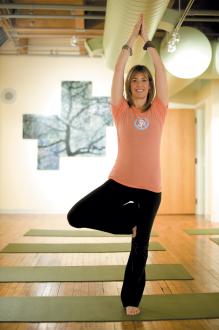
Photo: Brendan Lester

Melanee Cooper received her BA from the University of Michigan in 1984. Opening her first gallery at the age of twenty-six, she has exhibited and represented hundreds of contemporary artists, which contribute to her experience and fascination with the surface, texture and process of the artwork. After twenty years in the art business working with collectors, art professionals and artists, the gallery’s focus is to educate and provide outstanding personal client service. According to an article about Yoga House in Time Out Chicago, Melanee received her teachers training certification in yoga at the Nosara Yoga institute in Costa Rica.

Her new yoga studio offers classes in hatha yoga, vinyasa flow yoga and restorative yoga. And artwork will still be features on the walls of the studio!

PRICING

First class with YOGA HOUSE – complimentary

class: $17.00

class packages:
5x – $65 (one free class)
10x – $140 (two free classes)
20x – $285 (three free classes)

Lunchtime yoga – one hour – $12.00

Class packages are non-refundable.

Class schedule here.

Yoga House's New Home!

Melanee Cooper / Yoga House

740 N. Franklin (60654)
Tel 312-202-9305

yogahousechicago@gmail.com

Reblog this post [with Zemanta]

Read Full Post »

MIAMI BEACH, FL - JUNE 11:  (L-R) Hector Garci...
Image by Getty Images via Daylife

By Sue Shekut, Owner, Working Well Massage, Licensed Massage Therapist, Certified Wellness Coach, ACSM Personal Trainer

Last night I enjoyed the advantages of 2010 technology. I watched an episode of the show “30 Days”  on my television downloaded from Netflix! 30 Days is a TV show is about people spending 30 days in an environment fairly different from their own. The episode I watched was about a highly stressed man that visited a Life Coach and spent 30 days doing “New Age” therapies to  reduce his reaction to stress. While some of the “therapies” were of questionable merit, many of them helped the man and he ended up becoming a calmer, happier man and building a closer relationships with his wife!

One of the things the man enjoyed, and continued to keep up after the 30 days had ended, was yoga.  More and more research is coming out about the benefits of yoga. I don’t see yoga as a New Age therapy, but then I’ve been doing yoga for about 17 years. And yoga has been around for much longer than the U.S has been a  country (as has acupuncture). As more and more Western style scientific research is done on the benefits of yoga and more people in the U.S.  incorporate it into their daily lives, yoga has become more “mainstream.”

I came across a great article from Yoga Journal on “Banishing Burnout.” In the article, author Jennifer Pirtle shares some information about current research on yoga and stress relief.  She shares some insights into how doing yoga can help you learn to react less to stressors in the workplace. I am sharing some excerpts with you below:

More Bad News About Workplace Stress

Recently, a team of researchers at the University of California at San Francisco (UCSF) found that stress may even accelerate aging at the cellular level. The study found that the blood cells of women who had spent many years caring for a child with a health condition appeared to be, genetically, about 10 years older than the cells of women whose caretaking responsibilities were less prolonged.

Although the study focused on caregivers, the findings apply to overworked employees, too. “People with other sources of life stress showed similar relationships between their levels of stress and cell aging,” says Elissa Epel, Ph.D., an assistant professor in the department of psychiatry at UCSF and the study’s lead author.

Stress itself, Epel emphasizes, is neither inherently good nor bad. Instead, how you perceive and react to it determines how it will affect your health. “In the study,” she explains, “the perception of stress was more important than whether one was under the strain of caregiving or not.”

Making your work less stressful doesn’t have to mean leaving it behind for good. (And how many of us can hope to do that, anyway?) Instead, the key is to transform your relationship to the stress so that it no longer overwhelms you. More and more people are discovering that mind-body practices like yoga, qi gong, and meditation can be hugely helpful in shifting the way they react to stress.

How Does Yoga Help With Stress?

You’re likely to feel many of yoga’s benefits the first time you step onto the mat, says Timothy McCall, M.D., an internist and Yoga Journal‘s medical editor. “When you’re doing Downward-Facing Dog, your mind is saying, ‘I want to come down now; my arms are tired,’ but if your teacher tells you to hold the asana a little longer, you find the strength to do it,” he says. “At that point, you realize that you don’t have to respond to every urge you feel. At other times, when your body says it needs to come down, it really needs to. Yoga teaches you to tune in to what your body is telling you and to act accordingly.”

With practice, this awareness will spread into other areas of your life, including your work. “As you learn to separate the urge to act from the reaction, you begin to find that something like a canceled meeting or having a last-minute project handed to you may not rattle you as much as it once did,” says McCall. “You can detect stressors—what Buddhists call the spark before the flame—earlier, then pause long enough to think, ‘Well, maybe I don’t need to respond.'”

That’s what happened for David Freda, a 41-year-old software engineer in Pasadena, California. He had practiced yoga sporadically to help him deal with job-related anxiety in the past, but after he took a new position at an investment company in 1999, he decided to get serious. “I have very high standards as an engineer. As a result, I have a pattern of getting fed up with co-workers and bolting from my jobs,” he says. “When I took this job, I decided to stick it out to see what I could change in myself. I had a strong sense that yoga could help me do that.”

“When I’m doing a challenging posture such as Revolved Triangle [Parivrtta Trikonasana], I can stay in the posture, focus on my breathing, and perhaps not push quite so hard,” he says. “That approach helps me in my job. When I’m confronting someone who is making a bad technical decision, I consider what I could say that would facilitate what I want to achieve. In the past, my emotions would have gotten the best of me, but now people are more inclined to listen and to engage. Even my boss has commented on the changes.”

Read the entire article with many more great insights into how yoga can help you learn to battle workplace and life stress here.

Reblog this post [with Zemanta]

Read Full Post »

Yoga Video Tree Pose - Vrksasana
Image by myyogaonline via Flickr

By Sue Shekut, Owner, Working Well Massage, Licensed Massage Therapist, Certified Wellness Coach, ACSM Personal Trainer

I started practicing yoga about 18 years ago. I was working at a computer all day and went to get my first professional massage. During the massage, my massage therapist lifted my arms over my head to  stretch and I thought, “Wow, I never move my arms anywhere but up to my keyboard and mouse. this arm stretching stuff feels great!” At that time I didn’t stretch much and if I did, it was my legs that I stretched, not my arms or back. She recommended yoga and I joined my first yoga class at the local YMCA.
Through the years, I’ve been able to attend many yoga classes, workshops and do my own home yoga practice. I find yoga not only helpful to my body, but is also very calming, relaxing and stress reducing. Now research shows that practicing yoga actually has a chemical effect on your brain in that it increases levels of a neurotransmitter, GABA, believed to calm the nervous system.

Researchers at Boston University School of Medicine found that for experienced yoga practitioners, brain GABA levels increase by 27% after a session of yoga. This suggests that the practice of yoga should be explored as a treatment for disorders with low GABA levels such as depression and anxiety disorders. Authors of the study conclude that future studies should compare yoga to other forms of exercise to help determine whether yoga or exercise alone can alter GABA levels.

The Study

The sample subjects of the study included of 8 yoga practitioners and 11 comparison subjects. The Yoga practitioners completed a 60-minute yoga session and comparison subjects completed a 60-minute reading session. According to Suite 101, “Magnetic resonance spectroscopic imaging conducted before and immediately after each intervention indicated that the yoga practitioners had a 27% increase in GABA levels after the yoga session but no increase after the reading session.”

According to Barry Keate of Arches, Tinninus Formulas, this ability of yoga to increase GABA also has promising applications for sufferers of tinnitus due to its abilility to increase GABA levels. In his article, “How Yoga Increases GABA Levels And Improves Tinnitus” he quotes Dr. Chris Streeter, the lead researcher of the study and a yoga practioner herself about the implications of her study:

Dr. Chris Streeter stated in a newspaper interview “I’m quite sure this is the first study that’s shown there is measurable change in a major brain neurotransmitter with a behavioral intervention such as yoga. What’s really fabulous is this is hard science that is able to clearly document neurochemical changes in the brain.”

Dr. Streeter learned that the National Institutes of Health gave a high score to her research grant proposal for a larger yoga-GABA study and hopes to begin soon. “It will be a much bigger study,” she said. “We will use yoga-naïve people to gauge how regular practice can change GABA levels. It will also include more ability to gauge the positive effects of yoga over time.”

How Do GABA Levels Affect Anxiety and Depression?

Read the excerpt which follows from Laura Owens article in Suite 101, “GABA and Yoga: Decrease Depression and Anxiety: Yoga Boosts Essential Calming Neurotransmitter in Brain”

GABA or gamma-aminobutyric acid is an amino acid made in brain cells from glutamate. It functions as an inhibitory neurotransmitter, meaning it blocks nerve impulses. Without GABA, nerve cells fire too often and too easily. GABA is especially abundant in the cerebral cortex, where thinking occurs and sensations are interpreted, (Jacob J. Schor, N.D. and Rena A. Bloom, N.D.,“GABA: Gamma-Amino Buytric Acid,” Naturopathic Clinic News. Accessed January 14, 2009.)

As one of the primary neurotransmitters, GABA is responsible for inhibitory processes. It elevates the production of alpha waves associated with feeling relaxed (without drowsiness) while boosting mental alertness. Moreover, GABA lowers beta waves that contribute to a state of nervousness, racing thoughts and hyperactivity.

Research, including one study published in the Trends of Pharmacology Science indicate that a dysfunction in the GABA system can contribute to anxiety and depression. (Cryan JF, Kaupmann K, ” ‘B’ happy!: A role for GABA (B) receptors in anxiety and depression.” Trends Pharmacology Science, 2005 January 26 (1):36-43.

Read more at Suite101: GABA and Yoga: Decrease Depression and Anxiety: Yoga Boosts Essential Calming Neurotransmitter in Brain

For an abstract of the actual research on Yoga and GABA, click here.

How Does GABA Effect Tinnitus?

Barry Keates explores research on GABA and tinnitus. Read an excerpt from his article, “How Yoga Increases GABA Levels And Improves Tinnitus” below.

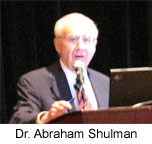
Dr. Andrew Shulman

In 2002, Drs. Abraham Shulman, Arnold Strashun and Barbara Goldstein, from the Martha Entemann Tinnitus Research Center, published a paper describing the common central pathway through the brain through which all tinnitus symptoms must travel. (Shulman A, Strashun A, Goldstein B. GABA-Benzodiazepine-Chloride Receptor-Targeted Therapy for Tinnitus Control. Int Tinnitus J. 2002;8(1):30-6.) This pathway, they determined, is the chemical receptor called gamma-aminobutyric acid-benzodiazepine-chloride receptor (GABA/BZ/Cl) in the medial temporal lobe system. The researchers stated the function of the GABA receptor is to inhibit central nervous system synapse activity.

Deficiency in the GABA receptor is directly related to the worsening of tinnitus, which is marked by increased emotional difficulty, anxiety, stress, depression and fear. Impairment of GABA function also leads to convulsions, which provides clinical support for the concept that tinnitus is an epileptic-like auditory phenomenon.

Read Barry Keates entire article here.

Reblog this post [with Zemanta]

Read Full Post »

By Sue Shekut, Owner, Working Well Massage, Licensed Massage Therapist, Certified Wellness Coach,  ACSM Personal Trainer

Yoga Journal

I took my very first yoga class about 15 years ago at my local YMCA in Ann Arbor, Michigan. Yoga was not as popular at that time and when I moved to Chicago, I relied on fliers and word of mouth to find a yoga class I enjoyed. Now, like most things, the internet makes it so easy to find a yoga class!

If you are a yoga novice looking for your first class, or if you are new to Chicago and want to find a yoga group that fits your practice, check out Yoga Chicago. Yoga Chicago is a local magazine that has a complete directory of yoga classes in Chicago and surrounding suburbs. They also post articles and info about upcoming workshops and yoga oriented trips.

To view a list of classes in your area, click on this link here.

Read one of the interesting articles in the current issue of Yoga Journal, “Neuroscience, Hatha Yoga and Creativity: A New Paradigm for Teaching” by By Michael McColly. Click here to read his article.

Enhanced by Zemanta

Read Full Post »

An Artistic yoga class in session
Image via Wikipedia

By Sue Shekut, Owner, Working Well Massage, Licensed Massage Therapist, Certified Wellness Coach, ACSM Personal Trainer

So you decided to take the plunge and try a yoga class. Then you find out that there are different kinds of yoga. How do you know what kind of yoga to take? And what if you are not flexible? Do not despair!  Yoga is really for people that are not flexible. Unfortunately, many yoga teachers or studios advertise their classes by showing a very highly trained yoga teacher doing an extremely advanced pose that few other people can do.  No worries, most beginning classes teach you simple poses to elongate your body and relax. “Pretzel” yoga is for the very very advanced, not the novice.

If you’ve tried a yoga class and found it either too difficult, too easy or too boring, it may not be yoga that’s the problem, it may  be  the type of yoga you tried or that particular teacher. (Think about it, if you get  a bad hair cut, do you think hair cuts are not for you or do you go to a different barber/hair dressor?!?)

So what type of yoga class should you attend?  Here are some tips from http://www.yoga.orz.nz:

Yoga Styles Overview

Iyengar – A softer -on-the-body classical style of yoga, Iyengar is perfect for beginners and those who haven’t exercised in a while. It uses props such as chairs, straps, blocks and pillows, and even sandbags, to compensate for a lack of flexibility, which is helpful for anyone with back or joint problems.

Iyengar is the most widely recognized approach to Hatha Yoga, it was created by B. K. S. Iyengar. Iyengar yoga is characterized by attention to detail within poses and the aid of the props. The props assist all sorts of people to be able to do the poses comfortably.

Each pose is held for a longer amount of time than in most other yoga styles, developing a state of focused calm. Benefits include toning muscles, eliminating tension and easing chronic pain.

Practicing Iyengar yoga will give you a good knowledge of classic yoga poses so that whatever other style you practice, you will have the basic fundamentals of how to do each posture. The teacher focuses on alignment and inner awareness.

Sue’s Note: Some Iyengar teachers tend to take a militaristic approach and may push your body beyond what you are capable of doing. Don’t let them! Many Iyengar teachers are wonderful and gentle. But if you find a teacher that is dogmatic in his/her approach or tells you to try a pose even if it hurts you, avoid this class and find someone that is more compassionate–or risk serious injury!

Ashtanga (Power Yoga) the preferred choice for athletes, Ashtanga yoga is light on meditation but heavy on developing strength and stamina. The poses are more difficult than those performed in other styles, students move quickly from one pose to another in an effort to build strength and flexibility.

This style is suitable for anyone in reasonable physical condition but should be avoided by those who are new to exercise. Even the “beginners” routines are a physically demanding workout.

Students move from one pose to another in a continual flow and combine the inhale and exhale of the breath with movements. This physically demanding yoga was developed to build strength, flexibility, and stamina.

The series of poses involves weaving in a combination of standing, seated, backbends, inversions, balancing, and twisting poses into sun salutation poses which include a standing forward bend, upward dog, downward dog, and other poses.

Sue’s Note: Ashtanga or “power” yoga is popular in the West.  Westerners tend to move at a hectic pace even in yoga. However, proper form is even more important when you move through poses quickly. Potential for injury or overstretching/tearing of ligaments is greater in the faster paced styles of yoga. Take care when you try this style of yoga and make sure your yoga teacher is aware of any injuries or limitations before the class begins.

Bikram done in a hot room that is 38C or higher (to replicate the temperature of yoga’s birthplace in India); this style of yoga focuses on 26 postures that are performed in a certain order. The exercises are very physical and the intensity is high.

The Bikram series is warm and stretches muscles, ligaments and tendons in the order in which they should be stretched. Heat and yoga makes for a tough workout. This style is recommended for yoga veterans and extremely fit individuals only.

Sue’s Note: If you have high blood pressure or tend to overheat easily, you may want to avoid Bikram yoga especially in summer heat!

Hatha: This mellow form of yoga focuses on simple poses that flow from one to the other at a very comfortable pace. Participants are encouraged to go at their own pace, taking time to focus on the breathing and meditation in their practice. This yoga is ideal for winding down at the end of a tough day.

Sue’s Note: Hatha yoga may feel too slow for you if you like fast paced moment and cardio classes. But be patient and let yourself be bored a bit sot hat you can take the time to learn the proper form for you poses. It’s also a  way to sneak a little relaxation into your hectic week.

Kundalini, which incorporates mantras (chanting), meditations, visualizations, and guided relaxation. It focuses on healing and “purifying” the mind, body, and emotions. Kundalini yoga is designed to activate the kundalini energy in the spine.

This is achieved with poses, breath control, chanting, and meditation. Kundalini yoga is beneficial in dealing with addictions, and many people find it a natural way of releasing endorphins just by breathing and doing the poses.

Kundalini yoga consists of poses combined with breath control, hand and finger gestures, body locks, chanting and meditation.

Kripalu, which is more spontaneous, flowing, and meditation orientated. Kripalu yoga starts with the first stage, postural alignment and intertwining of breath and movement, and the poses are held a short time.

The student progresses to the second stage with meditation included and poses held for longer. Finally, the practice of poses becomes a spontaneous dynamic movement. The essence of Kripalu yoga is experienced through a continuous flow of postures whilst meditating, for gentle yet dynamic yoga.

Sivananda Yoga has a series of 12 poses, with the Sun Salutation, breathing exercises, relaxation, and mantra chanting as the basis.

Viniyoga, a slower more individualized form of yoga. This form develops strength, balance and healing, make it ideal for beginners, seniors, people with chronic pain or who are in rehabilitation from injury or disease.

Read the entire article on Type of Yoga at http://www.yoga.org.nz here.

Enhanced by Zemanta

Read Full Post »

By Sue Shekut, Owner, Working Well Massage, Licensed Massage Therapist, Certified Wellness Coach, ACSM Personal Trainer

For those with spinal conditions that cause lumbar vertebrae to compress your disks, one of the many things you an do to keep prevent your back from getting worse is to use inversions, or hang upside down, for a few minutes a few times a week. Years ago one of the chiropractors I worked with introduced me to a simple device that allows me to hang upside down (‘invert”), giving my spine some relief from gravity! I’ve been using my Invertrac for about years now and I find it really helps take  pressure off my spine caused by simply walking around upright against gravity all day.

Invertrac in motion!

Why Do Inversions?

Those of you that do yoga regularly know that inversions are part of a well rounded yoga practice. According to the Invertrac website, here are some of the benefits of doing inversions with Invertrac:

• Invertrac counters the degenerative effects of gravity.
• Invertrac allows for the benefits of spinal decompression without trauma to ankle, knee, or hip joints.
• Natural traction occurs in the lower back when subject is in bent leg position.
• The lumbar curve is flattened allowing this to more readily occur.
• Invertrac helps eliminate stress and tension by stretching spine and back muscles allowing complete relaxation.
• Enhances circulation.

And, according to the Total Health Yoga blog here,

Inverting your body in yoga can help you:
• Give your heart a break.
• Stimulate your endocrine system.
• Calm your mind.
• Strengthens your core.
• Enhance your ability to concentrate and remain focused.
• Increase body awareness.
• Help with circulation.
To include all of these gains to their fullest, you need to remain inverted 3-5 minutes (according to Yoko Yoshikawa at Yoga Journal).

Invertrac Features

Why Invertrac Versus the Inversion Tables or Boots?

According to my chiropractor friend, Dr. Richard Arrandt, of Arrandt Health Care, hanging by inversion boots can cause problems for the ligaments in your ankles. Your ankles and feet are not  designed to suspend your body weight. I’ve tried out the inversion tables myself and I find them to be pretty uncomfortable and they do put a lot of stress on my ankles and feet.

Are There Risks to Doing Inversions?

Inversions are NOT for everyone and there are a long list of contraindications to using the Invertrac or doing inversions here.

Keep in mind that when you are upside down, a lot of blood rushes to your head. So if you have blood pressure issues or eye pressure issues, the Invertrac may not be for you!  Check with your doctor or chiropractor and make sure you are a good candidate for the Invertrac before trying it out (or doing any inversions in yoga classes too!)

How Do I Get an Invertrac?

Unfortunately, consumers cannot buy an Invertrac directly, you must go through your chiropractor or health care provider.  Invertrac’s website provides ordering instructions here.

Note: Neither Working Well Massage nor I have affiliation with Invertrac.

Reblog this post [with Zemanta]

Read Full Post »

By Sue Shekut, Licensed Massage Therapist, ACSM Personal Trainer, Certified Wellness Coach, Owner, Working Well Massage

Don’t have time to exercise? Working long hours at a computer or desk?  Then this set of easy yoga poses may be for you!

Easy Desktop Yoga is a CD with a series of video exercises based on yoga, and designed specifically for computer users. International yoga instructor, Juliet Lee, demonstrates easy modified yoga exercises to calm, invigorate, or relax.

Pop the CD into your computer and choose from more than 20 yogic exercises.  Each one can be done in just a few minutes, so they are easy to incorporate into your workday.  Easy Desktop Yoga CD-ROM comes complete with a reminder program to help remind you when it’s time to take a break and stretch!

Note: One of our clients purchased the DVD and found it only works for PCs not Apple computers.

What You Get on the Easy Desktop Yoga CD

Office Warm Up (four exercises) Easy Desktop Yoga Cover
Breathing
Breath Stretch
Seated Sun Salutation
Modified Sun Salutation
Moon Pose
Lunge Pose
Hip Rotation
Knee Rotation
Right Angle Pose
Neck Stretch
Lion Pose
Eye Exercise
Upper Body Twist
Upper Body Stretch
Shoulder Roll
Modified Camel Pose
Modified Cat and Dog Poses
Forward Bend
Relax

Purchase your very own Easy Desktop Yoga program here.

Check out the free download for a sample: neck stretch 2 min video here.

Read Full Post »

A yoga class.
Image via Wikipedia

By Sue Shekut, Licensed Massage Therapist, ACSM Personal Trainer, Certified Wellness Coach

For those of you suffering from back pain, I must first say this: Make sure you see a doctor or chiropractor you trust before undertaking any new exercise that impacts your low back. Certain low back conditions can be made worse by doing backbends and other yoga poses if done improperly, or if you have certain conditions such as Spondylolysis (a defect in the pars interarticularis of a vertebra). If you have an acute back condition such as a recent herniation, get your doctor’s approval before doing any yoga or any exercises that impact your back!

For people with muscle tension in the low back and those without back injury, gentle yoga poses may help strengthen your back and core muscles.

One website that offers help for back pain is YogaTherapyWeb.com

The site has many articles about using Yoga as a muscle therapy and stress management tool. Read more from YogaTherapyWeb.com about a study done using Yoga to reduce back pain:

Yoga For Back Pain

According to a study published in the Annals of Internal Medicine, yoga for back pain may be just what the doctor ordered. In the 12 week study, Dr. Karen Sherman and her colleagues at the Group Health Cooperative in Seattle compared the effectiveness of yoga for back pain vs. physical therapy exercises, and a self-care book with exercises targeting chronic lower back pain.

The 101 adults in the randomized, controlled clinical trial were separated into three groups: the first attended weekly yoga for back pain classes with daily at-home yoga practice. The second attended a program of back pain exercises developed by a physical therapist, also once a week with daily home practice. The third group received The Back Pain Helpbook, an evidence-based book emphasizing self-care strategies for back pain.

By the end of the 12 weeks, it was clear that yoga for back pain not only helped reduce the pain, but it did so more effectively than either the book or the back pain exercises.

Moreover, a three month follow-up revealed that the back pain yoga group continued to enjoy far better results than the groups who had practiced back pain exercises or read the book.

Read the entire post from YogaTherapyWeb.com here.

Source: Comparing Yoga, Exercise, and a Self-Care Book for Chronic Low Back Pain, Sherman, 2005

Reblog this post [with Zemanta]

Read Full Post »

Partner Yoga

Every day, clients ask us how often to stretch, why the stretching they do does not combat their neck and back pain and what are the best ways to stretch. The truth is, it’s tough to remember to stretch and it’s even more difficult to stretch often enough to combat the muscle tension we place on ourselves when sitting at computers all day. It’s also a challenge to find time to stretch without sacrificing time with loved ones.

So what are poor stressed out, tense muscled people to do? How about a few simple yoga poses?

One of the reason I like yoga is that is gives you a set of pre-designed poses that stretch the majority of muscles in your body. Once you know poses like “Downward Facing Dog,” “Sun Saluations” or “Tree Pose” you can do them virtually anywhere you have space and time to stretch out and extend your limbs. Simple yoga poses don’t require props and you can do them in a hotel room, or at home, or in a spare conference room at work if it’s allowed.

Even better yet, a great way to do yoga AND spend quality time with your partner or family, is to try Partner Yoga.

What is Partner Yoga?

The website, Partneryoga.com, defines partner yoga as a unique practice which combines powerful techniques and exercises from yoga, dance and martial arts. Partner Yoga use various movements and poses (asanas) to focus the mind and increase strength, stamina and flexibility. The physical poses are combined with potent breathing techniques (prananyams) which help release tension and promote the free flow of subtle energies (prana). All Partner Yoga exercises use the buddy system to dissolve tension and establish a natural state of harmony in body, mind, emotion, and spirit.

Partner Yoga postures like the “Cat/Cow” and the “Downward Facing Dog” are a fun and creative ways to for kids to learn about their bodies and the importance of physical exercise. Friends can use Partner Yoga to help each other stay motivated and committed to their wellness plan. Practicing yoga with a partner is uplifting and inspiring, and helps raise both people to new heights. The movements and poses in Partner Yoga require 100% participation from two people. Best of all, Partner Yoga requires no special equipment and can be done in any open space (the living room, gym, or park).

Benefits of Partner Yoga Poses

Working through a yoga sequence with someone else extends a number of benefits:

  • It’s non-competitive fitness in which two or more people can engage.
  • It builds intimacy, especially between love partners.
  • A deeper level of trust develops between two people who explore yoga together.
  • Partners can assist one another.
  • It’s a fun activity to share with children.

Where Can I Learn Partner Yoga Poses?

Here are some books and DVD’s on Partner Yoga.
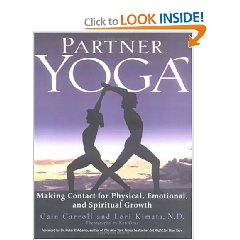
Partner Yoga: Making Contact for Physical, Emotional, and Spiritual Growth on Amazon here

Relaxation Fit Partner Yoga video  here from Divakar Yoga

The Joy of Partner Yoga here

Together: the Art of Partner Yoga here.

Read Full Post »

By Sue Shekut, Owner, Working Well Massage, Licensed Massage Therapist, Certified Wellness Coach, ACSM Personal Trainer

Fibromyalgia is a disease characterized by painful muscles and fatigue. For those suffering from this condition, pain relief is a main goal. And research has found that contrary to previously held beliefs, it is better to move more than be sedentary if you have this disease. I’ve listed some of the best resources for help with fibromyalgia below. There are a lot of links and great articles so make sure you take a break between reading and move your body a bit!

WebMD has a great article about the impact of exercise on Fibromyalgia sufferers here. This WebMD article does a fantastic job of explaining the physical and neurological reasons that exercise helps boost endorphins and serotonin, keeps muscles strong and flexible and overall helps reduce the pain associated with the condition. The article also suggests types of exercises that are best for those with Fibromyalgia Syndrome: walking, strength training, stretching, yoga, Pilotes, swimming and tai chi are some of the exercises recommended.

An article at the ProHealth website, suggests that for some, conventional exercise may be too painful or difficult. This article provides some alternative exercise tips for those in this category here. In the article, Fibromyalgia and ME/CFS specialist Dr. Charles Lapp suggests redefining “exercise” for Fibromyalgia  patients.  Perhaps a better word would be “movement” or “activity.”  He says the main thing is to avoid strict bed rest, which causes deconditioning, which in turn makes symptoms worse. Tips in this article include remembering to breath deeply, making an effort to move more throughout the day even if it’s to get up to get a glass or water, do slow seated stretches and take frequent breaks.

The best resource for information about Fibromyalgia is the National Fibromylagia Assocaition (NFA). Their website is here. The site has a network of support groups for people with fibromyalgia here. Online discussions are available here.

Another site with information and a community chat room about Fibromyalgia is the Fibromyalgia website here.

A new research study is described here: Behavioral therapy plus exercise may help ease fibromyalgia here.

And finally, Medline Plus, a service provided by the U.S. National Library of Medicine and National Institute of Health has a page listing all the latest info and research on fibromyalgia here.

Read Full Post »

« Newer Posts - Older Posts »