Feeds:
Posts
Comments

Archive for the ‘Health and Wellness’ Category

By Sue Shekut, Owner, Working Well Massage, Licensed Massage Therapist, Certified Wellness Coach, ACSM Personal Trainer

Pair a great upper body stretch with a few minutes of relaxation by using a yoga bolster to stretch every day. Let gravity do the work of opening your chest muscles. Meanwhile, give your back muscles a much needed break from holding you upright all day. AND give yourself an easy way to de-stress, take a few minutes to relax and unwind after a busy day.

Note: Always consult your doctor or health care provider before attempting any new exercises. This information is intended for educational purposes only and should not be construed as medical advice.

Gina Saka, a Chicago-based licensed massage therapist and yoga instructor, shows you how to perform the Yoga Bolster Stretch.

Why Stretch With the Yoga Bolster?
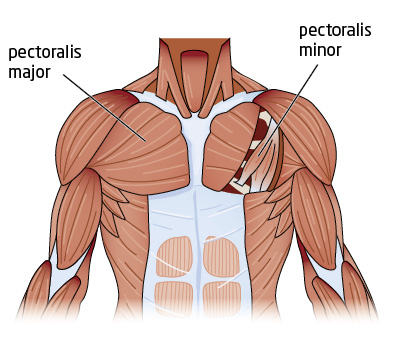
Working on a computer all day is tough on your back and neck muscles. Why is that? Forward leaning work causes us to tighten our pectoral and subscapularius muscles. As these muscles tighten, this can also lead to strain and pains in our upper back and neck muscles.

https://workingwellresources.blog/wp-content/uploads/2009/09/17975.jpg

Pectoral Muscle Diagram from Demand Studios

Notice in the diagram that there are two pectoral muscles: Pec major and pec minor. When you use a keyboard or mouse, you contract these muscles–sometimes for hours. This can cause your shoulders to round. The corresponding muscles in your back and neck have to pull backwards to keep you from falling over. Over time these back and neck muscles can become weak or strained. Painful trigger points can develop. And soon, you have that “Oh my aching neck or shoulder pain” feeling. (Note: We will cover anatomy of pectoral and back muscles in depth in later posts. The more you know about your own body, the more you can keep yourself healthy! )

If you have a job that requires you to sit or lean forward for hours at a time, it’s tough to stretch enough to counteract the stress this puts on your upper back and neck muscles. Like brushing your teeth a few minutes each day (versus once a week for 2 hours), it’s far better to stretch a few minutes each day than just once a week or when you go to the gym!

So Where Do I get a Yoga Bolster?
As versatile as they are for stretching, yoga bolsters are not often available at your local department or even sporting goods store. However, it’s easy to order your yoga bolster from many venders online. You may use either a round or a rectangular bolster for this stretch and for many other relaxing yogic stretches.

Round bolsters should be at least 9″ by 25″.
Square bolsters should be at least 24″ by 12″ by 6″s.
If you are very tall (over 6′-2″), you may want a longer bolder, say 10″ by 29″.

Vendors that sell yoga bolsters at reasonable prices:

YogaAccessories (TM) Round Cotton Yoga Bolster

Yoga Direct Deluxe Round Yoga Bolster

YogaAccessories (TM) Rectangular Cotton Yoga Bolster

YogaAccessories (TM) Deluxe Rectangular Cotton Yoga Bolster

And if you MUST have an organic yoga bolster, try Organic Yoga Bolster – Cotton Round Cushion – Natural Cotton Fill A bit more expensive, but made of organic materials. (Just don’t eat them!)

And for Hemp bolsters, try Natural Fitness Hemp Yoga Bolster

Note: This is not an exhaustive list of all vendors of yoga bolsters. And we do not receive any advertising income from these product recommendations. Feel free to browse your favorite online search services to find the bolster that’s right for you!

Read Full Post »

Experts share tips about choosing a fitness professional who can put you on the road to better health.
By Annabelle Robertson
WebMD Feature
Reviewed by Louise Chang, MD

Laurie Heit couldn’t imagine working with a wellness coach. In fact, she didn’t even know what a wellness coach was — until one transformed her life.

A compulsive overeater, Heit had struggled with her weight since childhood. She went on diet after diet, and was finally ready to join Overeaters Anonymous when a friend told her about wellness coaching. She suggested Chere Bork, a registered dietitian and coach. Heit jumped at the chance.

After her first appointment, Heit was so impressed that she decided to do more. She has now had 12 telephone coaching sessions with Bork at a cost of $75 each. She insists they were worth every penny.

Although Heit has made significant improvements to her diet and lost weight, she says she’s gained something far more important. Through the coaching process, Heit discovered that losing weight wasn’t what she needed most. She longed to be at home with her family. So after debating the options, Heit quit her insurance job and became a full-time homemaker. She’s never been happier.

“My goal didn’t change, but how I got there did,” she explains. “The time and exploration of the right food plan helped me explore myself and my wants in life.”

Fitness Trends

According to a recent survey by the American College of Sports Medicine (ACSM), “educated and experienced fitness professionals” now constitute the most important fitness trend in the world, having jumped from third to first place since last year. “Personal trainers” rose from seventh to third place.

“We want to be well. We yearn to be in control and feel better. We want more energy,” says Margaret Moore, founder of Well Coaches, the only health and wellness coaching certification program endorsed by the ACSM. “But there is an enormous gap between wanting to be well and the everyday reality of living with the mental and physical health penalties of overeating, underexercising, and having too little down time.”

That gap is growing. The CDC reports that more than 66% of adult Americans are overweight or obese.

Doctors’ Views on Wellness Coaching

That’s one of the reasons why Moore and other wellness coaches have been working to increase awareness about the field among medical professionals. Moore readily admits, however, that although the idea is becoming increasingly popular with the public, it’s only beginning to catch on with doctors.

“Physician referral to coaches is still at an early stage,” she says. “We don’t have reimbursement, and it’s going to take years to fall into place. We see grass-roots, small-scale doctors coming to us. But most physicians just aren’t into it yet. It’s still very new.”

One doctor who has embraced the idea is Michael Lano, MD. Director of the Ridgeview Clinics, a group of primary care facilities in suburban Minneapolis, Lano refers several patients a month to Bork.

“I’m a family physician and I always tell my patients that it’s my job to help them live a long, healthy life,” he says. “But 98% is their part, and that’s what the life coach helps with — everything from diet and exercise to emotional well-being. It’s the same thing that we [doctors] deal with, but she deals with it from a lifestyle perspective.”

Lano says he sees significant improvements in patients who work with Bork. Most begin exercising and eating better. Many make other important changes as well, which tend to have a boomerang effect on their overall outlook and lifestyle, as they did with Heit.

Ideal Candidates for Wellness Coaching

However, not everyone is a good candidate for wellness coaching, says Lano. Some may be too old or sick to change. Others may simply be unmotivated. The ideal patient is someone who may not be doing anything bad, but they’re not doing the good things, either, he says. “They’re not eating well. They’re not exercising. They’re stressed. They’re stuck. They’re not making progress.”

Jim Harburger found himself in that situation. The 66-year-old clinical psychiatrist began to gain weight 32 years ago when he abandoned his heavy smoking habit. Gradually, his weight began to creep from 165 pounds to 220 pounds.

Much of the problem, Harburger says, was stress from his high pressure job as the director of a large behavioral health organization. But the trigger was the daily gift of sweets offered by his secretaries, which Harburger found irresistible.

“The metaphor was that I was being eaten alive by my job, but I was actually eating to handle the anxieties from my work,” he says.

Harburger joined a gym. But like so many others, he found it hard to get there and went only sporadically. Desperate, he finally decided to hire a personal trainer. The gym recommended Ellen Albertson, a staff member who was a registered dietitian, a licensed nutritionist, a certified personal trainer, and a licensed corporate wellness coach.

Albertson began each session with 20 minutes of walking, during which time she and Harburger would talk.

“One might think I could walk on my own, but what she was doing was listening to me about my life, learning about how I managed eating, the stressors in my life, and my relationship to my body,” he explains. “She became familiar, almost like a good therapist, with all aspects of my life. And slowly, she built a relationship that I started to value.”

Albertson also helped Harburger manage his cravings. A self-confessed sugar addict, he likened it to withdrawal from cocaine. “I felt my body shaking, I couldn’t think, and I was in total transition for almost a week,” he says. “Now I know that if I have a cookie, I need to separate myself from what I am eating or I will just keep eating.”

The result? Harburger, who visits the gym almost every day now, dropped 40 pounds over a three-year period.

Albertson says she sees it all the time. People come in expecting to be told what to do, but what actually works best for them is to slow down, think about their goals, and then determine the path themselves.

“People are out of touch with their bodies. When you listen to your body, you eat when you’re hungry, you stop when you’re full, and you enjoy food for its rightful place in your life,” she says.

Looking for the Right Wellness Coach

Michael Arloski, PhD, is the author of Wellness Coaching for Lasting Change, a training manual used by several coaching programs, works with dozens of corporate clients, training them on the finer points of coaching for long-term lifestyle changes.

“We need to move from ‘prescribe and treat,’ or what I like to call ‘education and implore’ — where we’re begging someone to change after we give them a lot of information — to a coaching model where we’re advocating for change and becoming an ally with that person,” he says.

To determine whether a coach is reputable, Moore suggests checking references and asking for testimonials. Look for people with degrees or certification from reputable organizations such as WellCoaches and then interview them extensively about their background.

Moore advises choosing a coach who makes you feel the most energized and confident. You should be inspired after a coaching session, with lots of “Aha!” moments, as well as motivated about your ability to make needed changes in your life.

Plan to pay between $50 and $150 a session, and expect to spend at least three months with a coach before seeing meaningful progress, which is typically defined as the creation of two or three healthy new habits. And don’t hesitate to end the relationship if something doesn’t feel right.

In addition to his dramatic weight loss, Harburger says the changes have had a positive effect on his career. Harburger’s wellness coaching has led him to return to private practice and reduce his workweek to 75%.

“I struggled with giving myself permission to do that, but it was miraculous. Before, I would never have initiated that. Now, I feel so unencumbered,” he says. “It’s like I’m on constant vacation.”

Link to article in WebMD .

Read Full Post »
By Sue Shekut, Licensed Massage Therapist, ACSM Personal Trainer, Certified Wellness Coach, Owner, Working Well Massage

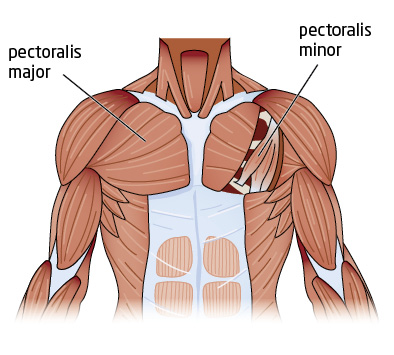
Sitting all day is tough on your back, neck and stress level. We hear news everyday about the benefits of exercise on our hearts, our waistlines and our mental processes. But many Americans have jobs that require us to sit long hours at computers or working at desks. If we can find time after work, some of us can squeeze in an hour or so working out at the gym a few days a week. But finding gym time is always not doable with busy schedules, long commutes and family obligations. What’s a stressed out office worker to do? Call Steelcase and order a new Walkstation treadmill so you can walk AND work…without leaving your office! Read more from this article by Shandra Martinez in The Seattle Times:

Burn while you earn: Desk treadmill keeps you walking at work

GRAND RAPIDS, Mich. — Too busy working to work out?

Now you can burn calories while earning a paycheck with Steelcase’s new Walkstation, which merges a workstation with a treadmill.

Dr. James Levine on his Walkstation
The Walkstation.
DEBRA L. ROTHENBERG / FEATURE PHOTO SERVICE

The concept is based on the research of Dr. James Levine of the Mayo Clinic in Rochester, Minn., who has spent the past 15 years studying energy expended during daily activity.

“What we have done is taken science from the lab to a product that could potentially help millions and millions of people,” said Levine.

“I think it’s the next iPod. Everybody is going to want one.”

Designed to run at a maximum of 3.5 mph, the commercial-grade treadmill has a quiet motor and belt, Klipa said.

But don’t expect this workplace treadmill to make you break a sweat or provide a gym-style workout.

Yet even a slow stroll can improve a person’s health, said Steve Glass, professor of movement science and director of Grand Valley State University’s Human Performance Lab.

“How hard you work to burn calories isn’t as important as burning those calories, from the standpoint of long-term health,” said Glass, who is familiar with Levine’s work.

Levine’s research on Non-Exercise Activity Thermogenesis (N.E.A.T.) concludes that a sedentary lifestyle is not natural. The key to fighting obesity and many other health problems is to keep people from spending their days deskbound.

“Over the last 150 years, we’ve become chair-imprisoned. We are behind a screen all day at work. We are in a car or bus getting to and from work. And in the evening, we are in a chair watching television or surfing the Internet,” Levine said. “We’ve gone from being on our legs all day to being on our bottoms all day.”

Steelcase's Walkstation

Levine does most of his research on his Walkstation. Sometimes, that can be as much as 90 hours a week. The 43-year-old’s longest stretch without stopping is 20 hours. The habit of walking a mile an hour while he works has made him sharper and reduced his need for sleep. “I’ve become incredibly focused on completing things,” said Levine, who has banned chairs from his office.

There are more benefits to the Workstation than losing weight. “People want to escape from work because it is stressful,” Levine said. “One of the key benefits to this approach to working is that it is de-stressing and depression prevention.”

Link to Shandra Martinez’s November 14, 2007 article in The Seattle Times, “Burn While You Earn”

Dr. Levin’s study of volunteers at SALO, LLC, a Minneapolis-based financial staffing firm, using the actual Walkstation showed that “Individuals lost an average of 8.8 pounds — 90 percent of that was fat. Triglycerides decreased by an average of 37 percent. no productivity was lost due to the new environment.”

The Walkstation retails for about $4500 and is available in a variety of colors and table sizes. For more information on Steelcase’s Walkstation, go to Steelcase’s website for the WalkStation

For more information on a six-month study from (late 2007 to early 2008) of a real-life office at SALO, LLC, a Minneapolis-based financial staffing firm, that was re-engineered to increase daily physical activity or NEAT (non-exercise activity thermogenesis) click here.

In addition to his research efforts at SALO, Dr. Levine and his colleagues in the NEAT (Non-exercise Activity Thermogenesis) lab at Mayo Clinic have pioneered an “Office of the Future” — an office complete with treadmills that serve as both desks and computer platforms and a two-lane walking track that serves as a meeting room.

They created a Squidoo lens that focuses on real world implementations of the work of the NEAT Lab. Dr. Levine, along with Dr. Joseph Stirt (a doctor and a NEAT practitioner, having installed a treadmill computer desk in his home office) and Lensmaster Tom Niccum (with a treadmill computer desk–affectionately called “iPLod”–in his company office) hope to create a community of NEAT practitioners to spread the idea of “walking while working,” discuss the practicalities of setting up one’s workspace, and explore new ways to implement NEAT ideas through their Squidoo lens, Walking While Working.

Read Full Post »

By Sue Shekut, Licensed Massage Therapist, ACSM Personal Trainer, Certified Wellness Coach, Owner, Working Well Massage

The American Heart Association is now encouraging that Americans end their love affair with sugar. The AHA guidelines recommend that women eat no more than six teaspoons of added sugar per day and men eat no more than ten teaspoons of added sugar a day. That’s a 70 percent reduction in sugar consumption for the average American.

According to an article from by by LAUREN COX and COURTNEY HUTCHISON from the ABC News Medical Unit, “Experts Debate the Value of the American Heart Association’s Call to Cut Our Sugar Intake.”

“We know that soft drinks are the number one source of added sugars in the American diet. We really want Americans to start thinking about this,” said Dr. Rachel K. Johnson, lead author of the study.

“The high intake of added sugar has been implicated in a number of negative health outcomes, but primarily this targets obesity,” said Johnson. “Sugars have been implicated in high blood pressure and inflammation which are risk factors for heart disease.”

“Strictly from a health standpoint, sugar is a ‘triple threat’ – it provides extra calories, no nutrients, and it may displace other foods and nutrients in the diet that are more beneficial,” said Dr. Donald D. Hensrud, an associate professor of Preventive Medicine and Nutrition at the Mayo Clinic.

Johnson, the lead author of the study, hopes her recommendations translate into some good advice, even if the public isn’t counting grams of sugar every day.
“We’re not saying eliminate added sugar, we’re saying use them with discretion,” said Johnson.

“Try to use the added sugars with foods that will enhance the diet, for instance a sugared whole grain breakfast cereal or a sugar sweetened dairy product … they’re improving the flavor of the food in a healthy diet as opposed to [spending it on] things that don’t carry any other nutritional value, like soda or candy bars,” she said.

For the complete ABC News article click here

Read Full Post »

By Sue Shekut, Licensed Massage Therapist, ACSM Personal Trainer, Certified Wellness Coach, Owner, Working Well Massage

Does exercise makes you fatter?  According to an article in Time Magazine ‘s August 9th,  2009 issue, “Why Exercise Won’t Make you Thin,” vigorous exercise can make you unable to lose weight. The article states that people only have so much willpower. Once they use that limited self control to work out, they don’t have any more mental strength to resist over eating. It also states that vigorous exercise makes you ravenous and you end up eating much more if you exercise than if you do not.

Well, that’s just silly.  Think about it. If vigorous exercise made you fat, Michael Phelps would be a Sumo wrestler.  It is true that high caloric expenditure requires high caloric intake.  An Olympic athlete that burns 12000 calories a day in training would need to eat at 12000 calories just to maintain his current weight. People that work out for hours at a time–competitive body builders, gymnasts, swimmers and marathon runners–do expend a lot of calories. And they do need to eat to replace the calories they burn in exercise. But ask a marathon runner if he or she is ravenously hungry after a run. Many of them will tell you they actually lose their appetite immediately following an intense workout. Body builders eat frequent meals throughout the day to keep protean available to give their muscles building blocks to grow larger and stronger.

It’s only been relatively recently that human beings lead such sedentary lifestyles. In the 1800’s and early 1900’s, most people had very physically active lives. Daily caloric intake was larger due to the extra caloric expenditure. In other words, if you spent your day tilling the fields, or washing clothes and dishes by hand, hand washing floors and making bread from scratch, you had a higher caloric needs than someone from 2009 that sits at work all day, drives home, microwaves a meal and sits in front of the television.

According to the American College of Sports Medicine, a leading authority in sports medicine and exercise science:

• Physical activity is one of the most important behavioral factors in weight maintenance and improving long-term weight loss outcomes. In fact, participation in an exercise program has proven to be the very best predictor of maintaining weight that was lost.

• Effective weight loss and maintenance depend on a simple equation called energy balance: Calories expended through physical activity and normal lifestyle functions must exceed calories consumed.

• It is a myth that exercise can actually prevent weight loss by leading exercisers to overeat. Research and common sense disprove this notion. Look around the gym or the jogging trail. If this were the case, wouldn’t those who regularly exercise be the fattest?

• Physical activity needn’t involve expensive equipment, gym memberships or team athletics. Simple activities like walking, accumulated in 10-minute bouts, can have significant benefits.

John Jakicic, Ph.D., FACSM states that” “Again, it is clear in this regard that physical activity is one of the most important behavioral factors in enhancing weight loss maintenance and improving long-term weight loss outcomes.”

Jakicic’s research on obesity, published in 2008, showed that a long duration of physical activity (275 minutes above baseline levels) led to the largest observed weight loss after a 24-month intervention.

Sorry for the letdown, folks, but exercise does help you lose fat and maintain the weight loss. And  it can be fun!

Sources:

Time Magazine Article link

ASCM Article link

Read Full Post »

« Newer Posts