Feeds:
Posts
Comments

Archive for the ‘Health and Wellness’ Category

By Sue Shekut, Owner, Working Well Massage, Licensed Massage Therapist, Certified Wellness Coach, ACSM Personal Trainer

Fibromyalgia is a disease characterized by painful muscles and fatigue. For those suffering from this condition, pain relief is a main goal. And research has found that contrary to previously held beliefs, it is better to move more than be sedentary if you have this disease. I’ve listed some of the best resources for help with fibromyalgia below. There are a lot of links and great articles so make sure you take a break between reading and move your body a bit!

WebMD has a great article about the impact of exercise on Fibromyalgia sufferers here. This WebMD article does a fantastic job of explaining the physical and neurological reasons that exercise helps boost endorphins and serotonin, keeps muscles strong and flexible and overall helps reduce the pain associated with the condition. The article also suggests types of exercises that are best for those with Fibromyalgia Syndrome: walking, strength training, stretching, yoga, Pilotes, swimming and tai chi are some of the exercises recommended.

An article at the ProHealth website, suggests that for some, conventional exercise may be too painful or difficult. This article provides some alternative exercise tips for those in this category here. In the article, Fibromyalgia and ME/CFS specialist Dr. Charles Lapp suggests redefining “exercise” for Fibromyalgia  patients.  Perhaps a better word would be “movement” or “activity.”  He says the main thing is to avoid strict bed rest, which causes deconditioning, which in turn makes symptoms worse. Tips in this article include remembering to breath deeply, making an effort to move more throughout the day even if it’s to get up to get a glass or water, do slow seated stretches and take frequent breaks.

The best resource for information about Fibromyalgia is the National Fibromylagia Assocaition (NFA). Their website is here. The site has a network of support groups for people with fibromyalgia here. Online discussions are available here.

Another site with information and a community chat room about Fibromyalgia is the Fibromyalgia website here.

A new research study is described here: Behavioral therapy plus exercise may help ease fibromyalgia here.

And finally, Medline Plus, a service provided by the U.S. National Library of Medicine and National Institute of Health has a page listing all the latest info and research on fibromyalgia here.

Read Full Post »

Yoga Videos On Demand: A Fresh Take On Healthy Living


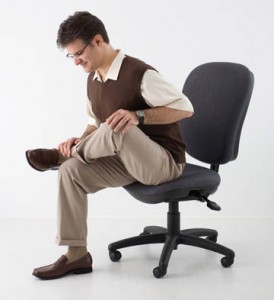
office-yoga-4-fa09ip-274x300

Office Yoga

  • Unlimited Video Classes
  • Full Screen HD Streaming
  • World Class Teachers
  • Low Monthly Subscription

Who is My Yoga Online?

My Yoga Online is a premium online subscription and digital download service, offering yoga, Pilates, meditation, and wellness video classes to thousands of members and free video and written content to hundreds of thousands of visitors worldwide. It was was created in 2005 and is Vancouver, Canada based. My Yoga Online partners a ‘Ancient Practice meets Modern Delivery’ concept, to bring the physical, mental, and emotional benefits of these wellness practices and exercises to a global audience, improving quality of life for all.

How does the website work?

My Yoga Online streams its large video library over the internet using streaming technology, allowing for full screen viewing in HD quality at your computer or on an attached television. People can download individual classes for their ipod, iTV, iPhone, or to burn to DVD. They also sell yoga related music and meditation downloads.

Price for subscription to My Yoga Online

Monthly Membership

$9.95 per month

• Unlimited access for just 33 cents a day
• Less than one DVD or studio class
• Experience our growing library of videos
• On demand anytime, anywhere
• Billing recurs monthly, cancel anytime
• No contract, no obligation

Yearly Membership Plan

$89.95 per year.

• Unlimited access for just a quarter a day
• 12 months for the price of 9
• World class teachers with guided instruction
• All the benefits of yoga at your fingertips

For more information on My Yoga Online, go to their website here.

Read Full Post »

What does exercise do to your brain? Specifically how can exercise improve your mood, your memory and your ability to process information aka your ability to think (cognate)?

Dr. Walter W. van den Broek, MD, PhD, (aka Dr. Shock), a Dutch Psychiatrist, has a website that answers these and many other questions about neuroscience for laypeople.  Read his blog post below to learn more about the effects of exercise on your brain.

Neuroscience of Exercise by Dr. Shock, MD

The Benefits of Exercise

  • In children, college students and young adults, exercise or physical activity improves learning and intelligence scores
  • Moreover, exercise in childhood increases the resilience of the brain in later life resulting in a cognitive reserve
  • The decline of memory, cortex and hippocampus atrophy in aging humans can be attenuated by exercise
  • Physical activity improves memory and cognition
  • Exercise protects against brain damage caused by stroke
  • Exercise promotes recovery after brain injury
  • Exercise can be an antidepressant

The brain needs certain ingredients to flourish or to life up to the expectations of every day problems. The brain has priority when it comes to certain ingredients. A variety of foods can be beneficial for learning. Positive effects on brain function have been reported for fish oil, teas, fruits, folate, spices, cocoa, chocolate and vitamins.

How does exercise improve the brain?

  • With exercise the number of neurons increase in the hippocampus, a brain structure important to memory and learning.
  • Also synaptic plasticity increases in a certain part of the hippocampus due to exercise: the dentate gyrus.
  • Spine density increases in certain parts of the hippocampus.
  • Exercise also increases and improves the small blood vessels throughout the brain.
  • Exercise can change the function of neurotransmitters and can activate the monoamine system.

And from Henriette van Praag, from Trends in Neuroscience:

Recent research indicates that the effects of exercise on the brain can be enhanced by concurrent consumption of natural products such as omega fatty acids or plant polyphenols. The potential synergy between diet and exercise could involve common cellular pathways important for neurogenesis, cell survival, synaptic plasticity and vascular function. Optimal maintenance of brain health might depend on exercise and intake of natural products.

Source:

van Praag, H. (2009). Exercise and the brain: something to chew on Trends in Neurosciences, 32 (5), 283-290 DOI. Read more here: 10.1016/j.tins.2008.12.007

Read D. Shock’s full article at his website here.

And for those that want to know more about exercise effects on your brain as you age, read more on Exercise, Experience and the Aging Brain at this abtract  here.

Read Full Post »

By Sue Shekut, Licensed Massage Therapist, ACSM Personal Trainer, Certified Wellness Coach, Owner, Working Well Massage

Take this easy test to calculate your risk for diabetes and heart disease.

Just enter some basic health information and My Health Advisor very accurately calculates your risk for type 2 diabetes, heart disease, and stroke. Note: Your results will be more accurate if you know your blood pressure, cholesterol and glucose levels from recent blood tests.

My Health Advisor

Then, once My Health Advisor calculates your personal risk, you can quickly and easily see the difference simple lifestyle changes—like losing 5 or 10 pounds or quitting smoking—make in your overall risk. Then get your personal action plan outlining suggestions for lowering your risk for these deadly diseases. When you’re done, email your results to your doctor and make plans to discuss them at your next check-up.

You can stop type 2 diabetes, starting right now. Use My Health Advisor. Then talk to your doctor about your risk for diabetes, heart disease, and stroke. Listen to your doctor. Eat better. Get moving.

Get started now!

Learn more about CheckUp America and your risk for type 2 diabetes, heart disease, and stroke.

What is My Health Advisor?

My Health Advisor is powered by Archimedes, a very powerful health modeling program that brings together a large amount of clinical research data to make highly accurate predictions about health risk. Archimedes creates a virtual reality in which all the important objects and events in the real world match objects and events in the model’s world.

When a simulation model is run, the objects interact and events occur as they would in the real world. So, My Health Advisor is very accurately projecting your personal risk based on real world events.


My Health Advisor was developed through the American Diabetes Association’s CheckUp America program, which is supported by unrestricted educational grants from Eli Lilly & Company, Merck & Merck/Schering-Plough Pharmaceuticals, Novartis, Pfizer Inc., sanofi-aventis, and Takeda Pharmaceuticals North America.

Go to the American Diabetes Association website for more details.

Read Full Post »

By Harvard Health Publications

Since the 1970s, meditation and other stress-reduction techniques have been studied as possible treatments for depression and anxiety. One such practice, yoga, has received less attention in the medical literature, though it has become increasingly popular in recent decades. One national survey estimated, for example, that about 7.5% of U.S. adults had tried yoga at least once, and that nearly 4% practiced yoga in the previous year.

Yoga classes can vary from gentle and accommodating to strenuous and challenging; the choice of style tends to be based on physical ability and personal preference. Hatha yoga, the most common type of yoga practiced in the United States, combines three elements: physical poses, called asanas; controlled breathing practiced in conjunction with asanas; and a short period of deep relaxation or meditation.

Many of the studies evaluating yoga’s therapeutic benefits have been small and poorly designed. However, a 2004 analysis found that, in recent decades, an increasing number have been randomized controlled trials — the most rigorous standard for proving efficacy.

Available reviews of a wide range of yoga practices suggest they can reduce the impact of exaggerated stress responses and may be helpful for both anxiety and depression. In this respect, yoga functions like other self-soothing techniques, such as meditation, relaxation, exercise, or even socializing with friends.

Taming the stress response

By reducing perceived stress and anxiety, yoga appears to modulate stress response systems. This, in turn, decreases physiological arousal — for example, reducing the heart rate, lowering blood pressure, and easing respiration. There is also evidence that yoga practices help increase heart rate variability, an indicator of the body’s ability to respond to stress more flexibly.

A small but intriguing study further characterizes the effect of yoga on the stress response. In 2008, researchers at the University of Utah presented preliminary results from a study of varied participants’ responses to pain. They note that people who have a poorly regulated response to stress are also more sensitive to pain. Their subjects were 12 experienced yoga practitioners, 14 people with fibromyalgia (a condition many researchers consider a stress-related illness that is characterized by hypersensitivity to pain), and 16 healthy volunteers.

When the three groups were subjected to more or less painful thumbnail pressure, the participants with fibromyalgia — as expected — perceived pain at lower pressure levels compared with the other subjects. Functional MRIs showed they also had the greatest activity in areas of the brain associated with the pain response. In contrast, the yoga practitioners had the highest pain tolerance and lowest pain-related brain activity during the MRI. The study underscores the value of techniques, such as yoga, that can help a person regulate their stress and, therefore, pain responses.

Improved mood and functioning

Questions remain about exactly how yoga works to improve mood, but preliminary evidence suggests its benefit is similar to that of exercise and relaxation techniques.

In a German study published in 2005, 24 women who described themselves as “emotionally distressed” took two 90-minute yoga classes a week for three months. Women in a control group maintained their normal activities and were asked not to begin an exercise or stress-reduction program during the study period.

Though not formally diagnosed with depression, all participants had experienced emotional distress for at least half of the previous 90 days. They were also one standard deviation above the population norm in scores for perceived stress (measured by the Cohen Perceived Stress Scale), anxiety (measured using the Spielberger State-Trait Anxiety Inventory), and depression (scored with the Profile of Mood States and the Center for Epidemiological Studies Depression Scale, or CES-D).

At the end of three months, women in the yoga group reported improvements in perceived stress, depression, anxiety, energy, fatigue, and well-being. Depression scores improved by 50%, anxiety scores by 30%, and overall well-being scores by 65%. Initial complaints of headaches, back pain, and poor sleep quality also resolved much more often in the yoga group than in the control group.

One uncontrolled, descriptive 2005 study examined the effects of a single yoga class for inpatients at a New Hampshire psychiatric hospital. The 113 participants included patients with bipolar disorder, major depression, and schizophrenia. After the class, average levels of tension, anxiety, depression, anger, hostility, and fatigue dropped significantly, as measured by the Profile of Mood States, a standard 65-item questionnaire that participants answered on their own before and after the class. Patients who chose to participate in additional classes experienced similar short-term positive effects.

Further controlled trials of yoga practice have demonstrated improvements in mood and quality of life for the elderly, people caring for patients with dementia, breast cancer survivors, and patients with epilepsy.

Benefits of controlled breathing

A type of controlled breathing with roots in traditional yoga shows promise in providing relief for depression. The program, called Sudarshan Kriya yoga (SKY), involves several types of cyclical breathing patterns, ranging from slow and calming to rapid and stimulating, and is taught by the nonprofit Art of Living Foundation.

One study compared 30 minutes of SKY breathing, done six days a week, to bilateral electroconvulsive therapy and the tricyclic antidepressant imipramine in 45 people hospitalized for depression. After four weeks of treatment, 93% of those receiving electroconvulsive therapy, 73% of those taking imipramine, and 67% of those using the breathing technique had achieved remission.

Another study examined the effects of SKY on depressive symptoms in 60 alcohol-dependent men. After a week of a standard detoxification program at a mental health center in Bangalore, India, participants were randomly assigned to two weeks of SKY or a standard alcoholism treatment control. After the full three weeks, scores on a standard depression inventory dropped 75% in the SKY group, as compared with 60% in the standard treatment group. Levels of two stress hormones, cortisol and corticotropin, also dropped in the SKY group, but not in the control group. The authors suggest that SKY might be a beneficial treatment for depression in the early stages of recovery from alcoholism.

Potential help for PTSD

Since evidence suggests that yoga can tone down maladaptive nervous system arousal, researchers are exploring whether or not yoga can be a helpful practice for patients with post-traumatic stress disorder (PTSD).

One randomized controlled study examined the effects of yoga and a breathing program in disabled Australian Vietnam veterans diagnosed with severe PTSD. The veterans were heavy daily drinkers, and all were taking at least one antidepressant. The five-day course included breathing techniques (see above), yoga asanas, education about stress reduction, and guided meditation. Participants were evaluated at the beginning of the study using the Clinician Administered PTSD Scale (CAPS), which ranks symptom severity on an 80-point scale.

Six weeks after the study began, the yoga and breathing group had dropped their CAPS scores from averages of 57 (moderate to severe symptoms) to 42 (mild to moderate). These improvements persisted at a six-month follow-up. The control group, consisting of veterans on a waiting list, showed no improvement.

About 20% of war veterans who served in Afghanistan or Iraq suffer from PTSD, according to one estimate. Experts treating this population suggest that yoga can be a useful addition to the treatment program.

Researchers at the Walter Reed Army Medical Center in Washington, D.C., are offering a yogic method of deep relaxation to veterans returning from combat in Iraq and Afghanistan. Dr. Kristie Gore, a psychologist at Walter Reed, says the military hopes that yoga-based treatments will be more acceptable to the soldiers and less stigmatizing than traditional psychotherapy. The center now uses yoga and yogic relaxation in post-deployment PTSD awareness courses, and plans to conduct a controlled trial of their effectiveness in the future.

Cautions and encouragement

Although many forms of yoga practice are safe, some are strenuous and may not be appropriate for everyone. In particular, elderly patients or those with mobility problems may want to check first with a clinician before choosing yoga as a treatment option.

But for many patients dealing with depression, anxiety, or stress, yoga may be a very appealing way to better manage symptoms. Indeed, the scientific study of yoga demonstrates that mental and physical health are not just closely allied, but are essentially equivalent. The evidence is growing that yoga practice is a relatively low-risk, high-yield approach to improving overall health.

Where To Find Yoga Classes

Yoga Chicago magazine is a free publication distributed around the Chicagoland area. It contains a directory of all yhe known yoga classes in the city and suburbs of Chicago. Other cities may have similar publications or online services. For the Yoga Chicago main class directory go to this link here.

There are also a number of great yoga DVD’s available from Amazon, or you may find them at Target, Best Buy or Whole Foods Markets:

Yoga for Beginners from Amazon here.

Yoga for Stress Relief from Amazon here.

Yoga for Every Body from Amazon here.

and Yoga for Inflexible People from Amazon here.

Working Well Massage also provides certified yoga instructors for your home or office.

Sources:

Brown RP, et al. “Sudarshan Kriya Yogic Breathing in the Treatment of Stress, Anxiety, and Depression: Part I — Neurophysiologic Model,” Journal of Alternative and Complementary Medicine (Feb. 2005): Vol. 11, No. 1, pp. 189–201.

Brown RP, et al. “Sudarshan Kriya Yogic Breathing in the Treatment of Stress, Anxiety, and Depression: Part II — Clinical Applications and Guidelines,” Journal of Alternative and Complementary Medicine (Aug. 2005): Vol. 11, No. 4, pp. 711–17.

Janakiramaiah N, et al. “Antidepressant Efficacy of Sudarshan Kriya Yoga (SKY) in Melancholia: A Randomized Comparison with Electroconvulsive Therapy (ECT) and Imipramine,” Journal of Affective Disorders (Jan.–March 2000): Vol. 57, No. 1–3, pp. 255–59.

Khalsa SB. “Yoga as a Therapeutic Intervention: A Bibliometric Analysis of Published Research Studies,” Indian Journal of Physiology and Pharmacology (July 2004): Vol. 48, No. 3, pp. 269–85.

Kirkwood G, et al. “Yoga for Anxiety: A Systematic Review of the Research,” British Journal of Sports Medicine (Dec. 2005): Vol. 39, No. 12, pp. 884–91.

Pilkington K, et al. “Yoga for Depression: The Research Evidence,” Journal of Affective Disorders (Dec. 2005): Vol. 89, No. 1–3, pp. 13–24.

Saper RB, et al. “Prevalence and Patterns of Adult Yoga Use in the United States: Results of a National Survey,” Alternative Therapies in Health and Medicine (March–April 2004): Vol. 10, No. 2, pp. 44–49.

For more references, please see www.health.harvard.edu/mentalextra.

Read Full Post »

The American Diabetes Association designated this November as the month to communicate the seriousness of diabetes and the importance of proper diabetes control and treatment to those diagnosed with the disease and their families.  Throughout the month, the American Diabetes Association will hold special events and programs on topics related to diabetes care and treatment.  For information click the link to go to the website,  American Diabetes Association or call (800) DIABETES.


myths-4330056-490x190

Diabetes Myths and Facts


Read the myths and facts below from the American Diabetes Association to see how well you know your diabetes facts.


Myth: Diabetes is not that serious of a disease.

Fact: Diabetes causes more deaths a year than breast cancer and AIDS combined.  Two out of three people with diabetes die from heart disease or stroke.

Myth: If you are overweight or obese, you will eventually develop type 2 diabetes.

Fact:  Being overweight is a risk factor for developing this disease, but other risk factors such as family history, ethnicity and age also play a role. Unfortunately, too many people disregard the other risk factors for diabetes and think that weight is the only risk factor for type 2 diabetes.  Most overweight people never develop type 2 diabetes, and many people with type 2 diabetes are at a normal weight or only moderately overweight.

Myth: Eating too much sugar causes diabetes.

Fact: No, it does not.  Type 1 diabetes is caused by genetics and unknown factors that trigger the onset of the disease; type 2 diabetes is caused by genetics and lifestyle factors.  Being overweight does increase your risk for developing type 2 diabetes, and a diet high in calories, whether from sugar or from fat, can contribute to weight gain.  If you have a history of diabetes in your family, eating a healthy meal plan and regular exercise are recommended to manage your weight.

Myth: People with diabetes should eat special diabetic foods.

Fact: A healthy meal plan for people with diabetes is generally the same as a healthy diet for anyone – low in fat (especially saturated and trans fat), moderate in salt and sugar, with meals based on whole grain foods, vegetables and fruit.  Diabetic and “dietetic” foods generally offer no special benefit. Most of them still raise blood glucose levels, are usually more expensive, and can also have a laxative effect if they contain sugar alcohols.

Myth: If you have diabetes, you should only eat small amounts of starchy foods, such as bread, potatoes and pasta.

Fact: Starchy foods are part of a healthy meal plan.  What is important is the portion size.  Whole grain breads, cereals, pasta, rice and starchy vegetables like potatoes, yams, peas and corn can be included in your meals and snacks.  The key is portions.  For most people with diabetes, having 3-4 servings of carbohydrate-containing foods is about right.  Whole grain starchy foods are also a good source of fiber, which helps keep your gut healthy.

Myth: People with diabetes can’t eat sweets or chocolate.

Fact: If eaten as part of a healthy meal plan, or combined with exercise, sweets and desserts can be eaten by people with diabetes.  They are no more “off limits” to people with diabetes than they are to people without diabetes.

Myth: You can catch diabetes from someone else.

Fact: No.  Although we don’t know exactly why some people develop diabetes, we know diabetes is not contagious.  It can’t be caught like a cold or flu.  There seems to be some genetic link in diabetes, particularly type 2 diabetes.  Lifestyle factors also play a part.

Myth:  People with diabetes are more likely to get colds and other illnesses.

Fact: You are no more likely to get a cold or another illness if you have diabetes.  However, people with diabetes are advised to get flu shots. This is because any illness can make diabetes more difficult to control, and people with diabetes who do get the flu are more likely than others to go on to develop serious complications.

Myth: If you have type 2 diabetes and your doctor says you need to start using insulin, it means you’re failing to take care of your diabetes properly.

Fact: For most people, type 2 diabetes is a progressive disease. When first diagnosed, many people with type 2 diabetes can keep their blood glucose at a healthy level with oral medications.  But over time, the body gradually produces less and less of its own insulin, and eventually oral medications may not be enough to keep blood glucose levels normal.  Using insulin to get blood glucose levels to a healthy level is a good thing, not a bad one.

Myth:  Fruit is a healthy food.  Therefore, it is ok to eat as much of it as you wish.

Fact: Fruit is a healthy food.  It contains fiber and lots of vitamins and minerals.  Because fruits contain carbohydrates, they need to be included in your meal plan.  Talk to your dietitian about the amount, frequency and types of fruits you should eat.

Read Full Post »

By Barbara Russi Sarnataro
WebMD Feature
Reviewed by Louise Chang, MD

How many New Year’s Eves have you spent sipping champagne and vowing to get more fit in the coming year? And how many times have you failed to follow through?

“December 31 over a drink is too late to set goals and make promises,” says Justin Price, owner of The Biomechanics, a personal training and wellness coaching facility in San Diego, Calif.

Fall, on the other hand, is a great time to start a fitness program because “‘you’re going to create good habits for the holiday season and the upcoming winter months,” says Price.

Chris Freytag, a fitness instructor and fitness expert with Prevention magazine, agrees.

“With the change of seasons comes a renewed time to rethink and restart,” she says. “‘What’s so special about January?”

Besides, says Freytag, a mother of three, moms with school-aged kids “think of September as the new year.”

Here are 10 ways to start making the most of the season. And who knows? This year, you might be in great shape before that New Year’s Eve party rolls around.

1. Take advantage of the weather. Fall can be a treat for the senses: the crisp air, apple picking, pumpkin carving, a gorgeous canopy of fall foliage, and the crunch of leaves underfoot. These months are a great time to exercise outdoors and enjoy cooler temperatures.

“Walking, hiking and cycling are all awesome in the fall,” says Todd Durkin, MS, fitness coach and owner of Fitness Quest 10 in San Diego, Calif.

Discover park trails and take in some new scenery, whether you’re walking, biking, or in-line skating, he suggests.

In places where snow falls early, try cross country skiing or snowshoeing. Or, if you live near the beach, get out and play volleyball, throw the Frisbee around, or play a vigorous game of fetch with your dog.

“It’s a great time to do beach activities because it’s so much less crowded,” says Price.

If you’re near a lake, try kayaking or canoeing, for an excellent whole-body workout and a great change of pace.

And remember, it doesn’t have to seem like exercise to be a great workout.

“Raking leaves or doing some fall outdoor yard work is a great way to get the heart pumping, and it’s great calorie-burning,” says Freytag.

2. Think outside the box. Always wanted to learn to tap dance? Attempt to box? Master the jump rope? Ask any schoolchild: Fall is a great time to learn something new.

Many classes at gyms and elsewhere get started in the fall, so look around and see if something intrigues you.

And with the kids in school, parents have more time to check out those classes, Freytag says.

Fall is the perfect time to gain new physical skills, Price says, because you burn fewer calories when you begin a new activity (thanks to the learning curve). If you learn something new now, by next summer, you’ll have mastered the skill — and you’ll burn more calories doing it, just in time for swimsuit season.

3. Be an active TV watcher. Many people get geared up for fall premieres of their favorite television shows, says Freytag. “If you’re going to sit down and watch hours of TV, get moving,” she suggests. “Make a date with exercise and TV.”

While you watch, you can walk or run in place, do standing lunges, do tricep dips off the couch, or lift weights. During commercials, do push-ups or sit-ups. In a one-hour show, you probably have close to 20 minutes worth of commercial interruption.

4. Integrate exercise into your life. You already know the obvious suggestions: park farther away from your destination; take stairs instead of elevators; take a walk during your lunch break. Here are a few that are less obvious:

* If you’re spending the afternoon taking kids to soccer practice, instead of reading a book or visiting with another parent, “why not walk around the outside of the field while they practice?”, suggests Price. “Or (if you feel comfortable) warm up and cool down with the kids.”
* Or try “walking meetings,” like those Price and his colleagues at Biomechanics often hold. ‘”We go for a walk, we brainstorm, and we figure out who’s going to take what responsibilities,” says Price. “‘Things get achieved much more quickly,” he says, and everyone feels better for doing it.
* You can even get moving while you get motivated — for fitness or other life goals. ‘”Get some inspirational music or find a motivational talk and download it to your iPod,” suggests Durkin. Walk while you listen for 30 minutes.

5. Rejuvenate yourself. Fall is the time to rejuvenate body, mind and spirit, says Durkin. Get a massage after your run. Learn to meditate. Take an art class. Treat yourself not just with exercise but other activities that promote wellness, he says, so you can feel good physically, mentally, emotionally, and spiritually.

6. Remember the 30-day rule. “‘It takes about four weeks for the body to adapt to lifestyle changes,” says Price. That’s why people who give up on their fitness programs tend to do so within the first 30 days.

So, when the alarm goes off in the morning and it’s darker and colder, don’t roll over and hit the snooze button.

“Try to stick with a program for a month,” Price says. “After a month, behavior patterns will have adapted and it will be much easier to stick with it after that.”

7. Strive for the 3 Cs. Freytag calls commitment, convenience, and consistency “the three Cs”, and says having all three will lead to a successful fitness program.

First, exercise takes commitment. When a client complains to Freytag about a lack of time, she responds: “Tell me something I haven’t heard before. We’re all busy; that’s just part of our lives.

You have to start planning exercise, just like you do everything else,” like meetings, dinners, and getting kids to lessons and practice, she says. “Put in on the calendar, because later always turns into never.”

Convenience means choosing a gym that’s close by, or an activity you can do at home, or a time when you’re not likely to be interrupted.

Finally, there’s consistency. “I’d rather see a brand-new client work out for 10 minutes a day rather than one hour every month,” Freytag says

8. Deal with darkness. The best way to enjoy fall is to exercise outdoors. But it is getting darker earlier, and staying dark later in the morning, so be smart and safe.

“Just because it’s 6 p.m. (or a.m.) and dark doesn’t mean you can’t work out,” says Durkin. If walking or running outdoors, he says, “wear a reflective vest and carry a flashlight.”

When cycling, affix a light to your helmet or bike.

If possible, use trails or a local school track to avoid vehicle traffic. Try to work out at the same time every day, so drivers get used to seeing you.

9. Dress in layers. When exercising outside, layer your clothing. Before your body warms up, you may feel chilled, but once the blood gets pumping, you’ll feel overdressed.

These days, there’s no lack of great weather gear. Freytag and Price recommend clothing with wicking, often called “DriFit.”‘ This fabric wicks moisture away from your skin so you’re not exercising with wet fabric hanging on you.

Freytag suggests three layers: “The inner layer should be a moisture-wicking fabric, so it wicks away sweat and you’re not chilled. The second layer should be a warmth layer, and the third layer should be a protective layer (like a windbreaker or rain slicker, depending on the weather).”

“And don’t forget the sunglasses,” she warns. UV protection is important year round. Fall sun can be blinding at certain times of the day.

10. Find your motivation. “People are motivated by different things,” says Durkin. It’s important to first discover what your individual goals are, whether it’s losing weight, strengthening and toning, or preparing for a race or event, says Durkin.

But goals aren’t enough to get you there; you have to be motivated by the day-to-day workouts, he says. So choose something you’ll enjoy doing and will be likely to keep up, whether it’s walking or hiking with a friend, working with a trainer, or taking part in a “boot camp” class.

Creating a challenge for yourself will motivate you, as will encouragement and accountability, he adds. “You want to know when you’re doing a good job, and when you’re not,” says Durkin.

Remember too, that anything worth having takes work.

“Tell me something you can do three times a week for 10 minutes and be great at? It doesn’t exist,” he says. “If it was easy to be great, everybody would be great.”

Link to Barbara Russi Sarnataro’s article here

Read Full Post »
Studies show that drinking excessive amounts of alcohol can be hazardous to your health. Many people enjoy drinking and are unlikely to give it up entirely, based on the threat of future health problems. A few glasses of wine may be safe for some and may even have a few health benefits.

Wine

But some overdo it. If you find yourself in the position of having drunk too much alcohol the night before, how can you handle the hangover? Eating Well magazine has some useful tips.

Of course, the best tip is to not overdo it! If you tend to over do it, try drinking a glass of water between every alcoholic drink to slow yourself down when drinking alcohol. It helps reduce dehydration and may keep you from drinking as much.

If you think you may have a problem with drinking, seek help.

Hangover Cures from Eating Well Magazine

Everyone knows someone who absolutely swears by a greasy egg sandwich from the corner diner to erase the symptoms of a hangover—but the only proven way to get rid of a hangover is to wait it out. (Hangovers usually last for 8 to 24 hours.) That said, some commonly touted hangover cures—while not proven effective—are worth a try if you’re truly in pain.

Fruit

bananas

One study conducted in the 1970s found that drinking fruit juice or eating fruit relieved some hangover symptoms. Fruits and fruit juices contain a sugar called fructose, which may help your body clear alcohol faster, according to the National Institutes of Health. Fruits and vegetables (think: supposed tomato juice cures] also contain minerals, such as potassium, that are important in restoring your electrolyte balance and replenishing your body’s fluids.

Starchy Carbohydrates

carbs

Starchy carbohydrates, such as toast or crackers, may help to counteract nausea and low blood sugar (symptoms include headaches, fatigue and cold sweats) caused by long bouts of drinking with little food, according to an article in the journal Alcohol Health & Research World.

Fluids

Water

Drinking alcohol causes your body to lose a lot of water, especially if you’ve been sick to your stomach. Rehydrating—with water or sports drinks that contain electrolytes, such as sodium and potassium—could help you feel better.

Electrolytes

Soup

The salt and potassium in bouillon-based soup may replace lost electrolytes, relieving some of the symptoms of dehydration: headache, weakness, dizziness.

“How Alcohol Affects Your Body,” an article from Eating Well

Read Full Post »

The Nutrition Data website is a great source of the latest information on nutrition. It also links to a great nutrition blog, the Nutrition Data blog, written by Monica Reinagel M.S., LD/N.

The information in Nutrition Data’s database comes from the USDA’s National Nutrient Database for Standard Reference and is supplemented by listings provided by restaurants and food manufacturers. The source for each individual food item is listed in the footnotes of that food’s Nutrition Facts page. In addition to food composition data, Nutrition Data also provides a variety of proprietary tools to analyze and interpret that data. These interpretations represent Nutrition Data’s opinion and are based on calculations derived from Daily Reference Values (DRVs), Reference Daily Intakes (RDIs), published research, and recommendations of the FDA.

Nutrition Data was launched in 2003 and has grown into one of the most useful sources of nutritional analysis on the Web. In July 2006, Nutrition Data was acquired by CondéNet, a digital publisher under the Condé Nast Publications umbrella dedicated to editorial excellence. Nutrition Data’s continuing goal is to provide the most accurate and comprehensive nutrition analysis available, and to make it accessible and understandable to all.

Check out Nutrition Data here for the latest on Diabetes, Diet and Weight Loss, Heart Health and a whole host of useful tools to track your daily caloric needs, compare foods to determine which has the best nutrition content and more!

Read Full Post »

From time to time we post about nutrition topics. Nutrition Data Blog is a great source of nutrition tips and ideas. Check out the ND blog here.

The Nutrition Data Blog is maintained by Monica Reinagel, MS, LD/N, CNS.

Who is Monica Reinagel? Take a look at her bio from MacMillan Speakers here to see if she really is a credible source about nutrition:

A licensed nutritionist, noted author, and trained chef, Monica Reinagel, MS, LD/N, CNS, has written and edited numerous books, articles, and other publications on health, nutrition, and diet. Her books include Amazon best-seller The Inflammation Free Diet Plan, as well as The Life Extension Revolution: The New Science of Growing Older without Aging (with Philip Miller, M.D.) and The Secrets of Evening Primrose Oil.

Monica is the creator of the IF Rating system, a scientific method for estimating the inflammatory effects of foods. She holds a Master’s Degree in Human Nutrition and is a board-certified nutrition specialist. Monica is a member of the American Dietetic Association, the American College of Nutrition and the International Association of Culinary Professionals.

Monica is Chief Nutritionist for NutritionData.com, the internet’s leading source of nutrition information. Her well-respected blog on NutritionData.com and her popular weekly Nutrition Diva podcast have attracted a large and enthusiastic fan base. In an age of information overload, Monica is known for her clear and practical advice on how to take charge of your health—without taking all the fun out of life.

Hmm, trained chef, licensed nutritionist, Masters Degree in nutrition, author of many nutrition books. We think Monica’s credibility speaks for itself! To view her blog click here.

Read Full Post »

« Newer Posts - Older Posts »