Feeds:
Posts
Comments

Archive for the ‘Health and Wellness’ Category

By Jacqueline Stenson, MSNBC contributor

Many exercisers wonder whether vigorous physical activity, such as running or jogging, can be too tough on the body, especially the joints.

Physical activity guidelines released by the federal government last year recommend a minimum of two hours and 30 minutes a week of moderate physical activity or at least one hour and 15 minutes of vigorous activity, plus at least two days of strength training a week. The guidelines also state that greater health benefits can be achieved when adults like yourself increase their physical activity to five hours a week of moderate activity or 2.5 hours of vigorous activity, or more.

exercise_routine

Light weight training from PsychologyToday.com

Dr. W. Ben Kibler, a spokesperson for the American College of Sports Medicine and medical director of the Lexington Clinic Sports Medicine Center, says that you can overdo it with exercise and sustain overtraining injuries, particularly if you don’t follow good technique or listen to your body’s warning signals to taper off. But there’s no reason to think that healthy people doing recommended amounts of physical activity and progressing at a sensible rate are going to eventually wear out their bodies. On the contrary, there is abundant evidence that exercise can go a long way to keep us healthy and strong as we age — and prevent early death.

There is a fairly common concern among exercisers that high-impact exercise such as running will eventually destroy the knees. But as Dr. Ron Noy, a New York City sports medicine specialist and spokesman for the American Academy of Orthopaedic Surgeons, points out, running helps the joints stay lubricated and healthy, and keeps the bones and heart strong.“If you have a healthy knee, running is not going to damage the knee,” he says. “It’s not going to wear down your knee, and there are benefits to the joint from running.”
KneeReplacement

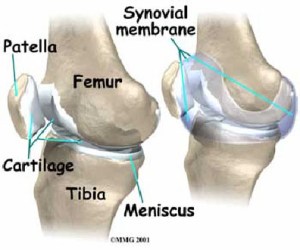
The Knee Joint. Image from globalsurgicalsolutions.com

”It’s a different story, though, if you have an arthritic or injured knee, which gives the body “less protective power” against high-impact activity, Noy says. Problems also can arise in obese people who are sedentary and then jump into a rigorous exercise program, which can overload a deconditioned body, he says, possibly leading to knee injuries, stress fractures or other problems.

So it would not be a good idea, for instance, for a 250-pound couch potato to start out running 12 miles a day, Noy says. “You have to acclimate your body to accept that load,” he says, with a “slow, progressive program.”

Even normal weight people with no health issues can become injured if they push too far, too fast in a range of activities. How much is too much varies from individual to individual, so as your program progresses, listen to your body, says Noy. If you’re getting signals such as pain, swelling or extreme fatigue, scale back.

An experienced coach or personal trainer can help recreational athletes develop a safe program that incorporates proper technique and equipment.

And it’s always a good idea to get a checkup before starting a training program, Noy says. It’s especially important to identify any potential heart problems or risk factors such as a family history of early cardiac death that might lead to sudden death during exercise. Be sure to discuss with your doctor any chest pain, shortness of breath or prior difficulty exercising in hot temperatures.

Kibler points out that people who die during endurance exercise often have underlying health problems or they push themselves too hard in the heat.“There’s usually some identifiable reason outside of exercise,” he says. “But exercise is the trigger.”

Link to original MSNBC article here.
Read Full Post »

Aside from achieving better Fitness by hiking and exercising in the Forest, there is ample evidence that exercising or interacting with nature (even having live plants in your work environment) helps combat burnout, reduces mental stress and reduces mental fatigue. Read on for more about this research and it’s implications for our daily lives.

A Walk in the Woods

By John Lofy in Michigan Today, a publication of the University of Michigan

STDana

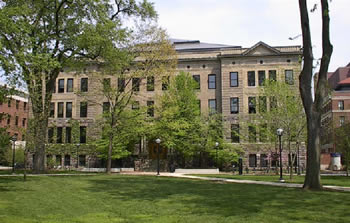
University of Michigan School of Natural Resources. Photo from JM Olsen Corporation

Professor Rachel Kaplan’s office at U-M’s School of Natural Resources and Environment looks out over a large oak tree. Potted plants crowd her window sill. Beyond these small patches of nature loom the buildings of central campus. But, she says, a little bit of nature goes a long way.

She would know. Kaplan and her husband, professor Stephen Kaplan, were among the first academics to study the psychological benefits of nature. Colleagues and collaborators for decades, they have shown that natural settings—trees, grass, gardens, and the like—have a profound, positive impact on both mental and physical health.

Both Kaplans hold joint appointments: Rachel in SNRE and Psychology, Stephen in Psychology and Electrical Engineering and Computer Science. They both take particular pride in graduate students they have mentored over the years. Students working with the Kaplans have made some striking discoveries:

• Studies by Bernadine Cimprich showed that the psychological health of cancer patients “improved dramatically” after they spent 20 minutes a day, three days a week, doing restorative activities such as gardening or walking in the woods. A control group that did not do the activities showed notably less improvement.

• Studies by Frances Kuo and William Sullivan found that residents of public housing projects who live near trees “showed all kinds of benefits,” says Stephen. “More civility, less aggression—and girls were more likely to study” their schoolwork.

• A study of AIDS caregivers by Lisa Canin found that the single most powerful factor in avoiding stress-related burnout was “locomotion in nature”—such as walking, running, biking, or canoeing. (The quickest route to burnout was watching television.)

Better yet, says Rachel, the natural setting “doesn’t have to be big or pristine” to have a positive effect. “Most of all, it has to be nearby.” A study by Ernest Moore of prisoners in Milan, Michigan, showed that simply having a view of farmland from a prison cell reduced inmates’ need for health care.

What’s so powerful about nature? Stephen theorizes that it comes down to brain function. The source of much mental distress, he says, is overuse of “directed attention”—such as concentrating on work. “Sustained directed attention is difficult and fatiguing. When people talk about mental fatigue, what is actually fatigued is not their mind as a whole, but their capacity to direct attention.” And it can make people “distractible and irritable.”

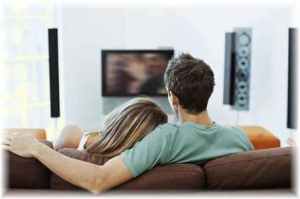
To escape the discomforts of mental fatigue, people often turn to activities that “capture” their attention. They find external events to distract them, so they don’t have to concentrate so hard. Watching TV, for instance, requires little willpower: the programs do the work, and the brain follows along.

tvfr2new

Watching t.v. doesn't allow for mental rest. Image from salviaforme

Similarly, says Stephen, “many people find an auto race fascinating.” Fast motion, loud noises, and smells captivate the brain.

The Kaplans refer to activities like watching TV or sporting events as “hard fascination.” The stimuli are loud, bright, and commanding. The activities are engaging and fun, but they don’t allow for mental rest.

Soft fascination, on the other hand, is the kind of stimulation one finds on, say, a stroll along the beach or in the woods. Nothing overwhelms the attention, says Stephen, “and the beauty provides pleasure that complements the gentle stimulation.” The brain can soak up pleasing images, but it can also wander, reflect, and recuperate.

Most people, say the Kaplans, intuitively know this. But often, they either don’t do it, or they may not have opportunities to get out in nature. That’s too bad, because the Kaplans have shown that if you’re upset, frazzled, or suffering, an easygoing walk in the woods or even along a tree-lined street is one of the best things you can do for yourself.

Read more about the Kaplans and their research here.

Ways You Can Increase Your Interaction with Nature

cok-gardener

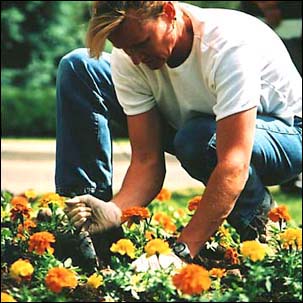
Gardening for stress relief. Photo from IVPeaceFest.com

• Plant a garden. Even in the city if you have an outdoor porch you can plant a small garden in pots and window boxes. Weeding the garden,  “playing” in the dirt, and taking the time to nurture your plants, nurtures your own nervous system and allows you some peaceful moments free from everyday stress.

• Bring live plants into your workspace. Live plants help clean the air and make your environment naturally beautiful and less stressful.

• Go for regular walks in nearby forest preserves or parks.

• Make after dinner walks around your neighborhood part of your family routine. This is a great way to spend quality time with friends and family, get regular exercise and get away from the stress of the TV, telephone and temptations of junk food.

• Volunteer in a nearby community garden.

2572969101_82c2ab01d5

Cabrini-Green Community Vegetable Garden (taken by Strannik45).

• Try snow shoeing, sledding, cross country skiing or walking in the fresh fallen winter snow. (It’s coming soon to Chicago so be ready with warm layers and waterproof hiking boots!)

Snowshoeing at The Basin Phippsburg 08

Snowshoeing. Image from outdoors.mainetoday.com

• When possible, alter your driving route to go through area parks, forest preserves or stretches of the road that gives you a view of Lake Michigan, trees and natural bodies of water like rivers and ponds.

IMG_0198

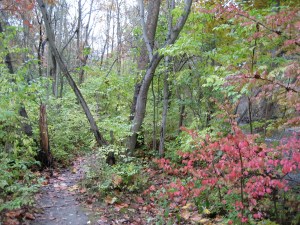
Fall Colors at Argonne

• Plant an indoor herb garden in a well lit window for the winter. It gives you the double benefit of fresh herbs for your meals and the moments of stress relief you get when tending your mini-garden.

• As much as possible, exercise outdoors. Run and hike in the park or forest preserves.

• When time permits, work outdoors. Take

your laptop to the beach or park. In inclement weather find malls or indoor public spaces with plants and trees.

Read Full Post »

Injured soldiers find relief through massage and other “alternative therapies.”

By Michael Devitt from Massage Today magazine

Wars have been fought since time immemorial. From simple sticks and rocks to guided missiles and uranium-tipped artillery shells, the methods civilized nations have used to annihilate one another have changed dramatically over the centuries.

Despite the advances in modern warfare, the types and degrees of injury suffered in combat have remained frighteningly constant. Surprisingly, research suggests a major cause of attrition (a reduction in number or strength) among military personnel in recent wars has resulted not from injuries incurred on the battlefield, but, rather to more typical conditions such as accidents and musculoskeletal complaints.

To determine what types of painful conditions affect soldiers during wartime, researchers in the United States and Germany examined 162 soldiers engaged in Operation Iraqi Freedom who were evacuated to pain treatment centers outside the theater of combat. Results of the study, published in the journal of Anesthesia & Analgesia, show that many of the injuries suffered by military personnel during conflict are indeed similar to those sustained by people in the civilian sector. Even more important, the use of alternative therapies in the treatment of pain among injured soldiers appears to be growing, with massage the most common alternative therapy used for pain relief.

All of the soldiers included in the study had been injured during OIF between March 2003 and June 2004, and were medically evacuated to one of two treatment facilities: Walter Reed Army Medical Center in Bethesda, Md., and Landstuhl Regional Army Medical Center in Landstuhl, Germany. Most of the injured personnel received “consultations for treatment recommendations to be implemented at military treatment facilities located at the patient’s home duty station.”

Analysis of the complaints showed most soldiers suffered injuries comparable to those that would have been sustained by similarly aged civilians. Not surprisingly, more than half of the pain complaints reported by the soldiers (53 percent) involved the low back. The second most common complaint was “nonradicular extremety pain,” which accounted for 23 percent of the presenting complaints.

The most common diagnosis of injury was lumbar herniated disk which, according to the researchers,” accounted for almost one-quarter of all pain disorders.” Postsurgical pain was the second most common diagnosis, and was experienced by 14 percent of all patients.

More than three dozen treatment modalities were utilized for pain relief; on average, each soldier was treated with 3.5 different therapies. Not surprisingly, drugs were the most popular form of pain relief, beginning with nonsteroidal anti-inflammatory drugs (NSAIDs), which were given to 91 service members. Seventy-nine patients received opiods; 66 patients received some kind of neuropathic pain medication.

Drugs and surgical procedures weren’t the only treatment options available, however. According to the study authors, 28 soldiers (17 percent of the study population) were treated with “some type of alternative therapy.” The most common alternative therapy offered was therapeutic massage, which was performed on 13 soldiers, and administered more frequently than chiropractic manipulation, acupuncture and glucosamine/chondroitin supplements combined. More than half of these patients treated with alternative therapies (15) were diagnosed with postsurgical pain or lumbar herniated disk before receiving care. In fact, more than one-third of all military personnel diagnosed with postsurgical pain were treated with massage.

The study pointed out the number of injuries suffered during combat was significantly less than the number of non-combat injuries; in fact, only 17 percent of the patients stated they were injured during battle.

Such nonbattle-related injuries, or NBIs, can take a serious toll on overall troop strength in modern warfare. According to the authors, “Among the 21,655 soldiers admitted to army hospitals in Southwest Asia during the Persian Gulf War, acute NBI comprised 25 percent of all hospitalizations, with musculoskeletal conditions ranking second at 13 percent.”

Presenting Pain Complaints in Soldiers Injured in Operation Iraqi Freedom*
Pain Presentation (n=162) Frequency Percentage
Lumbar radicular pain 49 30.2%
Axial low back pain 37 22.8%
Nonradicular leg pain 24 14.8%
Nonradicular arm pain 16 9.9%
Groin pain 15 9.3%
Thoracic pain 10 6.2%
Neck pain 10 6.2%
Abdominal pain 8 4.9%
Cervical radicular pain 6 3.7%
Headache 6 3.7%
Thoracic radicular pain 2 1.2%
Polyarthralgia 1 0.6%
Facial pain 1 0.6%
* The percentage of pain complaints is based on the number of patients (162), not the number of presenting symptoms (185).

Taking these numbers into account, this would mean that more than 2,800 soldiers were hospitalized due to musculoskeletal complaints during the Gulf War. Given the increasing number of low back and other musculoskeletal injuries that seem to be the norm in modern warfare, and given that these conditions often are seen by massage therapists in the civilian sector, it would appear that massage therapists are just as qualified as other health care providers in helping to ease the pain and suffering of injured military personnel.

For more information, go to the article here.

Resources

  1. Cohen SP, Griffith S, Larkin TM, Villena F, Larkin R. Presentation, diagnoses, mechanisms of injury, and treatment of soldiers injured in Operation Iraqi Freedom: An epidemiological study conducted at two military pain management centers. Anesth Analg 2005;101:1098-1103.
  2. Hoeffler DF, Melton LJ. Changes in the distribution of Navy and Marine Corps casualties from World War I through the Vietnam conflict. Mil Med 1981;146:776-9.
  3. Writer JV, DeFraites RF, Keep LW. Non-battle injury casualties during the Persian Gulf War and other deployments. Am J Prev Med 2000;18:64-70.

Read Full Post »

There is now a Chicago-based company, Element Bar, that let’s you custom design your own energy bar!  (And then they ship it to you.) But that’s not the best part. As you design your own energy bar, the website shows you how each ingredient effects nutritional data. Add some peanut  butter and watch the fat content go up. Add some honey and watch the sugar content increase. You can also add “boosts” of Omega 3, Fiber, Soy Protein or Whey Protein.

Try Building Your Own Bar here.

I tried it out and created the bar below:

• Dates: Made from natural date paste. Virtually fat free, high in fiber, no added sweeteners.


• Prunes: Adds a nice chewy texture and fiber.


• Almonds: Raw, unsalted – great for texture and taste.
• Flaxseeds: Lightly roasted that adds a nice crunch.
• Immunity Boost: Provides 100% of key antioxidants in each bar.
• Omega 3 boost: Our flax seed oil provides 0.5 grams of Omega-3 per bar.


• Fiber: Chicory root extract provides 2 grams of soluble fiber per bar.

Ingredients in my custom protein bar

name your custom energy bar
we guarantee delicious bars
Delete Ingredient Organic
prunes Prunes Organic not available
almonds Almonds
flaxSeeds FlaxSeeds
omega3Boost Omega-3 Boost
fiberBoost Fiber Boost Organic not available
immunityBoost Immunity Boost Organic not available
datey Datey Core Organic not available

Bar Power Key:

custom energy bar rich in antioxidants custom energy bar good for GI health custom energy bar good for your brain custom energy bar good for your heart custom energy bar for strength
Antioxidant GI Health Brain/Memory Heart Muscle/Strength

Nutrition Facts
Serving Size 1 Bar (2.8oz)
Amount Per Serving
Calories 265
Calories from Fat 50

Total Fat 5.5g
% Daily Value*8%

Saturated Fat 0.2g
% Daily Value*1%

Trans Fat 0g

Cholesterol 0mg
% Daily Value*0%

Sodium 2.2mg
% Daily Value*0%
Potassium 402.6mg
% Daily Value 12%

Total Carbohydrate 55.2g
% Daily Value 18%

Dietary Fiber 8.8g
% Daily Value 35%
Sugars 46.3g

Protein 2.3g
% Daily Value*5%

Vitamin A % Daily Value 42%
Vitamin C
% Daily Value*382%
Calcium
% Daily Value*20%
Iron
% Daily Value*3%

Ingredients: Date Paste (Pressed Dates, Vegetable Oil), Inulin (Chicory Root Extract), Almonds, Organic Flax Seeds, Prunes, Immunity Boost, Organic Flaxseed Oil

Contains: Tree Nuts
May contain traces of: Milk, Soy, Wheat, Tree Nuts, and Peanuts.

A Word About Element Bar Ingredients

Element Bars are made from all-natural ingredients that are either unprocessed or have been minimally processed to best preserve each ingredient’s nutritional benefits.

* No artificial sweeteners
* No processed starches
* No new, fancy food technology

Read Full Post »

Do scenes of nature on your computer screen or television give you the same stress relief that you get looking out a window at a scenic view? Sadly, no. Read the excerpt from Newswise.com below for the sad truth about the effects of “faux” nature.

Scenes of Nature Trump Technology in Reducing Low-level Stress

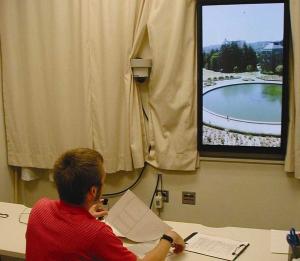
A new study that measured individuals’ heart recovery rate from minor stress when exposed to a natural scene through a window, the same scene shown on a high-definition plasma screen, or a blank wall. The heart rate of people who looked at the scene through the window dropped more quickly than the others. In fact, the high-definition plasma screen had no more effect than the blank wall.

080610154746

Student viewing computer scene of nature (Credit: Image courtesy of University of Washington)

Research done through the Human Interaction with Nature and Technological Systems Lab at the University of Washington showed that when people spent more time looking at the natural scene their heart rates tended to decrease more. That was not the case with the plasma screen.

The study, funded by the National Science Foundation, is published in the current issue of the Journal of Environmental Psychology.

“Technology is good and it can help our lives, but let’s not be fooled into thinking we can live without nature,” said Peter Kahn, a UW associate professor of psychology who led the research team.

“We are losing direct experiences with nature. Instead, more and more we’re experiencing nature represented technologically through television and other media. Children grow up watching Discovery Channel and Animal Planet. That’s probably better than nothing. But as a species we need interaction with actual nature for our physical and psychological well-being.”

Part of this loss comes from what the researchers call environmental generational amnesia. This is the idea that across generations the amount of environmental degradation increases, but each generation views conditions it grew up with as largely non-degraded and normal. Children growing up today in the cities with the worst air pollution often, for example, don’t believe that their communities are particularly polluted.

“This problem of environmental generational amnesia is particularly important for children coming of age with current technologies,” said Rachel Severson, a co-author of the study and a UW psychology doctoral student. “Children may not realize they are not getting the benefits of actual nature when interacting with what we’re calling technological nature.”

The researchers found that participants with the plasma screen actually looked at it just as often as did those who had the window. However, the window held the students’ attention significantly longer than the plasma screen did. When participants spent more time looking at the window, their heart rates decreased faster than on tasks when they spent less time looking at the window. This was not true with the plasma screen.

“I was surprised by this,” said Kahn. “I thought the plasma screen would come somewhere between the glass window and the blank wall. This study is important because it shows the importance of nature in human lives and at least one limitation of technological nature.

“In the years ahead, technological nature will get more sophisticated and compelling. But if it continues to replace our interaction with actual nature, it will come at a cost. To thrive as a species, we still need to interact with nature by encountering an animal in the wild, walking along the ocean’s edge or sleeping under the enormity of the night sky.”

Co-authors of the study are Batya Friedman, Jennifer Hagman, Erika Feldman and Anna Stolyar of the UW, Brian Gill of Seattle Pacific University, Nathan Freier of Rensselaer Polytechnic Institute and Sybil Carrere of California State University, San Bernardino. Freier and Carrere were both at the UW when they worked on the study.

Read the full article here.

Read Full Post »

Even the healthiest of us may require hospital treatment at some point in our lives. As do our kids, spouses,  parents and extended family. And the medical bills can be confusing, not to mention expensive!  But how do you know if you are overpaying or if the bill is accurate?  That’s where Smart Medical Consumer comes in.

About Smart Medical Consumer

Smart Medical Consumer is the first intelligent web-based service for consumers to manage their medical expenses, with breakthrough features including automatic detection of medical billing mistakes. Smart Medical Consumer offers this application based on its patent pending technology and architecture. We develop proprietary web software, and also operate as the service provider.

Analysis and management of the health care bills and insurance explanation of benefits might save a medical consumer thousands of dollars. Additionally, it can help a medical consumer smartly plan their short term and long term decisions for choices in health care, providers, drugs, health insurance plans, health savings accounts and flexible savings accounts.

While health care providers and insurances use extensive resources and tools to optimize their revenues from services to consumers, there is hardly any help for consumers to optimize their medical spending. Smart Medical Consumer is dedicated to fill this void and offer services for consumers to smartly manage their health care expenses.

The founder, Banu Ozden, PhD,

smart-medical-consumer

Banu Ozden

is an expert in distributed database systems, multimedia systems, and Internet infrastructure. Formerly, she was at Bell Labs, Murray Hill, New Jersey, as the Director of Research in Computing Systems, and at the Computer Science Department of the University of Southern California, Los Angeles, California.

After her own frustrations dealing with health care expenses, she founded Smart Medical Consumer to bring a consumer-centric solution to fellow medical consumers.

Smart Medical Consumer currently offers the following services: MySMC beta service to manage medical expenses; MyDocs beta service to keep track of medical billing documents from healthcare providers, insurances, and health saving accounts; and Ask&Share service to get help from billing experts, and to share frustrations and experiences with a community of other smart medical consumers.

About MySMC

Smart Medical Consumer’s MySMC service is for managing user’s medical expenses. MySMC is not a passive record tracking system, but it smartly analyses data to detect billing and coverage errors. It warns the user with detected billing mistakes, insurance coverage anomalies, and incorrectly allocated user payments. MySMC also enables user to analyze her own data more effectively, so that the user can make decisions about her medical choices and healthcare spendings.

Smart Medical Consumer’s first test users have saved thousands of dollars by the help of MySMC. Furthermore, the thorough understanding of what they are charged for and the correct amount they are responsible for have helped them to make proactive decisions about their medical choices.

About MyDocs

Smart Medical Consumer’s MyDocs service is to keep track of records user receives from insurances, providers and saving accounts.

MyDocs serves multiple purposes. One to maintain the records available to user as is so that the user does not need to manage filing of these records. Second to automatically retrieve data from the online documents stored in MyDocs and automatically enter data MySMC for further analysis.

MyDocs can be also be used independent of MySMC if the user needs only easy filing, retrieving and note keeping for the records the user receives from healthcare providers, insurances and saving accounts.

Similarly, the user can choose to use MySMC service independently of the MyDocs service.

About Ask&Share

Smart Medical Consumer’s Ask and Share is to help consumers understand their medical expenses: if you have questions regarding your medical expenses, doctor bills, health care provider statements, insurance claims, or explanation of benefits, post them here. Our moderators are medical billing experts and will answer your questions if they can. If not, other fellow smart medical consumers may be able to help.

Not understanding your medical bills or insurance explanation of benefits might cause you to spend more on health care than your fair share. Whether you are questioning the copays for your prescription drug, disputing an insurance claim, managing your family’s health care, trying to coordinate multiple insurance plans, trying to figure out the copay, coinsurance, allowed amount, reasonable and customary amount, hospital surcharge, deductible, out-of pocket amount, the services patient is charged for, the medical codes for services and procedures, and the diagnosis codes, or simply trying to understand the financial implications of the actions of your doctor or insurance company and what your options are, get aid from Smart Medical Consumer’s billing experts.

Whatever health problem you or your loved ones are going through, whether it is a catastrophic illness like cancer, a chronic disease like diabetes, or a sports injury like a hip fracture, don’t let the patient responsibility of medical expenses pile up unfairly. Post your questions at Ask&Share, use Smart Medical Consumer’s MySMC service to manage your expenses, and MyDocs service for easy filing and retrieving statements from providers, insurances and saving accounts.

Read Full Post »

Exercise and Mental Health

By Dr Shock at DrShockMD website
istock_000000297032xsmall

Healthy people exercising

A recent review about the relationship between exercise and mental health in the elderly discussed the results of clinical research and biological explanations for the effects of exercise on mental health. Exercise is studied in the elderly in depression, Alzheimer’s disease and Parkinson’s disease.

Dr. Shock has discussed the topic of exercise and depression before on his blog. The conclusion was that exercise is more effective than no treatment and that for mild to moderate depression it is efficacious and for severe depression it should be added to other treatments in the treatment program. In this more recent review on exercise and mental health the focus is on the elderly. Data on elderly patients are scarcer. Nevertheless investigations have shown that aerobic exercise at an intensity consistent with public health recommendations can be regarded as an effective treatment of mild and moderate depression. There is some evidence for a possible dose-response effect of exercise on depression. Treatment not prevention? Indeed, this topic has not yet been extensively studied in the elderly yet.

What does that mean: aerobic exercise at an intensity consistent with public health recommendations?

Basic recommendations from the The American College of Sports Medicine (ACSM) and the American Heart Association (AHA).

  • Do moderately intense aerobic exercise 30 minutes a day, five days a week
  • Or Do vigorously intense aerobic exercise 20 minutes a day, 3 days a week
  • And Do eight to 10 strength-training exercises, 10-15 repetitions of each exercise twice to three times per week
  • And If you are at risk of falling, perform balance exercises
  • And Have a physical activity plan.

What is a physical activity plan?
In short consult your GP before starting to exercise.

Older adults or adults with chronic conditions should develop an activity plan with a health professional to manage risks and take therapeutic needs into account. This will maximize the benefits of physical activity and ensure your safety.

Physical Exercise and Alzheimer’s Disease

  • Epidemiological studies have associated exercise with reduced risk of Alzheimer’s disease
  • Exercise as treatment for dementia showed efficacy for mood status, psychosocial functioning, physical health and caregiver distress
  • Daily 30 minutes of exercise diminishes the number of hospitalization needed, decreased depressive symptoms, increased quality of life in patients with Alzheimer’s disease
  • In comparison with a sedentary group, the group with a year of exercise intervention improved in quality of life

Physical Exercise and Parkinson’s Disease
Also in Parkinson’s Disease epidemiological studies have shown that exercise can protect against the disease. The disease is associated with tremor, rigidity, and hypokinesia which can result in falls and tiredness.The main advantage of exercise in PD is improvement of functional capabilities due to strength and balance training. This improves motor skills, improves their quality of life and reduces the number of falls.

Although somewhat limited, evidence suggests that exercise training is beneficial to patients with PD, especially in functional capacity and ADLs improvement

The protective effect of exercise can be explained by effects on the brain as can be read in the Neuroscience of Exercise on Dr. Shock’s blog.

Sources:
Deslandes, A., Moraes, H., Ferreira, C., Veiga, H., Silveira, H., Mouta, R., Pompeu, F., Coutinho, E., & Laks, J. (2009). Exercise and Mental Health: Many Reasons to Move Neuropsychobiology, 59 (4), 191-198 DOI: 10.1159/000223730

Read Full Post »

By Sue Shekut, LMT, ACSM PT, Certified Wellness Coach

There is still time to enjoy the fall colors and get a bit of healthy hiking in this fall. Throw on a few layers of clothes, a good pair of hiking shoes, a camel back for water and grab a few LARABARs and you are ready to hike Waterfall Glen in the Chicago area!

IMG_0192

Waterfal Glen

Waterfall Glen is one of the DuPage County Forest Preserves. It rings Argonne labs and offers hikers, bikers, fishermen (and women), horseback riders and picnickers a chance to get away from the sounds, smells and traffic in the city. Being in nature has a stress relieving effect and exercise is good for stress management as well.

According to researchers at Cornell University: “Our study finds that life’s stressful events appear not to cause as much psychological distress in children who live in high-nature conditions compared with children who live in low-nature conditions,” says Nancy Wells, assistant professor of design and environmental analysis in the New York State College of Human Ecology at Cornell. “And the protective impact of nearby nature is strongest for the most vulnerable children — those experiencing the highest levels of stressful life events.”

From the Waterfall Glen website:

Waterfall Glen Forest Preserve has w glacier-formed ridges, ravines and potholes. The preserve is exceptional, because it contains features not found anywhere else in the county: The largest contiguous woodland block – over 700 acres — and a dolomite prairie, with rock very close to the surface and shallow soil, home to rare plants for the region.

IMG_0198

Fall Colors at Argonne/Waterfall Glen

Waterfall Glen’s many habitats — prairies, savannas, oak-maple woodlands and planted pine groves – and distinctive features make it a haven for a wide variety of plants and animals. Surveys by District ecologists have recorded more than 600 native plant species at the preserve, which includes 75 per cent of all the plants known to grow naturally in DuPage County. In addition, countless fish, amphibian, reptilian, and mammalian species can be found in the preserve, as well as more than 160 avian species, some year-round and some migrating.

Biking

Cyclists are invited to use any of the preserve’s eight-foot-wide multipurpose trails, although they are asked to stay toward the outside of the trails as a courtesy to other visitors. To prevent damage to sensitive natural areas, cycling on trails less than eight feet wide is prohibited.

Fishing

Several old quarries scattered throughout the preserve offer still fishing waters. All persons 16 and older (except legally disabled persons) are required to have in their possession a valid Illinois sport fishing license. All anglers must follow District and state regulations.

Horseback Riding

In addition to the main trail loop, Waterfall Glen offers trails suitable for horseback riding throughout the preserve. Visitors with trailers should park in the designated parking bays at the trailhead on Northgate Road.

Model Aircraft Area

A large open field in the southwest section of the preserve is a popular spot for local model aircraft enthusiasts. For more information on access to this area or use by qualified model aircraft clubs, contact Visitor Services at (630) 933-7248.

Picnicking

Visitors are welcome to spread a blanket and enjoy a picnic in the mowed grass areas at Waterfall Glen. Ground fires are not permitted, except in the fire ring at the trailhead area.

Trails

Waterfall Glen’s four marked trails range from 0.2 miles to 9.5 miles in length and meander through some of the preserve’s most scenic areas. The main trail is an eight-foot-wide crushed-limestone multipurpose trail. In addition, there are many unmarked mowed-grass trails and footpaths that dissect the preserve. Feel free to hike and explore these smaller, less-conspicuous paths, but remember that they often are not linked to the main trail nor are they shown on the preserve map.

argonne1009

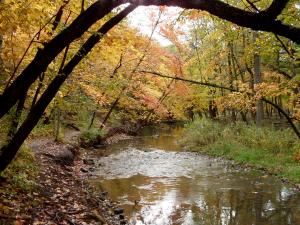
River at Waterfall Glen

To find out more about Waterfall Glen go to the DuPage Country Forest Preserve Website here.

Read Full Post »

By Sue Shekut, LMT, ACSM PT, Certified Wellness Coach

My boyfriend and I are avid hikers and bicyclers. We have spent many happy hours biking and hiking around Chicago area forest preserves this spring, summer and fall. But we get tired of the relative flatness of the terrain. Then we went to Starved Rock State Park this October and fell in love with the canyons in the area. We hiked about 8 miles one sunny Sunday, climbing literally hundreds of stairs and hills. It’s not the Grand Canyon, but for Chicagoans, it’s only 1.5 hours away from downtown and well worth the trip! And, it’s family friendly. We saw many parents with small children, babies in backpacks and people from all over the Chicago area.

I’ve loaded some of the pictures we took and use them as screen backgrounds. Feel free to use them yourself to give you a bit of natural relaxation on your computer desktop.

The View of Starved Rock from Lover’s Leap, the rock outcropping directly opposite Starved Rock.

IMG_0078

Starved Rock

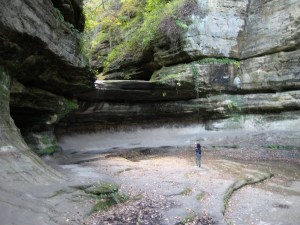
LaSalle Canyon. See how small the person in the picture is compared to the canyon? This gives you an idea of the majestic size and scale of the canyon.

IMG_0131

LaSalle Canyon at Starved Rock, Oct 2009

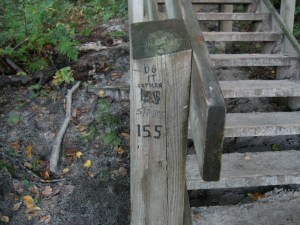
I love this shot of the bottom of one set of stairs along the hike. Some thoughtful previous traveler gave us a heads up on the stair count before us. 155 stairs to climb. With the motivational cue: Do It Fatman!

We did it!

IMG_0151

Stairs at Starved Rock

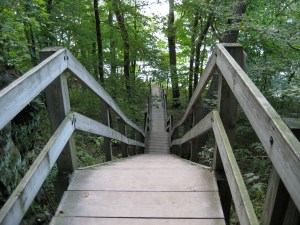
The view from the top of the stairs. Indeed, 151 stairs we climbed. And prior to that another 141 stairs at another area of the trail.)

IMG_0153

Another view of LaSalle Canyon. At this time of year, there was less water so we were able to hike into the canyon and walk all the way back to the edge of the waterfall which is behind us in this shot.

IMG_0134

If you look closely you can see the tiny trickle of waterfall still falling in October.

IMG_0135

Read Full Post »

If you like to hike, ski, run marathons, or otherwise burn calories in the great outdoors, you may have needed to resort to energy bars to keep you going. Nowadays, many people eat energy bars as a mid afternoon snack or to supplement a forgotten lunch box.  “Energy” bars can be packed with as much sugar as a candy bar. However, some energy bars face better than others in turns of good fats, low calories and great taste. (It sounds like a beer I am describing, but no, energy bars are not replacements for a Miller Genuine Draft 64!)

One of my favorite energy bars is the LÄRABAR.

sdc13037

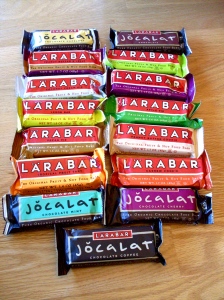
Lara Bar Varieties

It is available in about 12 different flavors, from Coconut Cream Pie, Cashew Cookie, Banana Bread, Key Lime Pie, Pistachio, Lemon Bar, Apple Pie, Chocolate Coconut, Ginger Snap, Peanut Butter Cookie to Cherry Pie, Pecan Pie, Cocoa Mole PB&J and the new Tropical Fruit Tart.

What’s So Great About These Bars?

Can bars with dessert names be good for you?  From the LÄRABAR website, take a look at the ingredients:

LÄRABAR is a delicious blend of unsweetened fruits, nuts and spices – energy in its purest form. Made from 100% whole food, each flavor contains no more than eight ingredients. Pure and simple, just as nature intended.

Quality standards for LÄRABAR ingredients are: All natural, No added sugars or sweetener, Raw, Non-GMO, Non-irradiated, No sulfites, No preservatives, No fillers, No colorings, Gluten-free, Dairy-free, Soy-free and Vegan (But don’t let that scare you away, they are tasty!)

LÄRABARs are sweet with no added sweeteners. They use no added fillers, supplements or flavorings.  All of the vitamins, minerals, fiber, protein, good carbohydrates and healthy fats are derived exclusively from the whole, raw food used to make LÄRABAR.  Plant-based fats are healthier than animal fats. The fat in LÄRABAR comes primarily from nuts-all plant-based fats containing Omega 3 & 6 essential fatty acids, which have been proven to reduce LDL cholesterol and help protect the heart.

The carbohydrates in LÄRABAR are good carbohydrates, derived from fruit and, ultimately, necessary for the body to function. They also contain fiber and plant phytonutrients that help the immune system. It’s the processed and refined carbohydrates you should avoid-the kind found in white flour, white rice, and added sugars such as high fructose corn syrup, white sugar and grape juice.

Larabars are Uncooked and Unprocessed. The essential enzymes, which are necessary fo

Pecan Pie bars

Pecan Pie bars

r the digestion and utilization of nutrients, remain completely intact in their most natural, powerful state. A diet abundant in raw, unprocessed foods is important for health and longevity.

LÄRABAR contains approximately 20 grams of whole-food-source carbohydrates, which are essential to good health. Each bar contains approximately 5 grams of protein.

My favorite bar, Pecan Pie, is simply a combination of pecans, dates and almonds.

JŎCALAT aka Chocolate LÄRABARs

The company also sells chocolate bars. You may say, wait, aren’t chocolate bars candy bars, which are bad for me, high in transfats, sugars and all that unhealthy gook? Well, normally yes. But in this case, no! LÄRABAR has a line of bars, JŎCALAT bars, that are made with cocoa powder, but no added sugar or trans fats.

The chocolate in JŎCALAT, along with the fruit and nuts, contains high concentrations of natural antioxidants, which appear to be helpful in combating disease and aging.

Each JŎCALAT bar contains at least 20% of the recommended daily value of fiber, along with a healthy dose of Omega-6 essential fatty acids, which help keep your heart healthy AND has the added benefit of being under 190 calories. JŎCALAT bars contain 13 essential vitamins and minerals, which decrease stress and increase energy. Resident phytonutrients promote a hea

lthy immune system.


LBGCC_large_large

German Chocloate Cake Bar Ingredients

JŎCALAT German Chocolate Cake Bars

A new entry JŎCALAT bar offering, this bar contains Coconut+Pecans+Almonds+Cocoa. And that’s it. Listed out like that, it may not sound like it tastes that good, but try it and see if it gives your taste buds a bit of that German Chocolate Cake taste., without the nasty sugar

drop a real cake usually give you. And without the bad fats and guilt too!

So Where Do I get These Tasty LÄRABARs Already?

Order LÄRABARs directly from their website and have them shipped to you. Click here to order directly.

OR buy LÄRABARs from Whole Foods Markets at about the same price without the shipping costs.

Make Your Own Bars

As a last resort, if you have time and are adventurous, make your own raw fruit and nut bars!

Try this recipe from the Cookie Madness blog

Sort of Like Larabars

Makes about 3 bars or a quarter or a 4×4 inch square which you can form and then cut or punch into shapes.

1 1/2 ounce almonds (about 1/3 cup)
3 ounces pitted dates (about 14, if you don’t have a scale)


datebarforblog

Homemade "Lara-like Bars"

2 teaspoons unsweetened cocoa powder (optional)
1 tablespoon prune puree
1 tablespoon quick cooking oats.

Place almonds in food processor and process into crumbs. Pour into a bowl. Place dates in processor

and process as much as possible. Add almond crumbs back into processor and process until well mixed. Add cocoa, prune puree and oats. Process a little more, then dump into a bowl and knead until ingredients stick together. Shape into a rectangle. If it’s too sticky, knead in some more almonds or oats. Slice into about 3 bars or press into a square and cut out cute shapes.

Read Full Post »

« Newer Posts - Older Posts »