Feeds:
Posts
Comments

Archive for the ‘Health and Wellness’ Category

Dont slip!
Image by Great Beyond via Flickr

By Sue Shekut, Owner, Working Well Massage, Licensed Massage Therapist, Certified Wellness Coach, ACSM Personal Trainer

Last night I joined my fellow Chicagoans in a common winter “sport”: I fell on the ice. I was lucky that I was well padded and fell backwards onto my backpack on my outside stairs. I have a huge bruise on my thigh but overall, I am OK.

This time of year, not everyone is so lucky. Falls on ice can lead to broken bones in odd places: hips, elbows, even jaws if you fall forward and  your chin hits a cement curb. My brother is a radiologist and he tells me this time of year he sees far too many bone fractures due to slips and falls on the ice.

Protect Yourself On The Ice

How can you protect yourself from falling on the ice?  Here are some tips from Canadian Senior Years:

  • Wear boots or overshoes with soles. Avoid walking in shoes that have smooth surfaces, which increase the risk of slipping.
  • Walk consciously. Be alert to the possibility that you could quickly slip on an unseen patch of ice. Avoid the temptation to run to catch a bus or beat traffic when crossing a street.
  • Walk cautiously. Your arms help keep you balanced, so keep hands out of pockets and avoid carrying heavy loads that may cause you to become off balance.
  • Walk “small.” Avoid an erect, marching posture. Look to see ahead of where you step. When you step on icy areas, take short, shuffling steps, curl your toes under and walk as flatfooted as possible.
  • Remove snow immediately before it becomes packed or turns to ice. Keep your porch stoops, steps, walks and driveways free of ice by frequently applying ice melter granules. This is the best way to prevent formation of dangerous ice patches. Using a potassium-based melter, such as Safe Step, instead of salt will prevent damage to concrete, grass and other vegetation or to carpets and floors should you track in some.
  • If You Do Fall, How to Fall Safely

    But what if you fall anyway like I did? How can you lesson the damage that can be done by your fall? Sandra Gimpel, a 3rd degree black belt Karate instructor and Hollywood stunt woman who earns a living falling in movies and television commercials, has tips for safely falling. “It’s important to tuck your body, lift your head and avoid trying to break the fall with a hand, which can cause a wrist injury,” says Gimpel. “The idea is to make yourself as small as possible by rolling up into a ball.”

    Read Gimpel’s approach to practicing safe falls here.

    Reblog this post [with Zemanta]

    Read Full Post »

    By Sue Shekut, Owner, Working Well Massage, ACSM Personal Trainer, Certified Wellness Coach, Licensed Massage Therapist

    Digitlal Miniposters from Produtive Fitness

    I write a lot about increasing activity and fitness in and outside the workplace.  Companies can provide employees with education about fitness to help improve employee health. One easy way to give employees great information about stretching and weight training is to put up posters from Productive Fitness. At home, Productive Fitness provides mini versions of these posters via digital download.

    What’s So Great About Productive Fitness?

    Productive Fitness Products Inc. is the #1 supplier of fitness books to exercise equipment stores in North America. Mike Jespersen started Productive Fitness Products Inc. with the publication of The Great Dumbbell Handbook. The idea of publishing a book specific to dumbbells came when Mike was working at a local fitness equipment store in Vancouver, B.C. Many of the customers purchasing dumbbells also wanted a reference guide to performing the exercises. The book was an instant success and has now sold over 300,000 copies. This success has been expanded upon with The Great Body Ball Handbook now having sold over 300,000 copies, and The Great Handbook series having sales of over 1.2 million.

    Since Productive Fitness Products’ incorporation in 1998, it has continued to publish books, expanding on its series of “Great Books” which offer instruction on specific exercise topics such as the Body Ball, Stretch Tubing, and multi-station gyms.
    The “Great Books” are designed as quick-reference handbooks which allow readers to instantly access exercise descriptions for a particular body part. Each exercise description has a start and finish photo with clear, concise, step-by-step exercise descriptions.

    • See a sample of Productive Fitness videos on You Tube here.

    Who Writes and Reviews Productive Fitness Products?

    • Andre Noël Potvin is an internationally accredited author, fitness educator and medical exercise specialist with 24 years of leadership experience and clinical experience. Owner and operator of both a medical fitness clinic and school for fitness professionals, Andre is frequently invited to lecture at international public and professional conferences.
    Read more about Andre here.
    • James Talo has an extensive background in individual and team sports. His endeavors have ranged from track and field to lacrosse and the martial art, aikido. However, it wasn’t until Jim suffered a spinal injury in 1993 where his appreciation for the human body and how it should optimally move and function became apparent. This injury shifted his attention to the method of kettlebell lifting and the teachings of some of the world’s best coaches. He began his search for knowledge on this niche sport and obtained his first kettlebell certification in 2004.Jim’s coaching philosophy is one he shares with his students, clients and colleagues: “My purpose is to create an awareness… to educate coaches and their athletes on the merits of kettlebell lifting both as a training protocol and as a sport…I am here to serve, and to instruct technique that is safe and highly effective.”

    Read more about Jim here.

    Fitness Posters from Productive Fitness

    • Large Size Posters for the workplace

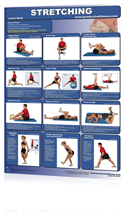
    Large Stretching Poster from Productive Fitness

    • Digital Download Posters (8.5 x 11) for home workouts.

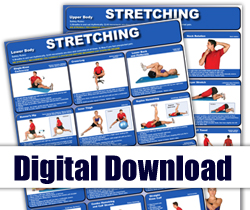
    Disital Posters from Productive Fitness

    Reblog this post [with Zemanta]

    Read Full Post »

    By Sue Shekut, Owner, Working Well Massage, Licensed Massage Therapist, Certified Wellness Coach, ACSM Personal Trainer

    Hugo's Naturals lotion

    Each month at the Working Well Massage chair station inside the Lincoln Park Whole Foods Market, we feature a different body cream or lotion that is great for massage and your body! This month, our massage therapists are applying Vanilla and Sweet Orange lotion from Hugo’s Naturals during our massages.

    Hugo’s Naturals make great hand and body lotions. They are also good for relaxing or Swedish massage or even an at home back rub you give your partner or children.

    Hugo’s Naturals Scents

    • Vanilla & Sweet Orange Lotion

    • Shea Butter and Oatmeal

    • Unscented

    • Grapefruit

    • French lavender

    • Red Tea and Ylang Ylang

    • Sea Fennel and Passion Flower

    • Lemon Verbena and Bergamot

    • Spearmint

    • Geranium

    Who is Hugo and How Natural Are His Products?

    According to Hugo’s blog , Hugo Saavedra, founder of Hugo Naturals, has always been passionate about seeking out the best, most unusual ingredients and combining them in unique and exciting ways. His business career began at age 11, in Buenos Aires, Argentina. A ship hand gave Hugo a branch of bananas at the port dock and on his way home, a woman stopped her car and asked how much they were. An entrepreneur was born.

    After years of running restaurants and supplying organic herbs and edible flowers from Argentina to the U.S., Hugo’s love of organic produce and exotic herbs spurred him on to his next venture — a line of exquisitely crafted soaps, which he sold at Farmer’s Markets along side his exotic produce. The demand for the soap was overwhelming, and soon outstripped his farming business. Hugo expanded the line to include lotions, body scrubs and bath salts. These products developed a large and intensely loyal following and Hugo expanded his sales beyond the United States into Asia, Canada and Europe.

    Hugo has taken great care to create the most beneficial products possible, while retaining a feel of luxury and comfort. All of Hugo’s products are earth-friendly and utilize organic ingredients. Using a cornucopia of natural ingredients, Hugo has created a banquet for the skin with the same sure hand that once created prize-winning culinary dishes. Hugo Naturals is a true expression of the creativity and integrity of its creator.

    Where Can I Buy Hugo Naturals’ Lotions?

    At Whole Foods Markets of course!  Right now a 12-ounce  bottle retails for $12.99 at Whole Foods Market. However, if you want to buy online, you will have to pay extra for shipping. Buy Hugo’s lotion from Amazon here.

    Read more about Hugo’s Naturals and Whole Foods body care products from Meg at her blog: Meg’s Makeup Reviews here.

    Note: Working Well Massage and Sue Shekut are not affiliated with Hugo’s Naturals nor do we get any advertising dollars from blogging about the products. We simply want to share a great product with our readers!

    Reblog this post [with Zemanta]

    Read Full Post »

    Massage in Frankfurt, Germany
    Image via Wikipedia

    By Sue Shekut, Owner, Working Well Massage, Licensed Massage Therapist, Certified Wellness Coach, ACSM Personal Trainer

    Whilst researching around the internet, I found a link to a chat room thread that exemplifies one of the problems massage therapists face to this day: the misconception that massage therapy is a sexual service. In this thread,  a young man inquires how to go about getting sexual services from a “legitimate massage therapist.” Which is really an oxymoron.

    All too often, men (and some women) think that massage IS a sexual service and get confused as to what they are getting when they schedule a massage session. This makes it tough on those of us that are legitimate massage therapists. How do you know if your massage therapist or massage center is legit or a cover for prostitution?

    Massage is Not Prostitution, But Massage “Parlors” Are Often Fronts for Prostitution

    Because prostitution is illegal, prostitutes and massage parlor operators look for creative ways to mask the real intent of their product: Sex for hire. And what better way to conceal your true product than to market it under the name of a similar product or service: Call it “massage.”

    Massage parlors don’t typically use licensed massage therapists. Why bother? Licensing for massage therapy requires at least a year or so of schooling, including anatomy and kineseology, at a cost of about $10,000-$12,000. And in Illinois, massage therapists get fingerprinted and go through a criminal background check–tough to pass if her or she has a record of convictions for prostitution.

    Who Are Legitimate Massage Therapists?

    Which brings me to my point. How do you know the difference between a legitimate massage therapy center and a massage parlor? Let’s run through a legitimate massage therapist’s goals, training and ethics to demonstrate how we differ from massage parlor masseuses.

    Massage Therapy Goals

    Legitimate massage therapists are people that like to help other people, non-sexually. We aim to relieve muscle pain, relax your nervous system and give you a period of time in which you and your wellness is the focus (which is tough to find these days between work, family, fitness and social obligations).

    Legitimate massage therapy gives clients a safe space to relax. Licensed massage therapists are trained to respect client’ boundaries, be non-judgemental and compassionate.

    True, there is a wide range of skill levels between licensed massage therapists, and some are far better than others, but overall, legitimate massage therapists strive to provide a clean, safe and relaxing massage session for clients.

    Massage Therapy Ethics

    Legitimate massage therapists agree to abide by a code of ethics that prohibits sexual massage. In fact, if a legitimate massage therapist is convicted of giving sexual massages, aka prostitution, she/he can lose their massage therapy license, face disciplinary measures from their professional association and be barred from performing professional massage.

    Massage Therapy Training

    Licensed massage therapists train in massage techniques as well as proper draping techniques to ensure your genitals are never exposed during your massage. In massage therapy school, we learn about skin conditions and how to avoid contagion.We learn about good hygiene and general health conditions. We undergo extensive testing in each massage class as well as at the end of our training in order to obtain our massage therapy licenses.

    In Chicago, legitimate massage therapists must apply for and maintain current licenses with the State of Illinois. Any massage therapist that has been disciplined for performing sexual massage can have this license revoked. You can look up the validity of a massage therapists license online here. Your can also request that your massage therapists show you his or her state license. In addition, in Chicago, every Massage Therapy “Establishment,” from the Working Well Massage chair massage station at Whole Foods to the big spas, must have a Massage Establishment License.

    Where Do I Find a Legitimate Massage Therapist?

    You can find legitimate massage therapists on massage locater services such as ABMP, or Massage Today’s websites.  Link to my previous post, “How Do I Find a Good Massage Therapist?” here.

    A massage therapy session can be a wonderful, positive, relaxing experience. Or it can be a way to relieve muscle pain, heal from injury or help you better cope with stress. What it’s not is an open invitation to harass, proposition or fondle the massage therapist!

    Enhanced by Zemanta

    Read Full Post »

    Image representing Walk Score as depicted in C...
    Image via CrunchBase

    By Sue Shekut, Licensed Massage Therapist, ACSM Personal Trainer, Certified Wellness Coach, Owner, Working Well Massage

    Want to know where you can take a nice after dinner walk in Chicago?  I know it’s cold but if you bundle up, you can burn some calories and still see the bright lights and your neighbors holiday decorations as you stroll.   Check out this site dedicated to providing rankings on most walkable neighborhoods: Walk Score.com

    According to WalkScore’s website, “The top 8 neighborhoods in Chicago are Walkers’ Paradises. 66% of Chicago residents have a Walk Score of 70 or above. 96% have a Walk Score of at least 50—and 4% live in Car-Dependent neighborhoods.”

    Top  Cities for Walking

    The cities at the top of the Walk Score rankings have density, mixed use, transit, short blocks—and almost everything else on our walkability checklist. Most importantly, these cities have lots of destinations near each address, which is the strongest indicator of whether people walk.

    Least Walkable Cities

    It’s difficult to get by without a car (or even walk to a nearby restaurant) in these sprawling cities. More time in the car means more money at the pump, less exercise, and more pollution. But even the least walkable cities have walkable places. Read about these walking oases.
    Top 20 Most Walkable Chicago Neighborhoods according to WalkScore

    Neighborhood     Score
    1  Loop                       98
    2  Near North Side  97
    3  Lincoln Park        94
    4  Lake View             93
    5  Uptown                 92
    6  Edgewater            92
    7  Near South Side  90
    8  Rogers Park         90
    9  West Town           88
    10  Hyde Park          87
    11  Logan Square     86
    12  Lincoln Square  85
    13  Bridgeport          85
    14  Lower West Side 85
    15  Near West Side   84
    16  Albany Park        84
    17  North Center      83
    18  West Ridge         83
    19  North Park          81
    20  Irving Park         80
    Read more from the WalkScore website here.
    Reblog this post [with Zemanta]

    Read Full Post »

    Division Street Farmers' Market
    Image by ifmuth via Flickr

    By Sue Shekut, Owner, Working Well Massage, Licensed Massage Therapist, Certified Wellness Coach, ACSM Personal Trainer

    First it was Eat Organic. Now it’s Eat Local. What is Eating Locally and why is it such a  good idea?

    What Does it Mean to Eat Locally Grown Foods?

    Active.com’s Charles Stuart Platkin explains what Locally grown means in an article here. Platkin writes: According to Erin Barnett, director of LocalHarvest.org, “‘Eating local’ means different things to different people, depending on how ‘local’ is defined.” Some define locally grown as within a 100-mile radius of where they live. But the overarching concept is that you purchase and eat foods produced close to home. “You might be able to get eggs raised just five miles down the road, but cheese from the state next to yours. Both choices take the food’s geographical origins into account, and that is the decision-making tool at the heart of eating locally grown,” says Barnett.

    Why Eat Locally Produced Food?

    The main reasons proponents tout locally grown food is that it’s better for the environment, keeps purchasing dollars within a closer proximity of your community and it is fresher and less likely to be sprayed with harmful chemicals.

    An article in the NewsOk explains why people choose to buy local:  “It often means getting fresher food,” said Urvashi Rangan, Ph.D., senior scientist and policy analyst at the nonprofit Consumers Union. The main reason, Rangan said, is that it hasn’t been trucked thousands of miles so there’s less time for food to spoil.

    “But there are even more advantages to local food production. It saves on gasoline and reduces pollution from transporting food (which can help reduce global warming), and, in many cases, it supports smaller-scale farmers,” Rangan said. So, basically, eating locally grown supports the local economy; you eat fresher, less-processed foods, think about your food more, get to know your local growers and help the environment — not bad. (Read entire article, “Eating Locally Can Bring Benefits,” from NewsOK, here.)

    According to Jennifer Maiser from FamilyResource.com, “While produce that is purchased in the supermarket or a big-box store has been in transit or cold-stored for days or weeks, produce that you purchase at your local farmer’s market has often been picked within 24 hours of your purchase. This freshness not only affects the taste of your food, but the nutritional value which declines with time.”

    Jennifer adds: “Because the produce will be handled less, locally grown fruit does not have to be “rugged” or to stand up to the rigors of shipping. This means that you are going to be getting peaches so ripe that they fall apart as you eat them, figs that would have been smashed to bits if they were sold using traditional methods, and melons that were allowed to ripen until the last possible minute on the vine.”  Read Maiser’s Top Ten Reasons to Eat Local Food here.

    The juries still out on whether locally produced food is better for your health, but as more and more people demand locally grown food, restaurants and stores are moving toward selling locally produced food items.

    Winter Farmers Markets in Chicago

    from Swedish Covenent Hospital’s Well Magazine

    GREEN CITY MARKET
    Green City Market Web site
    Indoor market – 2430 N. Cannon Dr., Chicago, IL. 60614

    Wednesdays and Saturdays until Dec. 23, 8 a.m. to 1 p.m.
    Wednesdays and select Saturdays January 16 to April 24, 8 a.m. to 1 p.m.

    CHICAGO’S DOWNTOWN FARMSTAND
    Chicago’s Downtown Farmstand Web site
    66 E. Randolph St., Chicago, IL. 60602
    Open year-round, Monday through Friday, 11 a.m. to 7 p.m.; Saturdays, 11 a.m. to 4 p.m.
    Please check the Web site or e-mail info@chicagoofficeoftourism.org for a holiday schedule.

    CHURCHES’ CENTER FOR LAND AND PEOPLE / FAITH IN PLACE WINTER MARKET
    Saturdays and Sundays at various churches and organizations throughout Chicago
    See localharvest.org/farmers-markets for a detailed schedule.

    LOGAN SQUARE WINTER FARMERS MARKET
    Indoor market, The Congress Theater, 2135 N. Milwaukee Ave., Chicago, IL. 60647
    Sundays, 10 a.m. to 2 p.m. — Runs until March 28, 2010
    See logansquarefarmersmarket.org for more information.

    Farmers Markets in the Chicago Area Suburbs

    List from LocalHarvest.org.

    Churches’ Center for Land and People (CCLP) is partnering this year with Faith In Place to sponsor indoor Winter Farmers Markets which provide small, local farm producers with additional venues to extend their income beyond the growing season. Held in parish halls of congregations of many denominations, these markets are open to the public and from November to March offer consumers an opportunity to purchase cheese, meat and poultry, soap, syrup, honey, wool, yogurt, raw fibers, vinegars, dried fruits, milled flours, sauces and salsas, preserves, cider, and fresh produce as available…..in short, anything that a farm grows or produces from what they grow. (Not all items listed will be available at every market.)

    When and Where

    (November-March)
    _____________

    Sun., Jan. 10, 10am to 2pm ~ Deerfield
    North Shore Unitarian Church
    2100 Half Day Rd. (Rt. 22), Deerfield IL 60015

    Sun., Jan. 24, 12noon to 3pm ~ Chicago/Old Irving Park
    Irving Park Lutheran Church
    3938 W. Belle Plaine Ave., Chicago, IL 60618

    Sat., Feb. 13, 9am to 1pm ~ Oak Park
    Euclid Avenue United Methodist Church
    405 S. Euclid Ave., Oak Park, IL 60302

    Sat., Feb. 20, 9am to 1pm ~ Rogers Park
    United Church of Rogers Park
    1545 W. Morse Ave, Chicago, IL 60626

    Sun., Mar. 7, time TBD ~ Oak Park
    St. Giles Catholic Parish
    1025 Columbian, Oak Park IL 60302

    Sun., Mar. 14, 9:30am to 1:30pm ~ Park Ridge
    Park Ridge Community Church
    100 Courtland Ave., Park Ridge IL 60068

    To read more from Local Harvest and view the extensive listing of available crops click here.

    If you’d like to be on the email list for LocalHarvest click here.

    Fun Facts About Illinois Crops and Farming from ExploreChicago.org

    • More than half of the corn in the U.S. is used for livestock feed.

    • Illinois chickens lay eggs that are used to make candy bars, mints, and hard candies all year round.

    • Popcorn is the official snack of Illinois.

    • JoDaviess, Hancock, Fulton, Adams, and Pike counties have more cattle than anywhere else in Illinois.

    • One Illinois farmers feeds 94 people in the United States and 35 people overseas-that’s 129 people per year.

    Read the entire list of Fun Facts About Illinois Crops and Farming from ExploreChicago.org

    Read an article on how Eating Local is the New Eating Organic from Time magazine here.

    Reblog this post [with Zemanta]

    Read Full Post »

    By Sue Shekut, Owner, Working Well Massage, Licensed Massage Therapist, Certified Wellness Coach, ACSM Personal Trainer

    Dracaena Janet Craig. Image from http://www.dracaena.com

    It’s a new year and time to clean out the old and bring in the new: air, that is. Think you may want to use houseplants to clean the air of your home or office from formaldehyde, benzene and carbon monoxide?  Those of you that read our posts on houseplants that clean air from NASA and The University of Georgia may now be ready to get your own indoor air cleaning plants. But where are the best places to get houseplants? Some say Home Depot and Lowes, but Home Depot ships their indoor plants –not so great in winter cold!  Lowes only has tiny tabletop Aerogardens available from their website.

    Lowes does have a great article for selecting indoor plants here. Check out their chart categorizing indoor plants by level of light they need. For example, Chinese Evergreen, Dracaena and Philodendrums require low light. Golden Pathos requires medium indirect light. Aloe and Cactus plants require bright direct sunlight.

    To help you find other indoor plant sources, I compiled a list of Chicago plant stores that carry the house plants that NASA and Georgia studies have found to be the best air cleaners. Find the store that’s closest to you and buy your own plants today!

    Grand Street Gardens

    2200 W. Grand Ave., Chicago, IL 60612
    (312) 829-8200
    Fall 2009 Hours • M-F 9 AM-7PM • Sat & Sun 9 AM-6PM

    Grand Street Gardens carries the following indoor plants for air cleaning:

  • African Violet
  • Chinese Evergreen
  • Dracaena Janet Craig
  • Dracaena Marginata
  • Ferns
  • Jade
  • Hoya
  • Philodendron
  • Pothos
  • Spider plant
  • Gethesmane

    5739 N Clark St, Chicago, IL

    (773) 878-5915
    Winter Hours • Monday – Sunday, 9 AM – 6 PM • Free  Parking

    All of the following 14 plants can be found in the Gethsemane Greenhouse and have been identified by NASA as most effective in cleaning the air;

  • English Ivy
  • Spider Plant
  • Golden Pothos
  • Chinese Evergreen
  • Bamboo or Reed Palm
  • Snake Plant
  • Heartleaf Philodendron
  • Selloum Philodendron
  • Elephant Ear Philodendron
  • Red Edged Dracaena
  • Cornstalk Dracaena
  • Janet Craig Dracaena
  • Warneck Dracaena
  • Weeping Fig
  • Adam and Son Gardens

    1057 N California Ave, (between Cortez St & Thomas St), Chicago, IL 60622
    (773) 235-0991
    Hours: Mon-Sun., 9:00 a.m. – 6:00 p.m.

    Old Town Gardens

    1555 N Wells St (between Burton Pl & North Ave), Chicago, IL 60610
    (312) 266-6300

    www.oldtowngardenschicago.com

    Sprout Home

    745 N Damen Avenue, (between Chicago Ave & Lee Pl), Chicago, IL 60622
    (312) 226-5950

    store.sprouthome.com/

    Farmers Market Garden Center

    4110 N Elston Ave (between Belle Plaine Ave & Ridgeway Ave), Chicago, IL 60618
    (773) 539-1200

    www.gardenchicago.com

    Belmont Flower Market

    2558 N Clark St (between Deming Pl & Wrightwood Ave), Chicago, IL 60614
    (773) 529-8756
    Hours: Mon-Sat., 11:00 a.m. – 7:00 p.m., Sun., 11:00 a.m. – 6:00 p.m.

    Jayson Home and Garden

    1885 N Clybourn Ave (between Kenmore Ave & Wisconsin St), Chicago, IL 60614
    (773) 248-8180
    www.jaysonhomeandgarden.com

    Marguerite Garden

    5059 N Clark St (between Carmen Ave & Winnemac Ave), Chicago, IL 60640
    (773) 506-6295

    www.margueritegardens.com

    Where To Buy Houseplants as Gifts

    ChicagoHouseplants.com

    Check out The Chicago Gardener’s blog for tips about gardening and caring for your indoor and outdoor plants.

    Enhanced by Zemanta

    Read Full Post »

    I'm on diet #2
    Image by floodkoff via Flickr

    By Sue Shekut, Owner, Working Well Massage, Licensed Massage Therapist, Certified Wellness Coach, ACSM Personal Trainer

    Whilst tooling around the internet looking for good nutritional info for my loyal readers, I came across an interesting blog about food and food politics called “WiseEats.” According to the blog’s author, Jayne Jang, “Unfortunately, fad diets will not help reverse obesity trends.”
    Jang has a lot of ideas about combating obesity, but thinks that fad diets are not the answer and I agree.

    Jang writes: “At the Gastro 2009 conference in London last week, Professor Chris Hawkey, British Society of Gastroenterology (BSG) president, said that fad diets are making Brits fat.  He concludes that that “if Britons continue to follow unhealthy diets and favour certain foods over others, nine in ten are likely to be overweight or obese by 2050. The methods he used to reach this conclusion are unclear, but generally, I agree that fad diets are not a sustainable solution.  These fad diets try to single out whole categories of food or claim that one food (ex. grapefruit) will burn fat like no other food can.  These diets may help people eliminate some processed junk food, but today, we have lost all sense of normal portion sizes.”

    Read the entire post on Jang’s WiseEats blog here.
    Read about Jang’s blog and approach to food and food politics here.

    Reblog this post [with Zemanta]

    Read Full Post »

    Sydney. Fireworks Newyear 2006. Opera House an...
    Image via Wikipedia

    By Sue Shekut, Licensed Massage Therapist, ACSM Personal Trainer, Certified Wellness Coach, Owner, Working Well Massage

    Mainstream media is full of celebrity resolutions, local Chicagoan resolutions and predictions for the year ahead. I am not big on resolutions. I am more of a goal setter. Resolutions are promises or wishes that may be tough to deliver on. Goals are actionable, time delineated, realistic, measurable and positive! Wellness Coaching is also big on goal setting. In fact, goal setting, goal review and goal refining is a big part of what makes wellness coaching so successful.

    When you set a resolution or “swear off” booze, or sugary foods or some other lifestyle problem, you set yourself up for failure and the shame and guilt that can accompany that failure. When you set a goal, you have a chance to think through specifics, what you are trying to accomplish, and what tools and support you will need to reach those goals. The process of goal setting is just as important as the actual goal you set.

    For example, a new years resolution might be “I will quit smoking for the New Year!”

    • This resolution doesn’t give you a start date, any tools or a structured support system for quitting smoking.

    A goal may be “I make a list of smoking cessation programs by January 8th.”

    • This goal gives you a specific deadline: June 8th. By June 8th you will know whether you completed the goal or not.

    • Making a list of smoking cessation programs gets you mentally ready to quit without imposing too many obligations on you. Making a list is an action. When you complete it, you can feel good that you have accomplished a step towards your ultimate goal of quitting smoking.

    Goal Review

    Goals can be and should be reviewed frequently. In Wellness Coaching session, we review goals about once per week. If a goal is not met, then we look at changing the goal instead of beating you up about not completing it.

    For example, if you goal is to eat 5 vegetables each day and you end up not eating any vegetables, we would likely look at the goal and decide if this is a reasonable goal for you. Perhaps adding 1 serving of fruit each day may be a more realistic and achievable goal on the way towards your ultimate aim of eating 5 veggie servings a day. Then maybe the next goal may be eating veggie soup once a day. The goals you set would be tweaked based on your past experiences of what works best for you and what’s realistic for your to achieve within the time constraints we set up.

    This New Year I wish everyone good health, happiness and stress free days. I will write more about goal setting in the coming months. But my goal for this blog is to write a post about aspects of wellness at least four times each week.

    Happy New Year!

    Reblog this post [with Zemanta]

    Read Full Post »

    By Sue Shekut, Licensed Massage Therapist, ACSM Personal Trainer, Certified Wellness Coach, Owner, Working Well Massage

    Chicago is famous for many things. Chicago is “the Windy City,” The Second City,” the home of the Cubs, the White Sox and da Bears. Chicago also has the dubious honor of being one of the top 20 most “fat” cities in the U.S. But there are those of us that want to change that last claim to fame for Chicago.

    One group that is making serous headway in tackling high blood pressure, obesity and activity levels of Chicagoans is Building a Healther Chicago.

    Building a Healthier Chicago

    Building a Healthier Chicago (BHC) is a collaborative of local and national stakeholders working to strengthen efforts to promote the health of Chicago residents and employees.

    Through collaboration BHC promotes and tracks the adoption of selected programs, practices, policies, and supportive environments throughout the worksites, schools, health care organizations, faith based organizations, parks and neighborhoods of Chicago. BHC works with community organizations, academics, health care and government to improve the health of all citizens.

    To make a significant impact on the health of all Chicagoans, BHC works to support its stakeholders broadly in:

    • Increasing physical activity levels
    • Improving healthy eating
    • Prevention, detection and control of high blood pressure

    Why focus on physical activity, nutrition, and blood pressure?

    Physical inactivity and obesity are at epidemic proportions in the U.S., resulting in an increased prevalence of many chronic diseases. Meanwhile, health care expenditures associated with physical inactivity and obesity continue to rise.

    Becoming a Stakeholder in Building a Healthier Chicago

    Working Well Massage is a stakeholder in Building a Healthier Chicago. If your firm is involved in promoting wellness or has a workplace wellness program you are proud of, consider joining BHC as a stakeholder!

    Building a Healthier Workplace Resources

    American Cancer Society Workplace Solutions

    Centers for Disease Control and Prevention

    Center for Value-Based Health Management

    Federal Occupational Health

    Health Enhancement Research Organization

    Health Resources and Services Administration

    National Business Group on Health

    National Wellness Institute

    Partnership for Prevention

    Start! For HR Professionals (American Heart Association)

    WELCOA: Wellness Council of America

    WellSteps

    Reblog this post [with Zemanta]

    Read Full Post »

    « Newer Posts - Older Posts »