Feeds:
Posts
Comments

Archive for the ‘Nutrition’ Category

By Sue Shekut, Owner, Working Well Massage, Licensed Massage Therapist, Certified Wellness Coach, ACSM Personal Trainer

Chicago Wellness Magazine

Did you know that Chicago has it’s own wellness magazine entitled, appropriately, Chicago Wellness Magazine? Tooling around the Internet, I found the magazine’s website and was intrigued by their offerings.

The latest issue of Chicago Wellness magazine has these stories in store for you:
• Find your Fit by JJ Rusch
• Mind Body Connection by Andrea Metcalf
• Try Reducing Pain the Natural Way
• Vitamin Jay by Jayson Kroner, Have Pills, Will Travel
• On the Shelves New Product Reviews
• Reader Discounts New Offer Round Up
• Grill Wisely Tips for a Safe and Great Grilling Season
• Fiber and Your Colon (The Scoop on Poop)
• The Price of Gas
• Soy what? I’ll Tofu!

In reading through the biography of it’s publisher, I was impressed how her story mirrors that of so many Chicagoans moving from an unhealthy lifestyle to an advocate of wellness. From the Chicago Wellness Magazine website, here is publisher Joanne Rusch’s wellness story:

On April 1, 2000 Joanne Rusch tipped the scale at 217 when she gave birth to her first and only child at the age of forty.

Six months later struggling to lose the last 25 pounds of maternity weight she had gained, Joanne was cast as a member of Good Morning America’s first Lock the Door Lose the Weight series, which aired in November of 2000. By the fall of 2001, she had lost that last 25 and more. The experience set forth into motion a series of life altering changes both personally and professionally.

Plagued by weight problems all her life, beginning with a “chubby childhood”, Joanne was passionate about sharing her newfound insights for weight control. She spent the next year writing and developing an inspirational website Scaleitdown.com. Her website and first reduced calorie cookbook, the “Sweets Edition” both debuted in November of 2002. Cookbook editions for: Appetizers, Breads & Soups, Casseroles and Salads followed.

Convinced the missing link to achieving healthier lifestyles fell somewhere between real life application and the barrage of helpful (and not so helpful) information we receive daily, Joanne began devoting herself to inspiring others to seek out personal plans to work in tandem with their own unique lifestyles, tastes and schedule demands and began working with small groups and individuals.

Offered her own column in Chicago Wellness Magazine (CWM) in July of 2004, Joanne spent the next year and a half as an editor and columnist penning her column under, “Find your Fit”, which quickly became her working motto.

At the NBC affiliate in Chicago, Joanne further honed her media skills as a recurring guest of fitness reporter, Michael Sena, where she shared reduced calorie recipes and dishes on his morning news segments. In January of 2006, she was offered a returning monthly guest spot to do healthy based consumer food segments, for which she was soon dubbed the “Food Cop”, by NBC5 morning anchor, Dick Johnson.


Food Cop at the Food Show—on location with NBC5 Morning Anchor, Dick Johnson reviewing new products. (Food Cop segments can be viewed by clicking the NBC logo at chicagowellnessmagazine.com.)

Joanne became the succeeding publisher of CWM in mid-2006 and redirected the publication’s focus to a consumer based feel. Educational and inspirational information and ideas on all things which affect our desires and efforts to achieve and live well-balanced lifestyles is the working theme of CWM today.

Want to subscribe to the magazine? It’s free! Click here to subscribe.

Note: Neither I, nor Working Well Massage has any affiliation with Chicago Wellness Magazine or  Joanne Rusch. I just wanted to share yet another source of wellness info with my Chicago based readers!

Reblog this post [with Zemanta]

Read Full Post »

By Sue Shekut, Owner, Working Well Massage, Licensed Massage Therapist, Certified Wellness Coach, ACSM Personal Trainer

Ever wanted to start your own city garden? Or maybe you want to grow an herb garden but aren’t sure how to go about it.  Eating healthy starts with using healthy ingredients. Gardening can be an enjoyable way to de-stress and spend some time working with your hands and enjoying the outdoors.

FamilyFarmedEXPO is a fantastic event this weekend that provides a variety of speakers and workshops to teach you all you want to know about gardening, growing herbs, buying local produce and generally eating and producing your own food in an environmentally friendly and healthy manner.

Friday features the Midwest’s leading local food trade show, our Meet the Buyers reception, an innovative Food Policy Summit, and the scrumptious Localicious Party to cap the day.

Saturday features cooking demos from celebrity chefs, educational seminars and an interactive Kids Corner.  Exhibitors offer a wide selection of local food, gifts and useful information to help you eat locally and healthy year-round.

Some of the workshops I recommend on Saturday, March 13, include:
Growing & Using Herbs & Botanicals From 12:30 – 1:45 pm

Growing and using herbs and botanicals to feed the senses.

• Locavore 365 – Preserving Fresh Grown Food from 3:30 –  4:45 pm

Enjoy local food year round by preserving the food you enjoy most.

Local & Organic Eating on a Dime Also from 12:30 – 1:45 pm

Eating organic food on a budget.

Farming in the City from 2:00 – 3:15 pm

Growing food between the skyscrapers and feeding local communities.

Drinking Farm to Glass from 3:30 –  4:45 pm

Learn how the beverages you choose can sustain your community.

For a list of all the workshops available on Saturday, March 13 click here.

And don’t forget, the CHEF COOKING DEMONSTRATIONS on Saturday:

10:30 – 11:30 am – Rick Bayless, Frontera Grill/Topolobampo/Xoco

12:00 – 1:00 pm – Paul Virant, Vie

1:15 – 2:15 pm – Paul Kahan, Blackbird/Avec/Publican

2:30 – 3:30 pm – Jo Kaucher & Kim Gracen, Chicago Diner

3:45 – 4:45 pm – Gale Gand, Tru

Where Do I Get Tickets?

Ticket to the event on Saturday are $15 if you buy online and $20 at the door. Click here to purchase tickets.

Where is the Event?

UIC Forum

The UIC Forum is located at the corner of Halsted and W. Roosevelt.

The address is 725 West Roosevelt Road, Chicago, IL 60607

Reblog this post [with Zemanta]

Read Full Post »

By Sue Shekut, Owner, Working Well Massage, Licensed Massage Therapist, Certified Wellness Coach, ACSM Personal Trainer

At an early age I had to turn away from the processed foods I so loved growing up to the healthier whole grain, fruit and veggie and meats diet that doctors and other health care providers now embrace. In college, I tried eating as a vegetarian, reading “Diet for a Small Planet” and trying hummus, falafel and garbanzo bean curry for the first time. I felt better, my skin looked better and once I realized that eating an entire jar of peanut butter, no matter how organic, was a bad diet move, I lost some of my teenage belly fat.

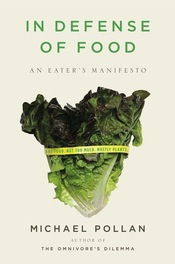
In Defense of Food

Now there’s a new book that talks about the American diet in a hopeful new way: Michael Pollan’s In Defense of Food here. Read an excerpt from his blog about the book:

Most of what we’re consuming today is not food, and how we’re consuming it — in the car, in front of the TV, and increasingly alone — is not really eating. Instead of food, we’re consuming “edible foodlike substances” — no longer the products of nature but of food science. Many of them come packaged with health claims that should be our first clue they are anything but healthy. In the so-called Western diet, food has been replaced by nutrients, and common sense by confusion. The result is what Michael Pollan calls the American paradox: The more we worry about nutrition, the less healthy we seem to become.

But if real food — the sort of food our great grandmothers would recognize as food — stands in need of defense, from whom does it need defending? From the food industry on one side and nutritional science on the other. Both stand to gain much from widespread confusion about what to eat, a question that for most of human history people have been able to answer without expert help. Yet the professionalization of eating has failed to make Americans healthier. Thirty years of official nutritional advice has only made us sicker and fatter while ruining countless numbers of meals.

Pollan proposes a new (and very old) answer to the question of what we should eat that comes down to seven simple but liberating words: Eat food. Not too much. Mostly plants. By urging us to once again eat food, he challenges the prevailing nutrient-by-nutrient approach — what he calls nutritionism — and proposes an alternative way of eating that is informed by the traditions and ecology of real, well-grown, unprocessed food. Our personal health, he argues, cannot be divorced from the health of the food chains of which we are part.

In Defense of Food shows us how, despite the daunting dietary landscape Americans confront in the modern supermarket, we can escape the Western diet and, by doing so, most of the chronic diseases that diet causes. We can relearn which foods are healthy, develop simple ways to moderate our appetites, and return eating to its proper context — out of the car and back to the table. Michael Pollan’s bracing and eloquent manifesto shows us how we can start making thoughtful food choices that will enrich our lives, enlarge our sense of what it means to be healthy, and bring pleasure back to eating.

Pollan’s last book, The Omnivore’s Dilemma, launched a national conversation about the American way of eating; now In Defense of Food shows us how to change it, one meal at a time.

Order Pollan’s book from Amazon here for about $15.00.

Reblog this post [with Zemanta]

Read Full Post »

Margarine in a tub
Image via Wikipedia

By Sue Shekut, Owner, Working Well Massage, Licensed Massage Therapists, Certified Wellness Coach, ACSM Personal Trainer

Even though my blood pressure is low to normal, I personally tend to avoid margarine and butter, opting for olive or canola oil when I cook with oil at all.  However, in the winter, I do indulge in a small sliver of butter on toast when I am working long hours doing massage or exercising and burning off calories quickly. But to me, a “sliver” of butter is about an 8th of a restaurant sized pad of butter, which is what most people would use! Fruit is the only sugar my body can tolerate.  Most people find that as they eliminate the corn sweetened foods and trans fat foods, real food, vegetables, fruits and whole grains taste much better than they thought.

Health Information World has a great article on reducing high blood pressure by implementing simple changes in your diet.  According to their Medical Conditions blog, Trans Fats and High Fructose Corn Sweeteners are the Frankenfoods of today.

The excerpt below is from their article,  “Simple Steps To Follow To Prevent High Blood Pressure.”

As an important point, two specific processed foods are now obviously linked to obesity and raised blood pressure. They are hydrogenated, or trans-, fats and high fructose sweeteners. These freaks can justly be called ‘Frankenstein Foods’ as examples of science gone wrong.

Trans-fats undergo a process that turns liquid oil into solid fat. We know this substance most commonly as margarine. The features of many of those margarines are no coincidence ; the chemical structure of hydrogenated fat is analogous to plastic. Unnecessary to say, trans-fats don’t happen naturally.

Ironically, margarine and other hydrogenated fats were once promoted as healthy choices to saturated fats. But we know now that natural fats contain trace minerals, amino acids and other nutrients essential to good health. Its hydrogenated fats that are the monsters.

Consumers need to read food labels carefully and treat hydrogenated fats with caution. And if you have raised blood pressure you should avoid them like the plague. Naturally, with extensive coverage of the health dangers of trans-fats this advice may appear old hat. A number of progressive shops and food producers have even taken the first steps to ban trans-fats in their products.

Another known cause of high blood pressure is high fructose syrups. These sweeteners were similarly promoted as healthy choices to the feared cane sugar. Food producers have pulled the wool over the publics eye by stressing the association of the name ‘fructose’ with fruit. Fruit contains fructose but it is in no fashion the same substance as the high fructose syrups, most frequently corn syrup, used in the food industry.

Read the entire article, “Simple Steps To Follow To Prevent High Blood Pressure” here.

Reblog this post [with Zemanta]

Read Full Post »

A typical TV Dinner.
Image via Wikipedia

By Sue Shekut, Owner, Working Well Massage, Licensed Massage Therapist, Certified Wellness Coach, ACSM Personal Trainer

Does eating certain foods make you sick? Obviously foods that are spoiled or have bacteria from sitting unrefrigerated too long can make you ill. However, what about foods that taste good and seem to be ok to eat? Like table salt, fast food and so forth. Recently I had a dear friend find out that his high blood pressure was preventing him from obtaining a lucrative government job. So we went on a grocery shopping mission to find foods he could eat that were healthier and less salty than the packaged and processed foods he accustomed to eating. It truly amazes me how small portions of frozen dinners often contain more fat, salt and calories than a huge pile of steamed veggies and meat!

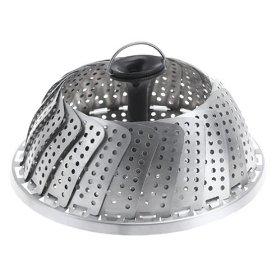
One of the simplest healthy eating devices I introduced my friend to was the vegetable steamer. Yes, the metal steamer that you can insert in a pot with a little water and steam your veggies for dinner or lunch. Steaming is one of the best ways to cook vegetables. It leaves more of the vegetable’s natural taste,  color and nutrients intact than any other method, and it requires no added fat. If you buy fresh produce like broccoli, and steam it instead of eating a tv dinner, you cut out a whole lot of unnecessary salt added to improve the taste of basically old frozen meat and veggies. You also cut out a lot of fat and other chemicals used to preserve the food and add flavor to what really is an unappetizing dish!

You can  buy a stainless steel veggie steamer from most stores including Target, Kmart, Bed Bath & Beyond or Amazon. The Trudeau Steamer runs about $17.00 at Amazon right now. Link here.

Trudeau Veggie Steamer

Read more on “How to Use a Veggie Steamer” here.

Watch a video on how to steam veggies here.

Reblog this post [with Zemanta]

Read Full Post »

By Sue Shekut, Owner, Working Well Massage, Licensed Massage Therapists, Certified Wellness Coach, ACSM Personal Trainer

So you are in a hurry and want to grab a quick bite. What’s your best bet calorie for dollar? Men’s Health magazine does such a  great job of explaining which fast food meal selections are better for you with their “Eat This Not That “column. They now made it into a  book.

A sample of the trade off between a few extra cents or bucks and the increase to your fat and calorie consumption from the Men’s Health article, “4 Must-Know Restaurant Secret’s,” By David Zinczenko, with Matt Goulding –  here.

Here’s exactly how expensive it really is whenever you go for the “bargain”:

  • 7-Eleven: Gulp to Double Gulp Coca-Cola Classic: 37 cents extra buys 450 more calories.
  • Cinnabon: Minibon to Classic Cinnabon: 48 more cents buys 370 more calories.
  • Movie theater: Small to medium unbuttered popcorn: 71 additional cents buys you 500 more calories.
  • Convenience store: Regular to “The Big One” Snickers: 33 more cents packs on 230 more calories.
  • McDonald’s: Quarter Pounder with Cheese to Medium Quarter Pounder with Cheese Extra Value Meal: An additional $1.41 gets you 660 more calories.
  • Subway: 6-inch to 12-inch Tuna Sub: $1.53 more buys 420 more calories.
  • Wendy’s: Classic Double with Cheese to Classic Double with Cheese Old Fashioned Combo Meal: $1.57 extra buys you 600 more calories.
  • Baskin Robbins: Chocolate Chip Ice Cream, Kids’ Scoop, to Double Scoop: For another $1.62, you’ve added 390 calories.

Want the Eat This, Not That info but don’t want to carry around a book. Men’s Health has a solution for you: the new Eat This, Not That iphone app. Check it out here.

Reblog this post [with Zemanta]

Read Full Post »

somosa
Image by megpi via Flickr

By Sue Shekut, Owner, Working Well Massage, Licensed Massage Therapist, Certified Wellness Coach, ACSM Personal Trainer

It’s cold outside and soon many Chicagoans will be stir crazy.  What a fantastic time to learn how to cook spicy, tummy warming,  healthy food.  In Chicago, we are lucky enough to have a celebrity cook, Ranjana,  that teaches how to prepare traditional healthy Indian dishes at her home or your home or event.

Ranjana offers a variety of Indian cooking classes. All classes in her kitchen near Hyde Park are designed for 8 students in which you prepare 9 Indian dishes in 3 hours and then have a sit down dinner with the fruits (and vegetables) of your labor! A single class is only $75 (not bad for the instruction, fun, and tasty 9 dish meal meal!)

View a list of Ranjana’s upcoming classes here.

Sample Somosa recipe here.

Note: Working Well is not affiliated with Ranjana. I met her at a Building a Healthier Chicago Stakeholder meeting and thought her classes would be a great idea for many of our clients and blog readers!

Reblog this post [with Zemanta]

Read Full Post »

Division Street Farmers' Market
Image by ifmuth via Flickr

By Sue Shekut, Owner, Working Well Massage, Licensed Massage Therapist, Certified Wellness Coach, ACSM Personal Trainer

First it was Eat Organic. Now it’s Eat Local. What is Eating Locally and why is it such a  good idea?

What Does it Mean to Eat Locally Grown Foods?

Active.com’s Charles Stuart Platkin explains what Locally grown means in an article here. Platkin writes: According to Erin Barnett, director of LocalHarvest.org, “‘Eating local’ means different things to different people, depending on how ‘local’ is defined.” Some define locally grown as within a 100-mile radius of where they live. But the overarching concept is that you purchase and eat foods produced close to home. “You might be able to get eggs raised just five miles down the road, but cheese from the state next to yours. Both choices take the food’s geographical origins into account, and that is the decision-making tool at the heart of eating locally grown,” says Barnett.

Why Eat Locally Produced Food?

The main reasons proponents tout locally grown food is that it’s better for the environment, keeps purchasing dollars within a closer proximity of your community and it is fresher and less likely to be sprayed with harmful chemicals.

An article in the NewsOk explains why people choose to buy local:  “It often means getting fresher food,” said Urvashi Rangan, Ph.D., senior scientist and policy analyst at the nonprofit Consumers Union. The main reason, Rangan said, is that it hasn’t been trucked thousands of miles so there’s less time for food to spoil.

“But there are even more advantages to local food production. It saves on gasoline and reduces pollution from transporting food (which can help reduce global warming), and, in many cases, it supports smaller-scale farmers,” Rangan said. So, basically, eating locally grown supports the local economy; you eat fresher, less-processed foods, think about your food more, get to know your local growers and help the environment — not bad. (Read entire article, “Eating Locally Can Bring Benefits,” from NewsOK, here.)

According to Jennifer Maiser from FamilyResource.com, “While produce that is purchased in the supermarket or a big-box store has been in transit or cold-stored for days or weeks, produce that you purchase at your local farmer’s market has often been picked within 24 hours of your purchase. This freshness not only affects the taste of your food, but the nutritional value which declines with time.”

Jennifer adds: “Because the produce will be handled less, locally grown fruit does not have to be “rugged” or to stand up to the rigors of shipping. This means that you are going to be getting peaches so ripe that they fall apart as you eat them, figs that would have been smashed to bits if they were sold using traditional methods, and melons that were allowed to ripen until the last possible minute on the vine.”  Read Maiser’s Top Ten Reasons to Eat Local Food here.

The juries still out on whether locally produced food is better for your health, but as more and more people demand locally grown food, restaurants and stores are moving toward selling locally produced food items.

Winter Farmers Markets in Chicago

from Swedish Covenent Hospital’s Well Magazine

GREEN CITY MARKET
Green City Market Web site
Indoor market – 2430 N. Cannon Dr., Chicago, IL. 60614

Wednesdays and Saturdays until Dec. 23, 8 a.m. to 1 p.m.
Wednesdays and select Saturdays January 16 to April 24, 8 a.m. to 1 p.m.

CHICAGO’S DOWNTOWN FARMSTAND
Chicago’s Downtown Farmstand Web site
66 E. Randolph St., Chicago, IL. 60602
Open year-round, Monday through Friday, 11 a.m. to 7 p.m.; Saturdays, 11 a.m. to 4 p.m.
Please check the Web site or e-mail info@chicagoofficeoftourism.org for a holiday schedule.

CHURCHES’ CENTER FOR LAND AND PEOPLE / FAITH IN PLACE WINTER MARKET
Saturdays and Sundays at various churches and organizations throughout Chicago
See localharvest.org/farmers-markets for a detailed schedule.

LOGAN SQUARE WINTER FARMERS MARKET
Indoor market, The Congress Theater, 2135 N. Milwaukee Ave., Chicago, IL. 60647
Sundays, 10 a.m. to 2 p.m. — Runs until March 28, 2010
See logansquarefarmersmarket.org for more information.

Farmers Markets in the Chicago Area Suburbs

List from LocalHarvest.org.

Churches’ Center for Land and People (CCLP) is partnering this year with Faith In Place to sponsor indoor Winter Farmers Markets which provide small, local farm producers with additional venues to extend their income beyond the growing season. Held in parish halls of congregations of many denominations, these markets are open to the public and from November to March offer consumers an opportunity to purchase cheese, meat and poultry, soap, syrup, honey, wool, yogurt, raw fibers, vinegars, dried fruits, milled flours, sauces and salsas, preserves, cider, and fresh produce as available…..in short, anything that a farm grows or produces from what they grow. (Not all items listed will be available at every market.)

When and Where

(November-March)
_____________

Sun., Jan. 10, 10am to 2pm ~ Deerfield
North Shore Unitarian Church
2100 Half Day Rd. (Rt. 22), Deerfield IL 60015

Sun., Jan. 24, 12noon to 3pm ~ Chicago/Old Irving Park
Irving Park Lutheran Church
3938 W. Belle Plaine Ave., Chicago, IL 60618

Sat., Feb. 13, 9am to 1pm ~ Oak Park
Euclid Avenue United Methodist Church
405 S. Euclid Ave., Oak Park, IL 60302

Sat., Feb. 20, 9am to 1pm ~ Rogers Park
United Church of Rogers Park
1545 W. Morse Ave, Chicago, IL 60626

Sun., Mar. 7, time TBD ~ Oak Park
St. Giles Catholic Parish
1025 Columbian, Oak Park IL 60302

Sun., Mar. 14, 9:30am to 1:30pm ~ Park Ridge
Park Ridge Community Church
100 Courtland Ave., Park Ridge IL 60068

To read more from Local Harvest and view the extensive listing of available crops click here.

If you’d like to be on the email list for LocalHarvest click here.

Fun Facts About Illinois Crops and Farming from ExploreChicago.org

• More than half of the corn in the U.S. is used for livestock feed.

• Illinois chickens lay eggs that are used to make candy bars, mints, and hard candies all year round.

• Popcorn is the official snack of Illinois.

• JoDaviess, Hancock, Fulton, Adams, and Pike counties have more cattle than anywhere else in Illinois.

• One Illinois farmers feeds 94 people in the United States and 35 people overseas-that’s 129 people per year.

Read the entire list of Fun Facts About Illinois Crops and Farming from ExploreChicago.org

Read an article on how Eating Local is the New Eating Organic from Time magazine here.

Reblog this post [with Zemanta]

Read Full Post »

I'm on diet #2
Image by floodkoff via Flickr

By Sue Shekut, Owner, Working Well Massage, Licensed Massage Therapist, Certified Wellness Coach, ACSM Personal Trainer

Whilst tooling around the internet looking for good nutritional info for my loyal readers, I came across an interesting blog about food and food politics called “WiseEats.” According to the blog’s author, Jayne Jang, “Unfortunately, fad diets will not help reverse obesity trends.”
Jang has a lot of ideas about combating obesity, but thinks that fad diets are not the answer and I agree.

Jang writes: “At the Gastro 2009 conference in London last week, Professor Chris Hawkey, British Society of Gastroenterology (BSG) president, said that fad diets are making Brits fat.  He concludes that that “if Britons continue to follow unhealthy diets and favour certain foods over others, nine in ten are likely to be overweight or obese by 2050. The methods he used to reach this conclusion are unclear, but generally, I agree that fad diets are not a sustainable solution.  These fad diets try to single out whole categories of food or claim that one food (ex. grapefruit) will burn fat like no other food can.  These diets may help people eliminate some processed junk food, but today, we have lost all sense of normal portion sizes.”

Read the entire post on Jang’s WiseEats blog here.
Read about Jang’s blog and approach to food and food politics here.

Reblog this post [with Zemanta]

Read Full Post »

By Sue Shekut, Licensed Massage Therapist, ACSM Personal Trainer, Certified Wellness Coach, Owner, Working Well Massage

Christmas Eve. Snacks, candy, treats, egg nog. Friends. Family. Presents. Roast turkey. Or ham and roast beef. And then rolls and bread and crackers and brie…and before you know it, you’ve eaten way too much and you feel…like a pinata ready to burst open.

The holidays are full of extra sugary and fat filled treats. And according to some nutrition experts, it’s fine to have a few treats at Christmas. However, it’s also a good idea to plan ahead and follow a few simple rules of thumb so you don’t overdo it. Dana Lilenthal of Nutrition Data blog has the following tips to help you feel less stuffed and more buff on Christmas.

Healthy Eating Tips for Christmas

By Dana Lilienthal

Before you head out to your holiday meal, or before your guests arrive, here are some things you should be doing to make sure you enjoy your holiday with out overindulging.

1. Make a game plan for the day.
• What will you eat during the day?
• When will you fit in your exercise?

2. How much will you eat at your Christmas Eve/Day meal.

3. What are those special foods that you will eat at this meal.
• Are there 1 or 2 dishes that you love and only have once a year?
• Will you enjoy a small serving of these foods?
• What foods can you pass on?

4. Are there foods that make better leftovers?

5. Will you be the host to have control over the foods prepared or are you the guest who can bring a healthy dish or two for you and the rest of the guests?

Read entire blogpost from Dana here here.

Read more articles like this: Blog posts by Dana, Habits & Behavior

Who is Dana Lilienthal, M.S., R.D. and Why Would You Want to Follow her Advice?
Dana is a health educator and counselor with a passion for analyzing and creating recipes. She holds certifications as a Registered Dietitian from the American Dietetic Association, Personal Trainer from the American Council on Exercise and Health Counselor from the Institute for Integrative Nutrition. Dana holds a B.S. in dietetics and a master’s degree in elementary education. When not in a middle-school classroom, Dana educates private clients on how to improve their lifestyle for health and overall well-being.

Reblog this post [with Zemanta]

Read Full Post »

« Newer Posts - Older Posts »