Feeds:
Posts
Comments

Archive for the ‘Fitness’ Category

Climbing stairs is a great way to pump fresh blood, (and thus, oxygen) into your brain, give yourself a break from a stressful day, and burn a few calories. Best yet, it can be fun.

In the 1960’s, Volkswagen made ugly cars fun with the Volkswagen Beetle. Now they are finding new ways to make exercise fun. A car company encouraging people to exercise? Now that is FUN!

Link to You Tube video!

From Volkswagen’s The Fun Theory website: We believe that the easiest way to change people’s behavior for the better is by making it fun to do. We call it The Fun Theory. Link to The Fun Theory Website

Working Well agrees!

Read Full Post »

In an article from Physorg.com, A new study shows that exercise boosts body image for both fit and unfit:

Attention weekend warriors: the simple act of exercise and not fitness itself can convince you that you look better, a new University of Florida study finds.

People who don’t achieve workout milestones such as losing fat, gaining strength or boosting cardiovascular fitness feel just as good about their bodies as their more athletic counterparts, said Heather Hausenblas, a UF exercise psychologist. Her study is published in the September issue of the Journal of Health Psychology.

“You would think that if you become more fit that you would experience greater improvements in terms of body image, but that’s not what we found,” she said. “It may be that the requirements to receive the psychological benefits of exercise, including those relating to body image, differ substantially from the physical benefits.”

The study by Hausenblas and graduate student Anna Campbell is the first to systematically analyze the wide-ranging effects of exercise on body image by examining all intervention studies on the subject until June 2008. From the 57 publications, the researchers found conclusively that exercise buffed up the way people see their bodies regardless of the actual benefits, but the results varied.

Negative body image has grown to almost epidemic proportions in the past 20 years, with as many as 60 percent of adults in national studies saying they don’t like the way their bodies look, Hausenblas said.

Americans spend billions of dollars a year for products designed to change their body size and shape, including diet pills and various cosmetic procedures, she said.

“Body dissatisfaction is a huge problem in our society and is related to all sorts of negative behavior including yo-yo dieting, smoking, taking steroids and undergoing cosmetic surgery,” she said. “It affects men and women and all ages, starting with kids who are as young as five years old saying they don’t like how their bodies look.”

The psychological advantages of exercise have been less explored, including the reduction of depression or confidence in body image, compared with the well-researched and understood physical benefits, she said.

Link to article here

Read Full Post »

By Sue Shekut, Licensed Massage Therapist, ACSM Personal Trainer, Certified Wellness Coach, Owner, Working Well Massage

I have had to eat a “healthy” diet for most of my adult life. As a young girl, I ate as much junk food as my peers and my body rebelled. By 20, I could not eat any white or processed sugar because I was hypoglycemic. I developed migrane headaches from chocolate (a former childhood love) and fermented foods like sharp cheeses and wines. White bread made me sick, so I had to switch to whole grain bread even before it was marketed as whole grain bread. Through the years my body let me know, anything overly processed, overly sugared, overly salted, or overly fat was going to give me stabbing pain in my head, my abdomen, or just plain make me sick and exhausted. I am the “canary in the coal mine” when it comes to food. But in many ways I am a lucky person. I haven’t been able to eat the typical American diet and I don’t have a lot of the typical American diseases. (such as obesity, high blood pressure, Type II diabetes)

I don’t tell you this to get accolades or say I am so great. No, my healthy diet was mainly by default in the beginning. I liked the junk food. I just couldn’t handle it. Later, as I read more and learned more, I ate healthy by design. Having grown up on Rice Krispy Treats, all things Nestle, Rice a Roni, Carnation Instant Breakfast, Skippy Peanut Butter, McDonald’s and Wonder Bread, I know what it’s like to try to wean off the processed foods and try to eat vegetables, fresh fruit, healthy grains, like brown rice, and be satisfied. In my case, I had a crash course in changing my diet. Still, it took a while to adjust to new tastes and learn how to be satisfied with less added sugar. But I can tell you IT CAN BE DONE! and your health and well being is worth it.

But How do you Know What’s Junk Food and What’s Healthy Food?
According to Margie King of the Philadelphia Nutrition Examiner, the NuVal nutritional scoring system may be the ticket to simpler healthy eating. The NuVal system will analyze more than 50,000 food items found in a typical grocery store and assign a value of 1 to 100 to each item. The higher the score, the more nutritious is the food.

The system is the brainchild of Dr. David Katz, an Associate Professor at the Yale University School of Public Health, and the Director and founder of Yale’s Prevention Research Center. Dr. Katz is an expert in nutrition and preventative medicine, the author of several books including The Flavor Point Diet, a syndicated health columnist for The New York Times and a medical contributor for ABC News.
Read more from Margie King of the Philadelphia Nutrition Examiner here

Dr. Katz says our taste buds are malleable and we are teaching them to crave salt and sugar. Eating added sugar in non-dessert items in everything from pasta sauce to breakfast cereal causes our taste buds to crave sugar much more than we normally would. In the video, he talks about how there is as much sodium in many breakfast cereals than your diet should be. It’s well worth the 4 minutes to watch Dr. Katz talk about how our diets are modified by the food supply and how we can retrain our taste buds to enjoy healthier less salty and less sugary foods.

Link to Dr. Katz’s video “Rehab Your Taste Buds: Getting Hooked on Wholesome Foods”

As American’s look to health care reform, there is a growing buzz about food system reform as well. Some say health care reform won’t work without reforming our nutritional system. The Nu Val system is one attempt to give us tools to reform our diets so we don’t NEED as much health care intervention. It’s Prevention versus Disease Treatment. And that sounds pretty sweet! Read Why Health Care Reform Requires Nutrition Reform by Margie King in the Philadelphia Nutrition Examiner

Read Full Post »

By Sue Shekut, Licensed Massage Therapist, ACSM Personal Trainer, Certified Wellness Coach, Owner, Working Well Massage

By now, most of us have heard about the new recommended guidelines for adults under 65 to get at least 30 minutes a day of moderately intense cardio, five days a week. The American College of Sports Medicine (ACSM) and the American Heart Association (AHA) Guidelines here

However, many people have a hard time finding time to exercise after work with long commutes, family obligations and just maintaining the household. At work, people face deadlines, scores of emails, phone calls and piles of paperwork to address. One way for employers and employees to help keep health care costs down, reduce risks of illness, and help improve overall health and well being is to encourage employees to step up their steps!

According to Health Enhancement Systems’ report, Walking: The Health and Economic Impact, there’s no wellness investment that pays a higher dividend than a robust walking program. Here are just a few of the health-related findings specifically associated with walking:

• Protects against heart attack and stroke.
• Helps prevent weight gain.
• Reduces risk of diabetes.
• Lowers overall mortality.
• Decreases heart disease risk.
• Maintains a healthy BMI.
• Enhances fitness with little time or effort.

According to a Loughbrough University study, women who took three 10-minute brisk walks, 5 days a week, had nearly the same increases in fitness levels as women who walked continuously for 30 minutes. In fact, those who walked in briefer sessions lost more weight and inches around the waist than the 30-minute walkers! More here from Health Enhancement Systems

Why Walk?
• Walking is the only exercise where participation rates don’t decrease as
individuals reach middle age and older. One national survey found that
compared with any other group, men 65 and older had the highest percent
of regular walkers — 39.4%.14
• It’s the most popular physical activity in America. More than 56 million people
walk for fitness at least 100 days a year.15
• Walking is inexpensive and easy. All a person needs is a pair of comfortable,
supportive shoes.16
• It comes naturally and can be done in connection with other daily activities —
for example: walking to work, circling the mall or grocery aisles, walking
the dog, or pacing while on the phone.
• Walking is a low impact, safe form of exercise — even for those who are
obese or have arthritis.

How to Find Time to Walk at Work
Employers cannot mandate that employees walk at work. And we don’t encourage employees to shirk their work responsibilities to complete their walking goals. But many smokers take “smoke breaks” at work, leaving the office for 10-15 minutes to smoke a cigarette outdoors. Why shouldn’t the nonsmokers take advantage of a similar break in the work flow for a far healthier result!

And the lunch “hour” is also a great time to get coworkers together and take a brisk walk outside the office or at a nearby mall. Although some do not take a full hour for lunch, and others may want to split the lunch break up into 30 minutes of walking and then time to eat lunch, there are many ways you can fit in a walk a few times during the workweek lunch time.

• A simple plan would be to set up 3 ten-minute walk breaks inside the office building if there is enough space, or weather permitting outside the office.

• Alternatively, staff can set up 20-30 minute walk breaks at lunch time.

• And for those lucky few that take a train or bus or subway to work, try getting off a few blocks or even a half mile earlier than normal and then walk to your destination from there. it’s an easy way to add a few steps to your day and explore your own neighborhood.

Benefits of Walking at Work
Employers have found that allowing employees to take minibreaks leads to increased productivity and job satisfaction. According to Health Enhancement Solutions, walking, like other physical activity, employee productivity increases with physical activity. Findings include:
• Better concentration 1
• Enhanced memory and learning 2
• Improved ability to make complex decisions 1
• Increased physical stamina. 3, 4

Walking promotes an overall sense of wellness by helping people to:
• Control appetite and increase the body’s metabolism 5
• Improve mood and well-being 2, 4
• Reduce symptoms of depression and anxiety 2
• Relax, feel more energetic, and control stress 4, 6
• Sleep better. 7, 8

Programs to Encourage People to Walk at Work
• Employers can encourage or even provide low cost pedometers to help staff monitor the steps they take every day. Recomended Top Ten Pedometers. The Sportline 360 Fitness Pedometer is $22 pedometer that’s easier to use, lightweight and clips on a belt or waistline of trowsers Order here
• Employers or Employees can start a Walking Club at work.

Walking Club Tips
• Spread the word – use email, voicemail and posters to get people interested
• Make it fun and make it friendly. Start slowly so that none of your co-workers are too intimidated to continue.
• Set a Walking club schedule so that it become part of your regular daily routine. Even if some people cannot commit to every day, make sure at least 2 of you keep up the schedule to maintain momentum.
• Encourage your colleagues to take walking breaks instead of coffee breaks in order to get some fresh air– and avoid problems sleeping alter at night due to too much caffeine.
• Promote a noon-hour walking group.
• Create an indoor walking route in case of poor weather – go to a local mall if your workspace is not conducive to walking. Walk the stairwells if your office is a high rise or building with access to stairs.
• Track your walking groups progress on a graph or poster in a main foyer to inspire others to join.
• Hold a contest or challenge between departments.
• Host a heart healthy nutritious potluck before or after your walking groups noon-hour walk.
• Ask your colleagues when they would prefer to walk. Some people need a “pick me up” in the morning while others require one in the later afternoon.

Link to the Health Unit of Canada’s tips on organizing a walking group at work

Research Cited:

1 Loehr J, Schwartz T. The Power of Full Engagement; New York, NY, 2003.
2 US Department of Health and Human Services. Physical Activity Fundamental to Preventing
Disease Washington, DC: U.S. Government Printing Office, June 2002.
3 Murphy MH, Nevill AM, Murtagh EM, Holder RL. The Effect of Walking on Fitness, Fatness and
Resting Blood Pressure: A Meta-Analysis of Randomised, Controlled Trials. Preventive Medicine
2007;44(5):377-385.
4 Fentem PH. Benefits of Exercise in Health and Disease. British Medical Journal
1994;308(6939):1291-1295.

5 Cheng MH, Bushnell D, Cannon DT, Kern M. Appetite Regulation via Exercise Prior or
Subsequent to High-Fat Meal Consumption. Appetite 2009;52(1):193-198.
6 Puetz TW, Flowers SS, O’Connor PJ. A Randomized Controlled Trial of the Effect of Aerobic
Exercise Training on Feelings of Energy and Fatigue in Sedentary Young Adults With Persistent
Fatigue. Psychotherapy and Psychosomatics 2008;77(3):167-174.
7 Galantino ML, Cannon N, Hoelker T, Iannaco J, Quinn L. Potential Benefits of Walking and Yoga
on Perceived Levels of Cognitive Decline and Persistent Fatigue in Women With Breast Cancer.
Rehabilitation Oncology 2007;25(3):3-16.
8 King AC, Pruitt LA, Woo S, Castro CM, Ahn DK, Vitiello MV, Woodward SH, Bliwise DL. Effects of Moderate-Intensity Exercise on Polysomnographic and Subjective Sleep Quality in Older Adults With Mild to Moderate Sleep Complaints. The Journals of Gerontology 2008;63A(9):997-1004.

Read Full Post »

By Sue Shekut, Licensed Massage Therapist, ACSM Personal Trainer, Certified Wellness Coach, Owner, Working Well Massage

Fall is a time the kids go back to school, people start spending more time indoors and flu bugs from across the globe travel to “make new friends” (infect new hosts, meaning us).

Colds and flues can now travel from one country to another in just a few hours via a carrier on an airplane. But you don’t have to go a round the world to catch a cold. You can get a virus from anyone in your immediate vicinity, coworker, random person out in public that touches something you touch. It’s so great that we all have learned to share!

Most colds and flues are not serious or life threatening, but they can make you miss work, drag down your energy levels and overall disrupt your regular life schedule.

What can you do to prevent getting sick?

Immune System Defenses
To start with, keep your immune system functioning well with these simply tips:

Get enough physical activity aka exercise. A the very least get the recommended minimum of 30 minutes of activity 5 times a day (recommended by the American College of Sports Medicine) even in 3 sets of 10 minutes of walking or stair climbing.

Make sure you drink enough water. According to the Mayo Clinic, “Water is your body’s principal chemical component, making up, on average, 60 percent of your body weight. Every system in your body depends on water. For example, water flushes toxins out of vital organs, carries nutrients to your cells and provides a moist environment for ear, nose and throat tissues.”

How much water is enough?

The Institute of Medicine advises that men consume roughly 3 liters (about 13 cups) of total beverages a day and women consume 2.2 liters (about 9 cups) of total beverages a day.

Even apart from the above approaches, if you drink enough fluid so that you rarely feel thirsty and produce 1.5 liters (6.3 cups) or more of colorless or slightly yellow urine a day, your fluid intake is probably adequate. Link to Mayo Clinic’s Water Intake article here

Get your ZZZ’s-Sleep deprivation is a torture technique. Don’t torture yourself! Get the reccomended 7-9 hours by night. And on days you are feeling run down, take an actual nap even for 20 minutes. it lets your nervous system take a break from high stress hormones and let’s your body recharge. Link to health.com “How Much Sleep Do You Really Need”

Aside from your immune system, here are some tips from the Center for Disease Control to help prevent the spread of actual germs.

How Germs Spread

Illnesses like the flu (influenza) and colds are caused by viruses that infect the nose, throat, and lungs. The flu and colds usually spread from person to person when an infected person coughs or sneezes.

How to Help Stop the Spread of Germs

Take care to:

• Cover your mouth and nose when you sneeze or cough
• Clean your hands often
• Avoid touching your eyes, nose or mouth
• Stay home when you are sick and check with a health care provider when needed
• Practice other good health habits.

Cover your mouth and nose when you sneeze or cough

Cough or sneeze into a tissue and then throw it away. Cover your cough or sneeze if you do not have a tissue. Then, clean your hands, and do so every time you cough or sneeze.
Clean your hands often

When available, wash your hands — with soap and warm water — then rub your hands vigorously together and scrub all surfaces. Wash for 15 to 20 seconds. It is the soap combined with the scrubbing action that helps dislodge and remove germs.

When soap and water are not available, alcohol-based disposable hand wipes or gel sanitizers may be used. You can find them in most supermarkets and drugstores. If using a gel, rub the gel in your hands until they are dry. The gel doesn’t need water to work; the alcohol in the gel kills germs that cause colds and the flu. (Source: FDA/CFSAN Food Safety A to Z Reference Guide, September 2001: Handwashing.)

Avoid touching your eyes, nose, or mouth

Germs are often spread when a person touches something that is contaminated with germs and then touches their eyes, nose, or mouth. Germs can live for a long time (some can live for 2 hours or more) on surfaces like doorknobs, desks, and tables.

Stay home when you are sick and check with a health care provider when needed

When you are sick or have flu symptoms, stay home, get plenty of rest, and check with a health care provider as needed. Your employer may need a doctor’s note for an excused absence. Remember: Keeping your distance from others may protect them from getting sick.

Common symptoms of the flu include:

• fever (usually high)
• headache
• extreme tiredness
• cough
• sore throat
• runny or stuffy nose
• muscle aches, and
• nausea, vomiting, and diarrhea, (much more common among children than adults).

The CDC’s “Stopping the Spread of Germs at Work”

Read Full Post »

By Sue Shekut, Licensed Massage Therapist, ACSM Personal Trainer, Certified Wellness Coach, Owner, Working Well Massage

Some say knowledge is power. And knowing how your body works and which muscles help you perform an activity can help you avoid injury and maintain optimal fitness. If you want to know more about your own body and how your muscles work in different exercises, Human Kinetics is the place to go. It’s a health and fitness education company that publishes a variety of books with detailed muscle anatomy illustrations. Books by Human Kinetics show how your muscles work in weight training exercises and when you do specific exercises like stretching, yoga, cycling and swimming. Each book shows the primary muscles you use in a particular exercise in color which makes it much easier to pick out individual muscles you wish to target. We recommend several of these illustrated anatomy books for corporate wellness libraries and for your home!

You can buy these books from the Human Kinetics site directly or from Amazon (where you may be able to get copies of used books for a bit less).

Example of Human Kinetic’s Strength Training Anatomy Dumbbell Lunge

Example of Human Kinetic's Strength Training Anatomy Dumbbell Lunge

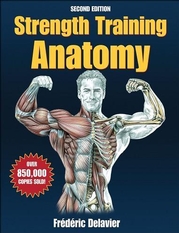
Strength Training Anatomy-2nd Edition
By Frederic Delavier

Strength Training Anatomy

The detailed artwork in the Strength Training Anatomy book showcases the muscles used during each exercise and delineates how these muscles interact with surrounding joints and skeletal structures. Like having an X-ray for each exercise, the information gives you a multilateral view of strength training not seen in any other resource.

This book also contains new information on common strength training injuries and preventive measures to help you exercise safely. Chapters are devoted to each major muscle group, with 115 total exercises for arms, shoulders, chest, back, legs, buttocks, and abdomen.

Order from Human Kinetics here

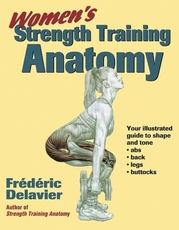
Women’s Strength Training Anatomy
By Frederic Delavier

Woman's Stretching Training Anatomy

With information on strengthening and toning the legs, buttocks, abs, and back, Women’s Strength Training Anatomy provides full-color, detailed anatomical illustrations of exercises for these hard-to-shape areas. Readers can see the muscles at work during each exercise, like an X ray of the body in motion.

Order from Human Kinetics here

Stretching Anatomy
By Arnold Nelson, Jouko Kokkonen

Stretching Anatomy

Each exercise in this book includes detailed instruction on how to stretch, when to stretch, primary and secondary muscle emphasis, and which muscles are activated for support. Stretching programs provide three levels of difficulty, including light stretching that can be used as a warm-up or to aid in recovery from soreness or injury. And summary movement tables show how to customize stretching programs to focus on key problem areas.

Order from Human Kinetics here

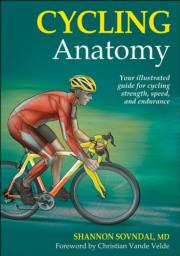
Cycling Anatomy
By Shannon Sovndal

Cycling Anatomy

Cycling Anatomy features 74 of the most effective cycling exercises, each with clear, step-by-step descriptions and full-color anatomical illustrations highlighting the primary muscles in action.

Cycling Anatomy goes beyond exercises by placing you on the bike and into the throes of competition. Illustrations of the active muscles involved in cornering, climbing, descending, and sprinting show you how the exercises are fundamentally linked to cycling performance.

Order from Human Kinetics here

Yoga Anatomy
By Leslie Kaminoff

Yoga Anatomy

With clear, expert instruction and full-color, detailed anatomical drawings, Yoga Anatomy depicts the most common asanasto provide a deeper understanding of the structures and principles underlying each movement and of yoga itself.

From breathing to standing poses, see how each muscle is used, how slight alterations of a pose can enhance or reduce effectiveness, and how the spine, breathing, and body position are all fundamentally linked.

Order from Human Kinetics here

Swimming Anatomy (available in October, 2009)
By Ian McLeod

Swimming Anatomy

See how to achieve stronger starts, more explosive turns, and faster times! Swimming Anatomy will show you how to improve your performance by increasing muscle strength and optimizing the efficiency of every stroke.

Swimming Anatomy includes 74 of the most effective swimming exercises, each with step-by-step descriptions and full-color anatomical illustrations highlighting the primary muscles in action.

Pre-order from Human Kinetics here

Read Full Post »

By Sue Shekut, Owner, Working Well Massage, Licensed Massage Therapist, Certified Wellness Coach, ACSM Personal Trainer

Pair a great upper body stretch with a few minutes of relaxation by using a yoga bolster to stretch every day. Let gravity do the work of opening your chest muscles. Meanwhile, give your back muscles a much needed break from holding you upright all day. AND give yourself an easy way to de-stress, take a few minutes to relax and unwind after a busy day.

Note: Always consult your doctor or health care provider before attempting any new exercises. This information is intended for educational purposes only and should not be construed as medical advice.

Gina Saka, a Chicago-based licensed massage therapist and yoga instructor, shows you how to perform the Yoga Bolster Stretch.

Why Stretch With the Yoga Bolster?
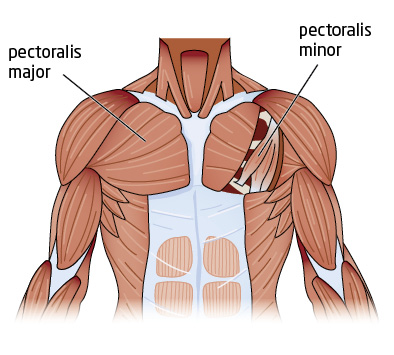
Working on a computer all day is tough on your back and neck muscles. Why is that? Forward leaning work causes us to tighten our pectoral and subscapularius muscles. As these muscles tighten, this can also lead to strain and pains in our upper back and neck muscles.

https://workingwellresources.blog/wp-content/uploads/2009/09/17975.jpg

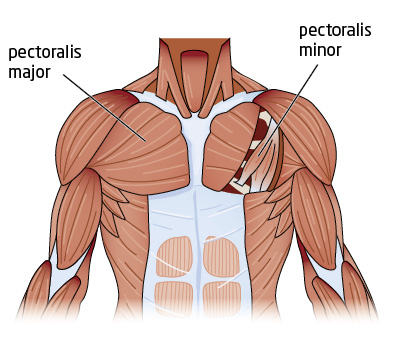
Pectoral Muscle Diagram from Demand Studios

Notice in the diagram that there are two pectoral muscles: Pec major and pec minor. When you use a keyboard or mouse, you contract these muscles–sometimes for hours. This can cause your shoulders to round. The corresponding muscles in your back and neck have to pull backwards to keep you from falling over. Over time these back and neck muscles can become weak or strained. Painful trigger points can develop. And soon, you have that “Oh my aching neck or shoulder pain” feeling. (Note: We will cover anatomy of pectoral and back muscles in depth in later posts. The more you know about your own body, the more you can keep yourself healthy! )

If you have a job that requires you to sit or lean forward for hours at a time, it’s tough to stretch enough to counteract the stress this puts on your upper back and neck muscles. Like brushing your teeth a few minutes each day (versus once a week for 2 hours), it’s far better to stretch a few minutes each day than just once a week or when you go to the gym!

So Where Do I get a Yoga Bolster?
As versatile as they are for stretching, yoga bolsters are not often available at your local department or even sporting goods store. However, it’s easy to order your yoga bolster from many venders online. You may use either a round or a rectangular bolster for this stretch and for many other relaxing yogic stretches.

Round bolsters should be at least 9″ by 25″.
Square bolsters should be at least 24″ by 12″ by 6″s.
If you are very tall (over 6′-2″), you may want a longer bolder, say 10″ by 29″.

Vendors that sell yoga bolsters at reasonable prices:

YogaAccessories (TM) Round Cotton Yoga Bolster

Yoga Direct Deluxe Round Yoga Bolster

YogaAccessories (TM) Rectangular Cotton Yoga Bolster

YogaAccessories (TM) Deluxe Rectangular Cotton Yoga Bolster

And if you MUST have an organic yoga bolster, try Organic Yoga Bolster – Cotton Round Cushion – Natural Cotton Fill A bit more expensive, but made of organic materials. (Just don’t eat them!)

And for Hemp bolsters, try Natural Fitness Hemp Yoga Bolster

Note: This is not an exhaustive list of all vendors of yoga bolsters. And we do not receive any advertising income from these product recommendations. Feel free to browse your favorite online search services to find the bolster that’s right for you!

Read Full Post »

Experts share tips about choosing a fitness professional who can put you on the road to better health.
By Annabelle Robertson
WebMD Feature
Reviewed by Louise Chang, MD

Laurie Heit couldn’t imagine working with a wellness coach. In fact, she didn’t even know what a wellness coach was — until one transformed her life.

A compulsive overeater, Heit had struggled with her weight since childhood. She went on diet after diet, and was finally ready to join Overeaters Anonymous when a friend told her about wellness coaching. She suggested Chere Bork, a registered dietitian and coach. Heit jumped at the chance.

After her first appointment, Heit was so impressed that she decided to do more. She has now had 12 telephone coaching sessions with Bork at a cost of $75 each. She insists they were worth every penny.

Although Heit has made significant improvements to her diet and lost weight, she says she’s gained something far more important. Through the coaching process, Heit discovered that losing weight wasn’t what she needed most. She longed to be at home with her family. So after debating the options, Heit quit her insurance job and became a full-time homemaker. She’s never been happier.

“My goal didn’t change, but how I got there did,” she explains. “The time and exploration of the right food plan helped me explore myself and my wants in life.”

Fitness Trends

According to a recent survey by the American College of Sports Medicine (ACSM), “educated and experienced fitness professionals” now constitute the most important fitness trend in the world, having jumped from third to first place since last year. “Personal trainers” rose from seventh to third place.

“We want to be well. We yearn to be in control and feel better. We want more energy,” says Margaret Moore, founder of Well Coaches, the only health and wellness coaching certification program endorsed by the ACSM. “But there is an enormous gap between wanting to be well and the everyday reality of living with the mental and physical health penalties of overeating, underexercising, and having too little down time.”

That gap is growing. The CDC reports that more than 66% of adult Americans are overweight or obese.

Doctors’ Views on Wellness Coaching

That’s one of the reasons why Moore and other wellness coaches have been working to increase awareness about the field among medical professionals. Moore readily admits, however, that although the idea is becoming increasingly popular with the public, it’s only beginning to catch on with doctors.

“Physician referral to coaches is still at an early stage,” she says. “We don’t have reimbursement, and it’s going to take years to fall into place. We see grass-roots, small-scale doctors coming to us. But most physicians just aren’t into it yet. It’s still very new.”

One doctor who has embraced the idea is Michael Lano, MD. Director of the Ridgeview Clinics, a group of primary care facilities in suburban Minneapolis, Lano refers several patients a month to Bork.

“I’m a family physician and I always tell my patients that it’s my job to help them live a long, healthy life,” he says. “But 98% is their part, and that’s what the life coach helps with — everything from diet and exercise to emotional well-being. It’s the same thing that we [doctors] deal with, but she deals with it from a lifestyle perspective.”

Lano says he sees significant improvements in patients who work with Bork. Most begin exercising and eating better. Many make other important changes as well, which tend to have a boomerang effect on their overall outlook and lifestyle, as they did with Heit.

Ideal Candidates for Wellness Coaching

However, not everyone is a good candidate for wellness coaching, says Lano. Some may be too old or sick to change. Others may simply be unmotivated. The ideal patient is someone who may not be doing anything bad, but they’re not doing the good things, either, he says. “They’re not eating well. They’re not exercising. They’re stressed. They’re stuck. They’re not making progress.”

Jim Harburger found himself in that situation. The 66-year-old clinical psychiatrist began to gain weight 32 years ago when he abandoned his heavy smoking habit. Gradually, his weight began to creep from 165 pounds to 220 pounds.

Much of the problem, Harburger says, was stress from his high pressure job as the director of a large behavioral health organization. But the trigger was the daily gift of sweets offered by his secretaries, which Harburger found irresistible.

“The metaphor was that I was being eaten alive by my job, but I was actually eating to handle the anxieties from my work,” he says.

Harburger joined a gym. But like so many others, he found it hard to get there and went only sporadically. Desperate, he finally decided to hire a personal trainer. The gym recommended Ellen Albertson, a staff member who was a registered dietitian, a licensed nutritionist, a certified personal trainer, and a licensed corporate wellness coach.

Albertson began each session with 20 minutes of walking, during which time she and Harburger would talk.

“One might think I could walk on my own, but what she was doing was listening to me about my life, learning about how I managed eating, the stressors in my life, and my relationship to my body,” he explains. “She became familiar, almost like a good therapist, with all aspects of my life. And slowly, she built a relationship that I started to value.”

Albertson also helped Harburger manage his cravings. A self-confessed sugar addict, he likened it to withdrawal from cocaine. “I felt my body shaking, I couldn’t think, and I was in total transition for almost a week,” he says. “Now I know that if I have a cookie, I need to separate myself from what I am eating or I will just keep eating.”

The result? Harburger, who visits the gym almost every day now, dropped 40 pounds over a three-year period.

Albertson says she sees it all the time. People come in expecting to be told what to do, but what actually works best for them is to slow down, think about their goals, and then determine the path themselves.

“People are out of touch with their bodies. When you listen to your body, you eat when you’re hungry, you stop when you’re full, and you enjoy food for its rightful place in your life,” she says.

Looking for the Right Wellness Coach

Michael Arloski, PhD, is the author of Wellness Coaching for Lasting Change, a training manual used by several coaching programs, works with dozens of corporate clients, training them on the finer points of coaching for long-term lifestyle changes.

“We need to move from ‘prescribe and treat,’ or what I like to call ‘education and implore’ — where we’re begging someone to change after we give them a lot of information — to a coaching model where we’re advocating for change and becoming an ally with that person,” he says.

To determine whether a coach is reputable, Moore suggests checking references and asking for testimonials. Look for people with degrees or certification from reputable organizations such as WellCoaches and then interview them extensively about their background.

Moore advises choosing a coach who makes you feel the most energized and confident. You should be inspired after a coaching session, with lots of “Aha!” moments, as well as motivated about your ability to make needed changes in your life.

Plan to pay between $50 and $150 a session, and expect to spend at least three months with a coach before seeing meaningful progress, which is typically defined as the creation of two or three healthy new habits. And don’t hesitate to end the relationship if something doesn’t feel right.

In addition to his dramatic weight loss, Harburger says the changes have had a positive effect on his career. Harburger’s wellness coaching has led him to return to private practice and reduce his workweek to 75%.

“I struggled with giving myself permission to do that, but it was miraculous. Before, I would never have initiated that. Now, I feel so unencumbered,” he says. “It’s like I’m on constant vacation.”

Link to article in WebMD .

Read Full Post »
By Sue Shekut, Licensed Massage Therapist, ACSM Personal Trainer, Certified Wellness Coach, Owner, Working Well Massage

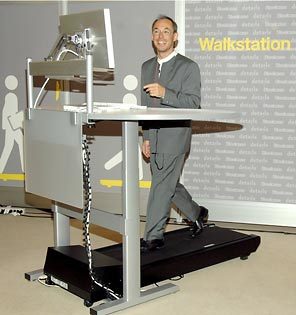
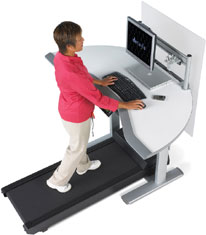
Sitting all day is tough on your back, neck and stress level. We hear news everyday about the benefits of exercise on our hearts, our waistlines and our mental processes. But many Americans have jobs that require us to sit long hours at computers or working at desks. If we can find time after work, some of us can squeeze in an hour or so working out at the gym a few days a week. But finding gym time is always not doable with busy schedules, long commutes and family obligations. What’s a stressed out office worker to do? Call Steelcase and order a new Walkstation treadmill so you can walk AND work…without leaving your office! Read more from this article by Shandra Martinez in The Seattle Times:

Burn while you earn: Desk treadmill keeps you walking at work

GRAND RAPIDS, Mich. — Too busy working to work out?

Now you can burn calories while earning a paycheck with Steelcase’s new Walkstation, which merges a workstation with a treadmill.

Dr. James Levine on his Walkstation
The Walkstation.
DEBRA L. ROTHENBERG / FEATURE PHOTO SERVICE

The concept is based on the research of Dr. James Levine of the Mayo Clinic in Rochester, Minn., who has spent the past 15 years studying energy expended during daily activity.

“What we have done is taken science from the lab to a product that could potentially help millions and millions of people,” said Levine.

“I think it’s the next iPod. Everybody is going to want one.”

Designed to run at a maximum of 3.5 mph, the commercial-grade treadmill has a quiet motor and belt, Klipa said.

But don’t expect this workplace treadmill to make you break a sweat or provide a gym-style workout.

Yet even a slow stroll can improve a person’s health, said Steve Glass, professor of movement science and director of Grand Valley State University’s Human Performance Lab.

“How hard you work to burn calories isn’t as important as burning those calories, from the standpoint of long-term health,” said Glass, who is familiar with Levine’s work.

Levine’s research on Non-Exercise Activity Thermogenesis (N.E.A.T.) concludes that a sedentary lifestyle is not natural. The key to fighting obesity and many other health problems is to keep people from spending their days deskbound.

“Over the last 150 years, we’ve become chair-imprisoned. We are behind a screen all day at work. We are in a car or bus getting to and from work. And in the evening, we are in a chair watching television or surfing the Internet,” Levine said. “We’ve gone from being on our legs all day to being on our bottoms all day.”

Steelcase's Walkstation

Levine does most of his research on his Walkstation. Sometimes, that can be as much as 90 hours a week. The 43-year-old’s longest stretch without stopping is 20 hours. The habit of walking a mile an hour while he works has made him sharper and reduced his need for sleep. “I’ve become incredibly focused on completing things,” said Levine, who has banned chairs from his office.

There are more benefits to the Workstation than losing weight. “People want to escape from work because it is stressful,” Levine said. “One of the key benefits to this approach to working is that it is de-stressing and depression prevention.”

Link to Shandra Martinez’s November 14, 2007 article in The Seattle Times, “Burn While You Earn”

Dr. Levin’s study of volunteers at SALO, LLC, a Minneapolis-based financial staffing firm, using the actual Walkstation showed that “Individuals lost an average of 8.8 pounds — 90 percent of that was fat. Triglycerides decreased by an average of 37 percent. no productivity was lost due to the new environment.”

The Walkstation retails for about $4500 and is available in a variety of colors and table sizes. For more information on Steelcase’s Walkstation, go to Steelcase’s website for the WalkStation

For more information on a six-month study from (late 2007 to early 2008) of a real-life office at SALO, LLC, a Minneapolis-based financial staffing firm, that was re-engineered to increase daily physical activity or NEAT (non-exercise activity thermogenesis) click here.

In addition to his research efforts at SALO, Dr. Levine and his colleagues in the NEAT (Non-exercise Activity Thermogenesis) lab at Mayo Clinic have pioneered an “Office of the Future” — an office complete with treadmills that serve as both desks and computer platforms and a two-lane walking track that serves as a meeting room.

They created a Squidoo lens that focuses on real world implementations of the work of the NEAT Lab. Dr. Levine, along with Dr. Joseph Stirt (a doctor and a NEAT practitioner, having installed a treadmill computer desk in his home office) and Lensmaster Tom Niccum (with a treadmill computer desk–affectionately called “iPLod”–in his company office) hope to create a community of NEAT practitioners to spread the idea of “walking while working,” discuss the practicalities of setting up one’s workspace, and explore new ways to implement NEAT ideas through their Squidoo lens, Walking While Working.

Read Full Post »

« Newer Posts