Feeds:
Posts
Comments

Archive for the ‘Fitness’ Category

Olympic Swimming Pool Fast Lane Category:Outdo...
Image via Wikipedia

We had our first real snow  of the season today in Chicago. And that means more indoor fitness activities for many of us.  It’s a good time to talk about the benefits of swimming!

As a young child, my parents used to take us to the local high school pool twice a week for open swim. Now in their 70’s, both my mother and father try to swim at least 3 times a week. It’s great exercise, easy on the joints and helps keep their muscle tone. Plus it’s a good way for them to spend time together and meet new friends in their water aerobics classes. I, too, try to swim more in the winter for cardiovascular health and overall fitness.

Richard Weil, MEd, CDE from Medicine.Net.com wrote a fantastic post about swimming,starting with the history of swimming,  moving on to the benefits of swimming, how to get started, what to wear, equipment you need, where to do it, and finishing with links to great swimming resources. Read the excerpt from his article below or click the link here to go to his original article.

What is the History of Swimming?

Human beings have been swimming for millennia. According to Wikipedia, Stone Age cave drawings depict individuals swimming and there are written references in the Bible and the Greek poems “The Iliad” and “The Odyssey” dating back 1,500 to 2,000 years. There are even Egyptian clay seals from 4000 BC showing four swimmers doing a version of the crawl, and the most famous swimming drawings were apparently found in the Kebir desert and were estimated to also be from around 4000 BC.

According to the Encyclopedia of Traditional British Rural Sports, literature specifically related to swimming grew in the middle ages. It is believed that the first book devoted to swimming was Colymbetes by Nicolas Wynman written in 1538, and a more widely recognized text, De Arte Nantandi, was published in Latin by Everard Digby in 1587. The encyclopedia also reports that swimming was required of knights and that Romans built bathhouses and pools wherever they conquered to serve as social clubs and places to exercise.

Organized swimming began in the 1800s and 1900s with the creation of swimming associations (for example, the Amateur Swimming Association in 1886) and clubs that competed against each other. There are reports from that era of swimming clubs in England, France, Germany, and the United States. High-profile events also contributed to swimming’s visibility. For instance, Matthew Webb swam the English Channel in 1875.

Competitive swimming continued to grow in popularity during the 1800s and was included in the first modern Olympic Games in Athens in 1896. In 1904, the Olympics in St. Louis included the 50-, 100-, 220-, 440-, 880-yard and one-mile freestyle, the 100-yard backstroke and 440-yard breaststroke, and a 4×50-yard freestyle relay.

By the 20th century, swimming had become mainstream. Indoor pools were beginning to appear, most towns with populations over 20,000 had public outdoor pools, and swimming clubs became increasingly popular for recreation. Women participated for the first time in swimming in the Olympic Games in Stockholm in 1912, and Johnny Weissmuller (considered by many authorities to be the greatest swimmer of all time and who later went on to Tarzan fame in movies) became the first person to swim 100 meters in less than one minute.

Today swimming is the second most popular exercise activity in the United States, with approximately 360 million annual visits to recreational water venues. Swim clubs, recreation centers, Y’s, and many other facilities feature swimming pools. Many high schools and colleges have competitive swim teams, and of course, swimming is one of the most popular Olympic sports. Millions of Americans are swimming each year. Are you one of them? If not, the following information may help get you started.

What are the Swimming Strokes?

Breaststroke, backstroke, butterfly, and crawl (freestyle) are the most popular swim strokes. The breaststroke and butterfly are more difficult to learn than the backstroke and crawl. Click here for a description of the various strokes.

What are the Benefits of Swimming?

There are plenty of reasons to swim! Here’s a list that should get you motivated.

Low impact

There’s no ground impact when you swim, and so you protect the joints from stress and strain. In fact, the Arthritis Foundation strongly recommends swimming and water activities for this reason, so much so that they sponsor water classes all over the country (check http://www.arthritis.org for information). Water aerobics classes are also desirable for this reason, because even if you do jump and hit the bottom of the pool, you do so with less force because you’re buoyant in the water.

Can be continued for a lifetime

Because there’s no impact with swimming, it can be continued for a lifetime. If you check the United States Masters Swimming (http://www.usms.org/) Web site for age categories of their swim competitions, you will find a 100- to 104-year-old age group! And the master of fitness, Jack La Lanne, still swims one hour every day at age 93!

Builds cardiorespiratory fitness

Swimming improves endurance. In one study of sedentary middle-aged men and women who did swim training for 12 weeks, maximal oxygen consumption improved 10% and stroke volume (the amount of blood pumped with each beat which indicates heart strength) improved as much as 18%.

Builds muscle mass

In a study of men who completed an eight-week swimming program, there was a 23.8% increase in the triceps muscle (the back of the arm). My take on muscle mass and swimming is that if you have been doing no resistance exercise at all and you start to swim, you will certainly get more toned and you may even gain mass like the men in this study.

An alternative when injured

When athletes are injured, particularly in the lower extremities, they are frequently told to swim to maintain their fitness level. Swimming helps them stay in shape, and it’s even part of the rehabilitation. That’s because the resistance of the water makes the muscles work hard without the strain or impact that is experienced on land.

It’s a family affair

Swimming and other water activities are something the entire family can share. With rising levels of obesity in children as well as adults in the United States, family physical activities and good role-modeling may be one way to stem the epidemic of inactivity and obesity facing our nation.

Burns calories

Swimming burns lots of calories, anywhere from 500-650 per hour depending on how efficiently you swim (you burn more flopping around than swimming cleanly!) and how buoyant you are (the more body fat you have, the more you float and the fewer calories it takes to swim). Very early and original research on swimming and calorie expenditure showed that swimming, regardless of the stroke, burned about 89% of the calories burned during running and 97% of the calories burned during cycling for the same time period. Calorie expenditure is dependent on the intensity of exercise, and so it’s entirely possible to burn more calories swimming than running in the same period of time as long as you swim hard enough, and particularly so if compared to running at light intensity.

How do I Get Started with Swimming?

Take a lesson if you don’t know how to swim! It’s never too late to learn. Your local recreation center, Y, fitness center, or senior center might have a pool, and if they do, chances are they offer swim lessons (plus, if it’s indoors, you can swim all year long!). You may have the choice of group or private lessons. Opt for a private lesson if you have a strong fear of the water and feel you need special attention, otherwise a group lesson will work just fine.

A qualified swim instructor will have some type of certification (for example, the American Red Cross-certified lifeguard and swim instructor) and will be willing to speak with you before you get started to explain how things work. Adults generally need one hour for beginning sessions, but that may vary based on your health and fitness level (children younger than 6 years of age need 15-30 minutes and 6- to 12 year-olds need 30-45 minutes). The instructor should use kickboards, float belts, or other flotation devices to assist you if necessary, and they should be sensitive to any fear of the water you might have. When you first start, you should expect to learn breathing and stroke techniques separately, and then the instructor will integrate your lessons as you get more comfortable and skilled. You might start in the shallow end where you can stand and work on breathing techniques, by the side of the pool and hold on while you kick, or perhaps hold on to a kickboard and kick across the pool to work on kicking strokes. Your instructor will know how quickly to progress.

Where are Resources for Swimming?

http://www.usms.org/

http://www.ymca.net/ (Click on aquatics to learn more about infant-parent classes, preschool classes, classes for people with disabilities, classes for teens, and competitive swimming for people 18 and over.)

http://www.arthritis.org/ (Check for water classes in your area.)

http://www.usaswimming.org/ (Click on the “swimmer” tab and then “disability.”)

http://swim.isport.com (formerly Clubswim)

http://www.usswimschools.org/

http://www.swimoutlet.com/AquaJogger

http://www.swimmingworldmagazine.com/

http://www.usatriathlon.org/

http://www.junonia.com/home.htm (large-size swimsuits for women)

http://www.wholesomewear.com/slimmer-c.html (large-size swimsuits for women)

http://www.landsend.com/cd/frontdoor/0,,swim,00.html (large-size and custom swimsuits for women)

http://www.bigmen.com/ (large-size swimsuits for men)

http://www.big-tall.com/ (large-size swimsuits for men)

http://www.bigandtallguys.com (large-size swimsuits for men)

http://www.swimoutlet.com/ (swim gear)

http://aquajogger.com/default.htm (swim gear)

http://www.shapeupshop.com/aqua/hand_buoys.htm (water dumbbells)

http://www.power-systems.com/ (water dumbbells)

http://www.gymcor.com/pat201aqwatr.html (water treadmill)

http://www.activeforever.com/ (water treadmill)

http://www.endlesspools.com/index.html (water treadmill—propeller method)

http://www.usoc.org/paralympics/swimming_teams.html

http://www.swimmingworldmagazine.com/swimshop/default.asp?iRefId=23

http://www.americanswimmingassociation.com/

Read entire article here.
Read Full Post »

By Sue Shekut, Licensed Massage Therapist, ACSM Personal Trainer, Certified Wellness Coach, Owner, Working Well Massage

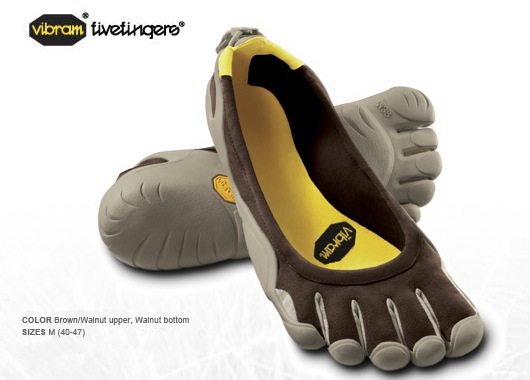
Looking for a gift idea for someone with plantar fasciitis? Or just want to give a runner a gift that will help them avoid it?  Look to the Vibram running shoe.

Vibram shoe

Read  John Biggs post about Vibram shoes at CrunchGear.com and learn all about his experience with the shoes. Then run to the nearest running store to get your own..and a pair for the runner in your life!

And, no, Working Well Resources and Working Well Massage are not affiliated with Vibram, John Biggs nor do we get any free gear for our post. (Would you trust us if we did?) We’re just happy to pass on the latest info to you, our loyal readers!

Review: Vibram Five Fingers Classic

by John Biggs

I swore I’d never wear them. We called them the Five Fingers of Suck a few years ago and I was sure they were crazy. Friends, I’m here to tell you I was wrong. And I’m sorry.

Here’s my story: I ran a marathon a few years ago. I got plantar fasciitis and couldn’t run after the marathon. I worked through that inflammation but by the time I was ready to run again I had gained thirty pounds. Wham. Shin-splints. So I was a fat former runner with leg problems. The prognosis wasn’t good.

So I tried a few things – the elliptical, weight training, losing some freaking weight – but the thing that saved me were these shoes.

Photo Gallery by Picturesurf

First, a caveat. I’m not a doctor, I’m an amateur runner and a bad one at that. Before you use these shoes, talk to a doctor. I can attest to what they did for me but I have no idea what they will do for you.

We are born to run. Heck, there’s even a book about it. Our first weapon, before fire and spears, was running. You see, animals like gazelles can run very fast for a short amount of time. They have great sprint speeds but they get tired easily. So we, as a pack predator, would get into formation and literally run animals to death. Then we’d eat them. We are good at running.

But we’re good at running barefoot. We’re not good at running in marshmallow-based shoes with padding, support, and protection. In fact, we get injured because of these shoes. There is some data that shows, in fact, that the more expensive the running shoe the worse it is for your feet and legs. I knew something was wrong when my feet would fall asleep while I was running. Something was up.

I don’t want to get into a religious argument – this is like arguing for veganism or onanism and you eventually fall into the hippie trap of equating something to “freedom” – but it makes sense. I bought the best shoes I could find for the marathon. And the shows – and the marathon – beat me down.

So I tried the Nike Free, a thinner soled shoe with separate compartments on the bottom for increased mobility. This got rid of most of my foot pain but I still had ankle pain. I ran a little in regular shoes and then read Born to Run and decided to go naked.

The thinking is this: we can run without injuries barefoot. It’s our natural mode of transportation and by wearing shoes we are weakening our bodies.

However, running barefoot in Brooklyn is a bad idea. So I ordered the Five Fingers Classic for about $75 – I bought 44 for my size 11.5 foot and they fit very well – and waited. I ran. My knees were screaming. My ankles hurt. Then, a few minutes later, all the pain was gone. I was running normally and, thanks to the light weight and comfort I could run longer than I ever could. I could run without stopping, which was a big change for me. I could run for quite a while. The only limitations were the blisters I got during the first few runs. Even those went away.

So I’m a Five Fingers convert. The shoes give your ankles a workout rather than a coddling. I felt my ankles get stronger and my feet get more resilient. I felt some of the pounds drop. I felt good.

They say we need lots of arch support but for most of our biological history we didn’t even know what an arch was let alone how to support it. While these shoes look ridiculous I’m happy to report that they work and they’re now my go-to running shoes.

Link to John Biggs  entire article here.

Where Do I Get Those Funny Looking Toe Sock Looking Shoes?

Order your pair of Vibrams shoes from their website here.

Order from Hanigs in Chicago here.

Or stop by Running Away a running store in Wicker Park located at 1753 N Damen Ave, Chicago, IL 60647. Phone: (773) 395 – 2929. Their website here.

Info on Running Barefoot (sans Vibrams) at runningbarefoot.org here.

Read Full Post »

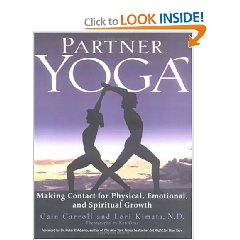
Partner Yoga

Every day, clients ask us how often to stretch, why the stretching they do does not combat their neck and back pain and what are the best ways to stretch. The truth is, it’s tough to remember to stretch and it’s even more difficult to stretch often enough to combat the muscle tension we place on ourselves when sitting at computers all day. It’s also a challenge to find time to stretch without sacrificing time with loved ones.

So what are poor stressed out, tense muscled people to do? How about a few simple yoga poses?

One of the reason I like yoga is that is gives you a set of pre-designed poses that stretch the majority of muscles in your body. Once you know poses like “Downward Facing Dog,” “Sun Saluations” or “Tree Pose” you can do them virtually anywhere you have space and time to stretch out and extend your limbs. Simple yoga poses don’t require props and you can do them in a hotel room, or at home, or in a spare conference room at work if it’s allowed.

Even better yet, a great way to do yoga AND spend quality time with your partner or family, is to try Partner Yoga.

What is Partner Yoga?

The website, Partneryoga.com, defines partner yoga as a unique practice which combines powerful techniques and exercises from yoga, dance and martial arts. Partner Yoga use various movements and poses (asanas) to focus the mind and increase strength, stamina and flexibility. The physical poses are combined with potent breathing techniques (prananyams) which help release tension and promote the free flow of subtle energies (prana). All Partner Yoga exercises use the buddy system to dissolve tension and establish a natural state of harmony in body, mind, emotion, and spirit.

Partner Yoga postures like the “Cat/Cow” and the “Downward Facing Dog” are a fun and creative ways to for kids to learn about their bodies and the importance of physical exercise. Friends can use Partner Yoga to help each other stay motivated and committed to their wellness plan. Practicing yoga with a partner is uplifting and inspiring, and helps raise both people to new heights. The movements and poses in Partner Yoga require 100% participation from two people. Best of all, Partner Yoga requires no special equipment and can be done in any open space (the living room, gym, or park).

Benefits of Partner Yoga Poses

Working through a yoga sequence with someone else extends a number of benefits:

  • It’s non-competitive fitness in which two or more people can engage.
  • It builds intimacy, especially between love partners.
  • A deeper level of trust develops between two people who explore yoga together.
  • Partners can assist one another.
  • It’s a fun activity to share with children.

Where Can I Learn Partner Yoga Poses?

Here are some books and DVD’s on Partner Yoga.
Partner Yoga: Making Contact for Physical, Emotional, and Spiritual Growth on Amazon here

Relaxation Fit Partner Yoga video  here from Divakar Yoga

The Joy of Partner Yoga here

Together: the Art of Partner Yoga here.

Read Full Post »

Does fitness have to be an all or nothing proposition? Experts say no.

Gentle exercise from EverydayHealth.com

Simply walking can have cardiovascular benefits. And you can walk a lot longer in your life than you may be able to run or kick box. Some take walking to the woods or hills and call it hiking. Others take walking to the streets for an “urban hike.” As a child, I walked everywhere my feet could take me–and my mother allowed! I could explore, see much more of my world, stop and smell the roses. As an adult I enjoy hiking in nature and walking around the city of Chicago. I see things I often miss when I am driving or biking. A good long walk clears my head, literally pumping fresh oxygen (via my blood) to my brain.

The American College of Sports Medicine and American Heart Association recommend that adults under 65 get at least 30 minutes of moderately intense cardiovascular exercise 5 days a week to maintain health and reduce the risk for chronic disease. And it does not have to be a consecutive 30 minutes of exercise. Three 10 minute walks will do the trick. Or, you can do vigorously intense cardio 20 minutes a day, 3 days a week for the same result. (In either case, twice a week, you should add in eight to 10 strength-training exercises of eight to 12 repetitions of each exercise.)

Moderate-intensity physical activity means working hard enough to raise your heart rate and break a sweat, yet still being able to carry on a conversation. (To lose weight or maintain weight loss, you likely need to add 60 to 90 minutes of physical activity.)

According to , at About.com, a study in the Nov. 14, 2005 issue of the “Archives of Internal Medicine” confirms that walking builds aerobic fitness at both moderate and high intensity.

Walk Longer or Walk Faster

Improvements in aerobic fitness were seen in the study group for those who walked with high intensity, either with low frequency or high frequency. But similar benefits for aerobic fitness were also seen for those walking at moderate intensity and high frequency.

“The findings demonstrate that significant improvements in cardiorespiratory fitness can be achieved and maintained over 24 months via exercise counseling with a prescription for walking 30 minutes per day, either at a moderate intensity five to seven days per week, or at a hard intensity three to four days per week,” Glen E. Duncan, Ph.D., R.C.E.P.S.M., of the University of Washington, Seattle, and colleagues concluded.
Reference: (Arch Intern Med. 2005; 165: 2362-2369.)

Walking Intensity vs. Frequency

  • Moderate Intensity Walking: Walking at 45-55% of maximum heart rate, an intensity at which you may be breathing a little harder than usual but able to keep up a full conversation.
  • High Intensity Walking: Walking at 65-75% of maximum heart rate. You are able to speak only in short sentences.
  • Low Frequency Walking: 3-4 times a week for 30 minutes a session.
  • High Frequency Walking: 5-7 times a week for 30 minutes a session.

Walking Prescription for Aerobic Fitness

The prescription for aerobic fitness gives you these choices:

  • High Intensity, Low Frequency: 30 minutes per day 3-4 days per week at 65-75% maximum heart rate.
  • Moderate Intensity, High Frequency: 30 minutes per day 5-7 days per week at 45-55% maximum heart rate.
  • High Intensity, High Frequency: 30 minutes per day 5-7 days per week at 65-75% maximum heart rate

Read entire article at About.com here.

How Do I Find My Target Heart Rate?

It’s easy! Use these simple online calculators.

Target Heart Rate Calculator from MayoClinic here.

Target Heart Rate Calculator based on your fitness level from About.com here.

Target Heart Rate Calculator for different intensity levels from Fitwatch.com here.

Or follow the instructions below from WikiHow.com to calculate your target heart rate the old fashioned pen and pencil way!

What’s this Karvonen Method of Calculating Target Heart Rate?

  1. Find your resting heart rate as soon as you wake up. You can do this by counting your pulse for one minute while still in bed. You may average your heart rate over three mornings to obtain your average resting heart rate (RHR). Add the three readings together, and divide that number by three to get the RHR. For example,(76 + 80 + 78) / 3= 78.
  2. Find your maximum heart rate and heart rate reserve.
    • Subtract your age from 220. This is your maximum heart rate (HRmax). For example, the HRmax for a 24-year-old would be220 – 24 = 196.
    • Subtract your RHR from your HRmax. This is your heart rate reserve (HRmaxRESERVE). For example,HRmaxRESERVE = 196 – 78 = 118
  3. Calculate the lower limit of your THR. Figure 60% of the HRmaxRESERVE (multiply by 0.6) and add your RHR to the answer. For example,(118 * 0.6) + 78 = 149.
  4. Calculate the upper limit of your THR. Figure 80% of the HRmaxRESERVE (multiply by 0.8) and add your RHR to the answer. For example,(118 * 0.8) + 78 = 172.
  5. Combine the values obtained in steps 3 and 4 and divide by the number 2. For example,(149 + 172) / 2 = 161 (You can get the same result by simply multiplying HRmaxRESERVE by 0.7 and adding to it RHR).

Tips for Checking Your Heart Rate

  • When you take your reading for your resting heart rate, make sure to do so the morning after a day where you are rested, as trying to do this after a day of a hard workout can affect your results.
  • You should ensure during your workout that your heart rate falls within your target heart rate zone to maximize cardiovascular fitness.
  • A rule-of-thumb is that if you’re able to sing, you’re not working out hard enough. Conversely, if you’re not able to talk, you’re working out too hard.
  • One of the most common ways to take a pulse is to lightly touch the artery on the thumb-side of the wrist, using your index and middle fingers. This is called a radial pulse check.
  • You may also place two fingers below the jawline, along the trachea (windpipe) to feel for a pulse, again using your index and middle fingers. This is called a carotid pulse check.
  • When taking your pulse for ten seconds during a workout, stop exercising. Do not allow yourself to rest before taking your pulse, and immediately resume exercise after the ten seconds. Multiply by 6 and you’ll have your heart rate.
  • If you are serious about working out and becoming more cardiovascularly fit, you may want to consider purchasing a heart monitor for accurate readings during your workout sessions.
Reblog this post [with Zemanta]

Read Full Post »

I was speaking with a client the other day about running. Many of our clients run to keep up their cardiovascular fitness and keep their bodyfat composition down. Running can be a great exercise if precautions are followed to avoid joint damage. Read expert advice on how you can minimize wear and tear on your joints from Running Times:

1) Train appropriately and maintain proper weight.

“The key word is appropriate,” says Dr. Walter Bortz, an expert on aging and longevity at Stanford University School of Medicine. “When the compressive forces are right in amount and direction, then the molecules across a joint are stimulated. That’s a healthy joint. But when they’re torqued or overburdened with obesity, then the molecules start fraying and that leads to arthritis.”

“The two important characteristics of runners who improve are genetics and training,” says Dr. David Martin, a renowned exercise physiologist at Georgia State University. “Some people aren’t given perfect biomechanical systems so they don’t have as much room for error in training.”

2) Avoid hard, cambered surfaces.

images

Running on grass. Image fom Womansrunningcentral.com

As much as possible, get off the roads. Ideally, train on dirt trails. Find a track, but run clockwise in the outside lane on your warm-up and cool-down so you’re not continually making left turns. On asphalt, choose lightly cambered roads. Avoid running on cement surfaces like the plague.

3) Wear the right shoes.

Martin says that two-time Olympic 1500m gold medalist Sebastian Coe wore heavy, cushioned shoes in training which, he says, provide a softer landing and develop very strong legs. Like Coe, reserve your lightweight flats for races and then “run with the wind,” Martin advises.

images-1

Running Shoes

Dr. Amol Saxena, a podiatrist in the Sports Medicine Department of the Palo Alto Medical Foundation in California, cautions that if you have a family history of medial (inside) knee arthritis, or if you’re bow-legged, avoid motion-control shoes and devices, as they contribute to wearing out the medial knee joint.

“I also encourage people who don’t have foot problems to walk around the house, or even do some exercise, in bare feet,” says Saxena. “This provides a stronger platform so your muscles can absorb shock and support your joints better. In cultures where people go barefoot, in general there is less osteoarthritis.”

4) Maintain proper running form and cadence.

In particular, avoid overstriding, which contributes to impact-related injuries. To prevent overstriding, strive for at least 160 foot strikes per minute (80 for each foot). Most elite runners have a stride rate of 180 or over.

5) Cross-train.

Give yourself regular breaks from running’s weight-bearing forces by swimming, deep water running with a flotation belt, bicycling, or cycling. If you have access to an Alter G treadmill, use it: A growing number of elites are incorporating this tool into their training.

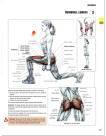
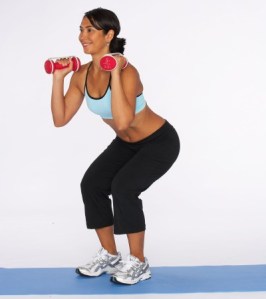
Dumbbell_Lunges_MPreview

Dumbbell Lunges

6) Incorporate weight and strength training.

When done properly, weight and strength training can help preserve bone density. Plus, it can improve muscle mass, strength, and balance, which may take pressure off of your joints.

7) Stretch diligently.

Long, supple muscles may also alleviate pressure and wear on your joints. Stretching is even more important as we age, when muscles and joints stiff en. Yoga and tai chi can be excellent for flexibility and balance, but be careful, as certain yoga positions can irritate joints.

8) Know the signs of over-taxed joints.

Obvious signs are joint pain accompanied by swelling. If you experience locking or catching of a joint, you should probably avoid impact activities.

9) Pay attention to all injuries.

Seek appropriate medical intervention. Don’t minimize physical therapy following injuries. Many types of injuries can cause long-term structural or biomechanical imbalances and lead to joint degeneration that doesn’t become apparent until years later.

sdc13037

Lara Bar Varieties

10) Eat right.

Some natural foods have anti-inflammatory properties that are beneficial for joints: berries and berry juices, soy products, some fruits and vegetables, canola and olive oils, green tea, and foods rich in omega-3 fatty acids (wild salmon and other cold water fish, walnuts, flax seed, etc.).

Entire article at Running Times here.

Read Full Post »

bigchicagocover

60 Hikes Within 60 Miles

If you’re looking for the lowdown on where you can stretch your legs and escape the urban grid, 60 Hikes within 60 Miles: Chicago will help you find your way.

Focusing on urban and rural areas and everything in between, the book features classic hikes at places such as Starved Rock State Park, as well as undiscovered gems like the LaSalle Fish and Wildlife Area in northwestern Indiana.

The author, Ted Villaire, also writes a blog, Prairie Fever here, with great insights into hiking, biking camping and kayaking in the Chicago area.

smalltedphoto

Ted Villaire

Who is Ted Villaire?

Ted Villaire received a bachelor’s degree in English and journalism from Aquinas College in Grand Rapids, Michigan, and received his master’s of arts in writing from DePaul University in Chicago. He is author of 60 Hikes within 60 Miles: Chicago, published in 2005 by Menasha Ridge Press, and is currently working on four more regional outdoor guidebooks that focus on bicycling and camping within the Chicago region and throughout Illinois. A Chicago resident for the past 10 years, Ted has worked for various daily and weekly newspapers, and has had freelance articles appear in The Chicago Tribune and the Des Moines Register. Recently, Ted worked for seven years as a publications editor for a large non-profit organization headquartered in Chicago.

Note: Working Well Resources is not affiliated with Ted Villaire in any manner. We just enjoy his blog and book and want to share them with you!

Read Full Post »

By Jacqueline Stenson, MSNBC contributor

Many exercisers wonder whether vigorous physical activity, such as running or jogging, can be too tough on the body, especially the joints.

Physical activity guidelines released by the federal government last year recommend a minimum of two hours and 30 minutes a week of moderate physical activity or at least one hour and 15 minutes of vigorous activity, plus at least two days of strength training a week. The guidelines also state that greater health benefits can be achieved when adults like yourself increase their physical activity to five hours a week of moderate activity or 2.5 hours of vigorous activity, or more.

exercise_routine

Light weight training from PsychologyToday.com

Dr. W. Ben Kibler, a spokesperson for the American College of Sports Medicine and medical director of the Lexington Clinic Sports Medicine Center, says that you can overdo it with exercise and sustain overtraining injuries, particularly if you don’t follow good technique or listen to your body’s warning signals to taper off. But there’s no reason to think that healthy people doing recommended amounts of physical activity and progressing at a sensible rate are going to eventually wear out their bodies. On the contrary, there is abundant evidence that exercise can go a long way to keep us healthy and strong as we age — and prevent early death.

There is a fairly common concern among exercisers that high-impact exercise such as running will eventually destroy the knees. But as Dr. Ron Noy, a New York City sports medicine specialist and spokesman for the American Academy of Orthopaedic Surgeons, points out, running helps the joints stay lubricated and healthy, and keeps the bones and heart strong.“If you have a healthy knee, running is not going to damage the knee,” he says. “It’s not going to wear down your knee, and there are benefits to the joint from running.”

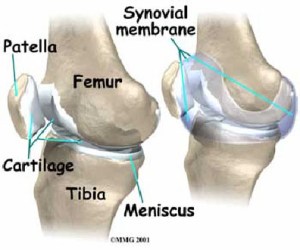
KneeReplacement

The Knee Joint. Image from globalsurgicalsolutions.com

”It’s a different story, though, if you have an arthritic or injured knee, which gives the body “less protective power” against high-impact activity, Noy says. Problems also can arise in obese people who are sedentary and then jump into a rigorous exercise program, which can overload a deconditioned body, he says, possibly leading to knee injuries, stress fractures or other problems.

So it would not be a good idea, for instance, for a 250-pound couch potato to start out running 12 miles a day, Noy says. “You have to acclimate your body to accept that load,” he says, with a “slow, progressive program.”

Even normal weight people with no health issues can become injured if they push too far, too fast in a range of activities. How much is too much varies from individual to individual, so as your program progresses, listen to your body, says Noy. If you’re getting signals such as pain, swelling or extreme fatigue, scale back.

An experienced coach or personal trainer can help recreational athletes develop a safe program that incorporates proper technique and equipment.

And it’s always a good idea to get a checkup before starting a training program, Noy says. It’s especially important to identify any potential heart problems or risk factors such as a family history of early cardiac death that might lead to sudden death during exercise. Be sure to discuss with your doctor any chest pain, shortness of breath or prior difficulty exercising in hot temperatures.

Kibler points out that people who die during endurance exercise often have underlying health problems or they push themselves too hard in the heat.“There’s usually some identifiable reason outside of exercise,” he says. “But exercise is the trigger.”

Link to original MSNBC article here.

Read Full Post »

Aside from achieving better Fitness by hiking and exercising in the Forest, there is ample evidence that exercising or interacting with nature (even having live plants in your work environment) helps combat burnout, reduces mental stress and reduces mental fatigue. Read on for more about this research and it’s implications for our daily lives.

A Walk in the Woods

By John Lofy in Michigan Today, a publication of the University of Michigan

STDana

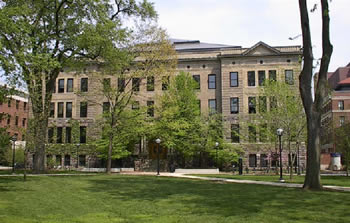
University of Michigan School of Natural Resources. Photo from JM Olsen Corporation

Professor Rachel Kaplan’s office at U-M’s School of Natural Resources and Environment looks out over a large oak tree. Potted plants crowd her window sill. Beyond these small patches of nature loom the buildings of central campus. But, she says, a little bit of nature goes a long way.

She would know. Kaplan and her husband, professor Stephen Kaplan, were among the first academics to study the psychological benefits of nature. Colleagues and collaborators for decades, they have shown that natural settings—trees, grass, gardens, and the like—have a profound, positive impact on both mental and physical health.

Both Kaplans hold joint appointments: Rachel in SNRE and Psychology, Stephen in Psychology and Electrical Engineering and Computer Science. They both take particular pride in graduate students they have mentored over the years. Students working with the Kaplans have made some striking discoveries:

• Studies by Bernadine Cimprich showed that the psychological health of cancer patients “improved dramatically” after they spent 20 minutes a day, three days a week, doing restorative activities such as gardening or walking in the woods. A control group that did not do the activities showed notably less improvement.

• Studies by Frances Kuo and William Sullivan found that residents of public housing projects who live near trees “showed all kinds of benefits,” says Stephen. “More civility, less aggression—and girls were more likely to study” their schoolwork.

• A study of AIDS caregivers by Lisa Canin found that the single most powerful factor in avoiding stress-related burnout was “locomotion in nature”—such as walking, running, biking, or canoeing. (The quickest route to burnout was watching television.)

Better yet, says Rachel, the natural setting “doesn’t have to be big or pristine” to have a positive effect. “Most of all, it has to be nearby.” A study by Ernest Moore of prisoners in Milan, Michigan, showed that simply having a view of farmland from a prison cell reduced inmates’ need for health care.

What’s so powerful about nature? Stephen theorizes that it comes down to brain function. The source of much mental distress, he says, is overuse of “directed attention”—such as concentrating on work. “Sustained directed attention is difficult and fatiguing. When people talk about mental fatigue, what is actually fatigued is not their mind as a whole, but their capacity to direct attention.” And it can make people “distractible and irritable.”

To escape the discomforts of mental fatigue, people often turn to activities that “capture” their attention. They find external events to distract them, so they don’t have to concentrate so hard. Watching TV, for instance, requires little willpower: the programs do the work, and the brain follows along.

tvfr2new

Watching t.v. doesn't allow for mental rest. Image from salviaforme

Similarly, says Stephen, “many people find an auto race fascinating.” Fast motion, loud noises, and smells captivate the brain.

The Kaplans refer to activities like watching TV or sporting events as “hard fascination.” The stimuli are loud, bright, and commanding. The activities are engaging and fun, but they don’t allow for mental rest.

Soft fascination, on the other hand, is the kind of stimulation one finds on, say, a stroll along the beach or in the woods. Nothing overwhelms the attention, says Stephen, “and the beauty provides pleasure that complements the gentle stimulation.” The brain can soak up pleasing images, but it can also wander, reflect, and recuperate.

Most people, say the Kaplans, intuitively know this. But often, they either don’t do it, or they may not have opportunities to get out in nature. That’s too bad, because the Kaplans have shown that if you’re upset, frazzled, or suffering, an easygoing walk in the woods or even along a tree-lined street is one of the best things you can do for yourself.

Read more about the Kaplans and their research here.

Ways You Can Increase Your Interaction with Nature

cok-gardener

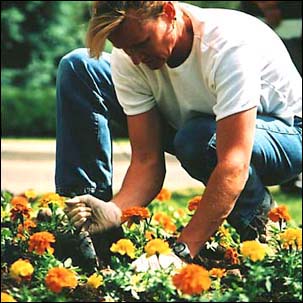
Gardening for stress relief. Photo from IVPeaceFest.com

• Plant a garden. Even in the city if you have an outdoor porch you can plant a small garden in pots and window boxes. Weeding the garden,  “playing” in the dirt, and taking the time to nurture your plants, nurtures your own nervous system and allows you some peaceful moments free from everyday stress.

• Bring live plants into your workspace. Live plants help clean the air and make your environment naturally beautiful and less stressful.

• Go for regular walks in nearby forest preserves or parks.

• Make after dinner walks around your neighborhood part of your family routine. This is a great way to spend quality time with friends and family, get regular exercise and get away from the stress of the TV, telephone and temptations of junk food.

• Volunteer in a nearby community garden.

2572969101_82c2ab01d5

Cabrini-Green Community Vegetable Garden (taken by Strannik45).

• Try snow shoeing, sledding, cross country skiing or walking in the fresh fallen winter snow. (It’s coming soon to Chicago so be ready with warm layers and waterproof hiking boots!)

Snowshoeing at The Basin Phippsburg 08

Snowshoeing. Image from outdoors.mainetoday.com

• When possible, alter your driving route to go through area parks, forest preserves or stretches of the road that gives you a view of Lake Michigan, trees and natural bodies of water like rivers and ponds.

IMG_0198

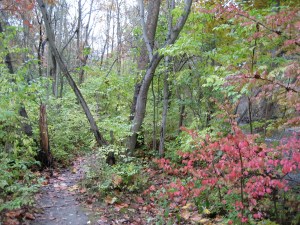
Fall Colors at Argonne

• Plant an indoor herb garden in a well lit window for the winter. It gives you the double benefit of fresh herbs for your meals and the moments of stress relief you get when tending your mini-garden.

• As much as possible, exercise outdoors. Run and hike in the park or forest preserves.

• When time permits, work outdoors. Take

your laptop to the beach or park. In inclement weather find malls or indoor public spaces with plants and trees.

Read Full Post »

Do scenes of nature on your computer screen or television give you the same stress relief that you get looking out a window at a scenic view? Sadly, no. Read the excerpt from Newswise.com below for the sad truth about the effects of “faux” nature.

Scenes of Nature Trump Technology in Reducing Low-level Stress

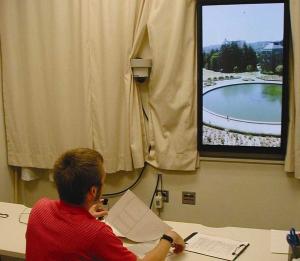
A new study that measured individuals’ heart recovery rate from minor stress when exposed to a natural scene through a window, the same scene shown on a high-definition plasma screen, or a blank wall. The heart rate of people who looked at the scene through the window dropped more quickly than the others. In fact, the high-definition plasma screen had no more effect than the blank wall.

080610154746

Student viewing computer scene of nature (Credit: Image courtesy of University of Washington)

Research done through the Human Interaction with Nature and Technological Systems Lab at the University of Washington showed that when people spent more time looking at the natural scene their heart rates tended to decrease more. That was not the case with the plasma screen.

The study, funded by the National Science Foundation, is published in the current issue of the Journal of Environmental Psychology.

“Technology is good and it can help our lives, but let’s not be fooled into thinking we can live without nature,” said Peter Kahn, a UW associate professor of psychology who led the research team.

“We are losing direct experiences with nature. Instead, more and more we’re experiencing nature represented technologically through television and other media. Children grow up watching Discovery Channel and Animal Planet. That’s probably better than nothing. But as a species we need interaction with actual nature for our physical and psychological well-being.”

Part of this loss comes from what the researchers call environmental generational amnesia. This is the idea that across generations the amount of environmental degradation increases, but each generation views conditions it grew up with as largely non-degraded and normal. Children growing up today in the cities with the worst air pollution often, for example, don’t believe that their communities are particularly polluted.

“This problem of environmental generational amnesia is particularly important for children coming of age with current technologies,” said Rachel Severson, a co-author of the study and a UW psychology doctoral student. “Children may not realize they are not getting the benefits of actual nature when interacting with what we’re calling technological nature.”

The researchers found that participants with the plasma screen actually looked at it just as often as did those who had the window. However, the window held the students’ attention significantly longer than the plasma screen did. When participants spent more time looking at the window, their heart rates decreased faster than on tasks when they spent less time looking at the window. This was not true with the plasma screen.

“I was surprised by this,” said Kahn. “I thought the plasma screen would come somewhere between the glass window and the blank wall. This study is important because it shows the importance of nature in human lives and at least one limitation of technological nature.

“In the years ahead, technological nature will get more sophisticated and compelling. But if it continues to replace our interaction with actual nature, it will come at a cost. To thrive as a species, we still need to interact with nature by encountering an animal in the wild, walking along the ocean’s edge or sleeping under the enormity of the night sky.”

Co-authors of the study are Batya Friedman, Jennifer Hagman, Erika Feldman and Anna Stolyar of the UW, Brian Gill of Seattle Pacific University, Nathan Freier of Rensselaer Polytechnic Institute and Sybil Carrere of California State University, San Bernardino. Freier and Carrere were both at the UW when they worked on the study.

Read the full article here.

Read Full Post »

Exercise and Mental Health

By Dr Shock at DrShockMD website
istock_000000297032xsmall

Healthy people exercising

A recent review about the relationship between exercise and mental health in the elderly discussed the results of clinical research and biological explanations for the effects of exercise on mental health. Exercise is studied in the elderly in depression, Alzheimer’s disease and Parkinson’s disease.

Dr. Shock has discussed the topic of exercise and depression before on his blog. The conclusion was that exercise is more effective than no treatment and that for mild to moderate depression it is efficacious and for severe depression it should be added to other treatments in the treatment program. In this more recent review on exercise and mental health the focus is on the elderly. Data on elderly patients are scarcer. Nevertheless investigations have shown that aerobic exercise at an intensity consistent with public health recommendations can be regarded as an effective treatment of mild and moderate depression. There is some evidence for a possible dose-response effect of exercise on depression. Treatment not prevention? Indeed, this topic has not yet been extensively studied in the elderly yet.

What does that mean: aerobic exercise at an intensity consistent with public health recommendations?

Basic recommendations from the The American College of Sports Medicine (ACSM) and the American Heart Association (AHA).

  • Do moderately intense aerobic exercise 30 minutes a day, five days a week
  • Or Do vigorously intense aerobic exercise 20 minutes a day, 3 days a week
  • And Do eight to 10 strength-training exercises, 10-15 repetitions of each exercise twice to three times per week
  • And If you are at risk of falling, perform balance exercises
  • And Have a physical activity plan.

What is a physical activity plan?
In short consult your GP before starting to exercise.

Older adults or adults with chronic conditions should develop an activity plan with a health professional to manage risks and take therapeutic needs into account. This will maximize the benefits of physical activity and ensure your safety.

Physical Exercise and Alzheimer’s Disease

  • Epidemiological studies have associated exercise with reduced risk of Alzheimer’s disease
  • Exercise as treatment for dementia showed efficacy for mood status, psychosocial functioning, physical health and caregiver distress
  • Daily 30 minutes of exercise diminishes the number of hospitalization needed, decreased depressive symptoms, increased quality of life in patients with Alzheimer’s disease
  • In comparison with a sedentary group, the group with a year of exercise intervention improved in quality of life

Physical Exercise and Parkinson’s Disease
Also in Parkinson’s Disease epidemiological studies have shown that exercise can protect against the disease. The disease is associated with tremor, rigidity, and hypokinesia which can result in falls and tiredness.The main advantage of exercise in PD is improvement of functional capabilities due to strength and balance training. This improves motor skills, improves their quality of life and reduces the number of falls.

Although somewhat limited, evidence suggests that exercise training is beneficial to patients with PD, especially in functional capacity and ADLs improvement

The protective effect of exercise can be explained by effects on the brain as can be read in the Neuroscience of Exercise on Dr. Shock’s blog.

Sources:
Deslandes, A., Moraes, H., Ferreira, C., Veiga, H., Silveira, H., Mouta, R., Pompeu, F., Coutinho, E., & Laks, J. (2009). Exercise and Mental Health: Many Reasons to Move Neuropsychobiology, 59 (4), 191-198 DOI: 10.1159/000223730

Read Full Post »

« Newer Posts - Older Posts »