Feeds:
Posts
Comments

Archive for the ‘Fitness’ Category

An Artistic yoga class in session
Image via Wikipedia

By Sue Shekut, Owner, Working Well Massage, Licensed Massage Therapist, Certified Wellness Coach, ACSM Personal Trainer

So you decided to take the plunge and try a yoga class. Then you find out that there are different kinds of yoga. How do you know what kind of yoga to take? And what if you are not flexible? Do not despair!  Yoga is really for people that are not flexible. Unfortunately, many yoga teachers or studios advertise their classes by showing a very highly trained yoga teacher doing an extremely advanced pose that few other people can do.  No worries, most beginning classes teach you simple poses to elongate your body and relax. “Pretzel” yoga is for the very very advanced, not the novice.

If you’ve tried a yoga class and found it either too difficult, too easy or too boring, it may not be yoga that’s the problem, it may  be  the type of yoga you tried or that particular teacher. (Think about it, if you get  a bad hair cut, do you think hair cuts are not for you or do you go to a different barber/hair dressor?!?)

So what type of yoga class should you attend?  Here are some tips from http://www.yoga.orz.nz:

Yoga Styles Overview

Iyengar – A softer -on-the-body classical style of yoga, Iyengar is perfect for beginners and those who haven’t exercised in a while. It uses props such as chairs, straps, blocks and pillows, and even sandbags, to compensate for a lack of flexibility, which is helpful for anyone with back or joint problems.

Iyengar is the most widely recognized approach to Hatha Yoga, it was created by B. K. S. Iyengar. Iyengar yoga is characterized by attention to detail within poses and the aid of the props. The props assist all sorts of people to be able to do the poses comfortably.

Each pose is held for a longer amount of time than in most other yoga styles, developing a state of focused calm. Benefits include toning muscles, eliminating tension and easing chronic pain.

Practicing Iyengar yoga will give you a good knowledge of classic yoga poses so that whatever other style you practice, you will have the basic fundamentals of how to do each posture. The teacher focuses on alignment and inner awareness.

Sue’s Note: Some Iyengar teachers tend to take a militaristic approach and may push your body beyond what you are capable of doing. Don’t let them! Many Iyengar teachers are wonderful and gentle. But if you find a teacher that is dogmatic in his/her approach or tells you to try a pose even if it hurts you, avoid this class and find someone that is more compassionate–or risk serious injury!

Ashtanga (Power Yoga) the preferred choice for athletes, Ashtanga yoga is light on meditation but heavy on developing strength and stamina. The poses are more difficult than those performed in other styles, students move quickly from one pose to another in an effort to build strength and flexibility.

This style is suitable for anyone in reasonable physical condition but should be avoided by those who are new to exercise. Even the “beginners” routines are a physically demanding workout.

Students move from one pose to another in a continual flow and combine the inhale and exhale of the breath with movements. This physically demanding yoga was developed to build strength, flexibility, and stamina.

The series of poses involves weaving in a combination of standing, seated, backbends, inversions, balancing, and twisting poses into sun salutation poses which include a standing forward bend, upward dog, downward dog, and other poses.

Sue’s Note: Ashtanga or “power” yoga is popular in the West.  Westerners tend to move at a hectic pace even in yoga. However, proper form is even more important when you move through poses quickly. Potential for injury or overstretching/tearing of ligaments is greater in the faster paced styles of yoga. Take care when you try this style of yoga and make sure your yoga teacher is aware of any injuries or limitations before the class begins.

Bikram done in a hot room that is 38C or higher (to replicate the temperature of yoga’s birthplace in India); this style of yoga focuses on 26 postures that are performed in a certain order. The exercises are very physical and the intensity is high.

The Bikram series is warm and stretches muscles, ligaments and tendons in the order in which they should be stretched. Heat and yoga makes for a tough workout. This style is recommended for yoga veterans and extremely fit individuals only.

Sue’s Note: If you have high blood pressure or tend to overheat easily, you may want to avoid Bikram yoga especially in summer heat!

Hatha: This mellow form of yoga focuses on simple poses that flow from one to the other at a very comfortable pace. Participants are encouraged to go at their own pace, taking time to focus on the breathing and meditation in their practice. This yoga is ideal for winding down at the end of a tough day.

Sue’s Note: Hatha yoga may feel too slow for you if you like fast paced moment and cardio classes. But be patient and let yourself be bored a bit sot hat you can take the time to learn the proper form for you poses. It’s also a  way to sneak a little relaxation into your hectic week.

Kundalini, which incorporates mantras (chanting), meditations, visualizations, and guided relaxation. It focuses on healing and “purifying” the mind, body, and emotions. Kundalini yoga is designed to activate the kundalini energy in the spine.

This is achieved with poses, breath control, chanting, and meditation. Kundalini yoga is beneficial in dealing with addictions, and many people find it a natural way of releasing endorphins just by breathing and doing the poses.

Kundalini yoga consists of poses combined with breath control, hand and finger gestures, body locks, chanting and meditation.

Kripalu, which is more spontaneous, flowing, and meditation orientated. Kripalu yoga starts with the first stage, postural alignment and intertwining of breath and movement, and the poses are held a short time.

The student progresses to the second stage with meditation included and poses held for longer. Finally, the practice of poses becomes a spontaneous dynamic movement. The essence of Kripalu yoga is experienced through a continuous flow of postures whilst meditating, for gentle yet dynamic yoga.

Sivananda Yoga has a series of 12 poses, with the Sun Salutation, breathing exercises, relaxation, and mantra chanting as the basis.

Viniyoga, a slower more individualized form of yoga. This form develops strength, balance and healing, make it ideal for beginners, seniors, people with chronic pain or who are in rehabilitation from injury or disease.

Read the entire article on Type of Yoga at http://www.yoga.org.nz here.

Enhanced by Zemanta

Read Full Post »

Dont slip!
Image by Great Beyond via Flickr

By Sue Shekut, Owner, Working Well Massage, Licensed Massage Therapist, Certified Wellness Coach, ACSM Personal Trainer

Last night I joined my fellow Chicagoans in a common winter “sport”: I fell on the ice. I was lucky that I was well padded and fell backwards onto my backpack on my outside stairs. I have a huge bruise on my thigh but overall, I am OK.

This time of year, not everyone is so lucky. Falls on ice can lead to broken bones in odd places: hips, elbows, even jaws if you fall forward and  your chin hits a cement curb. My brother is a radiologist and he tells me this time of year he sees far too many bone fractures due to slips and falls on the ice.

Protect Yourself On The Ice

How can you protect yourself from falling on the ice?  Here are some tips from Canadian Senior Years:

  • Wear boots or overshoes with soles. Avoid walking in shoes that have smooth surfaces, which increase the risk of slipping.
  • Walk consciously. Be alert to the possibility that you could quickly slip on an unseen patch of ice. Avoid the temptation to run to catch a bus or beat traffic when crossing a street.
  • Walk cautiously. Your arms help keep you balanced, so keep hands out of pockets and avoid carrying heavy loads that may cause you to become off balance.
  • Walk “small.” Avoid an erect, marching posture. Look to see ahead of where you step. When you step on icy areas, take short, shuffling steps, curl your toes under and walk as flatfooted as possible.
  • Remove snow immediately before it becomes packed or turns to ice. Keep your porch stoops, steps, walks and driveways free of ice by frequently applying ice melter granules. This is the best way to prevent formation of dangerous ice patches. Using a potassium-based melter, such as Safe Step, instead of salt will prevent damage to concrete, grass and other vegetation or to carpets and floors should you track in some.
  • If You Do Fall, How to Fall Safely

    But what if you fall anyway like I did? How can you lesson the damage that can be done by your fall? Sandra Gimpel, a 3rd degree black belt Karate instructor and Hollywood stunt woman who earns a living falling in movies and television commercials, has tips for safely falling. “It’s important to tuck your body, lift your head and avoid trying to break the fall with a hand, which can cause a wrist injury,” says Gimpel. “The idea is to make yourself as small as possible by rolling up into a ball.”

    Read Gimpel’s approach to practicing safe falls here.

    Reblog this post [with Zemanta]

    Read Full Post »

    By Sue Shekut, Owner, Working Well Massage, ACSM Personal Trainer, Certified Wellness Coach, Licensed Massage Therapist

    Digitlal Miniposters from Produtive Fitness

    I write a lot about increasing activity and fitness in and outside the workplace.  Companies can provide employees with education about fitness to help improve employee health. One easy way to give employees great information about stretching and weight training is to put up posters from Productive Fitness. At home, Productive Fitness provides mini versions of these posters via digital download.

    What’s So Great About Productive Fitness?

    Productive Fitness Products Inc. is the #1 supplier of fitness books to exercise equipment stores in North America. Mike Jespersen started Productive Fitness Products Inc. with the publication of The Great Dumbbell Handbook. The idea of publishing a book specific to dumbbells came when Mike was working at a local fitness equipment store in Vancouver, B.C. Many of the customers purchasing dumbbells also wanted a reference guide to performing the exercises. The book was an instant success and has now sold over 300,000 copies. This success has been expanded upon with The Great Body Ball Handbook now having sold over 300,000 copies, and The Great Handbook series having sales of over 1.2 million.

    Since Productive Fitness Products’ incorporation in 1998, it has continued to publish books, expanding on its series of “Great Books” which offer instruction on specific exercise topics such as the Body Ball, Stretch Tubing, and multi-station gyms.
    The “Great Books” are designed as quick-reference handbooks which allow readers to instantly access exercise descriptions for a particular body part. Each exercise description has a start and finish photo with clear, concise, step-by-step exercise descriptions.

    • See a sample of Productive Fitness videos on You Tube here.

    Who Writes and Reviews Productive Fitness Products?

    • Andre Noël Potvin is an internationally accredited author, fitness educator and medical exercise specialist with 24 years of leadership experience and clinical experience. Owner and operator of both a medical fitness clinic and school for fitness professionals, Andre is frequently invited to lecture at international public and professional conferences.
    Read more about Andre here.
    • James Talo has an extensive background in individual and team sports. His endeavors have ranged from track and field to lacrosse and the martial art, aikido. However, it wasn’t until Jim suffered a spinal injury in 1993 where his appreciation for the human body and how it should optimally move and function became apparent. This injury shifted his attention to the method of kettlebell lifting and the teachings of some of the world’s best coaches. He began his search for knowledge on this niche sport and obtained his first kettlebell certification in 2004.Jim’s coaching philosophy is one he shares with his students, clients and colleagues: “My purpose is to create an awareness… to educate coaches and their athletes on the merits of kettlebell lifting both as a training protocol and as a sport…I am here to serve, and to instruct technique that is safe and highly effective.”

    Read more about Jim here.

    Fitness Posters from Productive Fitness

    • Large Size Posters for the workplace

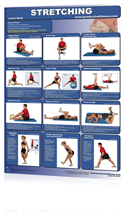
    Large Stretching Poster from Productive Fitness

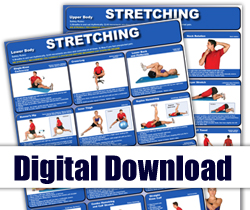
    • Digital Download Posters (8.5 x 11) for home workouts.

    Disital Posters from Productive Fitness

    Reblog this post [with Zemanta]

    Read Full Post »

    Image representing Walk Score as depicted in C...
    Image via CrunchBase

    By Sue Shekut, Licensed Massage Therapist, ACSM Personal Trainer, Certified Wellness Coach, Owner, Working Well Massage

    Want to know where you can take a nice after dinner walk in Chicago?  I know it’s cold but if you bundle up, you can burn some calories and still see the bright lights and your neighbors holiday decorations as you stroll.   Check out this site dedicated to providing rankings on most walkable neighborhoods: Walk Score.com

    According to WalkScore’s website, “The top 8 neighborhoods in Chicago are Walkers’ Paradises. 66% of Chicago residents have a Walk Score of 70 or above. 96% have a Walk Score of at least 50—and 4% live in Car-Dependent neighborhoods.”

    Top  Cities for Walking

    The cities at the top of the Walk Score rankings have density, mixed use, transit, short blocks—and almost everything else on our walkability checklist. Most importantly, these cities have lots of destinations near each address, which is the strongest indicator of whether people walk.

    Least Walkable Cities

    It’s difficult to get by without a car (or even walk to a nearby restaurant) in these sprawling cities. More time in the car means more money at the pump, less exercise, and more pollution. But even the least walkable cities have walkable places. Read about these walking oases.
    Top 20 Most Walkable Chicago Neighborhoods according to WalkScore

    Neighborhood     Score
    1  Loop                       98
    2  Near North Side  97
    3  Lincoln Park        94
    4  Lake View             93
    5  Uptown                 92
    6  Edgewater            92
    7  Near South Side  90
    8  Rogers Park         90
    9  West Town           88
    10  Hyde Park          87
    11  Logan Square     86
    12  Lincoln Square  85
    13  Bridgeport          85
    14  Lower West Side 85
    15  Near West Side   84
    16  Albany Park        84
    17  North Center      83
    18  West Ridge         83
    19  North Park          81
    20  Irving Park         80
    Read more from the WalkScore website here.
    Reblog this post [with Zemanta]

    Read Full Post »

    By Sue Shekut, Licensed Massage Therapist, ACSM Personal Trainer, Certified Wellness Coach, Owner, Working Well Massage

    Chicago is famous for many things. Chicago is “the Windy City,” The Second City,” the home of the Cubs, the White Sox and da Bears. Chicago also has the dubious honor of being one of the top 20 most “fat” cities in the U.S. But there are those of us that want to change that last claim to fame for Chicago.

    One group that is making serous headway in tackling high blood pressure, obesity and activity levels of Chicagoans is Building a Healther Chicago.

    Building a Healthier Chicago

    Building a Healthier Chicago (BHC) is a collaborative of local and national stakeholders working to strengthen efforts to promote the health of Chicago residents and employees.

    Through collaboration BHC promotes and tracks the adoption of selected programs, practices, policies, and supportive environments throughout the worksites, schools, health care organizations, faith based organizations, parks and neighborhoods of Chicago. BHC works with community organizations, academics, health care and government to improve the health of all citizens.

    To make a significant impact on the health of all Chicagoans, BHC works to support its stakeholders broadly in:

    • Increasing physical activity levels
    • Improving healthy eating
    • Prevention, detection and control of high blood pressure

    Why focus on physical activity, nutrition, and blood pressure?

    Physical inactivity and obesity are at epidemic proportions in the U.S., resulting in an increased prevalence of many chronic diseases. Meanwhile, health care expenditures associated with physical inactivity and obesity continue to rise.

    Becoming a Stakeholder in Building a Healthier Chicago

    Working Well Massage is a stakeholder in Building a Healthier Chicago. If your firm is involved in promoting wellness or has a workplace wellness program you are proud of, consider joining BHC as a stakeholder!

    Building a Healthier Workplace Resources

    American Cancer Society Workplace Solutions

    Centers for Disease Control and Prevention

    Center for Value-Based Health Management

    Federal Occupational Health

    Health Enhancement Research Organization

    Health Resources and Services Administration

    National Business Group on Health

    National Wellness Institute

    Partnership for Prevention

    Start! For HR Professionals (American Heart Association)

    WELCOA: Wellness Council of America

    WellSteps

    Reblog this post [with Zemanta]

    Read Full Post »

    By Sue Shekut, Licensed Massage Therapist, ACSM Personal Trainer, Certified Wellness Coach, Owner, Working Well Massage

    Some times ago I blogged about the Walkstation from Steelcase. (Link here.) Now it looks like the idea of treadmills attached to desks is gathering steam–and coming down a bit in price. Read the excerpt from a article in Vocus/PRWEB.

    Salt Lake City, UT (Vocus/PRWEB ) December 10, 2009 — A new research project for scientists at the University of Utah has been announced which will focus on a series of workplace wellness studies designed to test the effectiveness of walking slowly while working, utilizing a treadmill desk known as the TrekDesk.

    Dr. Elizabeth Joy of the University of Utah

    The first in a series of proposed studies will focus on damage caused in the workplace to employee’s spines. Eight out of ten Americans will suffer from back pain and injury at some point in their adult lives. The study will do a comparative analysis of spinal compression caused by office chairs versus the compression reducing qualities of walking.

    “We evolved as a species to be upright. We have less loading actually of the joints and our back standing than we do sitting. We actually lubricate the joints in our lower extremities, in our hips, in our knees and our ankles through movement,” states lead scientist, Dr. Elizabeth Joy, Director, Utah Health Research Network (UHRN). Dr. Joy has an extensive background in workplace wellness issues and has long lobbied for the re-engineering of work environments to allow for more physical movement.

    Treadmill desks are currently in use at many Fortune 500 companies and small businesses across America and have been shown effective in boosting energy, productivity, preventing disease, assisting in weight loss and restoring health.

    Many employers faced with declining employee health and rising health care costs now see the need for a radical change in the workspace and a need for more healthy solutions. The current challenge for most employers is finding a solution that is affordable since treadmill desks may retail between $4,500 and $6,000.

    A treadmill desk manufacturer based in Phoenix, AZ recently released the TrekDesk, which, priced at 1/10 the cost of comparable models, is the subject of many of the proposed studies. TrekDesk is a full sized, height adjustable workstation designed to attach to an existing treadmill.

    “We are thrilled that the University recognizes the myriad health benefits of treadmill desks and are honored that the TrekDesk has been chosen for further study due to its affordability and design,” states Steve Bordley, CEO of TrekDesk. “With rising obesity rates and skyrocketing health care costs it is time to realize that the sedentary design of the workplace must be changed,” states Bordley, “once employers adopt measures to keep their employees moving during the day they will see a boost in productivity and a decrease in sick days and health care costs.”

    Read the entire article in Vocus/PRWEB here.

    Working Well Says: The TrekDesk is available from Amazon for about $479. However, this does not include the cost of the treadmill which can run another $380 on up. In addition, if you purchase the TrekDesk, you must make sure that whatever treadmill you buy to work with it can fit so that the treadmill display and handlebars can fit behind the desk not blocking your entry to the desk. Overall, we are happy to see the price of walkable workstations decreasing. $800-$1000 is lot less than the Steelcase Walkstations $4500 price tag!

    Read Full Post »

    A yoga class.
    Image via Wikipedia

    By Sue Shekut, Licensed Massage Therapist, ACSM Personal Trainer, Certified Wellness Coach

    For those of you suffering from back pain, I must first say this: Make sure you see a doctor or chiropractor you trust before undertaking any new exercise that impacts your low back. Certain low back conditions can be made worse by doing backbends and other yoga poses if done improperly, or if you have certain conditions such as Spondylolysis (a defect in the pars interarticularis of a vertebra). If you have an acute back condition such as a recent herniation, get your doctor’s approval before doing any yoga or any exercises that impact your back!

    For people with muscle tension in the low back and those without back injury, gentle yoga poses may help strengthen your back and core muscles.

    One website that offers help for back pain is YogaTherapyWeb.com

    The site has many articles about using Yoga as a muscle therapy and stress management tool. Read more from YogaTherapyWeb.com about a study done using Yoga to reduce back pain:

    Yoga For Back Pain

    According to a study published in the Annals of Internal Medicine, yoga for back pain may be just what the doctor ordered. In the 12 week study, Dr. Karen Sherman and her colleagues at the Group Health Cooperative in Seattle compared the effectiveness of yoga for back pain vs. physical therapy exercises, and a self-care book with exercises targeting chronic lower back pain.

    The 101 adults in the randomized, controlled clinical trial were separated into three groups: the first attended weekly yoga for back pain classes with daily at-home yoga practice. The second attended a program of back pain exercises developed by a physical therapist, also once a week with daily home practice. The third group received The Back Pain Helpbook, an evidence-based book emphasizing self-care strategies for back pain.

    By the end of the 12 weeks, it was clear that yoga for back pain not only helped reduce the pain, but it did so more effectively than either the book or the back pain exercises.

    Moreover, a three month follow-up revealed that the back pain yoga group continued to enjoy far better results than the groups who had practiced back pain exercises or read the book.

    Read the entire post from YogaTherapyWeb.com here.

    Source: Comparing Yoga, Exercise, and a Self-Care Book for Chronic Low Back Pain, Sherman, 2005

    Reblog this post [with Zemanta]

    Read Full Post »

    The Rockefeller Center Christmas Tree in New Y...
    Image via Wikipedia

    Having a hard time keeping a handle on your fitness and nutrition goals this time of year?  You are not alone.  Holiday shopping, parties and extra goodies make it tough for everyone. Read what the experts at WebMD say about keeping on track with your fitness routine during this busy time of year.

    Your Holiday Fitness Program

    The holiday season can be enough to derail even the most dedicated exerciser. Here are some tips to help you stay fit through New Year’s.
    By Carol Sorgen
    WebMD Weight Loss Clinic-Feature

    You’re busy, you’re stressed, it’s chilly out… so why not just take a break from your fitness program until the New Year?

    Sure, you can always come up with an excuse not to exercise. But slacking off on your fitness program during the holidays will only leave you with more pounds — and more stress — come New Year’s. Fitness experts recognize that this time of year is difficult for many people trying to stick to an exercise program, so they have some suggestions to keep you motivated and disciplined.

    The first step, says lifestyle coach April Masini, is acknowledging the holidays probably will affect your exercise program to some extent. Then you can make adjustments that will help you stay fit during the season. For example, if you usually take exercise classes only offered at a certain time, skip the classes and take a hike or a swim at an indoor pool instead.

    “Take an honest look at your schedule, and instead of trying to squeeze exercise into your schedule, take other things out,” Masini suggests. “The goal is not to do more (as we all have a tendency to do this time of year), but to do less, but do it all well.”

    It’s also important to keep fitness a priority in your schedule, says Rich Ray, chairman of the Kinesiology Department at Hope College in Holland, Mich.

    “Whether or not you already have well-established exercise habits, make sure you actually schedule time into your day for your exercise,” he says. “There’s nothing like having an entry in your Palm Pilot for exercise.”

    Indeed, maintaining a workout schedule is even more important this time of year because most of us tend to eat more than usual, says Michael Thurmond, author of the 6 Week Body Makeover and resident fitness guru on ABC’s “Extreme Makeover.”

    As such, Thurmond recommends not only keeping to your same schedule, but striving to add an extra workout session or two whenever possible.

    Be Flexible and Mix It Up

    Here are some more expert tips for staying fit during the time-crunched, temptation-packed holiday season:

    • Be flexible when your days get busy, Ray advises. Instead of simply blowing off your 5 p.m. trip to the gym in favor of an office party at the same time, wake up an hour early and walk or jog before work. Or fit a brisk walk into your lunch hour.
    • Mix up your routine to avoid boredom. “If you usually run four days a week, try running once, swimming once, and lifting weights twice,” Ray says. “The novelty of the new exercise will hopefully be a stronger motivator than the ‘need’ to do something else during your normal exercise time.”
    • To save time, Ray recommends combining exercising and family commitments. For example, hauling the kids up a hill a few times can make a sledding trip as beneficial as a jog. Taking the family snowshoeing, cross-country skiing, or on a backpacking trip will provide exercise as well as quality time with loved ones.
    • Coraggio recommends creating a home workout routine for those times you can’t make it to the gym. Crunches, push-ups, and many other exercises can be done without any gym equipment.
    • Walking is an exercise that can go anywhere, from the woods to the mall, says health and lifestyle coach Jackie Keller, author of Body After Baby: The Simple 30-Day Plan to Lose Your Baby Weight. “Always have a pair of running or walking shoes with you, along with a set of light, hand-held weights, and a clean pair of socks,” Keller suggests. “If all else fails, you have the minimum equipment necessary to get in a walk.” Another Keller suggestion: add a heavy book to a backpack to make your walk more challenging.

    5 Cold-Weather Workout Tips

    If cold weather is derailing your fitness activities, personal trainer Kevin Gianni, author of The Busy Person’s Fitness Solution, offers these 5 winter weather workout tips:

    1. Lace up your skates. During the winter it’s often too cold, too dark, or too slippery to walk or run outside. To get in a great workout, try ice skating — whether you go to a local pond for a pickup game of hockey, or to the local ice rink (which also offers the advantage of no wind chill).
    2. Try thermal underwear. If you really need to be outside in frigid weather, add a layer of thermal underwear, which will keep you both warm and dry by wicking sweat away from your body, Gianni suggests.
    3. Don’t push it. On days when the air feels too cold to even breathe in, heed your body’s signals and stay indoors. Cold air can trigger exercise-induced asthma (EIA). Symptoms include wheezing, chest tightness, coughing, chest pain, and shortness of breath.
    4. Try a new home routine. Bodyweight routines are exercises that need no equipment and can be done in your own home. There are many types of bodyweight routines, such as yoga, Pilates, and aerobics. Pop in a fitness DVD or download a workout on your MP3 player to get you going.
    5. Set up your own gym. Now’s the time to think about getting a treadmill, elliptical machine, or stationary bike. Having your own equipment and knowing how to use it will keep you motivated and help you stay on track.

    When all’s said and done, says Tom Weede, a certified health and fitness instructor and author of the forthcoming book, The Entrepreneur Diet, it’s important to be realistic.

    “Give yourself a little slack during the holidays,” he advises. “After all, it’s a time to have fun and be with family and friends, and if you have a rigid attitude toward your diet and exercise, you may end up just giving up because you’ve set the standard too high.”

    So allow yourself some “cheat” days, Weede suggests. “In reality, what matters is the overall total calories you consume and the overall total you expend through physical activity over the entire holiday period. One or two splurges aren’t going to derail your efforts,” he says.

    Link to entire WebMD article here.

    Reblog this post [with Zemanta]

    Read Full Post »

    By Sue Shekut, L.M.T. ACSM Personal Trainer, Certified Wellness Coach, & Owner, Working Well Massage

    Winter is here which means more and more snow soon. If you don’t want to exercise inside, you can ski or sled or snowboard. What about outdoor exercise for hikers and those that don’t want to travel to downhill ski?  Snowshoeing is becoming a popular way to get some cardiovascular workouts and the Chicago area Forest Preserves area available all winter!

    Don’t have  experience snowshoeing?  Read the following excerpt from the “First-Timers Guide to ShowShoeing” below from SnowShoeing Magazine to learn all you need to know to get started!

    First-Timers Guide to Snowshoeing

    There is no better way to begin snowshoeing than just going and doing it. Take a risk, rent or buy a pair of snowshoes, dress for the elements and enjoy. However, that’s just a start – there is more to it than just taking a refreshing plunge in some snow.

    Snowshoeing has been around for thousands of years. And, obviously, the art of snowshoeing has become more sophisticated over time – now it’s considered a winter sport. From the early wood-frame to the aluminum-frame models, snowshoeing has garnered quite a following throughout the world. Modern day snowshoeing is made up of casual snowshoers who hike trails for pleasure, the snowshoeing enthusiasts who trek through the backcountry, and the competitors who race.

    Considering this is the fastest growing winter sport in the world (snowboarding is growing fast too, but not fast enough), snowshoeing is poised to become a monster of a market. Many involved in skiing and snowboarding utilize snowshoes to participate in some great backcountry hikes to find the holy grail of mother nature: Deep, unscathed powder. Snowshoeing is a great alternative for many sports – especially those who like running.

    What’s So Great About Snowshoeing?

    The sport is easy to learn, virtually inexpensive (compared to other winter sports), poses little risk of injury and is a great way to exert energy during the cold winter months. According to research provided by Snowsports Industries America (SIA), 40.8 percent of snowshoers are women (a number that is increasing rapidly), 9.4 percent of snowshoers are children (ages 7-11), and 44.2 percent of snowshoers are ages 25-44.

    shoe5

    SnowShowing burns more claories than walking or running. Image from SnowShowing Magainze

    One of the more appealing facts about snowshoeing is how it can help enrich a person’s health. Known to help maintain or improve cardiovascular fitness, the sport helps burn more than 600 calories per hour. Snowshoers can burn more than 45 percent more calories than walking or running at the same speed, according to SIA. Snowshoeing is a great way to pursue losing weight.

    What to Look For in a Pair of Snowshoes?

    When buying or renting a pair snowshoes, keep in mind the following details:
    There are three types of snowshoes available: Recreational Hiking, Aerobic/Fitness and Hiking/Backpacking.
    • Recreational hiking snowshoes are a basic selection and are perfect for first-timers. Usually, these snowshoes work best on simple terrain that doesn’t require a lot of steep climbing or descents.
    Snowshoes for aerobic/fitness are best suited for those who are active snowshoers – like runners and cross-trainers. This type of snowshoe has a very sleek design and is generally tougher than most available.

    Snowshoeing at The Basin Phippsburg 08

    Snowshoeing. Image from outdoors.mainetoday.com

    • If you like the powder and are more experienced with snowshoeing, purchasing a pair of hiking/backpacking snowshoes is your ticket. These are as tough as they come: Strong aluminum frame, durable material for flotation, and bindings that support all types of boots.

    • The cost for a pair of snowshoes is generally inexpensive. Look to spend on the low-end around $100 and on the high-end around $300 (sometimes higher depending on the manufacturer).

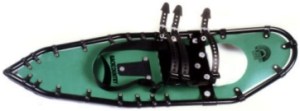
    grnshoe

    Northlites Snowshow from northernlites.com

    • Many retailers will offer a package deal that will provide poles and a snowshoe bag. These are generally good deals, but pay particular attention to the type of snowshoe you will be receiving. If you want to do some backcountry snowshoeing, a starter kit won’t be the best option. Ask your retailer for more details.

    • It is highly advised not to purchase a used pair of snowshoes. If you decide to go through with buying a used pair, inspect them thoroughly: Check the frames for damage (including chips), check the bindings for overstress and check the flotation material for holes and rips. Know who you are buying your snowshoes from. Don’t get caught in the backcountry with a faulty pair of shoes.

    • Finally, as one of the most important factors in snowshoeing, choose according to the size available. Usually measured in inches, the length will depend upon how much you weigh. The most common sizes (excluding kids lengths) are 25 inches, 30 inches and 36 inches. Your retailer should be able to help you when deciding snowshoe length.

    Where to Buy or Rent a Pair of Snowshoes?

    There are plenty of snowshoe retailers to choose from. However, there are more obvious choices than others. For example, REI and Eastern Mountain Sports (EMS) sell snowshoes around the nation – they are the obvious retailers. The less obvious retailers are independent stores that may include equipment for running and local mountain outfitters.

    If you really want a nice selection of shoes to purchase from a retailer, visit Backcountry.com: Click here. Backcountry.com is the place to buy not only snowshoes but accessories as well. They also have great prices on certain brands, models and snowshoe starter kits.

    Where Should You Go Snowshoeing?

    If it’s covered in snow…go for it!But, be careful. Don’t take risks and most importantly, have fun.

    The prime areas for snowshoeing are at nordic centers, which are usually placed in or around a ski resort. Other types of snowshoeing destinations include bed and breakfast inns, mountain lodges, state parks, national parks, snow-covered golf courses, open space (provided by your state government), ski slopes, and much more.

    Although many people like the individuality and peacefulness of snowshoeing, it’s a good idea to snowshoe with a friend or partner. And, bring a global positioning system (GPS) device and a compass to help better navigate remote and wooded areas.

    Please note: Remember to bring plenty of water or a water filter on your snowshoe travels.

    Read entire article from the “First-Timers Guide to ShowShoeing” below from SnowShoeing Magazine here.

    What Type of SnowShoes Do I Use?

    I recently bought a new pair of snowshoes from Amazon.com and plan to hit the trails as soon as there is more snow!
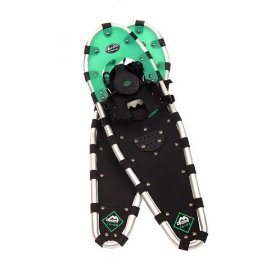
    I bought the Pacific Outdoors Optima 10-by-32 Snowshoes

    Pacific Outdoors Optima 10-by-32 Snowshoes

    Available here from Amazon for about $78.00

    Reblog this post [with Zemanta]

    Read Full Post »

    Jumping Jacks
    Image by Mike Schmid via Flickr

    By Sue Shekut, Licensed Massage Therapist, ACSM Personal Trainer, Certified Wellness Coach, Owner Working Well Massage

    I hear the same complaints from many of my clients: “I want to work out, but I don’t have time.” “My neck and shoulders are so tight, but I do stretch (when I remember).” Or “I know I should stretch, but I get busy at work and I forget.”

    For those of you that work out 5 times a week and incorporate yoga into your daily routine, a big fist pump! For those of you that barely do more than walk to the train or from your car to your office each day, I have a simple little exercise to help you feel less tension and get a bit of movement into your life.

    The Big 25

    What I am going to suggest is simple, easy to do and takes less than 10 minutes (depending on your speed and fitness level). Even those that are very fit can benefit from the Big 25. What is the Big 25, you ask. Just this: each day, before you get ready for work, stand up straight, take a deep breathe and do 25 Jumping Jacks. Consecutively. (That means without stopping! So do all 25!)

    What’s the Big Deal About Jumping Jacks?

    The truth is, for people who are relatively inactive, if I gave you a more difficult exercise to do every day, you likely wouldn’t do it. Starting with 25 Jumping Jacks is a great way to get your whole body moving, with minimal effort or training. This means that you pump fresh blood to your arms and legs, work your heart a bit and bring fresh oxygen to your noggin (aka brain) every day simply by doing the Jumping Jacks your grade school gym teacher taught you to do.

    Many computer uses sit all day, leaning forward, arms raised over their keyboards, low backs in constant flexion, leaning into their computer screens as they work. When’s the last time you raised your arm overhead? Or moves your arm in a complete rotation (like an arm circle)? Doing Jumping Jacks gives your arms a chance to break out of their keyboard pose, breaks up mild muscle adhesions in the shoulder and upper back, and gives your legs a chance to move sideways to open up your inner adductors (inside your thighs) and work your abductors (those muscles and tendons on the outside of your legs like the dreaded IT Band and your Gluteal muscles). You use your core muscles to stabilize you (or you’d fall over). And flapping your arms overhead as you jump gets your heart rate up.

    Too Good To Be True?

    You may think, 25 Jumping Jacks, that’s too easy. That’s for kids. That can’t really do much for my fitness. I have to go to the gym for an hour to get any benefit. I must refute those arguments.

    1. If it’s easy you will more likely be able to make it part of your daily routine.

    2. If kids can do it, so can you (barring any medical issues or injuries, of course). And, you can do it with your kids. Way to role model fitness!

    3. True, 25 Jumping Jacks a day will not make you buff. But if you do little physical activity now, and you work at a computer for a living, even 25 Jumping Jacks can help relieve some muscle tension and give your heart a boost. And doing 25 Jumping Jacks gives you at least 10 minutes of the  30 minutes of daily activity recommended by the ACSM and American Heart Association for general fitness.

    Can I Do More than 25 Jumping Jacks A Day?

    Of course! In fact, I’d suggest you increase the number of JJ’s as you go, say from 25 one week to 30 a day the next, then 30 to 35, until you get to 100 Jumping Jacks a day.  Then, you can move on to Squat Thrusts….Or maybe even hit the gym.

    How To Do A Jumping Jack

    Maybe you were home schooled and never had gym class. or maybe you forgot how to do them. In any case, if you don’t know how to do a  Jumping Jack,  follow the instructions below and start jumping!
    1. Start with your feet together and arms at your sides. Tighten your abdominal muscle. and slightly tuck your pelvis under your spine (this helps take pressure off your low back, so you don’t stick your rear end out too far).
    2.Bend your knees slightly and jump your feet apart to just beyond the width of your shoulders. Simultaneously time, raise your arms over your head and lightly tough them together (if you can).
    3. Keep your knees bent while you jump your feet back together and bring your arms back to your sides. At this point, your weight should be on your heels.
    4. Lather, rinse, repeat. (Or continue until you’ve done at last 25 Jumping Jacks. THEN you can jump in the shower and wash your hair.)

    Jumping Jack Video’s

    Still not sure how to do Jumping Jacks, check out these videos for demos.

    • Les Whitney does a decent job of demonstrating, but I wish his director had shown his footwork! Link here for Les’ video on YouTube.

    • Jumping Jacks for people that can fly (Or that don’t need to keep their feet on the ground) from LiveStrong.com on YouTube here.

    • Advanced Fancy Footwork Plank Pose–Jumping Jacks from Exercise TV on YouTube here.

    • Jumping Jacks in the water: easier on your knees and joints. Check out the Water Aerobics Jumping Jacks demo here.

    • Jumping Jack Russell-Watch this lil dog get a fantastic workout. Don’t try this at home…unless you are a Jack Russell Terrier! Watch the You Tube Video here.

    Reblog this post [with Zemanta]

    Read Full Post »

    « Newer Posts - Older Posts »