By Sue Shekut, Owner, Working Well Massage, Licensed Massage Therapist, Wellness Coach, ACSM Personal Trainer
For the past few years, I’ve been reading and learning more about evidence-based practices, research methods, and, sadly, the paucity of solid research backing up the medical benefits of massage therapy. While some members of the massage community are diligently working to improve the quality and quantity of massage research, there are many misconceptions about massage that have been taught to massage therapists in massage school and then passed on to massage clients. Some of these misconceptions have to do with the idea that “massage releases toxins” (technically, it does not and what people mean by “toxins”is unclear as well), that you must drink water after a massage (often as way to “flush” these said” toxins”). Some massage therapists and massage clients believe massage is a healing modality and that massage can release muscle “knots,” While massage can reduce muscle tension, the conceptualization of knots in our muscles is misleading. Many of these claims have either been seriously called into question, or explained to be misconceptions caused by massage school instructors trying to simplify physiological explanations.
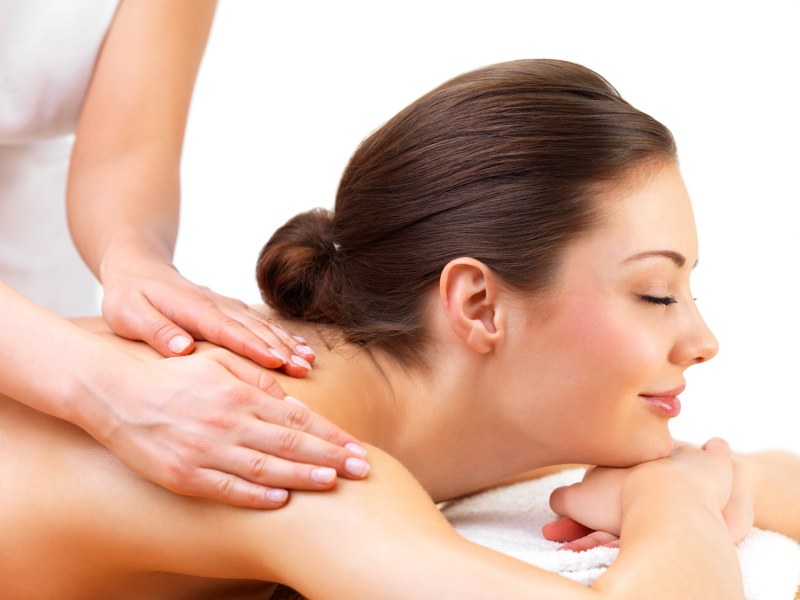
More will be revealed about how massage therapy works
That all said, I do believe that massage has some physical, mental and possibly, medical benefits. I do believe that most massage therapists genuinely want to help people feel better, want to use massage as a healing tool and are doing their best to teach clients what they know about the benefits of massage. And I think that while it is important to understand the mechanism of how massage therapist works on our bodies and minds, for now until the research we need pours forth, I would like to propose a few simple explanations as to how massage can benefit us:
1. Most massage therapy, whether performed on a massage chair or massage table, puts the person being massaged into a really relaxing comfortable position. And in our culture, people rarely have a chance to relax or just sit. If we sit down to relax, we often think we are being lazy or unproductive. So giving ourselves permission to get a massage “for our health” or to “reduce stress” allows us to give ourselves permission to sit down and do relatively nothing for a period of time. It’s not magical. It’s not mystical. But relaxing is good for our health. By sitting down or laying down for a period of time, from 10 minutes to an hour or more, allows our nervous systems to move from sympathetic (fight or flight adrenaline pumping mode) to parasympathetic resting and digesting mode).
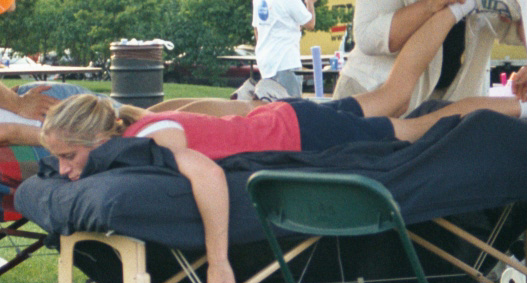
Just laying down on a massage table is relaxing
This may seem obvious to you, and you may think, “well what’s the big deal about that?” The big deal is this, in my experience few people in this culture will take the time to just sit down and do nothing or to lay down and relax, especially during a work day or when the kids needs help with homework or they want to spend time with friends. Relaxing is only socially acceptable if we do it in a structured environment like during a massage or while doing meditation. (Even though yoga was originally designed to calm the nervous system and relax the body, in the U.S., we even add words like “power” to yoga and add weight training to a yoga session! Which in my view, really defeats the purpose of doing yoga in the first place.)
2. Another aspect of our culture is that we are super “busy”…and often touch deprived. Our to do lists have to do lists. If we are not accomplishing, if we are not helping kids, parents or friends or making money (or being good consumers by spending money) we are not being “responsible, we are not being “productive” and we are not being “good” parents, children, neighbors, workers, bosses, employees, friends, community members. We are, in an unspoken way, not supposed to take time for ourselves (unless it is to work out, “power” style) because that is considered to be “selfish.” But getting a massage lets a person take care of him or herself without guilt. Instead of this being a selfish act, getting a massage is now seen an act of self caring. If we do not take care of ourselves, we cannot give to others because we will be too sick or too stressed out to be of much use! When you get a massage we allow ourselves to say, “hey this is my hour, or my ten minutes and I want the attention to be on me. I want to feel good, I want to be touched in a positive, kind way, without the touch feeling sexual or violent or ticklish. And it is for my health so it’s okay in this instance for me to do something for my self.

Getting a massage gives you a little window of time for self care
Likely down the road, we will be able to use science to explain the psychology of massage through random clinical trails. Someday soon we will be able to point to research that shows more specifically how one person touching another via massage actually causes the recipient’s nervous system to shift into parasympathetic mode. But for now, I am content in my own explanations. I know my clients, and clients of other Working Well Massage therapists, benefit from our massages. I know people relax and enjoy getting massages. The science will come. Until then, we will keep providing relaxation, comfort and care to massage clients. And we will acknowledge and encourage their willingness to take care of themselves.


 Working Well Resources' Blog
What about the ‘happy’ hormones released during massage, such as dopamine and serotonin? And, what about immune system effects from massage? Aren’t these considered health benefits?
Kim,
First off, thanks so much for reading and commenting. And to reward you for that, I am going to give you an answer to your questions that I wish were more positive, but hopefully will be clear.
1. Dopamine and serotonin have not been clinically proven to “make us happy” nor have they been proven to be effected by massage therapy. There is one seriously flawed study, to my knowledge, that claims that massage increases serotonin and dopamine, but since we can’t actually measure these neurotransmitters in our brains (only in our urine, which is not the same thing), and the study has serious methodological problems, there is not evidence that massage therapy effects these neurotransmitters. That said, there is no conclusive evidence, to my knowledge, that massage does NOT effect neurotransmitters. We simply do not know and have no way of knowing at this point. See this post for an excellent explanation about what we know of serotonin (and a somewhat scathing condemnation of pharmaceutical promotion of SSRIS):http://saveyourself.ca/articles/reality-checks/anti-depressants.php
I do not share the author’s abject condemnation of the use of SSRI’s, but I do agree that medical science does not really understand neurotransmitters and has no useful method, as of yet, to test them in our brains. In his post, Paul Ingraham also points out that Dr. Christopher Moyer has said that massage therapy has shown to be effective in reducing symptoms of depression and anxiety. I have a great deal of respect for Dr. Moyer and I beleive he is onto something with these observations based on clinical studies. If you want to know about specific research that has been done and is fairly well regarded, look to Dr. Moyer’s book Massage Therapy: Integrating Research and Practice available here: http://www.amazon.com/Massage-Therapy-Integrating-Research-Practice/dp/0736085653
2. As to immune system effects from massage therapy, I’d say that since massage therapy, as well as laying down and resting, have both been shown to relax the nervous system, and since many believe that relaxing our nervous systems leads to improved immune system response, you could make this claim. However, is there actual clinical evidence that massage therapy improves immune system response? Perhaps. Perhaps not yet. I did find this somewhat recent study about the effect of massage on some aspects of the immune system: A Preliminary Study of the Effects of a Single Session of Swedish Massage on Hypothalamic–Pituitary–Adrenal and Immune Function in Normal Individuals (http://online.liebertpub.com/doi/abs/10.1089/acm.2009.0634). However this was a single study conducted on a very small group of participants. While the results are encouraging, I would not stand behind the claim until more studies have replicated the findings.
I am not anti-massage by any means. And I do think massage can benefit our wellness and health especially regarding the relaxation response. I do think that there is much we will find out in years to come from a scientific viewpoint. My post was more about how without delving too deeply into the science, the benefits of massage therapy can be explained from a cultural and psychological viewpoint in very simple terms. And as many people say in the end we do what feels good. And massage feels good!
Thanks so much,
Sue