By Sue Shekut, Owner, Working Well Massage, Licensed Massage Therapist, Certified Wellness Coach, ACSM Personal Trainer
I was looking up calorie and nutrition information and came across a great resource for both…from Self magazine. Self’s Nutrition Data is fairly inclusive. They provide excellent nutritional data as found on nutrition labels (calories, fat, fiber, sugar, carbs and vitamin content).
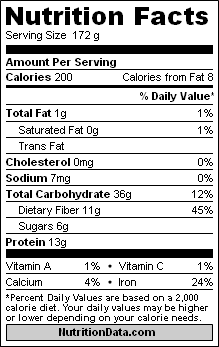
Self Nutrition Data also provides (from their website):
• A Nutritional Target Map™ (patent pending) which tells you how nutritious (nutrient-dense) and filling (calorie-dense) a food is based on two measurements, The Fullness Factor™ (FF) which rates foods on a 0 to 5 scale that predicts the satiating effect of the food and The ND (Nutrition Data) Rating which scores foods on a 0 to 5 scale based on the FDA recommendations for a healthy diet.

• Nutrition Data’s Opinion which awards foods 0 to 5 stars in each of three categories, based on their nutrient density (ND Rating) and their satiating effect (Fullness Factor™).
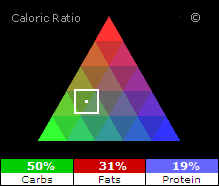
• Caloric Ratio Pyramid™–This graphic indicates the percentage of the food’s calories that are derived from the three main macronutrients—carbohydrates, fats, and protein.
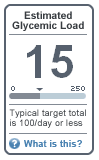
• Estimated Glycemic Load™–Nutrition Data estimates the Glycemic Load of foods and recipes using a proprietary eGL formula.
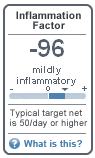
• IF (Inflammation Factor) Rating™–Nutrition Data estimates the inflammatory or anti-inflammatory potential of individual or combinations of foods using a proprietary formula developed by Monica Reinagel. Foods with positive IF Ratings™ are considered anti-inflammatory and those with negative IF Ratings™ inflammatory.
• The Nutrient Balance Indicator™ lets you see at a glance the nutritional strengths and weaknesses of a food, and can help you construct meals that are more nutritionally balanced.
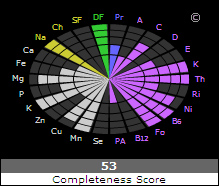
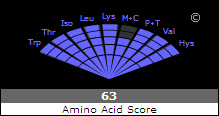
For an example of how a nutritional page for a food item looks, click here for info on the nutritional content of Part-Skim Milk Mozerella cheese.
Here is a list of all the other Nutritional data provided on the Self site:
- Nutrition glossary: Common nutrition terms defined
- Estimated Glycemic Load™, IF (Inflammation Factor) Ratings™, and omega-3 to omega-6 ratios and their effects on your body
- Fast-food nutrition facts for restaurants like Arby’s, Burger King, McDonald’s, Starbucks, and more
- Sensible diet advice
- Find foods highest in any vitamin or mineral or lowest in carbs, saturated fats, or sugars
- Help for newly diagnosed diabetics
- Diet and heart health
- Gaining weight the healthy way
- Weight loss tips, news, and tools
- My ND: Create and analyze recipes, track your diet, and save your favorite foods.
- Can calorie restriction extend your life?
- The latest in the low-carb debate
- Nutritional supplements: Do you need them?
- Quick start: Just one click stocks your My Foods list with foods that fit your diet, such as low-carb, low-calorie, low-fat, heart-healthy, quick and healthy, or super-nutritious
Related articles
- The Lowdown on Glycemic Load (everydayhealth.com)
- Good vs. Bad Carbohydrates (everydayhealth.com)
- Refining Your Diet With the Glycemic Index (everydayhealth.com)
- Diabetic Diet: Is Determining Glycemic Load Better Than Counting Carbs? (diabetesdialectics.wordpress.com)
- Can MyPlate Make Us Healthy? (thedailybeast.com)


 Working Well Resources' Blog
Leave a comment