Feeds:
Posts
Comments

Archive for November, 2010

By Sue Shekut, Owner, Working Well Massage, Licensed Massage Therapist, Certified Wellness Coach, ACSM Personal Trainer

 

]

Nutrition+exercise=Good Health

Today I came across an article about a gym that offers cooking classes and teaches basic nutrition to its members. Sadly for Chicagoans, the gym isn’t located in Chicago, but in Pittsburgh, PA. But maybe some enterprising Chicago gym owner/Entrepreneur will like the idea and start one here in the city of restaurants! Hint hint.”An article by Debbie Black in the FOR THE PITTSBURGH TRIBUNE-REVIEW describes the fitness/nutrition experience of My Fitness  Kitchen here:

With over 23 years of experience working in the fitness industry, the owner of My Fitness Kitchen, Mark Rullo is an exercise physiologist, a certified strength and conditioning specialist, a medical exercise specialist and certified golf fitness instructor.

Gym members can learn to cook from nutritional recipes and are trained in a healthy lifestyle starting with calories, cooking and eating. My Fitness Kitchen recommends supportive nutrition, stressing the need for oxygen to work muscles, concern for muscles, and relaxation and recuperation.

Read the entire article here.

Enhanced by Zemanta

Read Full Post »

CORONADO, Calif. (Nov. 22, 2007) Storekeeper 1...
CORONADO, Calif. Storekeeper 1st Class Andy Zhang enjoys Thanksgiving dinner with his son. Image via Wikipedia

By Sue Shekut, Owner, Working Well Massage, Licensed Massage Therapist, Certified Wellness Coach, ACSM Personal Trainer

Thanksgiving is traditionally a time to give thanks and count our blessings. It can also be a time to overeat and overindulge. Here a few tips to help keep you from feeling like you lost control of your healthy eating habits on this feastful holiday:

1. Eat small portions of each food item you want to sample.

2. Don’t deprive yourself of dessert or you may overeat something else. If you want a slice of  pie, have one. Just cut a half  a slice, let that digest an hour or so before you think about having more!

3. Make sure you drink plenty of water. Dehydration can make you want to consume more food. And drinking water fills your stomach so you don’t have as much room for food.

4. If you drink alcohol, remember it is dehydrating. Trade off between one glass of water for every beer or glass of wine (or mixed drink if you are hitting harder stuff.)

5. Remember that this holiday is really about spending time with friends and family. Focus on the social interactions and the food becomes less of an issue.

6. If you are struggling with overeating or overindulging, do the dishes! It helps out the hostess/host and gives you something to do with your hands besides munch!

A Heartfelt Thank You

And thank you for reading my blog. It’s been a great year for Working Well Massage, am exceptionally happy year for me and a wonderful year for the many people in my life that have benefited from massage therapy, wellness coaching, personal training, better ergonomics, outdoor exercising, and good nutrition! I am grateful to have the opportunity to meet so many interesting and positively motivated people as I travel around and find interesting stories for  my blog. It’s the people I meet and work with that make my life interesting and fulfilling. A heartfelt thank you to all of you I’ve come in contact with this year, on the blog and in real life!

Enhanced by Zemanta

Read Full Post »


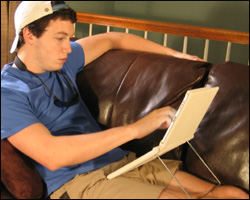
The Artculating Easel in use with an iPad


By Sue Shekut, Owner, Working Well Massage, Licensed Massage Therapist, Certified Wellness Coach, ACSM Personal Trainer

This past weekend I did what I tell other people not to do. I spent the bulk of the weekend at my desk and computer, studying, writing a paper and reading  a textbook. In all, I likely logged 20 hours sitting in my chair, typing, reading and researching. I did use my Port-A-Book to hold my textbook but even with good ergonomics, sitting for that long take sits toll. The result: I got a lot of work done, but I also felt exhausted, my back and neck hurt and I felt my immune system wearing out. I missed my weekly, long forest preserve hike and overall, I missed my weekend. I don’t do this often and I don’t advise spending the weekend working or computing, especially if that is what you do all week at work.

Now research shows that you do on your weekend can effect how well you feel and how productive you are during your workweek.  A study conducted by German researchers on emergency medical service (EMS) workers showed that weekend time spent socializing with friends and family tended to reduce workers’ burnout and increase their general well-being. Kind of a no brainer, don’t you think?  But  many people who work long hours during the week in office jobs that come home to a weekend of more work done in front of their computers. Why do we work so hard? For some, it’s a matter of managers giving workers too many tasks to complete in too little time. But if your manager is one of those people who doesn’t believe you should have time off from work on the weekend, you may want to share the results of this study with him or her. AND, if you are the one that drives yourself to work during the weekend, you may want to read more about this study yourself. And then, give yourself some time off! You will be glad you did.

Researchers at the Technical University of Braunschweig studied the effect of nonwork hassles, time spent in social activity and time spent reflecting positively about work on 87 EMS workers. Nonwork hassles were defined as conflicts with family members or spouse, car trouble, excessive housework  or similar irritation. Social activity was defined as spending time with people one enjoys and positive reflection about work was defined as thinking about the benefits or successes of one’s work. It appears it was easier to study EMS workers (paramedics in U.S. terminology) because they would have a difficult time “bringing their work home with them.” Thus,  the weekend experience for an EMS worker would not include work tasks. (Contrast this with U.S. office workers than can do their work anywhere a Blackberry, laptop or iPhone can be powered up.)

Non work hassles correlated with poor general well-being post-weekend and lower performance in daily work tasks post-weekend. So fighting with your spouse tends to make you feel less healthy and perform more poorly at work the next week). Workers engaged in more social activity on the weekend reported higher levels of general health and well-being as well as better task performance post-weekend.  A high amount of non work hassles tended to associate with lower pursuit of learning post weekend.  Higher positive work reflection on the weekend led to higher pursuit of learning post weekend. Exhaustion was significantly related to task performance (those more exhausted did less well on task performance). The study recommended that workers try to spend more time in positive social activities during weekends and free time.  Employers and organizations could use this study as support for considering reductions in workload and allowing for breaks or comp time after periods of intensive work activity.

I, for one, will be taking time off from the computer and my textbooks for next few days for Thanksgiving activities with my family and friends. And I will be giving my back and neck a much-needed break. And maybe even get  some hiking or swimming in!

Happy Thanksgiving to all of you!

Source:

Fritz, C., and Sonnentag, S. (2005) Recovery, Health, and Job Performance: Effects of Weekend Experiences. Journal of Occupational Health Psychology, 10(3), 187-199

Enhanced by Zemanta

Read Full Post »

Personal trainer monitoring a client's movemen...
Image via Wikipedia

By Sue Shekut, Owner, Working Well Massage, Licensed Massage Therapist, Certified Wellness Coach, ACSM Personal Trainer

There are so many workout myths out there I can’t even count them all. Today I ran across an article I really enjoyed that breaks some of the most popular and entrenched workout myths. Number #1 is the myth that sit ups will give you a “six-pack” belly. I have low back problems and doing sit ups is the worst way for me to strengthen my core. Traditional sit ups really work your hip flexors (Iliopsoas muscles for the anatomically aware) more than the abdominal muscles. Instead I prefer Pilates Plank poses or other abdominal exercises that target the core of your torso. (Meaning those muscles deep to your spine  that support your spine. A good thing, supporting the spine, don’t you think?!). Click here for an explanation of how to do Prone Plank with Stability Ball. (Note: Click on More photos under the pic in this short article to show you visually how to do the exercise.)

Also explained: Why running makes you a better runner but doe snot make you necessarily more fit for other activities. How reading effects your body while you workout (Hint: It isn’t helping your posture.) Why weights are not just for bodybuilders. Why exercising longer may not make you burn more calories! Why stretching IS important despite some confusing reports to the contrary. How your workout will make you look like your favorite celebrity. Not. And why you can’t eat like a glutton if you work out a  lot.

Read the list of exercise myth busting tips here by By Gillian Reeves, Personal Trainer from Mail Online. And then workout with a better idea of what you are doing.

Enhanced by Zemanta

Read Full Post »

By Sue Shekut, Owner, Working Well Massage, Licensed Massage Therapist, Certified Wellness Coach, ACSM Personal Trainer
Recently I heard about a great blog that provides posts about the latest research on Industrial/Organizational science, The IOATWORK blog.

Human Resource professionals, as well as those of you interested in reducing stress in your workplace, might learn a lot from articles in this blog. As a massage therapist and wellness coach, I see the effects of workplace stress first-hand. And I can do something about relieving the effects of stress for my clients. But I can’t eliminate the causes of stress. That’s the job of management and Industrial/Organizational psychologists. If you want to know more about what’s going on in the field of research, what’s been shown to work and what does not as far as reducing workplace stress, providing better work/life balance for employees or how to keep yourself from burning out, you would do well to check out this blog! (And of course there are a lot of other great non-wellness related posts in the blog as well.

Who Created the IOATWORK blog and Who May Benefit From Reading It?

The blog editor, Alison Mallard, Ph.D. explains why the blog was created and the audience they intend to serve:

Many consider Industrial/Organizational psychology as the science behind Human Resources, Organizational Development, Organizational Effectiveness, and Organizational Behavior.

I/O AT WORK helps to bridge the gap between I/O research and its application in the HR world (and beyond) by making it easier for practitioners to access and stay on top of recent published research.

So, instead of spending hours scanning multiple journals, we do much of the work for you.  With this site and a few minutes a week, you can stay informed about new research by scrolling through the new reviews posted each week.  Or you can search reviews by topic or journal.

Wellness-related  Blog Posts from IOATWORK blog (links included)

Your Lunchbox is Your Friend

Keeping it Safe for Daylight Saving Time

Heavy Workloads: Much More Than Just a Nuisance

If You Want to Prevent Exhaustion … Don’t Worry, Be Happy!

With Age Comes Wisdom…And Better Job Attitudes

Managing Grief in the Workplace

Oh give me a BREAK! (Why breaks are important)

When Helping Hurts: The Dark Side of Organizational Citizenship Behaviors

When Mental Detachment from Work is a Must

Play Hard, Rest Hard and Maximize Your Performance

The Organizational Benefits of Work Life Balance

Home Sweet Home…At Work?

Work-Family Conflict: White vs Blue Collar

Related articles

Enhanced by Zemanta

Read Full Post »


Cover Your Mouth When Sneezing!

By Sue Shekut, Owner, Working Well Massage, Licensed Massage Therapist, Certified Wellness Coach, ACSM Personal Trainer

The cold and flu season seems to no longer be a season but a constant sharing of germs and sneezes in many of the corporate offices I visit. Aside from sleep and fluids some people swear that exercising helps keep them from getting many of these office bugs.  According to a recent press release from the American College of Sports Medicine, sometimes it’s better to rest when you are sick versus exercise. However, exercise does help boost your body’s immune response. So how do you know when to work out and when to stay in bed?

Read this excerpt from the ACSM press release:

ACSM Fellow David C. Nieman, Dr.P.H., says that moderate exercise (30 minutes a day, on most, if not all, days of the week) actually lowers the risk for respiratory infections.  Prolonged, intense exercise, on the other hand, can weaken the immune system and allow viruses to gain a foothold and spread.

In general, if your symptoms are from the neck up, go ahead and take a walk,” said Dr. Nieman. “But if you have a fever or general aches and pains, rest up and let your body get over the illness.”

Read more from the press releases including Dr. Nieman’s  4 Tips on when to exercise and when to rest here.

And for a more detailed Fact Sheet on the relationship between safe exercise and illnesses download the ACSM fact sheet: “Exercise and the Common Cold,”   This fact sheet was written by Dr. Nieman.

Enhanced by Zemanta

Read Full Post »

By Sue Shekut, Owner, Working Well Massage, Licensed Massage Therapist, Certified Wellness Coach, ACSM Personal Trainer

One of the advantages to being a member of the American College of Sports Medicine (ACSM) is that I get timely access to the latest studies on sports medicine and exercise science. I also get a lot of information about what’s happening in the U.S. regarding health and wellness. Today I opened my email to find a newsletter from ACSM and a link to a great blog that features stories about real people implementing fitness and nutrition programs into schools, workplaces and the home. The blog is called the “Be Active Your Way Blog” and this week it features a story about the Hip Hop Healthy Heart Program for Children™ (Hip Hop), a comprehensive wellness program bringing together physical education, music, and arts in grade K-6th. The post before that was an article on ways people have overcome environmental barriers to be more active and fit with suggestions. Check it out here!

The blog was created by the U.S. Department of Health and Human Services. Contributors to the blog include the YMCA,  ACSM, the Office of Disease Prevention & Health Promotion, the National Center on Physical Activity and Disability, the National Physical Activity Plan, the National Coalition for Promoting Physical Activity, Inc. and many similar organizations.

Enhanced by Zemanta

Read Full Post »

By Sue Shekut, Owner, Working Well Massage, Licensed Massage Therapist, Certified Wellness Coach, ACSM Personal Trainer

There is a good article in this months’ Men’s Health Magazine about fat phobia and America’s obesity problem, titled “I Hate Fat People.”  The author, Richard Connif, did a thorough job of explaining how BMI numbers have been revised and how this affects our perception of our fatness in his article about fat phobia and prejudice. He also did a great job explaining the controversy between those that celebrate their fatness (and contend that fat doesn’t mean unfit and that thin isn’t necessarily more healthy or fit) and those that believe that obesity is a ticking time bomb of health problems that tend to manifest later in life no matter how fit an obese person is. But he also notes that obesity tends to cause health problems later in life as the extra weight takes its toll on the pancreas (contributing to Type II diabetes), heart disease, and I would also add, joint issues and back pain.

But what’s the cause of our obesity? I have read articles that explain that we as human beings are biologically predisposed to crave fat and sugary foods as well as protean to stave off hunger. For the majority of time humans have been on this planet, we were living in food scarcity. But in the last 100 years, and especially the last 30-40 years, we’ve been afforded an abundance of food in most developed nations. Walk the aisles of any grocery store and you’ll find more food than our ancestors likely ate in a lifetime. Advertisers, trying to sell their companies products, cater to our inborn cravings for fat and sugar and salt and load our prepared foods with it. Like literally giving candy to a baby, food manufacturers and retailers tempt us with sweets and treats and we, creatures of our biological nature, snatch them up, and eat as much as we want or can afford. Over time, as we add in the more sedentary lifestyle most of us now enjoy, due to car travel, television and long work hours and commutes. Add this all up and it’s a simple math equation. Too much fat, sugar and calories coupled with low activity levels and our bodies do what they are supposed to do: protect us from starvation and store fat.

There may be more to this picture than all that. Some believe that obesity isn’t a sign of lack of self-discipline or solely our biological drives. It may be caused by an addiction: Compulsive overeating. An article in WebMD by Elizabeth Lee talks about former FDA Commissioner David Kessler, MD ‘s book,  The End of Overeating. In the book, Kessler, a Harvard-trained pediatrician and medical school professor at the University of California, San Francisco, described Hyperpalatable foods. He defines these foods as those high in fat, sugar, and salt that stimulate the senses to provide a physiological reward that causes many people to eat more to repeat the experience. Kessler explains that when a person eats a high sugar, high fat food they like this stimulates the body to produce endorphins, the brain chemicals that tell us we are experiencing something pleasurable. (Similar to runners high but less calorie burning!) Since our brains feel so good from the ingestion of endorphin producing sugar and fatty food, we want more. Eating more momentarily calms our nervous systems and  makes us feel good. Eating these foods also stimulates our brings to produce more dopamine. This in turn signals us to eat more of that feel good food. Visual cues lead us to seek more of the feel good food-pictures of food on TV ads, the signs of fast food restaurants, the packaging of our favorite candy bars in vending machines and at the checkout line. We eat without thinking and don’t realize why it’s so hard to control our cravings and eating habits. Once we get “hooked” on these feel good foods, we may develop a tolerance. And then we need food with more fat and sugar to bring us the same high, Kind of sounds like cocaine addiction, doesn’t it? Well, chemically, to our brains there are a lot of similarities. Read the full WebMD article here.

Not everyone is susceptible to the hyperpalatable foods. But for those that are, similar to people who are more susceptible to becoming alcoholic or addicted to other substances, there is help. One of the self-help groups that many people with compulsive overeating issues can turn to is a group called “Overeaters Anonymous.” Link here to take  short test to see if you may be considered a compulsive overeater.

More about OA from their website:

What is OA?

Overeaters Anonymous is a Fellowship of individuals who, through shared experience, strength and hope, are recovering from compulsive overeating. We welcome everyone who wants to stop eating compulsively.

There are no dues or fees for members; we are self-supporting through our own contributions, neither soliciting nor accepting outside donations. OA is not affiliated with any public or private organization, political movement, ideology or religious doctrine; we take no position on outside issues.

Our primary purpose is to abstain from compulsive overeating and to carry this message of recovery to those who still suffer.

Who belongs to OA?

In Overeaters Anonymous, you’ll find members who are extremely overweight, even morbidly obese; moderately overweight; average weight; underweight; still maintaining periodic control over their eating behavior; or totally unable to control their compulsive eating.

OA members experience many different patterns of food behaviors. These “symptoms” are as varied as our membership. Among them are:

  • obsession with body weight, size and shape
  • eating binges or grazing
  • preoccupation with reducing diets
  • starving
  • laxative or diuretic abuse
  • excessive exercise
  • inducing vomiting after eating
  • chewing and spitting out food
  • use of diet pills, shots and other medical interventions to control weight
  • inability to stop eating certain foods after taking the first bite
  • fantasies about food
  • vulnerability to quick-weight-loss schemes
  • constant preoccupation with food
  • using food as a reward or comfort

Where can I find OA?

Go to Find a Meeting on this Web site and follow the instructions to find a meeting in your area. Or you can contact the World Service Office at (505) 891-2664 or email for further assistance. You can also look for Overeaters Anonymous in your local telephone directory and in your local newspaper’s social or community calendar section.

Enhanced by Zemanta

Read Full Post »

By Sue Shekut, Owner, Working Well Massage, Licensed Massage Therapist, Certified Wellness Coach, ACSM Personal Trainer

Infant massage helps baby's digestion and gassiness

I met Heather Rabbit recently at the AMTA-IL Strategic planning meeting. After spending a day with Heather and chatting with her over lunch, I can say that, if I were pregnant, she is the massage therapist I would most likely go to for pregnancy massage. And if I had a new born, I would also pick her as my number one Infant Massage Instructor. Heather is not only fit, smart, professional, knowledgeable and articulate, she is also warm and compassionate. And Heather has a passion for infant massage instruction as well as massage therapy in general. She is also a nationally certified and state licensed massage therapist practicing in Chicago, Illinois. She teaches parents how to give their babies massage in her Infant Massage Class at Swedish Covenent Hospital. Her website is here.

Read this excerpt about infant massage as explained by Heather from an article by Anne E. Stein, a Contributing writer in WellCommunity, a publication of Swedish Covenent Hospital.:

“Believe it or not, babies get stressed out,” Rabbitt says. “Massage helps them learn what relaxation is at a young age, and studies have shown they’ll be more relaxed as they grow.”

In addition to calming a baby, massage helps with digestion and gassiness by stimulating the stomach and large intestine. Tummy massage, explains Rabbitt, is extremely helpful for soothing colicky babies.

Other studies have shown that, like adults, babies derive a significant amount of relaxation and good feeling from massage because it decreases the stress hormone cortisol, which is harmful for brain development. Reduction in this hormone can cause an increase in the antibodies that fight infection and facilitate healthy weight gain.

More studies still have found that infant massage may increase babies’ alertness, attentiveness and ability to learn.

“Overall, brain development is defined and guided by our environment, and infant massage helps create a physical and emotional environment for baby that is open to learning,” Rabbitt said. “The sensation of touch can facilitate this brain development and creates denser and more comprehensive brain cells.”

This theory is based on the fact that babies (by about age 1) naturally have about 150 percent more neural connections (brain cells) than adults do. As babies age, their bodies start to shed the connections that are not being used. But if their brains are well stimulated at an early age, they retain more information, and are more responsive to learning.

Therefore, it is essential that babies take in as much sensation and information as possible during that time, and infant massage can serve as the needed stimulus.

Massage is a great tool for parents, especially if swaddling and rocking aren’t working. When a parent gets home from work, for example, infant massage provides quality time that comforts baby and decreases the parent’s stress.

The connection created by massage can be especially important for dads, who often feel left out because they haven’t carried the baby for nine months and don’t experience the intimacy of breastfeeding.

Infant massage techniques are similar to adult massage techniques though gentler, and generally 20 minutes is the maximum time for massage. It’s extremely easy to learn, said Rabbitt. At Swedish Covenant Hospital, up to two caregivers can attend three, 60 to 90-minute classes with their baby (Rabbitt also provides in-home sessions). The massage techniques are designed for babies from birth to one year, but classes are typically taken between four weeks to just before the baby starts to crawl.

Infant massage is also being used in a research project in the hospital’s special care nursery for late pre-term babies (27-34 weeks). Babies receive three massages a day for five days, with a goal of increasing their weight gain faster so they can go home sooner. Previous studies have shown that early pre-term infants gained 47 percent more weight and were discharged earlier than infants who weren’t massaged.

Link to the entire article here.

Heather Rabbit, LMT, Infant Massage Instructor

In 2008, Heather received a grant from the Massage Therapy Foundation entitled: Increasing Infant-Mother Interaction, Decreasing Depression – Teaching Infant Massage to Women With Symptoms of Postpartum Depression. With this grant, she was able to help 15 new mothers use infant massage as a tool to decrease anxiety, create a healthy and loving relationship with their new babies, and make sure their babies were developing properly for their age.

Heather is certified in Pre, Peri and Postnatal massage, as well as orthopedic massage. She is also the Secretary on the Board of Directors for 3300 member-Illinois chapter of the American Massage Therapy Association and she has BA from Ohio State University.

Watch Heather explain infant massage in this video, You Tube link here. Link to Heather’s website here.

Enhanced by Zemanta

Read Full Post »

By Sue Shekut, Owner, Working Well Massage, Licensed Massage Therapist, Certified Wellness Coach, ACSM Personal Trainer

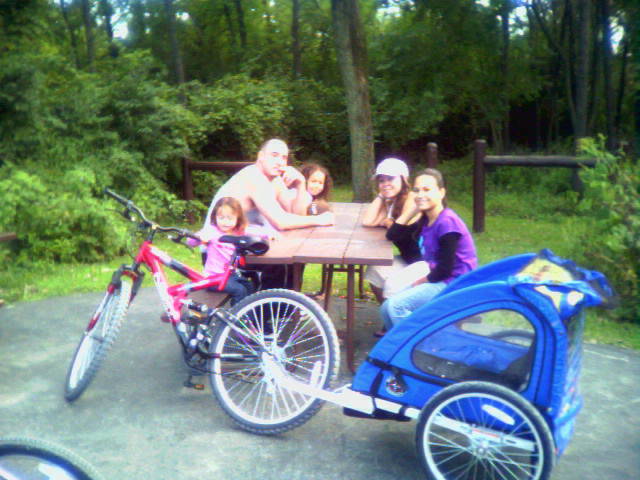
The Perdy Family take sa break from their biking adventure

I have a fair number of clients that have stressful jobs, long commutes and small children at home. It’s also a common scenario to see a client come in and say “I used to work out all the time and in the last year I haven’t been working out much.” Invariably I ask, do you have a one-year-old?” It’s not always the case, but often the answer is “Yes, how did you know?” The time of having a new baby int he family is an exciting and exhausting time. For a few months (to many months) this can mean sleep deprivation, more time needed at home to care for your child and of course the joys of seeing a new life, a new smile and bonding with your new son or daughter. But all this change can also bring a halt to mom and dad’s workout routines.

I am a big advocate of incorporating regular activity into our daily lives. But having a new baby or small children at home makes it difficult to workout like you did pre-children. That doesn’t mean you can’t work out at all. It just gives you an opportunity to try something new, think outside the box and modify your workout routine without taking too much time away from your family. One of the things I tell my parent clients is that working out and being fit is one of the best ways to role model healthy physical activity behavior to your children. And taking your kids along on your workout, while a bit tricky, can be a great way to spend time with your family without giving up time for your own health.

How to Incorporate more physical fitness into your life without sacrificing  family time.

• Used to going on long bike rides but can’t get away for long enough to get your rides in? Add a bike trainer to your own bike or buy a spinning type bike and put it in your basement, garage, workout room, where ever it is out-of-the-way but easily accessible for riding. If you need motivation to keep you from being bored, put the bike in front of a TV and use the SpinRider, an indoor cycling DVD that simulates an outdoor bike ride in different locales. Each DVD includes 3 bike rides filmed from the rider’s point of view. The videos take you to the countryside, city streets, beaches, and back alleys, while the onscreen subtitles and bonus features inform you about the destination’s history, people and activities. Spinrider releases a new 3 ride DVD every September, December, and February. Individual DVD’s are $19.95. Subscribe for 3 DVDs $44.95. Order here.

• Are your children old enough to be bundled up and go outdoors but too small to go on long walks? Pack them up in a stroller or bike carrier and either hike with them or bike with them.

• If you kids are old enough to bike but not old enough to keep up with you on your bike, let them cycle while you run or roller blade with them.

• Make family fitness a regular activity. Each weekend plan to explore a new forest preserve, a new lake, river or scenic outdoor setting. The Chicago area is chock full of small and large forest preserves. And children that experience and interact with nature will be more likely to be comfortable experiencing and protecting nature as adults. Check out  the Little Red School House for your children to explore Chicago area wildlife and go for a short hike together before the winter covers the woods with a blanket of snow!

• If you absolutely must leave your family to get in a workout, obviously, you want to minimize your time away. So if you join a gym, find one close to home, or put on your jogging shoes and go for a run. Adding a small workout room to your basement or spare room also means less travel time and less time away from the family. AND you kids get to see you role modeling good fitness behaviors. (Versus role modeling sitting in front of the TV eating cookies!)

• If you children are a bit older (say 7 or 12 years old), you can also have them join you in using Wii Fit or following along on beginner’s yoga videos.

• As your children hit the teenage years, it’s more likely that mom and dad are chaffering the kids around to their sports and athletic events more so than joining in on your children’s activities. But that doesn’t mean you need to go your separate ways when it come s to working out. If your children are old enough to do resistance training, you can work out together! If your son or daughter is a good swimmer, hockey player, roller blader or snow boarder, you can plan day trips or weekend trips to areas where the whole family can enjoy your favorite sports together.

• Take a dance class with your kids. Hip Hop is an easy dance to learn and a great aerobic workout. I’ve taken Hip Hop classes at the Old Town School of Folk and enjoyed every sweaty minute of it!

• If you have Dance Dance Revolution, make a game out of  playing it with your kids a few times a week.

• In the winter, go ice skating or sledding with your kids.

• Ask your kids what they want to do to have family fitness time each week. They may come up with answers that you all will love and that you might never have thought of without them!

Enhanced by Zemanta

Read Full Post »