Feeds:
Posts
Comments

Archive for April, 2010

Stretching throughout the workday is essential for good health.

By Sue Shekut, Owner, Working Well Massage, Licensed Massage Therapist, Certified Wellness Coach, ASCM Personal Trainer

If you’re reading this, it’s likely that you’ve been sitting at a computer for an extended period of time.  Did you know that sitting still for a long time can cause serious health damage? OSHA says that maintaining static postures, such as viewing the monitor, for a prolonged period of time without taking a break can fatigue the muscles of the neck and shoulder that support the head. Additionally, OSHA recommends that repetitive tasks or jobs that require long periods of static posture incorporate several, short rest breaks (micro breaks or rest pauses). During these breaks you should stand, stretch, and move around. This provides rest and allows the muscles enough time to recover. Read the excerpt from Susan Seliger”s article “Stretching Exercises at Your Desk: 12 Simple Tips” at WebMD for a few of the stretches you can easily perform in your workplace to keep limber throughout the day.

Stretching Exercises You Can Do at Your Desk

  1. Just stand up and sit down — no hands
    • You might have gotten a gold star in preschool for sitting still, but it just goes to show you (best sellers notwithstanding) that not all of us learned everything we need to know in kindergarten. “If you stand up and sit down (over and over) — without using your hands — it can be a challenge,” says Smith. It’s like doing mini-squats!
  2. Substitute exercise for sitting — while you work
    • Get rid of your desk chair and substitute an exercise ball, suggests Smith. “I used it for a while when I was having low-back problems; it was great,” Smith says. “All day you are engaging all the muscles in the back, legs, butt, everything, to stay balanced.”
  3. Shrug your shoulders — to release the neck and shoulders
    • Inhale deeply and shrug your shoulders, lifting them high up to your ears. Hold. Release and drop. Repeat three times.
    • Shake your head slowly, yes and no.
  4. Loosen the hands with air circles
    • Clench both fists, stretching both hands out in front of you.
    • Make circles in the air, first in one direction, to the count of ten.
    • Then reverse the circles.
    • Shake out the hands.
  5. Point your fingers — good for hands, wrist, and forearms
    • Stretch your left hand out in front of you, pointing fingers toward the floor. Use your right hand to increase the stretch, pushing your fingers down and toward the body. Be gentle.
    • Do the same with the other hand.
    • Now stretch your left hand out straight in front, wrist bent, with fingers pointing skyward. Use your right hand to increase the stretch, pulling the fingers back toward your body.
    • Do the same on the other side.
  6. Release the upper body with a torso twist
    • Inhale and as you exhale, turn to the right and grab the back of your chair with your right hand, and grab the arm of the chair with your left.
    • With eyes level, use your grasp on the chair to help twist your torso around as far to the back of the room as possible. Hold the twist and let your eyes continue the stretch — see how far around the room you can peer.
    • Slowly come back to facing forward.
    • Repeat on the other side.
  7. Do leg extensions — work the abs and legs
    • Grab the seat of your chair to brace yourself and extend your legs straight out in front of you so they are parallel to the floor.
    • Flex and point your toes five times. Release.
    • Repeat.
  8. Stretch your back with a “big hug”
    • Hug your body, placing the right hand on your left shoulder and the left hand on your right shoulder.
    • Breathe in and out, releasing the area between your shoulder blades.
  9. Cross your arms — for the shoulders and upper back
    • Extend one arm out straight in front of you. With the other hand, grab the elbow of the outstretched arm and pull it across your chest, stretching your shoulder and upper back muscles.
    • Hold. Release.
    • Stretch out the other arm in front of you — repeat.
  10. Stretch your back and shoulders with a “leg hug”
    • Sit on the edge of your chair (if it has wheels, wedge the chair against the desk or wall to make sure it does not roll). Put your feet together, flat on the floor.
    • Lean over, chest to knees, letting your arms dangle loosely to the floor. Release your neck.
    • Now bring your hands behind your legs, right hand grasping left wrist, forearm (or elbow if you can reach that far), left hand grasping the right. Feel the stretch in your back, shoulders and neck. Hold.
    • Release your hands to the floor again.
    • Repeat three times or as often as it feels good.
  11. Look up to release upper body
    • Sit up tall in your chair, or stand up. Stretch your arms overhead and interlock your fingers.
    • Turn the palms to the ceiling as you lift your chin up, tilt your head back, and gaze up at the ceiling, too.
    • Inhale, exhale, release.
  12. Substitute walks for email — and don’t eat at your desk
    • Instead of emailing a colleague “and copying 25 people who don’t want to be copied anyway,” Smith says, “walk over to the colleague you really want to talk to.”

    Read the rest of the article at WebMD.

    Reblog this post [with Zemanta]

Read Full Post »

By Sue Shekut, Owner, Working Well Massage, Licensed Massage Therapist, Certified Wellness Coach, ACSM Personal Trainer

It is with a very sad and heavy heart that I write this post. This morning, the City of Chicago’s Committee on Zoning passed the amendment to the zoning ordinance that would restrict  “massage establishments” to B-3 and C Zones despite testimony from the American Massage Therapy Association (AMTA), a representative from Massage Envy and other Chicago massage therapists.

The amendment is now slated to for a full vote before the full Chicago City Council on Wednesday, April 14th that would immediately enact the ordinance.

The AMTA Illinois Chapter and I, and all the licensed massage therapists I know, continue to strongly oppose the amendment. The amendment is discriminatory and does not address the issue of illicit activity, the purported impetus of the original zoning amendment. And the worst part yet is the amendment does not allow legitimate massage establishments to operate in B-1 and B-2 districts (safe and busy retail districts where you can now enjoy your massages). It is still unclear if this means that 100’s of legitimate massage business in Chicago will have to relocate or go out of business!!!

WE CAN STILL STOP THIS AMENDMENT, BUT YOU MUST ACT TODAY! Time is running out! We have less than 36 hours for all fifty Chicago Alderman to hear us loud and clear.

On Tuesday April 13, please call, e-mail and write to the alderman where you live, work or patronize a massage therapy clinic !

We really need YOUR help, fellow Chicagoans! Please take just a few minutes to call or email your alderman or alderwoman today. Ask them to support legitimate, licensed massage therapists and local economies citywide and Vote NO to this amendment to the zoning ordinance!

Here is a sample email you can cut and paste or use and modify in your own words:

“As a client of a legitimate massage therapy business, I implore you to oppose the amendment to limit massage therapy establishments to only B-3 and C Zoning Districts.  I value the health care benefits of massage and do not want my legitimate massage therapist penalized for the actions of a few illegal massage parlor operators. I visit my massage therapist in a safe convenient location. I do not want to have to travel to an industrial corridor to get massage therapy. Approving this amendment to the Massage Establishment Act will put a huge financial strain on legitimate massage therapy businesses if they are forced to relocate, would make it unnecessarily difficult for new massage therapists to open a business, and could increase the city’s unemployment by putting legitimate massage therapists out of work.  It will not damage illegal massage parlors–it will only make it easier for them sell their illegal services in less populated areas. And it will hurt legitimate massage businesses and make it less safe for them to provide therapeutic, legitimate massage therapy to tax paying citizens like me. Please oppose this amendment.”

Feel free to cut and paste our sample email or write your own. I appreciate your help on this important issue!

City of Chicago Alderman Names and Emails by Ward

1st Ward Proco Joe Moreno ward01@cityofchicago.org
2nd Ward Robert Fioretti ward02@cityofchicago.org
3rd Ward Pat Dowell Pat.Dowell@cityofchicago.org
4th Ward Toni Preckwinkle tpreckwinkle@cityofchicago.org
5th Ward Leslie Hairston lhairston@cityofchicago.org
6th Ward Freddrenna Lyle flyle@cityofchicago.org
7th Ward Sandi Jackson Sandi.Jackson@cityofchicago.org
8th Ward Michelle Harris mharris@cityofchicago.org
9th Ward Anthony Beale abeale@cityofchicago.org
10th Ward John Pope jpope@cityofchicago.org
11th Ward James Balcer jbalcer@cityofchicago.org
12th Ward George Cardenas ward12@cityofchicago.org
13th Ward Frank Olivo (Zoning Committee Member) folivo@cityofchicago.org
Ward Phone: (773) 581-8000  City Hall Phone: (312) 744-3076
14th Ward Edward Burke (Zoning Committee Member) eburke@cityofchicago.org
Ward Phone: 773-471-1414  City Hall Phone: 312-744-3380
15th Ward Toni Foulkes Toni.Foulkes@cityofchicago.org
16th Ward JoAnn Thompson JoAnn.Thompson@cityofchicago.org
17th Ward Latasha Thomas (Zoning Committee Member) lrthomas@cityofchicago.org
Ward Phone: 773-723-0908 City Hall Phone: 312-744-7738
18th Ward Lona Lane ward18@cityofchicago.org
19th Ward Virginia Rugai vrugai@cityofchicago.org
20th Ward Willie Cochran Willie.Cochran@cityofchicago.org
21st Ward Howard Brookins ward21@cityofchicago.org
22nd Ward Ricardo Munoz rmunoz@cityofchicago.org
23rd Ward Michael Zalewski mzalewski@cityofchicago.org
24th Ward Sharon Dixon Sharon.Dixon@cityofchicago.org
25th Ward Daniel Solis (Zoning Committee Chair) dsolis@cityofchicago.org
Ward Phone: (773) 523-4100 City Hall Phone: (312) 744-6845
26th Ward Roberto Maldonado Contact by Phone 773 395-0143
27th Ward Walter Burnett wburnett@cityofchicago.org
28th Ward Ed Smith (Zoning Committee Member) ehsmith@cityofchicago.org
29th Ward Deborah Graham Contact by Phone (312) 744-8805
30th Ward Ariel Reboyras ward30@cityofchicago.org
31st Ward Ray Suarez (Zoning Committee Member that sponsored amendment) rsuarez@cityofchicago.org
Ward Phone: (773) 486-6488 City Hall Phone: (312) 744-6102
32nd Ward Scott Waguespack ward32@cityofchicago.org
33rd Ward Richard Mell rmell@cityofchicago.org
34th Ward Carrie Austin (Zoning Committee Member) caustin@cityofchicago.org
Ward Phone: (773) 928-6961 City Hall Phone: (312) 744-6820
35th Ward Ray Colon (Zoning Committee Member) ward35@cityofchicago.org
Ward Phone: (773) 365-3535 City Hall Phone: (312) 744-6835
36th Ward John Rice Contact by Phone 773)622-3232
37th Ward Emma Mitts emitts@cityofchicago.org
38th Ward Thomas Allen (Zoning Committee Member) tallen@cityofchicago.org
Ward Phone: (773) 545-3838 City Hall Phone: (312) 744-6811
39th Ward Margaret Laurino (Zoning Committee Member) mlaurino@cityofchicago.org
Ward Phone: (773) 736-5594 City Hall Phone: (312) 744-7242
40th Ward Patrick O’Connor pjoconnor@cityofchicago.org
41st Ward Brian Doherty bdoherty@cityofchicago.org
42nd Ward Brendan Reilly Brendan.Reilly@cityofchicago.org
43rd Ward Vi Daley (Zoning Committee Member) vdaley@cityofchicago.org
Ward Phone: (773) 327-9111 City Hall Phone: (312) 744-3071
44th Ward Thomas Tunney ttunney@cityofchicago.org
45th Ward Patrick Levar plevar@cityofchicago.org
46th Ward Helen Shiller hshiller@cityofchicago.org
47th Ward Eugene Schulter (Zoning Committee Member) ward47@cityofchicago.org
Ward Phone: 773-348-8400 City Hall Phone: 312-744-3180
48th Ward Mary Ann Smith msmith@cityofchicago.org
49th Ward Joe Moore ward49@cityofchicago.org
50th Ward Bernard Stone (Zoning Committee Member) bstone@cityofchicago.org
Ward Phone: 773-764-5050 City Hall Phone: 312-744-6855
Note: Ald. Bernard Stone (50th Ward)  is the only Committee member that was opposed to the ordinance.  Thank you Alderman Stone!!!!!

A Better Idea For Massage In Chicago

In the meantime, the AMTA-IL Government Relations Committee is finalizing language for a model ordinance that would require massage therapy establishments to submit proof of state licensure when applying for business licenses or renewal (currently not done), and levying substantial fines for violations (also not currently done). Members of the Zoning Committee and a City Commissioner want to partner with the AMTA to address the issues of illicit activity in their wards without discriminating against licensed massage therapists and legitimate massage therapy establishments.

The AMTA proposal is designed to protect the public from illegal massage “parlors” without adversely effecting the business of legitimate massage therapists. But this proposal will likely fall on deaf ears if the current nonsensical and damaging amendment to the Massage Establishment Act passes on Wednesday.

Reblog this post [with Zemanta]

Read Full Post »

By Sue Shekut, Owner, Working Well Massage, Licensed Massage Therapist, Certified Wellness Coach, ACSM Personal Trainer

I first wrote about Climate Cycle’s upcoming Solar Ride for Schools here. I asked others to participate and now it’s time to walk my own talk. I am riding myself in the 10 miles course and I am looking for sponsors! By sponsoring me you are donating to Climate Cycle and your $5, $10, $20 or more donation will go to help provide solar panels for Chicago area schools. Climate Cycle also uses your donations to help raise awareness about environmental sustainability. I am happy to be able to participate and ride my bike along Lake Michigan with many other Climate Cycle Riders. It’s fitness with good purpose!

What is the Solar Schools Ride?

Climate Cycle’s May 15th, 2010 Solar Schools Ride is a family and fan friendly fundraiser in which riders garner pledges in advance of the ride. Proceeds go to install solar energy systems in local public schools.

Cyclists select from a 4, 10, 20 or 62-mile course along picturesque Lake Michigan. All starting and end points are in downtown Chicago, with the exception of the 62-mile “metric century” course, which begins at the Indiana Dunes and ends in downtown Chicago.

A post ride celebration follows the ride. This festive event includes music, free lunches for all riders, sustainability showcases, goody bags, a raffle and kid friendly activities.

Want to Help Out But Not Ride? Sponsor Me!

Sponsor me for the Climate Cycle Ride on May 15th! OR, register for the ride yourself and join me in fitness, fun and raising money for a good cause!

Reblog this post [with Zemanta]

Read Full Post »

By Sue Shekut, Owner, Working Well Massage, Licensed Massage Therapist, Certified Wellness Coach, ACSM Personal Trainer

People say they want to restrict fat or they want to eat less fat. But fat is a necessary part of your daily diet. So how much should you eat? And how do you keep track of how much fat to eat?

First off, let’s think about why we need fat. The body uses fat as its major source of energy storage– when the energy you eat and/or drink can’t be used, your body turns some of it into fat for later use. Despite its negative associations, fat is essential, as it cushions organs and bones, makes horomones, regulates blood pressure and maintains healthy skin, hair and nails.

Don't forget to read!

In general, though, people in the United States eat way too much of it. Katherine Zeratsky, R.D., L.D.,  a Mayo Clinic nutritionist, offers great advice on how to monitor your fat intake:

“Health experts at the Institute of Medicine recommend that healthy adults get 20 to 35 percent of their total calories from fat. Each gram of fat has 9 calories. So, if you’re trying to eat 1,800 calories a day, you should have no more than 70 grams of fat a day — 35 percent of 1,800 calories = 630 calories, divided by 9 (calories per gram of fat) = 70 grams.

Food labels also list calories and calories from fat per serving. So if a food label says 250 calories and 110 fat calories, it means that almost half the food’s calories come from fat. That’s not necessarily a reason to avoid that food, though. For example, 55 percent of the calories in part-skim mozzarella cheese come from fat, but a 1-ounce serving (28.47 grams) has just 4 grams of fat and 72 total calories.

The percentages you see on food labels are designed to show how much of a specific nutrient a food contains compared with the Daily Value (DV). The DV is based on a 2,000-calorie diet. So, for example, if the label lists 18 percent next to fat it means that the food provides 18 percent of the suggested daily total for fat. You may be eating more or less than 2,000 calories a day, but this percentage can still help you choose foods that are lower in fat.”

So don’t be afraid to eat fat. Just be careful how much you eat and of course, exercise and eat your veggies too!

Reblog this post [with Zemanta]

Read Full Post »

By Sue Shekut, Owner, Working Well Massage, Licensed Massage Therapist, Certified Wellness Coach, ACSM Personal Trainer

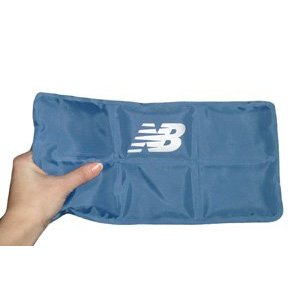
heat/ice packIn my business, I see a lot of injuries. Weekend warriors sit at a desks all week and then push the limits of their bodies in intense weekend sports. Many of my clients sit long hours at computers and then face a long seated commute home. Muscle injuries can occur in both active and inactive people. Even sitting at a desk for 8-10 hours requires you to contract and use your muscles in a repetitive manner. These positions can cause tight neck, shoulder and back muscles. And all sports and exercises, yes, even yoga, can lead to injury if you are not using proper form or if you are overly tired, if you are already injured or if your muscles are cold. When clients tell me they have an injury, one of the first things I ask them is “Did you ice?” Some clients remember to ice. Others say they didn’t know they should ice or that they didn’t have time. but icing an injured muscle or limb is easy!

You can also end up with tight and sore muscles from sitting too long or holding one position for too long. Gardening and yard work can also cause sore muscles. In this case, heat packs, heating pads and hot baths can be helpful.

Like one of the 25 million Americans who report chronic pain, you might seek some simple treatments for relief. But should you use a heating pad or an ice pack? And for how long?

Jonathan Cluett, MD, offers some simple advice in a post at orthopedics.about.com.

Cold Pack

Ice Treatment:

  • Ice treatment is most commonly used for acute injuries.
  • Use ice treatment if you have a recent injury (within the last 48 hours) where swelling is a problem,
  • Ice packs can help minimize swelling around the injury.
  • Ice packs are often used after injuries such as an ankle sprain have occurred.
  • To minimize swelling, apply an ice pack early and often for the first 48 hours. Decreasing swelling around an injury will help to control the pain.
  • Ice treatments may also be used for chronic conditions, such as overuse injuries in athletes. In this case, ice the injured area after activity to help control inflammation. Never ice a chronic injury before activity as that can cause it to tighten which is not good before a workout! If you are too injured to workout without icing first, you are likely too injured to workout at all!

Heat Treatment:

  • Heat treatments should be used for chronic conditions to help relax and loosen tissues, and to stimulate blood flow to the area. Use heat treatments for chronic conditions, such as overuse injuries, before participating in activities.
  • Do not use heat treatments after activity
  • Do NOT use heat after an acute injury–it can increase inflammation. Sometimes it feels good when you first add heat to an injured area, but afterward, as the swelling increases the pain may increase as well!
  • You can heat your tight muscles using a heating pad, or even a hot, wet towel.
  • When using heat treatments, be very careful to use a moderate heat for a limited time to avoid burns.
  • Never leave heating pads or towels on for extended periods of time, or while sleeping.

If that’s not simple enough for you, try this simple chart:

Ice or Heat?
Ice Heat
When To Use Use ice after an acute injury, such as an ankle sprain, or after activities that irritate a chronic injury, such as shin splints. Use heat before activities that irritate chronic injuries such as muscle strains. Heat can help loosen tissues and relax injured areas.
How To Do It Read through the information on how to ice an injury. There are several ways to ice an injury. Heating pads or hot wet towels are both excellent methods. Place a washcloth under hot tap water and then apply to the injured area.
For How Long Apply ice treatments for no longer than 20 minutes at a time. Too much ice can do harm, even cause frostbite; more ice application does not mean more relief. It is not necessary to apply a heat treatment for more than about 20 minutes at a time. Never apply heat while sleeping.

How to Apply Ice Treatment to an Injury

1. Make sure the injured area is not bleeding. If it is, wash the wound and seek medical attention.
2. Take an icepack from your freezer. if you do not have an ice pack, put about 4-5 ice cubes in a strong zip lock baggy and seal the baggy. If you have crushed ice you can use about a cup instead of the ice cubes.
3. Place a hand towel over the tissue you want to use. (This can help prevent frostbite. NEVER apply the ice pack directly to your skin. As it cools your tissue, it also numbs your tissue and you won’t realize you are getting frostbite!)
4. Place the ice pack over the towel and hold it in place for approximately 15 minutes. When your tissue stops feeling cold and starts to feels numb it’s time to remove the icepack!
5. After letting your tissue warm up again, after about 2 hours you can reapply ice in the same manner.

Where to Get Ice Packs and Heat Packs

• Techni Ice HDR 4 Ply Reusable Ice & Heat Packs, approx $18.00 at Amazon. Link here.
How to Make a $20 Ice pack for $2
• Instant Ice Pack for $1.50 at Amazon here.
• New Balance Ice/Heat Pack for $12.00 at Amazon here.
• Thermalon Microwave Activated Moist Heat-Cold Neck Wrap for Neck and Shoulder, 21″ about $17.00 from Amazon here.

Icewraps.com

Note: The information given in this post is not intended to replace advice from your health care provider. Make sure you consult your doctor before using ice or heat on an injury!

Reblog this post [with Zemanta]

Read Full Post »

By Sue Shekut, Owner, Licensed Massage Therapist, Certified Wellness Coach, ACSM Personal Trainer

Legitimate massage therapy happens every day!

According to the Association of Bodywork and Massage Professionals, the City of Chicago’s Committee on Zoning passed a motion on March 25, 2010, to amend its zoning ordinance affecting massage establishments. The amendment, sponsored by Alderman Ray Suarez (31st Ward), would prohibit “massage establishments” from operating in B Zoning Districts, moving them into C Zoning Districts only. The vote passed 2-0, but the majority of committee members did not vote.

Massage establishments in the city of Chicago can currently operate in areas typically used by other small businesses and retail establishments in local neighborhoods (B Zoning). If the amendment offered by Alderman Suarez passes as proposed, massage establishments would be moved out of safe and convenient neighborhoods and would be located only in areas normally zoned for commercial and industrial businesses (C Zoning), such as outdoor storage areas and automobile lots.

The zoning change would affect solo practitioners, massage clinics, and businesses that offer massage therapy as an ancillary service, such as spas and salons.

The proposed changes to the Massage Establishment ordinance make me think that some Chicago aldermen still think ALL massage therapy spas, saloons, clinics and sole proprietors are simply fronts for prostitution. For my clients, my massage therapists and all the massage therapists I know in Chicago, this would be a sad commentary on our elected officials view of  the massage profession. As I said in my post, “Massage and Prostitution–Whats’ the Difference,” yes, there are some shady operators that open up massage “parlors” and use massage as a front for prostitution. But those are few and far between. The current laws have recourse for shutting down those types of impostors. It’s illegal in the city of Chicago for a business with a Massage Establishment License to offer prostitution. And a business that operates as a massage “parlor” aka prostitution, can be shut down and fined. Any massage therapist or non-massage therapist that offers sex for money will be fined and lose his or her State Massage Therapy License. And relocated massage establishments to C Zone Business districts will only help shady operators. People can come and go from areas with storage warehouses and car dealers without much notice. In B Zone Districts, illegal activity is more noticeable–and much more safe for legitimate massage clients and for legitimate massage therapists!

According to Fran Spielman’s article, “Alderman targets massages to rein in ‘sex parlors'” at the Chicago Sun Times: Suarez persuaded 26 aldermen to co-sign the ordinance, but some of his colleagues say he’s going too far. They hope to derail the ordinance on the City Council floor.

“He’s probably got one place that’s a front for a sex operation, and instead of going after it with law enforcement, he’s trying to kill a whole industry,” said one alderman, who asked to remain anonymous.

“Just clean up the ones that need to be cleaned up and let the legitimate places operate. I have a large hairdresser that’s trying to come to my area. Something like this would kill it.”  Read the entire Chicago Sun Times article here.

I am sure Alderman Suarez is just trying to do his job and keep Chicagoans safe from prostitution. I applaud his good intentions. However, Licensed Massage Therapists are not prostitutes. We do not need to be hidden away in industrial corridors. We are professional, ethical, health care providers. And we have the required education, code of ethics and State of Illinois license to prove it. Limiting massage therapy businesses to C Zone Districts and industrial corridors would actually make it EASIER for disreputable massage parlors to operate and more DIFFICULT for legitimate massage therapy centers to offer legitimate therapeutic massage!

We need your help to keep massage therapy businesses in safe convenient neighborhoods. The next Zoning Committee meeting will be held on Monday, April 12th at 11am in room 201-A in City Hall at 121 N. La Salle in Chicago. Make your voice heard before this next important meeting.

Take Action Today!

1. Call or email Alderman Suarez and ask him to reconsider sponsoring this amendment. He can be reached at 773-486-6488. You can send him an email message at rsuarez@cityofchicago.org

2. Call or email your own alderman today and ask him or her to OPPOSE the zoning amendment. (You can find contact information for your alderman listed below. )

Let your alderman know that you oppose this change to the Massage Establishment ordinance and that you are happy having legitimate massage therapists near your local shops and retail establishments!

A Sample Email to Your Alderman

“As a client of a legitimate massage therapy business, I implore you to oppose the amendment to limit massage therapy establishments to only C Zoning Districts.  I value the health care benefits of massage and do not want my legitimate massage therapist penalized for the actions of a few illegal massage parlor operators. I visit my massage therapist in a safe convenient location and I do not want to have to travel to an industrial corridor to get massage therapy. Approving this amendment to the Massage Establishment ordinance will put a huge financial strain on legitimate massage therapy businesses if they are need to expand or relocate, would make it unnecessarily difficult for new massage therapists to open a business, and could increase the city’s unemployment by putting legitimate massage therapists out of work. Please oppose this amendment.”

Feel free to cut and paste our sample email or write your own!

City of Chicago Alderman Names and Emails by Ward

1st Ward Proco Joe Moreno ward01@cityofchicago.org
2nd Ward Robert Fioretti ward02@cityofchicago.org
3rd Ward Pat Dowell Pat.Dowell@cityofchicago.org
4th Ward Toni Preckwinkle tpreckwinkle@cityofchicago.org
5th Ward Leslie Hairston lhairston@cityofchicago.org
6th Ward Freddrenna Lyle flyle@cityofchicago.org
7th Ward Sandi Jackson Sandi.Jackson@cityofchicago.org
8th Ward Michelle Harris mharris@cityofchicago.org
9th Ward Anthony Beale abeale@cityofchicago.org
10th Ward John Pope jpope@cityofchicago.org
11th Ward James Balcer jbalcer@cityofchicago.org
12th Ward George Cardenas ward12@cityofchicago.org
13th Ward Frank Olivo folivo@cityofchicago.org
14th Ward Edward Burke eburke@cityofchicago.org
15th Ward Toni Faulkes Toni.Foulkes@cityofchicago.org
16th Ward JoAnn Thompson JoAnn.Thompson@cityofchicago.org
17th Ward Latasha Thomas lrthomas@cityofchicago.org
18th Ward Lona Lane ward18@cityofchicago.org
19th Ward Virginia Rugai vrugai@cityofchicago.org
20th Ward Willie Cochran Willie.Cochran@cityofchicago.org
21st Ward Howard Brookins ward21@cityofchicago.org
22nd Ward Ricardo Munoz rmunoz@cityofchicago.org
23rd Ward Michael Zalewski mzalewski@cityofchicago.org
24th Ward Sharon Dixon Sharon.Dixon@cityofchicago.org
25th Ward Daniel Solis dsolis@cityofchicago.org
26th Ward Roberto Maldonado Contact by Phone 773)395-0143
27th Ward Walter Burnett wburnett@cityofchicago.org
28th Ward Ed Smith ehsmith@cityofchicago.org
29th Ward Deborah Graham (no contact info)
30th Ward Ariel Reboyras ward30@cityofchicago.org
31st Ward Ray Suarez rsuarez@cityofchicago.org
32nd Ward Scott Waguespack ward32@cityofchicago.org
33rd Ward Richard Mell rmell@cityofchicago.org
34th Ward Carrie Austin caustin@cityofchicago.org
35th Ward Ray Colon ward35@cityofchicago.org
36th Ward John Rice Contact by Phone 773)622-3232
37th Ward Emma Mitts emitts@cityofchicago.org
38th Ward Thomas Allen tallen@cityofchicago.org
39th Ward Margaret Laurino mlaurino@cityofchicago.org
40th Ward Patrick O’Connor poconnor@cityofchicago.org
41st Ward Brian Doherty bdoherty@cityofchicago.org
42nd Ward Brendan Reilly Brendan.Reilly@cityofchicago.org
43rd Ward Vi Daley vdaley@cityofchicago.org
44th Ward Thomas Tunney ttunney@cityofchicago.org
45th Ward Patrick Levar plevar@cityofchicago.org
46th Ward Helen Shiller hshiller@cityofchicago.org
47th Ward Eugene Schulter ward47@cityofchicago.org
48th Ward Mary Ann Smith msmith@cityofchicago.org
49th Ward Joe Moore ward49@cityofchicago.org
50th Ward Bernard Stone bstone@cityofchicago.org
Reblog this post [with Zemanta]

Read Full Post »

By Sue Shekut, Owner, Working Well Massage, Licensed Massage Therapist, Certified Wellness Coach, ACSM Personal Trainer

One of our most popular posts is our post about NASA’s Top Ten plants to help clean your air here. You might already think that having a small plant at your desk is a pleasant aesthetic choice, but now you know that it actually will help keep you healthy as well!

“Indoor plants can reduce fatigue, coughs, sore throats and other cold related illnesses by more than 30%,” explains Dr Tove Fjeld of Norway’s University of Agriculture. NASA scientists have also found that plants in the office combat air humidity problems and absorb the pollution from computers, carpets and perfume.

A hearty desk plant can help improve the health of your office.

Megan Cohen at Planet Green has some suggestions for even the worst gardeners:

Spider Plant
Spider plants are happy with watering just once a week, and do well in moderately cool places, which is good news if you’re in an office where air conditioning is just part of the daily deal. They do best when they’re near a window so that they can get some natural light, but don’t put them right in the path of very strong sun or the leaves will freak out and start turning brown. Spider plants like it mellow.

Jade Plant
Jade plants can keep growing for decades, which definitely tells you something about how tough they are. Much like the parrot on the shoulder of a pirate, there’s a chance that your jade plant might outlive you, but chances are, it’ll just be a cool, laid-back partner in crime and will keep most of your secrets.

Peace Lily
These elegant white flowers only need watering about twice a week and have an exotic look that belies how easy they are to handle. Most flowers need a lot of sunlight to fully bloom, but peace lilies still put on a show in low-to-middling lighting conditions, which makes them optimal for bringing a little eye candy to a dingy cubicle.

Photo courtesy of Wikipedia.

Reblog this post [with Zemanta]

Read Full Post »

By Sue Shekut, Owner, Working Well Massage, Licensed Massage Therapist, Certified Wellness Coach, ACSM Personal Trainer

One of my favorite things about today’s constantly evolving technological landscape is the awesome ways companies are starting to incorporate health concerns into their products. With all of the iPhone apps out there, it’s easy to get overwhelmed.

Luckily, Meghan Ahearn from Woman’s Day Magazine has compiled a list of her favorite top 10 health apps. Have a look at the top 5– see if any of them will work for you!

  • Lose It!
    Set your daily calorie goal and stick to it with this helpful program that allows you to track your caloric intake and burn rate. Using the searchable database, you can log the foods you eat throughout the day and subtract calories burned during exercise. Users love that they can tally and save nutritional info for recipes they make most often. Free; Apple.com/iTunes

  • iWatchr
    Weight Watchers devotees, listen up: Now you can tally your daily food points with ease with this tool that allows you to calculate points for the meals and snacks you intake throughout the day. Users love the convenience of tracking their points without referencing the Weight Watcher’s site, and that it combines the food journal and point slider in one convenient package. $0.99;Apple.com/iTunes
  • Nutrition Menu
    This app boasts the largest freestanding nutritional information database on the market. You’ll find the calorie, fat, carb and fiber counts for over 79,000 food items—all without connecting to the Internet! Plus, you can track your daily food intake to see the number of calories you’ve consumed. $2.99; Apple.com/iTunes

  • iBody
    Recently honored with a Mobie Award for best app in the Healthcare and Fitness category, iBody allows you to record and keep on top of the most important health factors for your body: weight, blood pressure, pulse rate and BMI. Use it to track your weight loss or maintain a healthy blood pressure level to ensure you stay in the best shape possible. $9.99; Apple.com/iTunes
  • GoodFoodNearYou
    There’s nothing worse than finding yourself in an unfamiliar location and not knowing where to score good grub that’s also good for you. This app takes all the guesswork out of it by recommending nearby healthy food options based on your current location, which is tracked via GPS. We think this one would come especially in handy during road trips or on those late nights when you’re unsure which restaurants are still open. Free;Apple.com/iTunes

For the rest of the list, visit 1o Top Diet and Fitness Web Apps.

Reblog this post [with Zemanta]

Read Full Post »

By Sue Shekut, Owner, Working Well Massage, Licensed Massage Therapist, Certified Wellness Coach, ACSM Personal Trainer

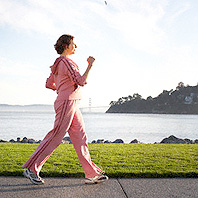
Gentle exercise from EverydayHealth.com

The American Heart Association’s Start! initiative calls on all Americans and their employers to create a culture of physical activity and health to live longer, heart-healthy lives through walking. It offers resources for employers to implement a walking program in the workplace and track employees’ progress in the program. One of Start’s key components, National Start! Walking Day aims to get Americans up and moving for 30 minutes on April 8, 2009. National Start! Walking Day will take place during National Workplace Wellness Week.

Why walk?

There are countless physical activities out there, but walking has the lowest dropout rate of them all! It’s the simplest positive change you can make to effectively improve your heart health. Research has shown that the benefits of walking and moderate physical activity for at least 30 minutes a day can help you:
  • Reduce the risk of coronary heart disease
  • Improve blood pressure and blood sugar levels
  • Improve blood lipid profile
  • Maintain body weight and lower the risk of obesity
  • Enhance mental well being
  • Reduce the risk of osteoporosis
  • Reduce the risk of breast and colon cancer
  • Reduce the risk of non-insulin dependent (type 2) diabetes

There really are so many benefits for such a simple activity!

How To Begin a Walking Program

The AHA offers these steps to begin a walking regimen:
Step 1: Remember that your safety is the most important thing! If you’re a male over 40 or a female over 50, you may want to work with your doctor to set up your exercise program.
Step 2: Get familiar with the American Heart Association’s recommendations for physical activity:

  • Aim for at least 30 minutes of moderate-to-vigorous physical activities, 5 days a week
  • Remember that physical activity can be accumulated throughout the day. Three 10-minute sessions is the same as one 30-minute session!
  • If you’re looking to lose weigh or maintain your current weight, aim for 60-90 minutes of moderate-to-vigorous physical activity each day

Step 3: Always measure the intensity of your exercise to know if you’re pushing yourself too hard or not hard enough. An easy way to do this is by taking the talk test:

  • You should be able to sing while working out at a light intensity level
  • If you’re exercising at a moderate intensity level, you should be able to carry on a conversation comfortably
  • If you become too winded or out of breath to carry on a conversation, the activity can be considered vigorous

You can also download this chart from the American College of Sports Medicine and Center for Disease Control and Prevention, which lists physical activities by their level of intensity. Happy trails!

Reblog this post [with Zemanta]

Read Full Post »

By Sue Shekut, Owner, Working Well Massage, Licensed Massage Therapist, Certified Wellness Coach, ACSM Personal Trainer

Worksite Wellness Programs Increases Productivity and Employee Retention

This coming week is National Workplace Wellness Week!  And no, it’s not just another Hallmark Holiday,  it’s a government resolution to promote workplace wellness.

History of Workplace Wellness Week

In 2008, the the U.S. House of Representatives passed a federal resolution creating National Workplace Wellness Week. The resolution, which was endorsed by the American Heart Association (AHA), Chamber of Commerce, Partnership for Prevention and many other groups, designated the first full week of April as “National Workplace Wellness Week.” During this week, private and public employers across the country are encouraged to invest in the health of their employees by creating worksite employee health promotion programs, or by sharing their worksite wellness experiences with other employers.

Workplace Wellness Statistics

The American Heart Association offers a handy fact sheet with some alarming statistics on workplace wellness:

· Health care costs in the United States doubled from 1990 to 2001 and are expected to double again by 2012

· Chronic illnesses affect more than a third of working-age Americans and the costs associated with chronic diseases account for approximately 75 percent of the nation’s annual health care costs

· Over 130 million Americans are employed across the United States and since a significant part of their day is spent at work, comprehensive, culturally sensitive health promotion within the workplace is essential to maintain and improve the nation’s health

· Nearly 60 percent of employers’ after-tax profits are spent on corporate health benefits. An estimated 25-30 percent of companies’ medical costs per year are spent on employees with excess health risk. That contrasts to three decades ago when only seven percent of corporate profits paid for health costs

· Addressing risk factors early can make a difference. For example, $5.6 billion in heart disease costs could be saved if one-tenth of Americans began a regular walking program

· Employer spending on health promotion and chronic disease prevention is a good business investment. Programs have achieved a rate of return on investment ranging from $3 to $15 for each dollar invested with savings realized between 12 and 18 months

National Workplace Wellness Week starts on April 5th and offers a new approach to some old stubborn problems that employers and employees face related to costs, health, productivity and morale, to mention a few. This information can help any company and can help them to take action to conquer their own health and wellness issues.

Get Well With Working Well Massage

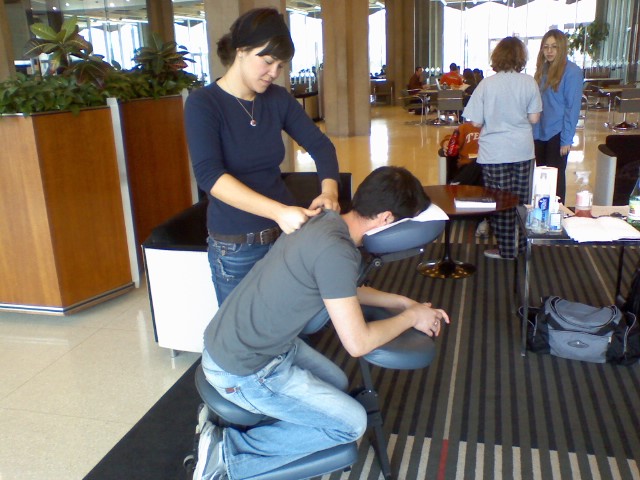
One way to help employees reduce stress, increase productivity and computational skills and reduce muscle tension is to bring in Licensed Massage Therapists from Working Well Massage to give staff members a short chair massage.  Massage is an easy, cost effective way for employers to kick off or inject new energy into a workplace wellness initiative.

If your company already has a workplace massage program, tell us what you like about it! How has it benefited you?

if your company does not provide employees with massages, ask your Human Resources Department to look into it. You, and your fellow staff members, will be glad you did! For information on setting up a workplace wellness program including massage therapy, go to our website.

Reblog this post [with Zemanta]

Read Full Post »

« Newer Posts - Older Posts »