Feeds:
Posts
Comments

Archive for December, 2009

By Sue Shekut, L.M.T., ACSM Personal Trainer, Certified Wellness Coach, Owner, Working Well Massage

For those that are looking for an ergonomic gift for those people on your gift list that are glued to their computers, you are in luck!  According to Shane McGlaun at SlashGear.com, Jeflin has a new mouse with a gel cover that fits comfortably in your hand and is easy to use.  Read Shane’s comments below for more info on this new mouse from Jelfin. (And no, Working Well Massage & Working Well Resources does not have any connection to Jeflin nor do we get any free gear or ad dollars for telling you about their products.)

Jelfin ball mouse with gel cover rolls onto scene

by Shane Glaun at SlashGear.com
I have never been one to think that the mouse form factor that we all know and love needs a complete redesign. I will agree some mice are more comfortable to use than others are, but I like the traditional style myself. Just give me lots of sensitivity and I am good.

jelpinmouse

If you want to try a different mouse altogether the Jelfin ball-shaped mouse may be worth a look. The mouse is round and is covered with a gel coating for ergonomics and a comfortable feel. The ball shape of the mouse promises to fit the curve of your hand perfectly.

The mouse is designed to be sort of like a stress ball that can be touched and squeezed. The ball mouse comes in blue, red, yellow, green, and pink colors. The mouse also ships in a can that acts as a transportation container. Sensitivity for the mouse is 1000 dpi and it is available now for $34.95 from Amazon here.

Reblog this post [with Zemanta]

Read Full Post »

2-people-beach-shadows-002
Image by mikebaird via Flickr

Emotional health is just as important as physical health. But what is emotional health? Being happy? Being in touch with your feelings? Being able to cope with stressful situations? Never being angry? Read more from Familydoctor.org below to find out.

What is good emotional health?

People who are emotionally healthy are in control of their thoughts, feelings and behaviors. They feel good about themselves and have good relationships. They can keep problems in perspective.It’s important to remember that even people who have good emotional health can sometimes have emotional problems or mental illness. Mental illness often has a physical cause, such as a chemical imbalance in the brain. Stress and problems with family, work or school can sometimes trigger mental illness or make it worse. However, people who are emotionally healthy have learned ways to cope with stress and problems. They know when they need to seek help from their doctor or a counselor.

What about anger?

People are sometimes not aware of what causes their anger, how much anger they are holding inside or how to express anger appropriately. You may be angry about certain events, your own actions or other people’s actions. Many little things can build up to make you feel that life is unfair.If you find yourself becoming increasingly irritable or taking unhealthy risks (such as drinking too much or abusing drugs), you may have a problem dealing with anger. It’s very important to talk with your doctor or a counselor about getting help.

What can I do to avoid problems?

First, notice your emotions and reactions. Try to understand them. Learning how to identify what is causing sadness, frustration and anger in your life can help you do a better job of managing your emotional health. The box to the right gives some other helpful tips.

Tips on dealing with your emotions

  • Learn to express your feelings in appropriate ways. It’s important to let people close to you know when something is bothering you. Keeping feelings of sadness or anger inside takes extra energy. It can also cause problems in your relationships and at work or school.
  • Think before you act. Emotions can be powerful. But before you get carried away by your emotions and say or do something you might regret, give yourself time to think.
  • Strive for balance in your life. Make time for things you enjoy. Focus on positive things in your life.
  • Take care of your physical health. Your physical health can affect your emotional health. Take care of your body by exercising regularly, eating healthy meals and getting enough sleep. Don’t abuse drugs or alcohol.

How does stress affect my emotions?

Your body responds to stress by making stress hormones. These hormones help your body respond to situations of extreme need. But when your body makes too many of these hormones for a long period of time, the hormones wear down your body — and your emotions. People who are under stress a lot are often emotional, anxious, irritable, and even depressed.If possible, try to change the situation that is causing your stress. Relaxation methods, such as deep breathing and meditation, and exercise are also useful ways to cope with stress.

Can emotional problems be treated?

Yes. Counseling, support groups and medicines can help people who have emotional problems or mental illness. If you have an ongoing emotional problem, talk to your family doctor. He or she can help you find the right type of treatment.

Tips on dealing with your emotions

  • Learn to express your feelings in appropriate ways. It’s important to let people close to you know when something is bothering you. Keeping feelings of sadness or anger inside takes extra energy. It can also cause problems in your relationships and at work or school.
  • Think before you act. Emotions can be powerful. But before you get carried away by your emotions and say or do something you might regret, give yourself time to think.
  • Strive for balance in your life. Make time for things you enjoy. Focus on positive things in your life.
  • Take care of your physical health. Your physical health can affect your emotional health. Take care of your body by exercising regularly, eating healthy meals and getting enough sleep. Don’t abuse drugs or alcohol.

Organizations That Can Help with Mental Health

Read more from familydoctor.org

Reblog this post [with Zemanta]

Read Full Post »

A yoga class.
Image via Wikipedia

By Sue Shekut, Licensed Massage Therapist, ACSM Personal Trainer, Certified Wellness Coach

For those of you suffering from back pain, I must first say this: Make sure you see a doctor or chiropractor you trust before undertaking any new exercise that impacts your low back. Certain low back conditions can be made worse by doing backbends and other yoga poses if done improperly, or if you have certain conditions such as Spondylolysis (a defect in the pars interarticularis of a vertebra). If you have an acute back condition such as a recent herniation, get your doctor’s approval before doing any yoga or any exercises that impact your back!

For people with muscle tension in the low back and those without back injury, gentle yoga poses may help strengthen your back and core muscles.

One website that offers help for back pain is YogaTherapyWeb.com

The site has many articles about using Yoga as a muscle therapy and stress management tool. Read more from YogaTherapyWeb.com about a study done using Yoga to reduce back pain:

Yoga For Back Pain

According to a study published in the Annals of Internal Medicine, yoga for back pain may be just what the doctor ordered. In the 12 week study, Dr. Karen Sherman and her colleagues at the Group Health Cooperative in Seattle compared the effectiveness of yoga for back pain vs. physical therapy exercises, and a self-care book with exercises targeting chronic lower back pain.

The 101 adults in the randomized, controlled clinical trial were separated into three groups: the first attended weekly yoga for back pain classes with daily at-home yoga practice. The second attended a program of back pain exercises developed by a physical therapist, also once a week with daily home practice. The third group received The Back Pain Helpbook, an evidence-based book emphasizing self-care strategies for back pain.

By the end of the 12 weeks, it was clear that yoga for back pain not only helped reduce the pain, but it did so more effectively than either the book or the back pain exercises.

Moreover, a three month follow-up revealed that the back pain yoga group continued to enjoy far better results than the groups who had practiced back pain exercises or read the book.

Read the entire post from YogaTherapyWeb.com here.

Source: Comparing Yoga, Exercise, and a Self-Care Book for Chronic Low Back Pain, Sherman, 2005

Reblog this post [with Zemanta]

Read Full Post »

The Rockefeller Center Christmas Tree in New Y...
Image via Wikipedia

Having a hard time keeping a handle on your fitness and nutrition goals this time of year?  You are not alone.  Holiday shopping, parties and extra goodies make it tough for everyone. Read what the experts at WebMD say about keeping on track with your fitness routine during this busy time of year.

Your Holiday Fitness Program

The holiday season can be enough to derail even the most dedicated exerciser. Here are some tips to help you stay fit through New Year’s.
By Carol Sorgen
WebMD Weight Loss Clinic-Feature

You’re busy, you’re stressed, it’s chilly out… so why not just take a break from your fitness program until the New Year?

Sure, you can always come up with an excuse not to exercise. But slacking off on your fitness program during the holidays will only leave you with more pounds — and more stress — come New Year’s. Fitness experts recognize that this time of year is difficult for many people trying to stick to an exercise program, so they have some suggestions to keep you motivated and disciplined.

The first step, says lifestyle coach April Masini, is acknowledging the holidays probably will affect your exercise program to some extent. Then you can make adjustments that will help you stay fit during the season. For example, if you usually take exercise classes only offered at a certain time, skip the classes and take a hike or a swim at an indoor pool instead.

“Take an honest look at your schedule, and instead of trying to squeeze exercise into your schedule, take other things out,” Masini suggests. “The goal is not to do more (as we all have a tendency to do this time of year), but to do less, but do it all well.”

It’s also important to keep fitness a priority in your schedule, says Rich Ray, chairman of the Kinesiology Department at Hope College in Holland, Mich.

“Whether or not you already have well-established exercise habits, make sure you actually schedule time into your day for your exercise,” he says. “There’s nothing like having an entry in your Palm Pilot for exercise.”

Indeed, maintaining a workout schedule is even more important this time of year because most of us tend to eat more than usual, says Michael Thurmond, author of the 6 Week Body Makeover and resident fitness guru on ABC’s “Extreme Makeover.”

As such, Thurmond recommends not only keeping to your same schedule, but striving to add an extra workout session or two whenever possible.

Be Flexible and Mix It Up

Here are some more expert tips for staying fit during the time-crunched, temptation-packed holiday season:

  • Be flexible when your days get busy, Ray advises. Instead of simply blowing off your 5 p.m. trip to the gym in favor of an office party at the same time, wake up an hour early and walk or jog before work. Or fit a brisk walk into your lunch hour.
  • Mix up your routine to avoid boredom. “If you usually run four days a week, try running once, swimming once, and lifting weights twice,” Ray says. “The novelty of the new exercise will hopefully be a stronger motivator than the ‘need’ to do something else during your normal exercise time.”
  • To save time, Ray recommends combining exercising and family commitments. For example, hauling the kids up a hill a few times can make a sledding trip as beneficial as a jog. Taking the family snowshoeing, cross-country skiing, or on a backpacking trip will provide exercise as well as quality time with loved ones.
  • Coraggio recommends creating a home workout routine for those times you can’t make it to the gym. Crunches, push-ups, and many other exercises can be done without any gym equipment.
  • Walking is an exercise that can go anywhere, from the woods to the mall, says health and lifestyle coach Jackie Keller, author of Body After Baby: The Simple 30-Day Plan to Lose Your Baby Weight. “Always have a pair of running or walking shoes with you, along with a set of light, hand-held weights, and a clean pair of socks,” Keller suggests. “If all else fails, you have the minimum equipment necessary to get in a walk.” Another Keller suggestion: add a heavy book to a backpack to make your walk more challenging.

5 Cold-Weather Workout Tips

If cold weather is derailing your fitness activities, personal trainer Kevin Gianni, author of The Busy Person’s Fitness Solution, offers these 5 winter weather workout tips:

  1. Lace up your skates. During the winter it’s often too cold, too dark, or too slippery to walk or run outside. To get in a great workout, try ice skating — whether you go to a local pond for a pickup game of hockey, or to the local ice rink (which also offers the advantage of no wind chill).
  2. Try thermal underwear. If you really need to be outside in frigid weather, add a layer of thermal underwear, which will keep you both warm and dry by wicking sweat away from your body, Gianni suggests.
  3. Don’t push it. On days when the air feels too cold to even breathe in, heed your body’s signals and stay indoors. Cold air can trigger exercise-induced asthma (EIA). Symptoms include wheezing, chest tightness, coughing, chest pain, and shortness of breath.
  4. Try a new home routine. Bodyweight routines are exercises that need no equipment and can be done in your own home. There are many types of bodyweight routines, such as yoga, Pilates, and aerobics. Pop in a fitness DVD or download a workout on your MP3 player to get you going.
  5. Set up your own gym. Now’s the time to think about getting a treadmill, elliptical machine, or stationary bike. Having your own equipment and knowing how to use it will keep you motivated and help you stay on track.

When all’s said and done, says Tom Weede, a certified health and fitness instructor and author of the forthcoming book, The Entrepreneur Diet, it’s important to be realistic.

“Give yourself a little slack during the holidays,” he advises. “After all, it’s a time to have fun and be with family and friends, and if you have a rigid attitude toward your diet and exercise, you may end up just giving up because you’ve set the standard too high.”

So allow yourself some “cheat” days, Weede suggests. “In reality, what matters is the overall total calories you consume and the overall total you expend through physical activity over the entire holiday period. One or two splurges aren’t going to derail your efforts,” he says.

Link to entire WebMD article here.

Reblog this post [with Zemanta]

Read Full Post »

By Sue Shekut, L.M.T. ACSM Personal Trainer, Certified Wellness Coach, & Owner, Working Well Massage

Winter is here which means more and more snow soon. If you don’t want to exercise inside, you can ski or sled or snowboard. What about outdoor exercise for hikers and those that don’t want to travel to downhill ski?  Snowshoeing is becoming a popular way to get some cardiovascular workouts and the Chicago area Forest Preserves area available all winter!

Don’t have  experience snowshoeing?  Read the following excerpt from the “First-Timers Guide to ShowShoeing” below from SnowShoeing Magazine to learn all you need to know to get started!

First-Timers Guide to Snowshoeing

There is no better way to begin snowshoeing than just going and doing it. Take a risk, rent or buy a pair of snowshoes, dress for the elements and enjoy. However, that’s just a start – there is more to it than just taking a refreshing plunge in some snow.

Snowshoeing has been around for thousands of years. And, obviously, the art of snowshoeing has become more sophisticated over time – now it’s considered a winter sport. From the early wood-frame to the aluminum-frame models, snowshoeing has garnered quite a following throughout the world. Modern day snowshoeing is made up of casual snowshoers who hike trails for pleasure, the snowshoeing enthusiasts who trek through the backcountry, and the competitors who race.

Considering this is the fastest growing winter sport in the world (snowboarding is growing fast too, but not fast enough), snowshoeing is poised to become a monster of a market. Many involved in skiing and snowboarding utilize snowshoes to participate in some great backcountry hikes to find the holy grail of mother nature: Deep, unscathed powder. Snowshoeing is a great alternative for many sports – especially those who like running.

What’s So Great About Snowshoeing?

The sport is easy to learn, virtually inexpensive (compared to other winter sports), poses little risk of injury and is a great way to exert energy during the cold winter months. According to research provided by Snowsports Industries America (SIA), 40.8 percent of snowshoers are women (a number that is increasing rapidly), 9.4 percent of snowshoers are children (ages 7-11), and 44.2 percent of snowshoers are ages 25-44.

shoe5

SnowShowing burns more claories than walking or running. Image from SnowShowing Magainze

One of the more appealing facts about snowshoeing is how it can help enrich a person’s health. Known to help maintain or improve cardiovascular fitness, the sport helps burn more than 600 calories per hour. Snowshoers can burn more than 45 percent more calories than walking or running at the same speed, according to SIA. Snowshoeing is a great way to pursue losing weight.

What to Look For in a Pair of Snowshoes?

When buying or renting a pair snowshoes, keep in mind the following details:
There are three types of snowshoes available: Recreational Hiking, Aerobic/Fitness and Hiking/Backpacking.
• Recreational hiking snowshoes are a basic selection and are perfect for first-timers. Usually, these snowshoes work best on simple terrain that doesn’t require a lot of steep climbing or descents.
Snowshoes for aerobic/fitness are best suited for those who are active snowshoers – like runners and cross-trainers. This type of snowshoe has a very sleek design and is generally tougher than most available.

Snowshoeing at The Basin Phippsburg 08

Snowshoeing. Image from outdoors.mainetoday.com

• If you like the powder and are more experienced with snowshoeing, purchasing a pair of hiking/backpacking snowshoes is your ticket. These are as tough as they come: Strong aluminum frame, durable material for flotation, and bindings that support all types of boots.

• The cost for a pair of snowshoes is generally inexpensive. Look to spend on the low-end around $100 and on the high-end around $300 (sometimes higher depending on the manufacturer).

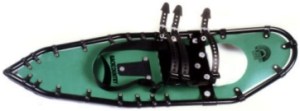
grnshoe

Northlites Snowshow from northernlites.com

• Many retailers will offer a package deal that will provide poles and a snowshoe bag. These are generally good deals, but pay particular attention to the type of snowshoe you will be receiving. If you want to do some backcountry snowshoeing, a starter kit won’t be the best option. Ask your retailer for more details.

• It is highly advised not to purchase a used pair of snowshoes. If you decide to go through with buying a used pair, inspect them thoroughly: Check the frames for damage (including chips), check the bindings for overstress and check the flotation material for holes and rips. Know who you are buying your snowshoes from. Don’t get caught in the backcountry with a faulty pair of shoes.

• Finally, as one of the most important factors in snowshoeing, choose according to the size available. Usually measured in inches, the length will depend upon how much you weigh. The most common sizes (excluding kids lengths) are 25 inches, 30 inches and 36 inches. Your retailer should be able to help you when deciding snowshoe length.

Where to Buy or Rent a Pair of Snowshoes?

There are plenty of snowshoe retailers to choose from. However, there are more obvious choices than others. For example, REI and Eastern Mountain Sports (EMS) sell snowshoes around the nation – they are the obvious retailers. The less obvious retailers are independent stores that may include equipment for running and local mountain outfitters.

If you really want a nice selection of shoes to purchase from a retailer, visit Backcountry.com: Click here. Backcountry.com is the place to buy not only snowshoes but accessories as well. They also have great prices on certain brands, models and snowshoe starter kits.

Where Should You Go Snowshoeing?

If it’s covered in snow…go for it!But, be careful. Don’t take risks and most importantly, have fun.

The prime areas for snowshoeing are at nordic centers, which are usually placed in or around a ski resort. Other types of snowshoeing destinations include bed and breakfast inns, mountain lodges, state parks, national parks, snow-covered golf courses, open space (provided by your state government), ski slopes, and much more.

Although many people like the individuality and peacefulness of snowshoeing, it’s a good idea to snowshoe with a friend or partner. And, bring a global positioning system (GPS) device and a compass to help better navigate remote and wooded areas.

Please note: Remember to bring plenty of water or a water filter on your snowshoe travels.

Read entire article from the “First-Timers Guide to ShowShoeing” below from SnowShoeing Magazine here.

What Type of SnowShoes Do I Use?

I recently bought a new pair of snowshoes from Amazon.com and plan to hit the trails as soon as there is more snow!
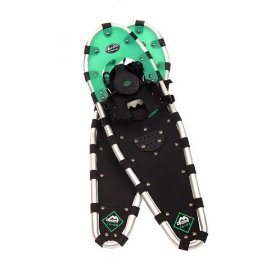
I bought the Pacific Outdoors Optima 10-by-32 Snowshoes

Pacific Outdoors Optima 10-by-32 Snowshoes

Available here from Amazon for about $78.00

Reblog this post [with Zemanta]

Read Full Post »

Jumping Jacks
Image by Mike Schmid via Flickr

By Sue Shekut, Licensed Massage Therapist, ACSM Personal Trainer, Certified Wellness Coach, Owner Working Well Massage

I hear the same complaints from many of my clients: “I want to work out, but I don’t have time.” “My neck and shoulders are so tight, but I do stretch (when I remember).” Or “I know I should stretch, but I get busy at work and I forget.”

For those of you that work out 5 times a week and incorporate yoga into your daily routine, a big fist pump! For those of you that barely do more than walk to the train or from your car to your office each day, I have a simple little exercise to help you feel less tension and get a bit of movement into your life.

The Big 25

What I am going to suggest is simple, easy to do and takes less than 10 minutes (depending on your speed and fitness level). Even those that are very fit can benefit from the Big 25. What is the Big 25, you ask. Just this: each day, before you get ready for work, stand up straight, take a deep breathe and do 25 Jumping Jacks. Consecutively. (That means without stopping! So do all 25!)

What’s the Big Deal About Jumping Jacks?

The truth is, for people who are relatively inactive, if I gave you a more difficult exercise to do every day, you likely wouldn’t do it. Starting with 25 Jumping Jacks is a great way to get your whole body moving, with minimal effort or training. This means that you pump fresh blood to your arms and legs, work your heart a bit and bring fresh oxygen to your noggin (aka brain) every day simply by doing the Jumping Jacks your grade school gym teacher taught you to do.

Many computer uses sit all day, leaning forward, arms raised over their keyboards, low backs in constant flexion, leaning into their computer screens as they work. When’s the last time you raised your arm overhead? Or moves your arm in a complete rotation (like an arm circle)? Doing Jumping Jacks gives your arms a chance to break out of their keyboard pose, breaks up mild muscle adhesions in the shoulder and upper back, and gives your legs a chance to move sideways to open up your inner adductors (inside your thighs) and work your abductors (those muscles and tendons on the outside of your legs like the dreaded IT Band and your Gluteal muscles). You use your core muscles to stabilize you (or you’d fall over). And flapping your arms overhead as you jump gets your heart rate up.

Too Good To Be True?

You may think, 25 Jumping Jacks, that’s too easy. That’s for kids. That can’t really do much for my fitness. I have to go to the gym for an hour to get any benefit. I must refute those arguments.

1. If it’s easy you will more likely be able to make it part of your daily routine.

2. If kids can do it, so can you (barring any medical issues or injuries, of course). And, you can do it with your kids. Way to role model fitness!

3. True, 25 Jumping Jacks a day will not make you buff. But if you do little physical activity now, and you work at a computer for a living, even 25 Jumping Jacks can help relieve some muscle tension and give your heart a boost. And doing 25 Jumping Jacks gives you at least 10 minutes of the  30 minutes of daily activity recommended by the ACSM and American Heart Association for general fitness.

Can I Do More than 25 Jumping Jacks A Day?

Of course! In fact, I’d suggest you increase the number of JJ’s as you go, say from 25 one week to 30 a day the next, then 30 to 35, until you get to 100 Jumping Jacks a day.  Then, you can move on to Squat Thrusts….Or maybe even hit the gym.

How To Do A Jumping Jack

Maybe you were home schooled and never had gym class. or maybe you forgot how to do them. In any case, if you don’t know how to do a  Jumping Jack,  follow the instructions below and start jumping!
1. Start with your feet together and arms at your sides. Tighten your abdominal muscle. and slightly tuck your pelvis under your spine (this helps take pressure off your low back, so you don’t stick your rear end out too far).
2.Bend your knees slightly and jump your feet apart to just beyond the width of your shoulders. Simultaneously time, raise your arms over your head and lightly tough them together (if you can).
3. Keep your knees bent while you jump your feet back together and bring your arms back to your sides. At this point, your weight should be on your heels.
4. Lather, rinse, repeat. (Or continue until you’ve done at last 25 Jumping Jacks. THEN you can jump in the shower and wash your hair.)

Jumping Jack Video’s

Still not sure how to do Jumping Jacks, check out these videos for demos.

• Les Whitney does a decent job of demonstrating, but I wish his director had shown his footwork! Link here for Les’ video on YouTube.

• Jumping Jacks for people that can fly (Or that don’t need to keep their feet on the ground) from LiveStrong.com on YouTube here.

• Advanced Fancy Footwork Plank Pose–Jumping Jacks from Exercise TV on YouTube here.

• Jumping Jacks in the water: easier on your knees and joints. Check out the Water Aerobics Jumping Jacks demo here.

• Jumping Jack Russell-Watch this lil dog get a fantastic workout. Don’t try this at home…unless you are a Jack Russell Terrier! Watch the You Tube Video here.

Reblog this post [with Zemanta]

Read Full Post »

Chatting
Image via Wikipedia

An important part of stress management is managing how we perceive events and situations in our lives. Now, new research shows that talking about our problems and finding resolution can make us happier than cold hard cash. Who knew? Read more from Health Day News to find our why talk therapy may make you happier than money in the long run.

SATURDAY, Nov. 28 (HealthDay News) — Psychological therapy may be much more effective at making people happy than getting a raise or winning a lottery prize, suggests an English study.

Researchers analyzed data on thousands of people who provided information about their mental well-being and found that the increase in happiness from a $1,329 course of therapy was so significant that it would take a pay raise of more than $41,542 to achieve an equal boost in well-being.

That suggests that therapy could be as much as 32 times more cost-effective at improving well-being than simply getting more money, the researchers said.

The study was published online Nov. 18 in the journal Health Economics, Policy and Law.

“We have shown that psychological therapy could be much more cost effective than financial compensation at alleviating psychological distress,” said study author Chris Boyce, of the University of Warwick. “This is not only important in courts of law, where huge financial rewards are the default way in which pain and suffering are compensated, but has wider implications for public health and well-being.”

Read entire article at Health Day News here.

Reblog this post [with Zemanta]

Read Full Post »

Olympic Swimming Pool Fast Lane Category:Outdo...
Image via Wikipedia

We had our first real snow  of the season today in Chicago. And that means more indoor fitness activities for many of us.  It’s a good time to talk about the benefits of swimming!

As a young child, my parents used to take us to the local high school pool twice a week for open swim. Now in their 70’s, both my mother and father try to swim at least 3 times a week. It’s great exercise, easy on the joints and helps keep their muscle tone. Plus it’s a good way for them to spend time together and meet new friends in their water aerobics classes. I, too, try to swim more in the winter for cardiovascular health and overall fitness.

Richard Weil, MEd, CDE from Medicine.Net.com wrote a fantastic post about swimming,starting with the history of swimming,  moving on to the benefits of swimming, how to get started, what to wear, equipment you need, where to do it, and finishing with links to great swimming resources. Read the excerpt from his article below or click the link here to go to his original article.

What is the History of Swimming?

Human beings have been swimming for millennia. According to Wikipedia, Stone Age cave drawings depict individuals swimming and there are written references in the Bible and the Greek poems “The Iliad” and “The Odyssey” dating back 1,500 to 2,000 years. There are even Egyptian clay seals from 4000 BC showing four swimmers doing a version of the crawl, and the most famous swimming drawings were apparently found in the Kebir desert and were estimated to also be from around 4000 BC.

According to the Encyclopedia of Traditional British Rural Sports, literature specifically related to swimming grew in the middle ages. It is believed that the first book devoted to swimming was Colymbetes by Nicolas Wynman written in 1538, and a more widely recognized text, De Arte Nantandi, was published in Latin by Everard Digby in 1587. The encyclopedia also reports that swimming was required of knights and that Romans built bathhouses and pools wherever they conquered to serve as social clubs and places to exercise.

Organized swimming began in the 1800s and 1900s with the creation of swimming associations (for example, the Amateur Swimming Association in 1886) and clubs that competed against each other. There are reports from that era of swimming clubs in England, France, Germany, and the United States. High-profile events also contributed to swimming’s visibility. For instance, Matthew Webb swam the English Channel in 1875.

Competitive swimming continued to grow in popularity during the 1800s and was included in the first modern Olympic Games in Athens in 1896. In 1904, the Olympics in St. Louis included the 50-, 100-, 220-, 440-, 880-yard and one-mile freestyle, the 100-yard backstroke and 440-yard breaststroke, and a 4×50-yard freestyle relay.

By the 20th century, swimming had become mainstream. Indoor pools were beginning to appear, most towns with populations over 20,000 had public outdoor pools, and swimming clubs became increasingly popular for recreation. Women participated for the first time in swimming in the Olympic Games in Stockholm in 1912, and Johnny Weissmuller (considered by many authorities to be the greatest swimmer of all time and who later went on to Tarzan fame in movies) became the first person to swim 100 meters in less than one minute.

Today swimming is the second most popular exercise activity in the United States, with approximately 360 million annual visits to recreational water venues. Swim clubs, recreation centers, Y’s, and many other facilities feature swimming pools. Many high schools and colleges have competitive swim teams, and of course, swimming is one of the most popular Olympic sports. Millions of Americans are swimming each year. Are you one of them? If not, the following information may help get you started.

What are the Swimming Strokes?

Breaststroke, backstroke, butterfly, and crawl (freestyle) are the most popular swim strokes. The breaststroke and butterfly are more difficult to learn than the backstroke and crawl. Click here for a description of the various strokes.

What are the Benefits of Swimming?

There are plenty of reasons to swim! Here’s a list that should get you motivated.

Low impact

There’s no ground impact when you swim, and so you protect the joints from stress and strain. In fact, the Arthritis Foundation strongly recommends swimming and water activities for this reason, so much so that they sponsor water classes all over the country (check http://www.arthritis.org for information). Water aerobics classes are also desirable for this reason, because even if you do jump and hit the bottom of the pool, you do so with less force because you’re buoyant in the water.

Can be continued for a lifetime

Because there’s no impact with swimming, it can be continued for a lifetime. If you check the United States Masters Swimming (http://www.usms.org/) Web site for age categories of their swim competitions, you will find a 100- to 104-year-old age group! And the master of fitness, Jack La Lanne, still swims one hour every day at age 93!

Builds cardiorespiratory fitness

Swimming improves endurance. In one study of sedentary middle-aged men and women who did swim training for 12 weeks, maximal oxygen consumption improved 10% and stroke volume (the amount of blood pumped with each beat which indicates heart strength) improved as much as 18%.

Builds muscle mass

In a study of men who completed an eight-week swimming program, there was a 23.8% increase in the triceps muscle (the back of the arm). My take on muscle mass and swimming is that if you have been doing no resistance exercise at all and you start to swim, you will certainly get more toned and you may even gain mass like the men in this study.

An alternative when injured

When athletes are injured, particularly in the lower extremities, they are frequently told to swim to maintain their fitness level. Swimming helps them stay in shape, and it’s even part of the rehabilitation. That’s because the resistance of the water makes the muscles work hard without the strain or impact that is experienced on land.

It’s a family affair

Swimming and other water activities are something the entire family can share. With rising levels of obesity in children as well as adults in the United States, family physical activities and good role-modeling may be one way to stem the epidemic of inactivity and obesity facing our nation.

Burns calories

Swimming burns lots of calories, anywhere from 500-650 per hour depending on how efficiently you swim (you burn more flopping around than swimming cleanly!) and how buoyant you are (the more body fat you have, the more you float and the fewer calories it takes to swim). Very early and original research on swimming and calorie expenditure showed that swimming, regardless of the stroke, burned about 89% of the calories burned during running and 97% of the calories burned during cycling for the same time period. Calorie expenditure is dependent on the intensity of exercise, and so it’s entirely possible to burn more calories swimming than running in the same period of time as long as you swim hard enough, and particularly so if compared to running at light intensity.

How do I Get Started with Swimming?

Take a lesson if you don’t know how to swim! It’s never too late to learn. Your local recreation center, Y, fitness center, or senior center might have a pool, and if they do, chances are they offer swim lessons (plus, if it’s indoors, you can swim all year long!). You may have the choice of group or private lessons. Opt for a private lesson if you have a strong fear of the water and feel you need special attention, otherwise a group lesson will work just fine.

A qualified swim instructor will have some type of certification (for example, the American Red Cross-certified lifeguard and swim instructor) and will be willing to speak with you before you get started to explain how things work. Adults generally need one hour for beginning sessions, but that may vary based on your health and fitness level (children younger than 6 years of age need 15-30 minutes and 6- to 12 year-olds need 30-45 minutes). The instructor should use kickboards, float belts, or other flotation devices to assist you if necessary, and they should be sensitive to any fear of the water you might have. When you first start, you should expect to learn breathing and stroke techniques separately, and then the instructor will integrate your lessons as you get more comfortable and skilled. You might start in the shallow end where you can stand and work on breathing techniques, by the side of the pool and hold on while you kick, or perhaps hold on to a kickboard and kick across the pool to work on kicking strokes. Your instructor will know how quickly to progress.

Where are Resources for Swimming?

http://www.usms.org/

http://www.ymca.net/ (Click on aquatics to learn more about infant-parent classes, preschool classes, classes for people with disabilities, classes for teens, and competitive swimming for people 18 and over.)

http://www.arthritis.org/ (Check for water classes in your area.)

http://www.usaswimming.org/ (Click on the “swimmer” tab and then “disability.”)

http://swim.isport.com (formerly Clubswim)

http://www.usswimschools.org/

http://www.swimoutlet.com/AquaJogger

http://www.swimmingworldmagazine.com/

http://www.usatriathlon.org/

http://www.junonia.com/home.htm (large-size swimsuits for women)

http://www.wholesomewear.com/slimmer-c.html (large-size swimsuits for women)

http://www.landsend.com/cd/frontdoor/0,,swim,00.html (large-size and custom swimsuits for women)

http://www.bigmen.com/ (large-size swimsuits for men)

http://www.big-tall.com/ (large-size swimsuits for men)

http://www.bigandtallguys.com (large-size swimsuits for men)

http://www.swimoutlet.com/ (swim gear)

http://aquajogger.com/default.htm (swim gear)

http://www.shapeupshop.com/aqua/hand_buoys.htm (water dumbbells)

http://www.power-systems.com/ (water dumbbells)

http://www.gymcor.com/pat201aqwatr.html (water treadmill)

http://www.activeforever.com/ (water treadmill)

http://www.endlesspools.com/index.html (water treadmill—propeller method)

http://www.usoc.org/paralympics/swimming_teams.html

http://www.swimmingworldmagazine.com/swimshop/default.asp?iRefId=23

http://www.americanswimmingassociation.com/

Read entire article here.

Read Full Post »

MDMA for PTSD
Image by ddaa via Flickr

The holidays can be stressful for all of us. For some people, managing stress requires more than time management and breathing techniques. People that have been through trauma are often wired to overreact to stress. For those that have been through trauma events, war, violence, and similar events, everyday stress may be more than they can handle. But help for PTSD and other trauma related conditions is now much more available. According to John M Grohol PsyD in PyschCentral.com, EDMR therapy may work in only 5 sessions.

EMDR stands for Eye Movement Desensitization and Reprocessing. It’s a type of psychotherapy that, among other things, involves thinking about the traumatic event while attending to bodily reactions and moving your eyes left and right, usually following a light or the therapist’s finger. The  therapy focuses on ‘reprocessing’ the trauma memories – essentially remembering and ‘reliving’ them, which seems to play a major role in preventing the uncontrolled memories and flashbacks that are part of the disorder.

Read Dr. Grohol’s article below for more insight into how eye movements can help reprogram people with PTSD’s  nervous systems.

Does EMDR Work in Just 5 Sessions

By John M Grohol PsyD in PyschCentral.com

Can eye movement desensitization and reprocessing (EMDR), a psychotherapy technique, work to help people with post traumatic stress disorder (PTSD) in just 5 sessions? The short answer is, yes.

And what about its long-term effects of EMDR? Do the benefits continue even after treatment has ended? Yes again.

For the first answer, I turn to Swedish researchers who examined 24 subjects who had just five sessions of EMDR therapy for the treatment of PTSD. After the five-session treatment, 67% of the subjects no longer met criteria for PTSD (compared to 10% of the control group), and there were significant differences post-treatment between the groups in Global Assessment of Function (GAF) scores and Hamilton Depression (HAM-D) scores. These latter two measures helped to measure how the person actually felt (versus some objective, but clinical, third-party diagnostic criteria). That’s significant, because it means that not only did two-thirds of those who received the EMDR treatment not meet the criteria for PTSD any longer, they actually felt better too. Sometimes researchers forget to measure silly things like that.

How about the long-term benefits of EMDR? Do psychotherapy techniques like EMDR actually help people even after therapy has ended?

To answer this question, van der Kolk and associates earlier this year examined the efficacy of a selective serotonin reuptake inhibitor (SSRI), fluoxetine, with a psychotherapeutic treatment, eye movement desensitization and reprocessing (EMDR), and pill placebo and measured maintenance of treatment gains at 6-month follow-up. They too relied on the clinical diagnostic criteria of PTSD as the primary outcome measure, but also used the Beck Depression Inventory II as a secondary measure (again, that pesky subjective measure needed to help determine whether any of this actually helps a person feel better!). Eighty-eight subjects were enrolled in the study, and the study again focused on brief treatment — this time, only eight sessions of EMDR were administered.

After the eight week treatment block, fluoextine and EMDR were equally effective,

However, six months later, 75% who had been traumatised in adulthood and were treated with EMDR reported having no symptoms. For people traumatised during childhood, a third treated by EMDR were symptom free at 6 months.

In contrast, none of the people in either group treated with fluoxetine managed to free themselves from symptoms.

As the researchers noted, brief EMDR treatment produces substantial and sustained reduction of PTSD and depression in most victims of adult-onset trauma.

So the next time you think psychotherapy has to take months or years to achieve its effects for the reduction in PTSD severity, point your therapist to this entry. Lasting effects can be had in just 5 to 8 weeks.

Read entire article by John M Grohol PsyDhere. Dr. John Grohol is the CEO and founder of Psych Central. He has been writing about online behavior, mental health and psychology issues, and the intersection of technology and psychology since 1992.

Link to abstract of clinical trial.

EMDR Practioners in Chicago

• Ann Foster L.C.P.C. at Millenium Counseling Center

• Jenny Scanlon L.C.P.C. at Millenium Counseling Center

• Nicole Wahlert L.C.P.C.at Millenium Counseling Center

Reblog this post [with Zemanta]

Read Full Post »

By Sue Shekut, Licensed Massage Therapist, ACSM Personal Trainer, Certified Wellness Coach, Owner, Working Well Massage

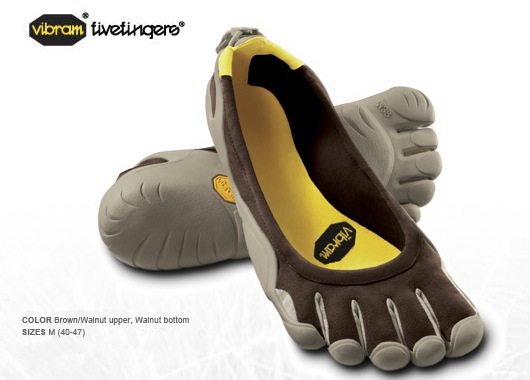
Looking for a gift idea for someone with plantar fasciitis? Or just want to give a runner a gift that will help them avoid it?  Look to the Vibram running shoe.

Vibram shoe

Read  John Biggs post about Vibram shoes at CrunchGear.com and learn all about his experience with the shoes. Then run to the nearest running store to get your own..and a pair for the runner in your life!

And, no, Working Well Resources and Working Well Massage are not affiliated with Vibram, John Biggs nor do we get any free gear for our post. (Would you trust us if we did?) We’re just happy to pass on the latest info to you, our loyal readers!

Review: Vibram Five Fingers Classic

by John Biggs

I swore I’d never wear them. We called them the Five Fingers of Suck a few years ago and I was sure they were crazy. Friends, I’m here to tell you I was wrong. And I’m sorry.

Here’s my story: I ran a marathon a few years ago. I got plantar fasciitis and couldn’t run after the marathon. I worked through that inflammation but by the time I was ready to run again I had gained thirty pounds. Wham. Shin-splints. So I was a fat former runner with leg problems. The prognosis wasn’t good.

So I tried a few things – the elliptical, weight training, losing some freaking weight – but the thing that saved me were these shoes.

Photo Gallery by Picturesurf

First, a caveat. I’m not a doctor, I’m an amateur runner and a bad one at that. Before you use these shoes, talk to a doctor. I can attest to what they did for me but I have no idea what they will do for you.

We are born to run. Heck, there’s even a book about it. Our first weapon, before fire and spears, was running. You see, animals like gazelles can run very fast for a short amount of time. They have great sprint speeds but they get tired easily. So we, as a pack predator, would get into formation and literally run animals to death. Then we’d eat them. We are good at running.

But we’re good at running barefoot. We’re not good at running in marshmallow-based shoes with padding, support, and protection. In fact, we get injured because of these shoes. There is some data that shows, in fact, that the more expensive the running shoe the worse it is for your feet and legs. I knew something was wrong when my feet would fall asleep while I was running. Something was up.

I don’t want to get into a religious argument – this is like arguing for veganism or onanism and you eventually fall into the hippie trap of equating something to “freedom” – but it makes sense. I bought the best shoes I could find for the marathon. And the shows – and the marathon – beat me down.

So I tried the Nike Free, a thinner soled shoe with separate compartments on the bottom for increased mobility. This got rid of most of my foot pain but I still had ankle pain. I ran a little in regular shoes and then read Born to Run and decided to go naked.

The thinking is this: we can run without injuries barefoot. It’s our natural mode of transportation and by wearing shoes we are weakening our bodies.

However, running barefoot in Brooklyn is a bad idea. So I ordered the Five Fingers Classic for about $75 – I bought 44 for my size 11.5 foot and they fit very well – and waited. I ran. My knees were screaming. My ankles hurt. Then, a few minutes later, all the pain was gone. I was running normally and, thanks to the light weight and comfort I could run longer than I ever could. I could run without stopping, which was a big change for me. I could run for quite a while. The only limitations were the blisters I got during the first few runs. Even those went away.

So I’m a Five Fingers convert. The shoes give your ankles a workout rather than a coddling. I felt my ankles get stronger and my feet get more resilient. I felt some of the pounds drop. I felt good.

They say we need lots of arch support but for most of our biological history we didn’t even know what an arch was let alone how to support it. While these shoes look ridiculous I’m happy to report that they work and they’re now my go-to running shoes.

Link to John Biggs  entire article here.

Where Do I Get Those Funny Looking Toe Sock Looking Shoes?

Order your pair of Vibrams shoes from their website here.

Order from Hanigs in Chicago here.

Or stop by Running Away a running store in Wicker Park located at 1753 N Damen Ave, Chicago, IL 60647. Phone: (773) 395 – 2929. Their website here.

Info on Running Barefoot (sans Vibrams) at runningbarefoot.org here.

Read Full Post »

« Newer Posts - Older Posts »